
Whether you’re escaping to a quiet campsite or bracing for the next storm, the hum of a traditional generator can ruin the peace—or worse, wake the neighbors. Inverter generators solve this by producing clean, stable electricity that’s safe for sensitive electronics like laptops and phones, all while running at a whisper. The real challenge isn’t finding a generator; it’s finding the one that delivers the power you need without the roar.
I’m Mohammad Maruf — the founder and writer behind Drink4Good. I’ve spent years combing through technical datasheets, comparing THD percentages, noise ratings, and engine displacements to separate the real performers from the marketing hype.
Whether you need to run a 15,000 BTU RV air conditioner or just keep the fridge going during an outage, this guide cuts through the noise. It delivers a tight, research-backed roundup of the best inverter generator options to match nearly any scenario and budget.
How To Choose The Best Inverter Generator
Choosing an inverter generator isn’t just about picking the biggest wattage number. You need to balance portability, noise, fuel efficiency, and clean power delivery. Focus on these four areas to avoid a costly mismatch.
Peak vs. Rated Wattage
Every generator lists two numbers: peak (surge) watts and rated (running) watts. Peak watts handle the extra draw when an appliance motor starts—like a refrigerator compressor or an RV air conditioner. Rated watts are what the unit can sustain continuously. Add up the running watts of everything you plan to power simultaneously, then ensure the generator’s rated output covers that total. The peak number gives you headroom for startup surges.
Total Harmonic Distortion (THD)
THD measures how clean the electrical sine wave is. For sensitive electronics—laptops, smartphones, CPAP machines—you want a unit with less than 3% THD. Inverter generators naturally produce cleaner power than conventional models, making them the go-to choice for charging medical devices or running a computer. Anything above 5% THD risks damaging delicate circuitry over time.
Noise Level and Portability
Manufacturers measure noise at a set distance (usually 23 feet). Look for numbers between 48 and 60 dBA for truly quiet operation. Also check the unit’s weight and whether it has a built-in handle or wheels. Lighter models in the 46–52 pound range are easier to load into a truck or move around a campsite. If you plan to run two units in parallel for more power, confirm that the model is parallel-ready before buying.
Fuel Capacity and Runtime
A larger tank doesn’t always mean longer runtime—engine efficiency varies. Look at the half-load runtime spec, which simulates typical mixed usage. Models with eco-throttle or economy mode automatically adjust engine speed to the load, saving fuel and reducing noise. Also check the engine displacement (cubic centimeters): larger displacement usually means more torque and better sustained power delivery under heavy loads.
Quick Comparison
On smaller screens, swipe sideways to see the full table.
| Model | Category | Best For | Key Spec | Amazon |
|---|---|---|---|---|
| A-iPower 4600W | Mid-Range | RV & Home Backup | 149cc, 16h runtime | Amazon |
| Aceup Energy 4000W | Mid-Range | Portable Power | 1.5% THD, 60 dBA | Amazon |
| PowerSmart 3600W | Mid-Range | Budget-Friendly Power | 50.7 lbs, 4.75h runtime | Amazon |
| PowerSmart 3800W | Mid-Range | Quiet Camping | 59 dBA, 143cc | Amazon |
| AIVOLT 4300W | Mid-Range | Heavy Camping Loads | 4300W surge, 51 lbs | Amazon |
| WEN 3600W (56360i) | Premium | Ultra-Light Travel | 46 lbs, fuel shutoff | Amazon |
| Champion 4000W | Premium | Lightweight Power | 49 lbs, 10h runtime | Amazon |
| WEN 4800W (56477i) | Premium | Home Emergency Backup | 224cc, wheels & handle | Amazon |
| Generac 2500W (GP2500i) | Premium | Compact & Light | 48 lbs, 208cc | Amazon |
| Westinghouse 4000W | Premium | Remote Start Convenience | 52 dBA, electric start | Amazon |
| Honda EU2200i | Premium | Gold Standard Reliability | 48–57 dBA, 2200W | Amazon |
In‑Depth Reviews
1. Westinghouse 4000W iGen4000cv

The Westinghouse iGen4000cv hits the sweet spot between high-end features and everyday practicality. With 4000 peak watts and 3300 rated watts, it handles an RV air conditioner, a fridge, and lights simultaneously without straining. The remote electric start via key fob is a real luxury—start the generator from your living room or truck cab while staying warm and dry.
Noise output dips as low as 52 dBA at 23 feet, making it one of the quietest 4000-watt units available. The telescoping handle and wheels make moving the 61.7-pound frame manageable on uneven campsite ground. A rotating digital display shows fuel level, power output, and remaining runtime, so you’re never guessing when to refill.
The CO sensor and automatic low-oil shutdown provide essential safety layers. Westinghouse backs this unit with a 3-year limited service warranty, and customer reports highlight strong out-of-box reliability—many users report first-pull starts and smooth parallel operation with a second unit for doubled output. If convenience and low noise are your top priorities, this is the inverter generator to beat.
Why it’s great
- Remote electric start with key fob is unmatched in this class
- 52 dBA noise level is genuinely conversation-friendly
- Informative LED data center with fuel and runtime readouts
Good to know
- At 61.7 pounds, it’s slightly heavier than some competitors
- Small 1.69-gallon tank yields about 7 hours at half load
2. Honda EU2200i Companion
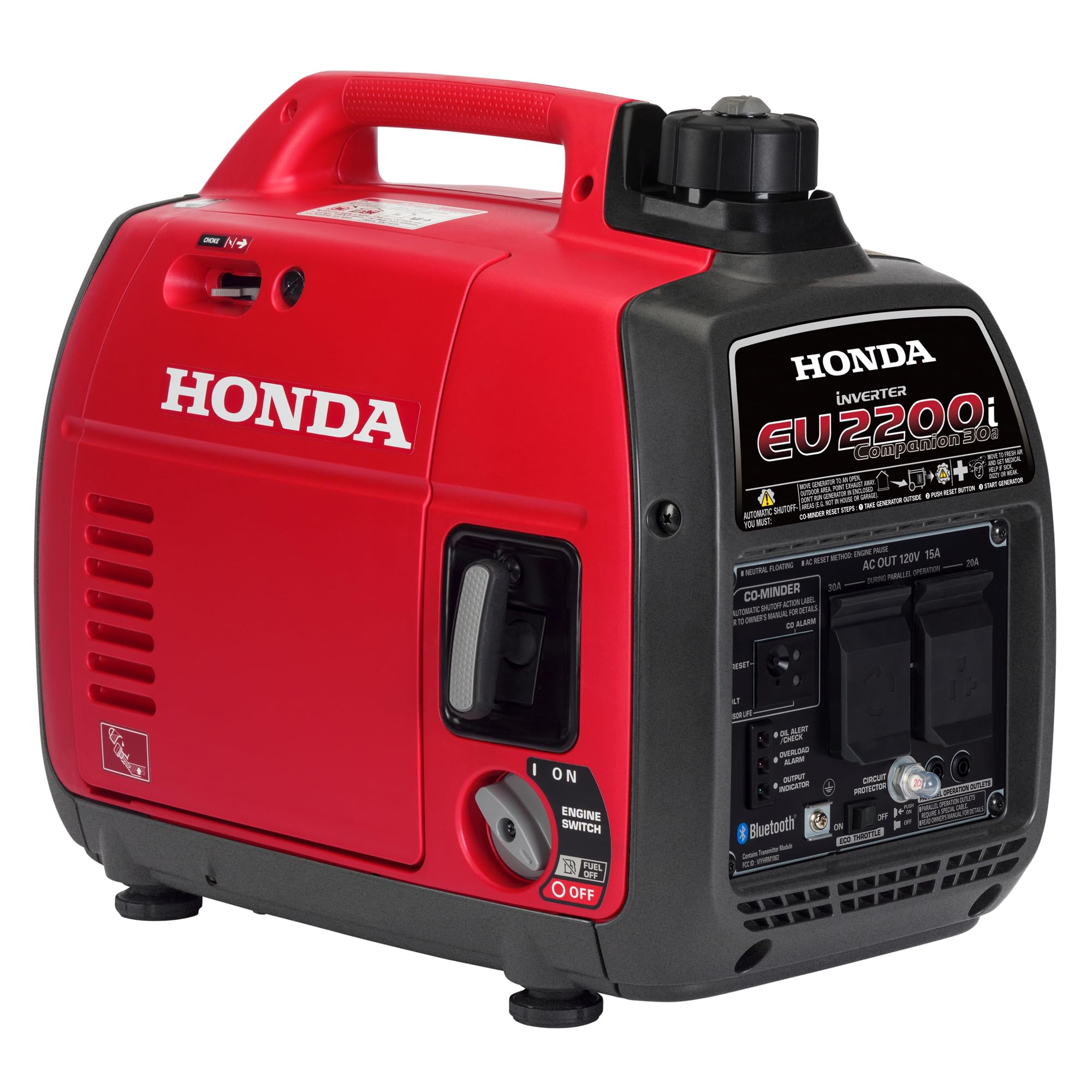
Honda’s EU2200i is the benchmark that every other inverter generator is measured against. Its 2200 peak watts and 1760 rated watts may seem modest next to 4000-watt units, but the real story is in the build quality, reliability, and sound engineering. The Eco Throttle system adjusts engine speed to match the load, delivering up to 8.1 hours of runtime on a single 0.95-gallon tank—remarkable efficiency for a 208cc engine.
At 48–57 dBA, the Honda is quieter than a normal conversation, making it ideal for primitive campsites and RV parks with strict noise ordinances. The Companion model includes a built-in 30A outlet for direct RV hookup and parallel capability, allowing you to connect two units for double the wattage. The CO-MINDER carbon monoxide detection system adds an extra safety layer by automatically shutting down the generator if CO levels become dangerous.
Users overwhelmingly praise its instant starting, even after months of storage, and the My Generator app adds Bluetooth control for remote monitoring and shutdown. The trade-off is power output—you won’t run a large RV AC or a well pump single-handedly. But for light home backup, camping, and jobsite use, this remains the gold standard for longevity and resale value.
Why it’s great
- Incredibly quiet and fuel-efficient with Eco Throttle
- Bluetooth app provides remote monitoring and control
- Unmatched long-term reliability and strong resale value
Good to know
- 2200 watts may not run a large RV air conditioner
- No built-in fuel gauge; fuel level is estimated via LED
3. A-iPower 4600W

The A-iPower 4600W delivers exceptional value for those who need sustained power over long stretches. With 4600 starting watts and 3600 running watts from a 149cc engine, it powers an RV air conditioner, fridge, and several electronics with ease. The standout spec is the 16-hour runtime at 25% load, thanks to its 2.6-gallon fuel tank—nearly double the endurance of most competitors in this power class.
Weighing just 56 pounds, it’s surprisingly portable for its output capacity. The open-frame design keeps weight down and improves airflow, though it doesn’t have the fully enclosed look of suitcase-style inverters. The TT-30R RV adapter is included, so you can plug directly into your travel trailer without hunting for separate adapters. Low idle technology further improves fuel economy when running smaller loads.
Customer feedback is overwhelmingly positive, with many users praising the first-pull starts and quiet operation. Some note the lack of an hour meter and an oil drain plug, so maintenance requires a bit more effort. The CO sensor and low-oil shutdown add safety peace of mind. For extended boondocking or storm season, this unit’s runtime leadership is hard to ignore.
Why it’s great
- Industry-leading 16-hour runtime at low load
- Includes RV-ready TT-30R adapter
- Lightweight for a 4600-watt unit
Good to know
- No hour meter or oil drain plug
- Open-frame design is less weather-resistant
4. Champion 4000W

Champion’s 4000-watt inverter generator is one of the lightest in its class at under 49 pounds. That makes it a fantastic choice for RVers who need to lift a generator into a truck bed or storage compartment without straining. With 4000 starting watts and 3000 running watts, it handles a 15,000 BTU RV air conditioner, lights, and a small fridge without issues.
Noise output is rated at 64 dBA from 23 feet—not the quietest on this list, but still comfortable for conversational-level sound at a campsite. The CO Shield carbon monoxide auto shutoff system is a welcome safety feature, and the optional parallel kit lets you pair two units for double the output. The TT-30R outlet plus a 120V 20A home-style duplex outlet provide flexible connectivity.
Users consistently report first-pull starts and reliable operation through dozens of hours of runtime. One notable advantage is Champion’s 3-year limited warranty and free lifetime technical support from US-based experts. The main downside is the lack of a fuel gauge and hour meter, though most users find the trade-off worth it for the weight savings and brand reputation. For solid power at a light weight, this is a top contender.
Why it’s great
- Exceptionally light at under 49 pounds
- CO Shield system for automatic carbon monoxide shutdown
- 3-year warranty with lifetime support
Good to know
- 64 dBA is slightly louder than premium competitors
- No built-in fuel or hour gauge
5. WEN 4800W (56477i)

When you need 4800 surge watts and 4000 rated watts, the WEN 56477i delivers serious power while staying portable enough to wheel around. Its 224cc engine provides the torque to start a well pump or run multiple appliances simultaneously. WEN includes onboard wheels and a telescoping pull handle, making it easy to maneuver despite the 72.7-pound weight.
The Watchdog CO Shutdown Sensor automatically turns off the generator if dangerous carbon monoxide levels accumulate, a critical safety feature for garage or near-home use. The fuel shutoff valve lets you run the carburetor dry before storage, preventing gum buildup and extending engine life. Four 120V receptacles plus a TT-30R RV outlet and two USB ports give you plenty of hookup flexibility.
Customer reviews highlight the quiet operation for its size and the peace of mind that comes with the CO safety system. Many users run it during extended power outages, powering fridges, freezers, and lights for 8+ hours on a single tank. The 3-year warranty is a strong bonus. The trade-off is weight—this isn’t a unit you’ll carry by hand. But if you need high sustained output and wheeled transport, it’s an excellent choice.
Why it’s great
- High 4800 peak watts from a 224cc engine
- Built-in wheels and telescoping handle for easy transport
- CO shutdown sensor and fuel shutoff valve
Good to know
- Weighs 72.7 pounds, not for hand carrying
- Slightly larger footprint than suitcase models
6. Aceup Energy 4000W
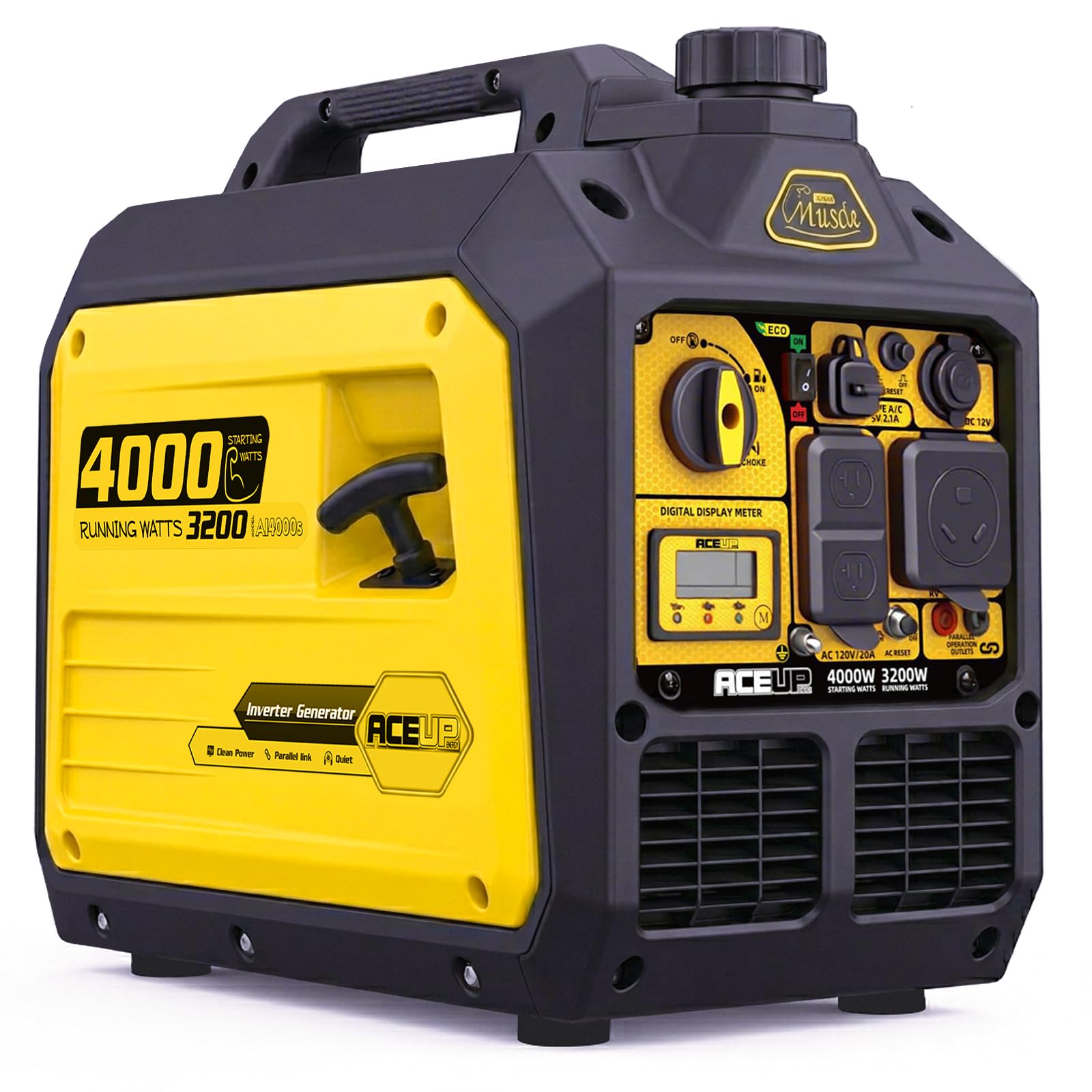
The Aceup Energy 4000W punches above its price point with a 1.5% THD rating—exceptionally clean power that’s safer for your phone, laptop, and TV than many generators costing twice as much. The 149cc engine delivers 4000 starting watts and 3200 rated watts, enough to run a 15,000 BTU RV air conditioner and lights simultaneously.
The intelligent gauge displays voltage, runtime, fuel level, hertz, and power output, so you always know what’s happening. A 5-in-1 knob combines fuel on/off, engine on/off, and choke into one control, simplifying startup and shutdown. At 60 dBA in eco mode, it’s quiet enough to hold a normal conversation nearby, and the parallel-ready design allows pairing with a second unit for up to 8000 peak watts.
Users consistently note the reliable first-pull starting and the informative display. Some wish the run time were longer than the 5 hours at half load, but the eco mode helps stretch the 1.32-gallon tank. The EPA compliance and 2-year limited warranty add confidence. For buyers who want clean power and modern features without stretching the budget, this Aceup model is a strong value play.
Why it’s great
- Ultra-clean 1.5% THD protects sensitive electronics
- Digital display shows fuel, runtime, and power output
- Parallel ready for doubling output
Good to know
- Only 5 hours runtime at half load on small tank
- Recoil start only, no electric option
7. WEN 3600W (56360i)

The WEN 56360i is a travel-friendly powerhouse at just 46 pounds. With 3600 surge watts and 2900 rated watts, it runs a 13,000 BTU RV air conditioner, furnace fan, lights, and a battery charger without breaking a sweat. The compact dimensions (17.9 x 11.6 x 19.7 inches) make it one of the easiest to store in tight RV compartments or truck beds.
The fuel shutoff feature is a smart engineering touch—when you turn the engine off, it automatically drains the carburetor, preventing stale fuel damage and extending the generator’s lifespan. The clean power output (less than 3% THD) means you can safely charge laptops, phones, and other sensitive devices. Outlets include two 120V receptacles, one TT-30R RV receptacle, a 12V DC port, and two USB ports.
Customer reviews highlight the quiet operation and reliable starting even in cold weather down to 14°F. Many users report 4–5 hours of runtime on a single gallon with moderate loads, and the single control switch simplifies operation for new users. The 3-year warranty is a welcome safety net. The only real limitation is the 2900 rated watts, which may struggle with larger well pumps or multiple heavy appliances simultaneously.
Why it’s great
- Ultra-light 46 pounds for easy transport
- Automatic fuel shutoff extends carburetor life
- Clean power output safe for sensitive electronics
Good to know
- 2900 rated watts may not power large appliances
- No electric start; recoil only
8. PowerSmart 3800W
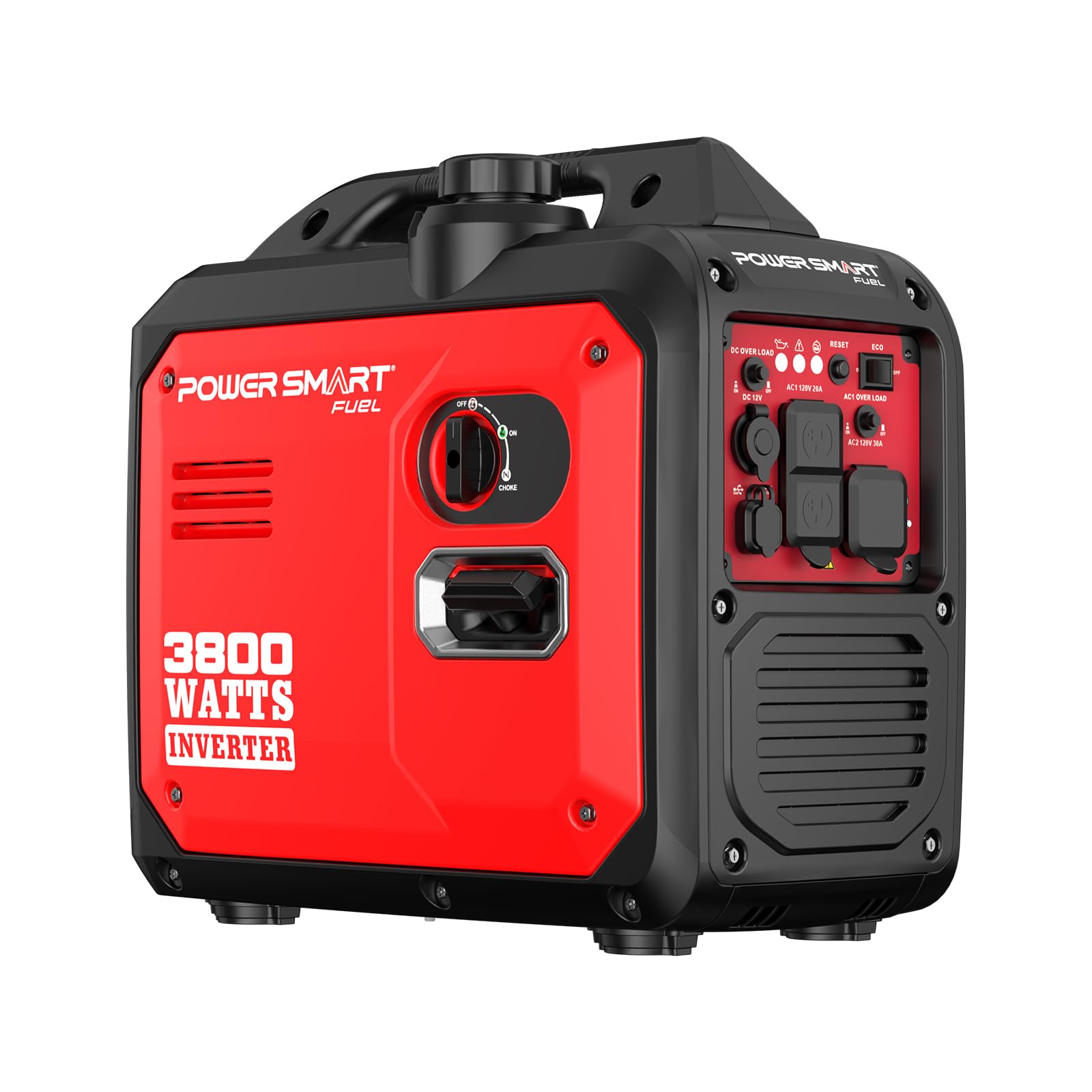
PowerSmart’s 3800-watt model is tuned for tranquility, operating at just 59 dBA from 23 feet—quieter than a normal conversation. That makes it a prime choice for campgrounds, RV parks, and any location where noise ordinances are strictly enforced. The 143cc 4-stroke OHV engine delivers 3800 starting watts and 3200 rated watts, enough to handle a 15,000 BTU RV air conditioner, lights, and a small microwave.
At 52 pounds, it’s remarkably portable for its output class, and the ergonomic handle makes lifting into a truck bed straightforward. The 1.19-gallon tank provides up to 4.5 hours of runtime at 50% load, with an economy mode that adjusts engine speed to match demand. Outlets include two 120V 26.7A AC outlets and a 5V USB port, plus parallel capability for linking two units together.
Users praise the easy first-pull starting and the well-labeled control panel. Some note that the run time is modest compared to larger-tank competitors, but the trade-off is a lighter, quieter unit that fits easily in smaller storage spaces. The EPA compliance and robust build quality add confidence. For campers who prioritize silence over marathon runtime, this PowerSmart delivers.
Why it’s great
- Very quiet 59 dBA operation
- Lightweight 52 pounds with ergonomic handle
- Parallel ready for double the output
Good to know
- Only 4.5 hours runtime at half load
- Recoil start only; no electric option
9. PowerSmart 3600W

The PowerSmart 3600W inverter generator proves that solid power doesn’t have to cost a fortune. Its 149cc engine delivers 3600 starting watts and 3200 rated watts, comfortably handling a 15,000 BTU RV air conditioner, refrigerator, and power tools simultaneously. The less-than-3% THD means you can safely plug in laptops, workstations, and smartphones without voltage spike concerns.
Weighing 50.7 pounds with an integrated carry handle, it’s one of the most portable options in the 3.5kW class. The 1.3-gallon tank provides up to 4.75 hours of runtime at 50% load, which is enough for an overnight camping trip or a short power outage. Parallel capability lets you connect two units for double the wattage, scaling up without buying a massive traditional generator.
Customers consistently highlight the first-pull starting and the quiet operation, noting it’s conversation-level rather than ear-plug loud. The compact footprint (21.9 x 13.4 x 19.5 inches) makes it easy to tuck away in an RV storage bay or garage corner. While the runtime is shorter than some competitors, the balance of power, weight, and price makes this an excellent entry-level or backup option for budget-conscious buyers.
Why it’s great
- Good 3200 rated watts at a budget-friendly price
- Lightweight and portable at 50.7 pounds
- Parallel ready for power expansion
Good to know
- Only 4.75 hours runtime at half load
- Recoil start only
10. AIVOLT 4300W
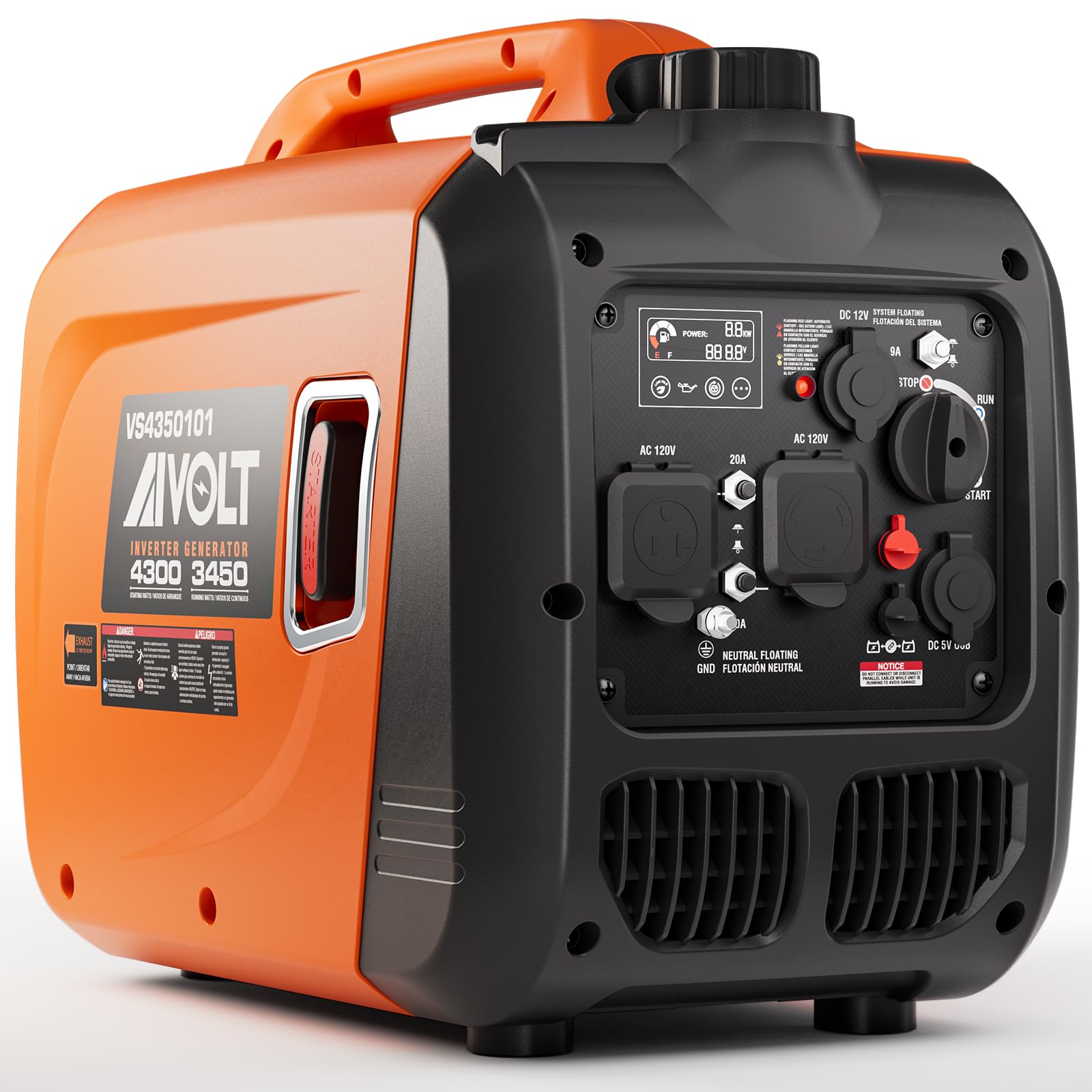
The AIVOLT 4300W brings premium features to a mid-range price point. Its 149cc copper-winding engine produces 4300 starting watts and 3450 running watts, making it one of the stronger options for running a food truck kitchen, a large RV, or a home backup setup. The electric start eliminates the arm-ache of recoil pulling, while the 5-in-1 LCD display tracks oil, fuel, and overloading warnings in real time.
At 60 dBA, it’s quiet enough for campsite use, and the eco switch improves fuel efficiency for up to 5.5 hours at 25% load. The control panel is versatile with a 120V 20A outlet, a 120V 30A locking outlet, a 12V DC outlet, and USB Type-A and Type-C ports. The CO Alert technology automatically shuts down the generator if carbon monoxide levels become unsafe, adding critical safety for enclosed or semi-enclosed use.
Users praise the build quality and the ability to run an air conditioner, microwave, and air fryer simultaneously without excessive strain. Some have reported challenges with customer service and parts availability, so checking the return policy is wise. The parallel-ready design allows pairing with another AIVOLT 4300W for up to 8600 peak watts. If you value electric start and high output, this AIVOLT is a compelling contender.
Why it’s great
- High 4300 surge watts with electric start
- CO Alert safety shutdown system
- USB Type-A and Type-C ports included
Good to know
- Customer service responsiveness is inconsistent
- Starter switch reliability reported as a weak point
11. Generac 2500W (GP2500i)

The Generac GP2500i is a lightweight, compact inverter generator designed for easy transport and quiet operation. Its 208cc engine delivers 2500 starting watts and 2000 rated watts, enough for lights, a fridge, a CPAP machine, or charging devices during a short outage or camping trip. The TruePower Technology ensures stable, clean power safe for sensitive electronics like laptops and TVs.
At 48 pounds with a built-in handle, it’s easy to lift and carry one-handed. The Economy Mode automatically adjusts engine speed to the load, reducing fuel consumption and noise. COsense Technology monitors carbon monoxide levels and shuts down the generator if they become dangerous. LED indicators for low oil, overload, and ready status simplify operation for new users.
Customer feedback is mixed—many praise the quiet operation and consistent power, while others report difficulty starting in cold weather and occasional reliability issues after several months. The gas cap must be loosened periodically to avoid carburetor starvation, which is a quirk to note. For occasional light use where portability and brand reputation matter most, the GP2500i is a respectable choice, though it’s best suited as a supplementary unit rather than a primary power source.
Why it’s great
- Compact and light at 48 pounds
- COsense safety shutdown technology
- Economy Mode for reduced fuel consumption
Good to know
- Can be hard to start in cold weather
- Some long-term reliability concerns reported
FAQ
Can I run a 15000 BTU RV air conditioner on a 3000 watt inverter generator?
What does parallel capability mean for inverter generators?
How often should I change the oil in my inverter generator?
Is it safe to run an inverter generator in the rain or snow?
What is the difference between an open frame and a closed frame inverter generator?
Final Thoughts: The Verdict
For most users, the best inverter generator winner is the Westinghouse 4000W iGen4000cv because it combines remote electric start, ultra-quiet 52 dBA operation, and a clear LED display without breaking the premium price barrier. If you want the gold standard for long-term reliability and resale value, grab the Honda EU2200i. And for extended off-grid stays where runtime is king, nothing beats the A-iPower 4600W with its 16-hour endurance.