
A ripped hand can sideline you for a week. Whether you’re grinding through pull-ups, muscle-ups, or toes-to-bar on a steel gymnastics bar, the friction between your palm and the knurling is a constant enemy. The right pair of gymnastics grips doesn’t just protect your skin — it changes how you connect with the equipment, allowing you to pull harder and longer without thinking about the damage you’re taking.
I’m Mohammad Maruf — the founder and writer behind Drink4Good. I’ve spent years analyzing the specific material compositions, strap geometries, and thickness profiles that separate a grip that works from one that causes more problems than it solves.
After combing through hundreds of customer experiences and technical specifications, I’ve narrowed the field to the five strongest contenders for the best gymnastics grips available right now, each suited to a different training style and hand shape.
How To Choose The Best Gymnastics Grips
The gymnastics grip market is split by material, finger-hole configuration, and strap design. Each variable directly affects how the grip performs under load, how long it lasts, and how it feels on the bar. Understanding these differences prevents you from buying a grip that slips, tears, or takes weeks to break in.
Leather vs Synthetic Materials
Genuine cowhide leather grips, like those from GymPaws and Meister, offer superior durability and a natural texture that molds to your hand over time. The trade-off is a two-to-three-week break-in period during which the leather is stiff. Synthetic options, including the isoprene polymer used by Element 26 and the vegan material from JerkFit, come ready to use out of the package and maintain consistent grip without chalk, but may not last as long under daily heavy use.
Finger Hole Configuration
Three-hole grips provide the most secure attachment to your fingers, but they limit wrist flexibility and can cause discomfort between the digits. Two-hole designs, exemplified by the JerkFit Fly Grips, leave the index finger free for better bar feel and mobility. No-hole or fingerless grips, like the LYFT-RX Carbon Grips, offer the widest range of motion and are ideal for athletes who prioritize quick transitions between movements during a workout.
Wrist Strap and Closure Type
Hook-and-loop Velcro straps allow rapid on-and-off adjustment, but a steel buckle system, as seen on the LYFT-RX, provides a more secure lock that won’t shift during dynamic movements. The length of the strap also matters — some grips include a custom trim line so you can cut the strap to match your wrist circumference exactly, eliminating bulk that can dig into the skin during wrist extension.
Quick Comparison
On smaller screens, swipe sideways to see the full table.
| Model | Category | Best For | Key Spec | Amazon |
|---|---|---|---|---|
| JerkFit Fly Grips | Vegan 2-Finger | High-volume pull-ups & CrossFit WODs | 2-finger design with free index finger | Amazon |
| LYFT-RX Carbon Fiber Grips | No-Hole Carbon | Quick transitions in functional fitness | 2.0mm carbon fiber sheet, ambidextrous | Amazon |
| Element 26 IsoGrip | Polymer No-Chalk | Grip without chalk, no break-in needed | Single-piece isoprene polymer material | Amazon |
| Meister Elite Leather Grips | Gel-Padded Leather | Heavy deadlifts and pulling exercises | 3-layer cowhide leather with gel padding | Amazon |
| GymPaws Leather Grips | Padded Leather Palm | Rowing and general weight lifting | Top-grain leather with neoprene backing | Amazon |
In‑Depth Reviews
1. JerkFit Fly Grips (2-Finger Vegan)

The JerkFit Fly Grips represent a thoughtful evolution in grip design. By using a two-finger layout that leaves the index finger completely free, these grips solve the flexibility problem that plagues traditional three-hole designs. The 1.5-inch wrist strap uses a buckle closure that stays secure even during explosive kipping movements. Athletes who attempted the Murph challenge — 100 pull-ups in a single session — reported zero hand rips, a testament to the full-palm coverage and the grip’s ability to stay in place without shifting.
Made from a 100% vegan material, these grips come fully broken in straight out of the package. There is no stiffness or awkward folding during the first use. The material gets better with repeated exposure to sweat and friction, developing a slightly tackier surface that enhances bar connection over time. The absence of a watch opening on the wristband is a minor inconvenience for athletes who train with a wrist-based heart rate monitor, but the overall comfort and durability outweigh that detail.
Sizing is straightforward — measure from the base of your palm to the top of your middle finger. Between sizes, sizing up is recommended for full coverage. The ambidextrous design means no fumbling with left and right hands, and the grips pack flat into a gym bag without taking up space. For CrossFit athletes and calisthenics practitioners who prioritize hand health across multiple high-rep movements, the Fly Grips deliver a compelling balance of protection and bar feel.
Why it’s great
- Free index finger allows natural wrist mobility and better bar control
- No break-in period required; ready to use immediately
- Vegan material develops improved tackiness with use over time
Good to know
- Wristband lacks a cutout for watches or heart rate monitors
- Buckle closure may take a session or two to adjust perfectly under load
2. LYFT-RX Carbon Fiber Hand Grips

The LYFT-RX Carbon Grips strip away everything unnecessary. A single sheet of 2.0mm carbon fiber material covers the palm with no finger holes, leaving your digits completely free for maximum tactile feedback. The velcro strap uses a steel buckle double-stitched to the outer face of the grip, so the hardware never touches your skin or presses against your wrist bone during wrist flexion. This design choice makes a real difference during movements like toes-to-bar where the wrist bends backward repeatedly.
The lack of finger holes means you can rotate the grip 360 degrees on the bar for quick transitions between pull-ups and deadlifts or burpees. The material stiffness allows the grip to stay folded against your palm when you flip it back, saving a second or two each transition — small savings that add up over a long workout. Ambidextrous by design, each grip fits either hand, and the four size options (S through XL) are based on hand length from the base of the palm to the desired finger coverage point.
Durability is a standout feature here. Users report daily training for months without tearing or fraying. The one-piece construction eliminates the weak points where stitching typically fails. The only minor issue reported is slight fraying near the fingertip edge on some units after extended use, though the grip remains fully functional. For athletes who value speed of movement and minimal interference between exercises, the LYFT-RX design delivers exactly that.
Why it’s great
- Fingerless design allows 360-degree rotation for fast transitions between exercises
- Steel buckle is positioned away from skin to prevent pressure points
- Carbon fiber sheet resists tearing under heavy daily use
Good to know
- No finger holes means less security on the bar for some users compared to hole-based grips
- Minor edge fraying reported on some units after months of frequent training
3. Element 26 IsoGrip

The Element 26 IsoGrip takes a different path from the leather and carbon fiber options by using a proprietary isoprene polymer that bonds to the bar without chalk. Users describe the connection as feeling like magnets on the knurling. This material eliminates the reliance on messy chalk, and in fact, applying chalk actually reduces its grip — a counterintuitive detail that new users need to know before the first session.
The grip design includes a custom-trim wrist strap with printed white lines that let you cut the strap to your exact wrist circumference. This removes the extra strap bulk that typically flaps around or digs into the skin. The single-piece construction means no seams to fail, and the material’s inherent flexibility allows the elastic finger loops to accommodate a range of finger lengths without causing pressure between the digits.
There is no break-in period at all. Users who have owned these for years report that the grip remains sticky even after hundreds of workouts. The only performance caveat is that the material can become slightly slippery when excessively sweaty, but a quick towel wipe restores the connection. Sizing may run slightly large according to the manufacturer’s chart, so measuring carefully and potentially sizing down is a smart move. For athletes training in varied environments where chalk is inconvenient or banned, the IsoGrip is a uniquely practical solution.
Why it’s great
- Isoprene polymer chemically bonds to the bar without chalk for a secure hold
- Custom-trim wrist strap eliminates bulky excess material
- Single-piece construction with no seams ensures long-term durability
Good to know
- Can become slippery with excessive sweat; requires a quick towel dry
- Sizing chart may run large — consider measuring twice or ordering one size down
4. Meister Elite Leather Weight Lifting Grips

The Meister Elite grips represent the traditional gold standard for heavy pulling. Constructed from three layers of genuine cowhide leather with gel padding integrated into the fingertips, these grips prioritize protection and durability above all else. The gel inserts lock your fingertips into position, reducing the effort required to maintain a closed grip during deadlifts, shrugs, and heavy rows. The thick neoprene wrist padding contours to the natural shape of the wrist, providing support that is noticeably beneficial for athletes managing wrist or elbow issues.
The rubberized grip sections at the bar contact points and fingertips add an extra layer of friction that prevents the grip from sliding on the bar even when the leather is new. This is a meaningful upgrade over standard leather grips that can feel slippery until broken in. The cowhide does develop a custom mold to your hand shape over time, but expect a break-in period of about a dozen training sessions before the leather fully softens.
Sizing is the one area that requires attention. The manufacturer’s sizing chart is not always accurate — users with a 6.75-inch wrist found they actually needed the L/XL instead of the suggested smaller option. The foam edge on the wrist can catch when rotating the hand on the bar, requiring a small technique adjustment. Despite these quirks, the leather itself holds up for well over a year of consistent training, and the gel padding remains effective for the life of the grip. For lifters who prioritize raw pulling power over quick transitions, the Meister Elite is a serious investment.
Why it’s great
- Three-layer cowhide leather and gel fingertip padding provide exceptional durability and lockdown
- Thick neoprene wrist support is beneficial for athletes with wrist or elbow strain
- Rubberized sections on contact points prevent slipping during new-leather break-in
Good to know
- Manufacturer sizing chart can be inaccurate; measure wrist circumference carefully
- Foam edge on the wrist may catch during bar rotation movements
5. GymPaws Real Leather Weight Lifting Pads
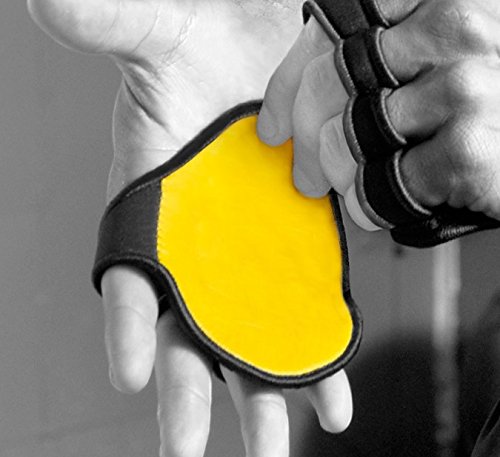
GymPaws occupies an interesting niche — these are not traditional gymnastics dowel grips but rather padded leather palm protectors with 12 finger loops designed for maximum breathability. The top-grain real leather palm section is slightly padded to provide a barrier against calluses and friction, while the military-grade neoprene backing and finger loops allow airflow that keeps sweat from pooling. The ambidextrous design and hook closure make them easy to take on and off between sets.
The unique value of GymPaws becomes apparent when you look beyond pure gymnastics bar work. Rowers on Concept2 ergometers are a vocal fan base — the extra cushioning prevents the hands from going numb during long sessions on the erg handle. Weightlifters also find them useful for general palm protection during deadlifts and presses. The durability is solid, with users reporting 8 to 10 months of six-days-per-week use before needing a replacement. A two-week break-in period is required as the leather adjusts to your hand shape, similar to the Meister Elite but shorter.
The design has some rough edges. The index finger loop can feel loose on smaller hands, and there is no padding in the thumb-to-palm area where calluses commonly form during pulling. The glossy gold color is a departure from the matte brown shown in product images, which may matter for aesthetics-minded athletes. For the budget-conscious athlete who wants a leather option that works across multiple activities including rowing, lifting, and light bar work, GymPaws delivers a lot of utility per dollar spent.
Why it’s great
- 12 finger loop design provides excellent breathability for sweaty hands
- Works effectively for rowing, weightlifting, and light gymnastics use
- Leather and neoprene construction lasts 8-10 months under daily training
Good to know
- Index finger loops may feel loose for smaller hand sizes
- Missing padding in the thumb-to-palm transition zone where many calluses form
FAQ
Do I need chalk with gymnastics grips made from synthetic materials?
How do I measure my hand correctly for gymnastics grip sizing?
How long should a pair of gymnastics grips last with regular training?
Final Thoughts: The Verdict
For most users, the best gymnastics grips winner is the JerkFit Fly Grips because the two-finger design with a free index finger provides the ideal balance of wrist mobility, full palm coverage, and immediate no-break-in usability for CrossFit and calisthenics athletes. If you want the raw, locked-down feel of genuine leather for heavy pulling, grab the Meister Elite Leather Grips. And for athletes who train in chalk-free environments or prioritize quick transitions between movements, the LYFT-RX Carbon Fiber Grips deliver a fingerless experience that nothing else matches.