
The right game can be a welcome anchor when your mind is sprinting in five directions at once. For those with ADHD, the challenge isn’t about avoiding stimulation—it’s about finding the *right* kind of stimulation that channels focus, provides clear feedback, and respects your brain’s natural rhythm. A game that’s too slow feels like a chore, while one that’s too chaotic can spike anxiety. The sweet spot lies in engaging mechanics, bite-sized challenges, and a satisfying loop that rewards short attention spans without overwhelming them.
I’m Mohammad Maruf — the founder and writer behind Drink4Good. My research focuses on how specific game mechanics, materials, and sensory inputs either support or drain cognitive energy, particularly for neurodivergent players.
After analyzing dozens of options across price tiers and play styles, I’ve curated a shortlist of the most effective and engaging games for adhd that balance strategy, sensory feedback, and quick rounds to keep you in the zone without burning out.
How To Choose The Best Games For ADHD
Not every game is built the same for the ADHD brain. The best options lean into fast feedback loops, manageable round times, and tactile or visual rewards that keep you engaged without demanding a 45-minute commitment. Here are the key factors to consider before picking one up.
Play Time and Pacing
Short rounds—ideally under 20 minutes—prevent the dreaded mid-game drift where focus evaporates. Look for games with quick setup and clear win conditions. Turn-based games with fast rounds or real-time elements work well because they respect your brain’s natural need for variety.
Sensory Engagement Level
The amount of visual, auditory, or tactile stimulation a game provides matters. Some ADHD brains need bright LED patterns and satisfying clicks to stay locked in, while others need a quieter, more tactile fidget experience to avoid overstimulation. Choose a game whose sensory profile matches your current environment and personal tolerance.
Social vs. Solo Play
Single-player games like handheld memory puzzles or shape-shifting cubes allow you to regulate your own pace without social pressure. Multiplayer games, on the other hand, can introduce a healthy dose of competitive dopamine—but only if the rules are simple and rounds are short. Consider when and with whom you’ll be playing.
Quick Comparison
On smaller screens, swipe sideways to see the full table.
| Model | Category | Best For | Key Spec | Amazon |
|---|---|---|---|---|
| BrainBolt Boost | Handheld Memory | Solo focus & memory training | 3 games in 1, variable speed | Amazon |
| Shashibo Sensory Cube | Fidget Transformer | Desk fidget & quiet focus | 100+ shapes, 36 magnets | Amazon |
| Tetris Board Game | Tabletop Strategy | Competitive puzzle play | 20-minute rounds, 2-4 players | Amazon |
| Drop Shot | Skill Game | Hand-eye coordination duels | 3-in-a-row drop mechanic | Amazon |
| Coping Skills Thumball | Therapy Tool | Group emotional regulation | 6-inch ball, 2-20 players | Amazon |
In‑Depth Reviews
1. Educational Insights BrainBolt Boost
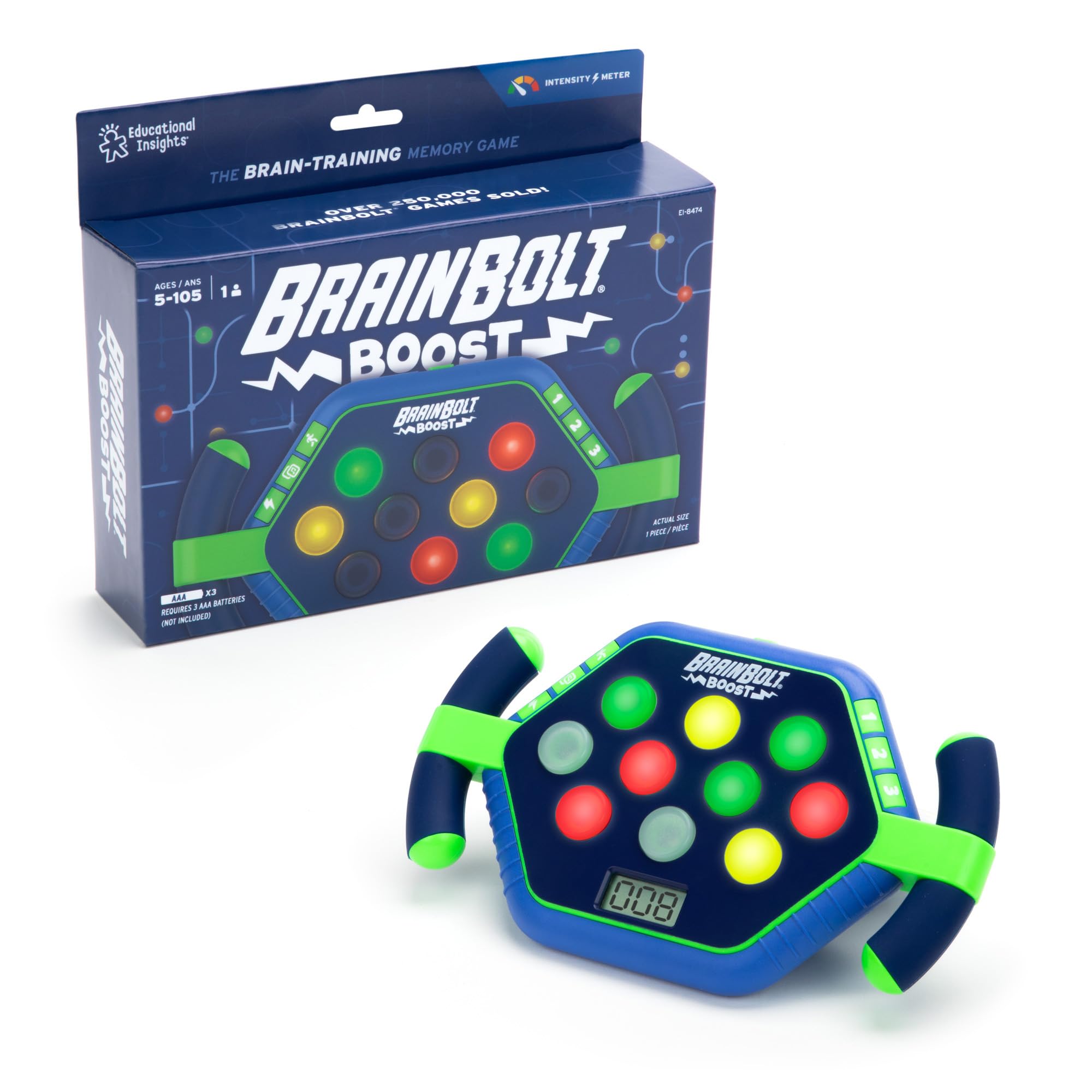
The BrainBolt Boost earns its top spot because it delivers three distinct memory challenges in one compact handheld unit, making it nearly impossible for an ADHD brain to get bored. The follow-the-light mode lets you adjust speed, so you can start slow and ramp up as your focus sharpens. The sound-matching game adds an auditory layer that engages a different part of your attention, while the classic reboot mode rewards pattern recognition. Its large buttons and hand grips are designed for quick, satisfying presses, and the LCD readout provides clear, immediate score feedback—critical for maintaining engagement.
At just 8 inches wide, this device travels easily in a bag or car console, making it a go-to for waiting rooms, road trips, or classroom breaks. Multiple customer reviews highlight that kids and adults alike find it addictive, which speaks to its ability to hold attention without screens. The variable difficulty means it scales with your skill level, preventing the frustration of a game that’s either too easy or impossibly hard. For anyone looking to boost reaction time and concentration in short bursts, this is the most versatile pick on the list.
Batteries are required, but the payoff in quiet, focused play time is significant. The sound-matching mode is a standout feature rarely found in handheld memory games, offering a fresh challenge when the visual patterns start to feel routine.
Why it’s great
- Three distinct game modes keep the brain guessing
- Variable speed settings accommodate different focus levels
- Compact and portable for on-the-go use
Good to know
- Requires batteries for operation
- Single-player only, not for group play
2. Shashibo Sensory Fidget Cube

The Shashibo cube is a masterclass in quiet, screen-free fidgeting. Its 36 rare earth magnets create a satisfying, clicky resistance as you fold and twist the cube into over 100 different geometric shapes. For an ADHD brain, the tactile feedback and the open-ended transformations provide a gentle cognitive workout that doesn’t require instructions or a time limit. You can pick it up during a meeting, a lecture, or a tense moment and let your hands work through the patterns while your mind settles. Customers repeatedly mention its ability to keep both children and adults engaged for extended periods, which is rare for a fidget toy.
The cube measures just 2.3 inches on each side, making it unobtrusive on a desk or in a pocket. It supports working memory indirectly—you’ll find yourself trying to remember the sequence of folds to recreate a specific shape. And because multiple cubes can connect magnetically, you can expand the challenge by linking them together for larger builds. While some users note that the seams can show wear after weeks of heavy use, the entertainment value and focus benefits for the price are substantial.
For those who need a silent fidget that doubles as a brain teaser, the Shashibo is ideal. Its resilience and the sheer variety of shapes make it a long-term companion rather than a disposable distraction.
Why it’s great
- Over 100 geometric transformations from a single cube
- Silent magnetic action won’t disturb a classroom or office
- Encourages spatial reasoning and working memory
Good to know
- Seams may show wear after extended use
- Requires patience to learn complex folds
3. Spin Master Games Tetris Board Game
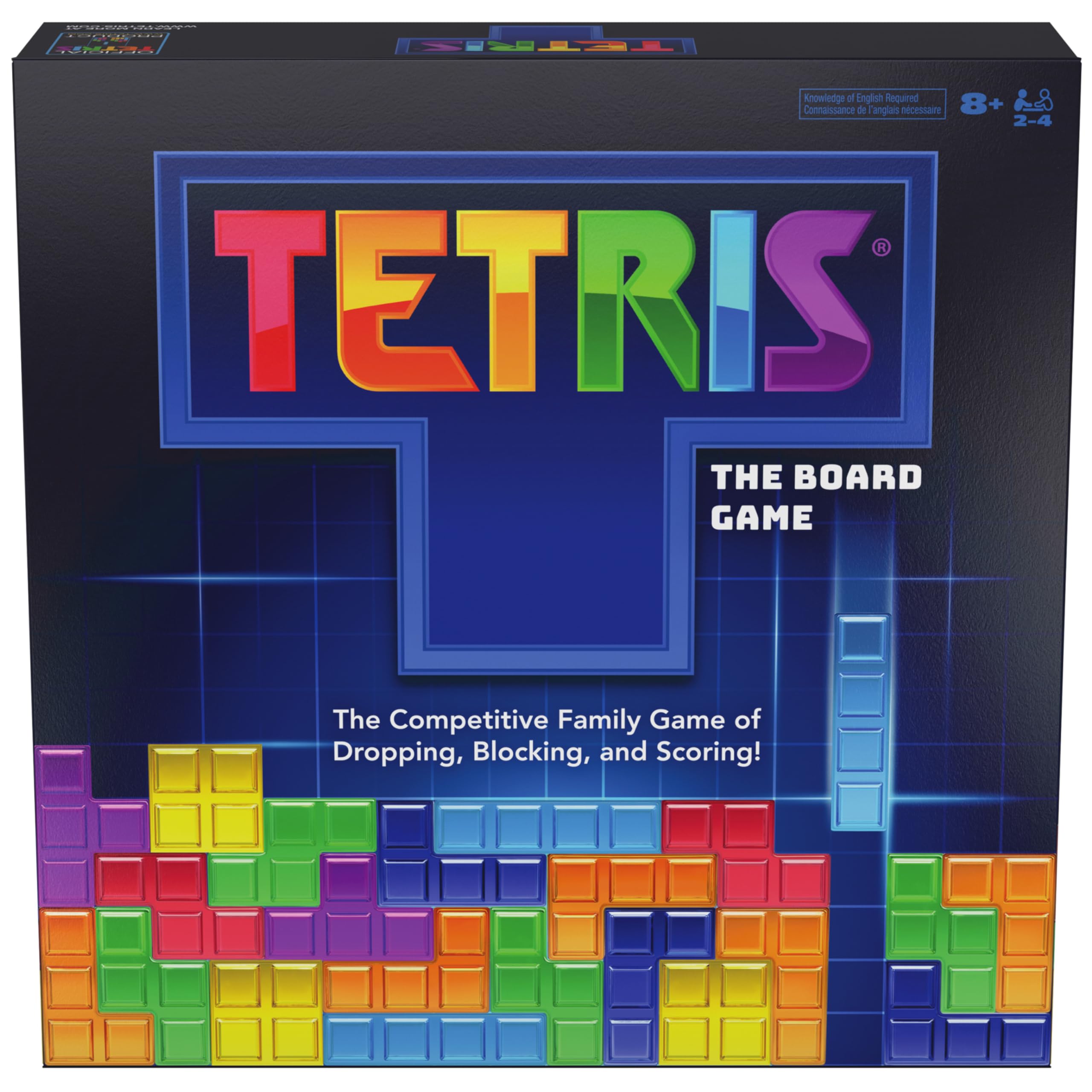
Translating the iconic digital puzzle into a physical tabletop experience was a smart move for ADHD players who need a tactile, social alternative to staring at a screen. The game keeps the core Tetris loop—dropping, rotating, and clearing lines—but adds a competitive twist: landing a Tetrimino on a black Garbage Drop Icon lets you send a blocking piece to an opponent’s grid. This direct interaction injects a healthy dose of dopamine through both the satisfaction of a clear line and the strategic sabotage of a rival. Rounds clock in at about 20 minutes, which is long enough to feel substantial but short enough to avoid fatigue.
The components are colorful and durable, and the semi-translucent Tetriminos mimic the look of the digital game beautifully. Setup is quick, with no batteries required. Customer feedback consistently praises the fast pace and the balance between luck and strategy, which keeps the game from feeling too punishing when your focus wavers. It supports 2 to 4 players, making it a solid group activity for family game night where everyone can engage at their own cognitive pace.
One minor note: the game requires a flat surface and some table space for each player’s grid, so it’s not a portable option. But for a dedicated game night or a rainy afternoon, this is pure, focused fun.
Why it’s great
- Classic puzzle mechanics in a physical, social format
- Fast 20-minute rounds prevent attention drift
- Direct player interaction keeps the dopamine flowing
Good to know
- Requires table space for multiple player grids
- Not a solo play option
4. Fat Brain Toys Drop Shot

Drop Shot is a deceptively simple skill game that demands focused hand-eye coordination without requiring complex rules or long setup times. Two players take turns dropping arrows into a hexagonal grid, aiming to land three in a straight row. The physical precision of the drop—gauging angle and distance—turns every turn into a mini-challenge that’s just challenging enough to hold attention. The game board is small (6 x 5 x 3 inches), so it fits easily on a coffee table or classroom desk, and each round wraps up quickly, making it easy to play multiple sessions without losing steam.
The satisfaction of a successful drop is immediate and physical, which is a key driver for ADHD engagement. Customer reviews highlight that while the game is simple to learn, mastering the drop trajectory takes real practice, giving it surprising depth. It’s best as a head-to-head game, which adds a social dynamic that can boost motivation. The included 12 arrows (six per player) are well-made and the hexagonal grid prevents the game from feeling too random.
Drop Shot is a great option for younger players (ages 6 and up) and for adults who need a quick, screen-free break. It’s not a solo game, but its fast pace and satisfying physical feedback make it a solid addition to any game collection.
Why it’s great
- Quick rounds maintain engagement without burnout
- Physical drop mechanic provides instant tactile feedback
- Encourages hand-eye coordination and spatial reasoning
Good to know
- Two-player only, no solo mode
- Requires a steady hand for precise drops
5. The Coping Skills Thumball

This Thumball takes a completely different approach to focus and regulation: it’s a soft, six-inch ball covered in prompts designed to spark conversation about coping with anxiety, ADHD, anger, stress, and other emotions. Players toss the ball to each other, and whatever prompt their thumb lands on becomes the topic they discuss or explore. The physical act of catching and reading creates a built-in pause that helps ground impulsive thoughts, while the group dynamic fosters a supportive environment where players can learn from each other’s experiences.
For an ADHD brain, this game works because it externalizes emotional processing—you don’t have to generate the topic from scratch; the ball does it for you. It’s a great tool for therapy sessions, school counseling, or family conversations where emotional regulation is a goal. Customer reviews from therapists and parents consistently praise its ability to get kids talking about difficult feelings in a non-threatening way. The ball is durable and easy to clean, and it works with groups of 2 to 20 players.
This isn’t a high-intensity game like the others on this list, but it serves a unique purpose: building emotional vocabulary and coping strategies in a playful, low-pressure format. For those who need help managing the emotional side of ADHD, this is an invaluable resource.
Why it’s great
- Externalizes emotional topics, reducing cognitive load
- Works for groups of 2 to 20 players
- Durable and easy to clean
Good to know
- Focuses on conversation, not fast-paced action
- May feel less engaging for those seeking high stimulation
FAQ
Can video games help with ADHD focus?
Are these games suitable for children with ADHD?
What makes a game good for ADHD versus a regular game?
Final Thoughts: The Verdict
For most users, the games for adhd winner is the BrainBolt Boost because it offers three distinct, speed-adjustable memory challenges in a portable format that suits both kids and adults. If you need a quiet fidget for a desk or classroom, grab the Shashibo Sensory Cube for its silent magnetic transformations. And for a competitive family game night that respects short attention spans, nothing beats the Tetris Board Game.