
Few parenting moments are more stressful than watching your baby writhe in pain from gas or arch their back after a feeding only to spit up what seems like the entire bottle. The constant guessing between “is this colic or is this reflux?” while running on three hours of sleep can push even the most composed parents to their wit’s end.
I’m Mohammad Maruf — the founder and writer behind Drink4Good. I’ve spent years examining infant nutrition science, dissecting formula ingredient panels, and cross-referencing clinical studies on hydrolyzed proteins, amino acid profiles, and prebiotic HMOs to give families the clearest path to a comfortable feeding routine.
Whether your baby has a confirmed cow’s milk protein allergy or simply gets fussy after every meal, finding the right best formula for gas and reflux can transform your entire household from survival mode into smooth, restful days.
How To Choose The Best Formula For Gas And Reflux
The core decision in this category hinges on understanding the protein structure in each formula. Gas and reflux often stem from the baby’s inability to break down large intact milk proteins. Formulas designed for these issues manipulate the protein source and particle size — the smaller the protein fragments, the less work the immature digestive system has to do.
Protein Breakdown Level
Standard milk-based formulas contain whole cow’s milk proteins that can trigger gas and reflux in sensitive infants. Partially hydrolyzed formulas chop those proteins into smaller pieces, easing digestion. Extensively hydrolyzed formulas break them down even further, while amino-acid based formulas eliminate whole proteins entirely, supplying nutrition as individual amino acids — the most hypoallergenic option available.
Carbohydrate and Fat Profile
Many sensitive-tummy formulas replace lactose with corn syrup solids or maltodextrin, since lactose intolerance can compound gas issues. Medium-chain triglycerides (MCTs) appear in advanced hypoallergenic lines, providing easier fat absorption for infants with malabsorption conditions. A formula that adjusts both the carb and fat sources often delivers the most dramatic reduction in reflux episodes.
Thickening Agent
Rice starch is the primary thickener in formulas designed for frequent spit-up. It increases the viscosity of the feed, making it harder for the stomach contents to travel back up the esophagus. While effective for visible reflux, rice starch does not address the root cause of gas — so combining a gentle protein base with a thickener can target both symptoms simultaneously.
Quick Comparison
On smaller screens, swipe sideways to see the full table.
| Model | Category | Best For | Key Spec | Amazon |
|---|---|---|---|---|
| Similac Alimentum Hypoallergenic | Hypoallergenic | Colic & CMPA relief | Extensively hydrolyzed protein | Amazon |
| Enfamil A.R. Spit-Up | Anti-Reflux | Frequent spit-up | Rice starch thickener | Amazon |
| EleCare Hypoallergenic | Amino Acid | Severe malabsorption | 100% free amino acids | Amazon |
| Alfamino Infant | Amino Acid | Multiple food allergies | MCTs for fat absorption | Amazon |
| Mama Bear Advantage Premium | Dual HMO | Gentle daily feeding | 2′-FL + LNnT HMOs | Amazon |
| Mama Bear Gentle | Gentle | Fussiness & crying | Partially hydrolyzed proteins | Amazon |
| Similac Soy Isomil | Soy-Based | Milk protein intolerance | Plant-based protein | Amazon |
In‑Depth Reviews
1. Similac Alimentum Hypoallergenic
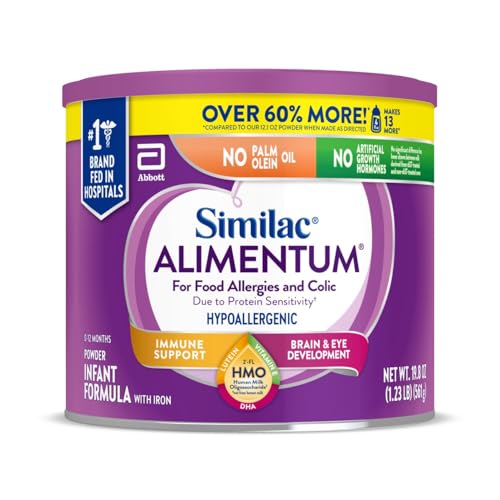
Similac Alimentum sits in a unique middle ground as an extensively hydrolyzed formula — its cow’s milk proteins are broken down into tiny fragments that virtually eliminate allergic reactions in most babies with cow’s milk protein allergy. The formula also incorporates 2′-FL HMO, an immune-nourishing prebiotic found in breast milk, making it the first hypoallergenic option to include this specific ingredient. Clinical data shows it begins reducing colic symptoms due to protein sensitivity within 24 hours in most infants.
The protein particle size here is significantly smaller than standard gentle or partially hydrolyzed formulas, which directly addresses the gas produced when the gut struggles to cleave intact proteins. Parents report that babies who previously arched their backs in pain after feeding — a classic reflux posture — settled noticeably within the first day. The 19.8-ounce value can provides a solid week’s supply for newborns, though the price point reflects the advanced protein processing.
One consistent observation from long-term users is that babies who tolerate Alimentum well often stay on it through their entire first year. The formula supports brain and eye development with DHA and ARA, and it works as a standalone nutrition source without requiring supplemental thickening agents. For babies whose gas and reflux stem specifically from protein sensitivity, this is the most direct solution available at this tier.
Why it’s great
- Starts reducing colic symptoms within 24 hours
- Contains 2′-FL HMO for immune support
- Extensively hydrolyzed proteins for CMPA babies
Good to know
- Has a distinct odor from the protein breakdown
- Premium pricing compared to standard formulas
2. Enfamil A.R. Infant Formula
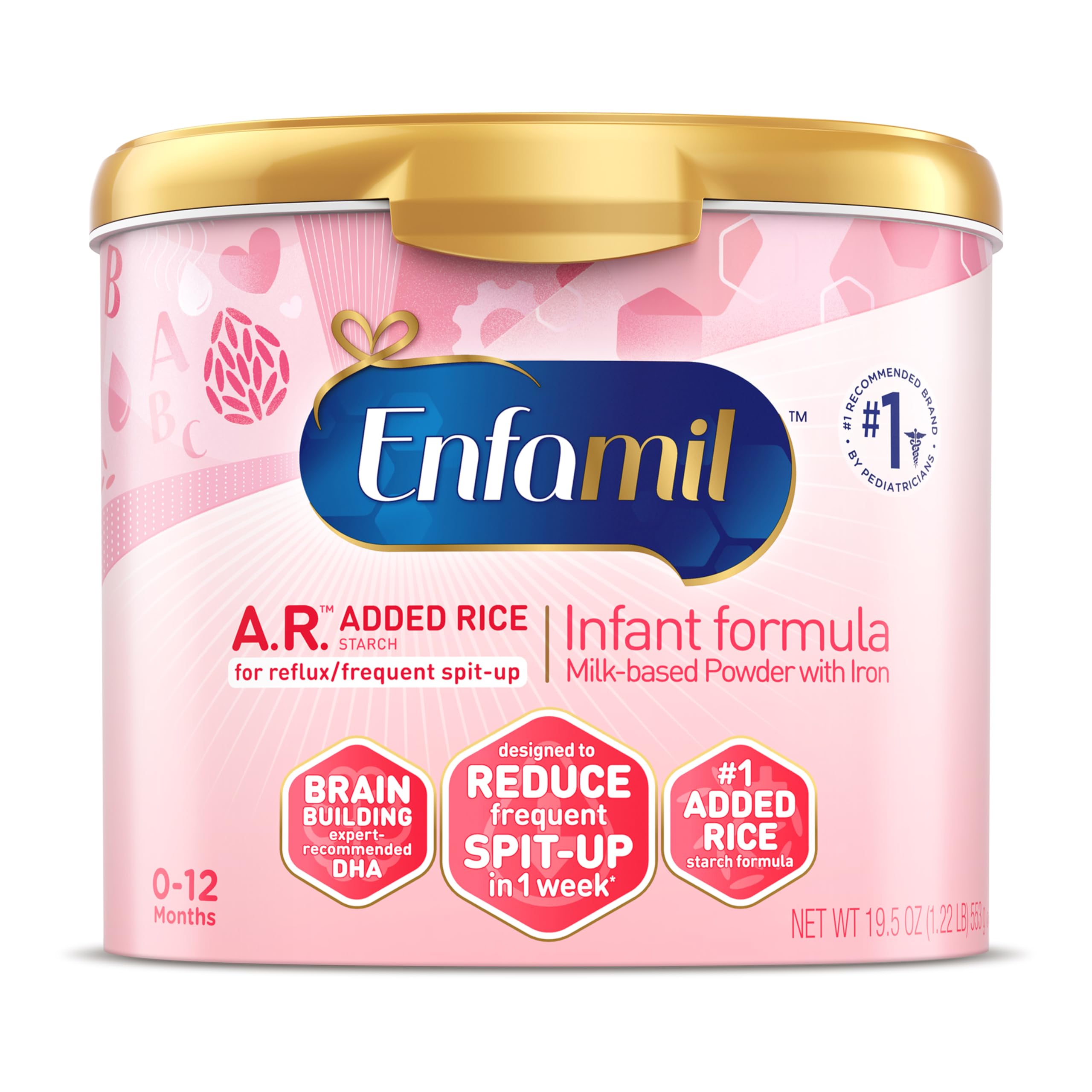
Enfamil A.R. uses a fundamentally different mechanism than the protein-focused formulas: rice starch. This added thickener increases the viscosity of the liquid feed, making it mechanically harder for stomach contents to push back up the esophagus. Clinical studies demonstrate a reduction in spit-up episodes by over 50% within one week, and the formula meets the reflux reduction guidelines established by the American Academy of Pediatrics.
The standard milk-protein base paired with rice starch means this formula is best suited for babies whose primary symptom is forceful or frequent spit-up rather than gassiness. The 19.5-ounce reusable tub includes a dual-prebiotic blend of galacto-oligosaccharides and polydextrose to support immune health, alongside the standard DHA for brain development. Parents transitioning from standard formulas often see an immediate behavioral change — less crying during burping and fewer soaked bibs.
One important distinction: this formula uses lactose as its primary carbohydrate, so it may not be ideal for infants with confirmed lactose intolerance. The rice starch also adds calories, which is beneficial for slow-gaining babies but may require adjusting feeding volumes. Enfamil A.R. is recommended for babies 3 months and older due to the thicker consistency and the developmental readiness needed to handle it.
Why it’s great
- Clinically proven to reduce spit-up by over 50% in one week
- Pediatrician-trusted brand for reflux management
- Dual prebiotic blend for immune support
Good to know
- Not suitable for infants under 3 months
- Contains lactose, so not for lactose-intolerant babies
3. EleCare Hypoallergenic Infant Formula
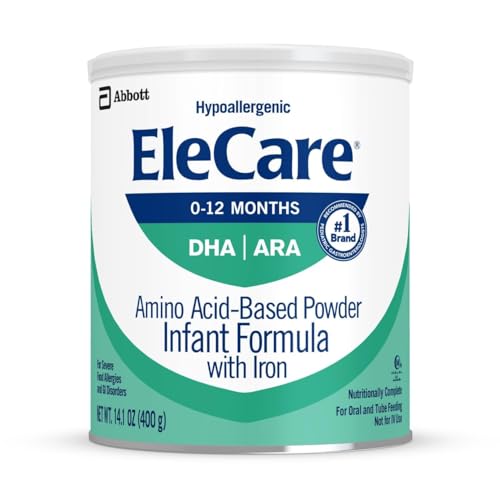
EleCare represents the highest tier of protein manipulation in infant formula: 100% free amino acids. There are no intact proteins or protein fragments — the nitrogen source is individual amino acids, which means the digestive system needs to do zero proteolytic work. This makes it the definitive option for infants with short bowel syndrome, severe malabsorption, or multiple concurrent food allergies that trigger both gas and reflux.
The formula also contains DHA and ARA for brain and eye development, and it is the #1 amino acid-based brand recommended by pediatric gastroenterologists. Parents moving their babies from extensively hydrolyzed formulas to EleCare often describe it as a “last resort that works” — the reduction in discomfort is dramatic because there is simply nothing left in the formula for the immune system to react against. The 14.1-ounce can is smaller than standard tubs, reflecting the medical-specialty positioning of this product.
Users consistently note that EleCare produces an unusual smell compared to standard formulas — a known side effect of the amino acid base — but babies typically accept the taste after a brief adjustment period. The formula also supports excellent calcium absorption thanks to a fat blend without palm olein oil. For infants whose gas and reflux have not responded to hydrolyzed options, EleCare is often the turning point in their feeding journey.
Why it’s great
- 100% free amino acids for zero allergenic potential
- Clinically shown to improve malabsorption symptoms
- #1 pediatric gastroenterologist-recommended amino acid brand
Good to know
- Distinct odor that may take getting used to
- Requires medical supervision for use
4. Alfamino Infant Formula
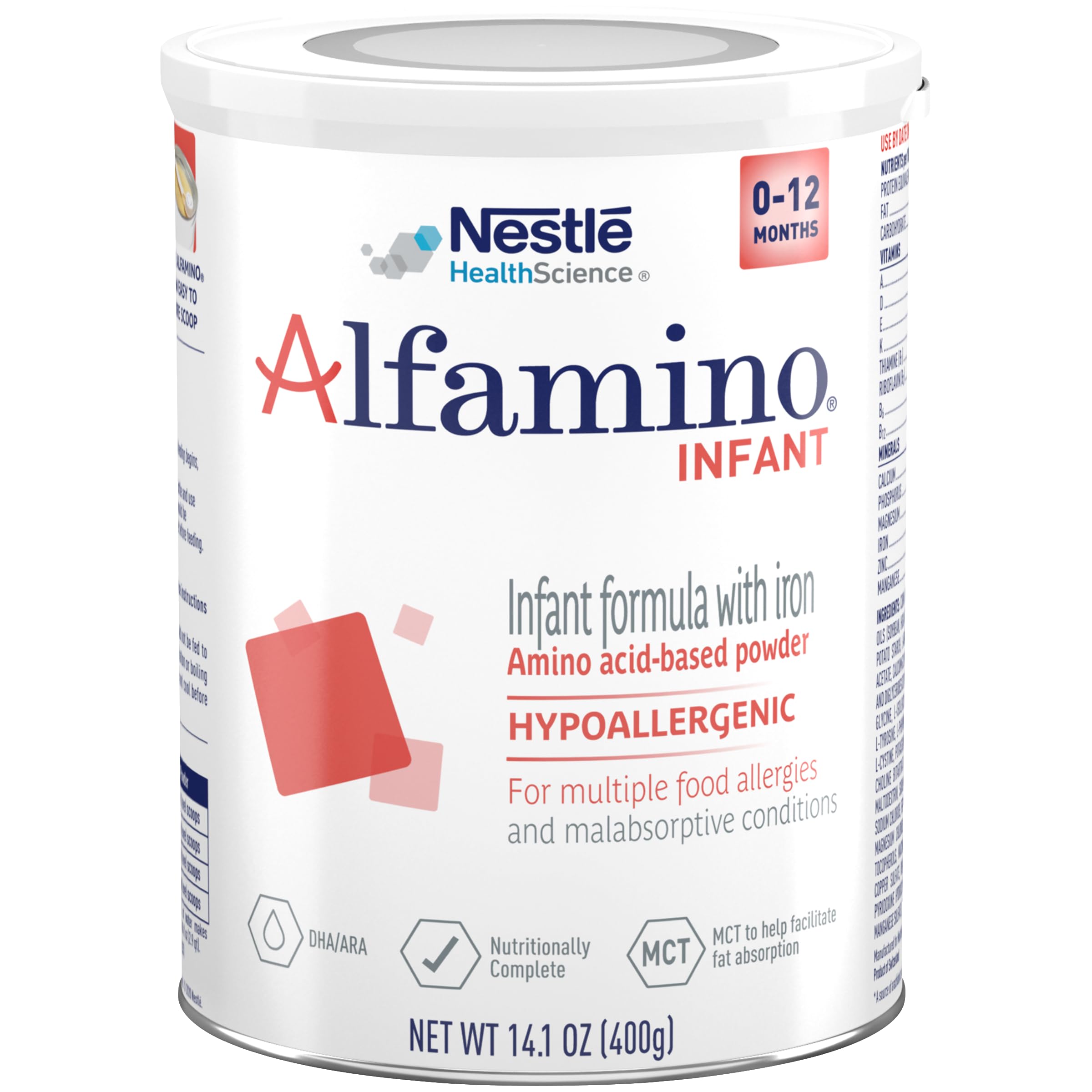
Alfamino is an amino-acid based formula from Nestlé Health Science designed for infants with multiple food allergies, including severe cow’s milk protein allergy. Like EleCare, it uses individual amino acids as the protein source, but it distinguishes itself with a unique fat blend containing medium-chain triglycerides (MCTs) to facilitate fat absorption — a critical feature for babies with malabsorption conditions that impair the digestion of standard long-chain fats.
Parents who have cycled through extensively hydrolyzed formulas and seen continued vomiting or bloody stools often find Alfamino to be the resolving solution. The formula is lactose-free and gluten-free, eliminating two additional potential triggers for gas and reflux. The 14.1-ounce can is comparable to other amino acid options in size, and the powder mixes well but requires vigorous shaking to achieve full dissolution.
Multiple user reports highlight that Alfamino resolved colic, reflux, and skin rashes in babies with confirmed dairy allergies. One notable observation is that Alfamino tends to produce green, less frequent stools — a normal response per pediatric guidance that indicates efficient absorption but can alarm new parents. The formula requires medical supervision and is often prescribed by pediatric gastroenterologists for the most challenging allergy cases.
Why it’s great
- MCTs facilitate fat absorption in malabsorption conditions
- Lactose-free and gluten-free formulation
- Effective for severe CMPA and related reflux
Good to know
- Must be used under medical supervision
- Green stools are normal but may surprise parents
5. Mama Bear Advantage Premium
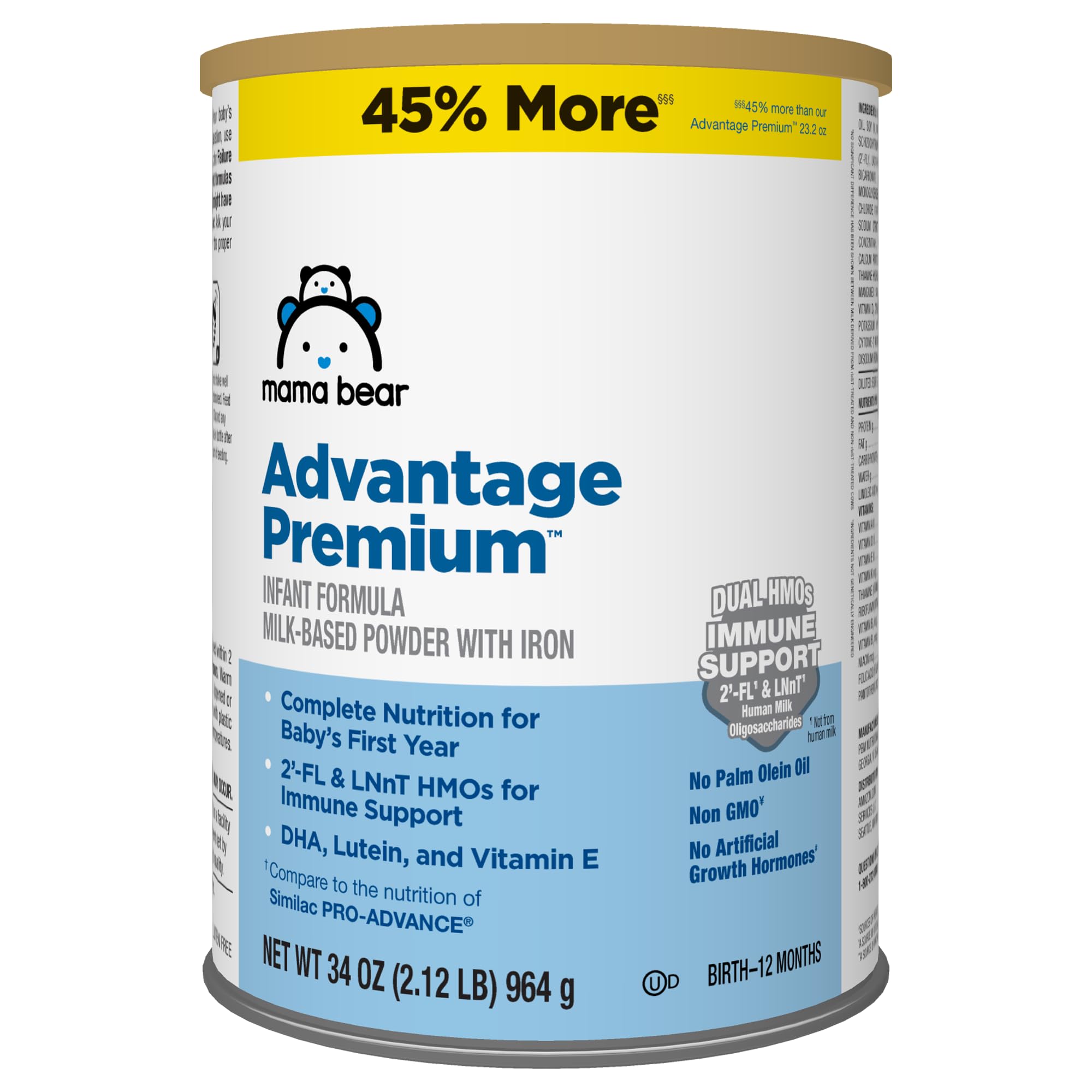
Mama Bear Advantage Premium is the only dual-HMO formula in this lineup, featuring both 2′-FL and LNnT — two of the most abundant immune-supporting prebiotics naturally found in breast milk. This formulation is designed to be closer to breast milk than single-HMO competitors by supporting the growth of beneficial bacteria in the digestive tract. For babies whose gas issues stem from an immature gut microbiome rather than protein allergy, this approach can be remarkably effective.
The standard milk-based protein structure means this is not a hypoallergenic formula — it works best for babies who do not have confirmed cow’s milk protein allergy but who show general fussiness and mild reflux after feeding. It includes DHA, lutein, vitamin E, and choline for brain and eye development, and it contains no palm olein oil or artificial growth hormones. The 34-ounce tub is larger than many competitors, delivering good value per feeding.
Parents transitioning from premium name brands like Similac Pro-Advance report seamless swaps with no digestive disruption. The formula is also SNAP-eligible and backed by Amazon’s quality standards. For families looking to reduce gas without moving to a therapeutic specialty formula, the bifidogenic effect of the dual HMOs in Mama Bear Advantage provides a practical, everyday solution.
Why it’s great
- Dual HMOs (2′-FL + LNnT) for gut health
- No palm olein oil for better calcium absorption
- Significant cost savings versus national brands
Good to know
- Standard milk-based protein, not for CMPA
- Relatively new formulation in market
6. Mama Bear Gentle Premium

Mama Bear Gentle uses partially hydrolyzed proteins — proteins that have been broken down into smaller fragments than standard milk-based formulas but not as extensively as Alimentum or other therapeutic options. This places it in the “gentle” category, designed to reduce fussiness, crying, and gas in babies without diagnosed allergies. The protein fragmentation level hits a sweet spot that many newborns handle well, reducing digestive effort without the cost or specialized positioning of hypoallergenic formulas.
The formula includes DHA and choline for brain development and a 2′-FL HMO for immune support. It compares nutritionally to Enfamil NEUROPRO Gentlease, which is a helpful benchmark for parents trying to identify a suitable analog. The 21.5-ounce container includes a built-in scoop holder on the lid, a small but appreciated design detail that keeps preparation clean.
User reports consistently mention that babies who refused name-brand gentle formulas accepted Mama Bear Gentle without protest. The powder mixes easily without clumps, and the price point makes it accessible for long-term use. For infants whose gas and mild reflux do not require medical-grade intervention but who need a gentler protein structure than standard formula provides, this is the most straightforward low-cost transition path.
Why it’s great
- Partially hydrolyzed proteins ease digestion naturally
- Compares to Enfamil Gentlease at lower cost
- Contains 2′-FL HMO for immune support
Good to know
- Not suitable for confirmed CMPA babies
- Shipping can be slow without Prime
7. Similac Soy Isomil

Similac Soy Isomil takes a completely different approach by eliminating cow’s milk protein entirely and using plant-based soy protein as the nitrogen source. Clinical data shows that soy-based formulas reduce fussiness and gas when switching from milk-based formulas, making this a viable option for babies whose digestive distress is linked to dairy protein intolerance rather than an inability to handle any protein source.
The 30.8-ounce value can in this pack of four delivers substantial volume for the price, and the formula includes DHA and lutein for eye health as well as prebiotics for digestive support. Notably, it contains no palm olein oil, which supports excellent calcium absorption. The soy protein also contains naturally occurring nucleotides that help support immune system development.
A crucial consideration with soy formulas is that some babies who are allergic to cow’s milk protein may also react to soy protein — cross-reactivity occurs in roughly 10-15 percent of CMPA infants. However, for babies with confirmed lactose intolerance or simple milk protein sensitivity without a full allergy, Soy Isomil often normalizes stool consistency and dramatically reduces gassiness within days. The bulk pack is ideal for families who have confirmed their baby tolerates soy well.
Why it’s great
- Plant-based protein eliminates dairy entirely
- Clinically shown to reduce fussiness and gas
- No palm olein oil for optimal calcium absorption
Good to know
- Soy-CMPA cross-reactivity exists in some babies
- Not suitable for infants with soy allergy
FAQ
What is the difference between partially hydrolyzed and extensively hydrolyzed formula?
Can I use a rice starch thickened formula if my baby also has severe gas?
How quickly should I see improvement after switching formulas for gas and reflux?
Final Thoughts: The Verdict
For most users, the best formula for gas and reflux winner is the Similac Alimentum Hypoallergenic because it combines extensively hydrolyzed proteins with 2′-FL HMO to address both the root protein sensitivity and the resulting gas and colic symptoms within 24 hours. If you want a rice starch thickener that targets frequent spit-up directly, grab the Enfamil A.R.. And for severe allergies or malabsorption where nothing else has worked, nothing beats the EleCare Hypoallergenic with its 100% free amino acid base.