
The wrong gym flooring turns every deadlift into a noise complaint and every burpee into a joint-jarring shock. Thin, brittle tiles buckle under a squat rack, while slippery surfaces turn a simple stretch into a fall hazard. A proper mat system absorbs the impact, protects your subfloor, and quiets the clang of dropped weights, transforming a cold garage or basement into a dedicated training space you actually want to use.
I’m Mohammad Maruf — the founder and writer behind Drink4Good. I dig into the material density, interlock geometry, and long-term durability of home fitness surfaces to separate lasting protection from disposable padding.
After sorting through the options on thickness, density, and real-world coverage, I have put together a streamlined list of the best gym flooring choices that balance joint comfort, equipment protection, and easy installation.
How To Choose The Best Gym Flooring
Choosing the right gym flooring comes down to matching the material and thickness to your specific workout style and the surface you’re covering. A heavy powerlifting setup demands different protection than a yoga and bodyweight space.
Material: EVA vs. Rubber vs. Foam
High-density EVA foam is the sweet spot for most home gyms. It offers excellent shock absorption for dropped weights and floor exercises, is lightweight, and is easy to cut and install. Rubber mats are more durable for very heavy commercial-grade loads but are much heavier and often have a strong odor. Basic foam tiles are cheaper but compress permanently under heavy equipment over time. Look for EVA foam that is free of PVC, phthalates, and lead for a safe indoor environment.
Thickness and Density
Half-inch (0.5”) thick tiles are the minimum for protecting concrete and providing decent joint cushioning for bodyweight work and light dumbbells. For Olympic lifts or heavy kettlebells, a 0.75” or 1” thick tile is better at absorbing impact and preventing damage to the subfloor. Density is just as critical — a high-density EVA tile feels firm and supportive underfoot, while a low-density tile feels spongy and will bottom out under a heavy squat rack.
Coverage and Interlock Design
Measure your space carefully and buy enough tiles to cover it without gaps. Standard 24×24 inch tiles with puzzle-piece edges snap together quickly. Make sure the interlocking mechanism is tight and won’t separate during dynamic movement. Some sets include border strips to finish the edges, which is a nice touch for a cleaner look and to prevent tripping.
Quick Comparison
On smaller screens, swipe sideways to see the full table.
| Model | Category | Best For | Key Spec | Amazon |
|---|---|---|---|---|
| BalanceFrom 1″ Tiles | Premium EVA | Thick joint protection | 1-inch thickness | Amazon |
| Our Modern Space 0.5″ Tiles | Premium EVA | Extra thick cushioning | 0.5-inch thickness | Amazon |
| beMaxx 0.4″ Tiles | Mid-Range EVA | Versatile coverage | BPA/Phthalate-Free | Amazon |
| GWT 0.4″ Tiles | Mid-Range EVA | Low odor, quick setup | Dual-sided design | Amazon |
| Marcy 0.5″ Tiles | Budget EVA | Entry-level value | 2-year warranty | Amazon |
In‑Depth Reviews
1. BalanceFrom 24×24 Interlocking Foam Exercise Tile Mat

The BalanceFrom tile mat is a serious performer because it offers a full 1-inch of high-density EVA foam, which is a rarity in the home gym market. This thickness provides genuine impact absorption for dropping deadlifts or setting down heavy kettlebells, protecting both your concrete subfloor and your knees during high-rep squats. The 72-square-foot coverage from a 12-tile set is enough for a dedicated lifting zone or a full-body circuit area.
The double-sided non-slip surface keeps the mat locked in place during burpees and sprawling drills, and the interlocking edges form a tight seam that stays connected even under heavy foot traffic. The tiles are moisture-resistant, meaning sweat spills wipe away without soaking in and causing odors. They are also lightweight enough to reposition if you want to change your gym layout later.
Some users note a temporary chemical smell upon opening the packaging, though this dissipates within a few days, especially with ventilation. The tiles also have a fringe that is part of the 24×24 size, so the actual coverage area ends up slightly smaller than the nominal measurement. This is a common manufacturing reality for exercise mats, but it is important to measure your space carefully and buy accordingly.
Why it’s great
- 1-inch thickness provides best-in-class impact protection for heavy weights
- Double-sided non-slip surface keeps the mat stable
- High-density EVA foam resists permanent compression
Good to know
- Initial chemical odor requires ventilation for a few days
- Fringe reduces usable area slightly from nominal size
2. Our Modern Space 0.5″ Extra Thick Floor Exercise Mat

The Our Modern Space tile mat offers a premium feel with its half-inch-thick, high-density EVA construction. The spec sheet states 0.5 inches, but real-world measurement shows a sturdy 0.4-inch tile that feels dense and supportive underfoot, not spongy. This firmness is ideal for supporting a treadmill, elliptical, or heavy weight rack without the mat bottoming out or compressing unevenly over time.
The set covers 48 square feet with its 12 tiles, which is a practical size for a dedicated home gym corner or a play area for kids. The interlocking edges are precise and snap together cleanly, requiring no adhesive or tape. The material is certified free of PVC, lead, phthalates, and BPA, making it a safe choice for indoor use, even in bedrooms or basements where air circulation is limited.
The surface has a slight texture that provides good grip for yoga, Pilates, and floor stretches, though it can slide a bit on very smooth hardwood floors without a rug liner underneath. It is easy to cut with a utility knife for fitting around posts or baseboards. The tiles have a minimal odor out of the box, which is a plus for those sensitive to strong chemical smells.
Why it’s great
- High-density construction resists compression under heavy equipment
- Free of PVC, phthalates, BPA, and lead for safe indoor use
- Precise interlocking edges for a clean, seamless look
Good to know
- May require a rug liner to prevent sliding on smooth hardwood
- Actual measured thickness is slightly less than advertised 0.5 inches
3. bemaxx Gym Mats Set 12 pcs EVA Interlocking Foam Floor Tiles
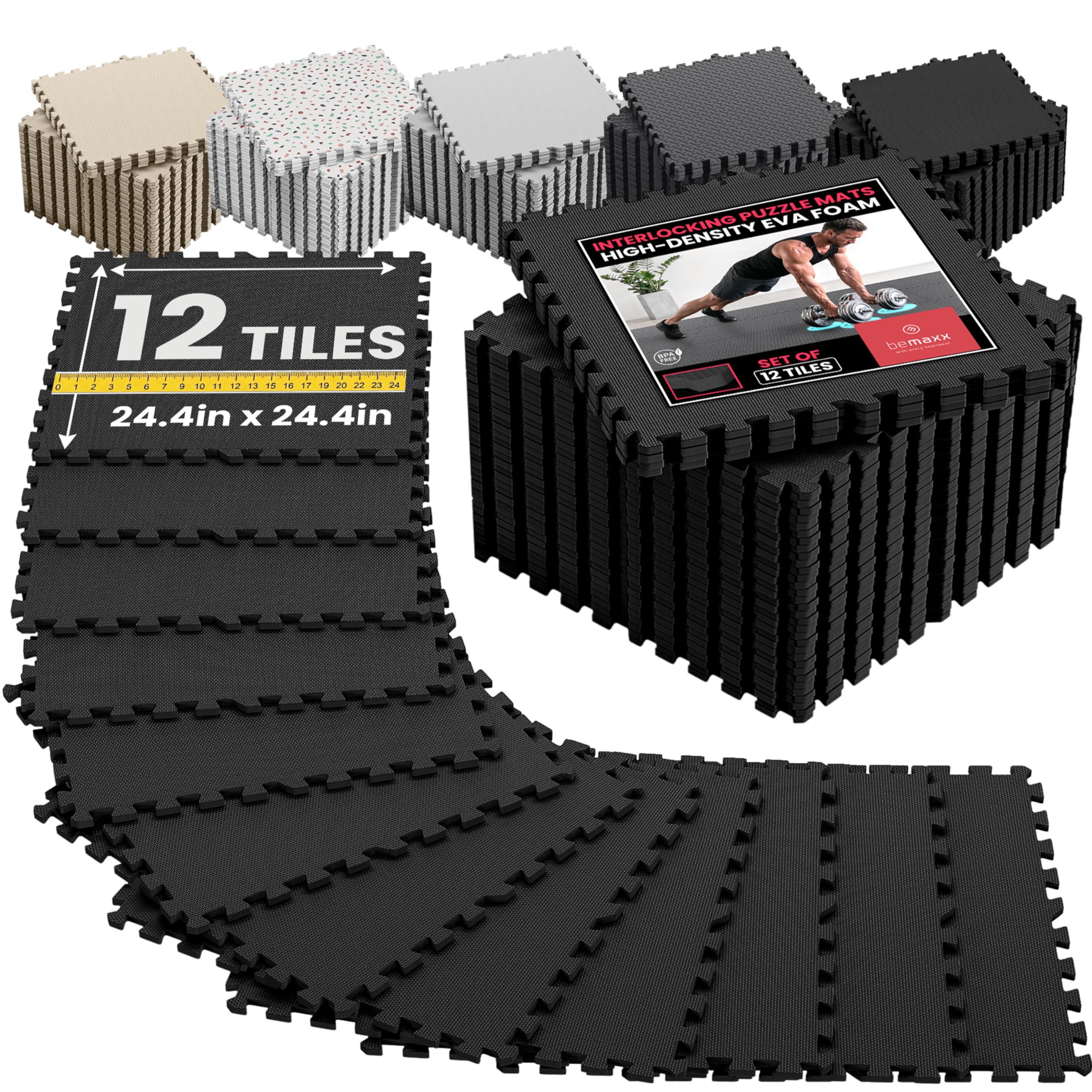
The bemaxx mat set stands out by including edge pieces for a finished border, which gives the installation a more polished, professional look and prevents the outer tiles from lifting during intense workouts. The 0.4-inch-thick EVA foam is highly compressed and feels firmer than standard foam mats, providing a stable base for stationary bikes, rowing machines, and bodyweight circuits without excessive bounce.
Each tile measures 24.4 inches square, offering a slightly larger footprint than the standard 24-inch tile, which means the 12-tile set covers a full 48 square feet with a bit more margin. The material is certified BPA-free, phthalate-free, and latex-free, so it is safe for families and pets. The surface is slip-resistant and easy to clean with just soap and water, and it has a geometric pattern that adds a subtle visual upgrade to a plain gym space.
The bemaxx mat is also praised for its excellent sound-dampening qualities, making it a strong option for multi-level homes or apartments where noise travels. The primary trade-off is the 0.4-inch thickness — it offers good joint protection for yoga and light cardio, but serious powerlifters dropping heavy barbells may want a thicker tile. The edge pieces are a nice addition, but they can take a bit of effort to align perfectly.
Why it’s great
- Includes edge strips for a finished, professional border
- Highly compressed foam resists indentation from exercise equipment
- Excellent sound-dampening for quieter workouts
Good to know
- 0.4-inch thickness is not ideal for heavy Olympic weight drops
- Edge pieces require careful alignment during installation
4. GWT Interlocking EVA Foam Floor Tiles 24×24 Inch
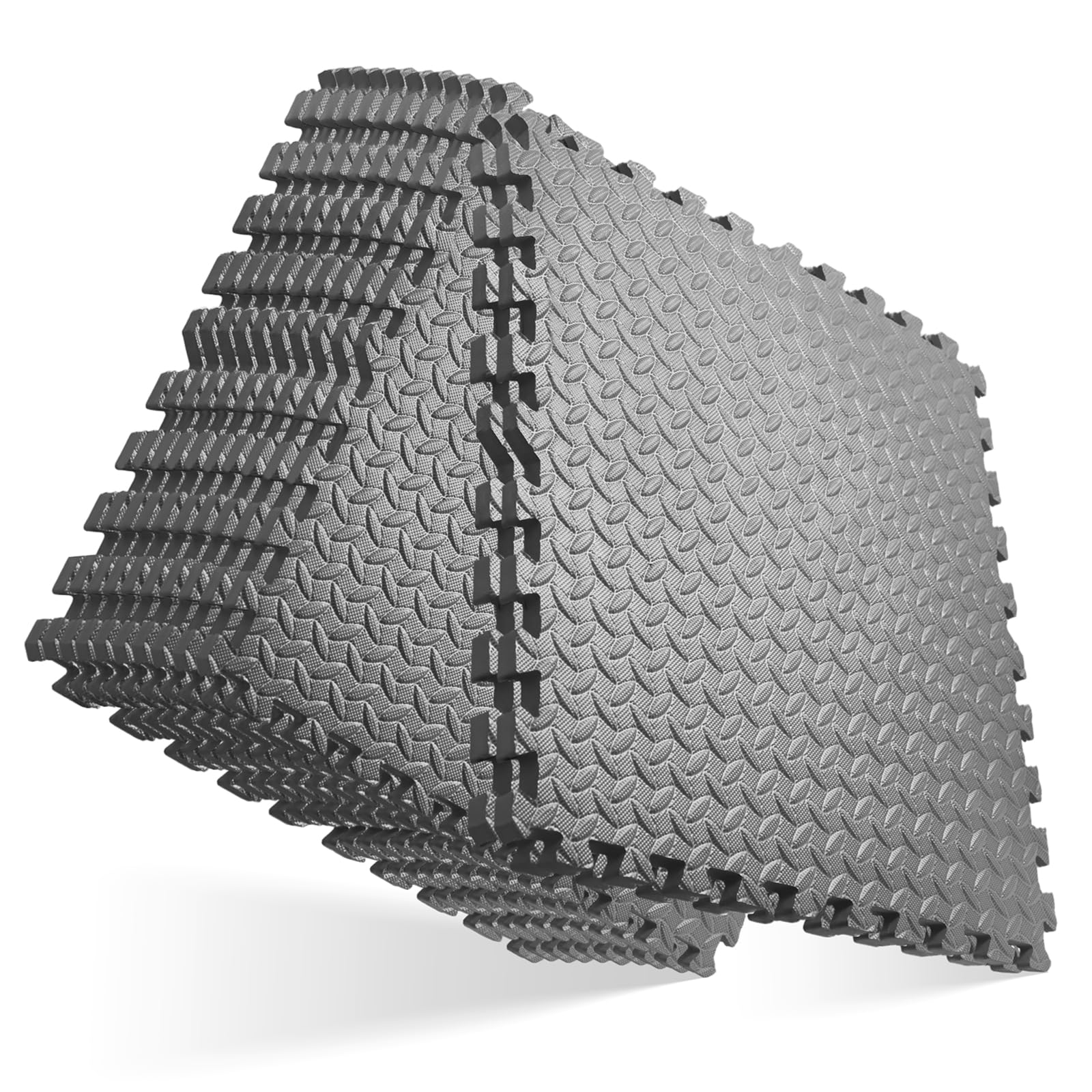
The GWT tile system is designed with a pragmatic dual-sided approach: a textured side for grip during workouts and a smooth side to protect your existing floor from scratches and scuffs. This reversible design is a thoughtful touch for renters or anyone setting up a gym in a finished room. The 0.4-inch thickness with high-density EVA foam provides a comfortable, supportive surface for floor work, stretching, and cardio.
The 12-tile pack covers 48 square feet, and the puzzle-edge interlocking system snaps together quickly without tools or adhesive. Users consistently highlight the extremely low odor right out of the box — these tiles can be installed and used immediately without the off-gassing period required by many other foam mats. The material is non-toxic and phthalate-free, making it suitable for use as a kids’ play area flooring as well.
The tiles work well on hardwood, tile, and concrete surfaces, and the smooth backing prevents grip marks or residue. The main limitation is the 0.4-inch thickness, which offers solid comfort for bodyweight training but is not adequate for absorbing the impact of heavy dropped weights. The snap-together connection is strong, though the tiles can separate slightly under very heavy lateral movement if not perfectly aligned.
Why it’s great
- Reversible design with textured and smooth sides for versatility
- Virtually no chemical odor, usable immediately out of the box
- Non-toxic and phthalate-free material safe for kids
Good to know
- 0.4-inch thickness is best for bodyweight, not heavy weight drops
- Tiles may shift slightly under intense lateral movement
5. Marcy EVA Foam Interlocking Flooring Mat High Density Non-Slip Tiles

The Marcy EVA foam mat is a classic entry point for home gym flooring, offering a half-inch thick tile that covers 24 square feet with its six-piece set. It is a smaller coverage option, making it ideal for a compact workout zone under a weight bench or a single piece of cardio equipment. The high-density EVA foam provides a non-slip, anti-fatigue surface that reduces joint strain during standing exercises and floor work.
The interlocking edges are easy to snap together, and the mat stays in place reasonably well on most surfaces. The material is free of PVC, lead, latex, silicone, and BPA, so it is safe for indoor use. A notable feature is the 2-year limited warranty from Marcy, which provides peace of mind for a budget-tier purchase. The mat is lightweight and easy to move or store when not in use.
Long-term durability is solid for the price point, with many users reporting three or more years of use under moderate equipment. The surface can be a bit slippery if placed on a very smooth floor, and the initial smell from the packaging takes a couple of days to fully dissipate. The smaller tile count means this is best for a dedicated spot rather than a full room coverage.
Why it’s great
- Proven long-term durability under moderate use
- Free of PVC, lead, BPA, latex, and phthalates
- Includes a 2-year limited warranty for peace of mind
Good to know
- 6-tile pack covers only 24 sq ft, best for small zones
- Initial chemical smell requires a few days of ventilation
FAQ
What is the minimum thickness I need for a home gym with a squat rack?
Can I put EVA foam tiles directly on concrete in a basement?
How do I clean my interlocking foam gym tiles?
Are EVA foam gym tiles safe for kids’ play areas?
Final Thoughts: The Verdict
For most users setting up a functional home gym, the best gym flooring winner is the BalanceFrom 1-inch thick tiles because its exceptional thickness and density provide the best impact protection for heavy equipment and floor exercises. If you need a premium, safe material for a multi-purpose space with minimal odor, grab the Our Modern Space 0.5-inch tiles. And for a budget-friendly, reliable starter mat with a warranty, nothing beats the Marcy EVA foam mat.