
Finding a game that genuinely holds an eight-year-old’s attention while delivering real cognitive payback is the sweet spot every parent hunts for. At this age, kids are past random chance games but not ready for complex adult strategy—they crave rules they can master, challenges that feel fair, and a clear path to winning. The best options blend quick-turn action with enough depth to keep kids coming back for more.
I’m Mohammad Maruf — the founder and writer behind Drink4Good. I’ve spent years analyzing the mechanics and educational value of board games, card games, and STEM puzzles designed for the 6-to-12 age bracket, breaking down what separates a one-time novelty from a regular rotation title.
After sorting through component quality, replayability, and the specific mental skills each title targets, I’ve narrowed the field to the very best games for 8 year olds that strike the perfect balance between fun and developmental benefit.
How To Choose The Best Games For 8 Year Olds
Eight-year-olds are at a developmental pivot where they can handle multi-step instructions and abstract reasoning, but they still need tangible, screen-free feedback. The right game will stretch their planning skills without leaning on reading-heavy rulebooks or requiring a parent to constantly referee. Focus on the length of play, the type of mental engagement, and the physical durability of the components.
Look for Variable Replay Value
A game with a static board and fixed setup often loses its appeal after a handful of rounds. Titles that include double-sided character sheets, randomized card decks, or progressive challenge cards ensure no two sessions feel the same. For an eight-year-old, novelty is the engine of sustained interest—if the puzzle or challenge changes each time, so does their motivation to play.
Prioritize Cooperative vs. Competitive Design
At this age, some kids thrive on head-to-head competition while others shut down if they fall behind. The best games for this group either offer a balanced competitive framework where luck and skill are in equal measure, or they embrace a cooperative or solo-play mode where the real opponent is the clock or the puzzle itself. Knowing your child’s temperament helps you pick the right dynamic.
Check the Estimated Playing Time
Games that run 15 to 20 minutes align perfectly with an eight-year-old’s attention span. Sessions that stretch past 45 minutes often lead to fatigue and disengagement, while games under 10 minutes can feel unsatisfying. Look for titles with a published playing time in the 15-30 minute sweet spot—long enough to feel meaningful, short enough to allow a rematch.
Quick Comparison
On smaller screens, swipe sideways to see the full table.
| Model | Category | Best For | Key Spec | Amazon |
|---|---|---|---|---|
| ThinkFun Gravity Maze | STEM Logic | Spatial reasoning & solo play | 60 challenge cards | Amazon |
| Spin Master Tetris Board Game | Strategy | Fast-paced head-to-head | 128 Tetrimino pieces | Amazon |
| Wordplay for Kids | Word Game | Vocabulary & spelling practice | 60-second timer per round | Amazon |
| Guess Who? NFL Edition | Deduction | Sports fans & quick deduction | 48 NFL players included | Amazon |
| Educational Insights Math Slam | Electronic Math | Arithmetic fluency on the go | 5 game modes | Amazon |
In‑Depth Reviews
1. ThinkFun Gravity Maze

With nine colorful towers and a game grid that accepts only precision-built paths, the 60 challenge cards ramp from beginner to expert, giving an eight-year-old room to grow without hitting a frustration wall. The instant feedback—the marble either reaches the target piece or it doesn’t—teaches trial-and-error reasoning without parental hand-holding.
What makes this a stand-out pick is its solo-play design. Eight-year-olds can work through puzzles independently, building confidence and persistence through repeated attempts. The spatial reasoning demanded here is more advanced than typical pattern-matching games, yet the hands-on building process keeps it tactile and enjoyable. Many families report that later puzzles stump adults too, turning it into a collaborative family challenge.
Component quality is noteworthy—the towers are thick plastic that snap together securely, and the marbles roll smoothly. It’s worth noting that some children under eight may struggle with the harder challenges, but for the target age group, this game delivers one of the highest return-on-engagement ratios available. It’s screen-free, self-correcting, and genuinely educational without feeling like homework.
Why it’s great
- Progressive difficulty across 60 challenge cards keeps play fresh for months
- Self-directed solo play builds independence and critical thinking
- High-quality tower pieces withstand frequent assembly and disassembly
Good to know
- Later puzzles may challenge younger or less patient players
- Requires flat, stable surface for consistent marble runs
2. Spin Master Games, Tetris: The Board Game
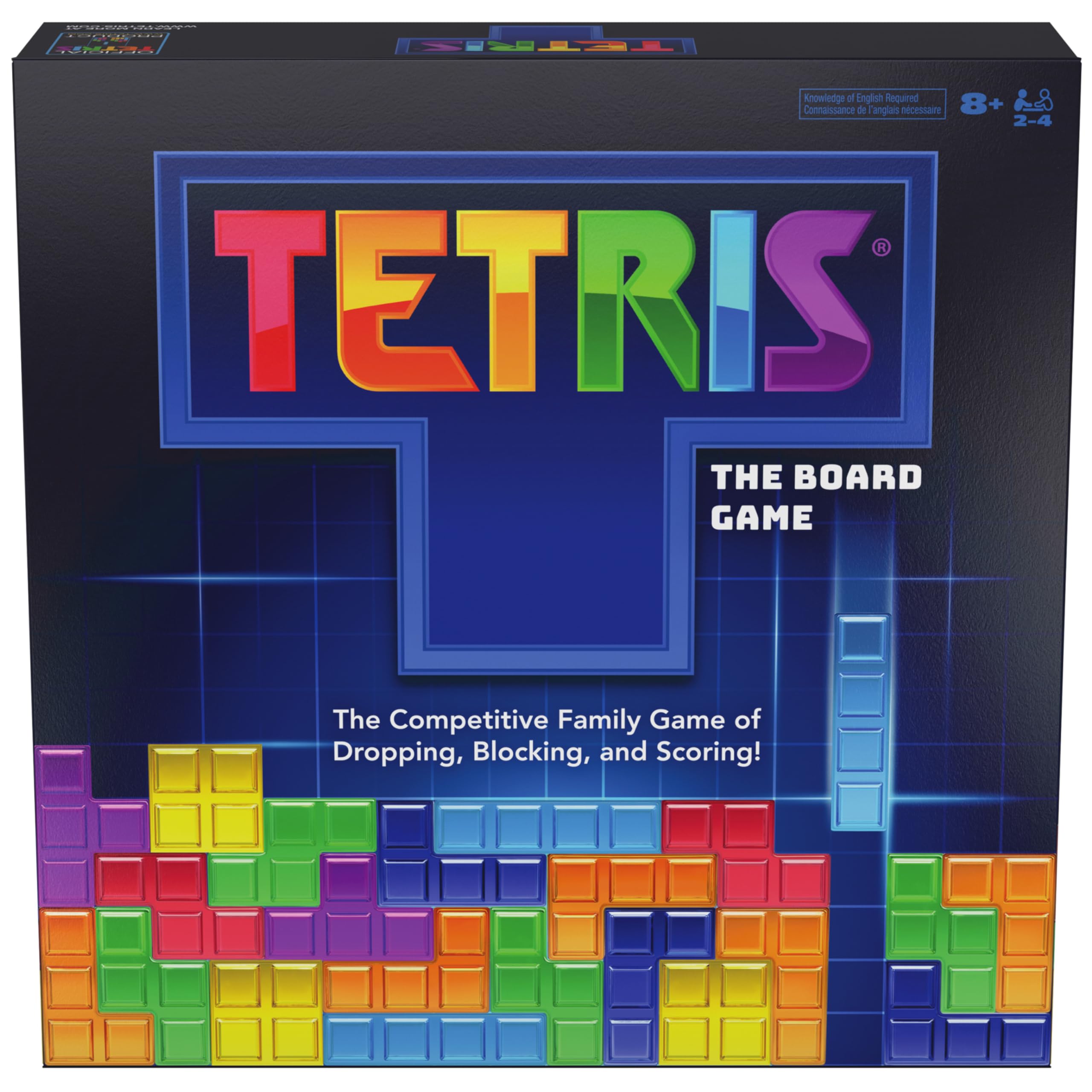
Bringing the iconic digital puzzle to a tabletop format is a clever feat, and Tetris: The Board Game nails it with semi-translucent Tetrimino pieces that feel lifted straight from the video game. The core loop of rotating, dropping, and clearing lines is faithfully preserved, but the competitive twist—the black Garbage Drop Icon that lets you dump a piece into an opponent’s grid—adds a layer of strategic blocking that elevates it beyond pure pattern-matching.
Setup is quick and the rules fit on a single page, which matters when you’re introducing it to an eight-year-old. The 20-minute playtime is ideal for this age group; you can run through two or three rounds in an evening without anyone losing focus. The area control mechanic means players must think not just about their own grid but also about when to disrupt an opponent’s progress, which introduces basic strategic thinking in a very tactile way.
Component-wise, the 128 Tetriminos and 8 Minos provide a generous pool of pieces, and the individual player grids keep the game organized. A few buyers noted bent pieces in their set, but the overall durability is solid for a game at this tier. It works well as a family game where an adult can play alongside a child without the adult having a built-in advantage, making it a rare find for multi-generational game night.
Why it’s great
- Innovative blocking mechanic adds real strategic depth
- Short 20-minute rounds encourage repeat play
- Familiar Tetris branding lowers the learning curve for digital natives
Good to know
- Some puzzle pieces may arrive slightly bent in packaging
- Requires table space for four individual grids and the gameboard
3. Wordplay for Kids

Wordplay for Kids takes a simple premise—spin two letters, roll a category, and race the timer—and turns it into a genuinely engaging language workout. The categories like ‘Food or Drink’, ‘Living Creature’, and ‘Boy’s or Girl’s Name’ are familiar enough for an eight-year-old to jump into immediately, yet the constraint of two specific letters forces them to stretch their verbal recall. The 60-second timer adds enough pressure to keep it exciting without being punishing.
What sets this apart from traditional spelling games is the scoring mechanic: longer words let you move further on the board, which subtly encourages kids to build multi-syllable vocabulary rather than just shouting the first word that comes to mind. The Teacher’s Choice Award recognition reflects real classroom utility—teachers have found it effective for reinforcing spelling patterns in a group setting. Parents report that children who initially disliked language arts began voluntarily playing daily.
The full-sized edition includes a larger board and better accessories compared to earlier travel versions, making it feel like a proper game night component. It’s worth noting that very advanced eight-year-olds may occasionally find the letter combinations easy, but the variety of categories and the timer keep the challenge fresh. For families looking to strengthen vocabulary in a low-pressure, high-fun format, this is a standout choice.
Why it’s great
- Encourages longer, more complex word formation for deeper vocabulary learning
- Award-winning design with proven classroom application
- Quick 30-minute game time fits easily into a school night
Good to know
- May feel repetitive for highly advanced readers without letter-pair variation
- Board movement relies on word length, which can slow scoring for struggling spellers
4. Guess Who? NFL Edition
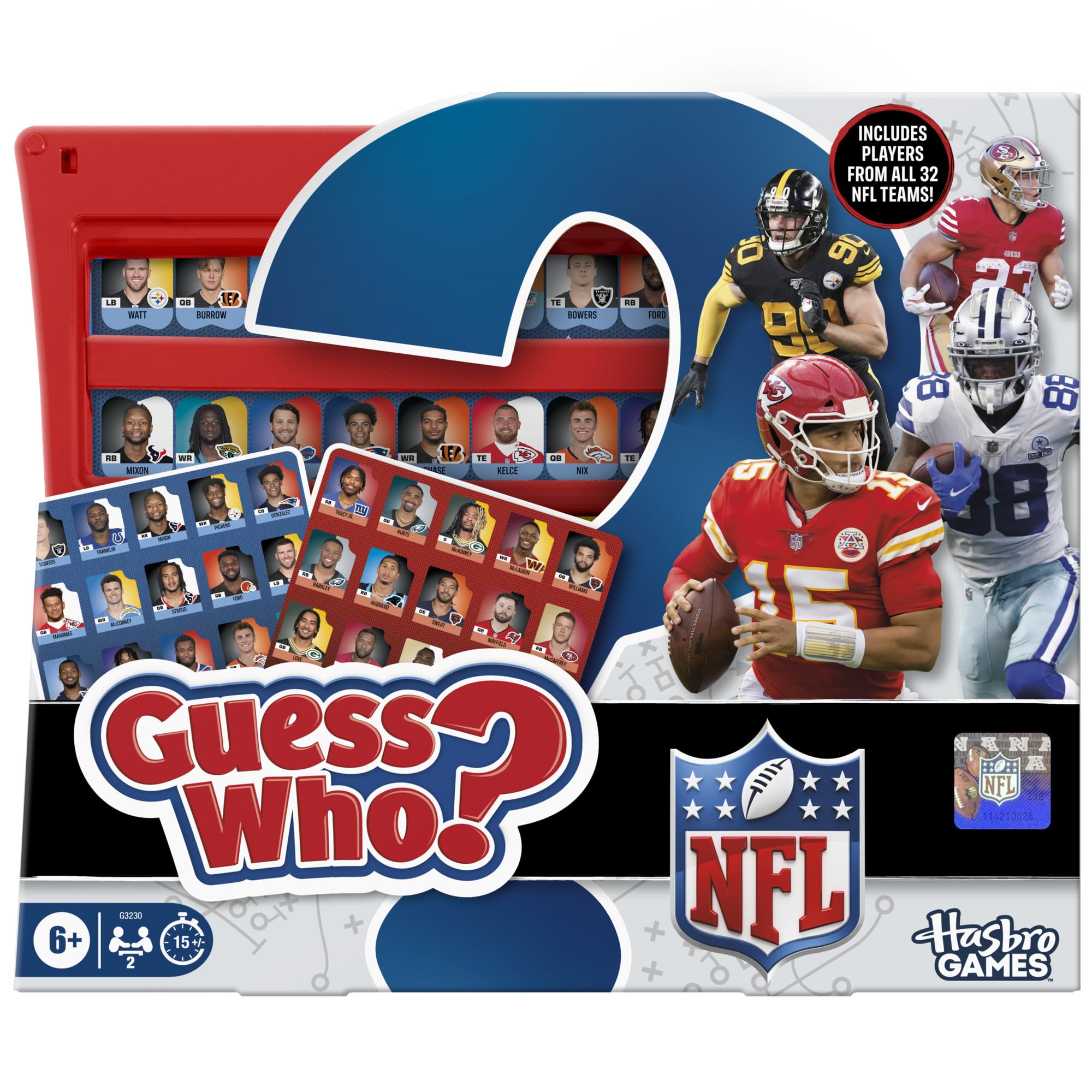
The classic Guess Who? formula gets a meaningful upgrade in this NFL edition, swapping generic faces for 48 real players from all 32 teams. The double-sided character sheets let players choose between AFC and NFC rosters, effectively giving you two game sets in one box. For an eight-year-old football fan, the appeal of asking “Is your player a quarterback?” or “Does your player have a beard?” is immediate—the sports context makes the deduction exercise feel less like a learning activity and more like a sports trivia challenge.
The game mechanics remain true to the original: each player picks a mystery person, then takes turns asking yes-or-no questions to narrow down the field. The NFL theme adds a layer of real-world knowledge—kids naturally learn jersey numbers, team affiliations, and player positions through repeated play. The 15-minute game time is perfect for quick sessions after school or before dinner, and the fold-up case design makes it genuinely portable for travel or road trips.
Build quality is what you’d expect from Hasbro—the plastic frames are sturdy, and the character sheets are printed on thick cardstock that resists creasing. The only limitation is the two-player cap, which means it’s a one-on-one activity rather than a group game. For families with a football-loving eight-year-old, this is an easy entry point that also sneaks in deductive reasoning and memory practice.
Why it’s great
- Real NFL rosters double the replay value by switching between AFC and NFC sheets
- Portable fold-up case design fits in a backpack for on-the-go play
- Teaches deductive reasoning through sports-themed yes-or-no questions
Good to know
- Limited to two players only, not suitable for larger groups
- Assumes basic familiarity with NFL players for full engagement
5. Educational Insights Math Slam

Math Slam is a rugged, handheld electronic game that turns arithmetic into a fast-paced reflex challenge. The LCD window displays a math problem, and players slam the correct answer from the five lit buttons on the dome. The built-in timer creates a sense of urgency that incentivizes quick mental calculation, and the five different game modes cover everything from basic addition and subtraction through to more complex algebra concepts, making it adaptable for kids from kindergarten through fifth grade.
What makes this device especially useful for an eight-year-old is its portability—it runs on three AA batteries and slips easily into a carry-on bag or backpack for restaurants, waiting rooms, or car rides. The audio feedback (which can be muted for quieter environments) adds an extra engagement layer, and the self-teaching design means a child can play independently without parental guidance. Several parents noted it helped their children improve math competition scores through regular daily use.
The plastic housing is drop-resistant enough to survive the occasional tumble off a table, and the button layout is intuitive even for younger players. The primary drawback is that the math content, while comprehensive, can become repetitive over very long sessions—it works best as a 10-15 minute daily drill rather than an hour-long activity. For parents looking to supplement school learning without screens, this is a focused and effective tool.
Why it’s great
- Five distinct game modes adapt from basic arithmetic to introductory algebra
- Compact and battery-powered for portable practice anywhere
- Audio and visual feedback makes math facts feel like an arcade challenge
Good to know
- Batteries not included; requires three AA cells
- Best used in short daily sessions to avoid repetition fatigue
FAQ
Is an eight-year-old ready for a competitive strategy game with blocking mechanics?
How many challenge cards or puzzles should a good STEM game include for this age group?
Can electronic games like Math Slam replace traditional math worksheets for an eight-year-old?
Final Thoughts: The Verdict
For most users, the games for 8 year olds winner is the ThinkFun Gravity Maze because it delivers unmatched solo replay value through 60 progressive challenges that build spatial reasoning without screens or batteries. If you want a fast-paced group experience that channels classic video game nostalgia, grab the Spin Master Tetris Board Game. And for strengthening vocabulary in a setting that feels more like a party than a lesson, nothing beats the Wordplay for Kids.