
That first black spot on your rose leaf signals a race against time — once the fungus spreads, defoliation weakens the plant and fewer blooms follow. Choosing the right treatment hinges on whether you prefer a systemic chemical that moves through the plant’s vascular system or a biological fungicide that builds long-term soil health.
I’m Mohammad Maruf — the founder and writer behind Drink4Good. I’ve spent years analyzing horticultural chemistry, comparing active ingredients like chlorothalonil, copper, and Bacillus amyloliquefaciens to find what actually suppresses Diplocarpon rosae without wrecking your garden’s ecosystem.
This guide breaks down five proven formulas so you can confidently pick the best fungicide for black spot on roses for your garden’s specific needs, whether that means drenching the root zone or spraying new growth weekly.
How To Choose The Best Fungicide For Black Spot On Roses
Black spot fungus (Diplocarpon rosae) thrives in warm, wet conditions and can strip a rose bush of its leaves within weeks. The most effective approach combines the right active ingredient with the correct application schedule — weekly preventative sprays work differently than systemic root drenches that protect for up to six weeks.
Systemic vs. Contact Fungicides
A systemic fungicide like those in Bonide’s Rose Rx line gets absorbed into the plant’s vascular system, protecting new growth from the inside out. Contact fungicides, including biological options, coat leaf surfaces and must be reapplied after rain. For established black spot, systemics provide more reliable long-term control.
Chemical vs. Biological Formulations
Traditional chemical fungicides often deliver faster knockout but can harm beneficial insects and pollinators if applied during bloom. Biological fungicides like Southern Ag’s Garden Friendly formula use beneficial bacteria (Bacillus amyloliquefaciens) that colonize roots and outcompete fungal pathogens — a safer approach for organic gardens.
Application Method Matters
Soil drenches eliminate drift and expose less of the plant to chemical residue, making them ideal for systemic products. Foliar sprays deliver quicker surface protection but require thorough coverage of both leaf surfaces — a common failure point is missing the undersides where black spot spores germinate.
Quick Comparison
On smaller screens, swipe sideways to see the full table.
| Model | Category | Best For | Key Spec | Amazon |
|---|---|---|---|---|
| Bonide Rose Rx Systemic Drench | Systemic | Long-term prevention | 6-week systemic protection | Amazon |
| Bonide Revitalize Biofungicide | Biological | Organic disease control | Triggered immune response | Amazon |
| Earth’s Ally Disease Control | Natural | Safe for pets and kids | Citric acid active ingredient | Amazon |
| Southern Ag Biological Fungicide | Biological | Soil health improvement | Bacillus amyloliquefaciens | Amazon |
| Great Big Roses Compost Extract | Fertilizer Booster | Root-zone enrichment | Humic acids + trace minerals | Amazon |
In‑Depth Reviews
1. Bonide Rose Rx Systemic Drench, 32 oz Concentrate

The Bonide Rose Rx Systemic Drench delivers a two-way punch against both insects and fungal diseases, including black spot, powdery mildew, and rust. Because it moves through the plant’s vascular system, you simply mix the concentrate with water and pour it around the base — no spraying, no drift, no missed leaf surfaces. A single application protects for six weeks, which saves hours of weekly maintenance during peak growing season.
Users with twenty or more rose bushes report consistent results year after year, noting that their plants rebounded from severe black spot infections within a month. The formula also targets Japanese beetles and aphids, so it doubles as a general rose care product. You do need to avoid applying while bees are foraging, since the systemic chemical can travel into blooms and harm pollinators.
The 32-ounce concentrate treats a large garden — one bottle goes a long way for a mid-sized bed. Customers highlight that dosing is straightforward: less concentrated solution is often more effective, so follow the label rather than over-application.
Why it’s great
- Works systemically for six full weeks
- No spraying required — just pour around the base
- Controls insects and fungal disease simultaneously
Good to know
- Harmful to bees during bloom
- Not suitable for organic gardening
- Requires careful dosing to avoid over-application
2. Bonide Revitalize Biofungicide, 16 oz Concentrate

Bonide Revitalize uses a biological mode of action that triggers the rose’s own immune response, making it a smart choice for organic gardeners who want to avoid synthetic chemicals. The concentrate mixes with water for either a foliar spray or soil drench, so you can adapt the application to your garden’s layout. It’s approved for use up to the day of harvest, which matters if your rose bushes sit near vegetables or herbs.
Gardeners report that Revitalize performs well against black spot and powdery mildew, though it requires more consistent reapplication than chemical systemics. One user noted a strong smell during mixing — that’s the beneficial bacteria at work. The product also works on houseplants and ornamentals, making it a versatile addition to the garden shed.
The 16-ounce bottle concentrates delivers cost savings compared to ready-to-use sprays, especially for multi-plant treatments. It’s a slower but safer approach to fungal management, ideal for those with children or pets who play near the rose bed.
Why it’s great
- OMRI-listed for organic gardening
- Can be used until day of harvest
- Safe for indoor and outdoor plants
Good to know
- Noticeable odor during mixing
- Needs more frequent reapplication
- Smaller concentrate bottle than competitors
3. Earth’s Ally Disease Control Concentrate, 32 oz
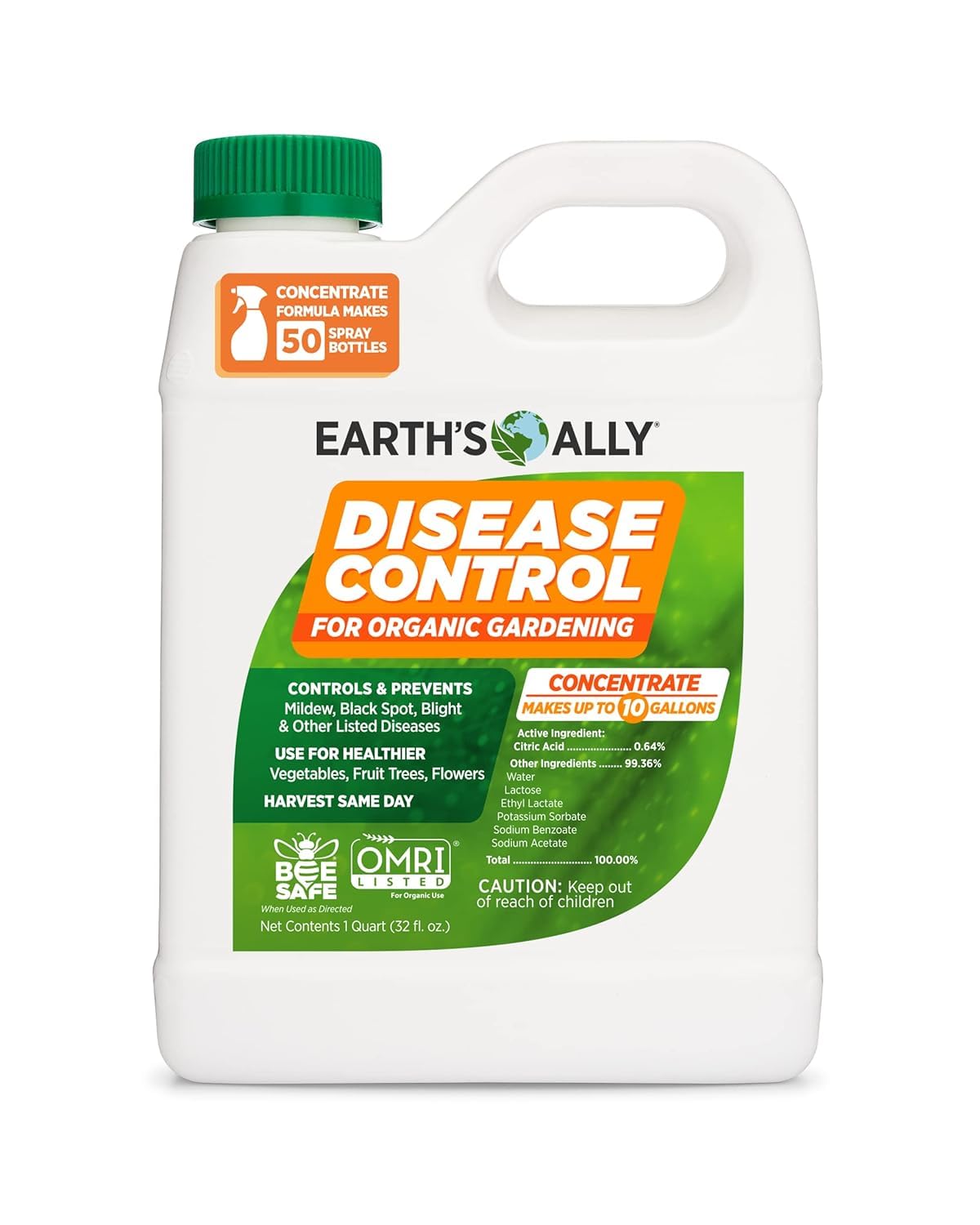
Earth’s Ally Disease Control relies on citric acid as its active ingredient, which makes it one of the safest options for households with curious pets and small children. The OMRI-listed formula is environmentally responsible and leaves no harsh chemical residues on leaves or soil. One 32-ounce concentrate makes ten gallons of ready-to-use solution, offering good coverage for a mid-sized rose garden.
Users who applied it weekly on rose bushes saw a noticeable improvement in leaf health within two weeks — new growth stayed clean and glossy. The formula covers black spot, powdery mildew, and blight in one product. Because it’s a contact fungicide, thorough coverage of both leaf surfaces is critical, especially the undersides where black spot spores first appear.
A drawback is that citric acid-based formulas break down faster in direct sunlight, so evening application is recommended for maximum effectiveness. You may need to reapply after heavy rain, which is common for contact fungicides.
Why it’s great
- Citric acid active — safe for people and pets
- Concentrate makes 10 gallons
- OMRI-listed for organic gardening
Good to know
- Contact fungicide requires thorough coverage
- Degrades faster in strong sunlight
- May need reapplication after rain
4. Southern Ag Garden Friendly Biological Fungicide, 16 oz

Southern Ag’s biological fungicide uses Bacillus amyloliquefaciens, a beneficial bacterium that colonizes roots and outcompetes pathogenic fungi. It works both as a soil drench and a foliar spray, which makes it flexible for treating black spot on roses while improving overall soil health. Gardeners in high-humidity climates like the Florida panhandle have reported that regular applications kept fungal pressure manageable even during wet summers.
The 16-ounce bottle is concentrated — users note that the same active ingredient appears in premium hydroponic products but at a much lower concentration, so this offers significant value. It also acts as a mild biofertilizer, darkening leaves and encouraging root development. Multiple applications are necessary for full control, especially during active black spot outbreaks.
A common complaint is the bottle opening design, which can dribble during measurement. But the product’s effectiveness and non-toxic profile make it a favorite among organic growers who want to avoid chemical residues near edible crops.
Why it’s great
- Colonizes roots for long-term protection
- Highly concentrated — more potent than similar products
- Non-toxic for the whole family
Good to know
- Requires regular reapplication
- Bottle design makes measuring messy
- Best as preventative, not curative
5. Great Big Roses Soil and Rose Booster, 32 oz Concentrate
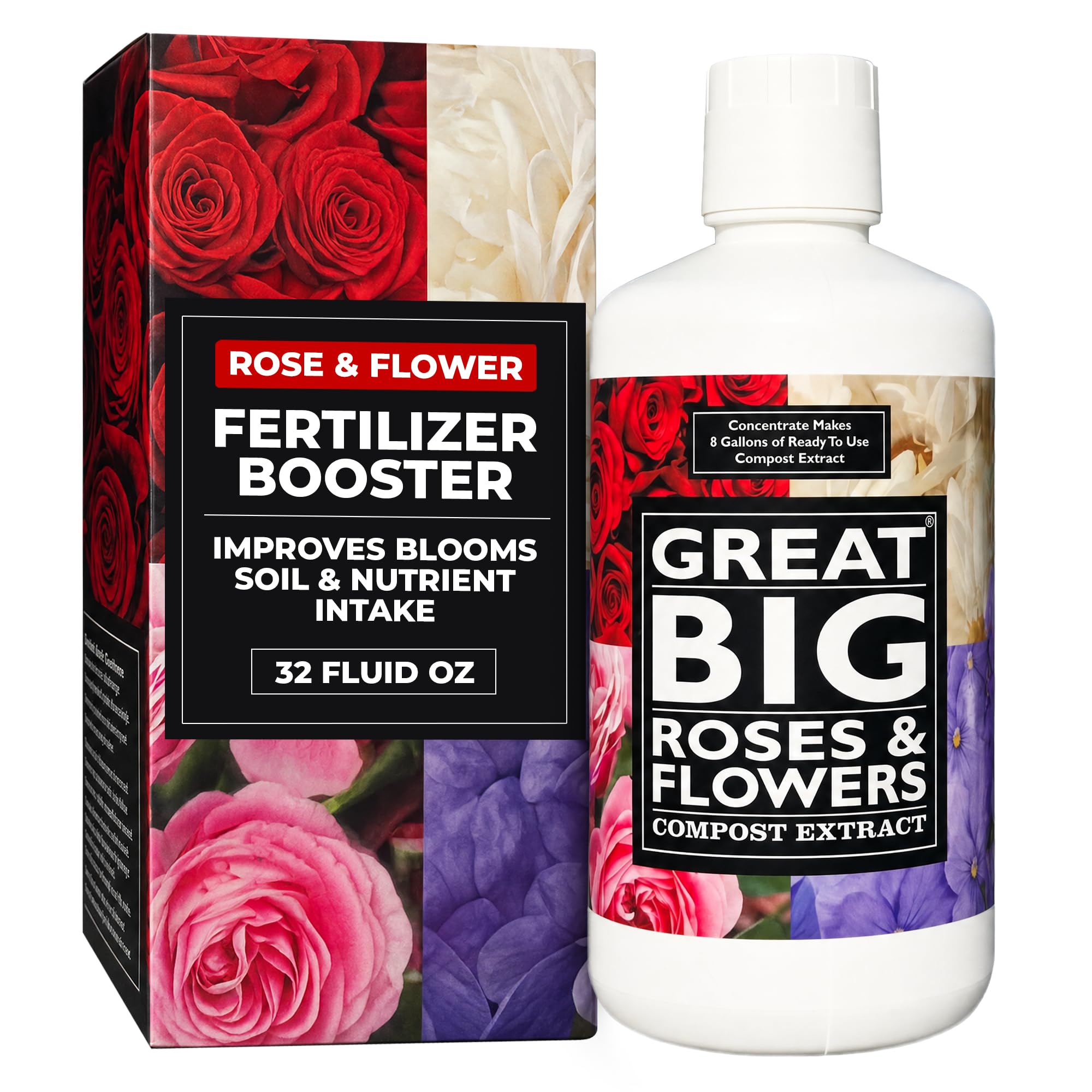
Great Big Roses is not a fungicide in the traditional sense — it’s a compost extract and soil booster that strengthens the rose bush from the roots up, making it less susceptible to black spot infection. The formula delivers humic acids, over 70 chelated trace minerals, and seaweed right into the root zone. Healthier roses naturally resist fungal pressure, and this product gives them the nutritional foundation to do so.
Users consistently report more buds, deeper green leaves, and earlier blooms after just a few applications. One gardener with iceberg roses noted an explosion of flowers that had never occurred in years of standard fertilizer use. The concentrate works best when used alongside a fungicide program — it’s a complementary tool, not a standalone black spot cure.
The 32-ounce jug makes about eight gallons of solution. Several users mention that the wide-mouth jug makes pouring messy, so a funnel is recommended. For roses weakened by repeated black spot defoliation, this booster helps them bounce back faster between treatments.
Why it’s great
- Strengthens plants from root zone upward
- Contains humic acids and chelated minerals
- Produces noticeable bloom improvement
Good to know
- Not a fungicide — needs fungicide companion
- Wide-mouth jug causes spills
- Premium price for a booster product
FAQ
What causes black spot on roses in the first place?
Can I use a biological fungicide after black spot appears?
How often should I apply fungicide for black spot on roses?
Is it safe to use fungicide when my roses are blooming?
Final Thoughts: The Verdict
For most rose gardeners, the fungicide for black spot on roses winner is the Bonide Rose Rx Systemic Drench because its six-week systemic protection eliminates guesswork and covers both insects and disease in one pour. If you want a biological approach that’s safe for kids and pets, grab the Bonide Revitalize Biofungicide. And for building long-term rose resilience through soil health, nothing beats the Great Big Roses Booster as a complementary treatment.