
Working with fiberglass insulation is a high-risk job for your hands. The tiny glass shards embed into your skin, causing an intense, relentless itch that regular work gloves just cannot stop. You need a barrier that is both dense enough to block those microscopic needles and nimble enough to let you grip batts, staple tabs, and cut material without losing control.
I’m Mohammad Maruf — the founder and writer behind Drink4Good. I’ve spent countless hours analyzing glove materials, coating technologies, and abrasion ratings to find the pairs that actually stand up to the unique demands of fiberglass handling.
This guide breaks down the five best-rated options that provide real protection, dexterity, and durability so you can find the right gloves for fiberglass insulation and get the job done without the post-work misery.
How To Choose The Best Gloves For Fiberglass Insulation
Selecting the right glove for fiberglass work means balancing three factors: barrier integrity, tactile sensitivity, and durability. A glove that fails on any one of these will either let fibers through, make the job impossible, or wear out after one shift.
Coating is the primary barrier
The coating is your first line of defense against fiberglass splinters. A microfoam nitrile coating is ideal because it creates a continuous film over the knit liner that glass fibers cannot penetrate. It also provides a superior grip on smooth materials like plastic-faced insulation batts. Avoid uncoated knit gloves or those with a simple latex dip, as they will quickly become saturated with fibers.
Dexterity and fit matter more than you think
Fiberglass work often involves reaching into tight attics or crawl spaces and handling small fasteners. A 15-gauge or 18-gauge knit liner offers the thinness and stretch needed for precise movements. A glove that is too thick or bulky will cause you to drop materials, leading to frustration and wasted time. Look for a snug, second-skin fit that still allows full finger articulation.
Cut resistance is a bonus, not a requirement
Fiberglass itself is not sharp enough to require a high cut-resistance rating. However, when working in demolition or around metal studs and fasteners, a glove with an ANSI A4 or A5 rating provides an extra safety net against accidental snags and slices. For pure insulation handling, a standard nitrile-coated glove is sufficient, but the added protection is worth considering for mixed-task job sites.
Quick Comparison
On smaller screens, swipe sideways to see the full table.
| Model | Category | Best For | Key Spec | Amazon |
|---|---|---|---|---|
| Ironclad Command Impact 360 | Cut Resistant | Cold & Impact Protection | ANSI A5 Cut Rating | Amazon |
| toolant ComfyCut A4 | Cut Resistant | Fiberglass-Free Comfort | 18-Gauge MetalQ Yarn | Amazon |
| Kebada W2 | Microfoam Nitrile | All-Day Breathability | 18000 Abrasion Cycles | Amazon |
| TitanFlex Microfoam | Microfoam Nitrile | Budget-Friendly Bulk | ANSI Level 4 Abrasion | Amazon |
| SHOWA Atlas 370 | Nitrile Dipped | Lightweight Precision | Smooth Nitrile Coating | Amazon |
In‑Depth Reviews
1. Ironclad Command Impact 360 Cut A5 Work Gloves

The Ironclad Command Impact 360 is the premium choice for anyone who needs a glove that does far more than block fiberglass. Its ANSI A5 cut-resistant liner is made from an HPPE blend that stops slashes from sharp metal edges and fasteners, a real benefit when ripping out old insulation that may contain hidden staples or nails. The back-of-hand impact protection and anti-vibration memory foam pads on the palm make this a serious tool for heavy demolition work, not just installation.
Dexterity is the standout feature here. Despite the heavy-duty protection, the glove maintains a performance fit that allows for precise control when cutting or stapling insulation. The conductive palm and fingers deliver flawless touchscreen responsiveness, so you can check plans or take calls without removing the glove. A terry cloth sweat wipe on the thumb keeps your grip secure during long, hot attic sessions.
The only trade-off is bulk. The impact plates and thicker liner make this glove warmer and less breathable than a simple nitrile-coated option. For pure insulation installation in temperate conditions, there are leaner gloves available. But for a combination of insulation work, demolition, and framing, this is the most versatile and protective pair on this list.
Why it’s great
- ANSI A5 cut resistance stops slashes from hidden nails and staples.
- Excellent touchscreen sensitivity with conductive palm and fingers.
- Impact protection and anti-vibration pads reduce hand fatigue.
Good to know
- Warmer and less breathable than lighter nitrile gloves.
- Finger impact strips may require trimming for precision trigger work.
2. toolant ComfyCut A4 Cut Resistant Work Gloves
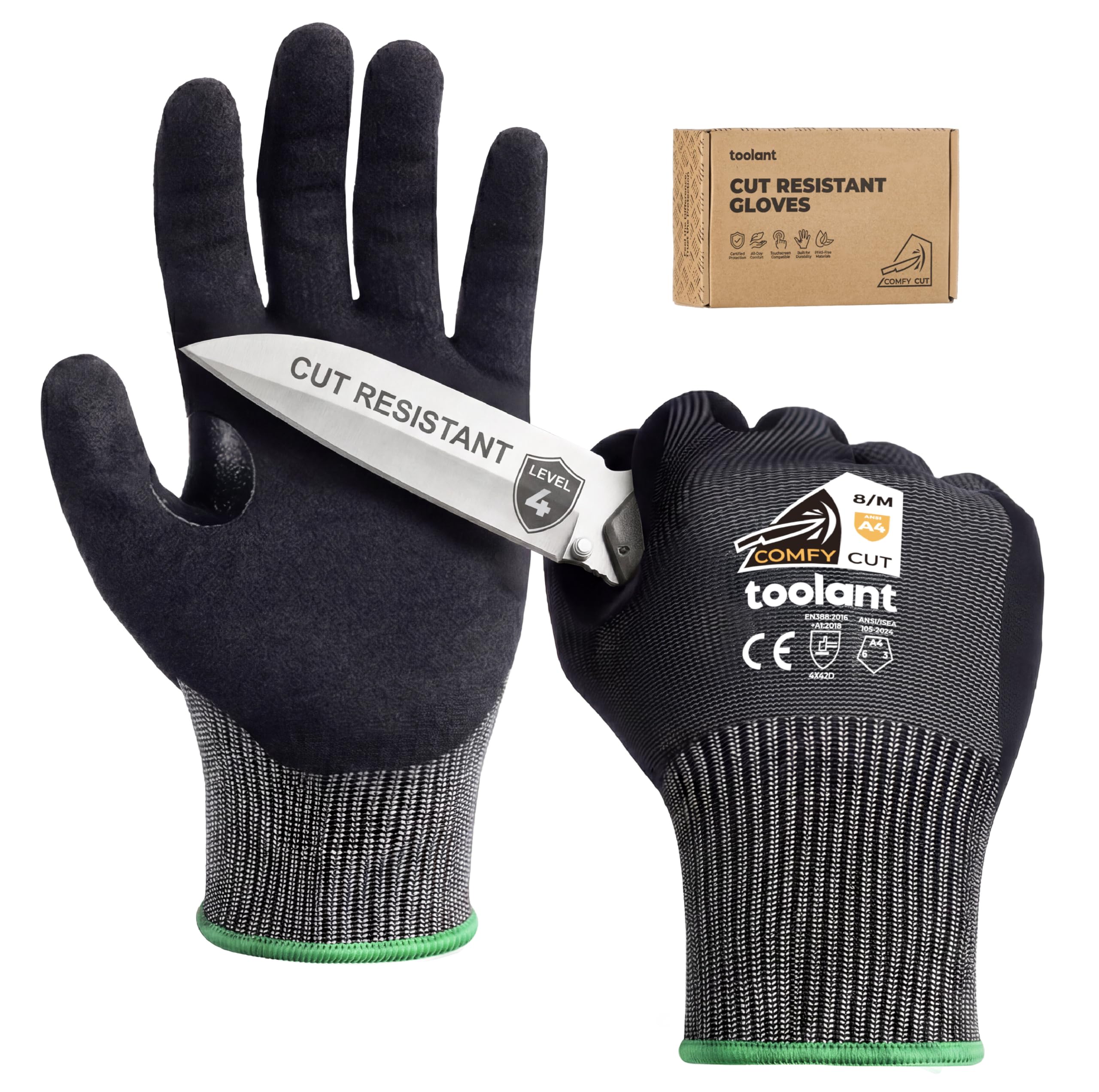
The toolant ComfyCut A4 solves two problems at once: it provides certified A4 cut protection for medium-duty tasks, and it is constructed entirely without fiberglass in the yarn. This is a critical feature for anyone who has experienced skin irritation from the steel-wire or fiberglass-reinforced fibers often found in cut-resistant gloves. The 18-gauge MetalQ yarn is 25% lighter than traditional HPPE, resulting in a soft, breathable, and very flexible feel.
For insulation work, this glove excels where you need maximum tactile feedback. The thin, seamless knit and microfoam nitrile coating allow you to feel the insulation batts and navigate tight spaces between studs. It handles dry and lightly oily conditions well, which is exactly the environment of a fiberglass job. The touchscreen compatibility on all fingers is a practical bonus for checking phone-based blueprints.
It is not a heavy-duty glove. The A4 rating stops slashes from knives and sharp edges, but it does not offer puncture protection or impact resistance. If your job involves heavy demolition or lots of metal handling, you will want a thicker glove. For pure insulation installation, however, this is the most comfortable and irritation-free option.
Why it’s great
- Fiberglass-free construction prevents yarn-related skin irritation.
- Ultra-thin 18-gauge knit provides exceptional dexterity and feel.
- Lightweight and breathable for all-day wear in warm attics.
Good to know
- Not puncture-proof; sharp staples can still penetrate.
- No impact protection for heavy demolition work.
3. Kebada W2 MicroFoam Nitrile Work Gloves

The Kebada W2 is engineered specifically for breathability. Its microfoam nitrile coating uses an open-cell micropore structure that allows heat and moisture to escape rapidly, preventing the sweaty, clammy feeling that plagues other gloves during summer insulation jobs. The 15-gauge nylon-spandex liner stretches naturally with the hand, providing a high-stretch fit that feels like a second skin.
Durability is a strong point here. The glove meets EN388 Level 4 abrasion standards, meaning it can withstand 18,000 cycles of abrasion before wearing through. This translates to a lifespan that is roughly three times longer than standard work gloves, making the 6-pack an excellent value for professional contractors who go through gloves quickly. The full-finger touchscreen is responsive and ideal for using scanners or phones on the job.
As a nitrile-coated glove, it provides an excellent barrier against fiberglass splinters. However, the coating does not offer any cut resistance (it is rated Level 1 for cut), so it is best suited for clean installation work rather than demolition that involves sharp metals. The pull-on elastic cuff fits securely but lacks a velcro closure, which some users may prefer for a more locked-in feel.
Why it’s great
- Most breathable microfoam coating for hot attic work.
- 3X longer lifespan than standard gloves at 18,000 abrasion cycles.
- Excellent grip on smooth insulation facing and drywall.
Good to know
- Low cut resistance; not ideal for demolition with sharp metals.
- Elastic cuff can loosen over time without a velcro strap.
4. TitanFlex Microfoam Nitrile Work Gloves (6-Pair)
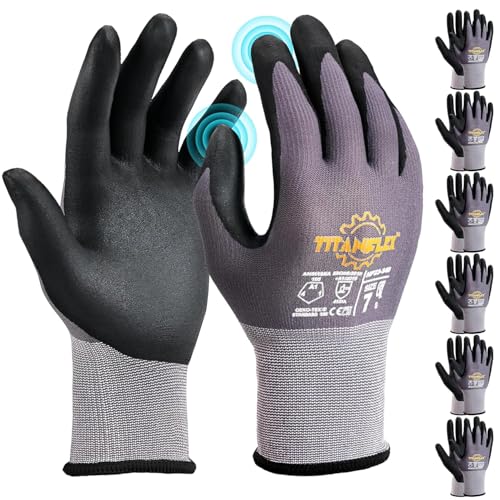
The TitanFlex gloves are the budget-friendly workhorse of this list. They feature a 100% microfoam nitrile palm coating (not a cheaper PU coating) that delivers excellent grip and a reliable seal against fiberglass. The 6-pair pack offers a low cost per glove, making it easy to keep a fresh pair in your truck, tool bag, and workshop without worrying about wear and tear.
Despite the entry-level price, the build quality is solid. The nitrile-coated nylon shell is certified to ANSI Level 4 abrasion resistance and EN388 puncture defense, providing more than enough protection for standard insulation handling. Users report a snug, comfortable fit and excellent dexterity for tasks like handling screws, bolts, and wiring. The touchscreen compatibility works reliably for taps and swipes.
These gloves are not designed for extreme conditions. The lightweight build means they offer minimal thermal protection in cold weather and are not waterproof. They are best used as a high-volume, disposable-friendly option for warm-weather installs. The printed labeling tends to fade after a few washes, though the glove performance remains unaffected.
Why it’s great
- Best price-per-pair for bulk fiberglass work.
- ANSI Level 4 abrasion and puncture defense.
- Machine washable below 40°C without losing shape.
Good to know
- Lightweight build offers no warmth for cold jobs.
- Not waterproof; will absorb moisture.
5. SHOWA Atlas 370 (12-Pack)

The SHOWA Atlas 370 is a classic for a reason. It uses a smooth nitrile dip over a seamless nylon liner that provides a near-perfect balance of dexterity, grip, and sensitivity. For fiberglass work, the continuous nitrile coating forms an effective barrier against splinters while remaining thin enough to allow for fine motor control when cutting and positioning insulation.
The standout feature here is the sheer value of the 12-pack. For fleet purchasing or for contractors who go through multiple pairs per week, this is the most economical option. Users consistently praise the glove’s ability to handle precision tasks like plumbing and electrical work, which means it transitions well between different phases of a construction project. The breathability is excellent, making it comfortable for all-day wear.
These are not heavy-duty gloves. The thin nitrile coating will wear through faster on rough surfaces than a microfoam-coated alternative. They also run slightly small, so you should order a size up for a comfortable fit. The lack of a touchscreen coating is a minor inconvenience, but for pure insulation work, the classic Atlas 370 remains a proven, reliable choice.
Why it’s great
- Unmatched dexterity for precision insulation handling.
- 12-pack offers the lowest cost per glove.
- Highly breathable for comfortable long shifts.
Good to know
- Thin coating wears faster on rough surfaces.
- No touchscreen compatibility.
FAQ
Can I use latex or rubber gloves for fiberglass insulation?
How do I wash gloves used with fiberglass to prevent contamination?
Final Thoughts: The Verdict
For most users, the gloves for fiberglass insulation winner is the Ironclad Command Impact 360 because it provides the strongest barrier against both fiberglass and on-site hazards with its A5 cut rating and impact protection. If you want a glove that is supremely comfortable and will not irritate your skin, grab the toolant ComfyCut A4. And for the best value in bulk, nothing beats the SHOWA Atlas 370 12-pack.