
Every autumn, the same scene plays out: wet leaves matted to the lawn, acorns buried under pine straw, and a backyard that seems to grow larger by the hour. A handheld electric unit simply cannot generate the sustained, hurricane-force airflow needed to clear a half-acre property of heavy debris before the next storm hits. The difference between a frustrating afternoon and a quick, surgical cleanup comes down to the displacement of the engine and the cubic feet per minute moving through the tube.
I’m Mohammad Maruf — the founder and writer behind Drink4Good. I’ve spent years analyzing engine displacement, CFM ratings, and harness ergonomics in outdoor power equipment to help homeowners and landscapers separate real performance from marketing numbers.
After reviewing dozens of models across displacement ranges from 51cc to 79.9cc, I’ve narrowed the field to the nine most reliable options currently available. This guide covers everything you need to confidently choose the best gas backpack leaf blower for your property size, physical comfort, and budget.
How To Choose The Best Gas Backpack Leaf Blower
Selecting the right gas backpack blower means matching engine displacement to your property’s debris load, not just the size of your yard. A 51cc engine handles light leaf cover on a suburban lot, while 75cc-plus units manage wet leaves, sand, and light snow on multi-acre properties. The key is understanding the relationship between air volume (CFM) and air speed (MPH): higher CFM moves more debris at once, while higher MPH dislodges stuck material from beds and crevices.
Engine Displacement and Power Delivery
Two-cycle engines dominate this category because they deliver high power-to-weight ratios. Displacement, measured in cubic centimeters (cc), directly correlates with torque and sustained airflow. A 58cc engine like the Echo PB-580T produces enough force for most residential tasks, while a 79.9cc engine like the Echo PB-9010T generates airflow that can blow sand and light gravel. Look for engines with chrome-plated cylinders and dual-ring pistons for longer service life under heavy use.
Harness Comfort and Weight Distribution
You carry this machine on your back for potentially hours at a time. A proper harness distributes weight across your hips and shoulders using padded straps and a lumbar support pad. Models with shock-absorbing backrests reduce vibration transfer to your spine, and adjustable chest straps prevent the unit from shifting during side-to-side movements. The overall weight matters less than how well the harness transfers that weight — a 25-pound blower with excellent ergonomics feels lighter than a 22-pound one with poor strap design.
Fuel System and Starting Mechanisms
Reliable starting is a quality-of-life issue that separates great blowers from frustrating ones. Look for primer bulbs that are easily accessible (not tucked under the frame), purge systems that remove air from the carburetor, and spring-assist pull mechanisms that reduce the effort required to turn over the engine. Cruise control or throttle locks are essential for maintaining consistent RPM without gripping the trigger continuously. Fuel tank capacity also matters — a 3-liter tank provides roughly 90 minutes of runtime, enough for most residential sessions.
Quick Comparison
On smaller screens, swipe sideways to see the full table.
| Model | Category | Best For | Key Spec | Amazon |
|---|---|---|---|---|
| PRORUN PBB2884 | Mid-Range | High CFM on a budget | 75.6cc / 1020 CFM | Amazon |
| VEVOR 79cc | Mid-Range | Large properties on budget | 79cc / 930 CFM | Amazon |
| PROYAMA 72CC | Mid-Range | Entry-level commercial use | 72cc / 880 CFM | Amazon |
| Echo PB-9010T | Premium | Maximum airflow for pros | 79.9cc / 1110 CFM | Amazon |
| Husqvarna 570BTS | Premium | Heavy commercial clearing | 66cc / 972 CFM / 37N | Amazon |
| Husqvarna 560BTS | Premium | Professional reliability | 65.6cc / 631 CFM / 30N | Amazon |
| Echo PB-770T | Premium | Commercial-grade moderate weight | 63.3cc / 756 CFM | Amazon |
| Echo PB-580T | Mid-Range | Residential reliability | 58.2cc / 510 CFM | Amazon |
| Troy-Bilt TB51BP | Budget | Budget-friendly suburban use | 51cc / 600 CFM | Amazon |
In‑Depth Reviews
1. PRORUN PBB2884

The PRORUN PBB2884 sits in a sweet spot where displacement and airflow converge at a price that undercuts similarly specced competitors by a wide margin. Its 75.6cc two-cycle engine pushes 1020 CFM at 240 MPH — numbers that rival units costing significantly more. The pull start engages in the final quarter of the stroke, which takes a little getting used to, but once running, the engine fires up reliably on subsequent starts. Owners consistently report that it moves wet leaves, gum balls, and 3-foot-high leaf rows without bogging down.
The backpack frame is built from sturdy plastic with padded straps that distribute the 32.8-pound weight reasonably well, though users taller than six feet may need to adjust the harness carefully. A three-year residential warranty adds peace of mind, and the anti-vibration design reduces hand fatigue during extended operation. The tube connections require a firm twist to lock, and the starter switch feels thinner than ideal, but no failures have been reported in the first six months of use.
For a homeowner with one to five acres of heavy debris, this blower offers the highest CFM-per-dollar ratio in this guide. It is not the most refined machine on the market, but it delivers commercial-level air volume at a fraction of the price, making it the clear choice for buyers who prioritize raw clearing power over brand prestige.
Why it’s great
- 1020 CFM airflow exceeds many premium models
- Quick starting after initial pull resistance
- Three-year residential warranty covers defects
Good to know
- Starter switch feels delicate and tight
- Tube connections need full rotation to lock
- Weight approaches 33 pounds fully fueled
2. Echo PB-9010T

The Echo PB-9010T represents the absolute top end of consumer-available airflow in this category. Its 79.9cc X Series engine moves an astonishing 1110 CFM — enough volume to blow six inches of wet snow off a 300-foot gravel driveway in 90 minutes. At half throttle, the force exceeds a brisk walking pace, and at full throttle it can dislodge embedded debris that smaller units leave behind. The tube-mounted throttle and cruise control allow you to lock in speed and focus on sweeping without grip fatigue.
Starting is smooth thanks to the purge system, and the engine idles reliably even in cold weather down to 20°F. Fuel consumption is predictably high at roughly one gallon per 90 minutes of continuous operation, so a large tank is essential for all-day jobs. The assembly instructions are notoriously poor, and the tube extensions can be difficult to connect the first time, but once assembled, the unit performs flawlessly. At full throttle, it pushes back against you — a sign of genuine air-moving capability.
For professionals and owners of large properties who want the highest possible air volume without moving to a commercial walk-behind, the PB-9010T is the ultimate choice. It is loud, heavy, and thirsty, but it cuts cleanup time by more than half compared to smaller backpack blowers, making it the undisputed king of debris removal speed.
Why it’s great
- 1110 CFM airflow is the highest in this comparison
- Starts easily even in sub-freezing temperatures
- Cruise control enables fatigue-free extended use
Good to know
- Fuel consumption is heavy at one gallon per 90 minutes
- Assembly instructions are confusing and incomplete
- Tube extensions are stiff and hard to connect initially
3. Husqvarna 570BTS
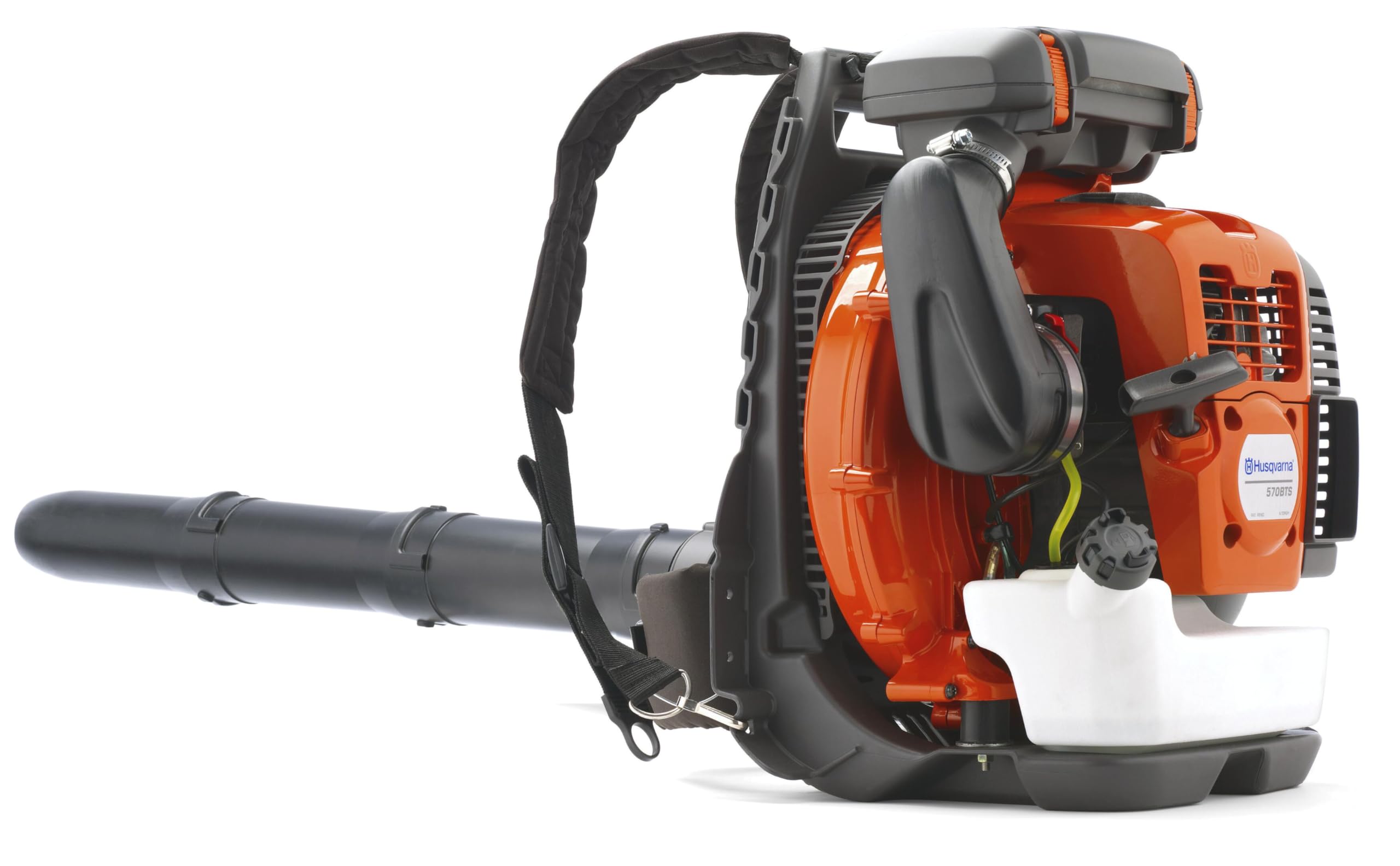
The Husqvarna 570BTS is engineered for professionals who demand unwavering reliability across years of heavy use. Its 66cc X-Torq engine delivers 972 CFM at 236 MPH with 37 newtons of blow force — enough to push wet leaves and small branches uphill on a sloped property. The 2-stage air filtration system captures fine debris that would clog lesser filters, extending service intervals significantly. Owners report that after five years of regular use, the engine still starts on the second or third pull without issue.
The LowVib technology and load-reducing harness make the 24.5-pound unit feel substantially lighter during operation. The offset soft-grip handle rotates for natural wrist positioning, and the cruise control maintains consistent RPM during long clearing sessions. One design quirk: the stop button does not automatically reset after shutting down, which can be confusing for new users. Additionally, the shoulder straps require careful adjustment to distribute weight properly, but once dialed in, the harness is more comfortable than many competitors.
For landscapers managing two or more acres daily, the 570BTS offers the best balance of high CFM, commercial durability, and ergonomic comfort in the premium tier. It is not the cheapest option, but its long-term reliability and lower maintenance costs make it a smarter investment for heavy users who cannot afford downtime during peak leaf season.
Why it’s great
- 37N blow force handles wet leaves and sticks
- 2-stage air filter extends engine life significantly
- LowVib harness reduces fatigue during all-day use
Good to know
- Stop button does not auto-reset after use
- Straps require careful adjustment for proper fit
- Initial carburetor priming may need multiple attempts
4. Echo PB-770T

The Echo PB-770T occupies a rare position: it delivers commercial-grade power in a package that feels lighter than its specification sheet suggests. Its 63.3cc engine produces 756 CFM at 234 MPH, which is more than enough for most professional landscaping tasks, yet users over 50 report wearing it comfortably for hours. The five-year consumer warranty is the strongest in this comparison, reflecting Echo’s confidence in the engine’s long-term durability.
Starting requires a firm pull, though the action becomes easier as the engine breaks in. The weight distribution is excellent, with the center of gravity sitting low on the back, which reduces strain during side-to-side sweeping motions. The tube-mounted throttle provides precise control, and the cruise lock works seamlessly. Some owners wish they had sprung for the larger PB-9010T, but for properties under three acres with standard leaf loads, the 770T provides all the power needed without the extra weight and fuel consumption of the flagship model.
If you want Echo reliability and a strong warranty but do not need the extreme CFM of the 9010T, the PB-770T is the smart middle ground. It is powerful enough for commercial use, light enough for extended home use, and backed by a warranty that outlasts most ownership periods.
Why it’s great
- Five-year consumer warranty is class-leading
- Light feel despite commercial-grade power output
- Low center of gravity improves balance during use
Good to know
- Pull start is stiff until fully broken in
- Not the highest CFM in Echo’s lineup
- Some owners experience carburetor tuning needs early on
5. Husqvarna 560BTS
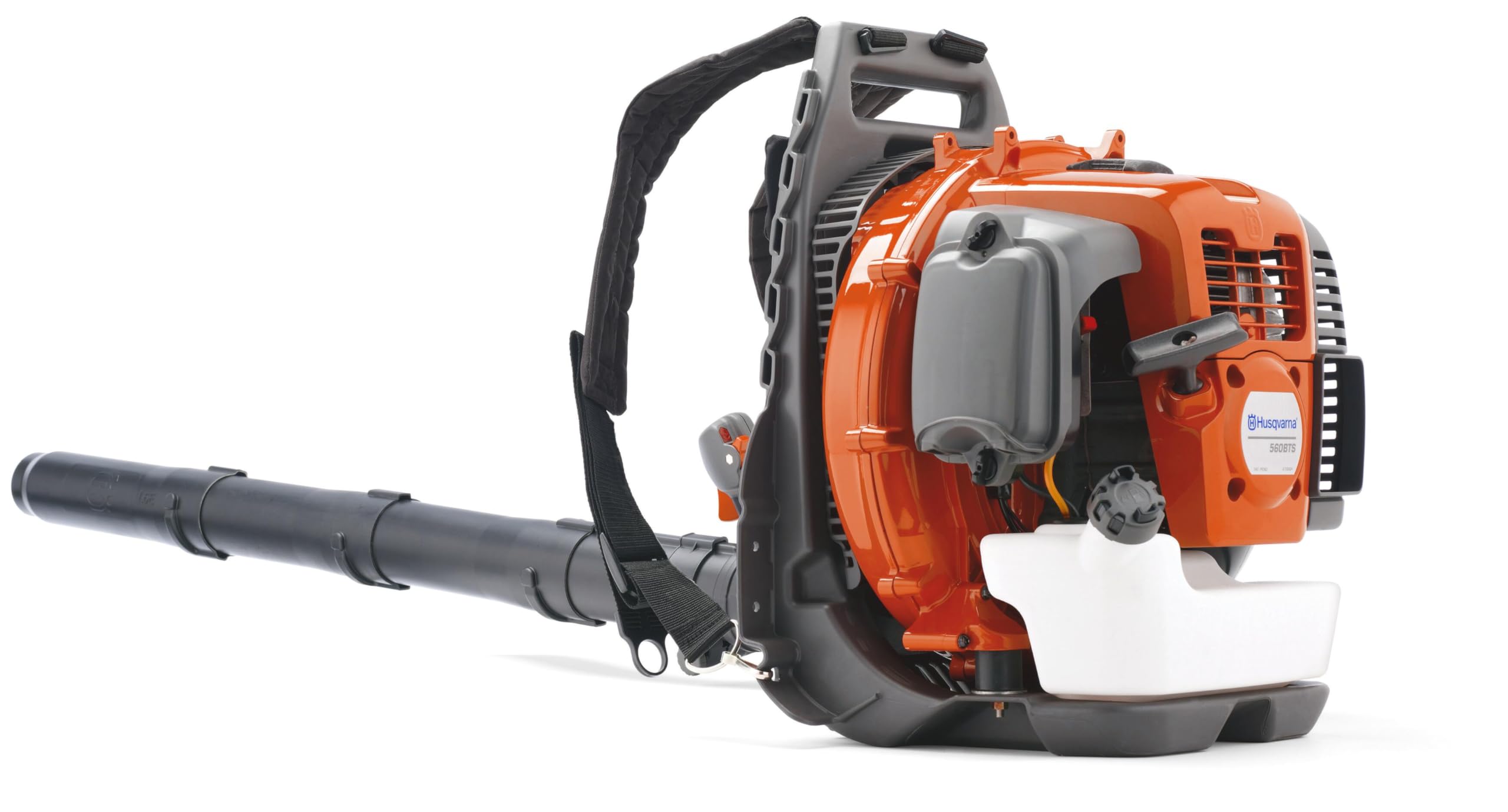
The Husqvarna 560BTS is a workhorse built for landscapers who need predictable, repeatable performance across seasons. Its 65.6cc X-Torq engine delivers 631 CFM with 30 newtons of blow force — lower CFM than its bigger sibling but still capable of blowing dirt, sand, and leaves with authority. The 2-stage commercial-grade air filter is the standout feature here: it traps fine dust particles that would quickly wear out a consumer filter, making it ideal for dry, dusty job sites.
Starting is consistent at the third pull, and the tube-mounted throttle gives the operator precise fingertip control without moving their hand. The harness is ventilated to reduce back sweat, though some owners note the absence of a chest strap, which allows the unit to shift slightly during aggressive side-to-side motion. Fuel consumption is higher than the Echo PB-580T, burning roughly one quart per 40 minutes of continuous operation, but the increased power translates to significantly faster cleanup times.
For professionals running multiple properties who prioritize air filtration and starting reliability over outright CFM numbers, the 560BTS is a proven platform. It reduces cleanup time by roughly two-thirds compared to handheld blowers and has the build quality to withstand daily commercial use without developing starting issues or carburetor problems.
Why it’s great
- Commercial air filter extends engine life in dusty conditions
- Consistent starting on the third pull every time
- Tube-mounted throttle offers precise speed control
Good to know
- Higher fuel consumption than comparable Echo models
- Lacks chest and waist straps for lateral stability
- Tube fit is very tight and hard to separate
6. Echo PB-580T

The Echo PB-580T is the lightest backpack blower in this comparison, weighing just 22.6 pounds, and it is also the quietest at 33 decibels (an unusually low rating that likely reflects a measurement standard different from the other models). Its 58.2cc engine produces 510 CFM — sufficient for dry leaves and light debris on residential properties up to two acres. The motor is positioned on the back rather than the tube, which significantly reduces wrist and arm strain compared to handheld units.
Assembly is straightforward, and the blower starts on the first pull even after sitting for weeks. The engine circulates air around the backplate to prevent sweat buildup, a thoughtful touch for hot-weather use. The backpack is narrower than the larger Echo models, making it easier to maneuver through tight spaces like garden paths and between parked cars. However, the lower CFM means it struggles with wet leaves and heavy pine straw that larger units handle easily.
For homeowners who want Echo’s legendary reliability in a lightweight package and do not regularly deal with wet or matted debris, the PB-580T is the ideal choice. It is less fatiguing to wear than any other blower on this list, and its noise signature is noticeably lower, making it more neighbor-friendly during early morning or evening sessions.
Why it’s great
- Lightest backpack blower at 22.6 pounds
- Low noise output for residential use
- Motor-on-back design reduces wrist fatigue
Good to know
- 510 CFM struggles with wet, heavy debris
- Less powerful than larger Echo and Husqvarna models
- Instructions are sparse and hard to follow
7. VEVOR 79cc
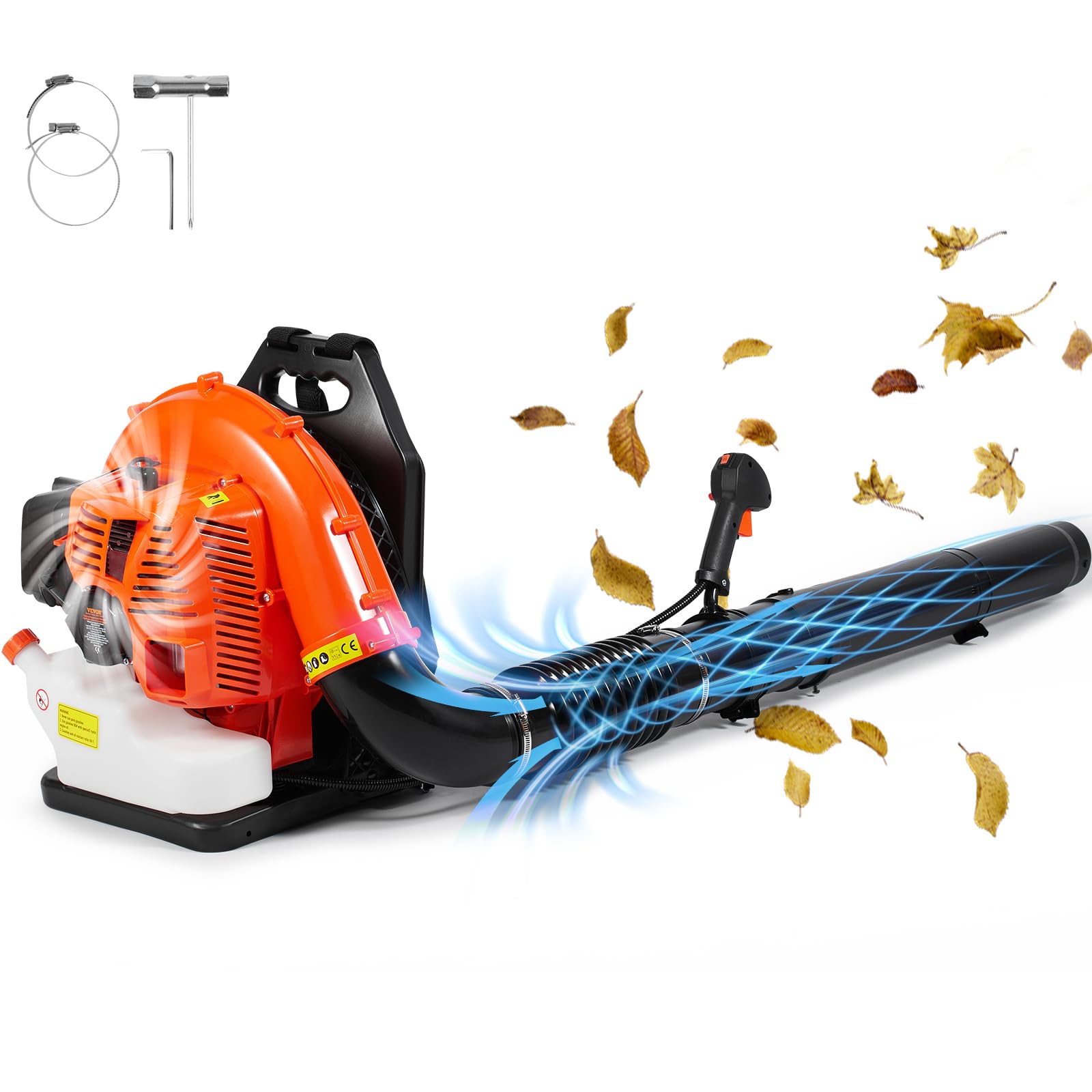
The VEVOR 79cc is a budget-friendly blower that punches well above its weight class, delivering 930 CFM from a 79cc engine that sips fuel efficiently enough to run for 95 minutes on a full three-liter tank. The high-strength nylon backpack and shock-absorption system are surprisingly comfortable for a unit at this price point, and the included accessories — noise-reducing earmuffs, mixing bottle, and wrench set — add genuine value. Owners report that it starts quickly and runs smoothly with no ethanol-free fuel.
The purge ball is awkwardly positioned on the side of the carburetor, making it hard to reach when the blower is strapped on. Idle adjustment may be necessary out of the box, as some units stall when idling. The 184 MPH airspeed is lower than many smaller-displacement blowers, which means the VEVOR relies on its high CFM to move large volumes rather than high velocity to dislodge stuck debris. For clearing leaves and light snow from open lawns, this trade-off works well, but it struggles with compacted wet leaves in garden beds.
If you need maximum CFM on a tight budget and are comfortable making minor carburetor adjustments, the VEVOR 79cc offers exceptional value. It is not as refined as the Echo or Husqvarna units, but the raw numbers and included accessories make it a compelling choice for cost-conscious buyers with large, open properties.
Why it’s great
- 930 CFM at a budget-friendly price point
- 95-minute runtime from a 3-liter fuel tank
- Includes earmuffs, mixing bottle, and tools
Good to know
- Purge ball is awkwardly positioned
- Low 184 MPH airspeed limits debris dislodging
- Idle adjustment may be needed out of the box
8. PROYAMA 72CC
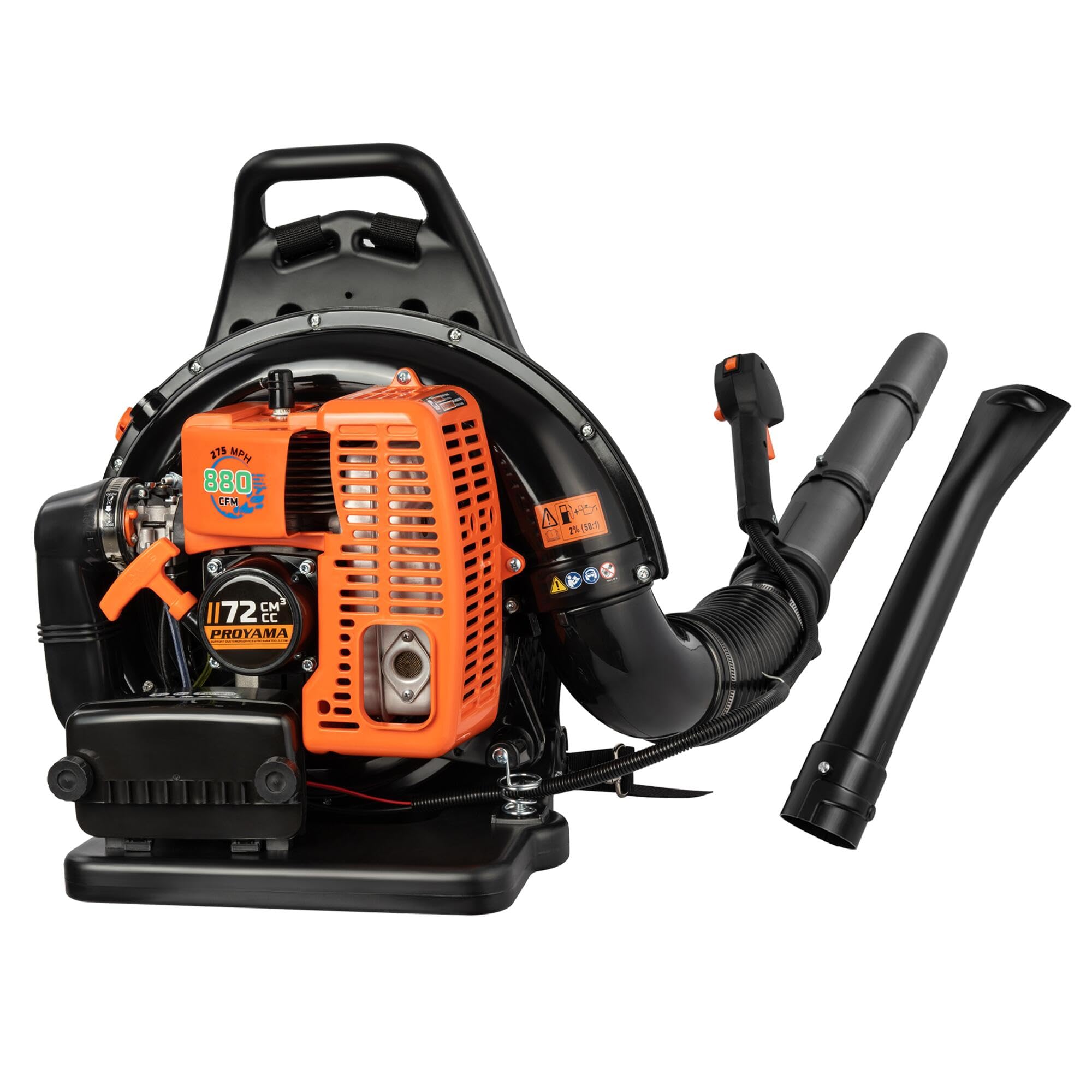
The PROYAMA 72CC delivers 880 CFM at 275 MPH from its 3.7-horsepower engine, making it one of the strongest airspeed performers in the budget tier. The dual-tube design includes a flat nozzle for wide coverage and a round nozzle for concentrated force, giving the operator versatility without switching tubes. The self-throttle lock maintains consistent RPM, reducing operator fatigue during extended clearing sessions.
The thickened backrest effectively isolates engine heat from the operator, a genuine comfort advantage over many budget blowers that transfer warmth to the user’s lower back. The shock-absorbing straps and balanced weight distribution make the 21-pound unit feel lighter than its numbers suggest. Starting requires more pulls than pricier models — sometimes up to 11 on the very first start — but after the initial break-in, the engine fires up consistently. Some owners note that the plastic-heavy construction raises questions about long-term durability, but no widespread failure patterns have emerged.
For budget-conscious buyers who prioritize high airspeed for dislodging stuck debris, the PROYAMA 72CC is a strong contender. It is not as refined as mid-range options, but the combination of 275 MPH speed, thermal isolation, and cruise control makes it a capable tool for suburban yards with mature trees and heavy leaf fall.
Why it’s great
- 275 MPH airspeed is class-leading for the price
- Heat-isolating backrest improves comfort
- Dual-tube design adds operational flexibility
Good to know
- Initial starting may require up to 11 pulls
- Plastic construction raises durability questions
- Long arm design has a learning curve for control
9. Troy-Bilt TB51BP
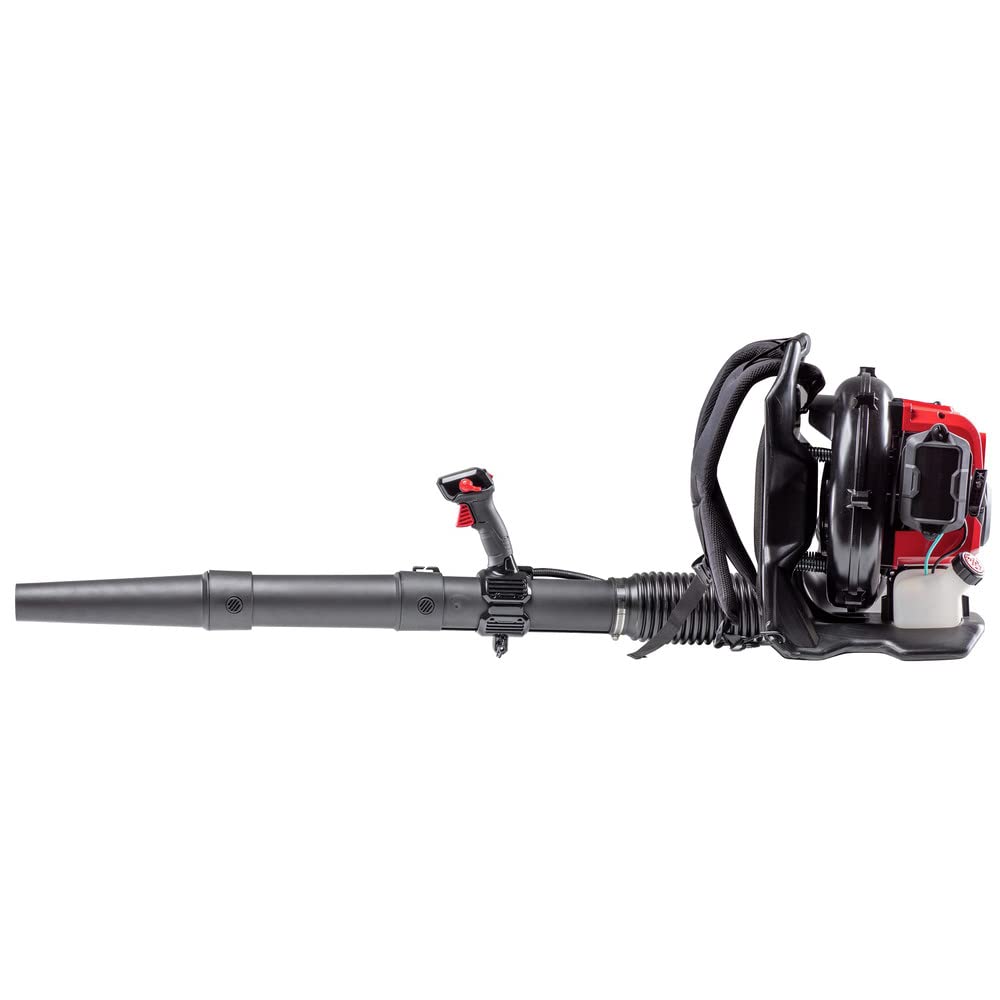
The Troy-Bilt TB51BP is the most accessible entry point into the gas backpack blower category, with a 51cc engine that produces 600 CFM and 220 MPH. The SpringAssist technology reduces pull-start effort significantly, making it a good choice for users with limited upper-body strength or those transitioning from electric models. The full-crank engine design adds durability compared to cheaper consumer engines, and the multi-material suspension system distributes weight evenly across the hips and shoulders.
The fuel tank is smaller than average, limiting runtime between refills, but the trade-off is a lighter overall package that is easy to put on and take off. The harness fits the shape of the hips well, reducing pressure points during extended use. Assembly is straightforward, and most owners report that it starts reliably after the initial break-in period. However, a small number of units have experienced starting issues after the first use, suggesting inconsistent quality control in the carburetor or fuel system.
For homeowners with small to medium suburban lots who want backpack-level performance without the intimidation of a large-displacement engine, the TB51BP is a sensible choice. It will not handle heavy commercial use or wet leaves on multi-acre properties, but it will make quick work of dry leaf cover on a quarter-acre without breaking the bank or your back.
Why it’s great
- SpringAssist makes pull starting noticeably easier
- Full-crank engine improves durability for the price
- Comfortable harness design reduces hip pressure
Good to know
- Small fuel tank limits continuous runtime
- Not powerful enough for wet or heavy debris
- Some units have carburetor reliability issues
FAQ
How do I determine the right engine displacement for my property?
What oil-to-fuel ratio should I use for a gas backpack leaf blower?
Why does my backpack blower stall when idling?
Final Thoughts: The Verdict
For most users, the best gas backpack leaf blower winner is the PRORUN PBB2884 because it delivers true commercial-grade airflow at a price that undercuts premium models by hundreds of dollars. If you want maximum power for the heaviest debris, grab the Echo PB-9010T with its 1110 CFM airflow. And for professional landscapers who prioritize long-term reliability and air filtration, nothing beats the Husqvarna 570BTS with its 37N blow force and commercial-grade components.