
Muffled voice comms and background noise ruin the competitive edge. A gaming headset’s microphone is the difference between a clean shotcall and a costly miscommunication, yet most specs gloss over diaphragm size, polar pattern, and frequency response. The market is flooded with headsets that promise “noise cancellation” but deliver thin, robotic audio that makes you sound like you’re speaking from inside a tin can.
I’m Mohammad Maruf — the founder and writer behind Drink4Good. I specialize in deep-dive market analysis of gaming peripherals, focusing on how microphone hardware specifications like frequency range, bit-depth, and sample rate translate into real-world voice clarity for streamers and competitive players.
The following guide breaks down the exact mic engineering, driver architecture, and connectivity trade-offs that define gaming headset for mic quality to help you make a confident purchase based on voice fidelity, not marketing buzzwords.
How To Choose The Best Gaming Headset For Mic Quality
Selecting a headset purely for microphone performance requires you to look past the marketing noise and focus on three key pillars: the mic’s polar pattern and capsule quality, the audio codec or sample rate it supports, and the headset’s ability to reject ambient noise without distorting your voice. Here is what actually matters.
Polar Pattern and Capsule Size
The polar pattern determines where the mic picks up sound from. Unidirectional or cardioid mics capture sound primarily from the front, rejecting kitchen fans, keyboard clicks, and room echo. Omnidirectional mics, common on budget headsets, grab everything around you. Capsule size measured in millimeters also influences sensitivity — a 9.9mm capsule like on the Razer BlackShark V3 captures more vocal detail than a smaller 4mm unit.
Sample Rate and Bit Depth
A headset that supports 48 kHz / 16-bit or higher sample rates reproduces a wider frequency range of your voice, making you sound fuller and less compressed. True high-fidelity 24-bit / 96 kHz audio, found on the SteelSeries Arctis Nova Elite, retains every nuance from breath to bass in your voice, which is critical for streaming or recording where audio quality is judged.
AI Noise Rejection vs Passive Design
AI-based microphone noise rejection uses onboard processing to filter out background sounds like wind or room hum without degrading your voice’s clarity. This is different from passive noise cancellation which only isolates your ears, not the mic. Headsets like the Sony INZONE H5 and SteelSeries Arctis Nova Elite use AI to clean voice pickup, while models like the HyperX Cloud Alpha rely on a tight unidirectional capsule and physical construction to reduce noise.
Quick Comparison
On smaller screens, swipe sideways to see the full table.
| Model | Category | Best For | Key Spec | Amazon |
|---|---|---|---|---|
| Razer BlackShark V3 Wireless | Premium | Competitive comms & clarity | Super Wideband 9.9mm mic | Amazon |
| Corsair HS80 RGB USB | Mid-Range | Streaming & broadcast sound | Omni-directional broadcast mic | Amazon |
| SteelSeries Arctis Nova Elite | Premium | Hi-res audio & pro streaming | AI noise rejection + 96kHz | Amazon |
| Sony INZONE H5 Wireless | Mid-Range | Wireless all-day play | AI-Based noise canceling mic | Amazon |
| Logitech G522 Lightspeed | Premium | Multi-device comms & streaming | Full-band 48kHz / 16-bit mic | Amazon |
| HyperX Cloud Alpha | Mid-Range | Durable all-platform use | Noise cancellation mic | Amazon |
| FIFINE AmpliGame H13BP | Budget | RGB aesthetic & value | Noise canceling mic + 7.1 | Amazon |
In‑Depth Reviews
1. Razer BlackShark V3 Wireless

The Razer BlackShark V3 Wireless redefines what “clear comms” means for competitive gamers. Its detachable HyperClear Super Wideband 9.9mm microphone captures a broader frequency range than typical headset mics, rendering your voice with natural richness instead of that thin, muffled quality most wireless headsets suffer from. Paired with 50mm Triforce Titanium Gen-2 drivers, the audio output is equally precise for footsteps and environmental cues.
Connectivity is versatile — you can run 2.4GHz wireless for lag-free PC gaming, Bluetooth 5.3 for mobile calls, or wired USB when the battery dips. THX Spatial Audio expands the soundstage with 7.1.4 surround, giving you overhead awareness in titles like Apex Legends. The 70-hour battery life means you recharge roughly once a week even with heavy daily use.
The build is lightweight at under 300 grams, with plush memory foam ear cushions that stay comfortable for marathon sessions. The mic also features a mute indicator LED on the boom, so you never accidentally broadcast sensitive conversation. It lacks active noise cancellation on the earcups, but the passive isolation is good enough for most home environments.
Why it’s great
- Wideband 9.9mm mic delivers studio-like vocal clarity
- 70-hour battery with fast USB-C charging
- Simultaneous 2.4GHz + Bluetooth for multi-device mixing
Good to know
- No active noise cancellation on earcups
- Slightly plasticky feel on the headband
- THX Spatial requires software installation
2. Corsair HS80 RGB USB

The Corsair HS80 RGB USB is engineered for streamers who need a microphone that rivals standalone USB mics. Its broadcast-grade omnidirectional capsule captures a wide frequency range — 20Hz to 40,000Hz — ensuring your voice comes through with rich bass and clear highs. The flip-up mute function with an LED indicator is intuitive for live streams, and the mic’s sensitivity picks up subtle vocal inflections without requiring you to eat the boom.
Sound reproduction is handled by custom-tuned 50mm high-density neodymium drivers that support Dolby Audio 7.1 surround. In-game positional audio for shooters like Call of Duty is excellent, with distinct separation between footsteps and gunfire. The headset also supports 24-bit / 96kHz high-fidelity audio over USB, which is rare at this price point and a boon for anyone who listens to music or edits audio.
Comfort is a strong suit — the floating headband design distributes weight evenly, and the memory foam earpads are wrapped in breathable microfiber cloth that prevents sweat buildup during long streams. The build quality feels premium with metal-reinforced yokes, though the cloth ear cushions can feel itchy for some users after several hours. The fixed USB cable lacks in-line controls, so all adjustments must be done through iCUE software.
Why it’s great
- Omnidirectional mic quality rivals dedicated USB mics
- 24-bit / 96kHz high-fidelity audio support
- Dolby Audio 7.1 for immersive spatial awareness
Good to know
- Cloth earcups may feel itchy for some after hours
- No in-line volume or mute controls on cable
- Requires USB connection only — no 3.5mm option
3. SteelSeries Arctis Nova Elite
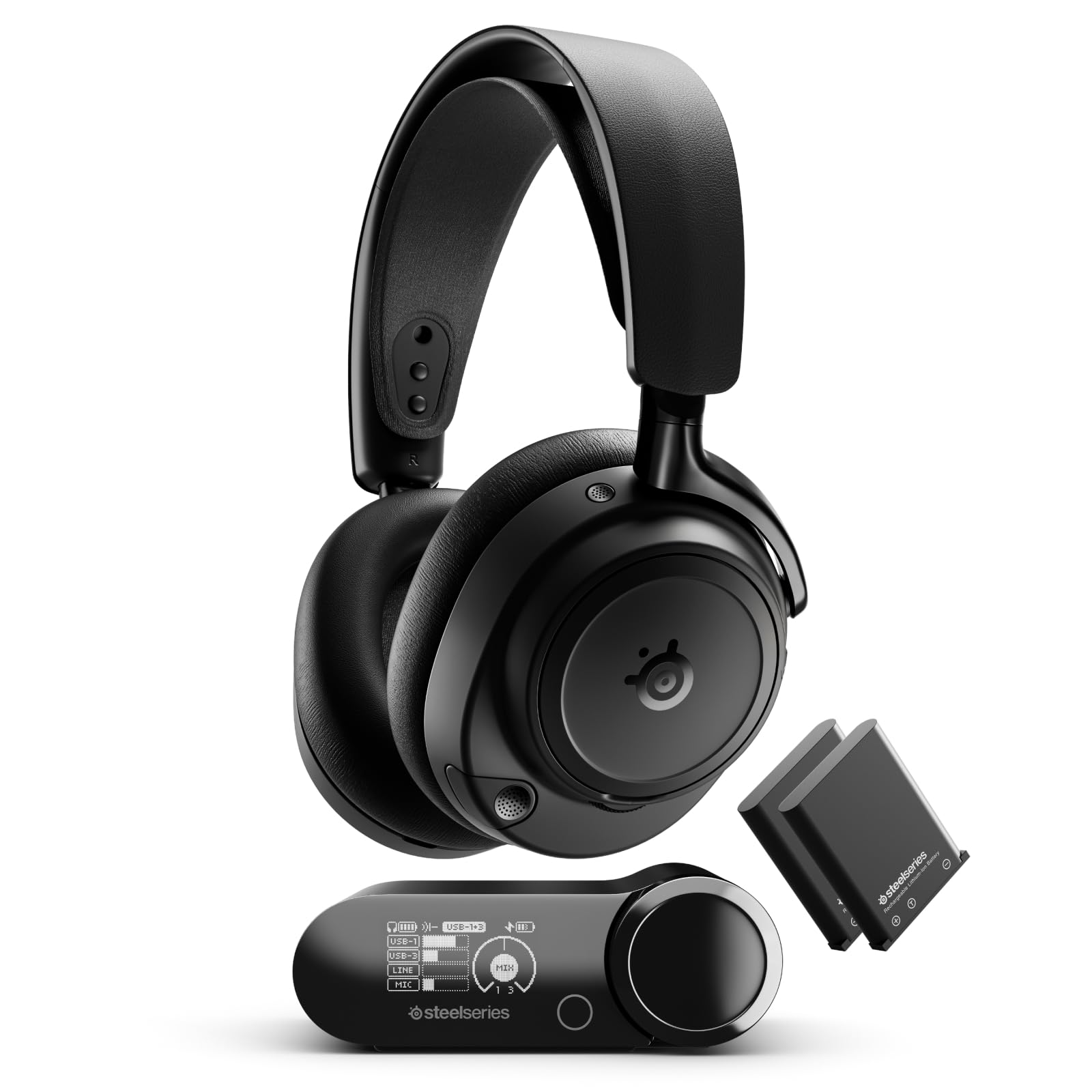
The SteelSeries Arctis Nova Elite sits at the absolute top of the mic-quality pyramid. Its AI-powered noise rejection reduces up to 97% of background noise according to independent lab testing, which means your voice cuts through even if you’re gaming next to a loud air conditioner or mechanical keyboard. The microphone itself is a broadcast-grade unit that supports high-fidelity 96kHz / 24-bit audio over wireless — a first for the gaming headset category.
Sound delivery comes from carbon fiber 2-piece drivers with a brass surround that moves pistonic for ultra-low distortion. The result is exceptionally clear mid-range and detailed treble, making footsteps and voice cues stand out with surgical precision. Active noise cancellation on the earcups reduces up to 42% more ambient noise than competitors, so you hear your game and team clearly even in noisy households.
The Infinite Power System uses two hot-swappable batteries — one powers the headset while the other charges in the GameHub base station. A 15-minute fast charge gives you four hours of playtime, meaning zero downtime. The headset supports OmniPlay connectivity for PC, PlayStation, Xbox, Switch, and Bluetooth simultaneously, letting you mix up to four audio sources at once. It is expensive, but the mic clarity, ANC performance, and multi-platform flexibility justify the cost.
Why it’s great
- AI noise rejection blocks 97% of background sounds
- Hi-res 96kHz / 24-bit wireless audio from mic
- Hot-swappable dual batteries eliminate downtime
- Best-in-class ANC across gaming headsets
Good to know
- High price point limits accessibility
- Tight fit for larger head sizes without adjustment
- Heavier than most wireless competitors
4. Sony INZONE H5 Wireless

The Sony INZONE H5 proves that great mic quality doesn’t require a wired connection. Its bidirectional boom microphone uses AI-based noise canceling technology that extracts ambient sounds like room echo and fan noise from your voice signal, delivering crystal-clear communications in Discord or in-game chat. This is especially valuable for wireless users who often sacrifice mic quality for convenience.
Audio reproduction comes from 40mm drivers tuned for detailed sound across the spectrum. While the driver size is smaller than some competitors, the 360 Spatial Sound personalizer — which uses a photo of your ear to tailor the soundstage — provides precise rival detection in games like Overwatch or Valorant. The headset supports both 2.4GHz wireless via USB transceiver and a 3.5mm wired backup.
Battery life reaches 28 hours, which is enough for a full weekend of gaming with a single charge. The build is lightweight at around 260 grams, making it comfortable for long sessions, though the earpads are somewhat tight for users with larger ears. The INZONE Hub software on PC gives you EQ tuning and mic monitoring, but the headset lacks Bluetooth which limits mobile use.
Why it’s great
- AI-based mic noise canceling for clean wireless chat
- 360 Spatial Sound personalizer for precise audio cues
- Lightweight design ideal for marathon sessions
Good to know
- Earpads can feel tight for larger ears
- No Bluetooth, only 2.4GHz wireless and 3.5mm
- 40mm drivers lack low-end punch of 50mm competitors
5. Logitech G522 Lightspeed

The Logitech G522 Lightspeed delivers a full-bandwidth 48 kHz / 16-bit microphone that captures your voice with broadcast-quality clarity. Unlike narrow-band mics that cut off the natural resonance of your voice, this microphone preserves the full frequency spectrum, making your comms sound rich and natural. Blue VO!CE software lets you adjust noise reduction, equalizer, and voice filters to fine-tune how you sound to teammates and viewers.
Audio is handled by PRO-G drivers that reproduce 48 kHz / 24-bit synchronized audio with low distortion and balanced tonality. The sound signature is neutral with enough bass presence for explosions without muddying mid-range frequencies. LIGHTSYNC RGB side lighting with 16.8 million colors adds visual flair, and the Tri-Connect system supports Lightspeed wireless, Bluetooth, and USB-C wired connections for total flexibility.
At just 280 grams, the G522 is one of the lightest premium wireless headsets, with round cushioned ear cups and a washable suspension headband that conforms to your head shape. Battery life reaches 60 hours with lighting off, so you can game for a full week without reaching for the charging cable. The mic is detachable for when you want to use the headset purely for music or travel.
Why it’s great
- Full-band 48kHz / 16-bit mic for natural voice output
- Blue VO!CE software for mic customization
- Ultra-light 280g design with long 60-hour battery
Good to know
- Sound quality is average for music listening
- RGB lighting drains battery quickly
- Not compatible with Xbox consoles
6. HyperX Cloud Alpha

The HyperX Cloud Alpha has been a cornerstone of the mid-range gaming headset market for years, and for good reason. Its detachable noise cancellation microphone uses a tight unidirectional pickup pattern that focuses on your voice and rejects background chatter effectively. The mic quality is clear and natural — it won’t rival dedicated streaming mics but delivers exceptionally clean voice for in-game communication.
The signature feature is HyperX’s Dual Chamber Driver design, which physically separates the bass and mid-high frequencies into different chambers. This reduces distortion at high volumes and provides cleaner audio separation than single-chamber designs. The frequency response of 15Hz to 25kHz covers a wide range, with punchy lows for explosions and crisp highs for footsteps. The headset works across PC, PS5, Xbox, Switch, and mobile via a 3.5mm connection.
The aluminum frame with expanded headband is incredibly durable — user reviews report surviving being slammed in doors and rolled over by chairs. Memory foam earcups remain comfortable for hours, though the leatherette material may peel after a couple of years of heavy use. The detachable braided cable has in-line controls, but the microphone will not work if the cable is damaged since it is a single combined jack.
Why it’s great
- Dual chamber drivers deliver clean, distortion-free audio
- Aluminum frame is exceptionally durable
- Widest platform compatibility with standard 3.5mm jack
Good to know
- Leatherette earpads may peel over long-term use
- Mic relies on single 3.5mm combined jack
- No USB sound card or 7.1 surround included
7. FIFINE AmpliGame H13BP
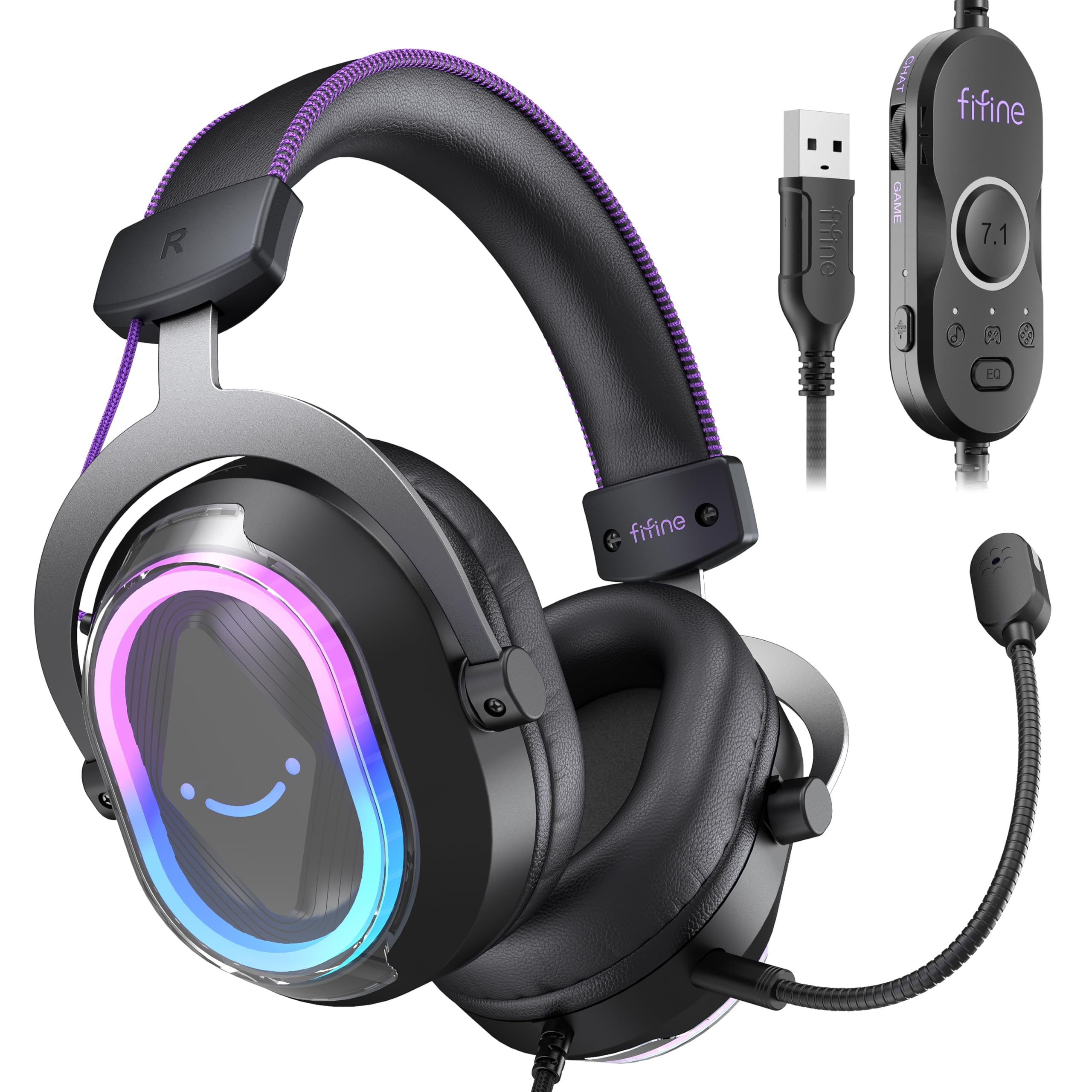
The FIFINE AmpliGame H13BP proves that you do not need to spend a fortune to get a respectable gaming microphone. The noise-canceling microphone on this budget-friendly wired headset effectively reduces ambient hum and background sounds, delivering clear voice pickup for Discord and in-game chat. The mic also features a mute status indicator that glows red when muted, preventing accidental broadcasting of private conversations.
Audio comes from 50mm dynamic drivers that produce sound with clear highs and decent mid-range presence for a headset at this price. The 7.1 surround sound simulation via USB helps with positional audio cues in FPS titles like Marvel Rivals, though it is software-driven rather than hardware, so don’t expect true multi-channel imaging. The inline control module includes game/chat balance, volume wheel, EQ mode switching, and a one-click mute button — all accessible without looking at the cable.
The design is visually striking with a transparent rhombus shell and customizable RGB lighting with 11 modes that can be toggled on or off. Protein leather earpads with memory foam are comfortable for extended sessions, and the closed-back design provides effective passive noise isolation. The 7.55-foot braided USB cable gives you plenty of reach around your desk setup. Build quality is decent for the price, though the plastic construction lacks the premium feel of metal-framed alternatives.
Why it’s great
- Noise-canceling mic with mute indicator light
- Customizable 11-mode RGB lighting for streaming aesthetic
- Inline controls with game/chat balance and EQ switching
Good to know
- Plastic build lacks premium durability
- 7.1 surround is software-simulated, not true multi-driver
- Not compatible with Xbox consoles or Switch
FAQ
What is the most important spec for microphone quality in a gaming headset?
Can a wireless gaming headset have good mic quality?
Should I buy a headset with a detachable microphone?
Do I need a USB connection for good mic quality?
Final Thoughts: The Verdict
For most users, the gaming headset for mic quality winner is the Razer BlackShark V3 Wireless because its Super Wideband 9.9mm microphone delivers studio-like voice clarity with outstanding battery life and multi-platform connectivity. If you want AI-driven noise rejection that blocks virtually all background sounds, grab the SteelSeries Arctis Nova Elite. And for a budget-friendly wired option that still offers impressive mic performance and RGB styling, nothing beats the FIFINE AmpliGame H13BP.