
Anthracnose turns lush leaves into blackened, blotchy messes in a matter of days, often stripping trees and vegetables of their canopy before you even spot the first lesion. The pathogen thrives in wet spring weather, and once it takes hold, generic sprays rarely stop its spread.
I’m Mohammad Maruf — the founder and writer behind Drink4Good. I’ve spent years analyzing fungicide formulations, comparing active ingredients, and tracking real-world results to find what actually halts anthracnose across different plants and climates.
This guide cuts through the marketing claims and examines five proven products to help you select the most effective fungicide for anthracnose based on your specific garden, lawn, or landscape needs.
How To Choose The Best Fungicide For Anthracnose
Anthracnose is caused by multiple Colletotrichum species that attack leaves, stems, and fruit. The right fungicide depends on whether you need curative action, preventative coverage, or an organic solution. Matching the active ingredient to your specific crop — turf, ornamentals, or edibles — is the first step toward effective control.
Active Ingredient: Contact vs. Systemic
Contact fungicides like chlorothalonil form a protective barrier on leaf surfaces, preventing new spores from germinating. Systemic fungicides such as propiconazole are absorbed into the plant’s vascular system, stopping infections that have already begun. For established anthracnose, systemic options are more reliable because they reach inner tissue that contact sprays cannot.
Formulation and Coverage
Concentrates require careful mixing but offer more applications per bottle, while ready-to-use formulas are convenient for small gardens. Microemulsion concentrates (MEC) provide better suspension stability, reducing nozzle clogging and uneven coverage. For large lawns or trees, a sprayable concentrate with good tank-mix compatibility saves time and money.
Plant Safety and Crop Intervals
Some fungicides can be used up to the day of harvest, while others have strict PHI (pre-harvest intervals) that restrict use on edibles. Organic labels often permit same-day harvest, but synthetic options may require a 14–30 day gap. Check the label for specific fruit, vegetable, and ornamental restrictions before applying.
Quick Comparison
On smaller screens, swipe sideways to see the full table.
| Model | Category | Best For | Key Spec | Amazon |
|---|---|---|---|---|
| Atticus Gunner 14.3 MEC | Systemic | Pro-grade lawn & landscape | 14.3% propiconazole MEC | Amazon |
| Quali-Pro Propiconazole 14.3 | Systemic | Turf and tree injection | 14.3% propiconazole MEC | Amazon |
| Bonide Fung-onil | Contact | Vegetables & ornamentals | Chlorothalonil concentrate | Amazon |
| Ferti-lome Systemic II RTS | Systemic | Quick spot treatment | 32 oz ready-to-spray | Amazon |
| Bonide Revitalize Biofungicide | Organic | Organic edibles up to harvest | Bacillus subtilis biofungicide | Amazon |
In‑Depth Reviews
1. Atticus Gunner 14.3 MEC Propiconazole Fungicide
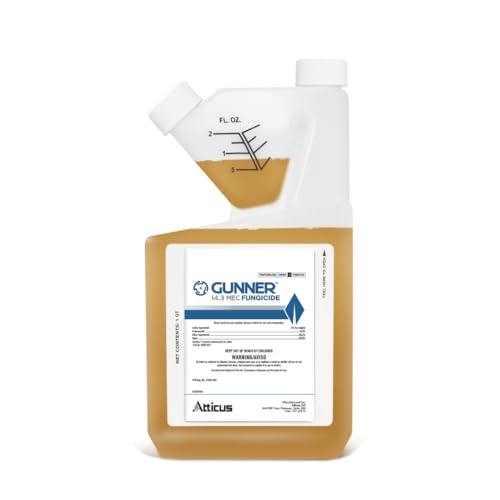
The Atticus Gunner 14.3 MEC delivers the same active ingredient — propiconazole — trusted by golf course superintendents for broad-spectrum anthracnose control. Its microemulsion concentrate formulation uses extremely fine particles that stay suspended in the tank, so you get consistent coverage without constant re-agitation. Once dry, the spray resists wash-off from rain or irrigation, making it reliable even during wet spring weather when anthracnose is most aggressive.
This product enters the plant quickly through both root uptake and stem absorption, providing systemic protection that lasts up to 28 days. It controls more than 20 listed fungi, including brown patch, dollar spot, and powdery mildew alongside anthracnose. The low-odor formula means you notice results rather than lingering chemical smells after treatment.
For homeowners managing larger lawns or landscape beds, the 32-ounce bottle treats up to 12,000 square feet at standard rates. Users consistently report visible recovery in turf within two weeks, with many reordering for annual preventative programs. Note that this product is not registered for sale in Alaska, Hawaii, or Vermont, so verify state restrictions before ordering.
Why it’s great
- Professional-grade MEC formula stays mixed in the tank
- Rainfast once dry — holds up through wet weather
- Systemic action provides up to 28 days of protection
Good to know
- Not available in all states — check registration
- Requires careful measuring for small lawns
2. Quali-Pro Propiconazole 14.3 Fungicide

Quali-Pro’s Propiconazole 14.3 targets anthracnose directly, listing it on the label alongside rusts, leaf spot, brown patch, and snow molds. The microemulsion formulation minimizes odor while providing excellent plant coverage and tank stability. Its locally systemic mode of action means the fungicide moves within the leaf tissue, stopping anthracnose lesions that have already formed.
This product is versatile across multiple use sites — turf, landscape ornamentals, trees, and even tree injection applications. Users treating Bermuda, St. Augustine, and fescue lawns report visible recovery within one to two weeks after the first application. Cases of orange rust on blackberries and oak wilt have also responded well after two to three sprays at the recommended dilution.
For a 12,000-square-foot lawn, a single 32-ounce bottle typically lasts multiple seasons when used as a curative spray. The concentrate requires dilution with water in a pump sprayer, and full PPE including a respirator and goggles is recommended during mixing. This product is a popular alternative to big-box retail options because of its higher active concentration and lower per-application cost.
Why it’s great
- Labeled specifically for anthracnose control
- Works on turf, trees, shrubs, and fruit brambles
- One bottle often lasts multiple growing seasons
Good to know
- PPE required during mixing and application
- Not as effective on St. Augustine fungus in some user reports
3. Bonide Fung-onil Multi-Purpose Fungicide Concentrate

Fung-onil uses chlorothalonil, a broad-spectrum contact fungicide that forms a protective film over foliage to prevent anthracnose spores from germinating. It controls leaf spot, rust, blight, scab, and mildew on beans, tomatoes, fruits, ornamentals, and trees. This product is ideal for gardeners who need a reliable preventative spray before symptoms appear, especially during humid, rainy periods when anthracnose pressure is highest.
The 16-ounce concentrate mixes with water to produce multiple gallons of finished spray. Users treating tomato leaf fungus report noticeable slowing of yellowing within 10 days after two applications spaced apart. The white residue left on foliage and fruit washes off easily with water and does not affect flavor. Many organic-minded growers keep this as a rotational option for heavy disease years.
Because chlorothalonil is a contact fungicide, thorough coverage — including the undersides of leaves — is essential for effective control. Reapplication every 7 to 10 days is recommended during active disease periods. The concentrate texture is milky and clings well to plant surfaces, reducing runoff during application. Be aware that chlorothalonil has a pre-harvest interval, so check the label before using on edibles close to harvest.
Why it’s great
- Protects a wide range of vegetables, fruits, and ornamentals
- Milky formula clings well to leaves for even coverage
- Effective preventative when applied before symptoms appear
Good to know
- Contact-only — does not cure existing internal infections
- White residue may be visible on fruit until washed
4. Fertilome Liquid Systemic Fungicide II RTS
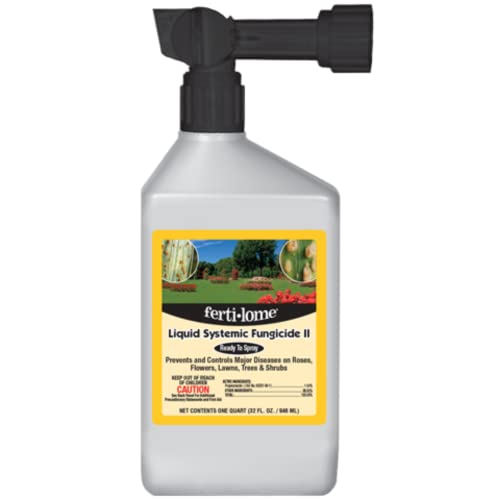
Ferti-lome’s Liquid Systemic Fungicide II comes in a ready-to-spray 32-ounce bottle, eliminating the need for mixing and measuring. It controls take-all patch, brown patch, dollar spot, and leaf spot on roses, flowers, lawns, and trees. Its systemic action moves through the plant to stop fungal activity from the inside, making it useful for anthracnose that has already started spreading.
Users treating mature live oaks, flowering crab trees, and pine trees report visible improvement after a single application. The formula is designed to be applied to the point of runoff on foliage and after mowing on turf. For grass, results are often noticeable within three days, with yellowing leaves turning green again over the following week.
The ready-to-use format makes this an excellent choice for small gardens or spot treatments where mixing a concentrate would be wasteful. However, the convenience comes at a higher cost per ounce compared to concentrates. For larger properties, the 32-ounce bottle may only cover a limited area, requiring multiple bottles for full-season protection. Apply early in the growing season for best results, and avoid spraying in direct midday sun.
Why it’s great
- No mixing required — spray straight from the bottle
- Systemic action treats existing fungal infections
- Fast visible results on lawns — often within three days
Good to know
- Higher per-ounce cost than concentrates
- Small bottle size limits coverage for large lawns
5. Bonide Revitalize Biofungicide Concentrate

Bonide Revitalize is a biological fungicide that uses the beneficial bacterium Bacillus subtilis to trigger an immune response in plants against anthracnose, blight, and powdery mildew. Approved for organic gardening, it can be applied up to the day of harvest with no pre-harvest interval. This makes it the top choice for vegetable gardeners who want to keep chemical residues off their produce.
The 16-ounce concentrate mixes with water and can be applied as a foliar spray or soil drench. It works by colonizing the leaf surface and outcompeting pathogenic fungi, rather than poisoning them. Users report successful control of septoria leaf spot on tomatoes and minor fungal issues on houseplants, though results may be slower than synthetic options during severe outbreaks.
One trade-off is the noticeable odor during and immediately after application — multiple reviewers describe it as strong but effective. Because it is a biological product, proper storage is important to maintain viability; avoid freezing or exposing the concentrate to extreme heat. For ongoing prevention in an organic garden, applying every 7 to 14 days during disease-prone weather is recommended.
Why it’s great
- OMRI-listed for organic gardening
- Can be used up to the day of harvest
- Works as both foliar spray and soil drench
Good to know
- Strong smell during and after application
- May be slower to act than synthetic fungicides on heavy infections
FAQ
Can I use propiconazole on vegetable plants for anthracnose?
How often should I apply fungicide for anthracnose during wet weather?
Will fungicide cure anthracnose after leaves are already blackened?
Final Thoughts: The Verdict
For most users, the fungicide for anthracnose winner is the Atticus Gunner 14.3 MEC because its professional-grade propiconazole formula provides systemic, rainfast protection that lasts nearly a month. If you need a versatile option for both turf and landscape ornamentals, the Quali-Pro Propiconazole 14.3 delivers identical active ingredient performance at a budget-friendly per-ounce cost. And for organic vegetable gardens where same-day harvest is required, nothing beats the Bonide Revitalize Biofungicide for safe, effective biological control.