
A compressor pedal is the most misunderstood tool on any pedalboard. It can tighten your picking, fatten your sustain, and turn a flimsy single-coil into a singing lead voice — but get it wrong and you’ll kill your dynamics and add a layer of hiss that never leaves your signal path. The secret is matching the pedal’s attack character, blend flexibility, and noise floor to your playing style and rig.
I’m Mohammad Maruf — the founder and writer behind Drink4Good. I’ve spent years mapping the compression market, from budget mini-pedals to studio-grade units, analyzing circuit types, threshold behavior, and real-world noise performance across every price tier.
Whether you’re after subtle clean sustain or full country squash, the right guitar compressor pedal makes your playing sound more polished and professional without sacrificing the natural dynamics you worked hard to develop.
How To Choose The Right Guitar Compressor Pedal
A compressor pedal is not a one-knob-wonder. Its job is to reduce the dynamic range between your softest and loudest notes, but the way it does that — and how much it colors your original tone — varies wildly from model to model. The first decision is circuit topology. Optical compressors like the MOOER Yellow Comp give you a smooth, natural attack with a gentle knee, ideal for fingerpicking and clean arpeggios. VCA and FET designs respond faster and deliver more aggressive squish, which country pickers and funk rhythm players rely on. The new wave of multi-band digital processors, like the BOSS CP-1X, analyze your playing across the frequency spectrum to reduce noise and pump artifacts, a massive upgrade for players who run high gain.
The Blend Control — Your Dynamics Safety Net
The single most important feature on a modern compressor is the blend or mix knob. Without it, you hear only the compressed signal — all the transient attack, string squeak, and picking nuance gets flattened into a lifeless wall. A blend control lets you re-introduce your dry signal so you get the sustain and stability of compression without losing the percussive snap that defines your attack. Keeley’s Compressor Plus, the Wampler Ego V2, and TC Electronic’s Hypergravity all leverage blend controls to give you studio-style parallel compression in a stompbox. If your budget supports it, never buy a compressor without a blend knob.
Release Timing and Pickup Matching
Single-coil pickups deliver a weaker signal with more upper-mid shimmer, making them naturally more sensitive to compression. Humbuckers push a hotter, fatter signal that can overload a compressor’s threshold if the attack is too fast. Some pedals, like the Keeley Compressor Plus, include a switch that toggles between release curves tuned for single-coils and humbuckers. Others, like the MXR Dyna Comp, have a fixed release rate that works best with single-coils. If you switch guitars mid-set, a pedal with adjustable release control or pickup-specific voicing saves you from manual knob-twiddling between songs.
Quick Comparison
On smaller screens, swipe sideways to see the full table.
| Model | Category | Best For | Key Spec | Amazon |
|---|---|---|---|---|
| Keeley Compressor Plus | Premium | Studio-grade blend control | Release switch for single-coil/humbucker | Amazon |
| Wampler Ego Compressor V2 | Premium | Transparent parallel compression | Blend knob with attack control | Amazon |
| BOSS CP-1X | Premium | Multi-band noise-free sustain | mDP digital processing engine | Amazon |
| TC Electronic Hypergravity | Mid-Range | Multi-band with TonePrint software | Multiband compression blend knob | Amazon |
| MXR Dyna Comp | Mid-Range | Nashville country squash | Classic single-coil attack curve | Amazon |
| JOYO D55 | Budget | Clean boost with 3-band EQ | Input switch: High, Middle, Low | Amazon |
| MOOER Yellow Comp | Budget | Ultra-compact optical compression | Optical circuit with true bypass | Amazon |
In‑Depth Reviews
1. Keeley Compressor Plus Pedal (KCompPlus)
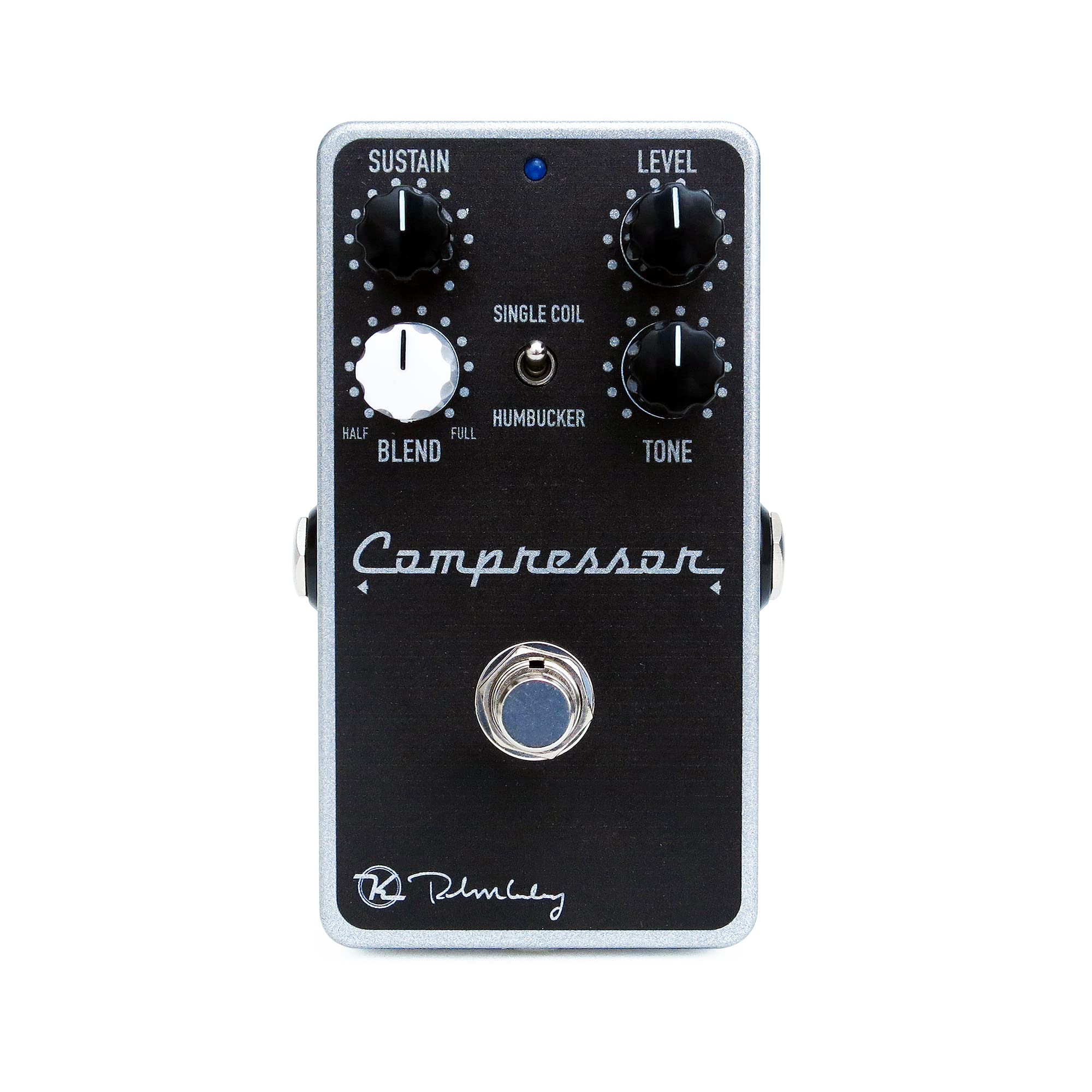
The Keeley Compressor Plus represents a genuine evolution of the classic Ross-style compressor circuit. It packs a blend control that mixes your dry signal back in, a tone control that restores the high-frequency sparkle often lost in compression, and a three-way release switch tuned for single-coils, humbuckers, or a standard position. The result is a pedal that can go from transparent subtle leveling to full squish without ever feeling like it’s fighting your picking hand.
Vocal sustain is where this pedal truly shines — even at moderate compression settings, notes bloom with a rich harmonic complexity that sounds natural, not choked. The release switch solves the long-standing problem of fixed-attack compressors that mush out on humbucker-equipped guitars. Players swapping between a Telecaster and a Les Paul mid-gig can toggle the switch and keep their dynamics consistent. The build quality is robust, with a painted steel enclosure that shrugs off road wear.
The low-noise floor means you won’t hear the pump or hiss that plagues cheaper compressors, though running it without an isolated power supply can introduce some background hum. At its price point, the Keeley delivers professional-grade parallel compression and pickup-specific release tuning that makes it the most versatile single-pedal compressor on the market right now.
Why it’s great
- Blend knob preserves dry attack and dynamics
- Release switch optimizes for single-coil or humbucker pickups
- Tone control restores natural top-end sparkle
Good to know
- LED indicator design can be confusing under stage lighting
- Requires isolated power supply for best noise performance
- Higher price than entry-level options
2. Wampler Ego Compressor V2

The Wampler Ego Compressor V2 is built around the idea that compression should enhance your tone without stealing it. The blend knob gives you parallel compression — you feed in as much dry signal as you want alongside the compressed signal. This lets you dial in the sustain and consistency of compression while keeping the percussive snap of your pick attack completely intact. The attack knob sweeps from a fast, clicky response perfect for chicken-pickin’ country to a slower, more subtle compression that works for ambient rock.
Transparency is the defining trait here. The Ego V2 adds no audible noise, no low-end loss, and no high-frequency roll-off. The tone control can subtract or add presence, but even at neutral settings your guitar sounds like your guitar — just with better sustain and a smoothed-out dynamic range. It works flawlessly with both single-coils and humbuckers, and the top-mounted jacks make pedalboard wiring much cleaner. The build quality is excellent, with a standard five-year warranty that reflects Wampler’s confidence.
The volume/output knob is sensitive near its maximum rotation, with a 15 to 20 dB jump that can make fine-tuning a little tricky, but this is easily managed by setting the pedal early in your chain. For gigging players who need one compressor that can handle everything from clean fingerpicking to driven solos without a hint of unnatural coloration, the Ego V2 is a top-tier choice.
Why it’s great
- Blend control enables true parallel compression for natural dynamics
- Extremely low noise floor — completely transparent operation
- Attack knob covers fast country squish to slow ambient sustain
Good to know
- Output knob has a sudden volume jump near max rotation
- Mini toggle switches may wear after years of heavy touring
- Premium pricing pushes it above some flagship models
3. BOSS CP-1X Compressor

BOSS threw out the analog rulebook with the CP-1X, deploying their proprietary Multi-Dimensional Processing (mDP) to compress your signal in separate frequency bands. This is a game-changer for reducing the two biggest compressor headaches: pumping and noise. By analyzing the low end, mids, and highs independently, the CP-1X applies exactly the right amount of compression to each register, which means deep bass notes don’t trigger the whole pedal into ducking your treble strings.
The result is a compression that feels extremely musical and immediate — pick harder and the tone shifts, not just the volume. The gain reduction LED meter gives you instant visual feedback on how much squish you’re applying, and the simple three-knob layout (Sustain, Level, Blend) makes it approachable even for compression beginners. It’s digital under the hood, but the output is warm, lush, and remarkably analog-feeling. Many players describe it as an “always on” pedal that just makes everything sound better.
The CP-1X handles both guitar and bass with equal authority, making it a fantastic choice for players who use a single pedalboard across multiple instruments. The noise floor is virtually silent, even at high sustain settings. BOSS build quality is legendary — the CP-1X will survive dropped amp heads and stomped-on patch cables alike. The only real adjustment is the digital attack character: if you’re after the specific rubbery feel of an analog optical compressor, this feels different, but not worse.
Why it’s great
- Multi-band processing eliminates pumping and reduces noise dramatically
- Works equally well for both guitar and bass applications
- Gain reduction LED gives clear real-time visual feedback
Good to know
- Digital compression feel differs from traditional analog optical/VCA circuits
- 30 mA current draw is higher than most analog mini pedals
- No internal attack or release trim pots for deep tweaking
4. TC Electronic Hypergravity Compressor

The TC Electronic Hypergravity is a Swiss Army knife of compression, offering both classic analog-style compression and a digital multiband mode accessed through a three-way toggle switch. The TonePrint software unlocks a level of control that’s rare in a stompbox — you can individually set threshold, ratio, attack, and release for up to three frequency bands. This makes it incredibly powerful for players who want to compress only the low end while leaving the highs untouched, or vice versa.
The blend knob is a straightforward mix control that lets you dial in parallel compression on the fly, and the top-mounted jacks keep your board tidy. Once you spend the time setting up a custom TonePrint via the desktop app, the pedal sounds fantastic. The vintage mode offers a familiar squish that works well for clean country and funk rhythms, while the multiband mode shines for modern lead tones where clarity and sustain need to coexist without muddiness.
The Hypergravity demands patience. Out of the box, it’s not plug-and-play — the default settings can introduce latency and hiss if the auto-gain function is left on. You must disable auto-gain and set your blend properly to get the best results. The knobs turn too easily, which can lead to accidentally moving settings when transporting the pedal. For players who love deep editing and don’t mind a learning curve, the Hypergravity offers more compression flexibility than any other pedal in its tier.
Why it’s great
- Full multiband compression with per-band threshold, ratio, attack, and release
- Blend knob enables seamless parallel compression for live use
- Top-mounted jacks for clean pedalboard wiring
Good to know
- Requires TonePrint app setup to unlock best sound — not plug-and-play
- Auto-gain feature causes latency and hiss if left enabled
- Knobs lack detents and can shift position during transport
5. MXR Dyna Comp (M102)

The MXR Dyna Comp needs no introduction. It’s the pedal you hear on countless Nashville recordings — that tight, squashed country telecaster sound with the signature “thwack” on every pick stroke. With only two knobs (Sensitivity and Output), it strips compression down to its purest, most musical form. It’s an in-line compressor that evens out your signal while boosting sustain, and it’s been a studio standard since the 1970s. The dynamic squash it delivers is aggressive and musical, making single-coil pickups sound impossibly tight.
Where the Dyna Comp really excels is in its simplicity and reliability. It runs on a standard 9-volt battery that lasts for months, and the steel chassis can survive being thrown in a gear bag every night. The tone is famously bright and percussive, with a compression curve that emphasizes attack transients rather than smoothing them out. It’s why country and chicken-pickin’ players swear by it — the Dyna Comp adds a clarity and punch that no other pedal quite replicates.
The trade-off is that it has no blend control, so 100 percent of your signal is compressed all the time. This works brilliantly with single-coils but can sound too squashed and noisy with hot humbuckers, especially if your rig introduces any background buzz. It also amplifies noise from a dirty power supply or poor shielding. If you play a Telecaster or Strat and want that iconic Nashville sound, the Dyna Comp is still the benchmark. If you need more flexibility or run humbuckers, you’ll want a pedal with a blend knob.
Why it’s great
- Legendary country and chicken-pickin’ compression tone
- Simple two-knob operation with no menu-diving required
- Battery-powered and built like a tank for touring
Good to know
- No blend control — 100% compressed signal at all times
- Works best with single-coils; can be noisy with humbuckers
- Amplifies background noise from non-isolated power supplies
6. JOYO D55 Compressor & Clean Boost

The JOYO D55 punches well above its price class by combining compression, a clean boost, and a three-band EQ in a single compact enclosure. The input switch (High, Middle, Low) lets you adapt the pedal’s sensitivity to different pickup outputs, which is a rare feature at this level. The COMP knob controls the amount of compression and sustain, while the ATTACK knob adjusts how quickly the compression clamps down on your initial pick attack. The MIX control blends your clean signal back in — a feature often missing from budget compressors.
With the MIX knob turned fully counter-clockwise, the D55 acts as a clean boost with EQ shaping, which makes it effectively two pedals in one. The paint-sprayed metal housing feels reassuringly solid, and true-bypass switching ensures your dry signal stays intact when the pedal is off. The 800-microamp current draw is extremely low, making it friendly for daisy-chained power supplies. It handles bass just as well as guitar, offering more versatility than most pedals at this price.
The compression character is more aggressive and less transparent than premium options, with a slight mid-forward coloration that some players find musical and others consider boxy. The low-noise performance is respectable but not silent — there’s a faint hiss at high sustain settings. The D55 is a fantastic choice for beginners building their first board or for players who want a utility pedal that can compress, boost, and EQ without spending on three separate units.
Why it’s great
- Combines compression, clean boost, and 3-band EQ in one pedal
- Input switch adapts to different pickup output levels
- MIX control allows blend of compressed and dry signal
Good to know
- Compression is less transparent than premium options
- Some audible hiss at high sustain and compression settings
- Mid-forward tone may not suit players seeking neutral coloration
7. MOOER Yellow Comp

The MOOER Yellow Comp packs an optical compression circuit into a housing that barely takes up more space than a standard patch cable. Optical compressors are prized for their smooth, natural attack and gentle release curve, and the Yellow Comp delivers that classic feel in a mini format. It features three simple knobs — Compression, Level, and EQ — and a true-bypass switch that preserves your signal integrity. The full metal shell is impressively solid for its size, and the 10-milliamp current draw is negligible.
The compression character is warm and musical, without the aggressive squish of FET-based units. It excels at adding sustain to clean tones without making your picking feel stiff or choked. The EQ knob is a surprisingly useful addition for an optical pedal, letting you brighten or darken the compressed signal to match your rig. On a crowded pedalboard, the Yellow Comp slides into gaps that would otherwise be wasted space, making it a favorite for players who need compression but can’t spare a full-size slot.
The biggest concern with the Yellow Comp is reliability — there are user reports of units failing after a month, and MOOER’s customer service is notoriously difficult to navigate. While the sound is excellent for the price, inconsistent quality control makes it a gamble. It also lacks a blend control, so you’re committing to a fully compressed signal. For players on a tight budget with limited board space who can tolerate some risk, the Yellow Comp sounds like a pedal three times its price. For gigging professionals, a more reliable unit is worth the investment.
Why it’s great
- Optical circuit delivers smooth, natural attack and decay
- Ultra-compact size fits in tight pedalboard gaps
- EQ knob adds useful tonal shaping for a mini pedal
Good to know
- No blend control — 100% compressed signal at all times
- Reliability concerns with some units failing early
- Customer service from MOOER is difficult to reach
FAQ
Should I place my compressor before or after distortion pedals in my signal chain?
Why does my compressor make a hissing sound when I engage it?
What is the practical difference between optical, FET, and VGA compression circuits in a pedal?
Final Thoughts: The Verdict
For most players, the best guitar compressor pedal winner is the Keeley Compressor Plus because its blend control, tone shaping, and pickup-specific release switch deliver studio-grade flexibility in a roadworthy stompbox. If you prioritize absolute transparency with parallel compression and want an always-on unit that never colors your sound, grab the Wampler Ego Compressor V2. And for the ultimate noise-free sustain with modern multi-band processing, nothing beats the BOSS CP-1X, especially for players switching between guitar and bass in a single rig.