
Planting grass in the summer heat is a race against the sun. Most cool-season varieties go dormant or cook in soil above 85°F, leaving you with bare patches and wasted effort. The right seed mix, however, uses deep-rooted tall fescues or warm-season Bermudagrass that actually thrive when temperatures spike.
I’m Mohammad Maruf — the founder and writer behind Drink4Good. I’ve spent years analyzing soil science data, germination rates, and heat-tolerance metrics across dozens of grass seed blends to separate marketing claims from real results.
This guide breaks down five proven mixes that handle direct sun, low water, and heavy foot traffic. Whether you’re overseeding a tired lawn or starting from bare dirt, the right grass seed for summer planting depends on your region, sun exposure, and how much maintenance you’re willing to commit.
How To Choose The Best Grass Seed For Summer Planting
Summer planting demands a seed that germinates fast, tolerates high soil temperatures, and survives with moderate watering. Not every bag labeled “sun” is built for August-level heat. Focus on three factors: the grass type’s natural heat ceiling, the presence of a moisture-retaining coating, and the root depth potential.
Heat Tolerance vs. Drought Tolerance
These traits are related but different. Heat tolerance means the grass blade doesn’t scorch when soil hits 90°F. A waxy leaf coating, like the kind found on Texas bluegrass and some tall fescues, reduces evaporation. Drought tolerance comes from deep roots — some mixes send roots down four feet, pulling moisture from deep soil layers long after surface water is gone.
Germination Speed in Warm Soil
Warmer soil speeds germination, but only if the seed is coated to retain moisture. Uncoated seeds can dry out within hours on a 95°F day. Look for Penkoted or similar technology that holds moisture around the kernel. Fast germinators like annual ryegrass can show green in five to seven days, while Kentucky bluegrass may take three weeks even in ideal conditions.
Coverage Rate and Seeding Density
Summer overseeding requires heavier seeding rates than spring to compensate for heat stress. A typical 3-pound bag may cover 750 square feet for a new lawn or up to 1,500 for overseeding. Make sure the bag’s coverage matches your project size — buying two bags of a smaller premium mix is often better than one large bag of a low-end filler blend.
Quick Comparison
On smaller screens, swipe sideways to see the full table.
| Model | Category | Best For | Key Spec | Amazon |
|---|---|---|---|---|
| Jonathan Green Black Beauty Heat & Drought | Cool-Season Blend | Full sun to light shade, 100°F heat | Waxy leaf coating, roots up to 4 ft | Amazon |
| Pennington Bermuda Grass Seed | Warm-Season | High heat, aggressive spreading | Penkoted moisture coating, cold-tolerant | Amazon |
| Scotts Turf Builder Sunny Mix | All-in-One | Direct sun, fertilized blend | Root-Building Nutrition formula | Amazon |
| Scotts Kentucky 31 Mix | Budget Tall Fescue | Large areas, moderate heat | 99% weed-free, 580 sq ft new lawn | Amazon |
| Pennington Smart Seed Kentucky Blue Grass | Entry-Level Bluegrass | Small sunny patches | Fertilizer included, covers 2000 sq ft | Amazon |
In‑Depth Reviews
1. Jonathan Green Black Beauty Heat & Drought Resistant Grass Seed

This is the cool-season mix that refuses to act like one. The blend of Black Beauty tall fescue and Texas bluegrass is bred with a waxy leaf coating that traps moisture like an apple’s skin, letting it survive temperatures up to 100°F without browning. Root depth reaches four feet, which is double what most fescue mixes achieve, giving it access to subsoil moisture long after the top inch dries out.
Germination runs 14 to 21 days, but multiple verified reviews report seeing sprouts in seven days with consistent morning watering and proper soil prep. The 3-pound bag covers 750 square feet for new lawns or 1,500 for overseeding. That’s a smaller footprint than budget options, but the seed quality per square foot is materially higher — fewer dead spots and denser turf.
The trade-off is that this seed demands good soil contact. Whether you use a garden claw, top-dress with potting soil, or aerate first, skipping prep noticeably reduces germination. Best applied mid-August to mid-October, but for summer planting in cooler zones, early morning seeding followed by daily watering at dawn works consistently.
Why it’s great
- Waxy leaf coating reduces evaporation in high heat
- Deep roots provide natural drought protection
- Dark green color comparable to Kentucky bluegrass
Good to know
- Requires thorough soil prep for best results
- Smaller coverage area than budget blends
2. Pennington Bermudagrass Grass Seed

Bermudagrass is the default warm-season answer for southern summer planting, and Pennington’s version adds cold-tolerant genetics and Penkoted technology that keeps the kernel hydrated during the critical first 48 hours. It’s an aggressively self-spreading grass — once established, it fills bare spots naturally through stolons and rhizomes without needing to reseed.
Coverage is generous at 5 pounds, and the grass requires mowing at 1 to 1.5 inches, which is lower than fescue. This keeps the canopy tight and reduces thatch buildup. The blend produces fewer clippings, which means less cleanup during peak growing months. Several users in Florida and the Carolinas report refurbishing weed-choked lawns into full turf within one growing season.
Germination requires soil temperatures of 70°F to 80°F and consistent moisture. In hot summer conditions, twice-daily watering may be necessary for the first two weeks. The seed goes dormant — turns brown — during winter months, so it’s not suitable for northern climates that demand year-round green. Best applied early to mid-summer for the hottest growth window.
Why it’s great
- Self-spreading nature fills bare spots naturally
- Penkoted coating improves germination in heat
- Cold-tolerant genetics extend growing season
Good to know
- Goes dormant and brown in winter
- Requires low mowing for best density
3. Scotts Turf Builder Grass Seed Sunny Mix
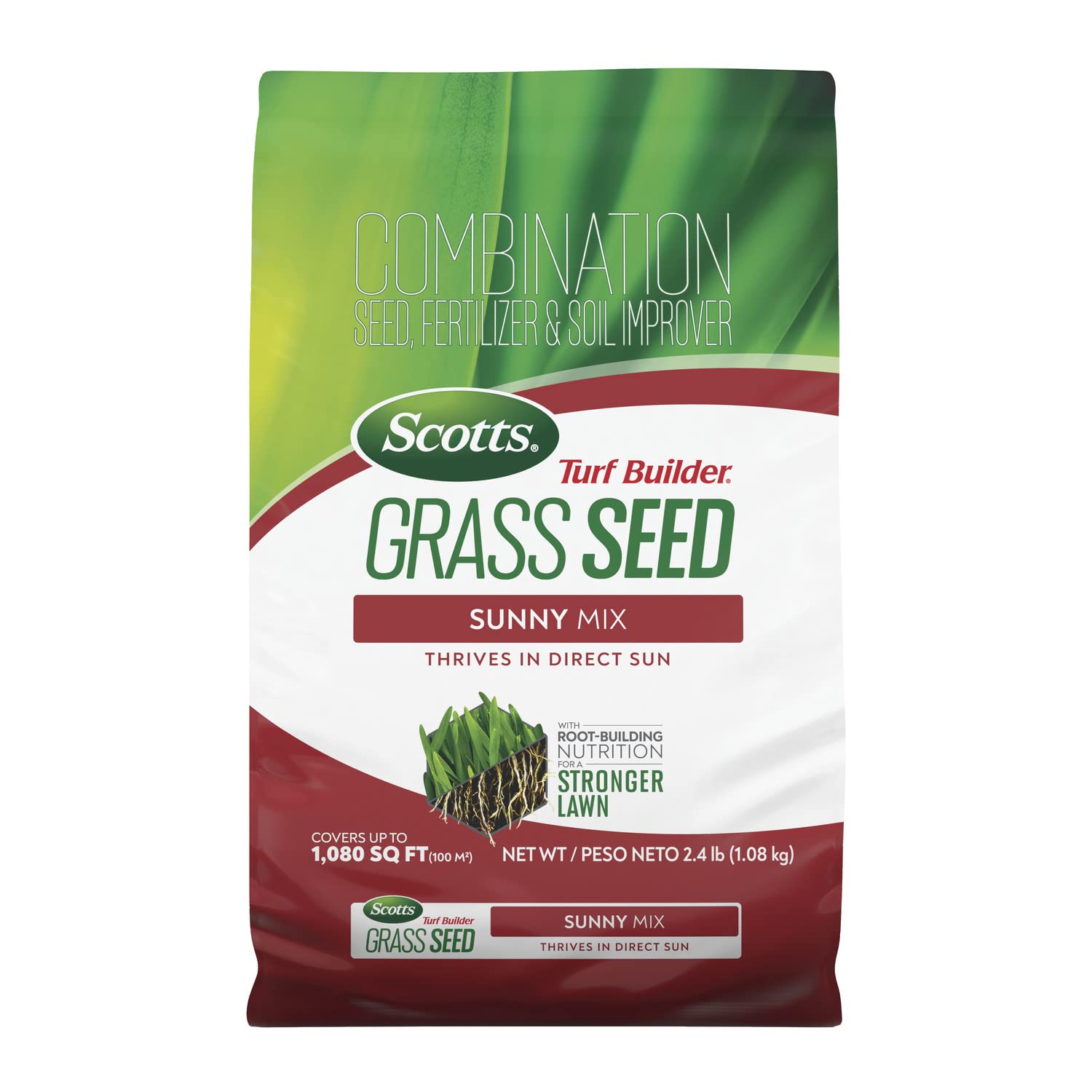
This bag does triple duty: seed, fertilizer, and soil improver all in one. Scotts’ Root-Building Nutrition formula is designed for full sun and light shade, with medium to high drought resistance once the grass is established. The fertilizer component feeds the seedling immediately, which matters when summer soil temperatures accelerate nutrient depletion.
The 2.4-pound bag covers 360 square feet for a new lawn or 1,080 for overseeding. That’s a relatively small footprint compared to straight seed blends, but the all-in-one design reduces the need for a separate starter fertilizer application. Users in drought-prone areas report the grass stays green with regular watering, and several note visible results within two weeks.
One limitation is that the fertilizer content means you cannot overseed with nitrogen-sensitive species immediately after. Wait at least four weeks before applying additional lawn food. The mix also contains annual ryegrass, which germinates quickly but may thin out in the second season — plan to overseed annually for sustained density.
Why it’s great
- Seed, fertilizer, and soil improver in one application
- Fast germination with visible results in 5 to 14 days
- Good drought resistance once roots establish
Good to know
- Small bag covers limited area for new lawns
- Contains annual ryegrass that may thin over winter
4. Scotts Kentucky 31 Grass Seed Mix
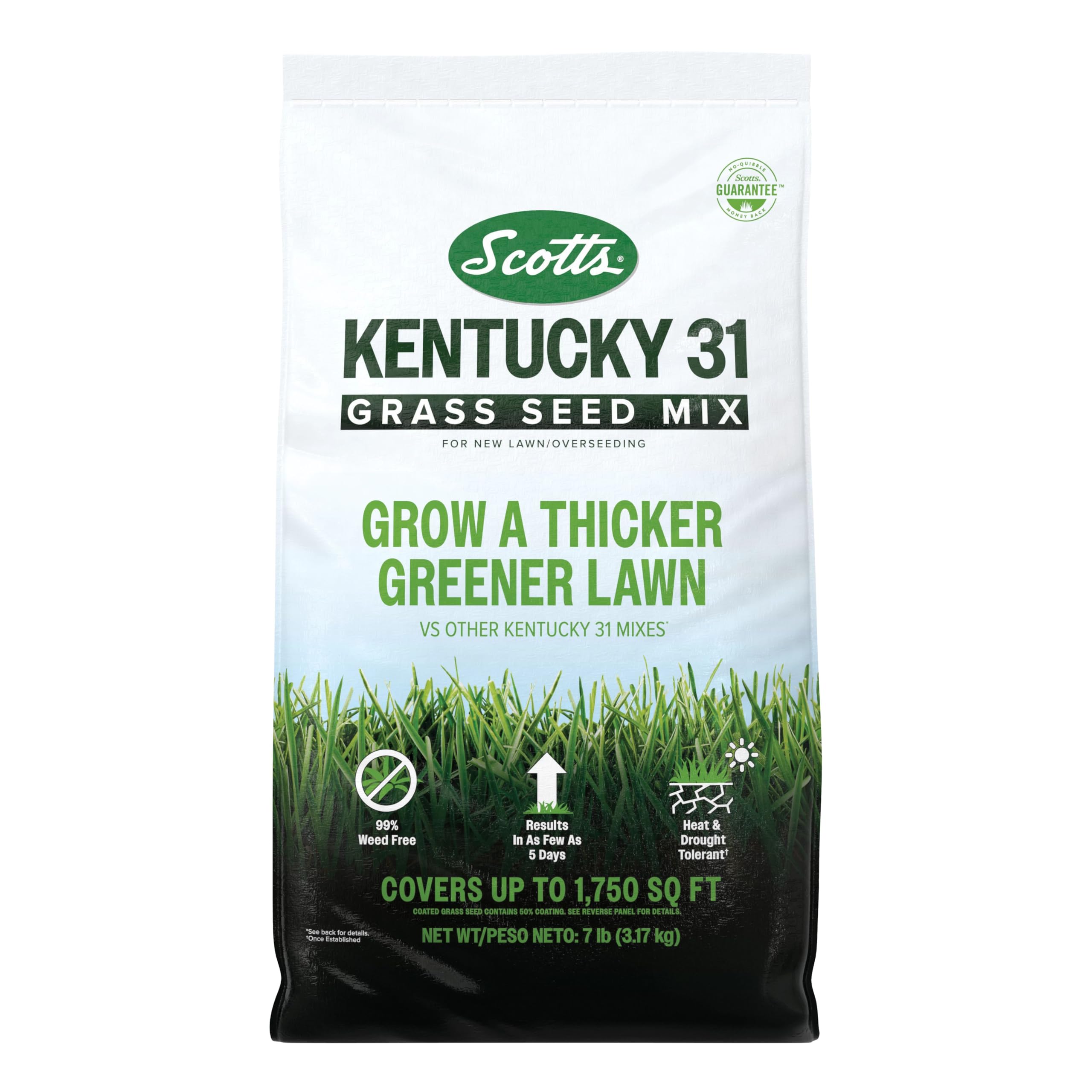
Kentucky 31 is a classic tall fescue that has been the go-to for economical large-area seeding for decades. Scotts’ version blends it with annual ryegrass for faster germination and a second tall fescue variety for improved density. The result is a 99% weed-free mix that tolerates heat and drought once established, though it lacks the deep-root extremism of the Jonathan Green blend.
The 7-pound bag covers 580 square feet for a new lawn or 1,750 for overseeding. That’s the best raw coverage ratio among the fescue options here, making it a solid choice for filling a half-acre patch without breaking the bank. Multiple verified reviews show it working in northern Virginia and Chicago-area zones with proper prep, and one user turned a 40-foot bare path into a lush carpet after other seeds failed.
The caveat is that some batches come with a coating that adds weight without seed content. Several reviews report the coating can account for nearly half the bag weight, and a small number of buyers experienced zero germination. To minimize risk, buy from high-turnover sellers and check the batch date. If you have time, test a handful in a tray before broadcasting over your whole lawn.
Why it’s great
- Best value for large-area coverage
- 99% weed-free, reliable in multiple climates
- Fast germination with annual ryegrass component
Good to know
- Coating can dilute actual seed weight significantly
- Inconsistent germination reported in some batches
5. Pennington Smart Seed Kentucky Blue Grass Mix

Kentucky bluegrass is not the first choice for summer planting — it’s a cool-season grass that thrives in spring and fall — but Pennington’s Smart Seed formula includes a fertilizer kicking and a blend that handles 4 to 6 hours of sunlight better than pure bluegrass. It’s best used for small sunny patches where you want a dense, lush feel comparable to a golf-course fairway.
The 3-pound bag covers up to 2,000 square feet, which is the broadest coverage of any product here. That makes it extremely efficient for overseeding established lawns where you only need to thicken existing turf rather than start from scratch. Users report seeing results in 15 to 30 days, with thick, hearty growth that blends well with existing fescue lawns.
Heat is the limiting factor. Bluegrass goes dormant above 85°F soil temperature, so summer planting is only viable in northern zones with mild summers or in shaded spots that stay cooler. Several reviews note that germination stalls if temperatures spike into the 90s within the first week. Pair with a light mulch cover to retain moisture and keep soil temps down during the critical establishment period.
Why it’s great
- Very high coverage per bag for overseeding
- Fertilizer included for one-step application
- Lush, thick texture when established
Good to know
- Bluegrass goes dormant in extreme heat
- Slow germination in summer without consistent watering
FAQ
Can I plant cool-season grass seed in July and August?
What is the fastest germinating grass seed for summer?
Should I use starter fertilizer with summer grass seed?
Final Thoughts: The Verdict
For most users, the grass seed for summer planting winner is the Jonathan Green Black Beauty Heat & Drought Resistant because its waxy leaf coating and four-foot root system deliver real heat tolerance without requiring frequent watering. If you want aggressive self-spreading for southern climates, grab the Pennington Bermudagrass. And for a quick, all-in-one fix that feeds as it grows, nothing beats the convenience of the Scotts Turf Builder Sunny Mix.