
Outdoor plastic faces a relentless assault: UV rays that embrittle the surface, rain that seeps into hairline cracks, and temperature swings that cause expansion and contraction. You need a formula engineered to withstand moisture, hold firm under thermal stress, and remain optically clear or paintable after curing.
I’m Mohammad Maruf — the founder and writer behind Drink4Good. I analyze adhesive chemistries and field-test their real-world performance on polypropylene, ABS, acrylic, and composite plastics used in outdoor furniture, automotive trim, and garden gear.
After examining bond-line strength, cure speed, UV resistance, and application viscosity across dozens of formulations, these five candidates stand as the definitive glue for outdoor plastic repairs that homeowners and hobbyists can trust through all four seasons.
How To Choose The Best Glue For Outdoor Plastic
Selecting the right adhesive for outdoor plastics means evaluating three core factors that indoor glues never face: constant UV exposure, cycles of moisture, and the physical flexing that temperature changes cause. Read on to understand what separates a bond that lasts a decade from one that fails before the next rainstorm.
UV Resistance & Weatherproofing
Ordinary cyanoacrylate turns brittle and yellow under direct sunlight within weeks. For outdoor plastic, look for formulations labeled UV-resistant or containing additives that block degradation. Construction adhesives and solvent cements that cross-link into a rubbery polymer handle thermal cycling far better than rigid super glues.
Adhesive Viscosity & Plastic Type
Thin, watery glues wick into tight cracks and solvent-weld rigid plastics like acrylic or ABS. Thicker gel or paste formulas fill gaps on uneven, weathered surfaces and work better on low-energy plastics like polypropylene and polyethylene after surface preparation. Matching viscosity to the repair scenario prevents drips on vertical applications and ensures deep penetration on porous repairs.
Full Cure Time & Working Window
Fast set times are convenient for small repairs but can ruin alignment on larger projects. A working window of five to ten minutes allows repositioning of outdoor furniture armrests or automotive trim pieces. Full cure to maximum strength typically takes 24 hours; outdoor exposure should wait until the bond is completely cured to avoid moisture entrapment weakening the joint.
Quick Comparison
On smaller screens, swipe sideways to see the full table.
| Model | Category | Best For | Key Spec | Amazon |
|---|---|---|---|---|
| Gorilla Max Strength Construction Adhesive | Construction | Gap filling & waterproof outdoor repairs | 7‑oz squeeze tube | Amazon |
| J-B Weld Light‑Activated Superglue | UV Cure | Precision small parts & instant fixes | 10‑second light cure | Amazon |
| WELD‑ON 16 Acrylic Plastic Cement | Solvent Cement | Acrylic / plexiglass & 3D‑print welding | 5‑fl oz tube, low VOC | Amazon |
| Rhino Glue Gel | Gel Cyanoacrylate | Quick bonds on clean plastic surfaces | 40‑gram gel, high viscosity | Amazon |
| Loctite Vinyl, Plastic & Fabric Adhesive | Contact Adhesive | Vinyl, fabric, and flexible plastic repairs | 24‑hour full cure, paste | Amazon |
In‑Depth Reviews
1. Gorilla Max Strength Construction Adhesive
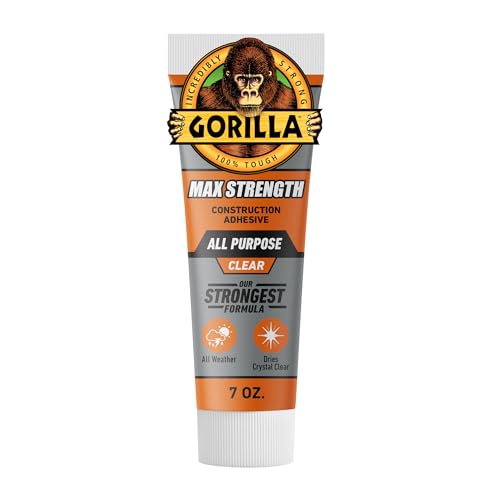
Gorilla’s Max Strength Construction Adhesive is formulated to be twice as strong as their Heavy Duty version, making it a top choice for outdoor plastic repairs that need to withstand rain, snow, and direct sun. The crystal-clear formula dries to a discreet finish, so it won’t yellow or crack when used on garden furniture, kayak trim, or plastic fencing. Its waterproof bond holds even when fully submerged, which is rare among consumer-grade adhesives.
The 7‑ounce squeeze tube delivers a thick, paste-like bead that fills gaps up to a quarter-inch wide — ideal for rough or weathered plastic surfaces where clamping is difficult. Users report that the adhesive remains repositionable for roughly five minutes before locking firmly, giving you time to align large panels or brackets. Full cure takes 24 hours, but the bond reaches handling strength within an hour in moderate temperatures.
One real-world test showed this glue holding magnets firmly inside a car engine bay through summer heat cycles. It also sealed a wood-to-plastic joint that remained watertight after pressure washing. The main trade-off is the large nozzle opening, which can dispense more adhesive than needed for smaller repairs.
Why it’s great
- Waterproof and UV‑resistant for year‑round outdoor use
- Clear finish blends into visible repairs
- Excellent gap‑filling for uneven or weathered plastic
Good to know
- Large nozzle makes precise application difficult
- Requires clamping for best results during 24‑hour cure
2. J‑B Weld Light‑Activated Superglue

This two‑pack system from J‑B Weld uses a UV‑curing mechanism that fully sets in ten seconds when exposed to the included light, making it the fastest‑curing option for outdoor plastic repairs. The liquid formula has a tensile strength of 2,800 PSI and cures hard as glass, which is ideal for reattaching broken plastic clips, automotive trim, or outdoor gear where clamping is impractical. Without the UV light it sets in about one minute and fully cures in 24 hours.
The precision tip applicator lets you place drops exactly where needed, reducing waste on small repairs. Because the glue remains liquid until exposed to UV light, you can reposition parts for a full minute or more before curing — a major advantage over traditional cyanoacrylate. Users report it works exceptionally well on smooth, non‑porous plastic surfaces that reject most other adhesives.
A few caveats: the cap can adhere to the tube if not cleaned after each use, causing the tube to glue shut. The UV light emits concentrated rays that can burn skin in seconds, so protective gloves and careful handling are essential. Still, for small outdoor plastic repairs requiring immediate handling strength, this system is unmatched.
Why it’s great
- UV light cures in ten seconds for instant use
- Precision applicator minimizes mess on small parts
- Remains liquid until UV exposure for repositioning
Good to know
- UV light can burn skin if not handled carefully
- Cap seals can fail, wasting glue if tip isn’t cleaned
3. WELD‑ON 16 Acrylic Plastic Cement

WELD‑ON 16 is a solvent‑based cement that chemically fuses acrylic, ABS, polycarbonate, and styrene plastics at the molecular level — it doesn’t just glue surfaces together, it creates a single continuous piece of plastic. This low‑VOC formula has a medium body and a working time of five to six minutes, enough to align large panels or repair outdoor acrylic windows before the bond sets. The liquid flows easily into tight joints and dries crystal clear with no white haze.
3D printing enthusiasts have adopted this as a go‑to for fusing PLA parts, reporting strong bonds that resist outdoor humidity and UV exposure when painted or coated. The low odor is a meaningful improvement over traditional solvent cements, making it suitable for garage or covered patio work without overwhelming fumes. Full cure still requires 24 hours, but handling strength is achieved within 30 to 60 seconds of application.
The main complaint is the tube design: the thin liquid pours out quickly, and the nozzle offers little control, making it easy to over‑apply. Using it upright and pinching the tube gently prevents messes. For permanent, near‑invisible repairs on rigid outdoor plastics, this remains the gold standard.
Why it’s great
- Chemically fuses acrylic and polycarbonate for a permanent bond
- Low VOC and low odor for comfortable application
- Dries crystal clear with no white residue
Good to know
- Thin liquid flows easily — easy to over‑apply without control
- Not suitable for flexible or polypropylene plastics
4. Rhino Glue Gel
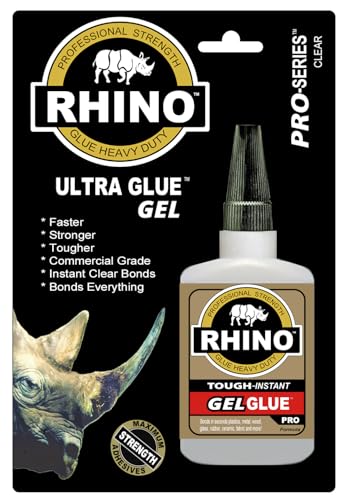
Rhino Glue Gel uses a triple‑distilled cyanoacrylate formula thickened to a high‑viscosity gel that stays where you put it, even on vertical plastic surfaces. This makes it a practical choice for outdoor repairs like reattaching a clothes steamer’s plastic hanger or fixing a shower door handle where dripping would ruin the job. The gel sets in seconds on clean plastic and achieves a bond strong enough for daily use within minutes.
The 40‑gram tube holds nearly twice the volume of typical superglue bottles, and the gel resists clogging and drying out between uses — a common frustration with standard cyanoacrylates. Users report excellent results on rigid plastics like ABS and polystyrene, though some found it less effective on polypropylene without proper surface roughening. The clear finish blends well on visible repairs.
One user compared it favorably to Loctite and Gorilla brands, calling it “the god of glue” for its fast set time and minimal waste. Another noted it worked well for reattaching a shower door seal that sees daily moisture exposure. For quick, no‑drip fixes on smooth plastic where clamping is impossible, this gel is a reliable companion.
Why it’s great
- Gel consistency stays in place on vertical surfaces
- Sets in seconds for instant holding power
- Large 40‑gram tube offers great value per application
Good to know
- Less effective on polypropylene without surface prep
- Not waterproof — avoid prolonged submersion
5. Loctite Vinyl, Plastic, and Fabric Adhesive

Loctite’s Vinyl, Plastic, and Fabric Adhesive is a paste‑based contact cement designed specifically for flexible materials — vinyl upholstery, fabric padding, and soft plastics that are common on outdoor furniture and lawn equipment. A real‑world user successfully reattached the foam padding to a lawn mower seat using this adhesive, and the bond lasted an entire mowing season without peeling. The 24‑hour full cure time ensures maximum strength on porous or textured surfaces.
The two‑pack provides backup for larger projects, and the paste formula prevents running or stringing on vertical applications, though a few users noted some stringing remains if applied too thickly. It bonds well to glass, paper, wood, and vinyl in addition to plastic, making it a versatile addition to any outdoor repair kit. The clear finish keeps repairs discreet on colored plastics.
One customer used it to bond apoxy and cloth for a custom action figure mask, demonstrating its ability to create flexible yet durable seams. For outdoor repairs involving fabric‑to‑plastic or vinyl‑to‑plastic bonding — such as reupholstering patio cushions or repairing convertible tops — this formula excels where rigid glues would crack.
Why it’s great
- Designed for flexible materials like vinyl and fabric
- Paste texture stays in place on vertical repairs
- Two‑pack provides backup for larger projects
Good to know
- Can string if applied too thickly
- 24‑hour cure requires patience before outdoor exposure
FAQ
Can cyanoacrylate super glue hold up outdoors on plastic?
What plastic types are hardest to glue for outdoor repairs?
Final Thoughts: The Verdict
For most users, the glue for outdoor plastic winner is the Gorilla Max Strength Construction Adhesive because it offers the best combination of gap‑filling ability, waterproof performance, and UV resistance for large‑scale repairs. If you need instant handling strength for small precision parts, grab the J‑B Weld Light‑Activated Superglue. And for fusing rigid acrylic or ABS panels into a single seamless piece, nothing beats the WELD‑ON 16 Acrylic Plastic Cement.