
The promise is simple: a small tube of saliva reveals where your family line extends across continents and centuries. For anyone hitting a brick wall in their genealogical research or simply wondering about the blend of cultures that shaped their features, a direct-to-consumer DNA test offers a shortcut that paper records can never match. The real challenge is choosing between the major players whose databases, reporting depth, and privacy policies differ significantly.
I’m Mohammad Maruf — the founder and writer behind Drink4Good. After analyzing the raw performance data, customer feedback, and feature sets of the leading autosomal DNA tests, I have isolated the critical specs that separate a shallow percentage breakdown from a genuinely useful ancestral roadmap.
Whether you are chasing a specific migration path or hoping to connect with living relatives, the best genetic dna testing for ancestry depends on how well a service balances region count, relative matching power, SideView separation, and long-term data control.
How To Choose The Best Genetic DNA Testing For Ancestry
Every consumer DNA kit works on the same fundamental principle: it reads hundreds of thousands of single nucleotide polymorphisms (SNPs) and compares them against a reference panel of known populations. The quality of your result hinges on three variables: the size and diversity of that reference panel, the company’s algorithm for assigning admixture, and the tools it provides for connecting those dots to your family tree.
Reference Regions vs. Actual Resolution
A test that claims 4,500+ geographic regions sounds superior to one with 3,600, but deeper coverage is not always uniformly high confidence. Look for companies that provide a confidence percentage for each population estimate and a chromosome browser that lets you see exactly which segments match specific regions. A test that gives you a single number for “British & Irish” without breaking it down by county is less useful than one that can point toward Northern Ireland versus Cornwall.
Relative Matching and Database Size
The primary reason people buy these kits is to find unknown relatives. That makes total user count the single most important spec after the ethnicity report itself. A larger database increases the probability that a third cousin who also tested will appear in your match list. AncestryDNA holds the largest consumer DNA database, which translates directly into more relative connections, while 23andMe offers a more refined chromosome browser that power users prefer for triangulation.
SideView and Parental Phasing
One of the most valuable innovations in this category is the ability to assign DNA matches to your mother’s or father’s side without requiring either parent to test. Both AncestryDNA (SideView) and 23andMe (parental inheritance) offer some version of this. If you are adopted or researching a parent whose history is unknown, a test with robust phasing is a non-negotiable feature.
Quick Comparison
On smaller screens, swipe sideways to see the full table.
| Model | Category | Best For | Key Spec | Amazon |
|---|---|---|---|---|
| 23andMe Ancestry Service | Mid-Range | Detailed geographic breakdown + Neanderthal ancestry | 4,500+ geographic regions | Amazon |
| AncestryDNA Genetic Test + 3-Month World Explorer | Premium Bundle | Combined DNA + record research subscription | 3,600+ regions + 3-month World Explorer | Amazon |
| AncestryDNA Test Kit | Mid-Range | Largest database for relative matching | 3,600+ regions + SideView | Amazon |
| Embark Breed & Health Dog DNA | Premium | Health screening + breed ID for dogs | 270+ health conditions + 400+ breeds | Amazon |
| Embark Breed Identification Kit | Mid-Range | Most accurate dog breed breakdown | 99% breed ancestry accuracy | Amazon |
| Wisdom Panel Essential Dog DNA | Budget-Friendly | Budget breed + health combo for dogs | 430+ breeds + 30 health conditions | Amazon |
| Wisdom Panel Breed Discovery Dog DNA | Budget-Friendly | Basic breed identification + MDR1 test | 430+ breeds + MDR1 medication sensitivity | Amazon |
In‑Depth Reviews
1. 23andMe Ancestry Service
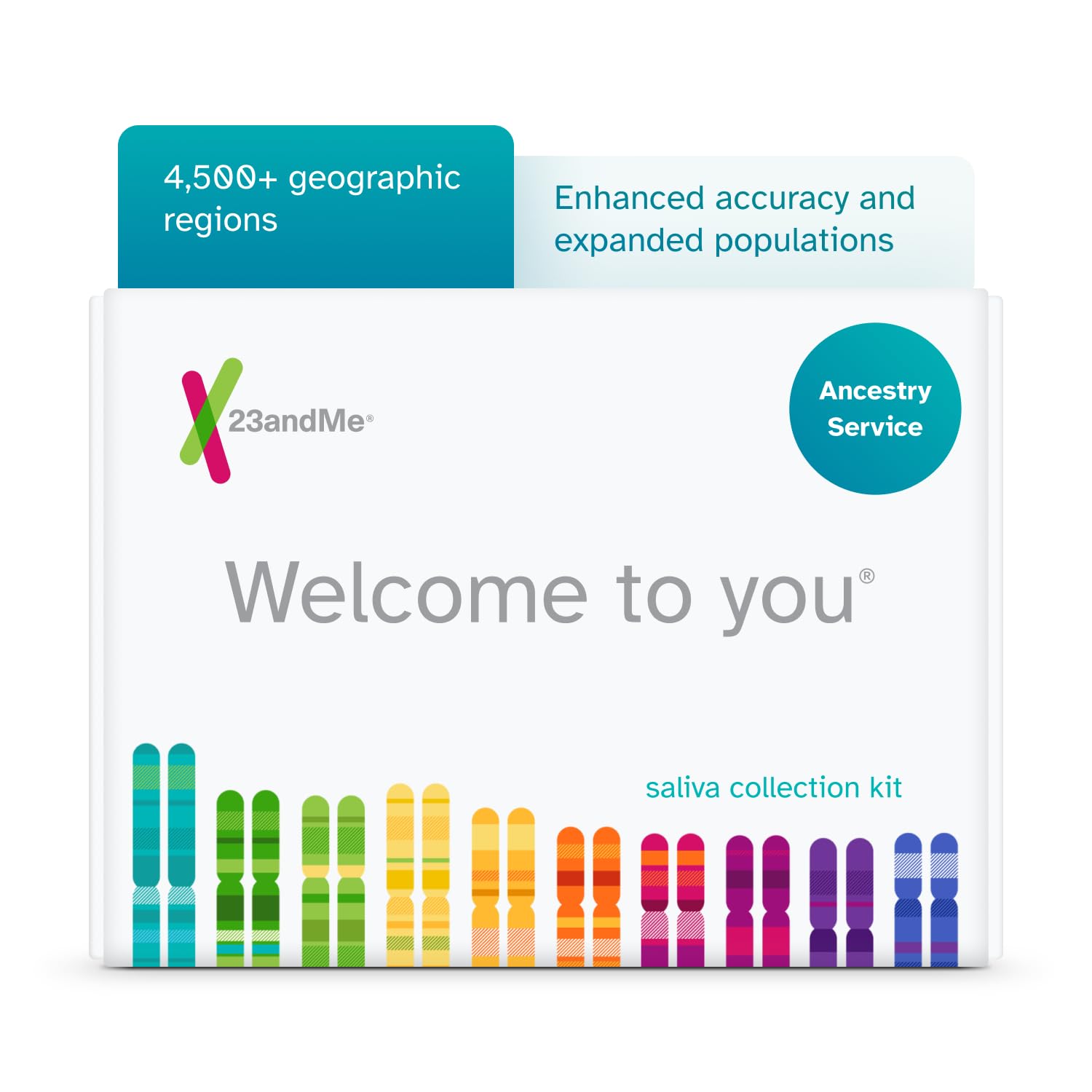
23andMe delivers the most granular geographic breakdown available among consumer autosomal tests, covering 4,500+ regions with the ability to drill down to the specific valley or village your ancestors inhabited. The Ancestry Timeline feature maps when your most recent ancestors from each population lived, giving you a chronological dimension that most competitors lack. It also screens for Neanderthal DNA variants and provides maternal and paternal haplogroup assignments from a single saliva sample.
The DNA Relative Finder is opt-in, which means you control whether strangers can see your profile, but the trade-off is a smaller match pool compared to AncestryDNA’s default-open system. Customers report reliable ethnicity estimates that frequently resolve long-standing family mysteries — one reviewer used 23andMe matches combined with chromosome mapping to identify a grandfather who had been unknown for 83 years. The trait reports cover 30+ characteristics such as cilantro aversion, perfect pitch, and sleep habits, adding a light personal genomics layer.
Turnaround time averages four to five weeks, and the kit requires only a simple saliva collection with no blood or needles. The raw data can be downloaded and uploaded to third-party tools like GEDmatch for further analysis, which advanced users will appreciate. The encryption and privacy-by-design framework let you revoke consent at any time, though your data remains subject to the company’s terms of service.
Why it’s great
- Highest region count (4,500+) with village-level detail
- Neanderthal ancestry and haplogroup reports included
- Strong privacy controls with opt-in relative matching
Good to know
- Relative finder database is smaller than AncestryDNA’s
- No integrated family tree builder like Ancestry offers
- Advanced chromosome browsing is less intuitive for beginners
2. AncestryDNA Genetic Test + 3-Month World Explorer
This bundle pairs the top-selling AncestryDNA test with a three-month World Explorer membership, giving you access to billions of family history records, census data, military rolls, and immigration manifests. The DNA component itself is identical to the standard AncestryDNA kit — it screens across 3,600+ geographic regions and uses SideView technology to assign origins and matches to each parent’s side automatically. For anyone who wants to build a full family tree beyond the ethnicity pie chart, this subscription unlocks the record collections that make Ancestry the dominant platform for genealogical research.
The SideView feature is the key differentiator here: it can separate your matches into maternal and paternal groups even if neither parent has tested, using statistical phasing based on your own DNA data. In practice, this means you can see that a second cousin shares DNA with you on your father’s side and then immediately search the World Explorer records for that surname in your father’s hometown. Customers report that the subscription pays for itself quickly when tracking down immigrant ancestors through ship manifests and naturalization papers.
Privacy controls let you decide whether to appear in other users’ match lists, and the three-month membership redeems only during the DNA activation process. The test uses a saliva collection method, and results are delivered online in approximately six weeks. Your ethnicity estimates may shift over time as the reference panel expands, which can be frustrating if you prefer static results, but it also means the report becomes more accurate as the database grows.
Why it’s great
- World Explorer unlocks billions of historical records
- SideView separates matches by parental side automatically
- Largest consumer DNA database for relative connections
Good to know
- Subscription auto-renews after three months unless canceled
- Ethnicity estimates may change with reference panel updates
- No health or trait reports included in this tier
3. AncestryDNA Test Kit
The standalone AncestryDNA test is the most popular consumer DNA kit on the market for good reason: it combines the industry’s largest reference database with a user-friendly interface that guides you from saliva collection to ethnic breakdown to relative matching. The 3,600+ region coverage includes detailed “Journeys” that trace the migration paths of your ancestors, showing both the historical routes and the time periods when those movements occurred. SideView technology, which separates your results into maternal and paternal sides, is included at no extra cost.
Relative matching is where AncestryDNA truly excels — because the company has tested more people than any competitor, the probability of finding a third cousin or closer match is significantly higher. Customers frequently report discovering previously unknown relatives, adoptees finding biological family members, and hobbyist genealogists confirming decades of paper trail research. The automatic family tree feature builds a rough tree based on your matches’ shared ancestors, though serious users will find they need to manually verify each relationship.
The test does not include health reports or trait analysis, which keeps the price accessible for those focused purely on ancestry. The ethnicity percentages are presented as ranges rather than hard numbers, reflecting the statistical reality of admixture estimation. Your raw data can be downloaded and used with third-party tools, and privacy controls allow you to delete your data at any time. Turnaround is roughly six weeks from the date the lab receives your sample.
Why it’s great
- Largest DNA database for relative discovery
- SideView parental phasing without testing parents
- Migration Journeys add historical context to percentages
Good to know
- No health or trait reports in this version
- Family tree feature needs manual verification
- Full access to records requires separate subscription
4. Embark Breed & Health Dog DNA Test
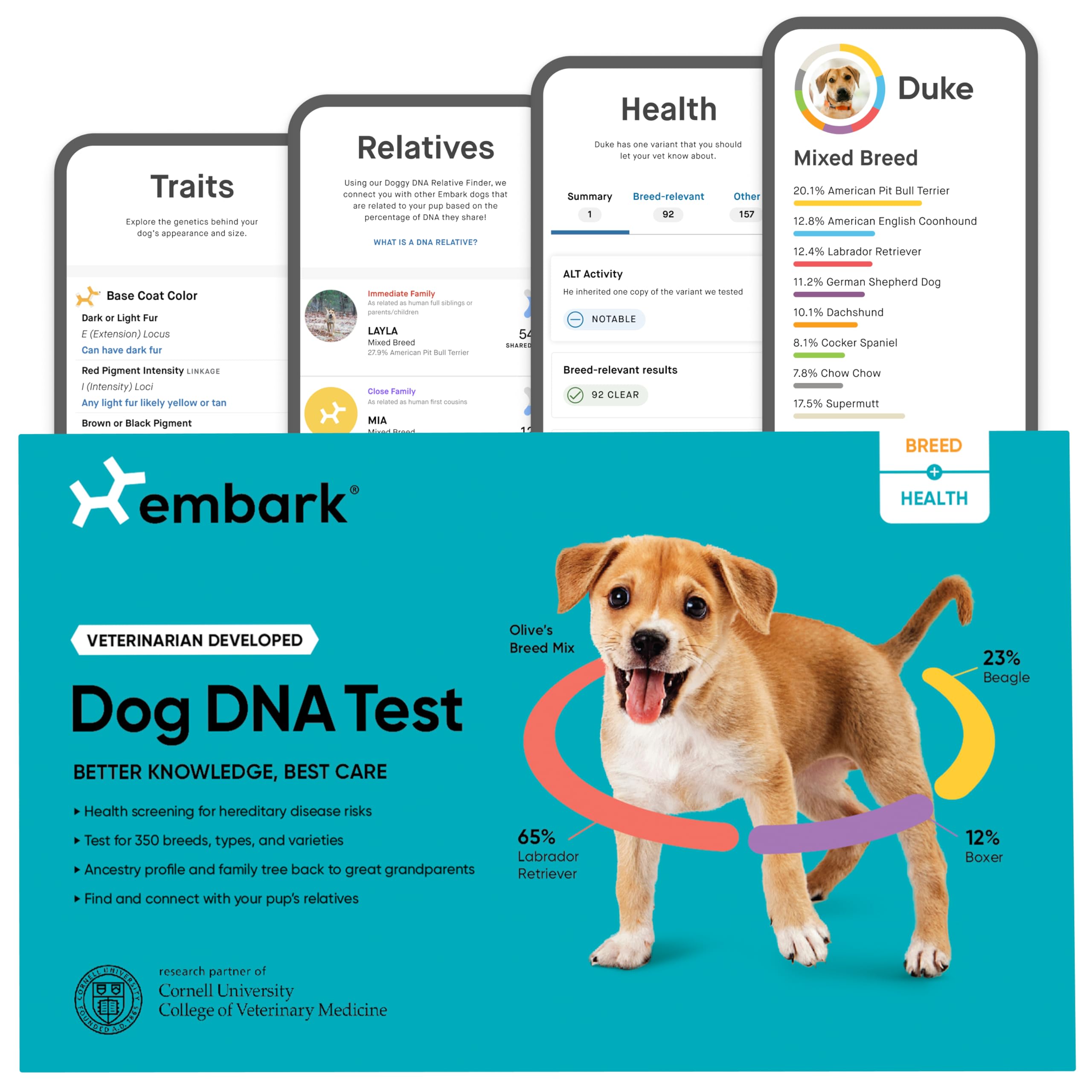
Embark’s flagship kit is the most comprehensive dog DNA test on the market, screening for over 270 genetic health conditions, 400+ breeds, and 55 physical traits, plus a new allergy risk score covering environmental, food, contact, and flea allergies. The platform was developed in partnership with Cornell University College of Veterinary Medicine, and the research-grade genotyping chip delivers breed identification accuracy that exceeds most competitors — especially for mixed-breed dogs where multiple ancestry components blend together.
The health screening covers actionable conditions like MDR1 drug sensitivity, IVDD risk, and progressive retinal atrophy, and 37% of dog owners reported changing their care routine after receiving results. The Relative Finder technology connects your dog with relatives in the Embark database, and roughly 90% of tested dogs find at least a cousin-level match. The personality quiz correlates breed instincts with your individual dog’s behavior, helping distinguish between traits inherited from specific breeds versus learned behaviors.
Sample collection requires a cheek swab, and results are delivered in two to four weeks. The kit includes access to veterinary geneticists who can answer follow-up questions, which is a significant advantage for owners navigating a newly discovered health risk. The price positions it as a premium purchase, but the combination of breed, health, and relative data in one package makes it the most complete option for serious pet owners.
Why it’s great
- 270+ health conditions including drug sensitivities
- Allergy risk scores for four allergy types
- Developed with Cornell for high accuracy
Good to know
- Premium price compared to breed-only kits
- Health risk information may require vet follow-up
- Relative finder database smaller than breed-only competitors
5. Embark Breed Identification Kit

For owners who want the most accurate breed breakdown without the full health panel, Embark’s breed identification kit delivers the same research-grade genotyping platform used in the company’s health version. It screens for 400+ breeds including dingoes, coyotes, wolves, and village dogs, and the algorithm can trace ancestry back to great-grandparents with 99% accuracy for mixed-breed dogs. The Relative Finder connects you with your dog’s family — over 90% of tested dogs find a relative, and about 12% discover a direct sibling or parent.
The family tree functionality displays three generations of ancestry, showing how the breed mix combines from each grandparent level. Customers whose rescue dogs came with vague breed labels like “Lab mix” frequently report surprising results — one owner discovered their supposedly Lab-shepherd dog was actually 50% mixed breed, 12.5% American Bulldog, 12.5% Chow Chow, and 25% other breeds. The personality quiz maps breed-specific instincts to your dog’s actual behavior, which helps explain quirks like herding tendencies or excessive barking.
The cheek swab process is simple, and results typically arrive in three weeks. The raw data can be accessed, though it does not include the health markers that the more expensive version tests. For owners who are confident their dog is healthy and want only breed information, this kit avoids paying for health screening they may not use. The trade-off is losing the actionable health insights that could catch a genetic condition early.
Why it’s great
- 99% breed accuracy for mixed-breed dogs
- Three-generation family tree visualization
- Relative Finder with strong match rates
Good to know
- No health condition screening included
- Wait for sales if budget is a concern
- Database smaller than AncestryDNA for human tests
6. Wisdom Panel Essential Dog DNA Testing Kit
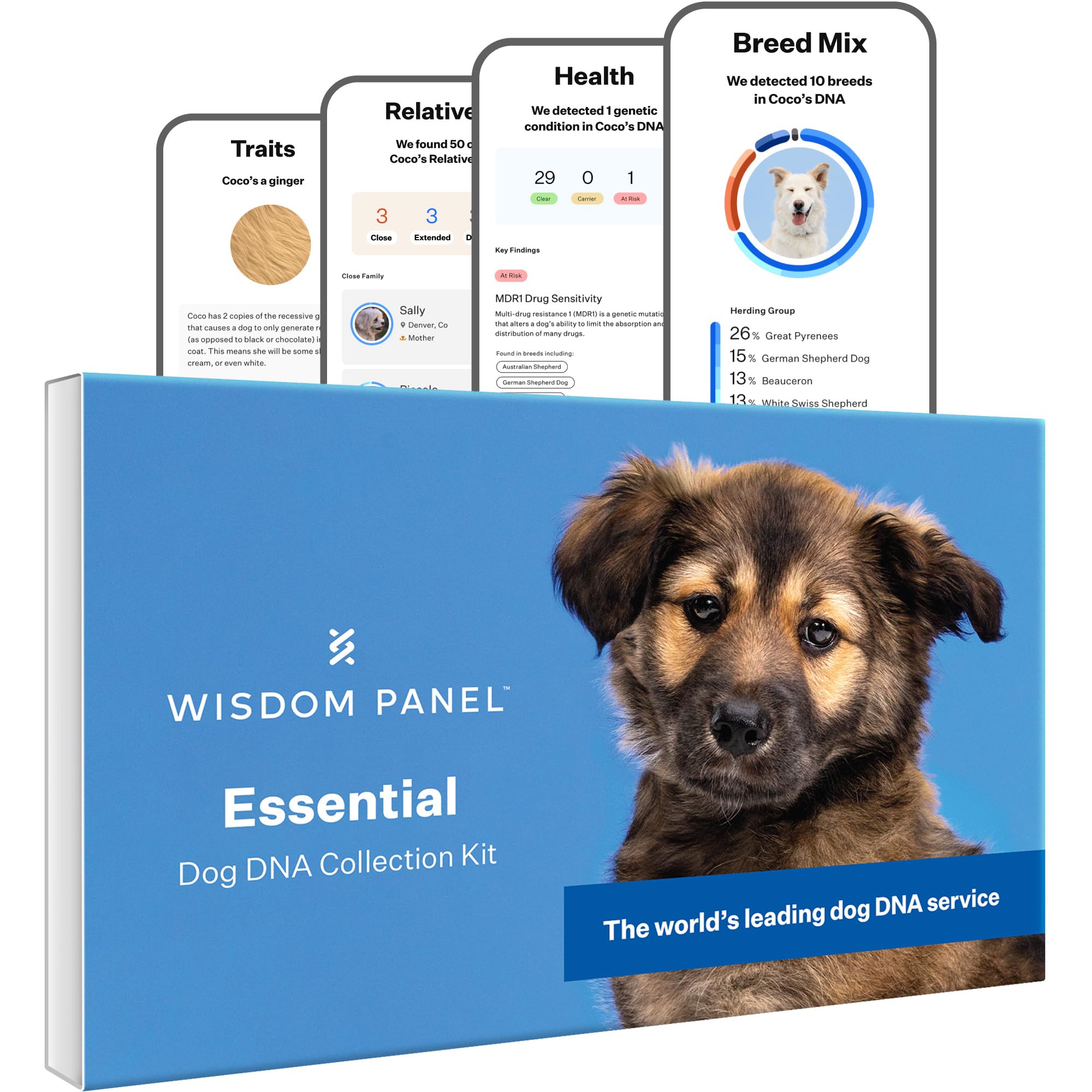
Wisdom Panel Essential offers the best value proposition in the dog DNA category, combining breed identification across 430+ types with screening for 30 genetic health conditions and 50+ traits — all at a significantly lower entry point than Embark. The breed detection resolves down to 1% and claims 98%+ accuracy for purebred dogs, though mixed-breed confidence drops for complex crosses with more than five breed components. The health panel covers MDR1, IVDD, and other common breed-specific conditions.
The Relative Finder leverages Wisdom’s database of 5 million dogs tested across 50 countries, and the company reports that 99.9% of tested dogs find at least one relative match. Customers appreciate the ability to view photos and compare DNA results with matched relatives, though the sorting and filtering options are more limited than Embark’s. The behavior trait insights help explain why a rescued stray might herd children or howl at sirens, connecting breed tendencies to everyday actions.
The kit uses a dual-swab method for redundancy, and results arrive in approximately three weeks. Some customers have reported discrepancies where known breed heritage did not appear in the results — one owner’s Dachshund mother produced zero Dachshund DNA on the report, suggesting algorithm limitations for certain breed combinations. For the price, though, it remains the most popular choice for shelter adopters who want a solid overview without the premium cost.
Why it’s great
- Affordable breed + health combination
- Large relative database with 5 million dogs tested
- Quick turnaround with dual-swab redundancy
Good to know
- Lower accuracy for complex mixed breeds
- No maternal/paternal line tracing
- Some breed detection discrepancies reported
7. Wisdom Panel Breed Discovery Dog DNA Testing Kit
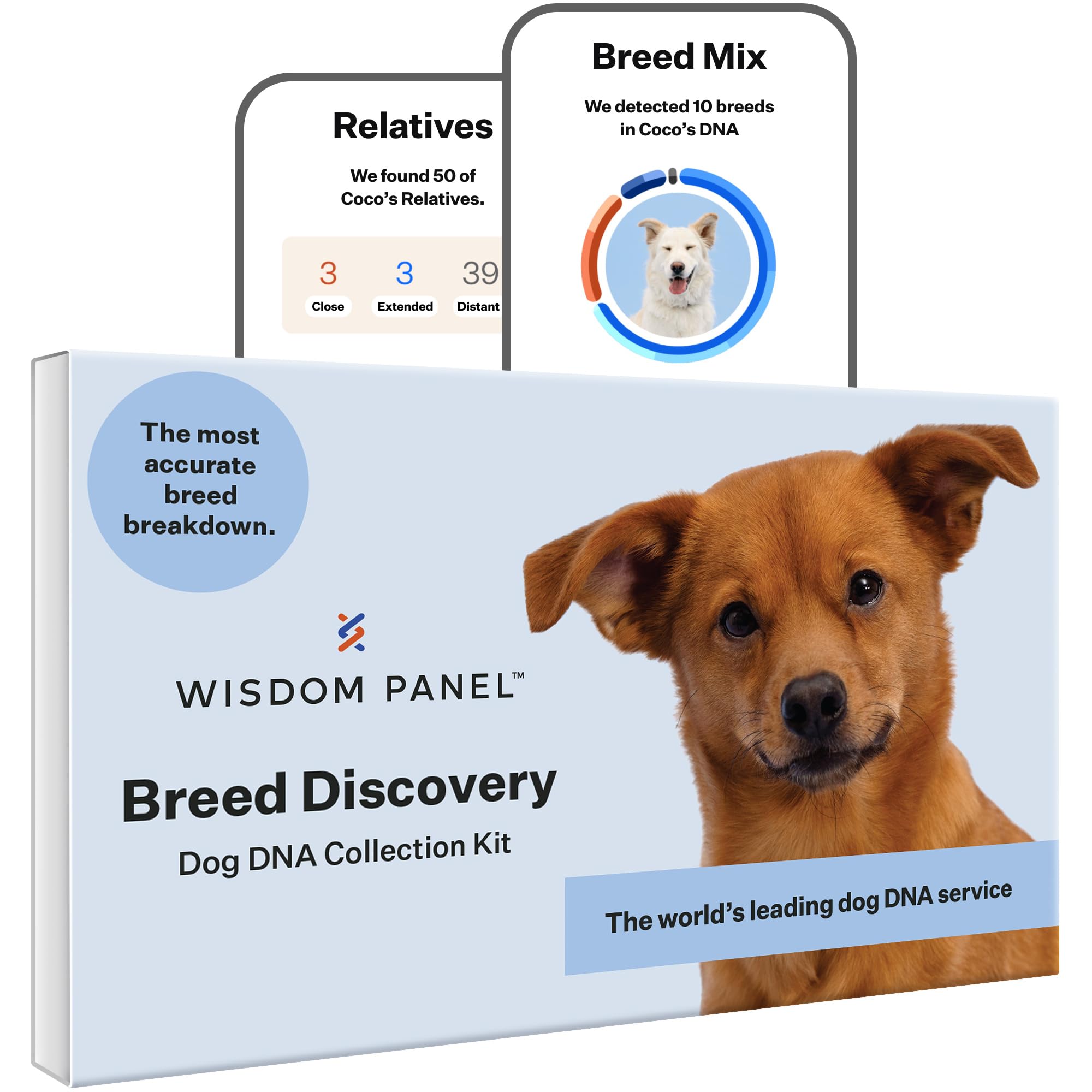
Wisdom Panel Breed Discovery is the pure breed-identification version of the company’s dog DNA testing line, offering 430+ breed coverage without the health screening that the Essential kit includes. The key differentiating feature at this tier is the MDR1 test, which checks for the genetic mutation that causes adverse reactions to common medications like ivermectin — a critical test for herding breeds such as Collies and Australian Shepherds. The ancestry report traces your dog’s family tree back three generations, showing the breed composition at each grandparent level.
The Relative Finder works with the same 5-million-dog database as the Essential kit, so your dog’s chance of finding cousins is identical regardless of which Wisdom version you buy. Customers report that the results are often surprising, especially for rescue dogs whose appearance does not match their genetic makeup. One owner discovered their unique-looking stray was a blend of 26 breeds, with Treeing Walker Coonhound being the most visually dominant at just 7%. The behavior insights help contextualize why a dog with certain breeds acts the way it does.
The kit includes two swabs with an air-drying step before mailing, and results arrive in two to three weeks. The price is the most accessible option in this roundup, making it a good entry point for first-time dog DNA testers. The absence of broader health screening means owners of breeds predisposed to conditions like hip dysplasia or heart disease may want to upgrade to the Essential or Embark version for more comprehensive coverage.
Why it’s great
- Most affordable dog DNA test in the lineup
- Critical MDR1 drug sensitivity test included
- Three-generation ancestry tree for breed mix
Good to know
- No general health condition screening beyond MDR1
- Breed detection accuracy lower for complex mixes
- Behavior insights are suggestive, not diagnostic
FAQ
Can a DNA test tell me exactly which country my ancestors came from?
How long does it take to get DNA ancestry results after mailing the sample?
Final Thoughts: The Verdict
For most users, the best genetic dna testing for ancestry winner is the 23andMe Ancestry Service because it combines the highest geographic resolution (4,500+ regions) with Neanderthal ancestry, haplogroups, and privacy controls that let you opt into relative matching on your terms. If you want the largest database for finding living relatives and plan to build a full family tree with historical records, grab the AncestryDNA Test Kit and pair it with a subscription. And for pet owners seeking the most complete genetic picture of their dog, nothing beats the Embark Breed & Health Dog DNA Test for combining breed accuracy with actionable health insights.