
That sickening separation where the outsole peels back from the upper, exposing the foam midsole to grit and ruin—it’s the single most common sneaker death. Most owners reach for a tube of generic super glue, which hardens, cracks, and fails within days, leaving a brittle mess that’s even harder to fix the second time. The right adhesive, formulated specifically for the flex, moisture, and abrasion that sneakers endure daily, can extend a favorite pair’s life by years rather than hours.
I’m Mohammad Maruf — the founder and writer behind Drink4Good. I’ve spent over a decade analyzing consumer product mechanics, from foam density in midsoles to the chemical cross-linking of urethane adhesives, to separate marketing claims from real-world repair performance.
Whether you are reattaching a blown-out toe cap on a leather boot or sealing a canvas seam before a hole forms, the right glue for sneakers makes the difference between a one-wear fix and a bond that outlasts the shoe itself.
How To Choose The Best Glue For Sneakers
Not every sticky substance belongs on a sneaker. The combination of rubber outsoles, foam midsoles, mesh uppers, and constant flexing makes footwear one of the most demanding substrates in consumer repair. A glue that bonds granite instantly may shatter on a nylon vamp after three steps. Understanding three key parameters will keep you from making a costly mistake.
Bond Flexibility vs. Hardness
A sneaker sole bends thousands of times during a single walk. A brittle adhesive, like most consumer cyanoacrylates, forms a glass-hard joint that snaps under repeated flex. Look for adhesives that remain elastic after full cure—polyurethane-based formulas and flexible fabric glues stretch with the substrate rather than fracture. If the dried glue feels rock-hard to the touch, it’s wrong for footwear.
Moisture and Temperature Resistance
Sneakers face sweat, puddles, rain, and sometimes washing machines. A waterproof bond is non-negotiable for any glue intended for sole reattachment or toe-cap repair. Check that the product claims resistance to moisture and temperature swings—some urethane formulations survive boiling water, while others soften under summer asphalt heat. The cure time also matters: most water-resistant bonds need a full 24-hour clamp period to reach maximum strength.
Surface Compatibility and Preparation
Leather, rubber, EVA foam, canvas, and polyester mesh each require a different chemical key for adhesion. A glue labeled for fabric only may fail on rubber outsoles; a rubber-only glue might not stick to a mesh upper. Clean the surface with isopropyl alcohol to remove mold-release agents and oils, then roughen glossy rubber with sandpaper. Proper prep doubles the bond strength of almost any sneaker glue.
Quick Comparison
On smaller screens, swipe sideways to see the full table.
| Model | Category | Best For | Key Spec | Amazon |
|---|---|---|---|---|
| Gorilla Waterproof Fabric Glue | Flexible | Fabric tears and canvas patches | 24-hour full cure, waterproof | Amazon |
| Boot-Fix Shoe Glue | Instant | Quick sole reattachment | 45-second set time | Amazon |
| Shoe-Fix Glue | Flexible | All-weather heel and sole repair | Clear, flexible finish | Amazon |
| Shoe Goo Repair Adhesive | Filler | Worn soles and gap filling | 3.7 oz, thick urethane formula | Amazon |
| Crep Protect Cleaner Kit | Cleaner | Pre-repair surface prep | Brush, solution & cloth included | Amazon |
In‑Depth Reviews
1. Gorilla Waterproof Fabric Glue 2.5 Ounce Tube
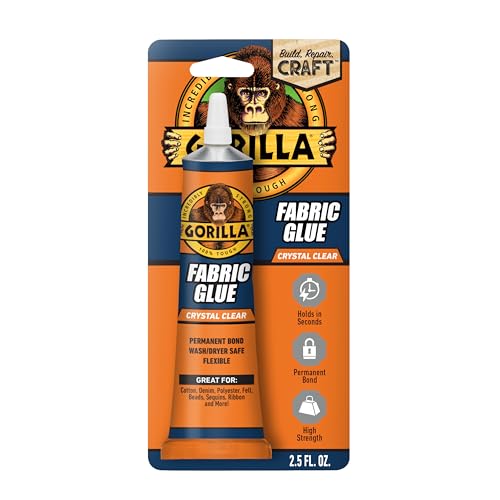
Gorilla has solved a problem that plagues most fabric-focused adhesives: washing machine durability. After a 24-hour full cure, this gel forms a bond that survives both hot washes and dryer cycles without peeling or stiffening the surrounding fabric. Real-world tests show it holding denim patches under repeated stress from leaning and pet scratching, and it has held a couch-seam repair for months where sewn thread would have snapped.
The 2.5-ounce tube provides enough volume for several major repairs—enough to save a coat from fraying or reinforce multiple pairs of canvas sneakers before holes form. The gel consistency stays put on vertical surfaces rather than running into the grain, and it dries crystal clear with no residue or white bloom. Users note a slightly sticky feel after drying on some fabrics, but this is rarely visible on outerwear.
It bonds to felt, denim, canvas, and even rhinestones without damaging the substrate. For anyone fixing fabric uppers, patching a backpack, or reinforcing a sneaker’s canvas panel before a tear starts, this is the most versatile and durable option on the shelf. The only trade-off is the 24-hour clamp time—plan ahead, because rushing the cure cuts bond strength in half.
Why it’s great
- Survives washer and dryer cycles
- Crystal-clear finish with no yellowing
- Stays flexible after full cure
Good to know
- Requires 24-hour clamp for maximum strength
- Leaves a slightly sticky feel on some fabrics
2. Boot-Fix Shoe Glue Professional Grade
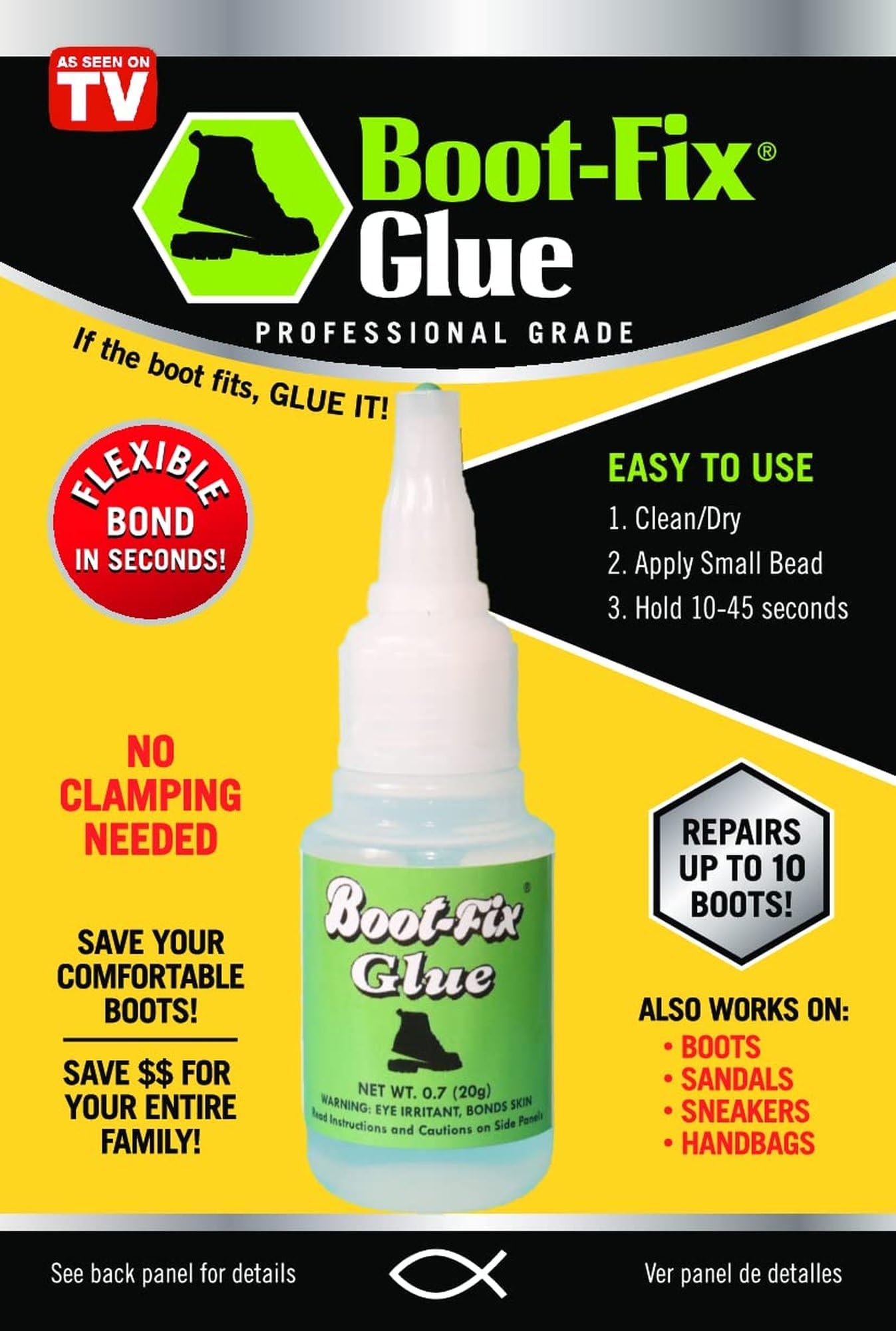
When the sole of a boot or sneaker peels loose mid-hike and you need to get back on the trail in minutes, Boot-Fix delivers where slower curing adhesives cannot. This cyanoacrylate gel sets in 45 seconds and reaches handling strength in under two minutes, which means no clamping, no waiting overnight, and no duct-tape jury rigging. Real-world tests show it holding a separated flip-flop strap and a steel-toe boot seam during a full week of farm use after just a single minute of hand pressure.
The 20-gram tube is small—about the size of a standard super glue bottle—and is best reserved for targeted spot repairs rather than large-area gap filling. Users report getting 10 to 15 small repairs from one tube, but major sole reattachments can consume most of the volume in a single application. The bond is strong enough to resist debris intrusion through a torn boot side, though the cured glue is noticeably stiffer than polyurethane alternatives.
Critical to success: wipe the repair surface with isopropyl alcohol first, then wipe the tube tip before capping to prevent the cap from fusing shut. The glue spreads easily on rubber and leather but is less effective on porous fabric or foam alone. For a fast, durable emergency fix when you cannot wait 24 hours, Boot-Fix is the best compromise between speed and strength in the category.
Why it’s great
- Sets in 45 seconds with no clamping
- Bonds leather, rubber, and some plastics
- Holds up to heavy daily use on work boots
Good to know
- Small bottle—one major repair can use most of it
- Brittle under extreme flex; not ideal for mesh or fabric
3. Shoe-Fix Glue Professional Grade Repair Adhesive

Shoe-Fix positions itself as the all-weather workhorse for footwear repair, and the user feedback backs that claim for most use cases. It dries clear and stays flexible, which means a repaired sole can bend without cracking in cold conditions or softening in summer heat. Buyers report successful fixes on athletic shoes, sandals, and climbing gear where the bond must survive mud, water, and temperature swings.
The gel formula applies cleanly without running, and it sets within seconds—enough that you can hold the seam for a minute and have a solid initial grab. One user noted a full sole reattachment on a child’s shoe that held for two years of daily wear before eventually succumbing to foam breakdown, which is a realistic lifespan for most sneakers anyway. The 20-gram tube is comparable to Boot-Fix in volume, so budget accordingly for larger repairs.
Shoe-Fix works on fabric, faux leather, and wood, but it struggles with direct adhesion to slick rubber outsoles unless the surface is roughened first. The bond becomes less reliable after two years of continuous flex, which is acceptable for footwear that rarely lasts that long anyway. For an instant-bonding, weather-resistant adhesive that keeps sneakers wearable through all four seasons, Shoe-Fix hits the target.
Why it’s great
- Resists heat, cold, and moisture
- Sets quickly with no clamping required
- Remains flexible after full cure
Good to know
- Small tube—half may be needed for a full sole repair
- Best for one-time major fix; long-term bond may degrade after 2 years
4. Shoe Goo Repair Adhesive 3.7 Oz (2-Pack)
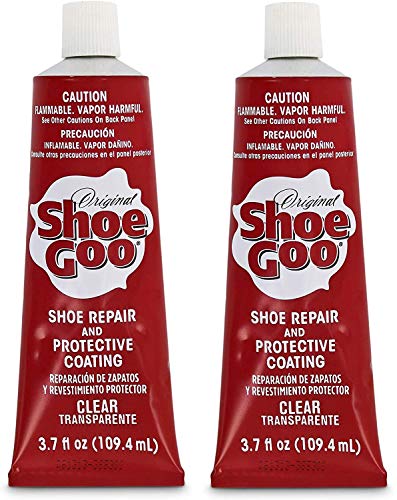
Shoe Goo is the veteran of the sneaker repair world, and its thick urethane paste formulation serves a completely different purpose than thin cyanoacrylate glues. It is not an instant fix—it needs 4 to 6 hours to firm up and a full 24 hours for maximum strength—but those 3.7-ounce tubes (two in the pack) provide enough material to rebuild a worn sole edge or fill a gouge in a rubber outsole that would leave a cyanoacrylate glue sitting in a brittle puddle.
The consistency is closer to rubber cement than super glue, and it shrinks noticeably as it dries, requiring a second layer for deep holes. It bonds aggressively to rubber and leather, and users have even used it to attach molded eyeglass lenses as wear pads on shoe soles—something few other adhesives can manage. The fumes are strong and linger for at least a day, so work in a ventilated area or outdoors.
For walkers and runners who want to extend the life of a favorite pair by filling worn heel treads or smoothing a chipped sole edge, the two-pack represents enormous volume for the price. The downsides are the slow cure time, the strong odor, and the difficulty of squeezing the last bit of paste from the tube. If you need a structural gap-filler rather than a skin-bonding instant glue, Shoe Goo remains the standard.
Why it’s great
- Thick paste fills gaps and rebuilds worn rubber
- Two tubes provide generous volume for multiple repairs
- Waterproof and durable on rubber outsole edges
Good to know
- Strong, lingering fumes require ventilation
- Shrinks as it dries; may need a second coat for deep holes
5. Crep Protect Sneaker Cleaner Kit
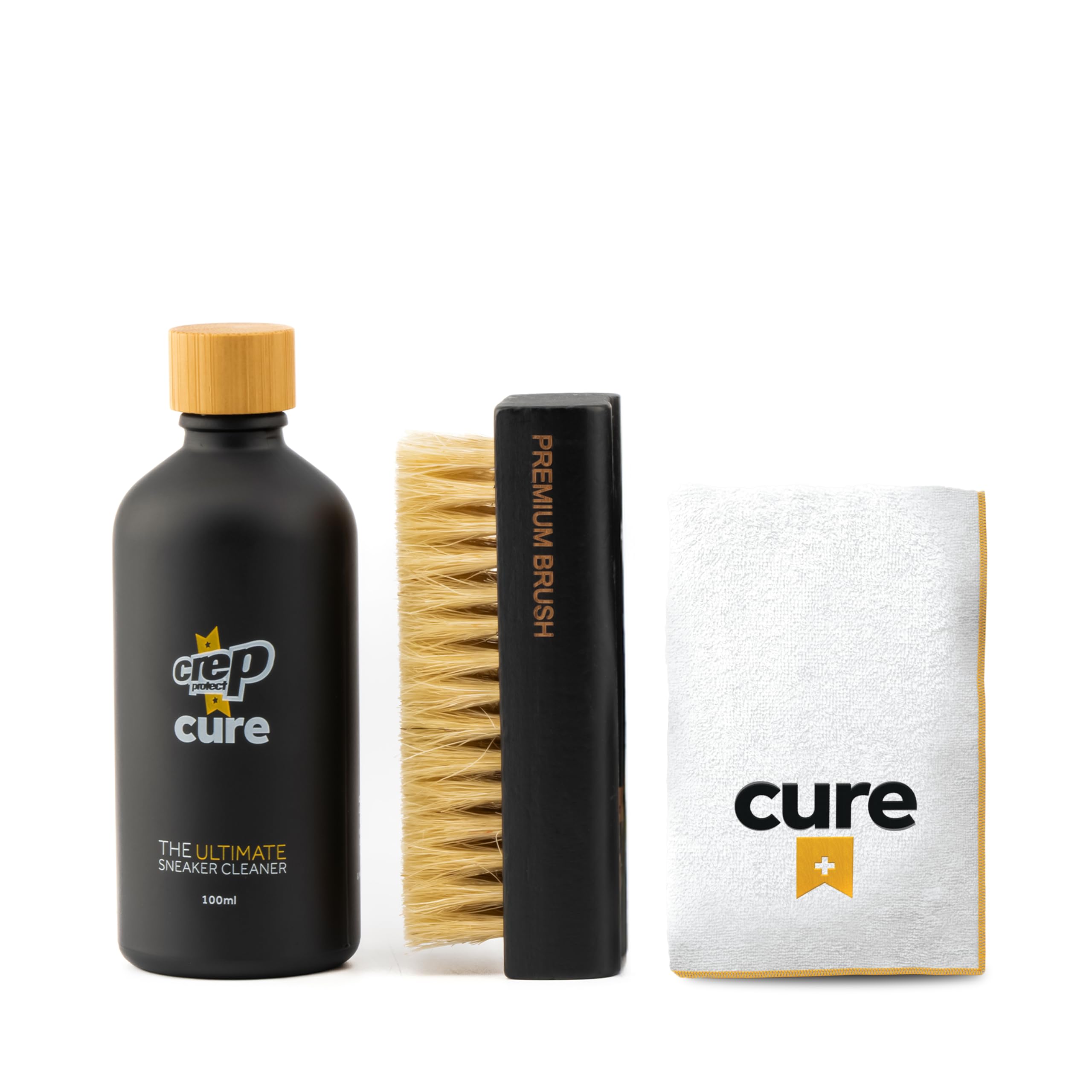
Before any glue touches a sneaker, the repair surface must be clean—dirt, oil, and old adhesive residue all sabotage bond strength. Crep Protect’s cleaner kit solves that problem with a concentrated solution that lifts grime from leather, suede, nubuck, and canvas without damaging the fibers. Users report that heavily soiled non-washable sneakers come back to near-new condition after a single pass, and the drying time is markedly faster than foam-based competitors.
The kit includes a soft-bristle brush, a microfiber cloth, and the cleaning solution in a portable case. The brush is a bit too large for tight areas like the toe cap edge and rubber sidewall junction, which is exactly where dirt accumulates and where a glue bead will later go. A smaller detailing brush or a toothpick helps finish the job. One user’s brush shed bristles during use, indicating batch inconsistency, though the majority of buyers report no issue.
For sneakerheads performing a full restoration or anyone prepping a shoe for glue repair, this kit removes the oxidized dirt and embedded grime that cause adhesive failure. The solution leaves no sticky residue and keeps the upper fibers soft rather than stiff. Consider it a supporting act—it won’t bond anything itself, but it makes your glue repair three times more likely to hold.
Why it’s great
- Cleans leather, suede, and canvas safely
- Fast drying—no long wait before repair
- Portable case and microfiber cloth included
Good to know
- Brush is too large for tight toe-cap areas
- Some brushes have quality control issues with bristle shedding
FAQ
Can I use regular super glue on sneaker soles?
How do I prepare the surface for the strongest bond?
Why does my glue repair peel off after a few wears?
Final Thoughts: The Verdict
For most users, the glue for sneakers winner is the Gorilla Waterproof Fabric Glue because it combines moisture resistance, flexibility, and a crystal-clear finish that handles everything from canvas patches to denim reinforcement without stiffening the fabric. If you need an instant repair for a separated sole mid-hike, grab the Boot-Fix Shoe Glue for its 45-second set time. And for rebuilding a severely worn outsole edge or filling a deep gouge, nothing beats the gap-filling volume of the Shoe Goo Repair Adhesive.