
The wrong pair of rock climbing gloves turns a perfect crack seam into a hand-shredding distraction. You need palm protection that doesn’t kill fingertip sensitivity on the rope work, breathable fabric that vents during a long belay session, and a fit that stays put when you’re pumping over a roof.
I’m Mohammad Maruf — the founder and writer behind Drink4Good. Over the past several years, I’ve analyzed the hardware specifications, material layups, and real-world durability reports of dozens of climbing glove models to find the ones that actually hold up to granite, gym jugs, and extended rappels.
Whether you lead trad, scramble long alpine ridges, or top-rope at the local crag, these reviews break down the leather thickness, stitching patterns, and closure systems you need to protect your hands without losing feel for the rope. This is the definitive guide to the best rock climbing gloves for every style and budget.
How To Choose The Best Rock Climbing Gloves
Choosing a climbing glove comes down to how much palm protection vs. finger dexterity you need. Belaying and rappelling demand a different cut than strict crack climbing, and material choice—goat leather vs. cowhide—directly affects how fast the glove breaks in and how long it lasts against abrasive granite.
Leather Grade & Stitching Density
Goat leather offers the best strength-to-weight ratio for climbing gloves, staying supple through repeated wet-dry cycles without stiffening. Cowhide is thicker and cheaper but requires a longer break-in and can feel clunky on carabiners. Look for Kevlar thread in high-wear zones—the palm and thumb crotch—to prevent seams from popping during a loaded rappel.
Finger Coverage & Ventilation
Half-finger gloves leave the tips exposed for knot-tying, gear clipping, and smearing on small holds, but offer zero protection inside a tight crack. Full-finger gloves shield the whole hand from rock abrasion, yet reduce feel on the rope. A breathable stretch mesh or 4-way spandex back panel keeps the hand cool during long belay sessions and prevents sweat buildup inside the leather palm.
Quick Comparison
On smaller screens, swipe sideways to see the full table.
| Model | Category | Best For | Key Spec | Amazon |
|---|---|---|---|---|
| Metolius 3/4 Climbing Glove | Premium | Rappelling & gym climbing | Triple-stitched cowhide palm | Amazon |
| BLACK DIAMOND Transition Gloves | Premium | All-day belay & rope work | Goat leather palm / mesh back | Amazon |
| PETZL CORDEX | Premium | Multi-pitch & guide use | Goat skin / carabiner hole | Amazon |
| BLACK DIAMOND Stone Gloves | Premium | Aid climbing & rappelling | Kevlar stitching | Amazon |
| Metolius Full Finger Belay Glove | Mid-Range | Belaying & abseiling | Full cowhide finger coverage | Amazon |
| Ocun Crack Gloves | Mid-Range | Crack climbing protection | CAT Rubber 1.1 adhesive | Amazon |
| EDELRID Open II Work Glove | Budget | Light belay & rigging | 4-way stretch back panel | Amazon |
In‑Depth Reviews
1. Metolius 3/4 Climbing Glove

This is the glove that multi-pitch climbers and canyon guides keep reaching for. The half-finger design leaves the first two phalanges exposed for tying knots and handling carabiners, while the triple-stitched, split cowhide palm reinforcement absorbs rope burn during extended rappels. The natural cowhide body is thick—expect a noticeable break-in of about three to four sessions—but once formed to your hand, the palm becomes a second skin that resists wear far better than any synthetic alternative.
The bar-tacked clip-in loop on the cuff lets you hang them from your harness between pitches, and double-stitched finger openings prevent the common failure point along the side seams. Several long-term users report these surviving over 200 rappels and multiple full-day canyon hikes soaked in water, still holding shape without delamination. The leather thickness does interfere slightly with wrist-worn devices like an Apple Watch, so plan to slide the watch up your forearm or rely on a chest-mounted altimeter.
For climbers who need a do-everything glove—gym sessions, outdoor sport, alpine ridges—the thick cowhide and reinforced palm make this the most durable option in the mid-premium tier. The Velcro closure is secure without being bulky, and the ambidextrous design simplifies packing.
Why it’s great
- Triple-stitched split cowhide palm outlasts cheaper gloves by a wide margin
- Half-finger cut keeps fingertip dexterity for gear handling
- Weathered users confirm survival over 8-hour soaked canyon hikes
Good to know
- Runs small; order one size larger than usual
- Thick leather edges can rub against a wrist watch
- Needs dedicated break-in time before reaching peak comfort
2. BLACK DIAMOND Transition Gloves

The Transition Gloves are Black Diamond’s answer to climbers who want a supple goat leather palm without the bulk of a traditional work glove. The goat skin delivers immediate flexibility—no break-in period required—and maintains excellent abrasion resistance against ropes and rock. The breathable stretch mesh back panel is a real advantage on warm belay sessions, preventing the clammy feeling you get with full-leather gloves.
Reinforced stitching in high-wear zones (the palm base and thumb saddle) keeps the glove intact through months of regular use, and the hook-and-loop wrist closure cinches down securely to keep debris out during low-angle scrambling. The ambidextrous fit is accurate, though users with longer, slender fingers may find the finger stalls slightly tight—consider sizing up if you fall into that category. There is zero insulation, so these are best for temperate conditions or active belaying in cooler weather.
Several reviews from rope-access professionals and fireground support workers confirm these gloves hold up to heavy abuse for at least one season of daily handling. For a lightweight, breathable, and immediately comfortable glove that still protects the palm on a loaded GriGri, the Transition is the top-tier option.
Why it’s great
- Goat leather palm is flexible from the first wear with no break-in
- Breathable mesh back keeps hands cool during long belay sessions
- Hook-and-loop wrist strap provides a secure, clean fit
Good to know
- Fingers are cut fairly long and narrow; not ideal for thick hands
- No insulation; insufficient as a cold-weather glove alone
- Cuff can feel cumbersome if worn under a jacket sleeve
3. PETZL CORDEX Lightweight Belay/Rappel Gloves
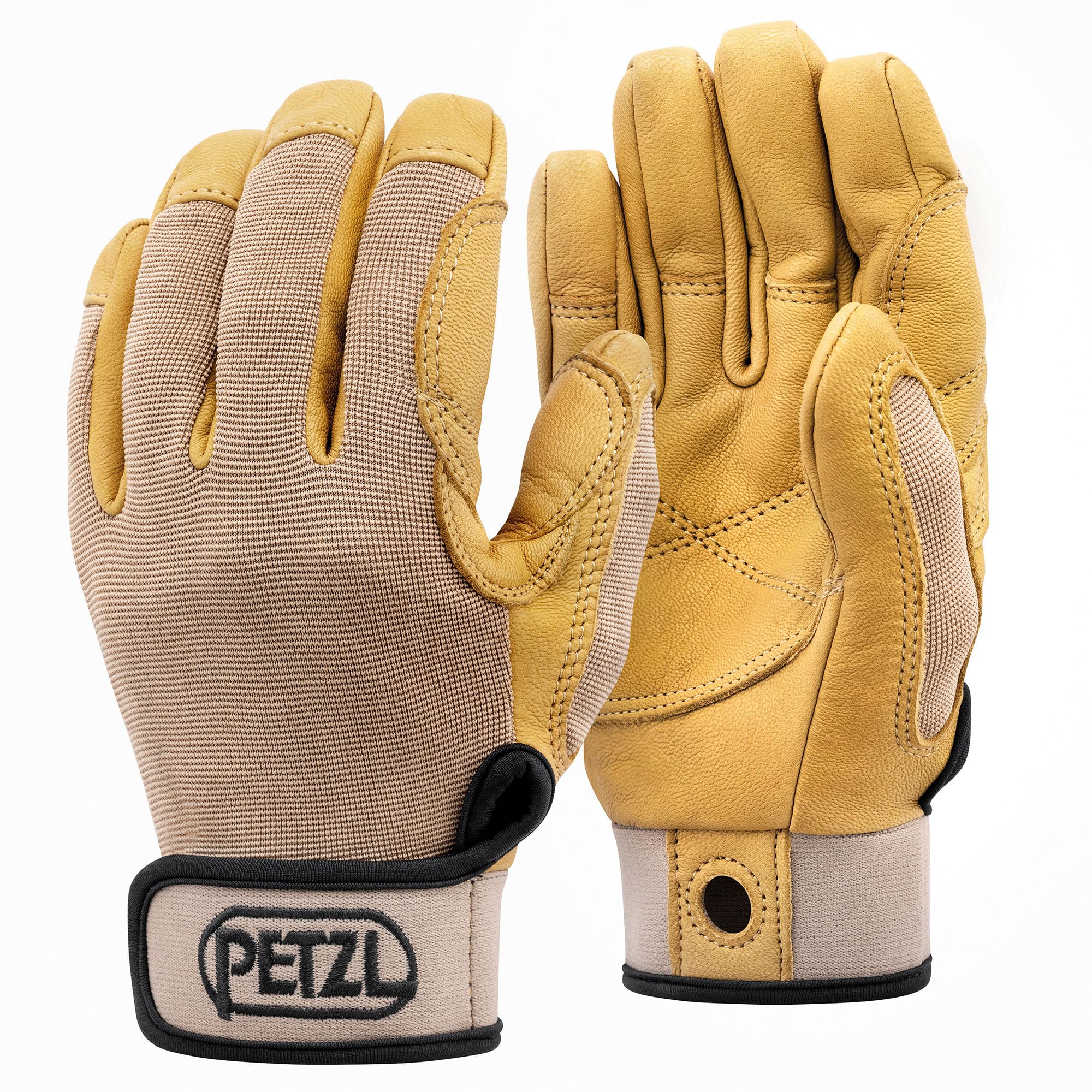
Petzl’s CORDEX has been a staple on harnesses for years, and for good reason. The goat skin leather palm offers excellent rope feel while still protecting the fleshy part of the hand during a loaded lowered. The back-of-hand is stretch nylon, which breathes well enough to wear on sweaty summer crag days and dries quickly after a rain shower. The reinforced carabiner hole at the cuff is a simple but brilliant feature—hook them to your gear loop between pitches and they don’t fall off when you traverse.
The ergonomic cut allows the fingers to wrap around the rope naturally, and the low-profile neoprene cuff with Velcro closure slips under a long-sleeve shirt without bunching. Users with smaller hands consistently praise the XS and S sizes for fitting without extra fabric bunching at the fingertips. The double-layer leather over the palm and base of the thumb provides a noticeable boost in abrasion resistance without making the glove feel stiff.
On the downside, the smooth finish of the goat leather lacks grip on wet rope or polished carabiners—you’ll need to keep a firm hold on the brake strand when conditions are damp. Some users also note that the finger holes wear through after roughly a year of heavy guide work. Overall, this is the most refined belay-specific glove on the market.
Why it’s great
- Goat skin leather delivers superb dexterity for tying knots and handling gear
- Built-in carabiner hole keeps gloves accessible on the harness
- Breathable stretch back prevents sweat buildup during warm belay sessions
Good to know
- Smooth leather offers limited grip when wet; require deliberate handling
- Fingertip holes may wear out after a full season of heavy use
- Reportedly discontinued; remaining stock may be limited
4. BLACK DIAMOND Stone Gloves
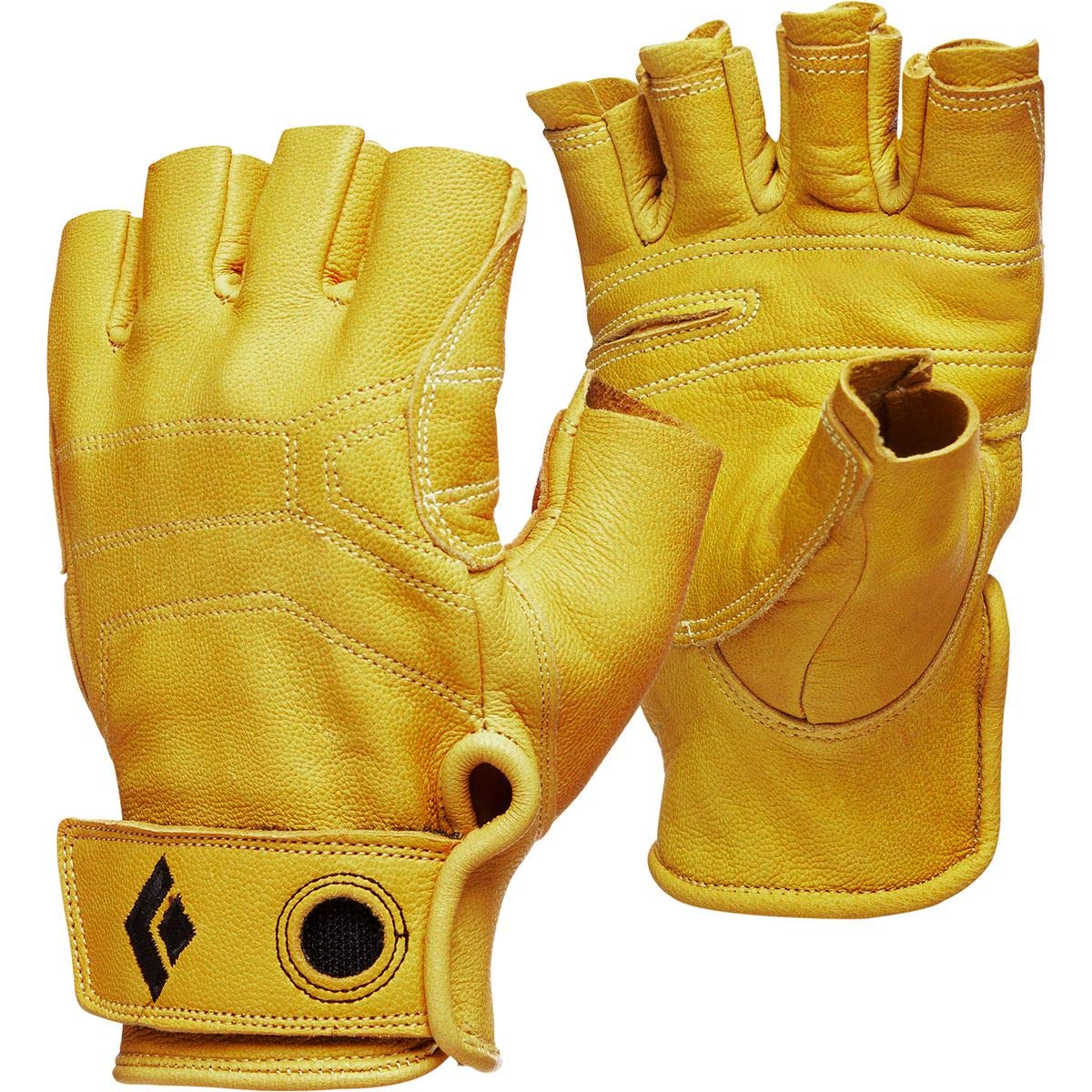
Black Diamond built the Stone Glove for aid climbers who need to protect their palms from sharp-edged gear and abrasive rock without losing the ability to tie a clove hitch. The goat leather construction is supple out of the box, and the Kevlar stitching in high-stress areas—especially along the palm seam and thumb crotch—resists the heat buildup that can melt standard polyester thread on a fast rappel. The open-finger design leaves the fingertips exposed for precise gear manipulation and smearing on small edges.
Several long-term users report these gloves lasting nearly two years of near-daily use for floor installation and heavy hand work, which speaks to the durability of the leather and stitching. The adjustable hook-and-loop wrist strap is simple and effective, holding the glove securely in place even during overhead reaching. Sizing runs slightly small; most reviewers advise ordering one size larger than your typical glove size.
One minor omission: the cloth version of the Half-Crag glove includes a terry cloth wipe pad on the thumb for sweat, but the leather Stone glove lacks this feature. If you tend to sweat heavily on the approach, bring a separate rag. Otherwise, this is a durable, dexterous pick that punches above its price point.
Why it’s great
- Kevlar stitching withstands heat from friction during loaded rappels
- Goat leather is flexible and comfortable right out of the package
- Open-finger design preserves full fingertip sensitivity
Good to know
- No sweat-wipe pad on the thumb, unlike the cloth version
- Runs small; consider ordering one size up
- Leather palm can be slippery on polished carabiners when wet
5. Metolius Full Finger Belay Glove

If your climbing involves extended hand-over-hand rappelling on fixed lines, or you regularly lower heavy partners and need full finger coverage to protect the knuckles, the Metolius Full Finger Belay Glove is the right call. The cowhide main body with triple-stitched split cowhide palm reinforcement mirrors the construction of the 3/4 model but extends the leather over the entire finger length. This offers maximum abrasion protection inside a chimney or crack, though it comes at the cost of reduced tactile feedback on the rope.
The biner clip-in loop on the cuff is heavily bar-tacked, and the Velcro closure provides a secure fit that doesn’t loosen during dynamic movement. The glove is intentionally stiff when new—expect five or six belay sessions before the leather breaks in enough to feel natural. Some users with larger hands have noted that the XL size fits much smaller than expected, essentially requiring a medium-handed climber to use the XL. Check the sizing guide carefully and be prepared to try a size up.
Outside of climbing, this glove has also been repurposed by wheelchair users for rim protection and by fly-fishing guides for stripping line. The thick palm stands up to constant friction without developing holes, and the full finger coverage protects the nail bed during heavy mechanical work.
Why it’s great
- Full finger leather coverage protects knuckles in wide cracks and chimneys
- Triple-stitched cowhide palm is extremely durable over hundreds of rappels
- Biner clip loop makes transition between pitches seamless
Good to know
- Runs very small; most buyers need to go up at least one full size
- Pinker seam can pinch during the break-in period
- Thick leather reduces rope feel for lead belaying
6. Ocun Crack Gloves for Crack Climbing
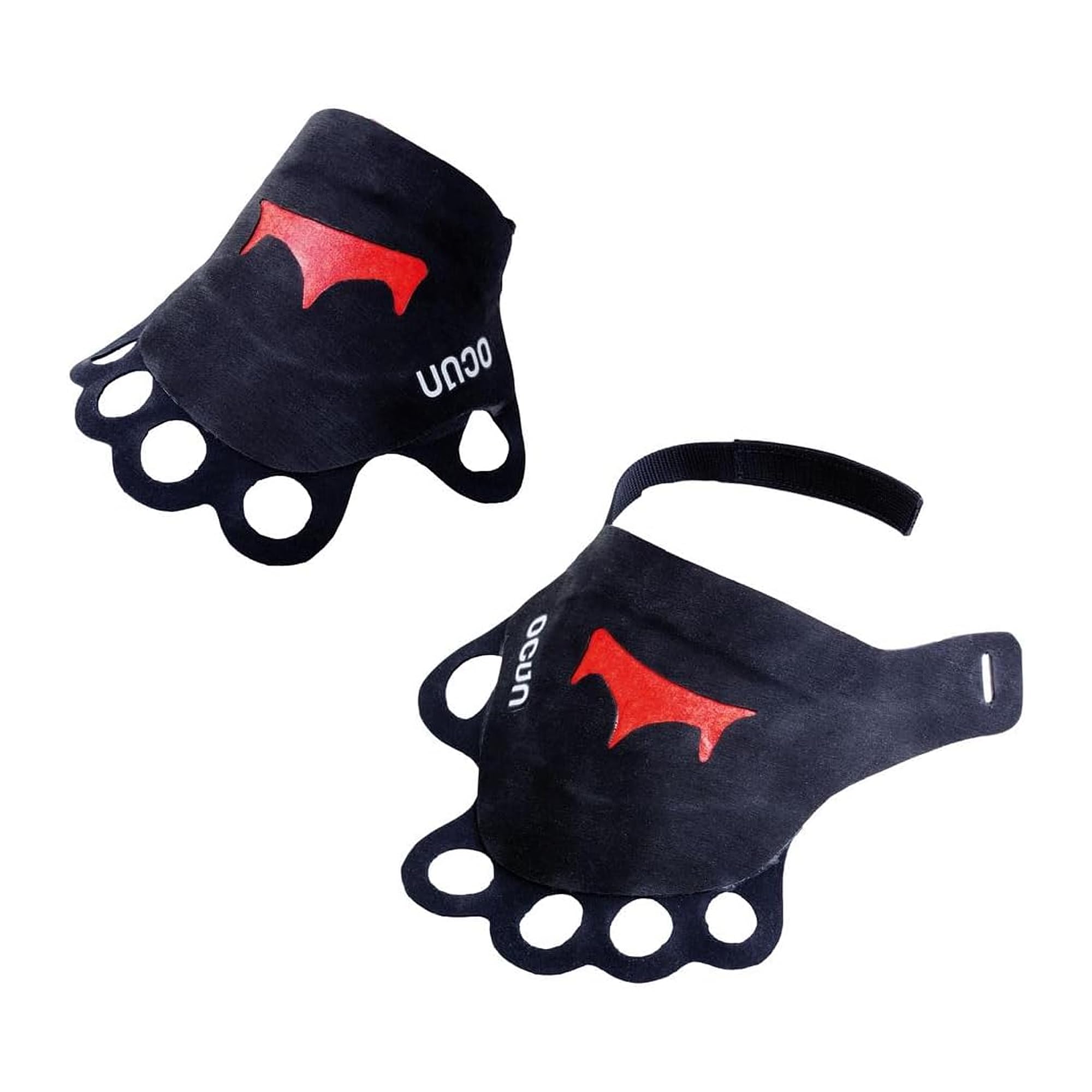
Ocun’s Crack Glove is engineered for one specific job: protecting the dorsal side of your hand while you jam into a parallel-sided crack. The microfiber stretch suede panels cover the top of the hand and fingers, while the palm features Ocun’s CAT Rubber 1.1 compound—a super-sticky rubber patch that provides extra friction against the rock when you’re hand-stacking. The thin profile allows you to feel the texture of the crack while still shielding the knuckles from sharp edges.
The Velcro closure tucks away neatly so it doesn’t snag on rock during a tight jam, and the construction is lightweight enough that you can stuff them into a chalk bag when not in use. Users consistently praise the streamlined fit, noting that the gloves feel like a natural extension of the hand after a few routes. The rubber patch on the palm does improve grip in off-width sections, though it’s not intended for weighted belaying—these are crack-specific tools, not belay gloves.
Durability is solid for the intended use, but the strap can wear out if yanked aggressively. A few reviewers mention the sizing runs small, so check the Ocun size chart before ordering. For climbers who spend most of their day in hand cracks and finger locks, this is the most specialized and effective option listed.
Why it’s great
- CAT Rubber 1.1 patch adds meaningful grip inside hand cracks
- Ultra-light and packable design fits in a chalk bag pocket
- Thin microfiber suede retains tactile feel for jamming
Good to know
- Not designed for belaying; palm is too thin for rope drag
- Runs small; verify sizing against the Ocun chart before purchase
- Velcro strap may eventually break if pulled aggressively
7. EDELRID Open II Work Glove

EDELRID’s Open II Work Glove borrows from the company’s alpine rope-access heritage and translates it into a budget-friendly glove that works well for belaying, rigging, and general rope work. The palm is 100% leather—genuine cowhide—with enough thickness to protect against rope burn during a lower, while the back of the hand uses a 4-way stretch fabric (98% polyester, 2% spandex) that breathes and moves freely with the hand. The open-finger design leaves the last two phalanges exposed for tying complex knots, making it a solid choice for arborists and rope-access technicians as well as climbers.
The closure tab includes a small carabiner loop for clipping to the harness, and the hook-and-loop wrist strap provides a snug fit that seals out debris. Ambidextrous design simplifies packing and reduces confusion when you’re racking up quickly. The light weight—only 60 grams per pair—makes them easy to carry as a backup glove even if you don’t plan on using them for the entire climb.
The most significant concern is inconsistent quality control: a small number of users have received gloves with torn stitching at the leather-stretch fabric junction on the first wear. Also, the leather smells strongly of industrial tanning chemicals out of the package. Air them outside for a day before use. For the price, the Open II delivers surprising versatility, but it’s not built to survive the same abuse level as the cowhide-heavy Metolius models.
Why it’s great
- Leather palm provides adequate protection for belaying and rappelling
- Stretch fabric back panel promotes airflow and unrestricted movement
- Extremely lightweight at 60 grams per pair
Good to know
- Reported quality control issues with stitching at leather-stretch seam
- Leather has a strong chemical smell; needs airing out before use
- Runs large—order at least one size smaller than usual
FAQ
How should rock climbing gloves fit around the palm and fingers?
Can I use leather work gloves for rock climbing instead of specialized climbing gloves?
How often should I replace my rock climbing gloves?
Final Thoughts: The Verdict
For most users, the best rock climbing gloves winner is the Metolius 3/4 Climbing Glove because it combines thick, triple-stitched cowhide palm protection with a half-finger design that preserves the dexterity needed for gear handling. If you prioritize a supple, breathable glove that doesn’t require a break-in, grab the BLACK DIAMOND Transition Gloves. And for dedicated crack climbers who need specialized hand-jamming protection, nothing beats the Ocun Crack Gloves.