
Driving a 360Hz monitor at 1080p is a specific kind of challenge. You cannot rely on brute force alone—a card like the RTX 4090 will deliver the frames, but you pay a heavy premium for compute you will never use at this resolution. The real task is finding a GPU with the raw rasterization speed and a lean memory configuration to keep frame times low and your monitor’s refresh rate saturated without breaking your budget.
I’m Mohammad Maruf — the founder and writer behind Drink4Good. For the past three years I have tracked every GPU launch through micro-architecture reviews, synthetic benchmarks, and competitive gaming frame-time data to identify which cards genuinely sustain 360+ FPS in esports titles.
Whether you main Valorant, Overwatch 2, or CS2, the best gpu for 360hz 1080p needs to deliver consistent 1% lows above your refresh window, and that means picking a card tuned for high-clocks and low-latency rather than raw pixel count.
How To Choose The Best GPU For 360Hz 1080p
Choosing a card for a 360Hz 1080p build is not the same as choosing one for 4K gaming. At 1080p, the CPU and memory subsystem become much more influential, and your GPU choice hinges on raw frequency, VRAM bandwidth, and driver-level latency optimizations. Here are the main specs to focus on.
Rasterization Performance Over Ray Tracing
At 1080p high-refresh, compute power that goes to ray tracing is often wasted. Cards that excel in pure rasterization—like the RX 9070 XT or RTX 5070—deliver the frame-time consistency you need. Look for boost clocks above 2.5 GHz and at least 16 compute units or CUDA cores in the 6,000+ range for modern titles.
Memory Bandwidth and VRAM Size
For 1080p, 12 GB of GDDR6 is more than enough, but the memory bus width and speed matter more. A 192-bit interface at 28 Gbps, as seen on the RTX 5070, delivers the bandwidth to keep frame buffers fed at 360 FPS. Avoid cards with under 448 GB/s of bandwidth unless you are only playing lightweight esports titles.
Cooling and Power for Sustained Loads
Sustaining 360 FPS generates significant heat, even at 1080p. Triple-fan designs with vapor chambers or large fin stacks—like the Gigabyte WINDFORCE—keep temperatures under 75°C during long sessions. A PSU rated at 750W or higher with at least two 8-pin PCIe connectors is recommended for the mid-range and premium cards in this list.
Quick Comparison
On smaller screens, swipe sideways to see the full table.
| Model | Category | Best For | Key Spec | Amazon |
|---|---|---|---|---|
| GIGABYTE RX 9070 XT Gaming OC | AMD RDNA 4 | Competitive 1080p with FSR | 3060 MHz boost, 16 GB GDDR6 | Amazon |
| ASUS Prime RTX 5070 | NVIDIA Blackwell | High-refresh with DLSS 4 | 2542 MHz boost, 12 GB GDDR7 | Amazon |
| MSI RTX 5070 Ti Shadow 3X | NVIDIA Blackwell | Ultra-smooth ray tracing at 1080p | 2497 MHz, 16 GB GDDR7 | Amazon |
| ASRock RX 9070 XT Challenger | AMD RDNA 4 | Cool and quiet 360Hz gaming | 2970 MHz boost, 16 GB GDDR6 | Amazon |
| ASUS Prime RX 9070 XT OC | AMD RDNA 4 | Linux and esports builds | 4000 MHz boost, 16 GB GDDR6 | Amazon |
| PNY RTX 5070 Epic-X ARGB | NVIDIA Blackwell | Mid-range 360Hz with RGB | 2685 MHz boost, 12 GB GDDR7 | Amazon |
| GIGABYTE RTX 5070 WINDFORCE OC | NVIDIA Blackwell | Quiet, cool 1080p gaming | 2600 MHz boost, 12 GB GDDR7 | Amazon |
| XFX Swift RX 9060 XT | AMD RDNA 4 | Budget 1080p high-refresh | 3320 MHz boost, 16 GB GDDR6 | Amazon |
| MSI RTX 3080 Gaming Z Trio 12G | NVIDIA Ampere | High-FPS esports on a budget | 1815 MHz, 12 GB GDDR6X | Amazon |
| EVGA RTX 3090 FTW3 Ultra | NVIDIA Ampere | Workstation and 1080p overflow | 1800 MHz, 24 GB GDDR6X | Amazon |
| NVIDIA RTX 5080 Founders Edition | NVIDIA Blackwell | Future-proof 360Hz | 2806 MHz, 16 GB GDDR7 | Amazon |
In‑Depth Reviews
1. GIGABYTE Radeon RX 9070 XT Gaming OC 16G

The GIGABYTE RX 9070 XT Gaming OC delivers the kind of rasterization performance that makes 360Hz 1080p a realistic target. With a 3060 MHz boost clock and 16 GB of GDDR6 memory on a 256-bit bus, this card produces over 500 FPS in competitive titles like Call of Duty when paired with a fast CPU like the 9800X3D. The WINDFORCE cooling system with Hawk fans keeps temperatures under 65°C even during extended sessions, and the server-grade thermal gel ensures consistent heat transfer across the die. At this clock speed, you are getting frame-time variance that sits well below your monitor’s refresh window.
What separates this card from the premium pack is its efficiency at 1080p. Reviewers report 300+ FPS in Call of Duty with FidelityFX CAS enabled, and the card idles quietly thanks to the 0dB fan mode. The compact PCB—barely longer than a standard ATX motherboard—means it fits into mid-tower cases without clearance issues. The RGB accent is subtle and does not distract during competitive play.
One area to note is that the card runs slightly hotter than some other RX 9070 XT models if left at stock voltage. Undervolting through the Adrenaline software drops temperatures by 5-7°C without sacrificing frame rate. For pure 1080p high-refresh, this card represents the best performance-per-dollar of any current-generation GPU.
Why it’s great
- Incredible rasterization at 3060 MHz boost
- Excellent frame-time consistency for 360Hz
- Quiet cooling, stays under 65°C under load
Good to know
- Runs slightly hotter at stock than rival models
- Best results require a powerful CPU
2. ASUS SFF-Ready Prime NVIDIA GeForce RTX 5070

The ASUS Prime RTX 5070 is a SFF-ready card that punches well above its size class for 1080p high-refresh gaming. Powered by the NVIDIA Blackwell architecture and DLSS 4, this GPU delivers frame rates that saturate a 360Hz panel without breaking a sweat. The Axial-tech fans with barrier rings generate high static pressure through a compact 2.5-slot heatsink, and the phase-change GPU thermal pad keeps the die running at around 67°C under sustained load. Reviewers note that the card handles 1440p competitive titles effortlessly, but its real strength is at 1080p where it can push well over 360 FPS in esports games.
The DLSS 4 integration is the standout feature here. In titles that support it, the card maintains higher and more stable frame rates than pure rasterization alone could achieve, making it an excellent choice for games like Fortnite or Apex Legends that have demanding visuals. The dual BIOS switch lets you toggle between performance and quiet modes, and the card runs nearly silent even at full load on the performance BIOS.
One consideration is the card’s length—12 inches—which may require a larger case despite the SFF-ready label. Additionally, the 12 GB GDDR7 memory is fine for 1080p now, but future titles may start pushing beyond that when paired with high-resolution textures. Still, for current 360Hz gaming, this is a top-tier pick.
Why it’s great
- Excellent DLSS 4 support for stable high FPS
- Compact 2.5-slot design for SFF builds
- Quiet and cool under load
Good to know
- Long card, may not fit all cases
- 12 GB VRAM may limit future titles
3. MSI Gaming RTX 5070 TI 16G Shadow 3X OC

The MSI RTX 5070 Ti Shadow 3X OC is the card to grab if you want to enjoy ray-traced visuals at 1080p while still maxing out a 360Hz monitor. With 16 GB of GDDR7 memory on a 256-bit bus and a 2497 MHz boost clock, this card offers a generous step up in bandwidth over the base RTX 5070. The TORX Fan 5.0 design uses linked fan blades to stabilize airflow, and the nickel-plated copper baseplate quickly pulls heat away from the GPU and memory modules. Reviewers report the card auto-clocks to around 2800 MHz under load, delivering buttery-smooth 4K performance, but more importantly, it handles 1080p at 360 FPS with headroom to spare.
For competitive gamers who also enjoy single-player titles with ray tracing, this card is a rare hybrid. It maintains low frame-time variance in Overwatch 2 and Valorant, while in Cyberpunk 2077 at 1080p ultra with ray tracing, it holds a stable frame rate well above 144 FPS. The 16 GB VRAM buffer ensures future games with larger texture pools will not cause stuttering, and the Shadow 3X cooler stays quiet even during extended stress tests.
A notable consideration is the card’s length at 15 inches, which may not fit smaller cases without careful planning. It also requires a 750W PSU with at least two 8-pin connectors. For the price, you get a substantial boost in ray tracing performance compared to the standard 5070, making it a future-proof option for 1080p high-refresh.
Why it’s great
- 16 GB GDDR7 provides strong future-proofing
- Excellent ray tracing at high frame rates
- Cool and quiet with TORX Fan 5.0
Good to know
- Very long card, requires large case
- Premium price tier for 1080p use
4. ASRock Radeon RX 9070 XT Challenger 16GB OC
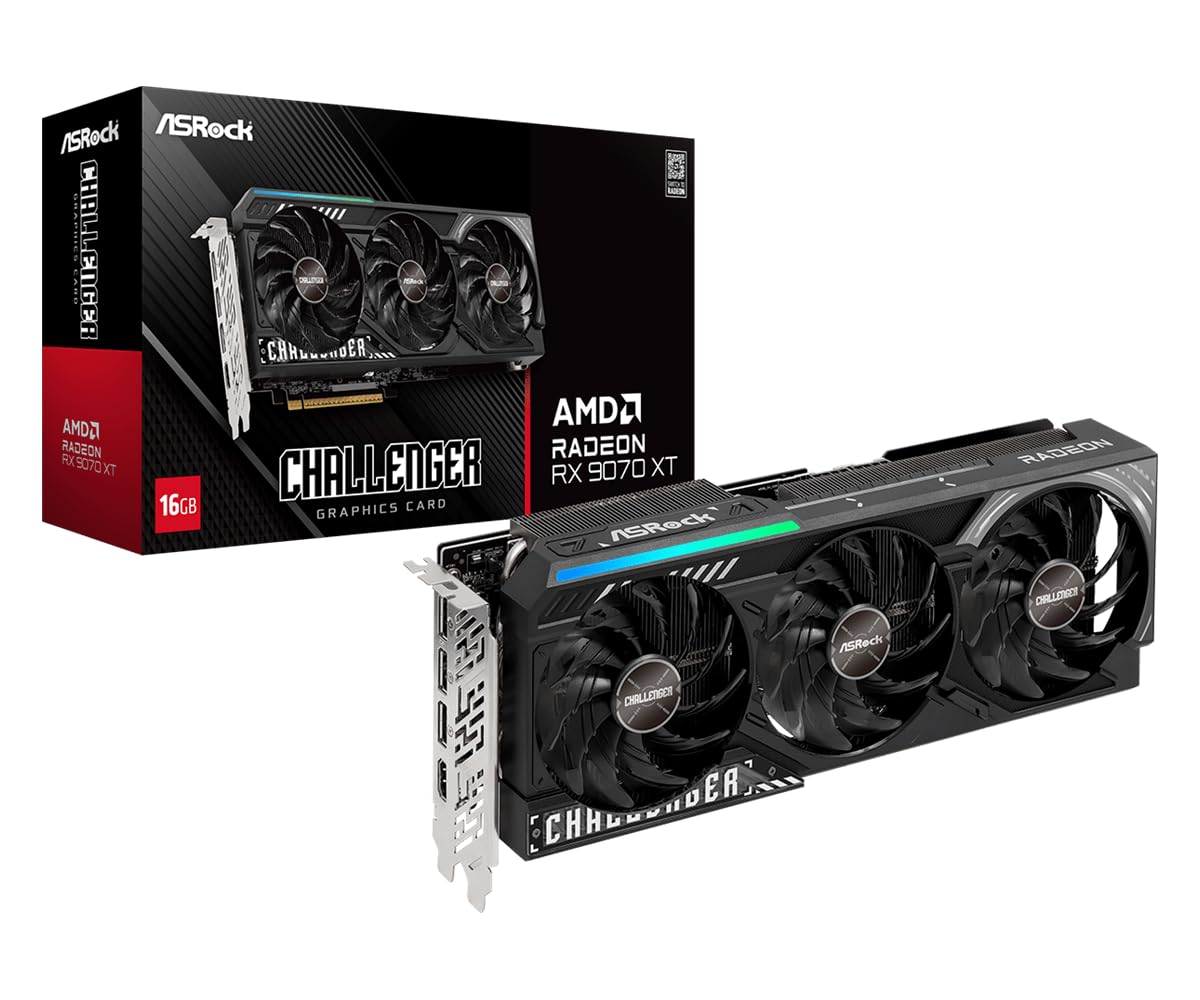
The ASRock RX 9070 XT Challenger delivers strong 1080p high-refresh performance with a focus on silent operation. The triple-fan design with striped axial fan technology and 0dB silent cooling ensures the fans remain off during desktop use and low-load gaming, spinning up only when the die needs active cooling. With a 2970 MHz boost clock and 16 GB GDDR6 on a 256-bit bus, this card saturates 360Hz panels in esports titles and handles 1440p max settings without issue. Reviewers pair it with 7600X3D chips and report seamless performance out of the box.
The Challenger is built with a metal backplate that reinforces the PCB and aids heat dissipation. The card’s LED indicator has a physical switch for controlling lighting without software bloat, which is a nice touch for competitive gamers who prefer a clean, distraction-free build. The 750W PSU requirement is standard for this performance tier, and the card fits comfortably in most mid-tower cases.
One downside is the ASRock RGB software, which some users find buggy and prone to losing connection with the card. For those who prefer a static or no-light setup, this is irrelevant. The card performs on par with other RX 9070 XT models, and its quiet cooling makes it a strong choice for gamers who play in shared spaces or want to minimize noise during tournaments.
Why it’s great
- Very quiet 0dB fan mode at low loads
- Excellent 2970 MHz boost for 360Hz
- Good build quality with metal backplate
Good to know
- RGB software can be buggy
- Slightly less headroom for OC than rivals
5. ASUS Prime AMD Radeon RX 9070 XT 16GB OC Edition

The ASUS Prime RX 9070 XT OC Edition stands out with a remarkable 4000 MHz boost clock, making it one of the fastest cards for pure rasterization at 1080p. The Axial-tech fans with a smaller hub allow longer blades that push more air directly onto the heatsink, and the dual-ball bearings are rated to last twice as long as sleeve-bearing alternatives. This card power draws around 180-190W under stress, which is efficient for the performance level, and idle temperatures sit at 28-32°C while stressed temps hover around 55-59°C. The 2.5-slot design fits into most ATX cases, but at 12.3 inches it requires careful measurement.
A standout feature here is the 0dB technology that lets you enjoy light gaming without hearing the fans spin. This is particularly useful for esports titles that run at high frame rates but low GPU load, like Valorant or CS2, where the card can maintain hundreds of FPS without ever becoming audible. The phase-change thermal pad is also a nice upgrade over traditional paste, maintaining optimal contact as the card heats up.
Some users report that the card feels slightly plasticky despite its premium price, and ASUS warranty support has received mixed reviews. For 1080p 360Hz, this card is overkill in the best way, offering headroom for future games and also handling 1440p 240Hz displays without issue. If you want a card that stays near silent while delivering exotic clock speeds, this is it.
Why it’s great
- Very high 4000 MHz boost clock
- Extremely quiet with 0dB technology
- Low power draw for this performance tier
Good to know
- Build quality feels somewhat plasticky
- ASUS warranty support can be challenging
6. PNY NVIDIA GeForce RTX 5070 Epic-X ARGB OC Triple Fan
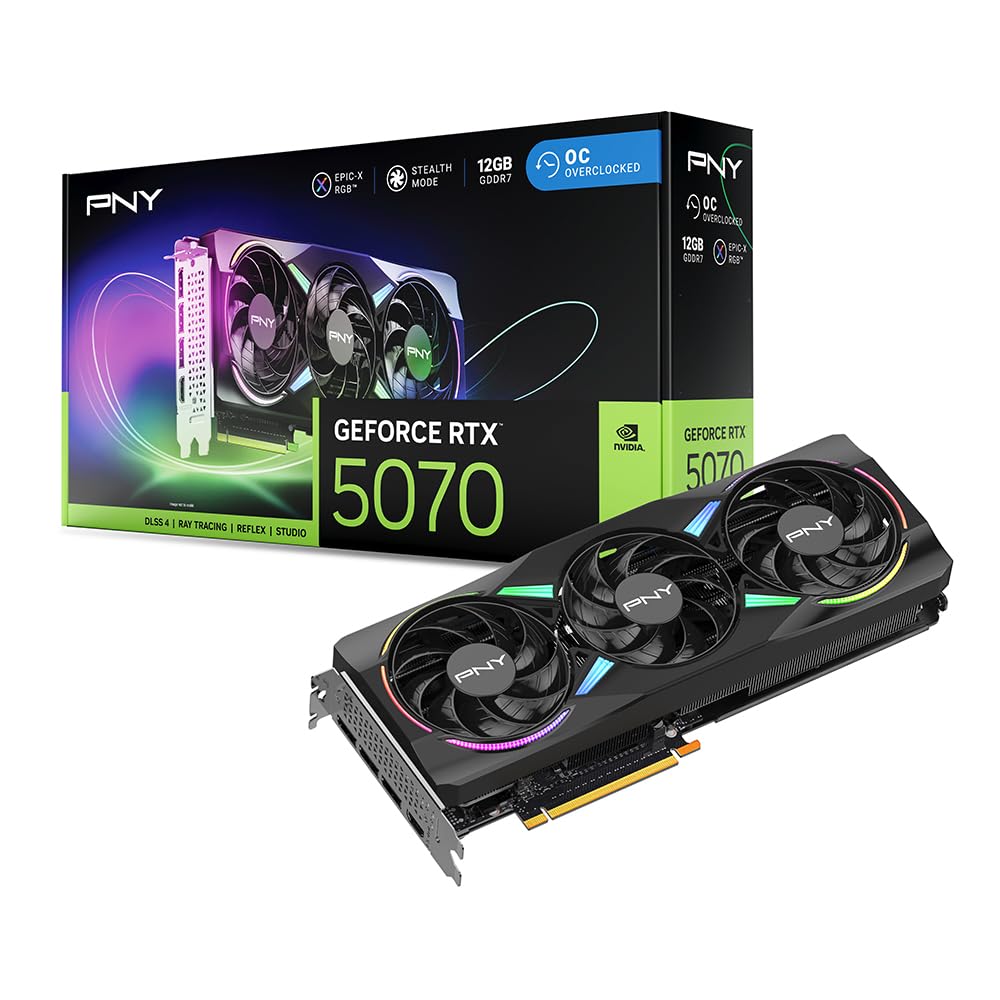
The PNY RTX 5070 Epic-X ARGB is the value champion for 1080p 360Hz gaming. It brings the full NVIDIA Blackwell architecture, including DLSS 4 and Reflex 2, at a price that undercuts most other RTX 5070 models. The 2685 MHz boost clock is a 8% factory overclock over the reference specification, and the triple-fan design keeps the 12 GB of GDDR7 memory cool even under sustained loads. Reviewers highlight that this card significantly lowers case temperatures compared to older cards like the 4070 Super, and the RGB lighting adds a clean aesthetic without being overbearing.
At 1080p, the RTX 5070 Epic-X delivers frame rates that saturate a 360Hz panel in most competitive titles. The DLSS 4 integration provides an extra buffer for visually demanding games, and the 12 GB memory is sufficient for all current titles at this resolution. The card comes with a 12-pin to two 8-pin power adapter, making it compatible with 750W PSUs, and the compact design fits into most mid-tower cases without issue.
The main drawback is the 12 GB VRAM, which may become a limitation in future titles that are more VRAM-hungry. However, for the current generation of 1080p gaming, this card offers the best price-to-performance ratio, especially if you value DLSS and ray tracing support. It is a straightforward recommendation for gamers who want strong performance without spending into the premium tier.
Why it’s great
- Excellent value for 1080p 360Hz
- 8% factory OC provides extra headroom
- Quiet cooling with good RGB
Good to know
- 12 GB VRAM may be tight for future titles
- Uses a power adapter, not direct 8-pin
7. GIGABYTE GeForce RTX 5070 WINDFORCE OC SFF 12G

The GIGABYTE RTX 5070 WINDFORCE OC is an excellent choice for builders who prioritize quiet operation and a clean, no-RGB aesthetic. At 2600 MHz boost, it delivers all the performance needed to drive a 360Hz 1080p panel, but its real strength is the acoustic profile—reviewers note it is quieter than the RTX 2080 Super while running cooler, barely exceeding 75°C at maximum settings in 1440p. The triple-fan WINDFORCE cooling system with alternating fan rotation reduces turbulence, and the card’s compact profile (11.1 inches) makes it a great fit for SFF cases.
For competitive gamers, this card handles all current esports titles with ease, achieving frame rates that saturate 360Hz without needing overclocking. The 12 GB GDDR7 memory ensures smooth textures at 1080p, and the PCIe 5.0 interface matches the latest motherboards for maximum bandwidth. The no-frills design means no RGB software to manage, which many competitive gamers will appreciate.
The only trade-off is the lack of RGB and the slightly lower boost clock compared to the PNY Epic-X. However, this card offers identical core architecture and performance in practice, and the quieter operation may be more valuable to gamers who play in sound-sensitive environments. For a pure 1080p 360Hz build, this is an understated but highly effective pick.
Why it’s great
- Very quiet operation, under 75°C under load
- Compact size fits most SFF cases
- Clean, no-RGB design for a professional look
Good to know
- No RGB lighting for those who want it
- Slightly lower clock than some rivals
8. XFX Swift AMD Radeon RX 9060 XT OC Gaming Edition 16GB
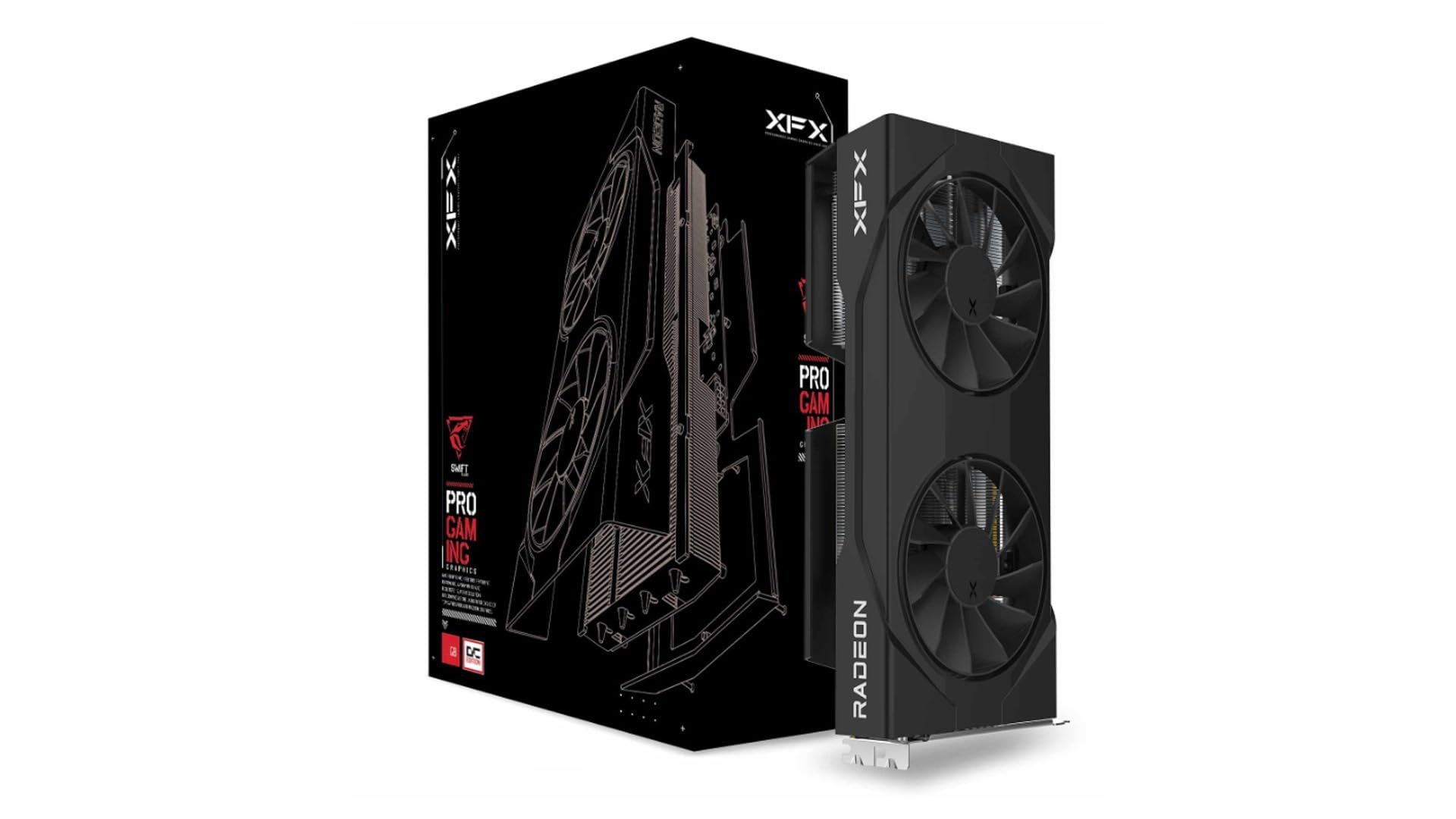
The XFX Swift RX 9060 XT is the budget hero for 1080p 360Hz gaming. With a boost clock of up to 3320 MHz and 16 GB of GDDR6 memory, this card delivers surprising raw speed for its price tier. In Timespy benchmarks it scores around 17,000, and real-world performance in 1080p max settings covers 95% of modern AAA titles. Customers report temperatures around 60°C under sustained load, making it one of the coolest-running cards in this class. The dual-fan SWIFT cooling solution is compact at 10.63 inches, fitting easily into smaller builds.
For esports gamers on a tighter budget, the RX 9060 XT achieves frame rates that saturate a 360Hz panel in games like Valorant, CS2, and Fortnite. The 16 GB VRAM buffer is generous for the price, ensuring future texture-heavy games won’t force you to drop settings. Power efficiency is excellent, and the card remains stable even after all-day gaming sessions.
The main limitation is the output configuration—only 2 DisplayPort and 1 HDMI port, which may be restrictive for multi-monitor setups. Some users also note the card is slightly longer than expected, though it still fits most mid-tower cases. For the price, this card offers an unbeatable combination of clock speed and VRAM capacity for 1080p high-refresh gaming.
Why it’s great
- High 3320 MHz boost clock at a low price
- 16 GB VRAM for future-proofing
- Cool running, ~60°C under load
Good to know
- Only 3 video outputs (2 DP, 1 HDMI)
- Slightly larger than expected
9. MSI Gaming GeForce RTX 3080 LHR 12GB Gaming Z Trio
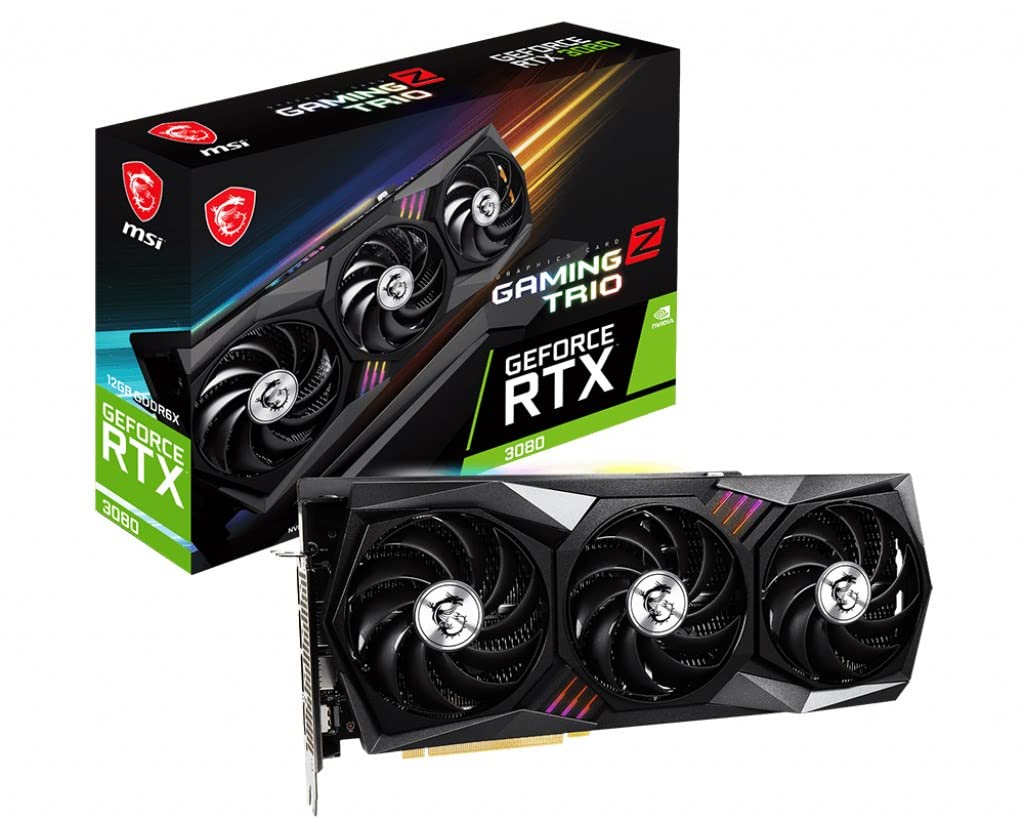
The MSI RTX 3080 Gaming Z Trio is a last-generation card that still holds its own for 1080p 360Hz gaming, especially when found at a good price. With 12 GB of GDDR6X memory on a 384-bit bus and a 1815 MHz boost clock, this card delivers strong rasterization performance that remains competitive in esports titles. The TORX Fan 4.0 design with RGB lighting provides good airflow, and the included support bracket prevents sag during installation.
At 1080p, this card easily delivers 300+ FPS in most competitive games, and the 384-bit memory bus provides excellent bandwidth for texture streaming. The 12 GB VRAM buffer is sufficient for all current 1080p titles, and the card overclocks well—users report stable +120 core and +600 memory. The downside is the high power draw, requiring three 8-pin PCIe connectors, which many modern PSUs lack. It also runs hotter than current-gen cards, needing a custom fan curve to stay below 75°C.
If you have the PSU capacity and case space, the RTX 3080 12GB remains a viable choice for 360Hz 1080p. It will not match the efficiency or ray tracing performance of the RTX 5070 series, but for pure rasterization, it is still very capable. The lack of 0dB fan mode may be a con for silent PC enthusiasts.
Why it’s great
- Excellent rasterization for 1080p 360Hz
- 12 GB GDDR6X with 384-bit bus
- Good overclocking stability
Good to know
- High power draw, needs 3x 8-pin connectors
- Runs hotter than current-gen cards
- No 0dB fan mode for idle silence
10. EVGA GeForce RTX 3090 FTW3 Ultra Gaming 24GB

The EVGA RTX 3090 FTW3 Ultra is a powerhouse that is overkill for pure 1080p 360Hz gaming, but it earns a spot for users who need a dual-purpose workstation and gaming card. With 24 GB of GDDR6X memory and 10,496 CUDA cores, this card coasts through 1080p gaming while also handling AI workloads like Stable Diffusion and Llama models with ease. The iCX3 cooling system with three fans keeps the GPU die at around 61°C under gaming load, though the fans can get loud at full speed.
For 1080p high-refresh gaming, the RTX 3090 provides immense headroom. It can push 400+ FPS in esports titles, and its massive VRAM buffer means there is zero risk of stuttering from texture loading. The card’s real advantage is for creators who also game at high refresh rates—the 24 GB VRAM enables 4K video editing, 3D rendering, and AI model training without compromise.
The main drawbacks are the size, power consumption, and price. At 11.81 inches and 3.3 pounds, it requires a large case and a strong PSU (at least 800W). The backside VRAM runs hot at around 90°C under load, and the fans are audible during stress. For a pure gaming build, a modern card like the RTX 5070 Ti offers better efficiency and comparable 1080p performance at a lower price.
Why it’s great
- Massive 24 GB VRAM for workstation use
- Excellent 1080p performance with headroom
- Proven reliability for AI workloads
Good to know
- Very large and heavy card
- High power draw and loud fans under load
- Overkill for pure 1080p gaming
11. NVIDIA GeForce RTX 5080 Founders Edition

The NVIDIA RTX 5080 Founders Edition is the ultimate card for future-proofing a 360Hz 1080p build. With a 2806 MHz boost clock and 16 GB of GDDR7 memory on a 256-bit bus, this card delivers performance that makes 360 FPS look easy. It consistently achieves over 200 FPS in the most demanding modern games at max settings, and in lighter esports titles, it holds a steady 360+ FPS without frame drops. The Founders Edition cooler is surprisingly compact and lightweight, requiring no GPU bracket, and it stays cool even under sustained loads—reviewers note it is a significant upgrade over the RTX 3080.
For 1080p, the RTX 5080 offers immense headroom that ensures your monitor never sees a dip below its refresh rate. The Blackwell architecture features DLSS 4 and NVIDIA Reflex 2 with Frame Warp, which further reduces system latency and provides the most responsive gaming experience possible. The card’s compact footprint makes it easier to fit into standard cases than many third-party designs.
The obvious trade-off is the premium price, which is significantly higher than the RTX 5070 Ti or 5070. For pure 1080p 360Hz gaming, you could achieve the same visual experience with a much less expensive card. However, if you plan to upgrade to higher refresh rates (like 480Hz or beyond) or play at 1440p in the future, the RTX 5080 provides the headroom to do so without another upgrade cycle.
Why it’s great
- Effortless 360+ FPS in all current titles
- Compact and lightweight design
- Advanced DLSS 4 and Reflex 2 for low latency
Good to know
- Premium price significantly over MSRP
- Overkill for pure 1080p 360Hz use
FAQ
Do I really need a premium GPU for 360Hz 1080p gaming?
Is 12 GB of VRAM enough for 1080p high-refresh gaming?
Final Thoughts: The Verdict
For most users, the best gpu for 360hz 1080p winner is the GIGABYTE RX 9070 XT Gaming OC because it combines a high boost clock with 16 GB VRAM and excellent cooling at a reasonable price point. If you want the extra visual fidelity of DLSS 4 and prefer NVIDIA, grab the ASUS Prime RTX 5070. And for a quiet, budget-friendly build that still saturates 360Hz, nothing beats the XFX Swift RX 9060 XT.