
The Pacific Northwest’s cool, wet winters and mild, dry summers create a turfgrass paradox: most seed blends either rot in the spring muck or crisp in the July drought. The climate demands a species that thrives in acidic, clay-heavy soil, endures overcast shade, and bounces back after months of moisture stress without succumbing to fungal pressure. Finding a mix that actually survives both the rainy season and the summer dry-down is the single biggest challenge for a PNW lawn keeper.
I’m Mohammad Maruf — the founder and writer behind Drink4Good. I track market trends and analyze germination specs for regional turf blends, focusing on the specific grass species (fine fescue, tall fescue, perennial ryegrass) that outperform in maritime Pacific Northwest conditions.
The right mix handles the region’s unique combination of dense shade, heavy winter rain, and summer drought. This guide breaks down the top contenders for the best grass seed for pacific northwest lawns, covering everything from fescue-based shade specialists to weather-resistant tall fescue blends built for high-traffic yards.
How To Choose The Best Grass Seed For Pacific Northwest
Selecting a seed for the PNW means optimizing for winter wet and summer dry. The wrong species — one bred for humid continental climates — will rot in November and brown out by August. Focus on three core criteria: species adaptation, shade tolerance, and weed-free purity.
Species Selection: Fescue-First Strategy
Fine fescues (creeping red, hard, Chewings) and turf-type tall fescue are the PNW’s backbone. Fine fescues handle dense shade and acidic soils naturally, while tall fescue develops deep roots that access moisture during the summer dry spell. Perennial ryegrass works for quick germination and high-traffic patches but requires more water. Avoid pure Kentucky bluegrass in shady PNW lawns — its shallow root system struggles with both the wet winter and the dry summer.
Shade Tolerance Metrics
Most PNW yards have at least one side dominated by bigleaf maple or Douglas fir canopy. Look for seed tagged “dense shade” or “shade tolerant” with a species breakdown of at least 50% fine fescue. If the label lists “sun and shade” generically, check the fine print — it’s likely a ryegrass-heavy blend that will thin out under heavy canopy after one season.
Purity and Weed-Free Guarantees
A 99.9% weed-free label matters in the PNW because damp soil activates every dormant weed seed in the top inch. Blends labeled “pure grass seed” with no fillers (usually listed under “other crop seed” or “inert matter”) give you a cleaner start. The GreenView and Lesco products reviewed here both score 99.9% weed-free, which translates to less hand-pulling of annual bluegrass and clover during establishment.
Quick Comparison
On smaller screens, swipe sideways to see the full table.
| Model | Category | Best For | Key Spec | Amazon |
|---|---|---|---|---|
| Lesco All-Pro Tall Fescue | Premium Tall Fescue | High-traffic, drought-prone lawns | Endophyte-enhanced insect resistance | Amazon |
| GreenView Tall Fescue 20 lb | Turf-Type Tall Fescue | Large lawn overseeding | Covers 5,000 sq ft (overseed) | Amazon |
| Scotts All-Purpose Mix | All-Purpose Mix | Budget-friendly large coverage | 20 lb, seeds up to 8,000 sq ft | Amazon |
| Outsidepride Fine Fescue | Fine Fescue Blend | Deep shade restoration | OptiGrowth coating with nutrients | Amazon |
| Jonathan Green Black Beauty Ultra | Premium Fescue Blend | Superior drought tolerance | Waxy coating conserves moisture | Amazon |
| GreenView Perennial Ryegrass | Perennial Ryegrass | Quick patch repair | Germinates in 7-12 days | Amazon |
| Jonathan Green Dense Shade | Shade Specialist | Heavy tree canopy areas | 3 lb, covers 1,800 sq ft | Amazon |
In‑Depth Reviews
1. Lesco All-Pro Transition Tall Fescue Grass Seed Blend – 10 lbs
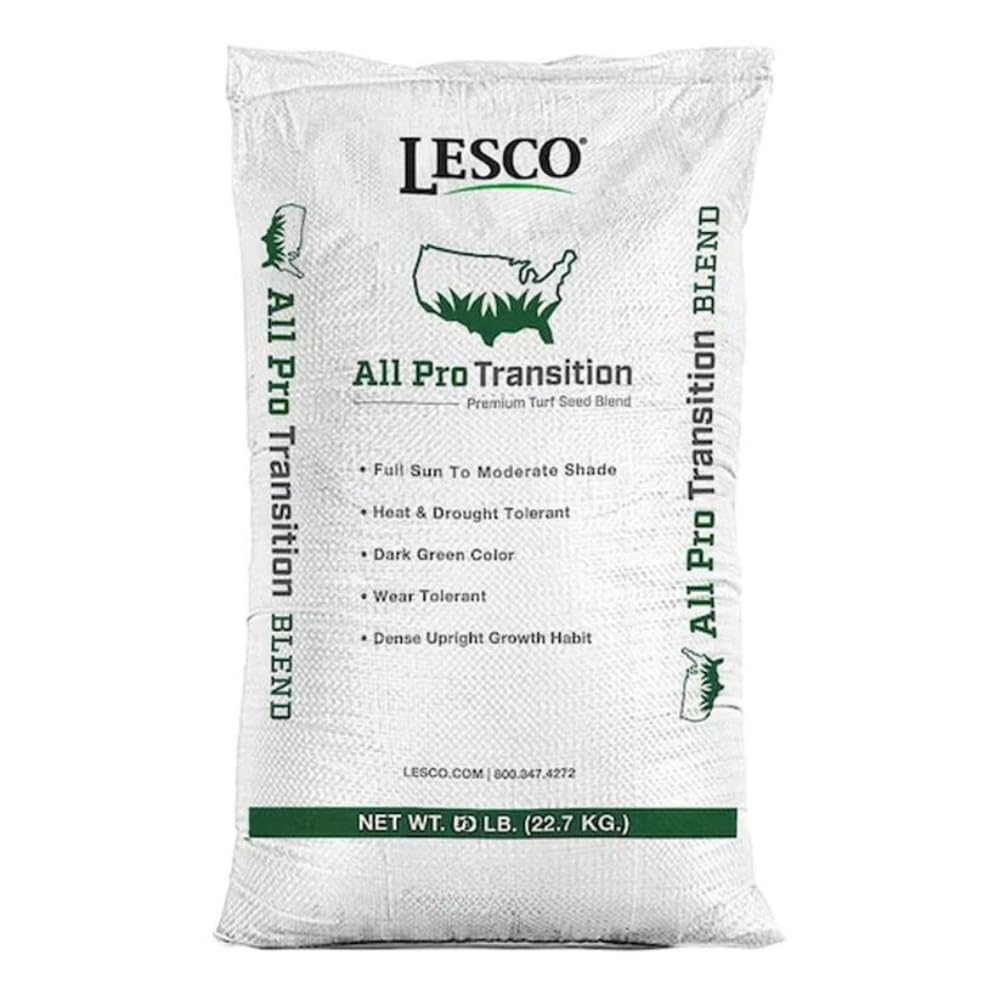
Lesco’s All-Pro blend is engineered for transition zones where heat, drought, and traffic converge — a perfect match for PNW summers that push lawns into stress. The turf-type tall fescue genetics produce a medium-coarse blade with deep root penetration, letting it access soil moisture long after fine-bladed grasses have curled. The endophyte enhancement is a practical bonus: it represses surface-feeding chinch bugs and sod webworms without chemical pesticides, which matters during the warmest months when insect pressure spikes.
Customer reports consistently note germination within one week under consistent moisture, with thick fill-in that matches existing tall fescue stands. The 10-pound bag is geared toward medium-sized projects — new lawns up to roughly 1,000 square feet or overseeding up to 2,000 square feet. Reviews emphasize the lack of weed contamination, a recurring pain point with cheaper big-box blends that introduce crabgrass and annual bluegrass into the soil bank.
One limitation: this blend is non-returnable, so soil prep and timing need to be exact. Apply in early fall or late spring when soil temperatures hit the 60–65°F sweet spot. Pair with a starter fertilizer high in phosphorus for root development during the establishment window. The price per pound sits in the mid-range, but the pure seed content and weed-free guarantee offer strong long-term value for a lawn that will need less rehab down the road.
Why it’s great
- Endophyte-enhanced insects resistance reduces pesticide need
- Fast germination in 7 days under proper moisture
- 99.9% weed-free with no filler content
- Deep root system handles PNW summer dry-down
Good to know
- Non-returnable policy requires careful planning
- Medium-coarse texture may not suit ultra-formal lawns
- 10-lb bag is limited for large-acreage projects
2. GreenView Pure Grass Seed Turf Type Tall Fescue Sun & Shade Blend, 20 lb

GreenView’s 20-pound tall fescue blend targets the PNW homeowner with a half-acre lot who wants one bag to handle the whole overseeding job. The turf-type tall fescue varieties are selected for sun and partial shade adaptability, and the 99.9% weed-free guarantee means you’re not paying for inert filler or dormant weed seeds. The 10-to-14-day germination window is standard for tall fescue, but the dark green color and medium-coarse texture come through reliably once roots anchor into the clay-loam soil common in the region.
Real-world user feedback notes near-total coverage of bare spots when applied with topdressing, particularly when paired with a thin compost or peat moss cover to retain surface moisture during the critical first two weeks. The blend’s drought and heat resistance is a direct fit for PNW July and August, when irrigation restrictions can leave unestablished seed vulnerable. Several reviews highlight that the 20-pound size covers 5,000 square feet for overseeding — a practical number for a suburban front and back lawn.
The main trade-off is a slightly slower establishment compared to perennial ryegrass blends, and the medium-coarse leaf texture won’t mimic the fine-bladed look of a bentgrass putting green. But for a durable, low-maintenance lawn that survives the wet-dry cycle, this bag delivers reliable coverage without multiple trips to the store. The price per pound is competitive with premium-tier options, making it a solid choice for whole-lawn renovation.
Why it’s great
- Large 20-lb bag covers up to 5,000 sq ft for overseeding
- 99.9% weed-free with no filler content
- Dark green color consistent with PNW tall fescue aesthetics
- Drought and heat tolerance for summer dry spells
Good to know
- 10-14 day germination is slower than ryegrass blends
- Medium-coarse texture not ideal for ultra-fine lawns
- Some users report slower growth than premium seed lines
3. Scotts Turf Builder Grass Seed Quality All-Purpose Mix – 20 lb

Scotts All-Purpose Mix is the most widely available option on this list, and its 20-pound bag can cover up to 8,000 square feet, making it the cheapest route to large-area coverage. The blend is coated with WaterSmart technology, which the manufacturer claims absorbs 2x more water than uncoated seed — a useful trait for PNW lawns where inconsistent summer watering is common. The 99.9% weed-free rating holds up in most customer experiences, with many users reporting thick, dark green growth in mixed sun and shade conditions.
Performance in the Pacific Northwest specifically benefits from the blend’s inclusion of perennial ryegrass and fine fescue, both of which handle the region’s acidic, clay-heavy soil. The ryegrass component germinates fast (7–10 days), providing quick green cover while the fescue establishes deeper roots. Several verified buyers note that it blends well into existing tall fescue lawns, which is the dominant turf type in the region. The “all-purpose” label is accurate — it’s a generalist, not a specialist for deep shade or extreme drought.
The downside is the inclusion of some filler material — not all 20 pounds is pure seed. Some reviews mention crabgrass and weed pressure after the initial germination flush, suggesting that the mix may carry trace weed seeds despite the claim. Also, the blend is not formulated specifically for the PNW; it’s a national product that performs adequately but not optimally in the region’s unique conditions. For a budget overseeding project where absolute turf quality isn’t the priority, this bag delivers square footage per dollar.
Why it’s great
- Best per-pound cost for large-area coverage (up to 8,000 sq ft)
- WaterSmart coating helps with establishment during dry spells
- Fast germination from ryegrass component
- Widely available at big-box retailers
Good to know
- Contains some filler material, not 100% pure seed
- Some reports of crabgrass and weed pressure after seeding
- Generalist blend, not optimized for PNW climate
- May require multiple applications for even coverage
4. Outsidepride Legacy Fine Fescue Grass Seed Mix – 5 lbs
Outsidepride’s Legacy Fine Fescue Mix is the go-to for PNW yards dominated by tree canopy where other grasses thin out after a single season. The blend comprises 20% Hard Fescue, 40% Chewings Fescue, and 40% Creeping Red Fescue — three species that thrive in low-light, acidic soil conditions common under Douglas fir and bigleaf maple. The OptiGrowth coating supplies zinc, phosphorus, and nitrogen directly on the seed, giving each kernel a nutrient boost during the vulnerable germination phase.
Customer feedback from the region is positive for deep shade restoration, with many noting that the fine blades create a dense, carpet-like turf that handles light foot traffic without browning. The elite mix is also a solid choice for erosion control on sloped, shady banks where mowing is difficult — the fescues stay low-growing and don’t require aggressive maintenance. The 5-pound bag covers roughly 1,000 square feet for new lawns, so it’s best suited for targeted shade patches rather than full-acre projects.
The main consideration is patience: fine fescues are slower to germinate than ryegrass, and the coated seed can take up to 14–18 days to show consistent growth, especially in cooler spring soil. Once established, though, the drought tolerance is superior to most ryegrass blends, and the low maintenance requirement appeals to PNW homeowners who don’t want to water through the summer. The price point is premium-tier for a 5-pound bag, but the genetic purity and species selection justify the cost for problem shade areas.
Why it’s great
- Three-fescue blend optimized for deep PNW shade
- OptiGrowth coating provides essential nutrients for germination
- Low maintenance once established, minimal watering needed
- Dense, fine-bladed turf ideal for naturalized areas
Good to know
- Slow germination (14-18 days) compared to ryegrass
- 5-lb bag is small for large-scale projects
- Premium price point per pound for the coating
5. Jonathan Green 40322 Black Beauty Ultra Grass Seed, 7 lb

Jonathan Green’s Black Beauty Ultra is the only seed on this list with a physical waxy coating on the blade that mimics the cuticle of an apple — it wards off disease and preserves leaf moisture during drought. For PNW summers that can stretch from June into September without measurable rain, this trait alone can mean the difference between a green lawn and a straw-colored patch. The 7-pound bag covers 2,800 square feet for overseeding, putting it in the mid-size category for targeted lawn renovation.
The genetics are built around tall fescue with deep root architecture, but the waxy coating adds an extra layer of protection against Ascochyta leaf blight and other fungal diseases common in the PNW’s cool, damp spring followed by sudden summer heat. Customer reports highlight extreme heat survival — some users in inland PNW climates with 90+°F summers noted the grass remained green with minimal supplemental water. The pet-friendly label is accurate; the seed contains no chemical treatments that could harm dogs or children.
Establishment requires discipline: germination takes 7–15 days for the fescue component, and the Kentucky bluegrass portion (present in smaller amounts) can take up to 29 days. Reviews from the region stress the need for consistent watering and starter fertilizer during the first month. The unit cost is higher than generic blends, but the disease resistance and drought tolerance reduce long-term inputs. For homeowners who want to minimize summer watering without sacrificing a dark green lawn, Black Beauty Ultra is a strong competitor.
Why it’s great
- Unique waxy coating preserves moisture and resists disease
- Pet-friendly with no chemical treatments
- Deep tall fescue roots handle PNW summer drought
- Dark green color that holds through hot spells
Good to know
- Slow germination — full establishment takes up to 4 weeks
- Premium price point for 7-lb bag
- Requires consistent watering during first month
- Some Kentucky bluegrass component can create uneven color
6. GreenView Pure Grass Seed Perennial Ryegrass Blend, 7 lb

GreenView’s Perennial Ryegrass Blend is the fastest-germinating option here, with visible growth in 7–12 days under consistent moisture. For PNW homeowners who need to fill bare spots left by winter moss damage or dog urine patches, this blend provides rapid cover that stabilizes soil and competes with spring weeds. The 99.9% weed-free guarantee and pure seed composition (no fillers) give it an edge over economy ryegrass blends that include rye-grain waste as inert matter.
The blend is tested for sun and partial shade adaptability — it performs well in open PNW lawns but will thin out under dense tree canopy over time. Customer reviews specifically call out its ability to outgrow weeds during establishment, with several noting it greened up weeks earlier than fescue or Bermuda in the spring. The 7-pound bag covers up to 3,500 square feet for overseeding, making it a practical size for spot repair or small-lot renovation.
The main limitation is long-term durability: perennial ryegrass is less drought tolerant than tall fescue and fine fescue, and it can go dormant during extended summer dry periods without irrigation. In the PNW’s mild coastal zones, this isn’t typically an issue, but inland areas with hotter summers will need supplemental watering. The blend also has a medium-to-fine texture that matches well with existing fescue lawns, but it won’t blend seamlessly with ultra-fine bentgrass. For speed of establishment, it’s the top choice.
Why it’s great
- Fastest germination — visible growth in under 2 weeks
- 99.9% weed-free, pure seed with no fillers
- Outperforms weeds during establishment
- Medium-to-fine texture blends well with fescue lawns
Good to know
- Lower drought tolerance than tall fescue
- Will thin out under dense shade after one season
- Requires consistent watering during summer dry spells
- Not ideal for large-scale new lawn projects
7. Jonathan Green 40600 Dense Shade Grass Seed, 3 lb
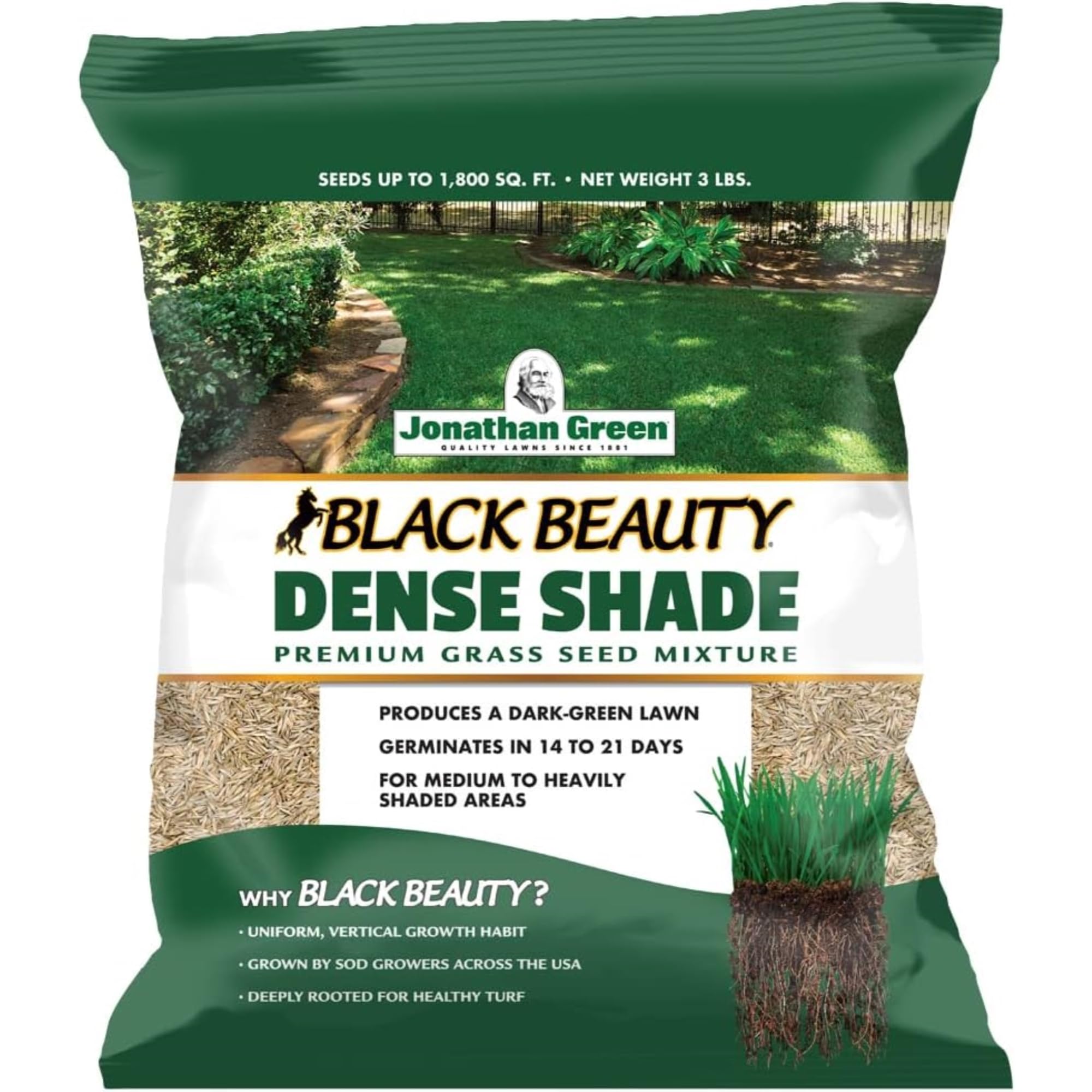
Jonathan Green’s Dense Shade formula is a targeted solution for the most problematic PNW microclimates — the north side of the house, under a mature maple, or along a fenced property line where sunlight never reaches. The 3-pound bag covers 1,800 square feet, making it a spot-treatment size for individual shade patches rather than a whole-lawn solution. The seed mix is 100% premium grass seed with no filler, and the “dense shade” designation means it’s formulated with shade-specific varieties rather than a generic sun-shade mix.
Customer feedback from the region is polarized but informative: several buyers report germination in 3-5 days with thick, dark green growth that no other product achieved in their deep shade. Others noted 5-10% germination and failure after one week, citing potential batch inconsistencies. The shade resistance is real — the blend contains specialized fine fescues that photosynthesize efficiently at low light levels. The leaves are described as tall, thin, and dark green, matching the aesthetic of a natural woodland understory.
The critical caveat is heat sensitivity: the same varieties that love the shade can deteriorate rapidly when exposed to 80+°F temperatures. One PNW user reported that grass greened up beautifully in spring but collapsed in mid-summer during a 95°F heat wave, despite adequate watering. This makes the product best suited for fully shaded areas that never see direct afternoon sun. For partial-shade areas, a tall fescue blend like Lesco’s or GreenView’s may offer better year-round durability.
Why it’s great
- Specialized for dense, low-light PNW shade conditions
- Fast germination in 3-5 days under proper moisture
- 100% premium seed with no filler content
- Tall, dark green leaves ideal for woodland aesthetics
Good to know
- 3-lb bag is small — best for spot treatment
- Heat sensitive; may deteriorate in summer heat waves
- Some batch inconsistency reported by users
- Not suitable for areas with direct afternoon sun
FAQ
Why do PNW lawns need fescue-heavy blends instead of Kentucky bluegrass?
How late in fall can I seed in the Pacific Northwest?
Final Thoughts: The Verdict
For most users, the best grass seed for pacific northwest winner is the Lesco All-Pro Transition Tall Fescue because its endophyte-enhanced, deep-rooted tall fescue genetics survive both the wet winter and the summer dry spell without chemical interventions. If you want shade specialist performance under heavy tree canopy, grab the Outsidepride Legacy Fine Fescue Mix. And for budget-friendly large-area coverage, nothing beats the Scotts All-Purpose Mix for sheer square footage per dollar.