
A pitcher’s glove isn’t just a bigger mitt — it’s a tactical tool designed to hide your grip, shield your release point, and funnel the ball to the throwing hand in one clean motion. The wrong web, the wrong depth, or a stiff palm can telegraph your pitch before you even start the windup, turning an advantage into a liability.
I’m Mohammad Maruf — the founder and writer behind Drink4Good. I’ve spent years tracking leather grades, web patterns, and break-in curves to separate a true pitcher’s glove from a generic infield model marketed as something it’s not.
Whether you’re a youth player learning a change-up grip or a high-school arm working on command, finding the right best pitcher gloves begins with knowing which closed-web design, leather weight, and hand orientation actually serve your motion.
How To Choose The Best Pitcher Gloves
A pitcher’s glove serves two jobs that an infield or outfield mitt simply doesn’t: it hides the ball from the batter until the last possible split-second, and it absorbs force from line drives hit straight back up the middle. The wrong web pattern, leather weight, or break-in level can interfere with both jobs. Here’s what to prioritize.
Closed Web vs. Open Web — Why It Matters on the Mound
Most pitcher-specific gloves use a closed web — a two-piece solid web, a full basket web, or a trap web — to block the batter’s view of your grip. Open webs like the traditional H-web or I-web leave a gap that lets hitters see whether you’ve got a four-seam, a two-seam, or a change-up grip. For youth players, a closed web is even more important because young arms are still developing wrist snap and need every split-second of deception they can get. If the glove has a visible hole between the fingers and the web, it’s not a pitcher’s glove.
Leather Grade and Break-In Level
Pitchers catch their own ball more than any other position player — every time a batter makes contact, the ball comes back through the mound. That means pocket collapse is a real issue with cheap synthetic leathers. Premium steerhide or kip leather holds its shape over hundreds of bullpen sessions. Look for gloves labeled as “ready-to-play” or “70% factory break-in” if you need it game-ready in a week, or traditional stiff leather (like the Rawlings PRO Preferred) if you want a custom fit after a dedicated break-in routine. Thin, floppy leathers feel soft out of the box but lose their pocket within one season on the mound.
Hand Orientation and Fit
Every pitcher glove on this list comes in right-hand throw and left-hand throw configurations. Never buy a glove that forces you to switch — the hand that stays inside the glove needs to feel the ball’s seam immediately for grip transfer. Look for 11.5-inch to 12-inch patterns for most adult pitchers; anything larger can feel unwieldy during a quick turn-and-throw on a comebacker. A padded thumb and pinky sleeve also reduce sting from hard-hit balls up the middle.
Quick Comparison
On smaller screens, swipe sideways to see the full table.
| Model | Category | Best For | Key Spec | Amazon |
|---|---|---|---|---|
| Rawlings PRO Preferred | Pitcher | Elite high school / college pitchers | Two-piece solid web, kip leather | Amazon |
| SSK Z5 Craftsman | Infield/Pitcher | Players wanting game-ready feel | Nameshi cowhide, dimple palm grip | Amazon |
| 44 PRO Rise | Youth Fielding | Youth (8-12) infield/outfield | Steerhide leather, narrow fit | Amazon |
| Wilson A700 | Pitcher | Budget-conscious pitchers | 12” closed web, full grain A700 leather | Amazon |
| Franklin Sports Proflex | Pitcher | Adult rec league / fastpitch | 12.5” closed web, cowhide + PVC hybrid | Amazon |
| Wilson A500 | Youth Infield | Young players (6-9) learning positions | 10.5” H-web, top grain leather | Amazon |
| Rawlings Great Hands Pancake | Trainer | Fielding drills / soft hands practice | Zero-pocket pancake, raw leather face | Amazon |
In‑Depth Reviews
1. Rawlings PRO Preferred

The Rawlings PRO Preferred is built with kip leather — a lighter, more supple hide than steerhide that still delivers a loud, crisp snap on every catch. The two-piece solid web is the gold standard for pitch-tipping protection, completely blocking the batter’s line of sight to your grip. Designed to Jacob deGrom’s game-day pattern, this glove features a 12.75-inch profile with Pittards sheepskin palm lining that wicks moisture away during long starts on the mound.
Break-in is a deliberate process — Rawlings specs it at 30% factory, 70% player. The 100% wool padding aids pocket formation without sacrificing shape retention, and the padded thumb/pinky sleeves absorb sting from hard-hit comebacks. This is not a glove you can unbox and use in a game that week; it requires hot water, mallet work, and patience. Once broken in, the pocket forms precisely to your hand and the kip leather feels like an extension of your arm.
The PRO Preferred carries a premium price tag, but the kip leather and pro-grade laces justify the investment for serious high school or college pitchers. For casual league play, the break-in curve may feel like too much work, but for anyone who’s been using a cheap synthetic glove, the difference in pocket stability and feel is immediately obvious on the first bullpen session.
Why it’s great
- Kip leather forms a tight, long-lasting pocket without heavy bulk
- Closed two-piece solid web hides grip from the batter completely
- Pittards sheepskin lining reduces sweat buildup during long innings
Good to know
- Requires a significant break-in routine — not for impatient players
- Premium price point; overkill for recreational or youth leagues
2. SSK Z5 Craftsman
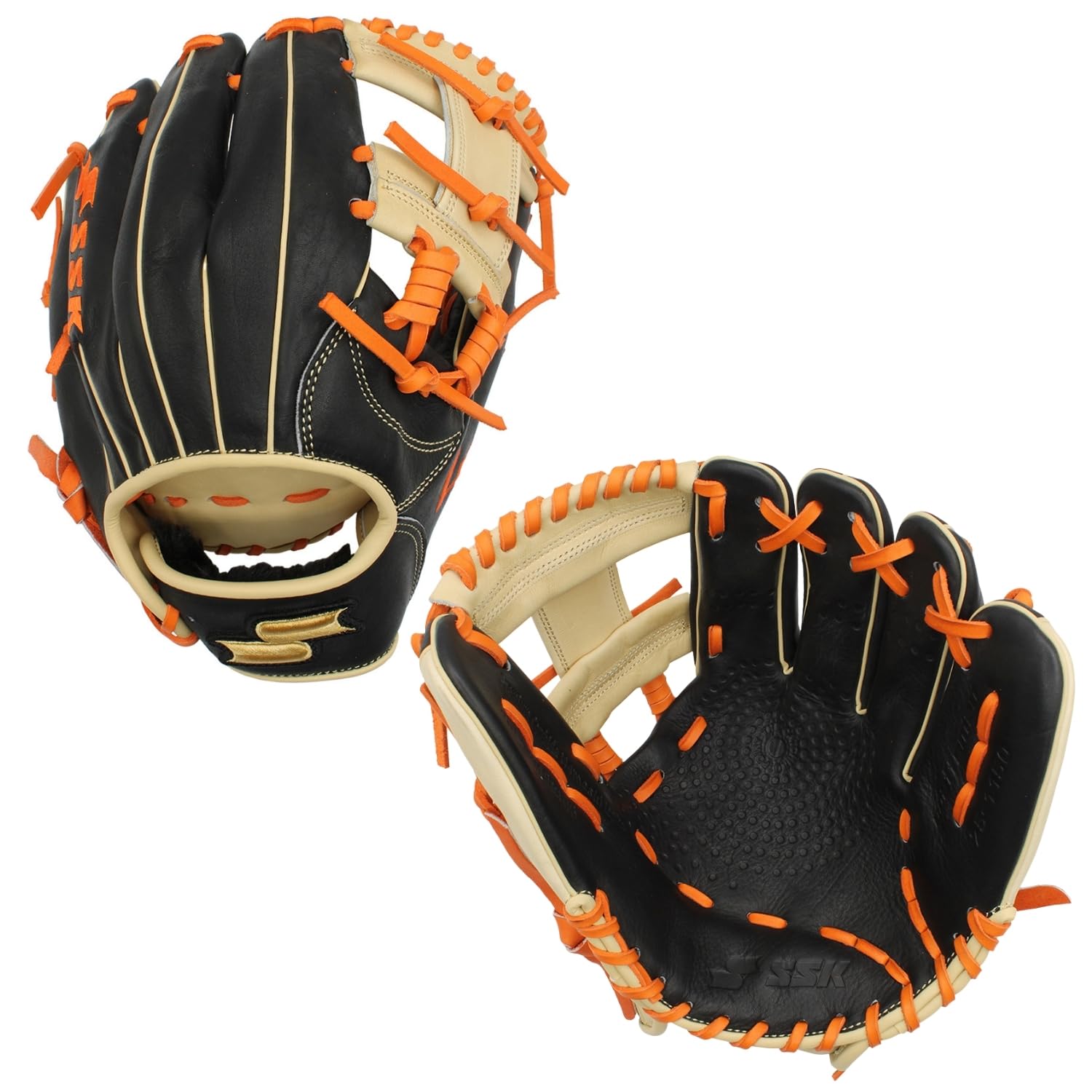
SSK’s Z5 Craftsman uses Premium Cowhide Nameshi Leather — a Japanese-tanned hide known for being game-ready right out of the box while still remaining durable. The 11.5-inch infield pattern works well for pitchers who prefer a smaller, quicker glove, and the H-web offers some grip visibility but the closed finger-backs still limit pitch-tipping compared to a fully open web. The standout feature here is the Dimple Sensor Technology in the palm, which uses small textured indentations to reduce spin and improve grip on the ball after each catch.
The glove undergoes an extra factory break-in process, meaning you can open the package and use it the same day. Top-grain leather lacing with high tensile strength prevents the web from stretching out over the season, a common failure point with budget gloves. The lightweight construction (roughly 1.5 pounds) won’t fatigue your throwing hand during pre-game warmups or long innings in the field.
For a mid-range price, you get Japanese craftsmanship that competes with gloves costing twice as much. The dimple palm is a genuine advantage for pitchers who rely on spin separation between fastball and off-speed pitches. The only tradeoff is that the H-web doesn’t offer total concealment — if complete pitch-tipping prevention is your priority, a solid-web model will serve you better. But for game-ready feel and palm technology, this is a strong value.
Why it’s great
- Game-ready feel with minimal break-in time required
- Dimple Sensor palm adds grip and reduces ball spin on transfers
- Top-grain laces hold up to repeated use without fraying
Good to know
- H-web still offers some grip visibility to batters
- Slightly smaller 11.5-inch pattern may feel tight for larger hands
3. 44 PRO Rise
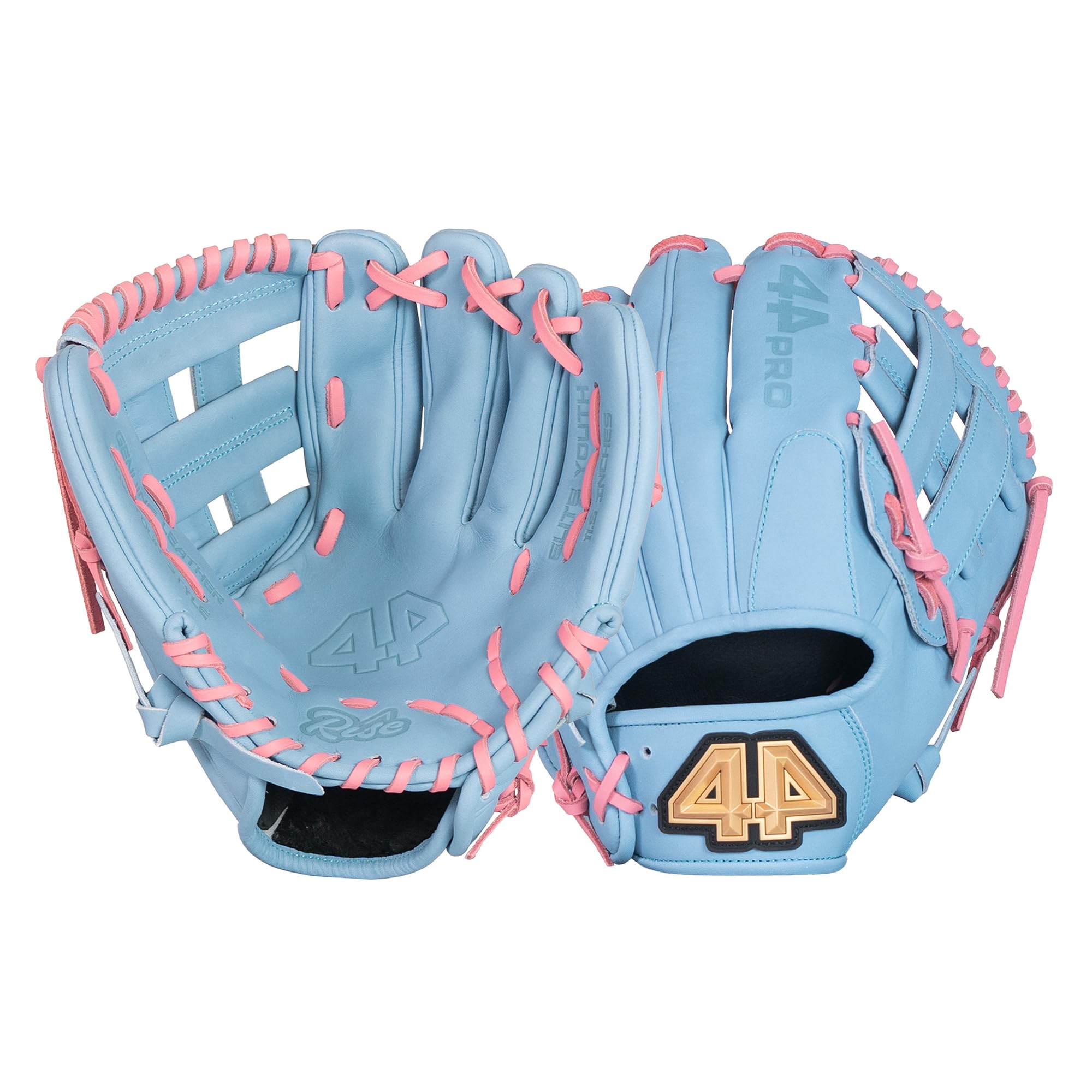
The 44 PRO Rise is purpose-built for youth players aged 8-12, featuring US Steerhide leather that breaks in faster than full-grade adult steerhide but still holds its shape better than cheap synthetic starter gloves. The 11.5-inch pattern with a medium-depth H-web is designed for infield and outfield play, but the closed finger-back construction and narrow fit make it a viable pitcher option for young arms who need quick glove-to-hand transfers. 44 PRO’s reputation for customization shows in the build quality — reinforced stitching and premium laces that don’t tear after a single season.
Break-in is notably quicker than traditional steerhide models. Reviewers report using water and shaping to get a functional pocket within a day or two, even for 8-year-olds with less hand strength. The narrow fit prevents the glove from flopping open during the windup, a common issue with oversized youth gloves that leads to dropped balls on the mound. The pre-curved finger design helps young pitchers maintain a consistent catching angle without fighting stiff leather.
The only limitation for a dedicated pitcher is the H-web — it does offer some visibility to the batter, which matters less at youth levels where batters aren’t tracking grip cues yet. The price sits in the mid-range for youth gloves, but the steerhide construction and pro-level craftsmanship make it last longer than the typical one-season glove. If your young pitcher is serious about development on the mound, this is a smarter buy than a generic store-brand glove.
Why it’s great
- Steerhide leather breaks in quickly while maintaining shape
- Narrow fit prevents glove flop during windup for young arms
- Pre-curved fingers reduce break-in struggle for kids
Good to know
- H-web still offers some grip visibility to batters
- Narrow fit may not suit players with wider hands or those between sizes
4. Wilson A700

Wilson’s A700 is the rare entry-level pitcher’s glove that doesn’t cut corners on construction. The full-grain A700 leather is thinner than the A2000 line, but it’s still genuine leather — not the PVC-heavy hybrid material found on budget gloves. The 12-inch pattern with a closed H-web is specifically designed for pitchers: the web is fully closed, blocking the ball from view, and the rolled dual welting helps the glove maintain its shape through repeated catches. The drawstring closure allows quick adjustments on the mound without needing to relace the wrist.
Break-in is manageable for a player who has some experience with leather gloves. Reviewers report that the glove arrives around 70% factory broken-in, with the remaining stiffness focused in the hinge points. A few sessions of catch and a light mallet treatment will get it game-ready within a week. The leather is lightweight enough for youth players transitioning from synthetic gloves but dense enough to handle hard throws from adult arms in rec league settings. For the price point, this is the best closed-web leather option available.
The tradeoff for the lower price is that the A700 leather doesn’t have the same longevity as a premium kip or steerhide. After two seasons of heavy use, the pocket may begin to soften and lose its defined shape. For a developing player who will outgrow the glove in a year or two, that’s a reasonable trade. For an adult pitcher expecting five years of use, the premium models will hold up longer. But as a first dedicated pitcher’s glove that doesn’t break the bank, the A700 is hard to beat.
Why it’s great
- Genuine full-grain leather at an affordable price point
- Closed web pattern blocks pitch tipping effectively
- Drawstring wrist closure allows fast, custom fit adjustments
Good to know
- Leather won’t last as long as premium kip or steerhide
- May still be a bit stiff for younger players with less hand strength
5. Franklin Sports Proflex

The Franklin Sports Proflex is a hybrid-construction glove that pairs a premium cowhide palm with a PVC hybrid shell, designed to break in quickly and hold up in adult rec league or fastpitch softball environments. The 12.5-inch pattern with a closed web is explicitly labeled as a pitcher’s glove, offering the grip concealment needed on the mound. The adjustable wrist strap provides a custom fit for a wide range of hand sizes, from younger adult players to experienced weekend warriors.
The biggest selling point is the “ready to play” out-of-box feel — no break-in, no treatment, no mallet work required. The cowhide palm offers enough grip for ball control without the stiffness of full leather models. The PVC shell adds weight to the outer structure, which can feel slightly heavier than a pure leather glove, but it also provides impact protection on line drives up the middle. Left-hand throw options are available, making this a viable pick for southpaws who struggle to find dedicated pitcher patterns in the entry-level price range.
The hybrid construction means the glove won’t develop the same customized pocket as a pure leather glove — the PVC shell resists molding in the same way. After a season or two, the pocket may feel less defined than a cowhide-only or steerhide glove. However, for a player who only needs a functional pitcher’s glove for weekend games without the investment in leather care, this Franklin model gets the job done. It’s a practical choice, not a performance upgrade.
Why it’s great
- Zero break-in time — game-ready straight out of the box
- Closed web design suitable for pitch concealment
- Adjustable wrist strap fits a wide range of hand sizes
Good to know
- PVC hybrid shell limits pocket molding over time
- Heavier feel compared to pure leather alternatives
6. Wilson A500
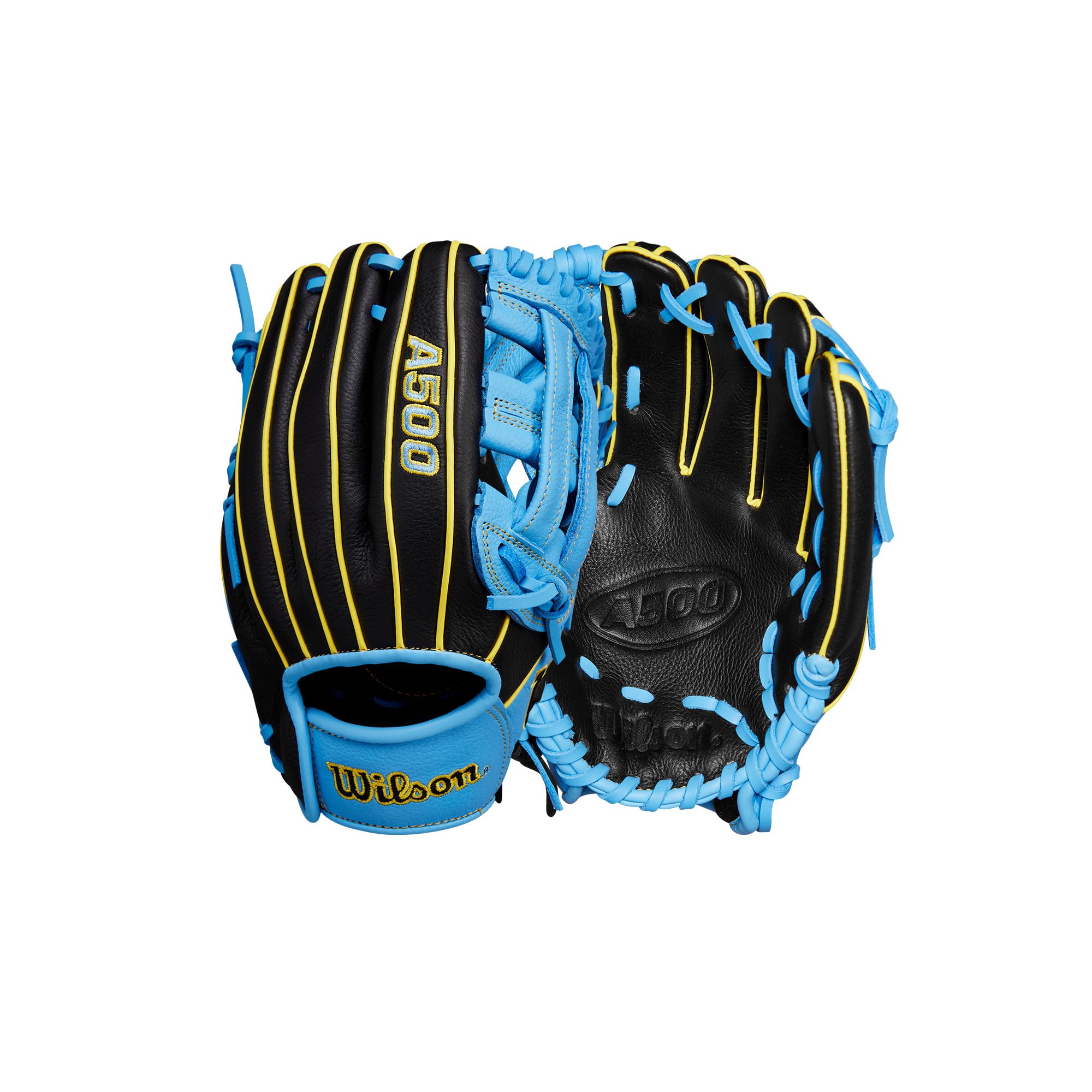
Wilson’s A500 is a youth infield glove (10.5 inches) built from resilient top-grain leather that keeps its structure without weighing down a young hand. The H-web design and rolled welting help the glove maintain a consistent pocket across repeated catches. While this is not a dedicated pitcher’s glove, the closed finger-backs and relatively shallow pocket make it usable for kids learning to pitch in 7U or 8U leagues where pitch-tipping isn’t yet a strategic concern. The Quick Fit wrist system provides a snug, stay-put feel for small hands.
One of the most praised features among parents is the soft, pre-broken-in feel — the A500 requires virtually no break-in effort. A 6- or 7-year-old can open the box, put it on, and start catching immediately. The lightweight design allows kids to practice two-in-the-pinky and develop proper glove mechanics without fighting stiff leather. The 10.5-inch length is ideal for young infielders who need quick glove-to-hand transfers, but it also works for young pitchers who are still learning how to position their glove during the follow-through.
The biggest limitation for pitcher use is the H-web itself — it’s open and won’t hide the ball. At youth levels this rarely matters, but as a player progresses to competitive leagues where batters read grips, they’ll need to move to a closed-web model. The top-grain leather is also not as durable as steerhide; heavy use across two seasons can lead to pocket wear. For an inexpensive youth starter glove that builds confidence, this is a solid pick, but it’s a stepping stone, not a long-term solution.
Why it’s great
- Ultra-soft feel out of the box — no break-in needed for kids
- Lightweight design helps young arms develop proper mechanics
- Quick Fit wrist system keeps glove secure on small hands
Good to know
- Open web design won’t offer pitch concealment for competitive play
- Leather may not hold shape beyond a couple of seasons
7. Rawlings Great Hands Pancake Training Glove

The Rawlings Great Hands Pancake Training Glove is not a game-day mitt — it’s a fielding trainer designed to eliminate the pocket entirely. The flat, zero-pocket leather face forces the fielder — or pitcher fielding their position — to catch the ball with soft hands and absorb the impact rather than relying on a deep pocket to trap the ball. For pitchers, this is especially useful because it trains the hand to handle comebackers and bunts without flinching or using the glove as a basket.
The construction uses the same quality leather as Rawlings game gloves, so it holds up to repeated use during drills. The fully closed face means there is no web — it’s a solid leather pad — which completely eliminates the temptation to catch with the web rather than the palm. Coach feedback on this tool is overwhelmingly positive: reviewers note that it teaches youth players to “give with the ball” rather than stabbing at it. For pitchers who need to field their position, training with the pancake glove for 20 minutes a day can drastically improve clean transfers to the throwing hand.
The pancake glove is a specialized tool and shouldn’t be someone’s primary glove. It’s not useful for game play, and it won’t help with pitch concealment or glove mechanics during the windup. But as a training aid specifically for developing soft hands — a skill that directly translates to fielding your position — it’s invaluable. For the price of a budget glove, it delivers training benefits that no standard glove can replicate.
Why it’s great
- Zero pocket forces true soft-hands catching technique
- Solid leather pad eliminates bad web-catching habits
- Durable Rawlings construction withstands daily drill use
Good to know
- Not usable for game play or regular catch
- Single-hand orientation — order carefully for left or right throw
FAQ
Can I use an infield glove as a pitcher’s glove?
What size pitcher glove does a 12-year-old need?
How long does a leather pitcher glove typically last?
Does a pitcher’s glove need a special break-in compared to a fielder’s glove?
Final Thoughts: The Verdict
For most users, the best pitcher gloves winner is the Rawlings PRO Preferred because its kip leather and two-piece solid web deliver the highest level of pitch concealment, durability, and pro-grade feel on the mound. If you want game-ready performance without the long break-in process, grab the SSK Z5 Craftsman — the dimple palm and Nameshi cowhide make it functional out of the box. And for a budget-conscious entry into leather gloves with a true closed web, nothing beats the Wilson A700 for value and performance balance.