
German coffee machine engineering is defined by relentless precision — a commitment to consistent water temperature, uniform grind distribution, and durable mechanical components that withstand years of daily thermal cycling. The best machines in this category don’t just brew; they meter pressure and flow within tolerances that ensure every shot extracts the full potential of your beans.
I’m Mohammad Maruf — the founder and writer behind Drink4Good. I’ve spent over a decade analyzing commercial-grade brewing hardware, dissecting thermal block designs, pump certifications, and grinder burr geometries to separate genuine engineering investments from marketing-driven assemblies.
Whether you value hands-on craft or push-button convenience, understanding the real mechanical differences between a brass boiler and a thermoblock, a conical burr and a flat burr, or PID control versus passive thermostats is essential. This guide examines the best German coffee machine options across every tier to match your daily ritual with the right precision instrument.
How To Choose The Best German Coffee Machine
German coffee machines prioritize mechanical longevity and thermal consistency over flashy gimmicks. Before buying, assess three core subsystems: the heating element (boiler vs. thermoblock), the grinder (burr geometry and adjustability), and the pump (vibration vs. rotary). Each component dictates the ceiling on your brew quality.
Heating System: Boiler or Thermoblock
Brass and stainless steel boilers retain heat longer, enabling stable steam pressure for milk texturing and consistent brew temperatures across multiple back-to-back shots. Thermoblocks heat water on demand faster, reducing warm-up time, but may struggle with temperature stability during sequential extractions. German machines often use brass boilers for durability — Rancilio’s Silvia uses a commercial-grade brass boiler that holds heat like a tank.
Grinder Build: Conical vs. Flat Burr
Conical burrs (common in De’Longhi and Breville models) produce a broader particle distribution that works well for medium-to-dark roasts and espresso. Flat burrs (rare at this price tier) offer tighter particle uniformity for clarity in light roasts. German-adjacent engineering in machines like the Bosch and Jura uses proprietary conical grinders designed for minimal heat transfer to the grounds — critical for preserving volatile aromatic compounds.
Pump Pressure and Type
Most German and Italian-engineered machines use a 15-bar or 19-bar vibratory pump. The key is not the max pressure rating but the consistency of 9-bar extraction pressure after pre-infusion. High-end machines like the Jura E6 use an 8th-generation brew unit with 3D brewing technology to mimic the pressure profiling of commercial lever machines.
Quick Comparison
On smaller screens, swipe sideways to see the full table.
| Model | Category | Best For | Key Spec | Amazon |
|---|---|---|---|---|
| Rancilio Silvia | Semi-Auto | Manual Craft Enthusiasts | Brass Boiler / 3-Way Solenoid Valve | Amazon |
| De’Longhi La Specialista Arte Evo | Semi-Auto | Cold Brew + Espresso | Cold Extraction / 15-Bar Pump | Amazon |
| Breville Barista Express | Semi-Auto | Beginner Barista | PID / Conical Burr Integ. | Amazon |
| De’Longhi Magnifica XS | Super-Auto | Compact Fully Auto | 13 Adjustable Grind Settings | Amazon |
| Philips 4400 LatteGo | Super-Auto | Low-Maintenance Milk | SilentBrew / QuickStart 3s | Amazon |
| PHILIPS 5500 LatteGo | Super-Auto | 20 Preset Drinks | 20 Preset / 4 Profiles | Amazon |
| KitchenAid KF6 | Super-Auto | Metal-Clad Durability | 2.2L Tank / 15 Recipes | Amazon |
| Bosch VeroCafe 800 | Super-Auto | Connected Brewing | 35 Drinks / Home Connect | Amazon |
| Jura E4 Piano Black | Super-Auto | Pure Espresso Precision | PEP / Aroma G3 Grinder | Amazon |
| Bosch VeroCafe 800 Steel | Super-Auto | Milk System Flexibility | 36 Drinks / Wi-Fi | Amazon |
| Jura E6 Platinum | Super-Auto | All-in-One Speed | 8th Gen Brew Unit / 60s Cycle | Amazon |
In‑Depth Reviews
1. Rancilio Silvia Espresso Machine

The Rancilio Silvia is the benchmark for home espresso under four figures, built with a full-sized brass boiler and a commercial-grade group head. It lacks a PID and pressure gauge by design, forcing the user to learn temperature surfing — a technique that yields exceptional shots when mastered but requires discipline. The 30.8-pound heft comes from a steel frame and stainless side panels that will outlast any appliance-grade machine on this list.
The articulating steam wand offers a full range of motion and a professional steam knob for precise pressure control. Users consistently report 4-5 years of daily use with only minor maintenance like gasket replacement. The 0.3-liter boiler capacity limits back-to-back steaming, but for the single-shot enthusiast who values mechanical longevity over automation, this machine is unmatched.
Pair it with a dedicated conical burr grinder — the built-in portafilter is commercial-standard, so grind quality becomes the limiting factor. The included single and double filter baskets are durable, and a bottomless portafilter upgrade reveals real extraction quality.
Why it’s great
- Brass boiler with commercial group head for heat stability
- All-metal construction weighs 30.8 lbs, built for decades
- Articulating steam wand with adjustable pressure valve
Good to know
- Temperature surfing required without PID; learning curve is real
- Small top-access water tank with 10 oz capacity
- Slow transition from brew to steam mode
2. De’Longhi La Specialista Arte Evo

De’Longhi’s Arte Evo brings cold brew to the espresso world with its Cold Extraction Technology, delivering a concentrated cold coffee in under five minutes — a feature developed in collaboration with the Specialty Coffee Association. The 15-bar Italian pump ramps from low-pressure pre-infusion to a consistent 9-bar extraction, and the Active Temperature Control offers three infusion temperatures to match roast profiles.
The integrated conical burr grinder has eight settings, and the barista kit includes a dosing funnel, tamping mat, and tamper that reduce mess dramatically. Users report consistent crema and repeatable shots after dialing in, though the grinder can struggle with very oily dark roasts — setting it to 7-8 (coarse) solves this.
The commercial-style steam wand heats quickly for microfoam, and the 4 presets (espresso, americano, cold brew, hot water) cover most daily needs. At 21.5 lbs, it’s solid but not immovable. The compact footprint fits modern kitchens without sacrificing drip tray or water tank capacity.
Why it’s great
- Cold brew in under 5 minutes with SCA collaboration tech
- Active Temperature Control with 3 roast-specific settings
- Mess-free dosing and tamping kit included
Good to know
- Steam wand has limited range of motion
- Dark oily beans require coarser grind setting to avoid jamming
- Auto shutoff timer is shorter than ideal for back-to-back drinks
3. Breville Barista Express BES870XL
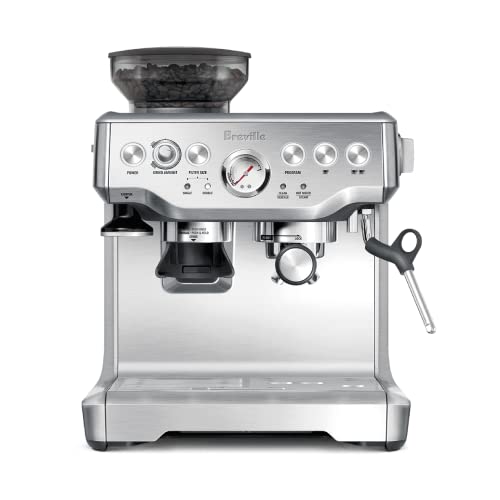
The Breville Barista Express remains the most recommended entry-level espresso machine for a reason: PID temperature control, a 1600-watt thermocoil heating system, and a 1/2 lb bean hopper with an integrated conical burr grinder. The digital PID maintains water temperature within +/- 4°F, which is tight enough for repeatable single-origin extractions without manual surfing.
Users consistently report 5-6 years of daily use with limited maintenance — gasket replacement and occasional descaling. The low-pressure pre-infusion ramps up gradually, helping even distribution before full 9-bar extraction. The Razor Dose Trimming Tool ensures consistent puck depth, removing guesswork for beginners.
The manual steam wand requires practice for microfoam but produces excellent latte art when temperature surfing is accounted for. The 67 oz water tank is generous for this class, though the drip tray fills quickly. It’s not a German machine by origin, but its PID and thermocoil design match the precision standard serious buyers expect.
Why it’s great
- PID ensures water temp within +/- 4°F for extraction consistency
- Built-in conical burr grinder with grind-size dial for any bean
- Razor Dose Trimming Tool eliminates tamp guesswork
Good to know
- High coffee waste during initial dial-in process
- Grounds can be messy around the portafilter cradle
- Not piping hot out of the brew group; cup preheating recommended
4. De’Longhi Magnifica XS ECAM22110SB

The De’Longhi Magnifica XS is a fully automatic machine that prioritizes footprint and simplicity. Its 13 adjustable grind settings on the professional burr grinder allow fine-tuning for bean freshness, and the manual cappuccino system mixes steam and milk for long-lasting foam. The compact brew unit self-adjusts for single or double shots and is entirely extractable for easy cleaning.
Users report excellent espresso quality after the initial setup, with the grinder producing consistent grounds even for lighter roasts. The second chamber accepts pre-ground coffee, useful for decaf or specialty blends. Daily maintenance simply involves purging the steam wand and emptying the grounds bin — the machine self-cleans internally.
The one common critique is that brew temperature could be hotter; pre-warming cups helps significantly. At 60 oz water tank capacity, it’s sufficient for a household of two to three daily drinkers. Its 8.9-inch width makes it one of the most counter-friendly super-automatics available.
Why it’s great
- 13 grind settings for precise dial-in across bean types
- Compact footprint — just 8.9 inches wide
- Manual frother produces thick, long-lasting foam
Good to know
- Brew temperature runs lukewarm; cup preheating recommended
- Grinder noise is normal but noticeable
- Some units ship with dead-on-arrival issues; test immediately
5. Philips 4400 Series LatteGo EP4444/90
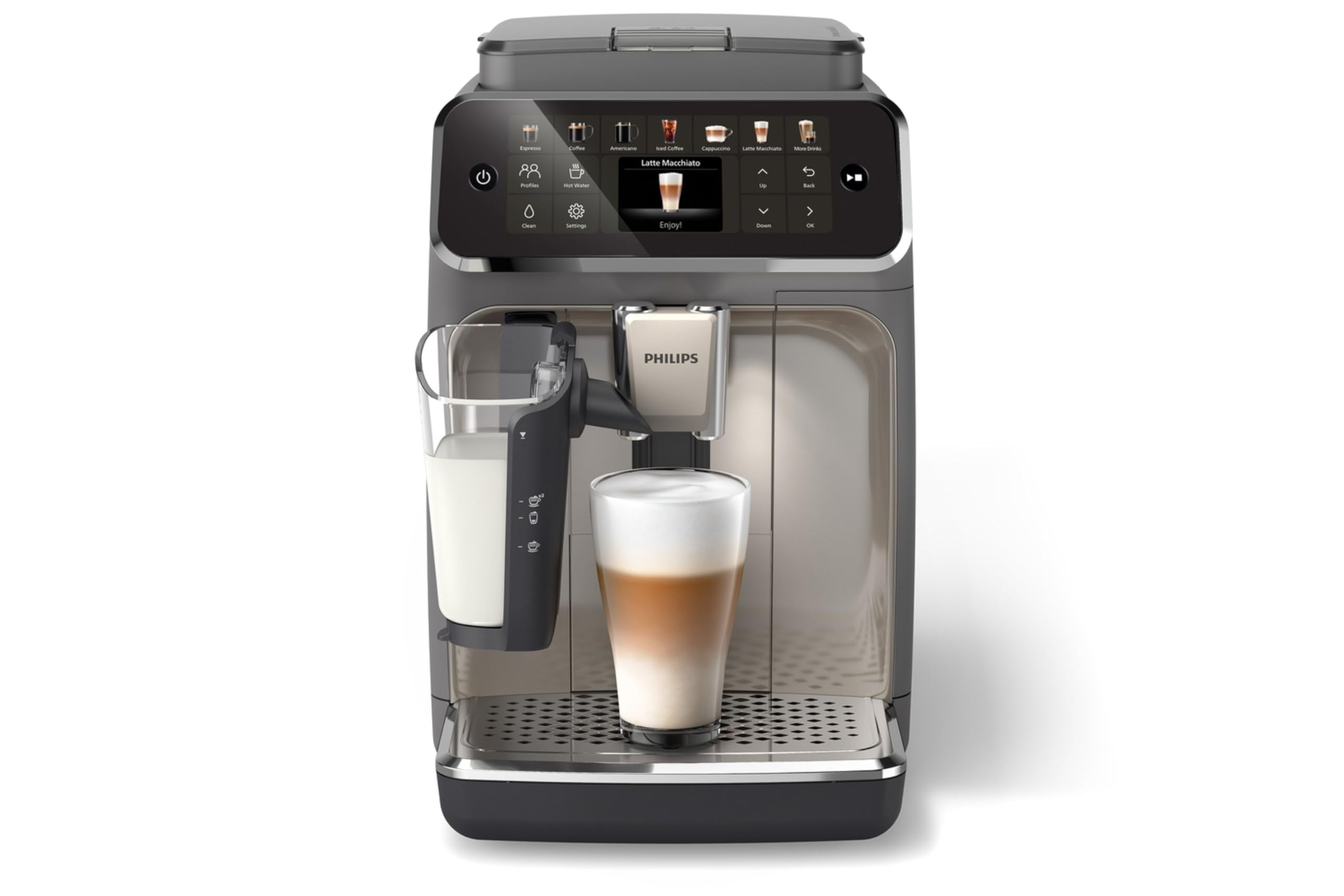
The Philips 4400 brings 12 presets and LatteGo milk system — a two-piece design with no internal tubes that rinses clean in 10 seconds or goes in the dishwasher. The SilentBrew technology uses sound shielding to reduce grinding noise by 40%, certified by Quiet Mark, making it one of the quietest super-automatics in its class. QuickStart delivers ready-to-brew status in three seconds.
The 15-bar pressure pump and conical burr grinder with adjustable settings produce consistent espresso through the color display. Users can customize strength, volume, and milk level, saving up to two profiles. The 1.8-liter water tank is adequate but some users note it needs refilling every three cups during initial use.
Build quality feels robust despite a predominantly plastic exterior. Users switching from pod machines report significantly better crema and flavor complexity. The grinder range requires adjustment for different roast levels — starting at setting 6 and moving finer ensures proper puck resistance.
Why it’s great
- LatteGo milk system — 3 parts rinse clean in 10 seconds
- SilentBrew certified 40% quieter than comparable machines
- Ready to brew in 3 seconds with QuickStart
Good to know
- Water tank needs frequent refilling for multiple drinks
- Plastic exterior lacks premium feel of steel competitors
- Weak extraction reported if grinder not dialed fine enough
6. Philips 5500 Series LatteGo EP5544/94
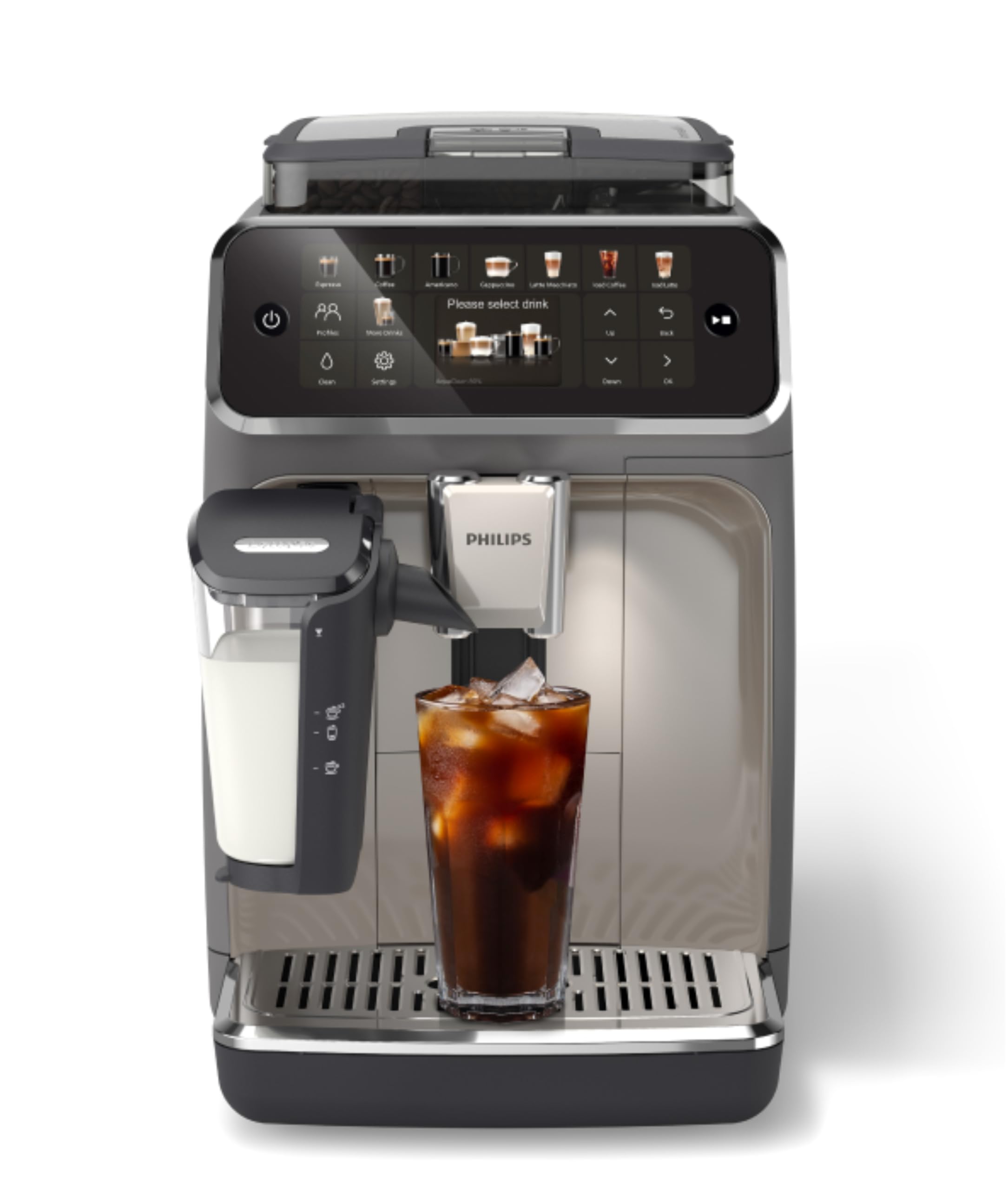
The 5500 expands on the 4400 with eight additional presets (20 total) and four user profiles — each family member can save their preferred strength, volume, and milk ratio. The same LatteGo milk system and SilentBrew technology carry over, but the 5500 adds a third pre-ground coffee chamber with better sealing for separate bean storage.
Users describe this as “the best super-automatic at this price point,” frequently contrasting its consistency with Keurig and Nespresso machines. The color display is intuitive, and the 4-profile system works seamlessly for households with varied preferences. The grinder’s 12 settings cover everything from fine espresso to coarse drip.
Long-term durability is promising — some users report 9,000+ espresso shots on previous Philips generations. The use of fresh roasted beans and proper water mineral adjustment significantly improves taste. The stainless steel exterior adds a more premium feel compared to the 4400’s plastic body.
Why it’s great
- 20 presets with 4 user profiles for multi-person households
- SilentBrew guarantees quiet operation throughout brewing
- Three-part LatteGo milk system rinses clean in seconds
Good to know
- Milk reservoir lasts only 2-3 drinks before needing refill
- Some units ship with DOA issues and poor Amazon packaging
- Over-reliance on pre-ground chamber can cause clog errors
7. KitchenAid Fully Automatic KF6 KES8556PL

KitchenAid’s first fully automatic espresso machine combines metal-clad construction with a twist-and-lift removable bean hopper for quick bean changes. The KF6 offers 15 recipe options including espresso, americano, latte, and cappuccino, all accessed through a responsive touchscreen. Automatic smart dosing adjusts grind volume per drink selection.
The single-drink milk system uses a hose that draws directly from any milk container — no integrated milk tank to clean. Users report excellent crema and a noticeably quiet grinder compared to competitors. The 2.2-liter water tank is side-accessible, making refills less disruptive.
Two years of warranty backs the metal-clad build, and early impressions suggest solid longevity. Some users find the coffee temperature insufficient despite low, medium, and high settings — microwaving milk first solves this. The machine’s 18.5-inch depth may not fit standard 16-inch cabinets.
Why it’s great
- Metal-clad construction with 2-year warranty
- Twist-and-lift bean hopper for easy bean swapping
- 15 recipes with automatic smart dosing adjustment
Good to know
- 18.5-inch depth may not fit standard 16-inch cabinets
- No separate steam wand; milk system only produces foam
- Temperature settings still may require milk preheating
8. Bosch VeroCafe 800 TPU60309
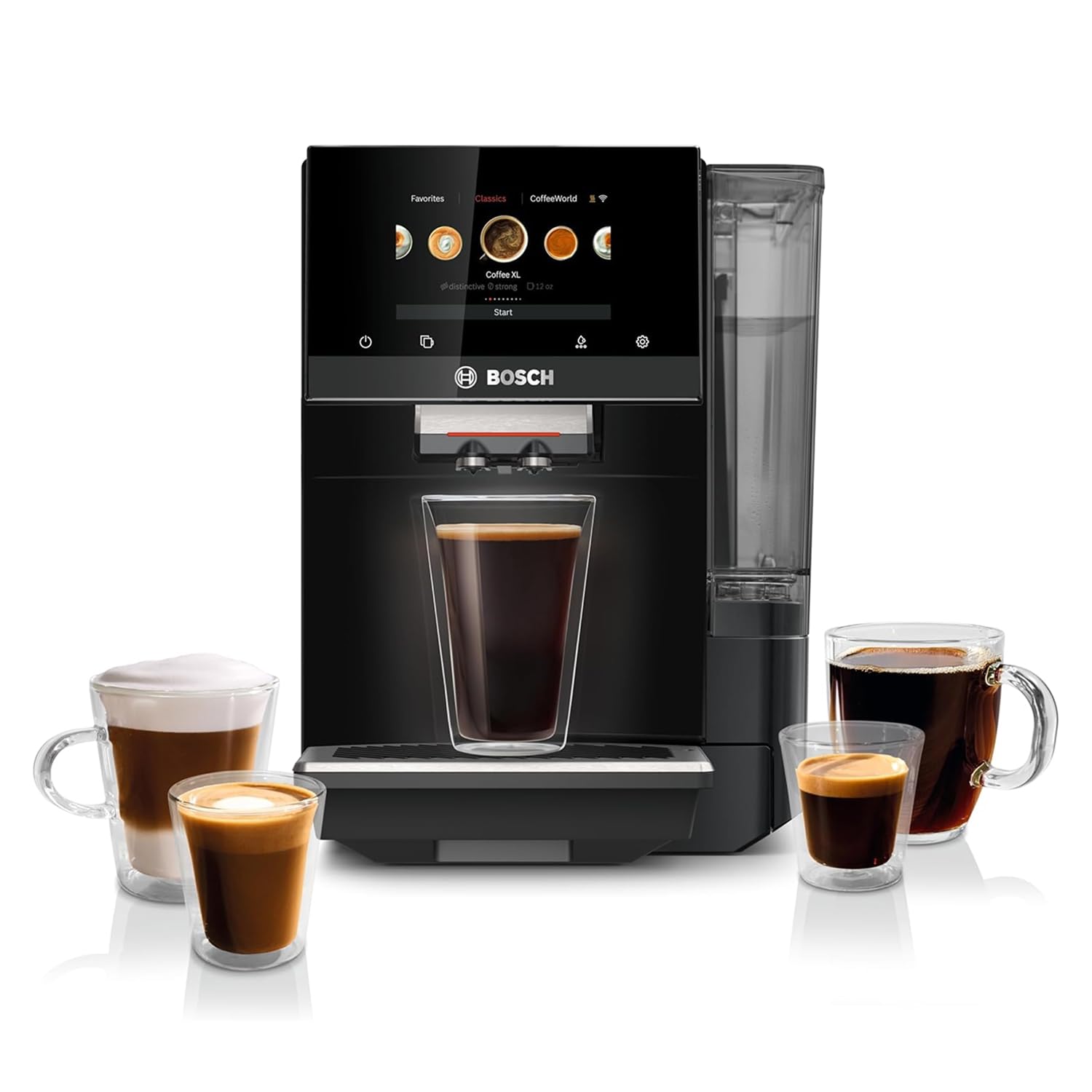
The Bosch VeroCafe 800 brings 35 beverage options through a large touchscreen display, with full remote brewing via the Home Connect app. The system grinds, tamps, and brews at the push of a button, and its milk frother draws directly from a container — no built-in milk tank. The grinder is exceptionally quiet, with users comparing its sound level favorably against Jura and Miele competitors.
Personalization extends to strength, size, milk ratio, and even aroma. The machine’s cleaning and descaling program is integrated with visual step-by-step guides. The integrated Mavea water filter reduces scale buildup, and the machine alerts when replacement is needed. Users consistently rate the black coffee quality as “as good as any café.”
The main drawback is brew temperature — some users measure water at 135-146°F, which is cool compared to specialty coffee standards. Slow brew mode reaches 158°F but is not always practical. The machine’s Home Connect app adds convenience but is limited compared to Jura’s software ecosystem.
Why it’s great
- 35 drinks with touchscreen and remote Home Connect app
- Exceptionally quiet grinder; certified by Quiet Mark
- Combined cleaning and descaling program with visual guides
Good to know
- Brew temperature measured at 135-146°F for standard mode
- Cannot adjust milk ratio below 30% on some drinks
- Switching beans for decaf is cumbersome
9. Jura E4 Piano Black
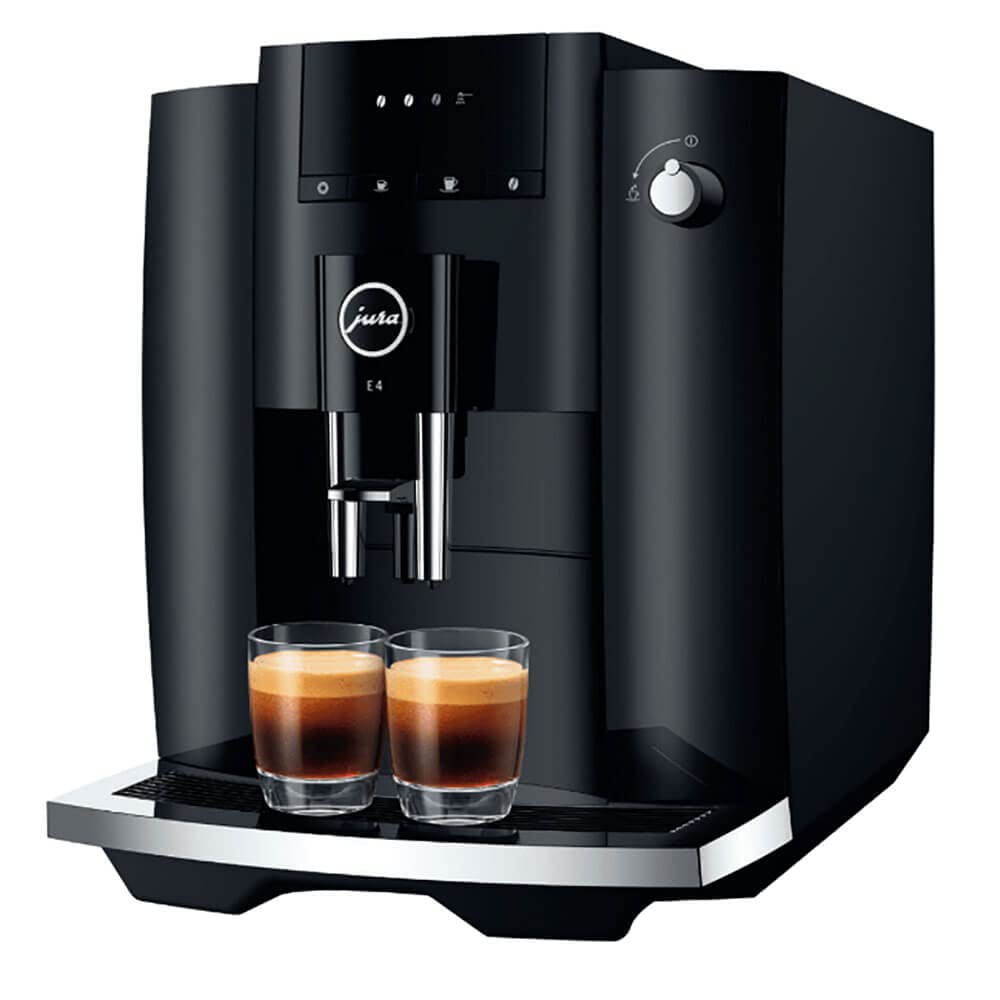
Jura’s E4 is purpose-built for black coffee purists. It has no milk system, focusing entirely on espresso, ristretto, coffee, Café Barista, and Lungo Barista. The Pulse Extraction Process (PEP) alternates pressure bursts to maximize extraction from finely ground beans, producing a thicker body and richer crema than conventional pre-infusion methods.
The professional Aroma G3 grinder uses a conical burr with a special surface coating that reduces heat transfer to the beans, preserving volatile oils. Jura’s eighth-generation brew unit with 3D brewing technology ensures even water distribution across the puck. The 64 oz water tank feeds a thermoblock that reaches brew temperature quickly.
Users consistently rate the coffee quality as “fantastic” for straight espresso and Americano. The interface uses symbols for strength and volume — less intuitive than a color display but fully programmable. Avoid oily beans to prevent hopper clogging. The machine also requires Jura-branded water filters to prevent constant descaling alerts.
Why it’s great
- Pulse Extraction Process for richer crema and body
- Aroma G3 grinder minimizes heat transfer to preserve oils
- Dedicated to black coffee with no milk system complexity
Good to know
- No milk frother or steam wand; milk drinks not possible
- Requires Jura-branded filters with chip to avoid descaling mode
- Interface uses symbols — less beginner-friendly than touchscreen
10. Bosch VeroCafe 800 Stainless Steel TQU60307
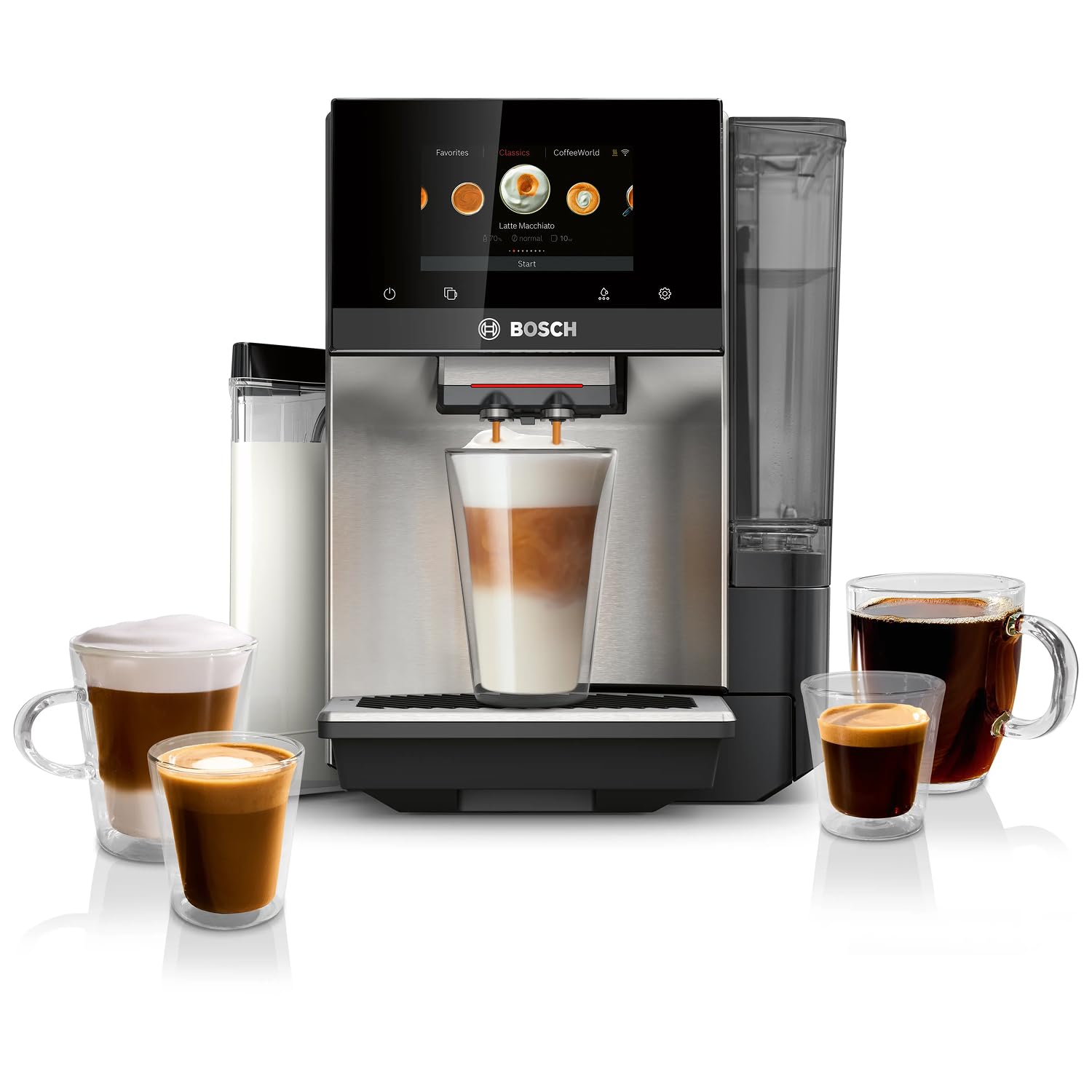
The stainless steel VeroCafe 800 adds an integrated milk container and milk adapter to the standard VeroCafe platform, making it a true milk-based beverage powerhouse. It offers 36 drink options with the same Home Connect app, responsive touchscreen, and exceptionally quiet grinder as its black counterpart. The removable brew unit is a significant advantage over Jura models — it can be fully rinsed under running water.
Users who have owned Jura S9, Ena Micro 5, and Philips LatteGo consistently rank this Bosch as their favorite, citing plug-and-play simplicity, extensive customization, and muted sound. The “World Coffee” feature on the app unlocks additional regional recipes. The cup warmer works best with inverted cups for optimal heat distribution.
The side-attached milk container is easier to maintain than internal tube systems, and the machine provides sensor alerts for cleaning and descaling. The main critique is that the hopper lid design can cause bean spillage when twisting — a 3D-printed extension (STL file available online) resolves this cleanly. Software limitations mean only 18-20 recipes are accessible directly on the touchscreen; additional recipes require the app.
Why it’s great
- Integrated milk container with easy-clean side attachment
- Removable brew unit can be fully rinsed (unlike Jura)
- Extremely quiet grinder with Wi-Fi remote brewing
Good to know
- Hopper lid can spill beans during rotation; STL fix available
- Milk drinks need temperature set to highest level for proper heat
- Software-limited; only ~18 recipes on screen, rest via app
11. Jura E6 Platinum 15465
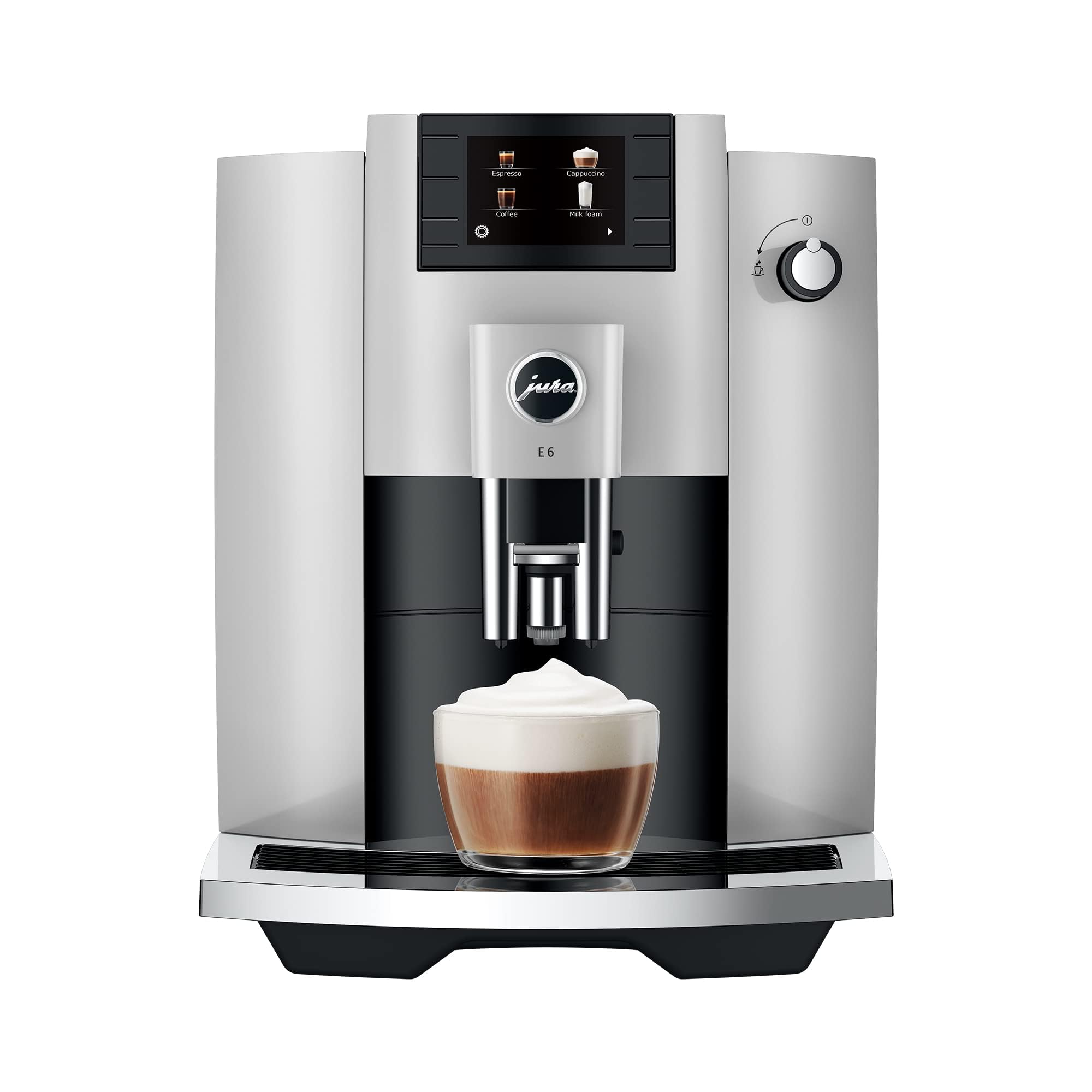
The Jura E6 compresses the full brewing cycle — grind, tamp, brew, froth, and self-clean — into under 60 seconds. The color display offers intuitive navigation through strength, volume, temperature, and milk foam settings. The eighth-generation brew unit with 3D brewing technology ensures even extraction, while Pulse Extraction Process (PEP) delivers professional-grade espresso with layered crema.
The Professional Aroma Grinder uses a conical burr design that Jura claims grinds 12.2% more aroma into the cup. The 1.9-liter water tank and 10 oz bean hopper accommodate medium-volume households. The pre-ground chute allows single-serve decaf or specialty runs without emptying the hopper.
Users describe the coffee quality as “life-changing” compared to manual methods, with particular praise for the cappuccino and latte performance. The milk system uses a tube that draws from any milk source — no custom container needed. Maintenance is prompted on the display, and the integrated programs handle rinsing, cleaning, and descaling. The only compromise is the absence of a separate steam wand for hands-on frothing.
Why it’s great
- Full cycle from bean to cup in under 60 seconds
- 8th-gen brew unit with 3D brewing for even extraction
- PEP technology delivers professional crema and body
Good to know
- No separate steam wand for hands-on texturing
- Requires Jura water filter; generic filters trigger descaling mode
- No milk container included; uses external tube and container
FAQ
What type of heating element is best for espresso consistency?
Can I use oily dark roast beans in a German coffee machine?
What does Pulse Extraction Process do differently?
Final Thoughts: The Verdict
For most users, the best German coffee machine winner is the Rancilio Silvia because its brass boiler and commercial-grade group head reward skill with unmatched longevity and shot quality. If you want a fully automated milk experience with negligible cleanup, grab the Philips 5500 LatteGo. And for the black-coffee purist who prioritizes pressure profiling precision above all else, nothing beats the Jura E4 Piano Black.