
That perfect guitar tone you dial in at home turns into a thin, fizzy mess the moment you try to record it or send it to the front of house. The culprit is almost never your amp—it’s the microphone you’re pointing at the speaker cone. A dedicated guitar amp microphone does more than just handle high volume; it captures the specific midrange punch and harmonic complexity that a vocal mic or a general-purpose dynamic simply flattens out. Choosing the right one means the difference between a recording that sounds like a toy amp and one that sounds like a cranked stack in a real room.
I’m Mohammad Maruf — the founder and writer behind Drink4Good. I’ve spent years analyzing the frequency response curves, polar pattern behavior, and build quality of instrument microphones to separate the tools that genuinely serve guitarists from those that just borrow the shape of a classic.
Whether you are miking a 1×12 combo for a live set or capturing a cranked half-stack in your home studio, finding the right guitar amp microphone starts with understanding how each mic handles SPL and where its pickup pattern focuses.
How To Choose The Best Guitar Amp Microphone
The market is flooded with mics that claim to work on guitar cabinets, but a handful of design factors separate the ones that deliver consistent, mix-ready tone from the rest. Focus on these three specifications to narrow your options quickly.
Polar Pattern and Rear Rejection
A cardioid or super-cardioid polar pattern is non-negotiable for a guitar amp microphone. These patterns reject sound arriving from the sides and rear, which is critical when you are placing the mic inches from the grill cloth while a drummer or a second guitarist is playing nearby. Super-cardioid offers slightly more side rejection than plain cardioid, but both will keep your sound source isolated and reduce feedback in a live setting.
Frequency Response and the Presence Peak
The ideal guitar amp microphone does not have a flat, ruler-flat response. Instead, it features a gentle presence boost between 3 kHz and 6 kHz. This boost is what gives an electric guitar track its cut and clarity in a dense mix. Some mics, like the classic Shure SM57, have a pronounced presence peak that immediately brightens a dark amp. Others offer a smoother, more neutral top end that pairs better with already-bright amplifiers or high-gain metal tones.
High SPL Handling Without Distortion
Guitar amplifiers, especially cranked tube amps, produce sound pressure levels well above 120 dB SPL. A microphone designed for this application must handle 140 dB or more without the diaphragm distorting. Dynamic mics are the standard here because their passive design tolerates extreme volume without requiring phantom power or an internal preamp to stay clean. Always check the maximum SPL rating—a figure below 130 dB is a red flag for close-miking a high-wattage head.
Quick Comparison
On smaller screens, swipe sideways to see the full table.
| Model | Category | Best For | Key Spec | Amazon |
|---|---|---|---|---|
| Shure SM57 | Dynamic | Industry-standard versatility | 40 Hz – 15 kHz, presence peak | Amazon |
| Sennheiser e 609 Silver | Dynamic | Easy hanging placement | 40 Hz – 18 kHz, super-cardioid | Amazon |
| Audix i5 | Dynamic | Extended low end and clarity | 50 Hz – 16 kHz, cardioid | Amazon |
| LEWITT MTP 440 DM | Dynamic | Smoother alternative to SM57 | 50 Hz – 15 kHz, cardioid | Amazon |
| AKG P170 | Condenser | Detailed acoustic & clean amp capture | 20 Hz – 20 kHz, cardioid, pad | Amazon |
| CAD TSM411 | Dynamic | Budget-friendly, deep tone | 100 Hz – 15 kHz, super-cardioid | Amazon |
| Superlux PRA628MKII | Dynamic | Entry-level, high SPL handling | 80 Hz – 18 kHz, super-cardioid | Amazon |
In‑Depth Reviews
1. Shure SM57 Dynamic Microphone

The Shure SM57 is the benchmark against which every other guitar amp microphone is measured. Its contoured frequency response includes a refined presence boost around 5 kHz that helps an electric guitar cut through a dense mix without sounding harsh. The cardioid pattern offers excellent rear rejection, so you can place it directly on the grill cloth of a cranked 4×12 without picking up the crash cymbal two feet away. With a maximum SPL handling of well over 140 dB, the SM57 is virtually impossible to distort.
Users consistently report that the SM57 delivers a focused, midrange-forward sound that translates well from the studio to the stage. The included A25D swivel stand adapter makes precise positioning easy, and the rugged metal construction has survived decades of touring abuse. It does require an audio interface or mixer with sufficient clean gain—around 60 dB—to achieve optimal levels, but this is standard for any passive dynamic mic.
The SM57’s presence peak can be a double-edged sword on already-bright amplifiers. For Fender Twin Reverbs or Vox AC30s, you may find yourself dialing back the treble on the amp to compensate. The included storage bag is minimal but functional, and the plastic enclosure on the handle feels less premium than all-metal competitors. Despite these minor quirks, the SM57 remains the most reliable, universally accepted choice for guitar cabinet miking in any scenario.
Why it’s great
- Legendary presence cut for mix clarity
- Nearly indestructible road-ready build
- Consistent sound across thousands of units
Good to know
- Presence peak may be too aggressive on bright amps
- Requires high-gain preamp for optimal levels
- Plastic handle feels less robust than all-metal designs
2. Sennheiser e 609 Silver

The Sennheiser e 609 Silver is purpose-built for guitar cabinets, and its flat, rectangular body is the defining feature. You can drape the mic directly over the top edge of a combo amp or 4×12 cabinet, eliminating the need for a mic stand and boom arm. The super-cardioid polar pattern provides tighter rear rejection than a standard cardioid, which means less hi-hat bleed when you are miking a single speaker in a live drum-and-guitar setup. The dynamic element handles SPL up to 150 dB without a hint of distortion.
Compared to the SM57, the e 609 offers a slightly wider frequency response that extends to 18 kHz, giving it a bit more air and top-end sparkle when miking a clean amplifier. The neodymium ferrous magnet with boron keeps the capsule stable regardless of temperature or humidity on a club stage. Users who switch from the SM57 often describe the e 609 as having more body and fullness, with a smoother top end that does not require as much EQ to sit in the mix.
Because the e 609 lacks a swivel mount, you cannot angle the mic capsule independently of the body—the entire mic must be tilted to aim at the speaker cone. This makes precision placement slightly less flexible than a traditional cylindrical mic with a clip. The included pouch is basic, and some users note that the XLR connection feels snug to the point of being tight when first used. Still, for any guitarist who wants to simplify stage setup, the e 609’s hang-and-play design is a genuine time-saver.
Why it’s great
- Flat body hangs over amp without a stand
- Super-cardioid pattern offers excellent bleed rejection
- More top-end air and body than an SM57
Good to know
- No swivel mount for precise capsule angling
- XLR connector can feel very tight initially
- Not ideal for standard microphone clip placement
3. Audix i5 Dynamic Instrument Microphone

The Audix i5 is often described as a modern evolution of the classic dynamic instrument mic, and it earns that reputation with a frequency response that provides more low-end weight and high-frequency extension than the SM57. The cardioid pattern is tight enough for close-miking loud sources, and the i5 handles SPL up to 140 dB without breaking a sweat. The zinc alloy body feels dense and premium in the hand, with a flat cap design that differs from the traditional rounded grille of the SM57.
Users consistently praise the i5 for requiring less EQ to get a usable guitar tone. The microphone does not have a sharp presence peak at 5 kHz; instead, it offers a more gradual rise that makes high-gain metal amps sound punchy without being piercing. On snare drums and bass cabinets, the i5 also delivers excellent results, making it a versatile option for a musician who records multiple instruments. The heavy-duty mic clip and carrying pouch are welcome inclusions.
Some users feel the i5 is slightly less robust than the SM57 in terms of pure physical durability, though there are no widespread reports of failure. The low-frequency extension down to 50 Hz is useful for bass cabs but may require a high-pass filter to avoid excessive boominess when close-miking a guitar amp with deep low-end resonance. If you own a dark-sounding amp like a Marshall JCM800 or a Rectifier, the i5’s balanced tone helps the natural character of the amp shine through.
Why it’s great
- Extended low end and high end vs. SM57
- Requires less EQ for a usable mix tone
- Versatile on guitar, snare, and bass cabs
Good to know
- May be too boomy on some amps without HPF
- Zinc body feels premium but less road-tested than SM57
- Flat cap design limits some traditional clip placements
4. LEWITT MTP 440 DM Dynamic Instrument Microphone
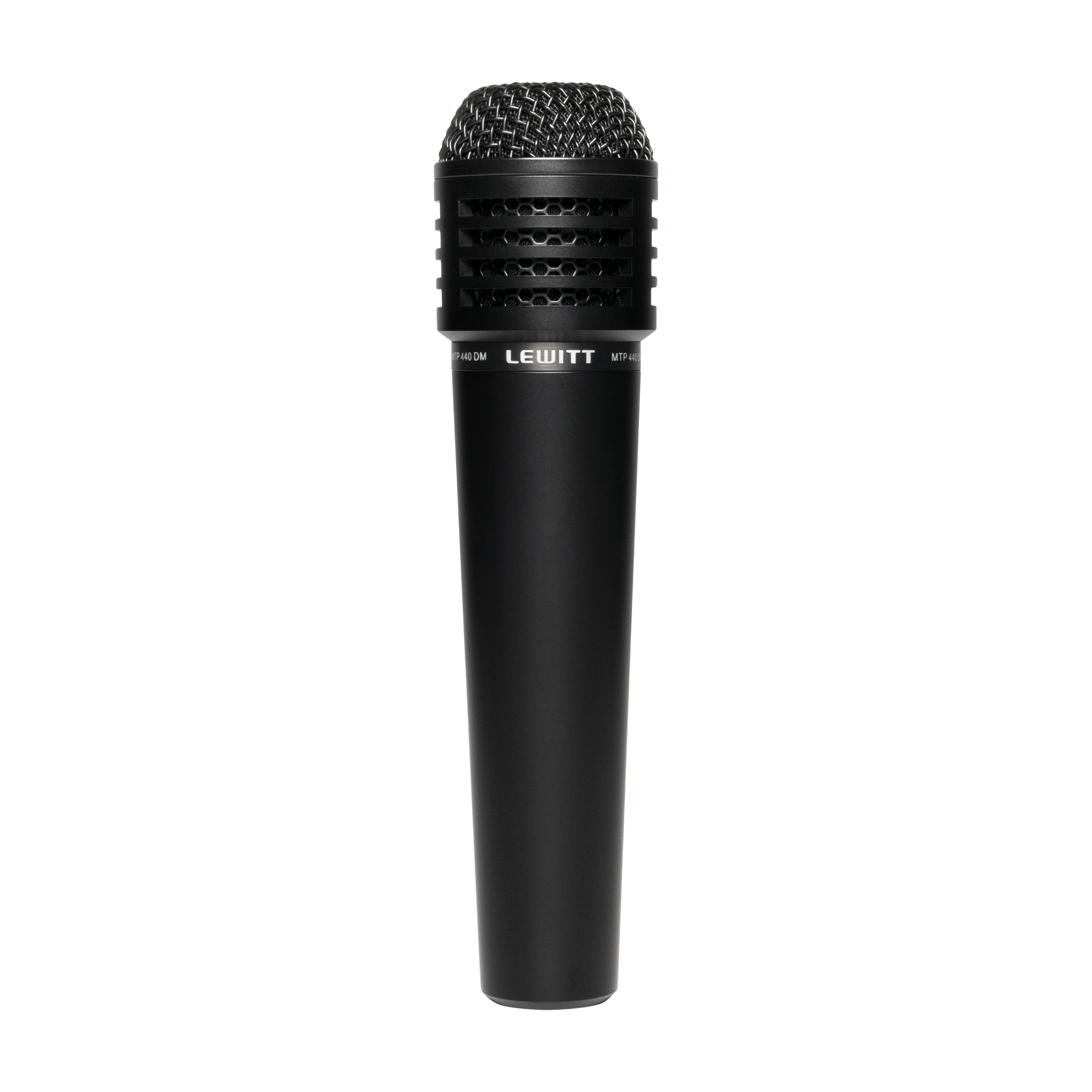
The LEWITT MTP 440 DM is the unapologetic contrarian in the guitar amp microphone market. Where the SM57 highlights the midrange, the MTP 440 delivers a flatter, smoother frequency response that some users describe as closer to a ribbon or condenser sound. The die-cast zinc body and cardioid pattern are built to standard, but the real story is the absence of that aggressive presence bump. This makes the mic ideal for bright amplifiers like a Fender Deluxe Reverb or a Vox AC15, where you want the natural amp tone without additional top-end excitation.
Users who A/B the MTP 440 against an SM57 consistently note that the LEWITT has a higher output level and a better signal-to-noise ratio. This means you will need less gain from your preamp, and the noise floor will be lower. The microphone works exceptionally well for clean amp sounds and bluesy breakup, where the absence of a sizzling top end preserves warmth and body. It also pairs beautifully with an SM57 for a blended microphone technique—the 57 provides cut, and the 440 provides the weight.
The MTP 440 lacks the high-frequency extension of some competitors, topping out at 15 kHz. For modern high-gain metal or djent tones that rely on a fizzy top end, this mic may sound too polite on its own. The included clip is standard, and the overall packaging is minimalist. If your tone philosophy leans toward vintage warmth rather than modern aggression, the LEWITT MTP 440 DM is a revelation that challenges the SM57 monopoly.
Why it’s great
- Smooth, flat response ideal for bright amps
- Higher output and better SNR than SM57
- Excellent for clean and bluesy breakup tones
Good to know
- 15 kHz top end lacks modern high-frequency sizzle
- Not the best choice for high-gain metal alone
- Minimal accessories beyond the basic clip
5. AKG P170 Small-Diaphragm Condenser

The AKG P170 is a small-diaphragm condenser that breaks the dynamic-mic-only rule for guitar amp microphones. It features a cardioid pattern, an extended frequency response from 20 Hz to 20 kHz, and a switchable -10 dB attenuation pad that allows it to handle SPL up to 155 dB without distortion. This makes it one of the few condensers that can survive a close-miking position on a loud guitar cabinet while delivering the transient detail and high-frequency shimmer that dynamics often miss.
In practice, the P170 excels on clean and lightly overdriven amps where the nuance of fingerpicking and pick attack matters. Users have reported excellent results using the P170 as a room mic paired with a dynamic like the SM57 for a blended guitar tone. The low self-noise and excellent rear rejection help it capture a natural sound even in an untreated home studio environment. The all-metal body and included stand adapter add to its value.
The P170 requires phantom power, which means a mixer, audio interface, or preamp with 48V is mandatory. It is also more sensitive to plosives and room reflections than a dynamic mic, so careful positioning is critical. The small-diaphragm design picks up far more ambient noise than a dynamic, which can be a disadvantage in a live setting with high stage volume. For the home or project studio guitarist who wants pristine clean tones, the P170 is a secret weapon that punches well above its price tier.
Why it’s great
- Exceptional transient detail for clean amp tones
- Switchable -10 dB pad for high SPL handling
- Wide 20 Hz – 20 kHz frequency response
Good to know
- Requires phantom power (48V)
- More sensitive to ambient noise and room reflections
- Not ideal for high-stage-volume live settings
6. CAD Audio TSM411 Dynamic Microphone

The CAD TSM411 is a super-cardioid dynamic microphone that delivers deeper, fuller tone than many budget options, making it a serious contender for mid-range buyers who want a dedicated guitar amp microphone without paying for a brand name. The frequency response ranges from 100 Hz to 15 kHz, emphasizing the low-mids and fundamental body of a guitar tone rather than the top-end sizzle. The super-cardioid pattern provides strong off-axis rejection, which is useful when miking a single speaker among several on a multi-driver stage cabinet.
Users who have A/B tested the TSM411 against an SM57 report that the CAD offers a more substantial low-end response and a wider dynamic range. It captures the thump of a bass cab and the fullness of a tube guitar amp very effectively. Reviewers also note that the TSM411 feels solidly constructed, with a brass enclosure and a weight of just 9.6 ounces, and the included super-cardioid polar pattern description aligns with real-world performance in both studio and live scenarios.
The high-frequency roll-off above 15 kHz means the TSM411 will not provide the airy top-end sparkle that some players want for pristine clean tones. The brass enclosure, while sturdy, lacks the impact-absorbing properties of heavier zinc or steel designs. If your setup involves low-tuned guitars or bass-heavy tones and you want to avoid a thin, scratchy top end, the CAD TSM411 delivers a surprisingly professional sound at a point where you are not sacrificing essential low-mid weight.
Why it’s great
- Deep, full low-mid response ideal for bass and downtuned guitars
- Strong super-cardioid rejection of ambient noise
- Solid brass enclosure feels durable
Good to know
- Top end rolls off above 15 kHz
- Lacks the high-frequency air for bright tones
- Brass body may dent under heavy tour abuse
7. Superlux PRA628MKII Professional Dynamic Instrument Microphone
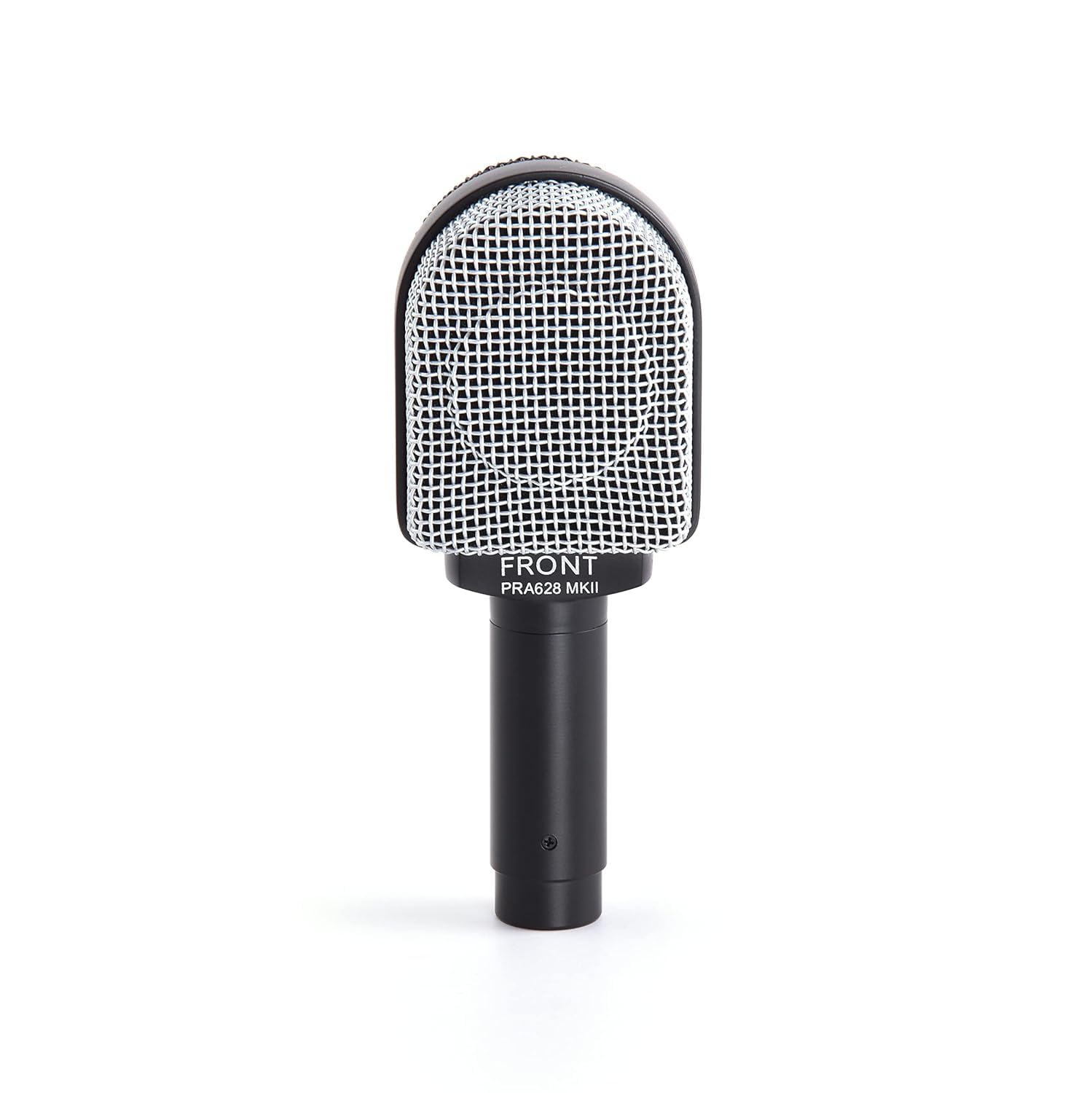
The Superlux PRA628MKII is a super-cardioid dynamic microphone that punches well above its price tier for guitar amp capture. Its tailored frequency response of 80 Hz to 18 kHz preserves the essential midrange crunch of an electric guitar while providing enough top-end extension to avoid sounding boxy. The mic handles SPL up to 150 dB without distortion, making it completely safe for close-miking even the most aggressive high-wattage heads. The included gooseneck clamp and carrying pouch provide immediate usability.
Users report that the PRA628MKII produces a neutral, uncolored sound that works well for both guitar and bass cabinets. It is not voiced to add a presence boost like the SM57; instead, it captures the natural tone of the amplifier, which is a desirable quality for players who want their recorded sound to match what they hear in the room. The low-profile design allows the mic to be positioned very close to the speaker cone without getting in the way of the performer.
The plastic-metal hybrid housing does not feel as robust as an all-metal mic, and some users note that the included gooseneck clamp may not hold the mic securely at extreme angles over long periods. The lack of any presence peak means the PRA628MKII may sound too polite for some guitarists looking for the aggressive midrange cut that helps solos stand out. For a beginner building a first home studio, this mic offers a great entry point into proper instrument miking without the risk of a high upfront investment.
Why it’s great
- Neutral, uncolored sound preserves natural amp tone
- Low-profile design allows tight speaker cone placement
- Included gooseneck clamp and pouch add immediate value
Good to know
- Housing feels less durable than all-metal alternatives
- Lacks presence peak, may sound too polite for solos
- Gooseneck clamp may not hold at extreme angles
FAQ
Can I use any dynamic vocal microphone on my guitar amp?
Does a condenser microphone work better than a dynamic on a guitar amp?
What does the presence boost do for a guitar amp microphone?
How do I position a microphone on a guitar cabinet?
Do I need a preamp or audio interface to use these microphones?
Final Thoughts: The Verdict
For most users, the guitar amp microphone winner is the Shure SM57 because its focused presence peak and legendary durability make it the most reliable, universally compatible choice for any genre or setting. If you want a smoother, more balanced tone that complements bright amplifiers without extra EQ, grab the LEWITT MTP 440 DM. And for pristine clean tones and detailed studio capture where you can use phantom power, nothing beats the AKG P170 as a high-value condenser option.