
Warm-season Bermuda lawns look immaculate until brown patch, dollar spot, or rust takes a quarter of the turf offline in a single wet week. Selecting a fungicide that actually penetrates the dense stolons and thatch layer of Bermuda while remaining safe for the grass itself requires a specific active ingredient strategy — blanket “any grass” solutions often fail here.
I’m Mohammad Maruf — the founder and writer behind Drink4Good. I spend my time breaking down the raw chemistry of turf fungicides and cross-referencing application data against Bermuda grass growth cycles so you don’t spray money onto dormant fungi.
This guide details the top liquid concentrates and granular formulas built for Bermuda’s specific disease pressures, helping you match the right fungicide for bermuda grass to your property size and current infection severity.
How To Choose The Best Fungicide For Bermuda Grass
Bermuda grass grows aggressively, which means fungal infections can spread under the canopy before you notice discoloration. The right choice depends on whether you need preventative coverage or curative knockdown, and whether your property fits a concentrate sprayer or a spreader-friendly granular.
Active Ingredient Type: Systemic vs. Contact
Systemic fungicides like propiconazole or azoxystrobin are absorbed into the Bermuda plant tissue, moving through the stolons and rhizomes. This provides curative action against established infections and offers residual protection (usually 14–28 days). Contact fungicides only kill surface fungi and wash off quickly — they are inferior for Bermuda’s dense thatch.
Application Method: Liquid Concentrate vs. Granular
Liquid concentrates give you precise mixing ratios per gallon of water, allowing spot treatment of infected patches without over-application. Granular formulas are better for large-scale preventative blanket treatments (5,000–10,000 sq ft), but they require watering in immediately to activate the active ingredient.
Resistance Planning and Product Rotation
Using the same fungicide group year after year causes fungi to adapt. Smart Bermuda owners rotate between a propiconazole-based product (Group 3) and a QoI strobilurin (Group 11) every 2–3 applications during the growing season. The reviews below note which products work well in a rotation schedule.
Quick Comparison
On smaller screens, swipe sideways to see the full table.
| Model | Category | Best For | Key Spec | Amazon |
|---|---|---|---|---|
| Quali-Pro Propiconazole 14.3 | Liquid Concentrate | Curative brown patch | 14.3% propiconazole systemic | Amazon |
| Atticus Gunner 14.3 MEC | Liquid Concentrate | Low-odor spray | Microemulsion concentrate | Amazon |
| Bonide Infuse Systemic | Granular | Preventative coverage | 2–3 month systemic protection | Amazon |
| The Andersons Prophesy | Granular | Large lawns (10k sq ft) | Propiconazole on DG Pro carrier | Amazon |
| Scotts Turf Builder Fungicide | Granular + Fertilizer | Fungicide + feeding | 8,000 sq ft with 19-0-10 | Amazon |
| Jonathan Green Lawn Fungus Control | Granular | Cool/warm season rotation | Covers 5,000 sq ft | Amazon |
| Monterey Complete Disease Control | Liquid Concentrate | Organic garden-edge | OMRI listed 16 oz pint | Amazon |
In‑Depth Reviews
1. Quali-Pro Propiconazole 14.3 Fungicide

The Quali-Pro Propiconazole 14.3 is a professional-grade liquid concentrate that delivers the same active ingredient used on golf courses and commercial turf. At 14.3% propiconazole, it provides locally systemic movement through Bermuda grass leaf tissue and into the root zone, stopping brown patch and dollar spot infections within days of application. Multiple verified reviews confirm it stopped active Bermuda patch disease after a single spray.
The microemulsion formulation (MEC) keeps the product stable in the tank, so you do not have to re-mix mid-application. One 32-ounce bottle treats roughly 12,000 square feet at curative rates, making it extremely efficient for medium to large Bermuda lawns. Users report visible results in 7–10 days, with the halt of white mycelium spread being the most frequently mentioned outcome.
A minority of users noted that propiconazole requires strict rotation — using it exclusively for multiple seasons can breed resistant fungal strains on Bermuda. Alternating with a QoI strobilurin (Group 11) every other application is recommended for long-term efficacy.
Why it’s great
- Curative action on active brown patch and dollar spot
- Low-odor MEC formulation mixes easily
- Excellent value per square foot at curative rates
Good to know
- Requires a pump sprayer — not ready-to-use
- Must rotate with a different mode of action group
2. Atticus Gunner 14.3 MEC Propiconazole
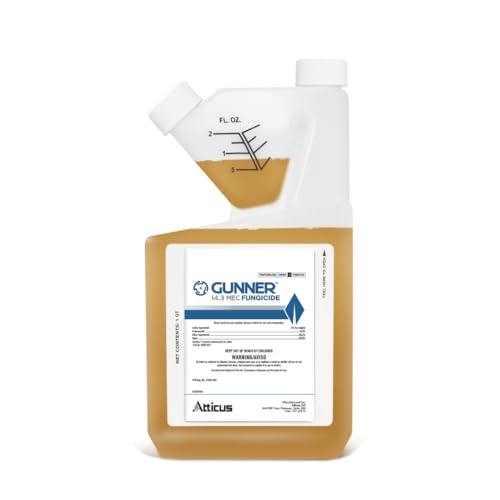
The Atticus Gunner 14.3 MEC is functionally similar to Quali-Pro but with a noticeably lower odor profile during mixing and application. This matters for homeowners who spray near outdoor living areas or have neighbors close by. The 14.3% propiconazole concentration covers the same brown patch, dollar spot, rust, and powdery mildew spectrum, and the MEC base ensures the spray stays suspended instead of settling at the bottom of the tank.
Users report that it holds up well in rainy conditions once dry — rainfastness is solid after about two hours. The 32-ounce bottle covers roughly 12,000 square feet when applied at the curative rate of 2 ounces per 1,000 square feet. Several reviewers specifically praise it for knocking out powdery mildew on ornamentals bordering Bermuda lawns.
The primary limitation is that the print on the bottle label is very small, making it difficult to read exact mixing ratios without a magnifier or a PDF of the label downloaded ahead of time.
Why it’s great
- Very low odor — comfortable for residential spraying
- MEC formulation stays mixed in the tank
- Rainfast within two hours of application
Good to know
- Label text is difficult to read on the bottle
- Not for sale in AK, DC, HI, PR, or VT
3. Bonide Infuse Lawn & Landscape Systemic

The Bonide Infuse Systemic Granules work differently than spray concentrates — the active ingredient is absorbed through Bermuda roots and moved upward through the plant’s vascular system. This provides systemic protection for up to 2–3 months from a single application, which is significantly longer than the typical 14–28 day window of a liquid propiconazole spray.
The 7.5-pound bag covers exactly 5,000 square feet, making it ideal for smaller Bermuda lawns or targeted patch treatment. Many users found it effective for brown patch, dollar spot, and leaf spot, and several noted that it works on ornamentals and shrubs bordering the lawn. The granular application is straightforward — broadcast with a spreader, then water in thoroughly.
One verified review mentioned that it did not cure gray leaf spot on Bermuda, which requires a strobilurin-based fungicide rather than a Group 3. If gray leaf spot is your target, this formula is not the right choice.
Why it’s great
- 2–3 months of protection per application
- Systemic absorption through roots
- Safe for use on ornamentals and shrubs
Good to know
- Ineffective for gray leaf spot
- Requires immediate watering-in after spreading
4. The Andersons Prophesy Propiconazole
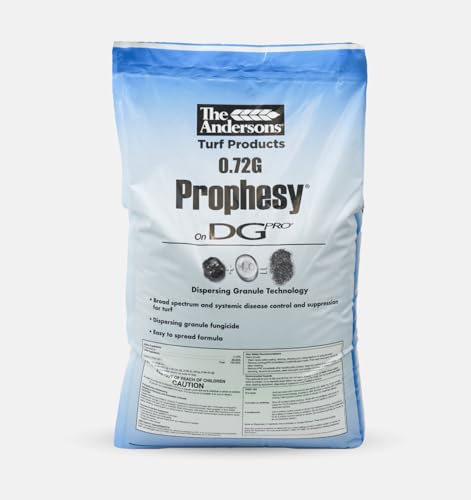
The Andersons Prophesy is a 25-pound bag of granular propiconazole — the same active ingredient as the Quali-Pro and Atticus concentrates, but delivered on a patented DG Pro carrier that disperses more particles per square foot for even coverage. This bag covers up to 10,000 square feet, making it the most economical option for large Bermuda lawns that require regular preventative applications.
User reports confirm that it works swiftly against red thread and necrotic ring spot, two diseases that often frustrate Bermuda owners. One reviewer with necrotic ring spot noted that the fungus was cured after combining the granules with topsoil amendment. The granular format is ideal for owners who prefer to use a broadcast spreader rather than mixing spray jugs.
Quality control issues have been reported — some bags arrive with hard lumps that clog the spreader. Sifting the granules through a mesh screen before loading the spreader can prevent this headache.
Why it’s great
- 10,000 sq ft coverage reduces reorder frequency
- Works well for necrotic ring spot and red thread
- Professional-grade granules with DG Pro technology
Good to know
- Some bags arrive with hard clumps
- Premium-tier pricing compared to liquid concentrates
5. Scotts Turf Builder Fungicide and Lawn Food
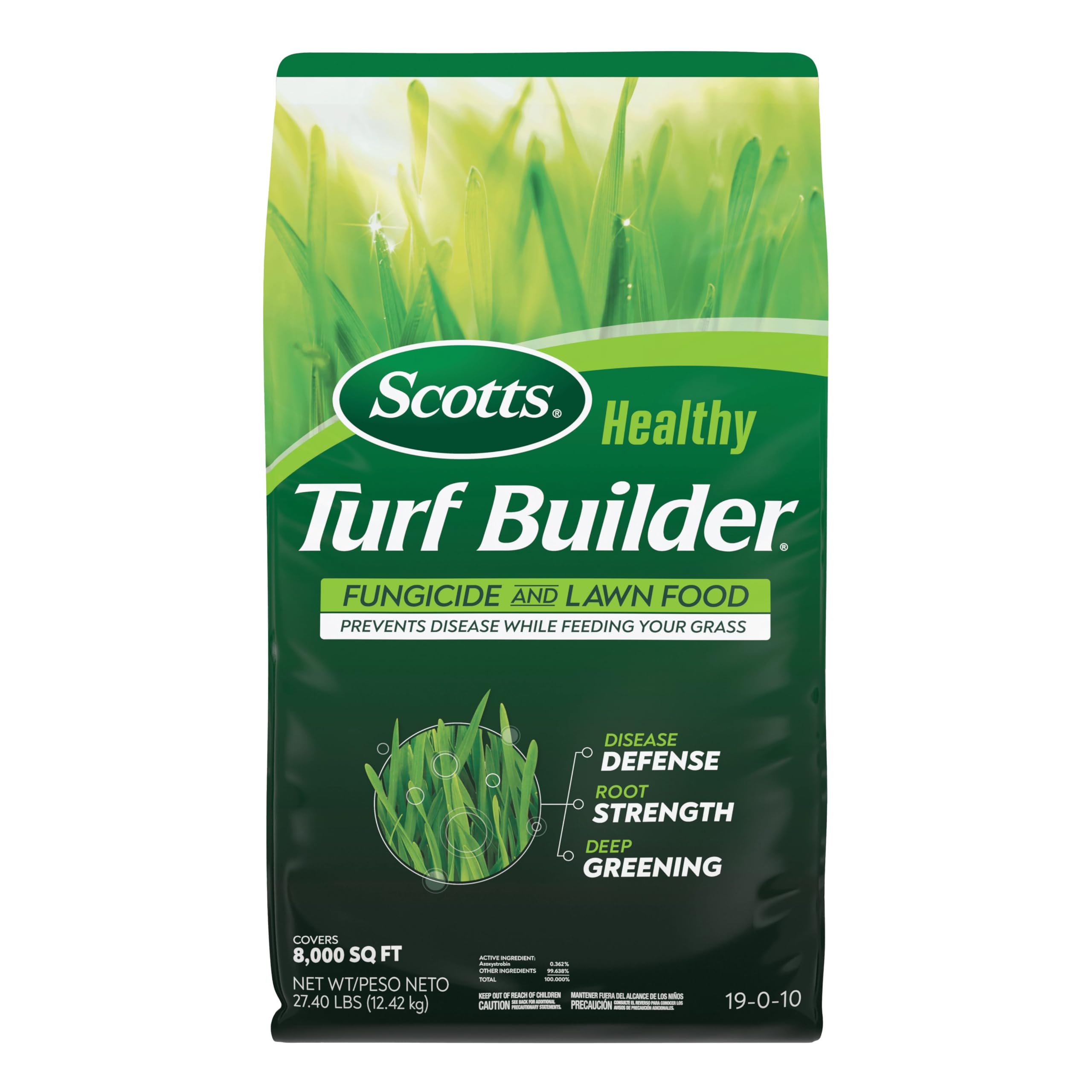
The Scotts Turf Builder Fungicide and Lawn Food is a 2-in-1 granular product that combines a systemic fungicide with a 19-0-10 fertilizer analysis. For Bermuda owners who want to address fungus and feed the lawn in a single pass, this eliminates the need for separate fungicide and fertilizer applications. The 27.4-pound bag covers 8,000 square feet.
Verified reviews confirm that it effectively controls 27 listed diseases including brown patch, leaf spot, and powdery mildew, while the fertilizer component greens up Bermuda within a week. Users mention that it works best as a preventative — applying it before symptoms appear yields the most consistent results. Several reviewers rotate it with a straight propiconazole product to avoid resistance.
The nitrogen content (19-0-10) means it should not be applied during Bermuda’s peak summer heat or during drought stress, as pushing growth during those conditions can worsen fungal pressure.
Why it’s great
- Fungicide and fertilizer in one application
- Covers 8,000 sq ft — good value per bag
- Controls 27 listed lawn diseases
Good to know
- Too much nitrogen in summer can worsen fungus
- Not curative for severe active infections
6. Jonathan Green Lawn Fungus Control

The Jonathan Green Lawn Fungus Control is a broad-spectrum granular fungicide that works on both cool and warm-season grasses, making it a good rotation partner for Bermuda lawns. It controls over 20 soil-borne diseases including brown patch, leaf spot, red thread, dollar spot, and pink snow mold. The 7.5-pound bag covers exactly 5,000 square feet.
Several users noted that it helped break resistance issues they were experiencing with Scotts Disease Ex — rotating to the Jonathan Green product restored efficacy on their Bermuda. The granules are designed for dry lawn application and should be watered in within 24 hours. The product works both preventatively and curatively, though results are slower when used curatively.
Quality control problems have surfaced — some bags arrive with hard solidified lumps that clog spreaders. Storing the bag in a climate-controlled space before use helps maintain flowability.
Why it’s great
- Breaks resistance cycles when rotated
- Controls over 20 soil-borne diseases
- Suitable for cool and warm-season grasses
Good to know
- Bags can arrive with hardened lumps
- Curative action is slower than liquid concentrates
7. Monterey Complete Disease Control
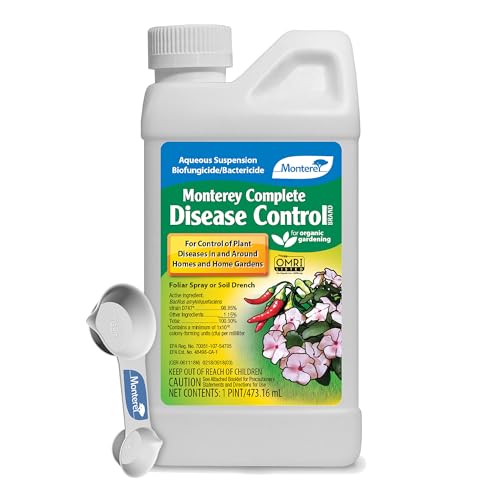
The Monterey Complete Disease Control is a biological fungicide that uses a beneficial bacterium (Bacillus subtilis) to colonize root hairs and outcompete pathogenic fungi. It is OMRI Listed for organic gardening and can be used as a foliar spray or soil drench on vegetables, fruits, ornamentals, and lawns. For Bermuda grass near edible garden beds, this is the safest option to prevent chemical drift.
Users report that it effectively slows and arrests powdery mildew, rust, leaf blight, and anthracnose when applied at first sign of disease. The concentrated 16-ounce pint makes about 16 gallons of mixed spray at the standard rate of 1 teaspoon per gallon. The biological mode of action means it works best as a preventative — it colonizes the Bermuda root zone before fungi can establish.
Because it is biological rather than chemical, it does not kill active mycelium as fast as propiconazole. Users with heavy brown patch infections noted that the disease slowed but did not stop completely. It is best used early in the season or as a rotation partner for chemical fungicides.
Why it’s great
- OMRI Listed for organic use near edibles
- Colonizes root hairs for preventative protection
- Can be used as foliar spray or soil drench
Good to know
- Slower curative speed than chemical fungicides
- Requires early-season application for best results
FAQ
Can I use a fungicide labeled for other grasses on Bermuda?
How often should I apply fungicide to Bermuda grass?
Final Thoughts: The Verdict
For most users, the fungicide for bermuda grass winner is the Quali-Pro Propiconazole 14.3 because its professional-grade concentration and low-odor MEC formulation deliver fast curative knockdown of brown patch and dollar spot with excellent value per square foot. If you want a granular spreader option with 10,000 sq ft coverage, grab the The Andersons Prophesy. And for organic garden-edge treatment where chemical drift is a concern, nothing beats the Monterey Complete Disease Control.