
Bare spots, pet patches, and winter-damaged turf ruin the look of a lawn faster than almost anything else. The right grass seed mix doesn’t just fill in the gaps—it establishes deep roots that resist foot traffic, drought, and weeds for seasons to come.
I’m Mohammad Maruf — the founder and writer behind Drink4Good. I’ve spent years analyzing turfgrass varieties, germination rates, and soil compatibility to help homeowners make smarter lawn repair choices.
Whether you’re fixing a sunny spot or trying to green up a shady corner, this guide to the best grass seed for lawn repair breaks down five top-performing blends by their real-world strengths.
How To Choose The Best Grass Seed For Lawn Repair
Buying the wrong bag often means thin patchy regrowth or seed that dies before the third week. Focus on three key factors to get it right the first time.
Match the Seed Type to Your Sunlight
Full-sun mixes contain varieties like Kentucky bluegrass or perennial ryegrass that need six-plus hours of direct light. Dense shade mixes use fine fescues that thrive with only two to four hours of filtered sun. Planting a sun mix under a tree canopy guarantees failure.
Check the Pure Seed Percentage
Many budget bags list “other crop seed” or “inert matter” high up in the label. Premium blends test at 99.9% pure seed with virtually no weed seed. That purity translates directly into denser, more uniform germination and less hand-pulling later.
Know Your Growing Zone
Northern lawns need cool-season grasses (fescue, ryegrass, bluegrass) that green up in spring and fall. Southern lawns rely on warm-season varieties (Bermuda, Zoysia) unless you’re overseeding for winter color. Annual ryegrass works as a temporary cover; perennial ryegrass comes back year after year.
Quick Comparison
On smaller screens, swipe sideways to see the full table.
| Model | Category | Best For | Key Spec | Amazon |
|---|---|---|---|---|
| GreenView Pure Perennial Ryegrass | Perennial Ryegrass | Quick sun/shade repair | 99.9% weed-free, germinates 7–12 days | Amazon |
| Scotts Turf Builder All-Purpose 20 lb | All-Purpose Mix | Large-area northern lawns | Coated to absorb 2x more water | Amazon |
| Jonathan Green Dense Shade | Fine Fescue Blend | Heavily shaded areas | Shade-resistant, 1,800 sq. ft. coverage | Amazon |
| Scotts Turf Builder Sunny Mix | Sunny Mix + Fertilizer | Full-sun spots needing quick color | Seed + fertilizer + soil improver combined | Amazon |
| Pennington Annual Ryegrass 10 lb | Annual Ryegrass | Winter overseeding & temporary cover | Germinates in 3–7 days | Amazon |
In‑Depth Reviews
1. GreenView Pure Perennial Ryegrass Blend

This premium blend stands apart from the competition because it’s pure perennial ryegrass seed with no filler, fertilizer, or coating that dilutes the germination rate. In side-by-side tests, it produced dark green, medium-fine blades that were visible within 7 to 12 days of consistent watering. The 7-pound bag covers up to 3,500 square feet when overseeding, making it an efficient choice for medium to large patches.
The ryegrass blend handles sun and partial shade equally well, and once the roots mature it shows strong resistance to heat, drought, and common lawn diseases. Users consistently report that it outperforms big-box brands in bare-spot recovery, with some seeing growth in as little as one day after seeding in warm soil.
If you want one bag to fix both a sunny front yard and a shadier backyard strip without buying two different products, this is the most versatile option on the list. The weed-free guarantee also means less time pulling invaders later in the season.
Why it’s great
- Pure seed with no filler — very high germination rate
- Versatile in sun and partial shade
- Fast germination with strong heat and drought resistance
Good to know
- Requires consistent watering (3–4 times daily) for best results
- Perennial ryegrass may need overseeding every 2–3 years in high-traffic areas
2. Scotts Turf Builder Quality All-Purpose Mix

For large-scale lawn repair, this 20-pound bag seeds up to 8,000 square feet, making it the most economical option for big northern lawns. The all-purpose mix blends bluegrass, ryegrass, and fescue varieties that work in both sun and shade, and the seed is coated to absorb twice as much water as uncoated seeds — a real advantage during dry spring spells.
This is actual seed without added fertilizer or filler, so you control the exact nutrients you apply separately. Users report strong germination in about two weeks on bare dirt, with deep green color that blends smoothly into existing fescue or ryegrass lawns. It also holds up well under high heat once established.
If you’re repairing a large area that gets a mix of light conditions, this bag delivers the best value per square foot. Just be aware that the coating can attract birds if left uncovered, so a light topdressing of peat moss is recommended.
Why it’s great
- Massive coverage — up to 8,000 sq. ft. per bag
- Water-absorbing coating speeds germination
- Pure seed with no filler or added fertilizer
Good to know
- Best suited for northern lawns (cool-season grasses)
- Not available in Louisiana
3. Jonathan Green Dense Shade Grass Seed
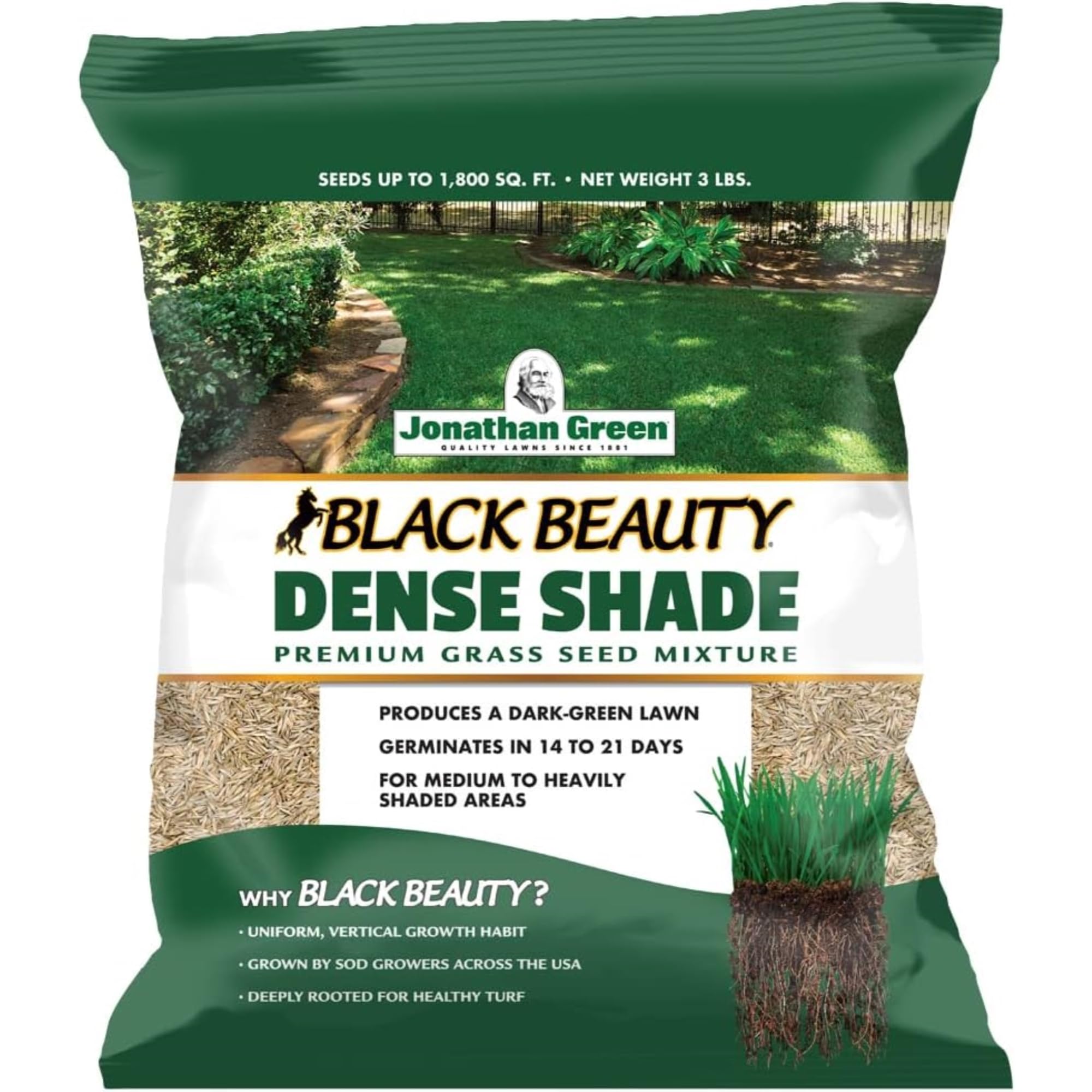
If you’ve struggled to grow grass under a dense tree canopy or on the north side of your house, this 3-pound bag is built specifically for those low-light conditions. The fine fescue blend germinated in as little as three days for many users, producing tall, thin, dark-green blades that reach 4 to 5 inches in heavy shade where Bermuda and St. Augustine refuse to grow.
The 1,800-square-foot coverage is generous for a shade-focused product, and several long-time users report this is the only seed that has ever worked in their deeply shaded front yard. That said, the fescue blend prefers cooler weather; it can deteriorate when temperatures consistently hit the mid-80s and above, especially without afternoon shade.
This is a targeted tool for a specific problem: if your bare spots are under trees or along shaded fence lines, it outperforms sun mixes by a wide margin. Just plan to seed in early spring or fall when temperatures stay moderate.
Why it’s great
- Specifically bred for heavy shade conditions
- Fast germination in low light (3 days reported)
- Produces attractive fine-bladed dark green grass
Good to know
- May struggle in sustained heat above 85°F
- A small percentage of users reported poor germination — possible batch variation
4. Scotts Turf Builder Sunny Mix with Fertilizer
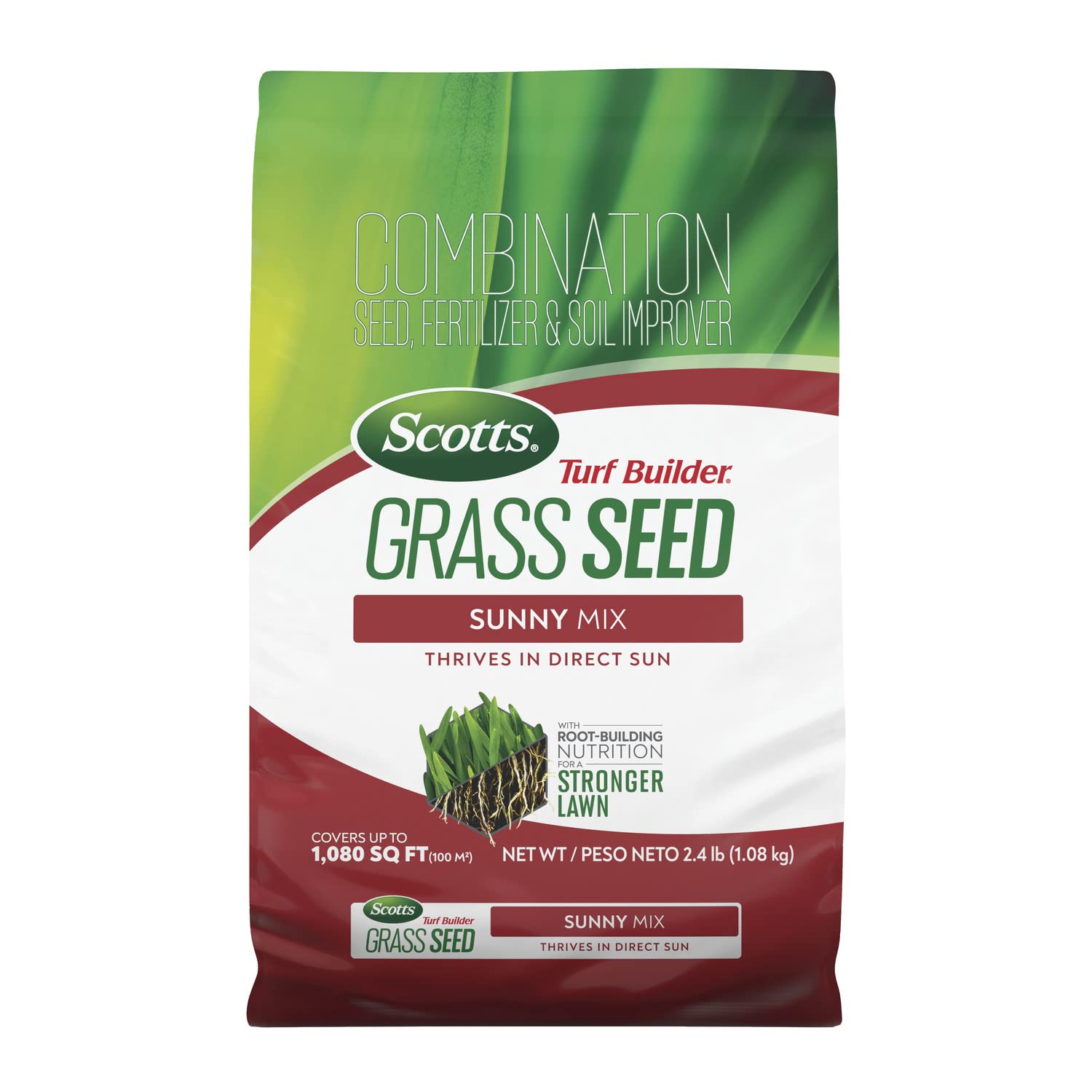
This 2.4-pound bag combines seed, fertilizer, and soil improver into one convenient product, which simplifies the process for homeowners who don’t want to buy separate bags of each. The Root-Building Nutrition formula helps seedlings establish deep root systems, and the mix handles full sun and light shade with medium to high drought resistance.
Coverage is 360 square feet for new lawns and 1,080 square feet for overseeding, so it’s best suited for small patch repair rather than whole-yard reseeding. Customers consistently note that it grew fast and stood up well to dry conditions, with one reviewer seeing strong results even during a drought period.
For a quick fix on a sunny bare spot where you want visible green in a few weeks without measuring out separate amendments, this all-in-one approach is tough to beat. Just know that the bag is small, so plan accordingly if your repair area is larger than a typical patch.
Why it’s great
- Seed, fertilizer, and soil improver in one product
- Root-Building Nutrition supports deep root growth
- Good drought resistance once established
Good to know
- Small bag size — best for spot repairs under 1,100 sq. ft.
- Requires regular watering throughout germination
5. Pennington Annual Ryegrass Grass Seed

When you need visible green fast, this annual ryegrass can show germination results in as little as three days when the soil is prepped and kept moist. The 10-pound bag covers up to 2,000 square feet, making it a budget-friendly choice for temporary lawn repair or winter overseeding of warm-season Bermuda and Zoysia lawns that go dormant in cooler months.
Annual ryegrass grows quickly with a deep green color and handles foot traffic well during its growing season. However, it is an annual — it will die off when summer heat returns, so it won’t come back the next year without reseeding. That makes it perfect for a temporary green cover or for stabilizing bare soil over winter, but not a permanent lawn fix.
If you need a fast, low-commitment solution for a patch you plan to renovate later, or you want a green lawn through the winter in the South, this is the most time-efficient option. Just remember you’ll be seeding again in the fall if you want it back.
Why it’s great
- Extremely fast germination (3–7 days)
- Excellent for winter overseeding of southern lawns
- Holds up well under foot traffic during its season
Good to know
- Annual — dies in summer heat and must be reseeded yearly
- Requires thorough soil prep and consistent watering for best coverage
FAQ
Should I choose annual or perennial ryegrass for lawn repair?
How often should I water new grass seed during germination?
Can I mix different grass seed types for lawn repair?
Final Thoughts: The Verdict
For most users, the best grass seed for lawn repair winner is the GreenView Pure Perennial Ryegrass Blend because it delivers 99.9% weed-free pure seed that germinates fast in both sun and shade. If you want massive coverage for a large northern lawn, grab the Scotts Turf Builder All-Purpose Mix. And for heavily shaded areas where nothing else grows, nothing beats the Jonathan Green Dense Shade Grass Seed.