
That mid-race gut punch — the sudden cramp, the sloshing nausea, the desperate need to not take another sip of syrup goo — is the marathoner’s hidden adversary. Finding a fuel that delivers steady energy without declaring war on your stomach is the single most decisive gear choice you will make, and the margin between a personal record and a miserable DNF often comes down to a single gel packet.
I’m Mohammad Maruf — the founder and writer behind Drink4Good. I spend my days analyzing sports nutrition at the molecular level, comparing carbohydrate transport pathways, electrolyte ratios, and ingredient sourcing to separate genuine performance breakthroughs from clever marketing.
A top-tier gels for marathon selection prioritizes rapid carbohydrate absorption, stomach-friendly ingredient profiles, and a texture that goes down cleanly at mile twenty when your mouth is dry and your focus is shot.
How To Choose The Best Gels For Marathon
Marathon fueling is not about calories alone — it is about absorption timing, stomach tolerance, and electrolyte replacement. Selecting the wrong gel chemistry can sabotage months of training within thirty minutes of taking it. Here is what matters most.
Carbohydrate Chemistry and Absorption Rate
The body has two distinct carbohydrate transport channels — one for glucose and one for fructose. Gels that combine both sugars via non-competing pathways (maltodextrin plus fructose) deliver 60 to 90 grams of carbs per hour without overwhelming the gut. Newer hydrogel technology suspends carbs in a gel that bypasses stomach mixing, sliding directly into the small intestine for near-instant uptake. This is critical at mile twenty, when blood flow diverts away from the stomach.
Electrolyte Density for Fluid Balance
Sweat losses in a marathon average 800 to 1,200 milligrams of sodium per hour. A gel with 200 to 250 milligrams of sodium per serving helps maintain fluid equilibrium and stave off cramping without requiring a separate salt pill. Potassium (40 to 150 milligrams) supports muscle contraction but becomes counterproductive if it overshadows sodium.
Texture and Swallowability Under Load
At elevated heart rates, thick pastes require excessive water to clear the mouth, increasing the risk of side-stitches. Isotonic gels (already mixed to the body’s natural fluid concentration) require little to no water. Liquid gels flow faster but take up more packet volume. Real-food bases — chia, fruit puree — offer a thinner, applesauce-like consistency that coats the throat lightly and digests without drama.
Caffeine Timing and Dosage
Caffeine improves endurance performance but must be timed. Gels containing 20 to 40 milligrams serve as a second-half pick-me-up without the jitters or crash. For early morning or caffeine-sensitive runners, caffeine-free options avoid gut irritation and sleep disruption. Most premium packs offer both versions.
Quick Comparison
On smaller screens, swipe sideways to see the full table.
| Model | Category | Best For | Key Spec | Amazon |
|---|---|---|---|---|
| MAURTEN Gel 100 | Hydrogel | Maximum carb absorption, zero stomach risk | 25g carbs, hydrogel delivery | Amazon |
| Huma Plus Chia | Real Food | Double electrolytes, all-natural digestion | 240-250mg sodium, chia seed base | Amazon |
| GU Energy Liquid Gel | Liquid | Quick swallow, BCAA muscle support | 100 cal, dual-source carbs, BCAA | Amazon |
| SiS GO Isotonic | Isotonic | No-water-needed running fuel | Isotonic formulation, easy to digest | Amazon |
| Transcend Foods Strawberry Gel | Fast-Acting | Portable glucose management on the go | 1.1 oz, 30-month shelf life | Amazon |
In‑Depth Reviews
1. MAURTEN Gel 100 Energy Gel

MAURTEN’s Gel 100 is the gold standard for runners who have experienced gut distress from traditional syrup gels. The patented hydrogel technology suspends 25 grams of carbohydrates in a jelly-like matrix that passes directly through the stomach into the small intestine, bypassing the mixing and digestion phase that causes bloating and nausea. This is the only mainstream gel that allows intake of 100 grams of carbs per hour without overwhelming the gastrointestinal system.
The fructose-to-glucose ratio of 0.8 to 1 optimizes both transport channels while keeping the overall sugar load surprisingly mild. Runners consistently describe the taste as “lightly sweetened marshmallow” with no artificial flavoring or preservatives. The 40-gram sachets are compact and tear open easily with teeth, a critical detail when your fingers are numb from cold or effort. Each serving delivers exactly 25 grams of carbohydrates with no electrolytes and no caffeine, so it integrates cleanly with your existing hydration strategy.
The premium price makes this a race-day investment rather than a daily training staple, but for marathon morning reliability, nothing else matches its combination of zero stomach friction and rapid systemic absorption. Athletes with a history of GI issues during races report that MAURTEN effectively eliminated the uncertainty around mid-race feeding.
Why it’s great
- Hydrogel technology eliminates stomach upset entirely
- Zero artificial flavor, color, or preservatives
- Supports up to 100g carb intake per hour
- Compact packet opens easily mid-race
Good to know
- No electrolytes included — must pair with salt tabs or sports drink
- Premium cost limits it to race-day rotation rather than training
- Texture is a set jelly, not a liquid — some prefer a thinner consistency
2. Huma Plus Chia Energy Gel, Variety Pack

Huma Plus is the antidote to the chemical aftertaste and thick paste of conventional sports gels. By using finely powdered chia seeds and real fruit purees as its base, it delivers a thin, applesauce-like consistency that goes down smoothly without a water chaser — a decisive advantage during the late miles of a marathon when swallowing thick syrup becomes a chore. The “Plus” designation means double the natural electrolytes of the standard Huma gel, supplying 240 to 250 milligrams of sodium and up to 145 milligrams of potassium per serving, sourced from sea salt and fruit concentrates.
The variety pack includes twelve gels across six flavors — Blackberry Banana, Berries & Pomegranate, Orange Mango, Strawberry Lemonade, Lemon Lime, and Chocolate Peanut Butter — with the latter three containing 25 milligrams of caffeine each. This variety allows runners to dial in flavor preferences and caffeine timing before race day. The 2-to-1 ratio of short-chain glucose to long-chain fructose maximizes carbohydrate uptake while the chia seed protein provides all nine essential amino acids to support muscle repair during the effort.
Runners with sensitive stomachs report that Huma effectively eliminates the bloating and cramping caused by gels built on dextrose and maltodextrin. The only trade-off is cost — these are among the pricier options per serving — but the real-food ingredient list and electrolyte density make them a compelling daily training companion as well as a race-day weapon, particularly for warm-weather marathons where salt loss accelerates.
Why it’s great
- Real-food ingredients — no dextrose, maltodextrin, or artificial sweeteners
- Double electrolytes with 240-250mg sodium per serving
- Thin consistency requires no water to swallow
- Variety pack includes caffeine and caffeine-free options
Good to know
- Premium price point for the serving count
- Some find chia seed texture unappealing (mild grit)
- Not ideal if you need a very compact sachet for tight storage
3. GU Energy Liquid Gel, Assorted Flavors
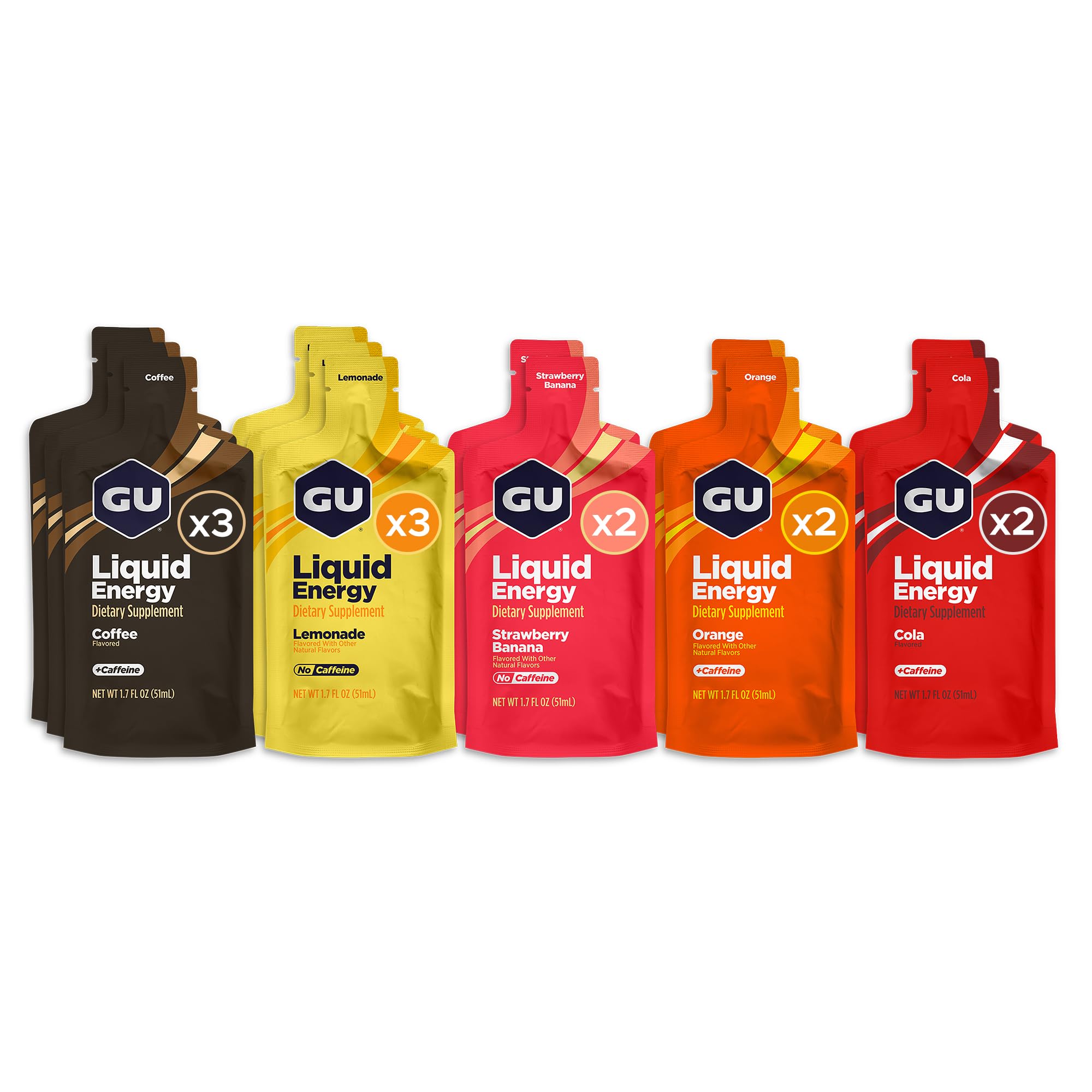
GU’s Liquid Energy Gel reformulates the classic GU formula into a thinner, drinkable consistency that many runners prefer over traditional paste. Each packet delivers 100 calories from a dual-source blend of maltodextrin and fructose, using non-competing metabolic pathways for efficient absorption and sustained output. The mixture also includes a branched-chain amino acid profile designed to reduce mental fatigue and muscle breakdown during prolonged effort.
The 12-count variety pack introduces five flavor profiles — Cola, Lemonade, Orange, Strawberry Banana, and Coffee — with the Coffee variety providing a measured caffeine boost appropriate for the second half of a marathon. The liquid form flows quickly out of the package, requiring less sucking force than thicker gels, and the light consistency means it mixes easily with a sip of water if desired. The calorie density per packet is slightly lower than some competitors, which encourages more frequent intake intervals and helps avoid sugar spikes.
The larger packet volume and liquid nature present logistical trade-offs: storing multiple sachets on a race belt or in a triathlon top is more cumbersome, and warm liquid can become difficult to control in your mouth during high breathing rates. Still, for runners who prioritize a fast, swallowable texture and appreciate the mental clarity from BCAA support, the GU Liquid Gel fills a specific niche that no thick paste can match.
Why it’s great
- Thinner liquid form is easier to swallow on the run
- BCAAs help reduce mental and muscle fatigue
- Dual-source carbohydrate blend for efficient absorption
- Assorted flavor pack allows taste variety
Good to know
- Larger packet volume is harder to carry in bulk
- Warm liquid can be difficult to control while breathing hard
- Lower calorie density per pack requires more frequent dosing
4. SiS GO Isotonic Energy Gel, Orange
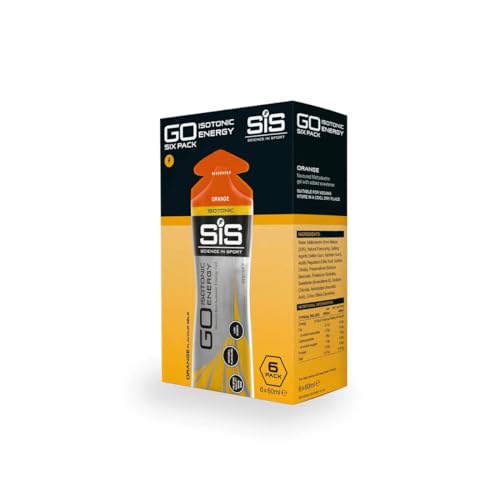
SiS GO Isotonic Energy Gel solves the most practical obstacle of mid-race nutrition — finding or carrying enough water to wash down a sticky paste. By formulating the gel to match the body’s natural fluid concentration, SiS eliminated the need for water consumption alongside the gel. This isotonic design allows the carbohydrate solution to move rapidly from stomach to intestine without drawing additional fluid from the body, reducing the risk of dehydration and side stitches.
The orange flavor is intentionally light and clean, avoiding the sharp chemical notes that make some gels unpalatable when you are already fatigued. Each 360-milliliter six-pack provides enough fuel for multiple long runs, and the sachets are slender enough to fit three deep in a waistband or short pocket. The carbohydrate content is lower per packet than some concentrated gels, so runners targeting a high hourly carb intake may need to dose more frequently, but the trade-off is the gentlest stomach impact in the mid-range category.
Mountain bikers and trail runners also gravitate toward the isotonic formula because it performs reliably when water sources are unpredictable. The only consistent complaint is the sachet dimensions — slightly wider than some competitors — which makes carrying a race-day pile of six or more a tight squeeze in small handheld bottles or minimalist running vests.
Why it’s great
- Isotonic formulation requires zero water intake
- Light, clean orange flavor with no soapy aftertaste
- Excellent stomach tolerance for sensitive runners
- Slender sachets fit well in waistbands
Good to know
- Lower carb content per serving requires more frequent dosing
- Sachet size is wider than some competitors for bulk carry
- No caffeine or electrolytes — must supplement separately
5. Transcend Foods Strawberry Gel, Pack of 10

Transcend Foods Strawberry Gel occupies a distinct lane in the marathon fueling market: it is a medical-grade glucose gel repurposed for endurance use. Each 1.1-ounce packet delivers pure glucose in a fast-absorbing liquid carrier without the maltodextrin or fructose blends common in sports-specific gels. This specificity makes it exceptionally reliable for blood sugar management, as Type 1 and Type 2 diabetic runners consistently report predictable glucose rises without the delayed absorption or glycemic swings associated with complex carbohydrate blends.
The 30-month shelf life and individually printed expiration dates on each pouch mean you can stash these in a gym bag, car glovebox, or race vest indefinitely without worrying about degradation. The strawberry flavor is mild and unobtrusive — it is not trying to taste like a dessert but succeeds at being palatable during exertion. The gel is also caffeine-free and gluten-free, meeting the strict dietary requirements of runners managing autoimmune conditions or caffeine sensitivity. The 10-count pack offers a low barrier to entry for testing the glucose-only approach.
The trade-off for this biochemical purity is a relatively narrow carbohydrate profile: pure glucose is fast but does not engage the dual-transport fructose pathway, so runners targeting maximum carb throughput may find it less efficient than a maltodextrin-fructose blend. The gel is also at the lower end of the price spectrum, making it an accessible option for training runs or for runners who want a backup gel that will not go bad between seasons.
Why it’s great
- Fast-acting pure glucose for predictable energy delivery
- 30-month shelf life with individually dated pouches
- Trusted by diabetic runners for reliable blood sugar management
- Caffeine-free and gluten-free for sensitive systems
Good to know
- Single-sugar source limits maximal carb absorption rate
- Not designed for dual-transport carbohydrate loading
- Strawberry flavor is functional, not gourmet
FAQ
How often should I take a gel during a marathon?
Why do some gels require water but others do not?
Can I use a gel designed for diabetics in a marathon?
Is there a difference between gel texture for road vs. trail racing?
Final Thoughts: The Verdict
For most runners, the gels for marathon winner is the MAURTEN Gel 100 because its hydrogel technology eliminates the stomach upset that derails the majority of mid-race fueling efforts with no trade-off in absorption speed. If you want natural ingredients and double electrolytes, grab the Huma Plus Chia. And for a budget-friendly, no-water-needed option that performs reliably across all conditions, nothing beats the SiS GO Isotonic.