
Building your dream pedalboard is rewarding, but it costs hundreds and takes months of tweaking. A single amp that packs multiple effects, channel switching, and amp modeling cuts that whole process down to plug-and-play. Whether you need pristine cleans with a hint of reverb or a wall of high-gain distortion with delay, the right combo delivers professional tones straight out of the box.
I’m Mohammad Maruf — the founder and writer behind Drink4Good. Over years of analyzing digital modeling technology, solid-state circuitry, and multi-effects architecture, I’ve mapped what separates a versatile workhorse from a one-trick pony in this crowded space.
From budget-friendly practice amps to premium modeling rigs, these are the best guitar amps with built-in effects for every playing scenario and budget tier.
How To Choose The Best Guitar Amps With Built-In Effects
An amp with built-in effects is only as good as its core tone engine and how easily you can access the sounds you need. The wrong choice leaves you scrolling through unusable presets or fighting with muddy digital processing. Here are the critical factors to evaluate.
Wattage vs. Speaker Size
Wattage determines headroom and volume, but the speaker diameter shapes the low-end response and projection. A 10-watt amp with a 6.5-inch speaker is fine for bedroom practice but lacks the punch for a drummer. For home use, 10–30 watts paired with an 8-inch or 10-inch speaker is ideal. For rehearsals and small gigs, 40–50 watts with a 12-inch speaker provides clean headroom and usable stage volume. Higher wattage also allows the power amp to stay clean while the preamp delivers distortion.
Effects Architecture and Accessibility
Not all built-in effects are created equal. Some amps offer simple reverb and delay knobs, while others feature multi-effects sections with modulation, compression, and pitch shifting. Look for independent effect type selection — the ability to run delay, reverb, and modulation simultaneously without menu-diving. A dedicated footswitch input is a must for live changes. Amps with a companion app often unlock deeper editing and preset management, which adds value over time.
Modeling vs. Analog Channels
Digital modeling amps simulate multiple classic amp circuits, giving you Fender cleans, Marshall crunch, and Mesa Boogie gain in one box. Pure solid-state amps offer discrete clean and overdrive channels with a fixed tonal character. Modeling is more versatile, but analog channels often respond more dynamically to picking attack. Beginners benefit from modeling’s variety, while purists may prefer the simplicity of a two-channel analog amp with reverb.
Connectivity and Recording Output
Modern built-in effects amps double as practice tools. Bluetooth for backing tracks, an aux input for jamming along to songs, and a headphone output for silent practice are essential. For recording, a USB audio interface or line output with cab simulation allows direct-to-DAW connection without a microphone. The presence of an effects loop lets you integrate external pedals between the preamp and power amp, preserving the amp’s core tone while adding time-based effects.
Quick Comparison
On smaller screens, swipe sideways to see the full table.
| Model | Category | Best For | Key Spec | Amazon |
|---|---|---|---|---|
| Fender Mustang LT50 | Modeling | Recording & small gigs | 50W, 12” speaker, USB audio interface | Amazon |
| BOSS Katana-50 Gen 3 | Hybrid Analog/Digital | Versatile stage & home use | 50W, 12” speaker, 12 amp characters | Amazon |
| Line 6 Spider V 20 MKII | Digital Modeling | Entry-level practice | 20W, 8” speaker, 16 presets | Amazon |
| Marshall CODE50 | Digital Modeling | Marshall tone with deep editing | 50W, 12” speaker, 14 preamp models | Amazon |
| Positive Grid Spark 40 | Smart Modeling | Home practice & learning | 40W, stereo, 50K+ ToneCloud presets | Amazon |
| QSC K12.2 | Powered Speaker | High-output PA & monitoring | 2000W, 12” woofer, DSP-controlled | Amazon |
| Orange Crush 20RT | Solid State | Analog purists, jazz & rock | 20W, 8” speaker, built-in tuner | Amazon |
| Yamaha THR10II | Desktop Modeling | Apartment & desktop practice | 10W stereo, 15 amp models, Bluetooth | Amazon |
| Valeton GP-200 | Floor Multi-FX | Ultimate flexibility & direct recording | 240+ effects, 140 amp models, IR support | Amazon |
In‑Depth Reviews
1. Fender Mustang LT50

The Fender Mustang LT50 hits the sweet spot between power and value. Its 50-watt output drives a 12-inch custom speaker, producing enough clean headroom for small venue gigs without breaking your back — the combo weighs under 24 pounds. The 25 on-board effects include compression, modulation, delay, and reverb, plus octave and pitch-shifting options that go far beyond basic presets.
What sets the LT50 apart is the integrated USB audio interface. You can record directly into your DAW with zero latency, capturing the amp’s modeled tones without a microphone. The 30 preloaded presets cover genres from blues to modern metal, and the companion Fender Tone app allows deep editing of every parameter. The tuner is fast and accurate, eliminating the need for a pedal.
Users consistently praise its reliability and loudness — several note that the 50-watt rating is honest, delivering usable stage volume for outdoor events. The lack of Bluetooth is the only notable omission, as some competitors offer streaming from phones. For guitarists who value recording capability and gig-ready volume, this is the most balanced package in the mid-range tier.
Why it’s great
- Built-in USB interface for direct recording
- 25 versatile effects with deep editing via app
- 50 watts through a 12-inch speaker is gig-ready
Good to know
- No Bluetooth for audio streaming
- Presets can sound generic without manual tweaking
2. BOSS Katana-50 Gen 3
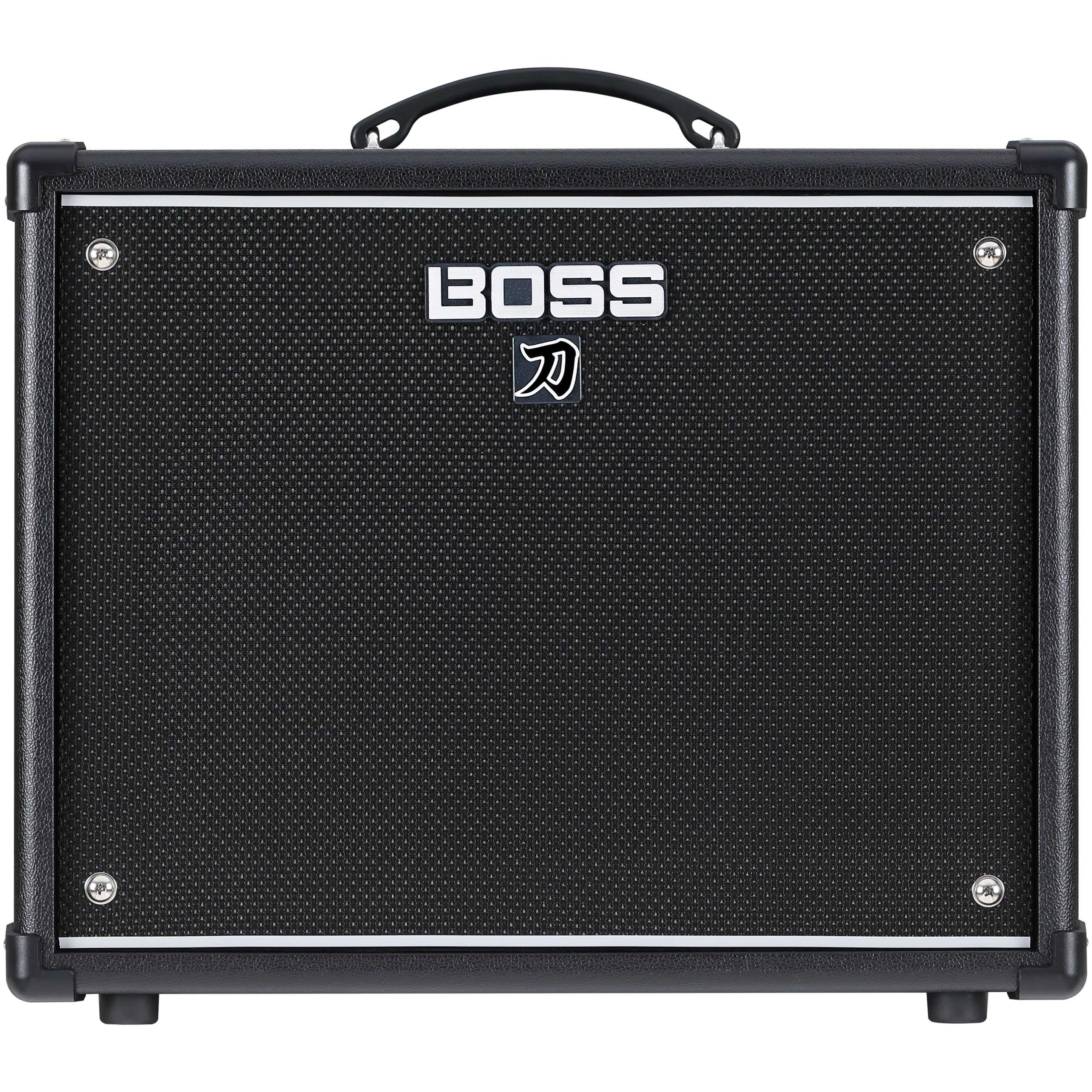
The BOSS Katana-50 Gen 3 continues the lineage that redefined the affordable modeling amp market. The Tube Logic engine delivers analog-like response — the new Pushed amp character provides edge-of-breakup dynamics that react to picking attack, rivaling boutique tube preamps. The 12-inch custom speaker handles the 50-watt Class AB power stage with authority, projecting clean tones and saturated leads with equal clarity.
Five independent effects sections — Booster, Mod, FX, Delay, and Reverb — can be stacked simultaneously. The BOSS Tone Studio app unlocks deep parameter control, including EQ, noise gate, and effect routing. The power control feature lets you drop to 25W or 0.5W for bedroom volumes without sacrificing tone, a practical advantage over fixed-wattage models.
User feedback highlights the authentic tube-like feel, with several reviewers calling it a true hybrid that sounds closer to analog than digital. The lack of built-in Bluetooth is a minor gap, but the free software compensates with extensive customization. For players who need a single amp that covers clean jazz, classic rock crunch, and modern metal without pedals, the Katana-50 Gen 3 is a serious contender.
Why it’s great
- Analog-like Tube Logic response with new Pushed character
- Five simultaneous effects sections with app editing
- Power control for bedroom-to-stage volume
Good to know
- No built-in Bluetooth streaming
- Software required to fully customize effects chain
3. Marshall CODE50
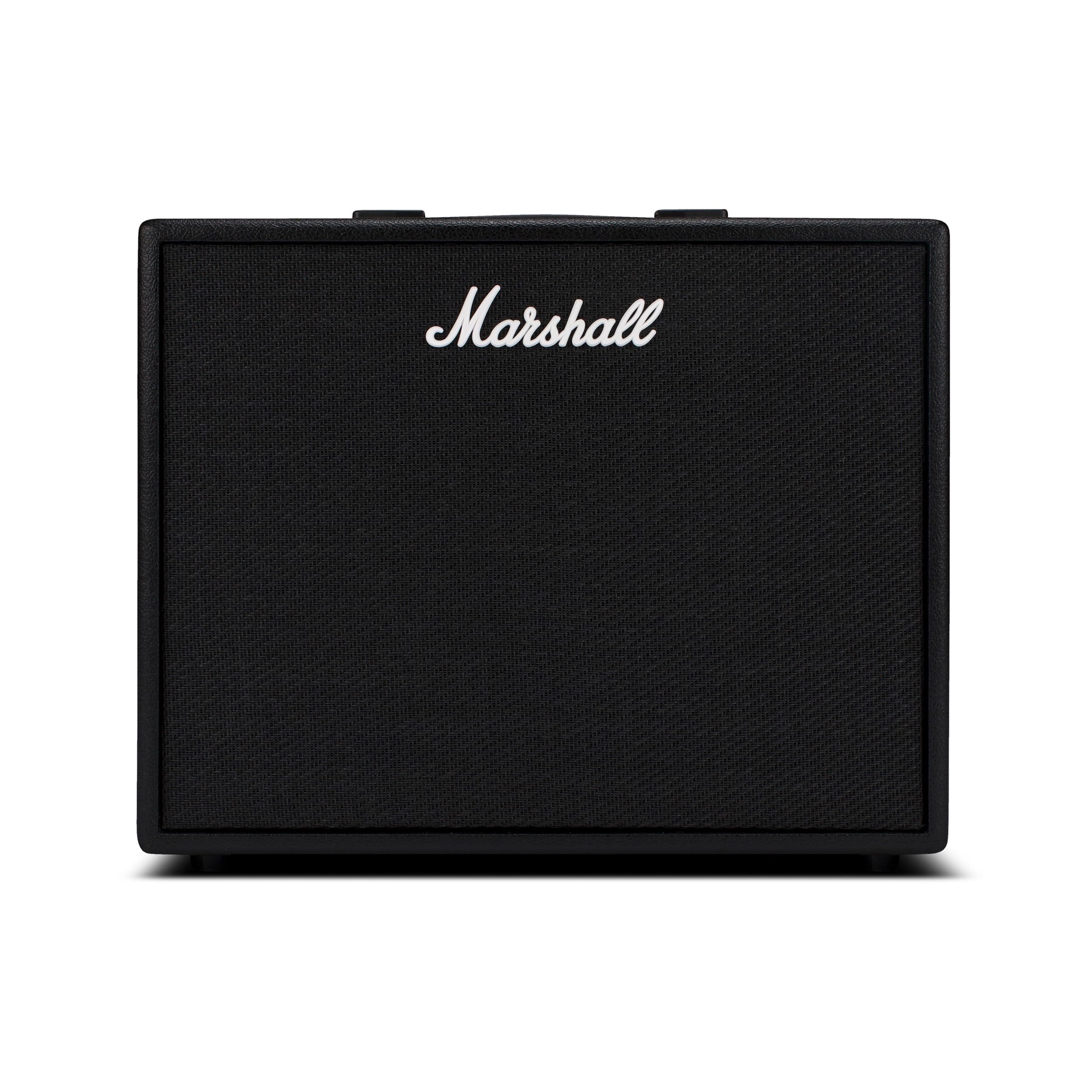
The Marshall CODE50 delivers the iconic British voice with a digital backbone. Fourteen MST preamp models include Plexi, JVM, DSL, and Silver Jubilee voicings, each capturing the harmonic complexity of their analog counterparts. Four power amp emulations — EL34, EL84, 6L6, and 5881 — let you swap the output stage’s character, a granularity rarely found at this level.
Twenty-four digital effects cover reverb, delay, chorus, flanger, and tremolo, and the signal chain order can be rearranged within the MyMarshall app. The 100-plus editable presets provide a deep library, though many users note that factory presets sound muffled until you dial in the presence and cabinet simulation settings. The 50-watt output through a 12-inch speaker is loud enough for small venues.
Bluetooth connectivity enables streaming backing tracks and full app control, making tone editing convenient. Some users experienced Bluetooth dropout issues requiring board-level intervention, but the build quality is otherwise solid. The learning curve is steeper than simpler amps, but for players seeking authentic Marshall crunch with modern digital flexibility, the CODE50 is a rewarding platform.
Why it’s great
- 14 preamp models including classic Marshall circuits
- Swappable power amp emulations (EL34, EL84, 6L6, 5881)
- Bluetooth for streaming and app-based editing
Good to know
- Factory presets require manual presence adjustment
- Some users report Bluetooth connectivity issues
4. Positive Grid Spark 40

The Positive Grid Spark 40 redefines the practice amp by integrating machine learning into the tone equation. The Smart Jam engine analyzes your playing in real time and generates authentic bass and drum accompaniment, making solo practice feel like a full band session. Forty watts of power drive a stereo speaker array that produces surprising low-end depth for a compact chassis — it doubles as a high-fidelity Bluetooth speaker when not in guitar mode.
Access to over 50,000 user-created presets on ToneCloud means you can instantly load tones from professional guitarists for any genre, from acoustic fingerstyle to djent. The Spark app also auto-displays guitar chords for songs streamed from Spotify or YouTube, a game-changer for learning new material. Seven core amp models cover clean to high-gain, with an additional delay, reverb, and modulation block on board.
Users flag that the Spark is not designed for live gigging — the speaker array lacks the projection of a 12-inch guitar driver. Some have reported hum issues with certain cable configurations, though these are resolved by switching cables. For home practice, song learning, and recording via USB, the Spark 40 offers the most intelligent feature set in its class.
Why it’s great
- Smart Jam generates real-time bass and drum backing
- 50K+ ToneCloud presets for instant tone access
- Bluetooth streaming with auto-chord display for songs
Good to know
- Not loud enough for band rehearsals or gigs
- App performance can be inconsistent on some devices
5. Valeton GP-200

The Valeton GP-200 is a floor multi-effects processor that packs more modeling power than many flagship units. It offers over 240 effects drawn from 140 legendary amp and cabinet simulations, plus 100 renowned stompbox emulations. The new-generation HD modeling technology delivers touch-sensitive response that feels like hot glass, with clean tones that break up naturally when pushed. The 4.3-inch TFT color display makes menu navigation intuitive, and eight customizable LED footswitches give you hands-free control over presets, looper, and tuner.
Signal chain routing is fully adjustable, supporting up to 11 simultaneous effect blocks in any order. The 180-second looper and 100 built-in drum rhythms are invaluable for practice and composition. A USB Type-C port provides stereo audio streaming and OTG compatibility for direct connection to iOS and Android devices, making this a complete recording interface. The FX loop allows integration with external pedals, and MIDI I/O connects to external controllers.
Users report that the amp and IR cabinet modeling sound indistinguishable from real amplifiers, with some IR slots even surpassing Two Notes simulations. The all-metal chassis and Gorilla Glass display are built for the road. While the menu system requires a short learning curve, the free Mac/Windows software simplifies preset management. For guitarists and bassists who want every tone in one pedalboard-sized unit, the GP-200 is exceptional value.
Why it’s great
- 240+ effects and 140 amp models for endless tonal options
- 11 simultaneous effect blocks with re-orderable chain
- Built-in looper, drum machine, and USB-C audio interface
Good to know
- Menu system has a moderate learning curve
- IR cab simulation is off by default — must be enabled
6. Yamaha THR10II

The Yamaha THR10II reimagines the desktop practice amp as a high-fidelity audio device. Its extended stereo technology produces a wide, immersive soundstage that makes 10 watts feel significantly larger, with bass response that defies its compact footprint. Fifteen guitar amp models — including boutique Fender, Vox, and Marshall voicings — are joined by three bass amps and three acoustic-electric mic models, making it a universal tool for multi-instrumentalists.
The eight built-in effects are integrated seamlessly, with reverb, delay, chorus, and modulation available via the front-panel knobs or the Bluetooth-connected app. The app also serves as a librarian for saving and recalling presets. Headphone output and a dedicated aux input allow silent practice with backing tracks, while the USB port enables plug-and-play recording. The THR10II doubles as a high-quality Bluetooth speaker for music listening.
Users consistently praise the intuitive interface and the authentic feel of the tube-amp modeling, especially at low volumes where many amps sound thin. A few note that the settings memory did not consistently recall levels on power-up, and the included USB cable is omitted. For apartment dwellers, late-night players, and anyone who values studio-quality sound at conversation-level volumes, the THR10II is the gold standard.
Why it’s great
- Studio-quality tone at any volume with stereo sound
- 15 amp models plus bass and acoustic modes
- Bluetooth streaming and app-based preset editing
Good to know
- Settings memory may not reliably recall levels
- USB cable not included in the box
7. Rockville G-AMP 30

Rockville’s G-AMP 30 delivers the essentials at an accessible price point without cutting corners on core functionality. The 30-watt output through an 8-inch speaker is sufficient for bedroom practice and small room jams, and the built-in Bluetooth receiver lets you stream backing tracks directly from your phone. The independent mic input with its own volume control is a rare feature — you can sing while playing without additional gear.
The clean and overdrive channels are paired with an adjustable gain knob and a simple delay effect, offering enough tonal range for blues, rock, and mild distortion. The footswitch input allows hands-free channel switching, a feature typically reserved for more expensive models. Metal corner protectors and a carry handle add road durability for a unit weighing under 20 pounds.
Users appreciate the clear clean tones and functional Bluetooth, with several noting it works well for both electric and acoustic-electric guitars. Some units arrived with cosmetic blemishes, but overall build quality is solid for the tier. The delay effect is basic — suitable for rhythmic spacing but not ambient washes. For beginners and players on a tight budget who need a mic input and wireless jamming, the G-AMP 30 is a smart starting point.
Why it’s great
- Built-in Bluetooth for streaming and jamming
- Independent mic input with volume control
- Footswitch input for hands-free channel switching
Good to know
- Delay effect is basic — not suitable for ambient sounds
- Some units may show minor cosmetic damage
8. Line 6 Spider V 20 MKII

The Line 6 Spider V 20 MKII is an entry-level modeling amp that builds on the brand’s legendary POD technology. Sixteen factory presets cover a range of genres, and three simultaneous effects — plus independent reverb — allow layered tones without needing external pedals. The built-in tuner and tap-tempo function make setup fast, while the free Spider V Remote app unlocks over 200 additional amps and effects for deeper exploration.
Classic speaker mode refines the cabinet simulation for a more natural feel at lower volumes. The 20-watt power section is paired with an 8-inch speaker, providing adequate volume for solo practice and quiet jam sessions. USB connectivity allows recording and editing on Mac, PC, iOS, and Android devices, making it a useful tool for learning and basic home recording.
Users highlight the convenience of having dozens of effects without a pedalboard, saving money and space. Several note that the tone quality is noticeably better through headphones than through the built-in speaker. A few initial units were defective on arrival, but replacements performed well. For absolute beginners and casual players who want a low-cost entry into multi-effects, the Spider V 20 MKII delivers a wide sonic palette.
Why it’s great
- 16 presets with 3 simultaneous effects plus reverb
- Free app unlocks over 200 additional amps and effects
- USB connectivity for recording and editing
Good to know
- Speaker tone is inferior to headphone sound
- Power output insufficient for band rehearsal
9. Orange Crush 20RT

The Orange Crush 20RT is a straight-ahead solid-state amp for players who prefer analog circuitry over digital modeling. The 20-watt output drives a custom 8-inch Voice of the World speaker, producing the distinct Orange voicing — punchy mids and a warm low-end that works beautifully for rock, blues, and jazz. The two-channel design lets you switch between clean and dirty sounds, with the dirty channel delivering a convincing Rockerverb-style gain.
The built-in digital reverb adds ambient depth, though it lacks the subtlety of spring reverb units. The integrated chromatic tuner eliminates the need for a pedal, and the aux input and headphone output allow silent practice. At 16 pounds, it’s easy to carry to lessons or small jams, and the metal enclosure handles travel abuse well.
Users consistently praise the authentic Orange tone, noting that the clean channel breaks up naturally when pushed. Some have reported the speaker failing after a year of use, with several upgrading to a Jensen C8R for improved response. The reverb is functional but not lush — driven players will likely want an external spring reverb pedal. For guitarists who value tactile simplicity and a distinct analog voice, the Crush 20RT is a faithful companion.
Why it’s great
- True analog Orange tone with punchy mids
- Built-in chromatic tuner for quick setup
- Lightweight and portable at 16 pounds
Good to know
- Reverb is shallow — not suitable for ambient styles
- Stock speaker may fail under heavy use over time
FAQ
Can I use my guitar amp with built-in effects for recording?
Are modeling amps as good as real tube amps with pedals?
What is the advantage of having Bluetooth on a guitar amp?
Final Thoughts: The Verdict
For most users, the best guitar amps with built-in effects winner is the Fender Mustang LT50 because it combines gig-ready 50-watt power, a 12-inch speaker, 25 versatile effects, and a built-in USB audio interface — all without breaking the mid-range budget. If you want authentic analog-like response and deep editing via software, grab the BOSS Katana-50 Gen 3. And for desktop practice with studio-quality stereo sound, nothing beats the Yamaha THR10II.