
Streaming is a two-front war. While you focus on chat and gameplay, your graphics card is silently encoding every frame into a compressed video stream your viewers can actually watch without buffering. A GPU that stumbles on encoding produces pixelated chaos no matter how entertaining you are. The right card, however, handles the encode pipeline efficiently, leaving you free to perform.
I’m Mohammad Maruf — the founder and writer behind Drink4Good. I spend my time analyzing hardware roadmaps, comparing encoder quality across architectures, and cross-referencing encode/decode benchmarks to separate marketing talk from real stream performance.
To help you choose with confidence, I have broken down eleven cards across AMD, Intel, and NVIDIA architectures in this guide to the best gpu for streaming based on real-world encoding performance and value.
How To Choose The Best GPU For Streaming
The best streaming GPU is not just the one with the highest frame rate. It needs a dedicated hardware encoder that can compress video in real-time without stealing performance from your game. You also need enough VRAM to hold both the game’s assets and the encoder’s frame buffer simultaneously.
Hardware Encoder Generation
NVIDIA’s NVENC (on RTX 30, 40, and 50-series cards) is the gold standard for H.264 and H.265 encoding. AMD’s Video Core Next (VCN) on RDNA 3 and 4 cards has improved massively and now supports AV1 encoding. Intel’s Arc GPUs also offer decent encoding but require Resizable BAR support for peak performance. The generation of the encoder matters more than the GPU core count for streaming.
VRAM Capacity and Memory Bandwidth
Streaming at 1080p or 1440p while gaming at the same resolution demands VRAM. A card with 8GB GDDR6 can handle 1080p streaming comfortably, but 12GB or 16GB gives you headroom for texture-heavy games and higher bitrate encodes. Memory bandwidth (measured in GB/s) also affects how fast the encoder can pull frames from the buffer.
PCIe Generation and Platform Compatibility
Older motherboards with PCIe 3.0 can bottleneck newer PCIe 4.0 or 5.0 cards in certain encode-heavy workloads. If you are building a streaming rig on an older platform, check that the card can run at PCIe 4.0 x8 or x16 on your motherboard. Also verify that your power supply can deliver enough wattage and the correct power connectors (single 8-pin vs. dual 8-pin vs. 16-pin).
Quick Comparison
On smaller screens, swipe sideways to see the full table.
| Model | Category | Best For | Key Spec | Amazon |
|---|---|---|---|---|
| PNY RTX 5070 Epic-X | NVIDIA Blackwell | High-quality NVENC AV1 encoding | 12GB GDDR7 192-bit | Amazon |
| Sapphire Nitro+ RX 9070 XT | AMD RDNA 4 | Premium AV1 encode + 4K gaming | 16GB GDDR6 256-bit | Amazon |
| Sapphire Pulse RX 9070 XT | AMD RDNA 4 | Reliable AV1 encode at a lower price | 16GB GDDR6 256-bit | Amazon |
| ASRock RX 9070 XT Challenger | AMD RDNA 4 | High boost clock for encode + gaming | 16GB GDDR6 256-bit | Amazon |
| ASUS Prime RTX 5070 | NVIDIA Blackwell | SFF streaming rigs with DLSS 4 | 12GB GDDR7 192-bit | Amazon |
| PowerColor RX 9060 XT | AMD RDNA 4 | 16GB VRAM for 4K encoding workflows | 16GB GDDR6 128-bit | Amazon |
| ASRock RX 7700 XT Challenger | AMD RDNA 3 | Balanced 1440p streaming with 0dB mode | 12GB GDDR6 192-bit | Amazon |
| GIGABYTE RTX 5060 Windforce | NVIDIA Blackwell | Entry-level NVENC with GDDR7 | 8GB GDDR7 128-bit | Amazon |
| PNY RTX 5060 Epic-X | NVIDIA Blackwell | Budget streaming with triple-fan cooling | 8GB GDDR7 128-bit | Amazon |
| ASRock Intel Arc B580 | Intel Xe2-HPG | AV1 encode on a tight budget | 12GB GDDR6 192-bit | Amazon |
| XFX Speedster SWFT210 RX 7600 | AMD RDNA 3 | Budget 1080p streaming on Linux | 8GB GDDR6 128-bit | Amazon |
In‑Depth Reviews
1. PNY NVIDIA GeForce RTX 5070 Epic-X ARGB OC Triple Fan
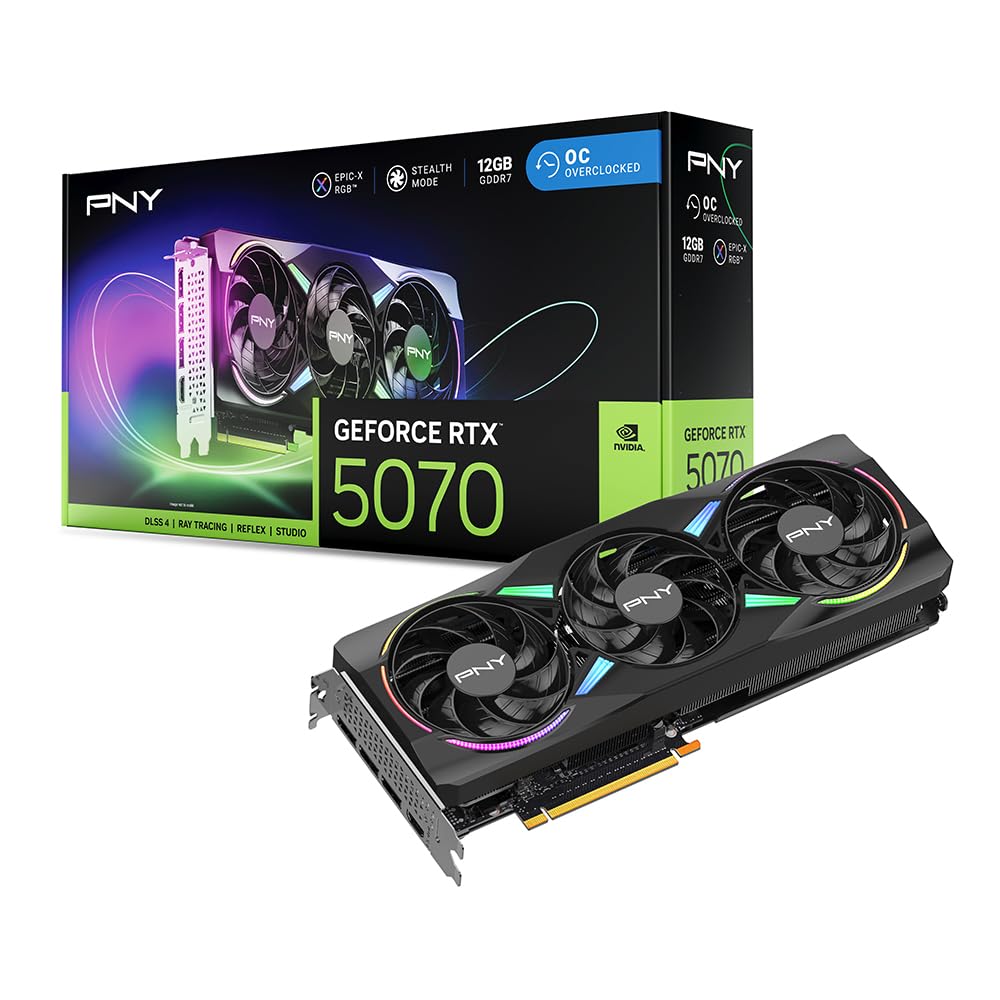
The PNY RTX 5070 Epic-X combines NVIDIA’s latest Blackwell architecture with 12GB of GDDR7 memory on a 192-bit bus, delivering a boost clock of 2685 MHz. The fifth-gen Tensor Cores power DLSS 4 for upscaling while the dedicated NVENC encoder handles H.264, H.265, and AV1 streams simultaneously without taxing the game performance. Users report excellent 1440p encoding quality with very low latency.
Customer reviews confirm that this card runs quietly under full load, with one user noting a 8% factory overclock that left extra headroom for manual tuning. The triple-fan design keeps temperatures in check during long streaming sessions, and the card fits well in mid-tower cases despite its 2.4-slot thickness. The included 16-pin to dual 8-pin adapter simplifies power delivery on existing PSUs.
Streamers who upgrade from a RTX 30-series card will notice a significant improvement in encoding efficiency thanks to the Blackwell encoder’s lower bitrate requirements for the same quality. The AV1 support is critical for platforms like Twitch that are gradually rolling out AV1 ingest. This card sits at the sweet spot where encoding quality meets raw gaming performance.
Why it’s great
- Blackwell NVENC supports AV1, H.264, and H.265 encodes simultaneously
- 12GB GDDR7 provides enough VRAM headroom for 1440p streaming
- Excellent cooling keeps noise low during extended encode sessions
Good to know
- Requires a 750W PSU with 16-pin or dual 8-pin connectors
- Premium price tier compared to entry-level streaming cards
2. Sapphire Nitro+ AMD Radeon RX 9070 XT Gaming OC

The Sapphire Nitro+ RX 9070 XT is the flagship RDNA 4 card with a massive 16GB GDDR6 buffer on a 256-bit interface and a boost clock of 3060 MHz. AMD’s Video Core Next (VCN) encoder on this generation supports AV1 at very competitive quality levels, matching NVENC in most blind tests. The triple-slot cooling solution keeps the card exceptionally quiet even under sustained encode loads.
Customer feedback highlights the card’s ability to handle 4K/120Hz gaming while simultaneously encoding a 1080p stream without dropped frames. One reviewer noted that the card stays below 56°C at 120 FPS gaming, which is remarkable for an air-cooled high-end GPU. The dual HDMI and dual DisplayPort outputs allow flexible multi-monitor setups for stream management.
The main trade-off is physical size: this card is over 300mm long and requires 850W PSU with clean 12V cable routing under its backplate. It also sags slightly even with the included support bracket, so an aftermarket GPU support is recommended. For streamers who want the absolute best AMD encoder and have space in their chassis, this is the top choice.
Why it’s great
- Excellent AV1 encode quality with 16GB VRAM buffer
- Very quiet operation even during encode-intensive workloads
- High boost clock of 3060 MHz for gaming and encoding
Good to know
- Requires significant chassis space and an 850W PSU
- Premium price point; card may sag without additional support
3. Sapphire Pulse AMD Radeon RX 9070 XT

The Sapphire Pulse RX 9070 XT delivers the same core RDNA 4 encoder and the same 16GB GDDR6 buffer as the Nitro+ but in a more compact dual-slot design that fits smaller cases. The boost clock is slightly lower at 2970 MHz, but real-world encoding performance is nearly identical. This card is aimed at streamers who want high-quality AV1 encoding without paying for the premium Nitro+ cooler.
Verified buyers report that this card drives a 5120×1440 ultrawide monitor at Ultra settings while encoding a stream with zero compatibility issues. One customer running Arch Linux with ROCm 6.3.3 measured Blender BMW27 rendering at 15.55 seconds — a 5.68x speedup over their CPU. The dual fan design stays quiet under load, with temperatures in the upper 70s during extended gaming sessions.
The Pulse lacks the RGB customization and the beefy heatsink of the Nitro+, but the core encoding hardware is identical. For streamers who prioritize encode quality over aesthetics, the Pulse offers the best performance-per-dollar in the high-end AMD segment. It requires a 750W PSU and dual 8-pin connectors.
Why it’s great
- Same RDNA 4 AV1 encoder as the Nitro+ at a lower price point
- 16GB VRAM handles 4K encoding workflows without overflow
- Compact dual-slot design fits most mid-tower cases
Good to know
- Not as quiet as the Nitro+ under heavy encode load
- Linux driver setup may require troubleshooting for RDNA 4
4. ASRock Radeon RX 9070 XT Challenger 16GB OC
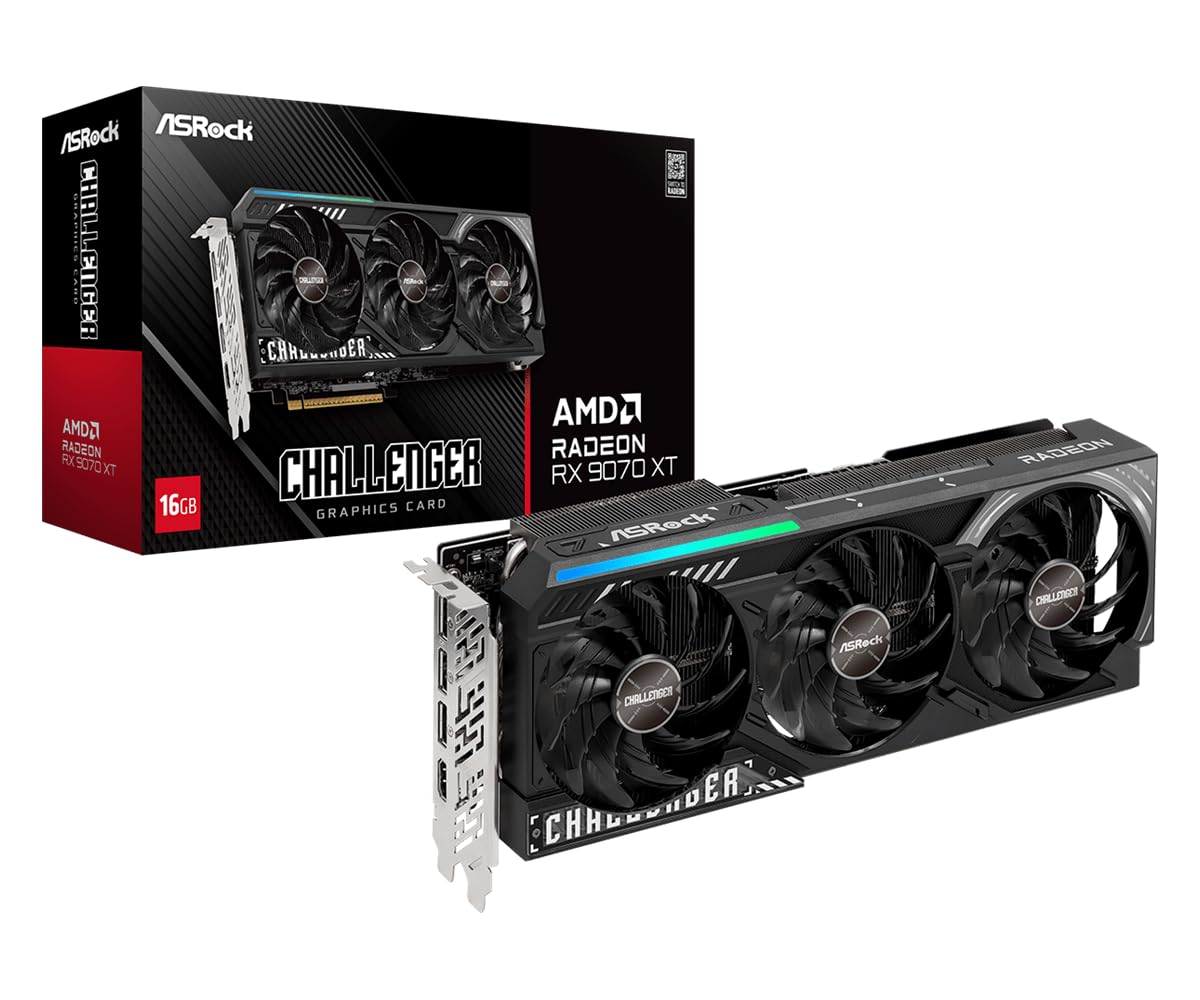
The ASRock RX 9070 XT Challenger offers a boost clock of 2970 MHz and 16GB GDDR6 on a 256-bit bus, with a triple-fan cooling system that includes 0dB silent technology. The fans stop completely during low-load scenarios, which is ideal for streamers who want silent operation when browsing or managing chat between games. The card also has a physical LED switch to control lighting without software.
Customer reviews emphasize excellent 1440p maximum settings performance with smooth encoding. One user paired it with a 7600X3D and reported an enormous upgrade from a RX 5700 XT for both gaming and VR streaming. The card undervolts well via AMD Adrenaline, potentially reducing power draw and heat during encode workloads while maintaining stable frame pacing.
The Challenger’s 0dB fan mode makes it the best choice for streamers who require absolute silence during non-gaming moments. The card requires a 750W PSU and may not fit all chassis, so check dimensions before purchasing. The ASRock RGB software has some connectivity quirks, but overall the encoding performance matches other RDNA 4 cards.
Why it’s great
- 0dB fan mode provides total silence during idle and light workloads
- Excellent undervolt potential reduces heat during encode tasks
- Physical LED switch avoids reliance on buggy software
Good to know
- ASRock RGB software can lose connection with the card
- Requires careful case dimension verification before purchase
5. ASUS SFF-Ready Prime NVIDIA GeForce RTX 5070

The ASUS Prime RTX 5070 is a SFF-Ready card that packs the same Blackwell NVENC encoder as larger RTX 5070 models into a compact 2.5-slot design. It ships with 12GB GDDR7 on a 192-bit bus and features axial-tech fans with a smaller hub for increased downward air pressure. The phase-change GPU thermal pad helps maintain consistent temperatures during long encodes.
Customer reviews highlight excellent 1440p competitive gaming performance paired with a 7800X3D. One user reported Steel Nomad benchmark of 5839 and noted that the card ran at only 67°C under sustained load. The card requires a 16-pin to dual 8-pin adapter, which means you need at least a 750W PSU with two free 8-pin connectors. The card is thicker than standard dual-slot cards, so measure your case carefully.
For streamers building a small form factor rig without sacrificing encoding quality, this ASUS card is the top option. The dual BIOS switch lets you toggle between performance and quiet modes. The DLSS 4 integration also means you can upscale your game to a higher resolution before encoding, which improves perceived quality on stream.
Why it’s great
- SFF-Ready design fits compact streaming rigs
- Blackwell NVENC with DLSS 4 for upscaled encoding
- Phase-change thermal pad maintains consistent encode temps
Good to know
- Requires 16-pin adapter and compatible PSU
- Thicker than standard dual-slot, measure case clearance
6. PowerColor Reaper AMD Radeon RX 9060 XT 16GB

The PowerColor Reaper RX 9060 XT is a compact RDNA 4 card with an impressive 16GB GDDR6 memory buffer, which is unusually high for its performance tier. The card measures only 200mm in length and draws power from a single 8-pin connector, making it one of the easiest cards to install in a streaming build. The boost clock sits at 2620 MHz on a 128-bit interface.
Customer reviews note that this card runs silent even at full power and handles 4K at a solid 60 FPS for most titles. One user upgraded from an RX 580 and found the smaller size and lower power consumption to be a major improvement. The card handles LLM workloads fine, which suggests it has plenty of compute headroom for encode tasks as well. The 16GB VRAM is ideal for streaming at 1440p with high texture settings.
The 128-bit memory bus is the limiting factor for high-resolution encoding workflows, but for 1080p and 1440p streaming this card performs admirably. The single 8-pin power requirement makes it an excellent choice for older PSUs that lack multiple PCIe connectors. Frame pacing is adequate but not as smooth as higher-end RDNA 4 cards.
Why it’s great
- 16GB VRAM in a compact, single 8-pin powered card
- Very quiet operation even at full power
- Excellent for 1440p streaming with high texture settings
Good to know
- 128-bit memory bus limits encode performance at 4K
- Frame pacing could be smoother in some titles
7. ASRock AMD Radeon RX 7700 XT Challenger 12GB

The ASRock RX 7700 XT Challenger is a RDNA 3 card with 12GB GDDR6 on a 192-bit bus and a boost clock of 2584 MHz. AMD’s VCN encoder on RDNA 3 supports AV1 encoding, which is a significant upgrade for streamers who want modern encode quality without jumping to the latest generation. The dual-fan design includes 0dB Silent Cooling that stops fans at low temps.
Customer reviews report excellent 1440p performance with one user running a 3440×1440 ultrawide monitor at around 200 FPS in Overwatch. Another reviewer noted that the card runs Assetto Corsa in VR at max settings without overheating. The 12GB VRAM is sufficient for most streaming scenarios, though heavily modded games may push the buffer.
The main drawback is the non-customizable white LED lighting, which may clash with some build aesthetics. The card is also getting older relative to RDNA 4 options, but its AV1 encoder support makes it a viable budget streaming card. For streamers on a tighter budget who still want AV1 compatibility, this card delivers solid encoding performance.
Why it’s great
- AV1 encode support on a budget-friendly RDNA 3 platform
- 12GB VRAM provides good headroom for 1440p streaming
- 0dB Silent Cooling stops fans during low-load streaming
Good to know
- LED lighting is white only and not customizable
- RDNA 3 encoder is older than current RDNA 4 generation
8. GIGABYTE GeForce RTX 5060 WINDFORCE OC 8G

The GIGABYTE RTX 5060 Windforce brings NVIDIA’s Blackwell NVENC encoder to an entry-level price point. It features 8GB of GDDR7 memory on a 128-bit bus with a boost clock of 2512 MHz. The WINDFORCE cooling system uses dual fans with blade design for efficient heat dissipation. The PCIe 5.0 interface ensures compatibility with future motherboard upgrades.
Customer reviews show that this card delivers over 250 FPS in many games and handles Cyberpunk 2077 well with DLSS enabled. One user upgraded from a 1660 and noted roughly double the capability across the board. The 8GB VRAM requires careful texture settings management in heavy applications, but for 1080p streaming it is perfectly adequate.
The main limitation for streaming is the 8GB VRAM buffer. If you stream at 1440p while gaming at high textures, you may encounter frame drops in memory-intensive titles. However, the Blackwell NVENC encoder is exceptionally efficient, so you can offset this by using slightly lower in-game texture settings without sacrificing stream quality. For the price, this is the cheapest way to get modern NVENC encoding.
Why it’s great
- Blackwell NVENC encoder at an entry-level price
- GDDR7 memory offers fast memory bandwidth for its class
- PCIe 5.0 interface future-proofs the card for upgrades
Good to know
- 8GB VRAM can be limiting for 1440p streaming with high textures
- 128-bit memory bus may bottleneck some encode workloads
9. PNY NVIDIA GeForce RTX 5060 Epic-X ARGB OC Triple Fan
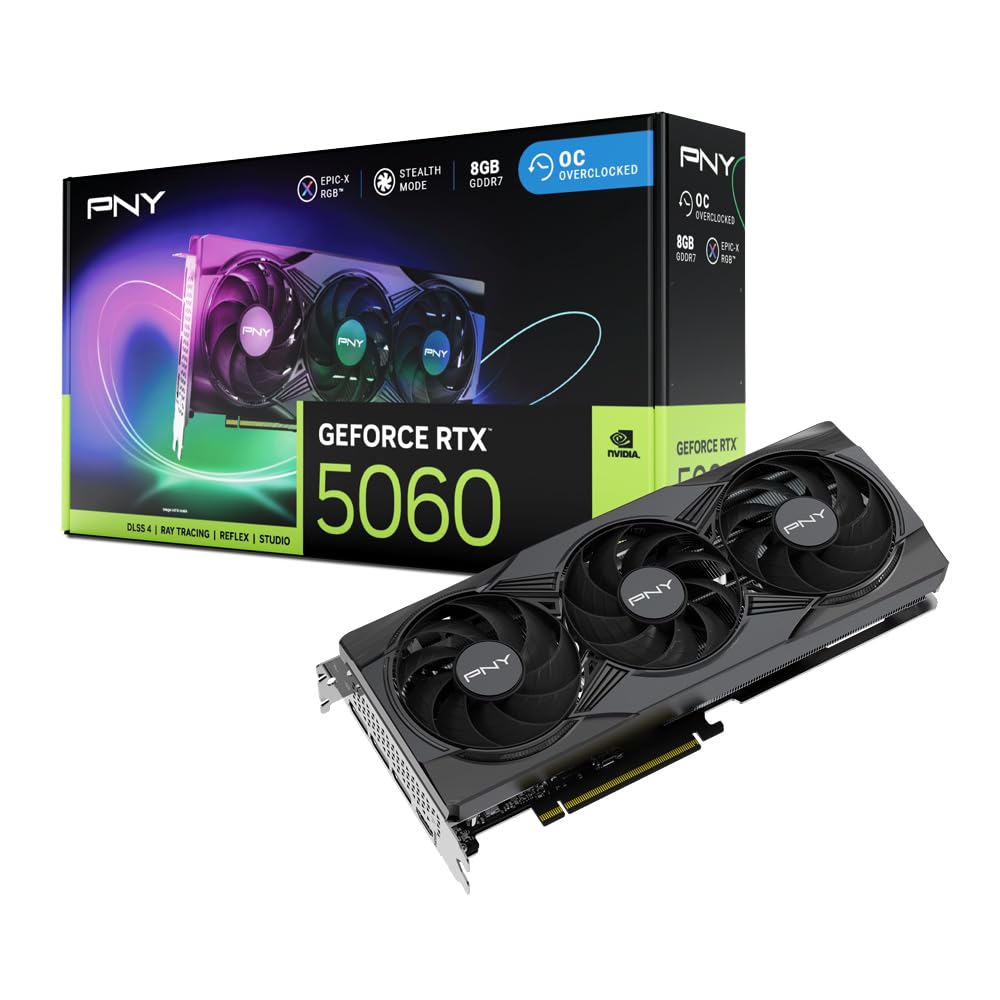
The PNY RTX 5060 Epic-X is the ARGB-equipped sibling of the GIGABYTE 5060, sharing the same 8GB GDDR7 memory and Blackwell NVENC encoder but adding customizable RGB lighting. The triple-fan cooling design is overkill for this power class, resulting in exceptionally quiet operation during encode tasks. The boost clock is slightly lower at 2280 MHz, but real-world performance is nearly identical.
Customer reviews highlight the card’s great price-to-performance ratio and easy installation. One user reported 74 FPS on a PC with the correct driver update, and another noted 100+ FPS on almost every game at high settings. The card is small enough for all mid-tower cases and draws relatively low power, making it suitable for PSUs in the 500W-600W range.
The ARGB lighting is a nice touch for streamers who want their build to look good on camera, but the core encoding performance is identical to the GIGABYTE 5060. The triple-fan design is purely cosmetic and noise-reducing — the card does not generate enough heat to benefit from three fans. For streamers who prioritize aesthetics alongside encoding, this is a solid choice.
Why it’s great
- Customizable ARGB lighting enhances stream build aesthetics
- Blackwell NVENC delivers efficient encoding at low power
- Triple-fan design runs very quietly during encodes
Good to know
- 8GB VRAM may limit texture settings in heavy titles
- Triple-fan cooler is overkill for this power class
10. ASRock Intel Arc B580 Challenger 12GB OC

The ASRock Intel Arc B580 Challenger is a dark horse in the streaming market. It packs 12GB GDDR6 on a 192-bit bus with a boost clock of 2740 MHz and Intel’s Xe2-HPG architecture. The real draw is Intel’s AV1 encoder, which performs exceptionally well for the price — it rivals NVIDIA’s NVENC in quality for AV1 encodes. The card requires a 650W PSU and Resizable BAR support for full performance.
Customer reviews confirm that this card handles 1440p gaming at 60+ FPS on ultra settings and some games reach 165 Hz. One user noted that the power draw is under 100W at 60 Hz and under 150W under full load, making it very efficient for a mid-range card. Another reviewer reported excellent 1080p performance with 120+ FPS on high settings.
The main caveat is that the card loses significant performance without Resizable BAR support — it needs a 10th-gen Intel CPU or newer. The driver installation process is also more involved than NVIDIA or AMD. However, for streamers on a strict budget who want modern AV1 encoding, this Intel Arc card delivers encode quality that punches above its price class.
Why it’s great
- Excellent AV1 encode quality for the price point
- 12GB VRAM provides ample buffer for 1440p streaming
- Very power efficient, drawing under 150W at full load
Good to know
- Requires Resizable BAR support for full encoding performance
- Driver installation process is more involved than NVIDIA or AMD
11. XFX Speedster SWFT210 Radeon RX 7600 8GB

The XFX Speedster SWFT210 RX 7600 is the most budget-friendly card in this lineup, featuring 8GB GDDR6 on a 128-bit bus with a boost clock of 2655 MHz. It uses AMD’s RDNA 3 VCN encoder, which supports AV1 encoding. The dual-fan XFX SWFT cooling solution keeps the card compact and quiet. It requires only a single 8-pin power connector and draws relatively low power.
Customer reviews show that this card is a solid performer for 1080p streaming. One user upgraded from a GTX 1650 Super and reported excellent VR performance in titles like Half-Life Alyx. Another user on Arch Linux found the swap from an Nvidia card to be easy with stable open-source drivers. However, some users noted that the card runs in the 80°C range before a driver update, which settled to upper 70s after updating.
The 8GB VRAM and 128-bit memory bus are the limiting factors here. This card is best suited for 1080p streaming with modest in-game settings. It will struggle with 1440p streaming in modern titles. However, for streamers who are just starting out and want AV1 capability on a tight budget, the RX 7600 offers the most affordable path to modern encoding.
Why it’s great
- Most affordable path to AV1 encoding with RDNA 3 VCN
- Compact dual-fan design fits in smaller cases
- Single 8-pin power connector simplifies installation
Good to know
- 8GB VRAM and 128-bit bus limit 1440p streaming potential
- Can run hot — requires driver update for optimal temps
FAQ
Does NVENC or AMD VCN produce better streaming quality?
How much VRAM do I need for 1080p and 1440p streaming?
Is Intel Arc good for streaming?
Should I get an NVIDIA or AMD GPU for streaming?
Final Thoughts: The Verdict
For most users looking for the best gpu for streaming, the winner is the PNY RTX 5070 Epic-X because it combines a modern Blackwell NVENC encoder with 12GB GDDR7 memory and excellent thermal management at a price that balances performance and value. If you want the absolute best AV1 encode quality with 16GB VRAM, grab the Sapphire Nitro+ RX 9070 XT. And for a budget streaming build that still delivers modern AV1 encoding, nothing beats the ASRock Intel Arc B580 Challenger at its price point.