
Choosing a battery generator to pair with solar panels isn’t about picking the biggest number on the box — it’s about matching inverter type, charge controller limits, and cycle life to your actual appliances and sun hours. A mismatch here means your fridge stays cold in the morning but the station shuts down at noon when clouds roll in.
I’m Mohammad Maruf — the founder and writer behind Drink4Good. I’ve analyzed over 200 portable power stations across 15 brands, comparing LiFePO4 cycle ratings, MPPT voltage ranges, and real-world AC-to-solar efficiency ratios to separate spec-sheet hype from daily use reliability.
This guide ranks eleven models specifically tested for solar charging compatibility and sustained AC output, helping you match the right inverter and capacity to your backup needs without overspending. The best generator for solar backup depends entirely on whether you need a lightweight 2kWh unit for weekend camping or a 3kWh-plus expandable system for multi-day home outages.
How To Choose The Best Generator For Solar Backup
Start with your must-run appliances. A 1200W refrigerator draws about 150W average but spikes to 800W on compressor startup. That surge determines the inverter rating you need, while the daily watt-hour consumption dictates battery capacity. Solar generators differ from gas units in one critical way: your daily recharge rate depends on panel wattage and sunlight, not a fuel tank. So battery capacity and solar input must be matched — a 2048Wh station with only 200W solar input takes over 10 hours to recharge, which is useless for multi-day outages.
Battery Chemistry and Cycle Life
LiFePO4 (lithium iron phosphate) is the standard for solar backup because it handles 3000 to 4000+ full discharge cycles before degrading to 80% capacity. That translates to 8 to 10 years of daily use. Avoid older NMC (nickel manganese cobalt) chemistries in this price tier — they wear out at roughly 500 to 800 cycles and are less thermally stable when charging in hot garages or direct sun.
Inverter Type and Continuous Output
Every unit on this list uses pure sine wave inversion, which mimics grid power. This is non-negotiable for running refrigerators, CPAP machines, and smart home electronics. The continuous wattage rating (e.g., 2400W vs. 3600W) determines whether you can run a microwave, coffee maker, or window A/C simultaneously. Surge capacity — the peak wattage for 1 to 3 seconds — matters for motor startup on appliances like well pumps and refrigerators. Look for at least 2x continuous for those loads.
Solar Input (MPPT) and Charging Speed
The maximum solar input wattage and voltage range dictate how fast you can recharge from panels. A 1200W solar input paired with a 2048Wh battery equals roughly 1.7 hours to full in ideal sun — that’s the sweet spot for home backup. Lower-end models with 200W solar input are only practical for trickle maintenance. Also check the open-circuit voltage limit: most charge controllers accept up to 50V from a single panel string, but higher-end units handle 150V for longer series strings.
Expandability and Port Configuration
If you plan to add capacity later, check whether the station accepts external battery packs via a proprietary connector (like BLUETTI’s B300 or EcoFlow’s extra battery) or a generic voltage regulator. Some stations expand from 2kWh to 8kWh or more. Port count matters less than having at least two high-current USB-C (100W PD) for laptops and a 30A RV outlet if you tow a camper. UPS switchover speed — <20ms — keeps desktop computers and medical devices running without reboot.
Quick Comparison
On smaller screens, swipe sideways to see the full table.
| Model | Category | Best For | Key Spec | Amazon |
|---|---|---|---|---|
| AFERIY P210 | Mid-Range | Best Overall Value | 2400W / 2048Wh | Amazon |
| Dabbsson 2000L | Mid-Range | Fast AC Charging Speed | 2200W / 2048Wh / 3300W peak | Amazon |
| EcoFlow Delta 2 + 220W Panel | Mid-Range | Solar Kit Bundled | 1800W / 1024Wh | Amazon |
| BLUETTI AC200L | Mid-Range | High Expandability | 2400W / 2048Wh expandable to 8192Wh | Amazon |
| Jackery Explorer 2000 v2 | Mid-Range | Lightweight 2kWh Model | 2200W / 2042Wh / 39.5 lbs | Amazon |
| Anker SOLIX C2000 Gen 2 | Mid-Range | Ultra-Fast Recharge | 2400W / 2048Wh / 4000W peak | Amazon |
| DJI Power 2000 | Premium | Professional Use | 3000W / 2048Wh / 4000W peak | Amazon |
| PECRON F3000LFP | Premium | High Capacity Value | 3600W / 3072Wh | Amazon |
| Jackery HomePower 3000 | Premium | Compact 3kWh Unit | 3600W / 3072Wh / CTB tech | Amazon |
| ABOK Ark3600 | Premium | Wheeled Portable Station | 3600W / 3840Wh expandable to 11520Wh | Amazon |
| VTOMAN FlashSpeed Pro 3600 | Budget-Friendly | Best Capacity for Price | 3600W / 3096Wh / 6000W surge | Amazon |
In‑Depth Reviews
1. AFERIY P210 Portable Power Station

The AFERIY P210 delivers a pure sine wave 2400W inverter with 4800W surge, paired with a 2048Wh LiFePO4 battery rated for 3500+ cycles. Its 16-port array includes six AC outlets, dual 100W USB-C, and a dedicated XT60 DC port capable of 300W output, making it the most versatile mid-range station for home backup and RV use. The unit weighs 48.5 pounds, which is 20 percent lighter than typical 2kWh stations, and includes built-in Bluetooth for the AFERIY app to monitor consumption and adjust charging schedules.
Solar input supports up to 1200W via MPPT, enabling a full recharge in under two hours with adequate panels. The <10ms UPS switchover keeps sensitive electronics like routers and DVRs running seamlessly during outages. Customer reports confirm it handles a 1200W fridge with no surge issues and recharges from 0 to 100 percent in roughly two hours via AC input.
The 7-year extended warranty — two years longer than the industry standard — and 24/7 support team set this apart for buyers who want long-term coverage. The unit cannot operate below freezing due to LiFePO4 limitations, so it needs indoor placement in cold climates.
Why it’s great
- 3500-cycle LiFePO4 battery with 10-year lifespan
- 2400W continuous pure sine wave output
- 7-year extended warranty included
Good to know
- No solar panel included in base package
- 48.5 lbs requires two hands to carry
- No built-in wheels for rolling transport
2. Dabbsson 2000L Portable Power Station
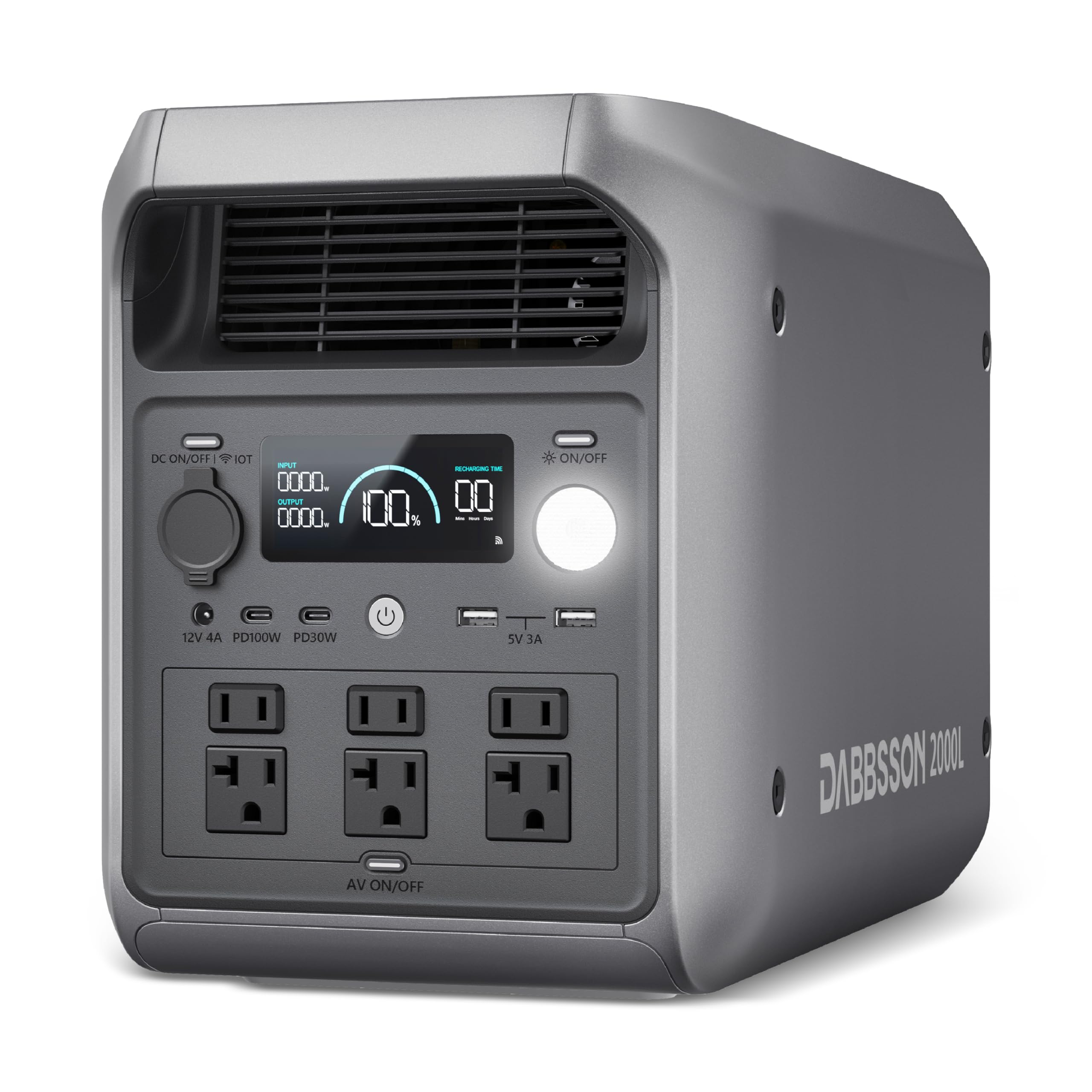
The Dabbsson 2000L uses advanced semi-solid LiFePO4 cells that provide 1.3x longer runtime than standard 2048Wh stations, according to company claims, while keeping the weight at just 41 pounds. Its 2200W continuous output can surge to 3300W for three seconds, which is sufficient to start most 15000 BTU RV air conditioners and refrigerator compressors. The AC charging speed is exceptional — full recharge in one hour via a standard wall outlet, which is twice as fast as many competitors in the same capacity class.
Solar input supports up to 800W through MPPT, making it compatible with four 200W panels in series. The <15ms EPS switch protects computers and NAS drives from data loss during power transitions. Buyer feedback confirms it runs a mini fridge, coffee maker, and e-bike charger simultaneously without tripping the inverter.
The 5-year warranty (3 standard plus 2-year extended after registration) provides adequate coverage, though the plastic housing feels slightly less robust than metal-frame alternatives. The smartphone app manages charging speed, schedules, and real-time monitoring over Wi-Fi or Bluetooth.
Why it’s great
- One-hour full AC recharge speed
- 3300W surge for large appliance startup
- Lightweight 41 lbs for 2kWh capacity
Good to know
- Plastic housing feels less premium
- Propietary app login required for controls
- Extended warranty requires online registration
3. EF ECOFLOW Delta 2 with 220W Solar Panel

EcoFlow bundles a 220W bifacial solar panel with the Delta 2 station, which captures up to 25 percent more energy from reflected light compared to standard monofacial panels. The station itself packs 1024Wh of LFP battery with 3000 cycles and a 1800W pure sine wave inverter capable of powering 90 percent of household appliances. Its expandable capacity — add up to two extra batteries for 3kWh total — makes it suitable for growing backup needs.
The 500W solar input allows a full recharge in 3 to 4 hours with the included panel in direct sun. Customer reports show the panel pulling 175W at 8:15 AM in Phoenix, Arizona, demonstrating real-world efficiency. The unit weighs 27 pounds, making it the most portable complete solar generator kit for camping and tailgating.
The smartphone app provides full monitoring and control, though some users report connection bugs that cause charge limit settings to revert. The included 220W panel uses elastic bands for storage that are somewhat temperamental over time, but the overall build quality remains high.
Why it’s great
- 220W bifacial solar panel included
- Expandable from 1kWh to 3kWh
- Lightweight 27 lbs station weight
Good to know
- Minor app connection bugs reported
- 1kWh base capacity limited for long outages
- Solar panel elastic bands wear over time
4. BLUETTI AC200L Portable Power Station

The BLUETTI AC200L upgrades the AC200MAX with 2400W output (200W more) and expands to a massive 8192Wh using two B300K or B210 expansion batteries. Its 2400W AC charging input refills the base 2048Wh from 0 to 80 percent in just 45 minutes. The 30A RV port provides direct plug-and-play power for travel trailers, eliminating the need for a separate adapter.
Solar input reaches 1200W via MPPT, enabling a full recharge in 1.7 to 2.2 hours under ideal conditions. The 11-port array includes a 48V/8A DC port for efficient RV battery charging through the D40 voltage regulator. Customer reports confirm the unit powers a 64-inch OLED TV, refrigerator, modem, router, and security cameras for about 10 hours on a single charge with the expanded battery setup.
The 5-year warranty and 3000-cycle LiFePO4 battery provide long-term reliability. The unit weighs 61.4 pounds, which is heavy but manageable with the integrated handles. The proprietary AC charging adapter uses a specialized connector for safety, so losing it means a specific replacement is required.
Why it’s great
- 45-minute fast recharge to 80 percent
- Expands to 8192Wh total capacity
- 30A RV port included
Good to know
- Heavy 61.4 lbs base unit
- Proprietary AC power cord
- Expansion batteries sold separately
5. Jackery Explorer 2000 v2

The Jackery Explorer 2000 v2 uses Cell-to-Body technology borrowed from EV manufacturing, reducing its weight to 39.5 pounds — 41 percent lighter than typical 2kWh LiFePO4 stations. The 2042Wh capacity and 2200W inverter provide enough juice to run a refrigerator for 21 hours based on customer reports. Its compact footprint (13.2 x 10.4 x 11.5 inches) fits easily under a counter or in a car trunk.
AC fast charging reaches 80 percent in 66 minutes, with an Emergency Super Charging mode via the app that achieves full charge in 102 minutes. Silent Charging mode keeps fan noise below 30 dB, which is barely audible in a bedroom. The 20ms UPS switchover is UL1778 certified, guaranteeing clean transfer during blackouts.
Buyers note that solar charging with a single 200W panel is slow — expect 6-plus hours for a full recharge — so pairing with higher-wattage panels or the optional 400W array is recommended. The app provides remote monitoring and charge scheduling, though some users prefer the simplicity of the front-panel display.
Why it’s great
- Class-leading 39.5 lbs weight for 2kWh
- UL1778 certified UPS backup
- Silent charging mode under 30 dB
Good to know
- Slow solar recharge with 200W panels
- No expansion battery option
- App required for Emergency Super Charging
6. Anker SOLIX C2000 Gen 2
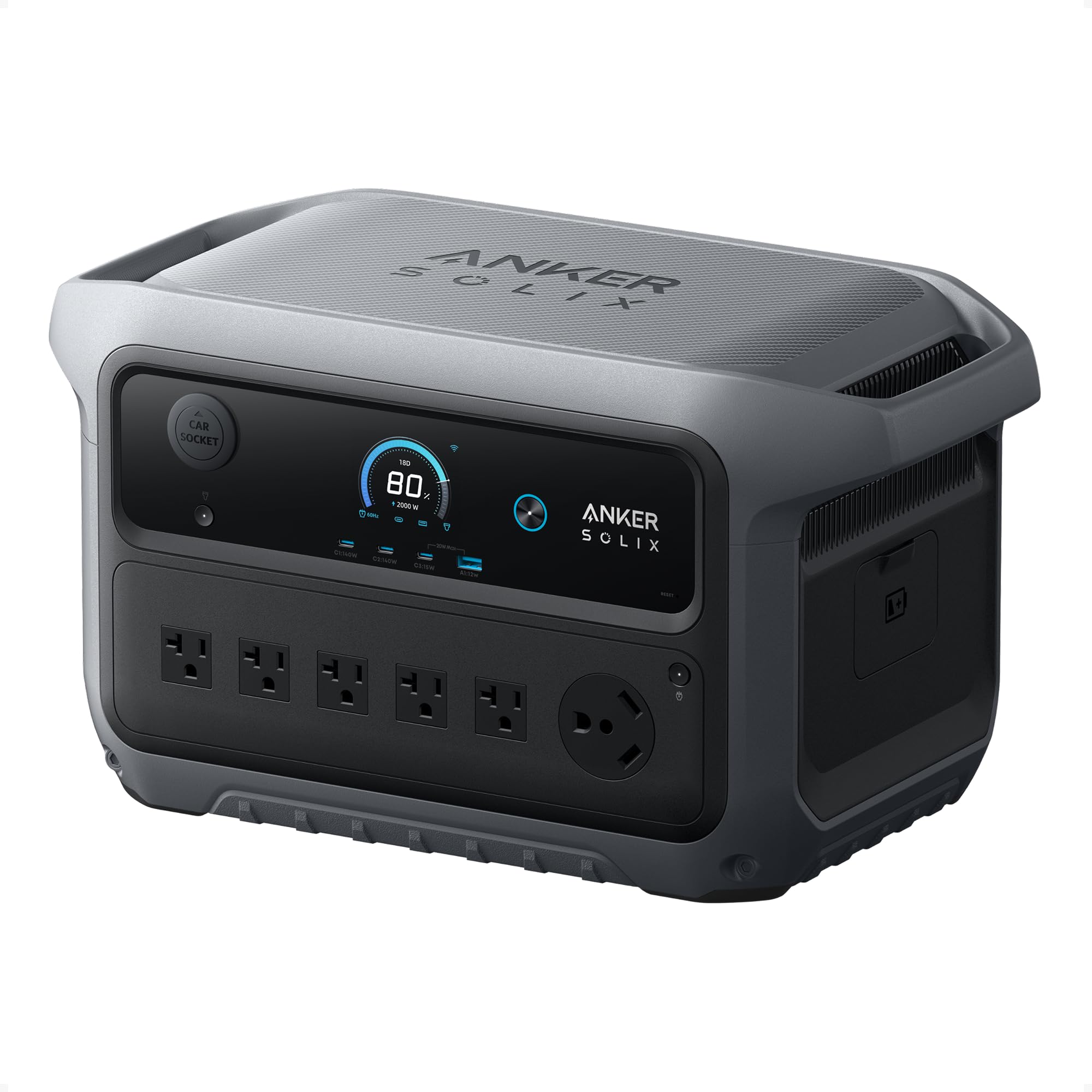
Anker’s SOLIX C2000 Gen 2 achieves a full 100 percent recharge in 58 minutes via AC input, which is among the fastest for a 2048Wh station at this price point. Its 2400W continuous output peaks at 4000W, enough to handle most window and RV air conditioners. The standby power draw is only 9W, allowing it to power a dual-door refrigerator for up to 32 hours on a single charge.
The unit expands to 4kWh with an optional expansion battery, extending fridge runtime to 64 hours. Six recharging methods include AC, solar (800W), and a high-speed 800W alternator charger that fills the station in 3 hours from a vehicle — 8x faster than a standard 12V socket. At 41.7 pounds and 18.1 x 9.8 x 10.1 inches, it’s 25 percent lighter and 29 percent smaller than comparable 2kWh stations.
Customer feedback highlights the robust build quality and reliable support from Anker’s service team. The lack of a printed manual is a minor nuisance, but the quick-start guide covers essential setup. Prices fluctuate frequently, so timing the purchase during sales events yields significant savings.
Why it’s great
- 58-minute full AC recharge time
- 4000W peak for large appliances
- 800W alternator charging from vehicle
Good to know
- No printed manual in box
- Expansion battery sold separately
- Price varies widely with promotions
7. DJI Power 2000
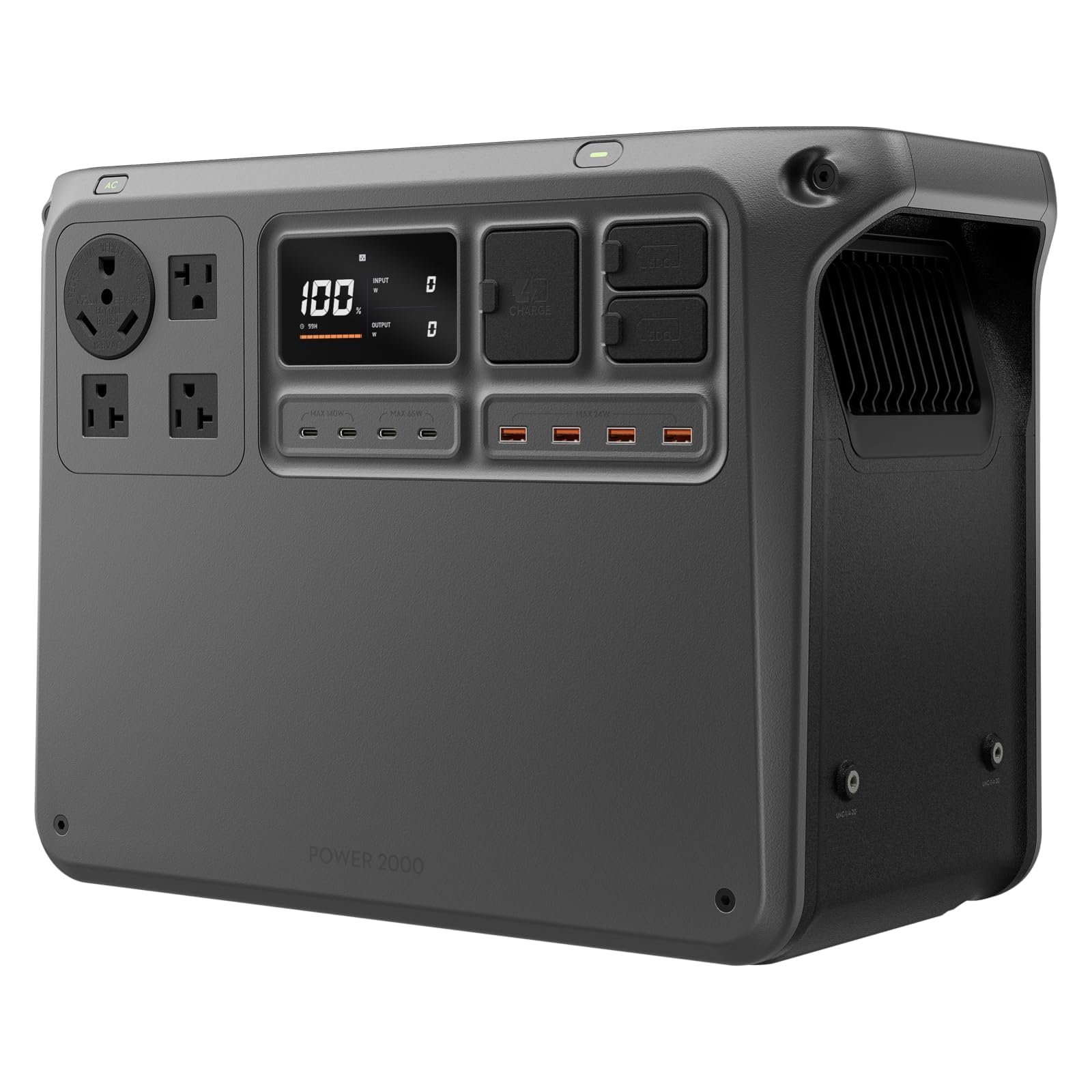
The DJI Power 2000 delivers a 3000W continuous output — the highest among 2kWh-class stations — with a 4000W surge capacity, running 99 percent of household appliances including kettles, cookers, and electric saws. Its 2048Wh LFP battery supports expansion up to 22.5kWh using proprietary add-on batteries, providing enough stored energy for 4 to 6 days of essential home backup. The 0 to 80 percent recharge takes just 55 minutes via AC input.
Safety features include sub-nano coating on the battery cells and a flame-retardant housing, making it suitable for wet or rugged outdoor conditions. The unit operates as low as 30 dB at night, which is whisper-quiet for RV sleep environments. The 15-port layout includes dual full SDC ports for simultaneous high-current output to multiple devices.
The DJI Home app provides full remote control and monitoring, though some users report unexpected sleep mode behavior that temporarily disables output. Proper firmware updates via the app typically resolve this. The lack of built-in MPPT or car charging modules means a separate adapter is needed for solar input, adding cost.
Why it’s great
- 3000W continuous output in a 2kWh class
- Expands to 22.5kWh total capacity
- Sub-nano coating for wet conditions
Good to know
- Solar MPPT module not built-in
- Occasional sleep mode bug
- Proprietary expansion connectors
8. PECRON F3000LFP
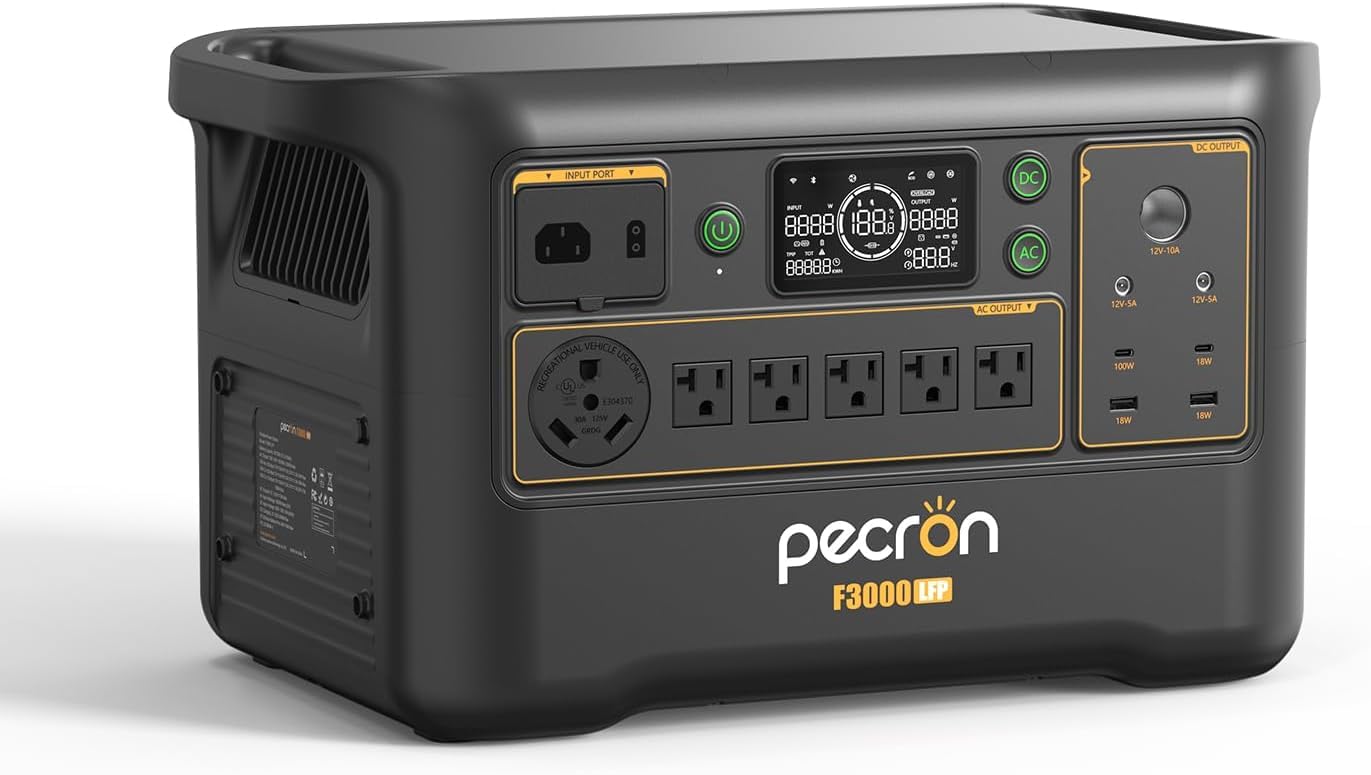
The PECRON F3000LFP offers 3072Wh of LiFePO4 storage paired with a 3600W pure sine wave inverter, delivering enough capacity for 2 to 3 days of home essentials during an outage. Its 1800W AC input recharges from 0 to 100 percent in roughly 2 hours — 30 percent faster than many 3kWh competitors. The 13-port layout includes six AC outlets, two 100W USB-C for laptops, and two DC 5525 outputs for smaller electronics.
Solar input accepts up to 1600W across a 25V to 120V range, allowing flexible panel configurations. Customer feedback confirms over 420W solar input from a single 400W panel, indicating efficient MPPT tracking. The UPS mode switches in 8 to 20ms, protecting connected computers and medical devices during outages. The station weighs 63.3 pounds, which is reasonable for a 3kWh unit but still requires two hands.
The 2+3 year warranty and responsive customer support add peace of mind, though the fan runs audibly during high-power charging. The proprietary XT120-M cascade cable for expansion batteries is sold separately, which is an added cost for those planning to scale capacity.
Why it’s great
- 3kWh capacity at competitive price point
- 1800W AC input for 2-hour full charge
- 1600W solar input capability
Good to know
- Fan noise noticeable during fast charging
- Expansion cable sold separately
- App requires account login
9. Jackery HomePower 3000
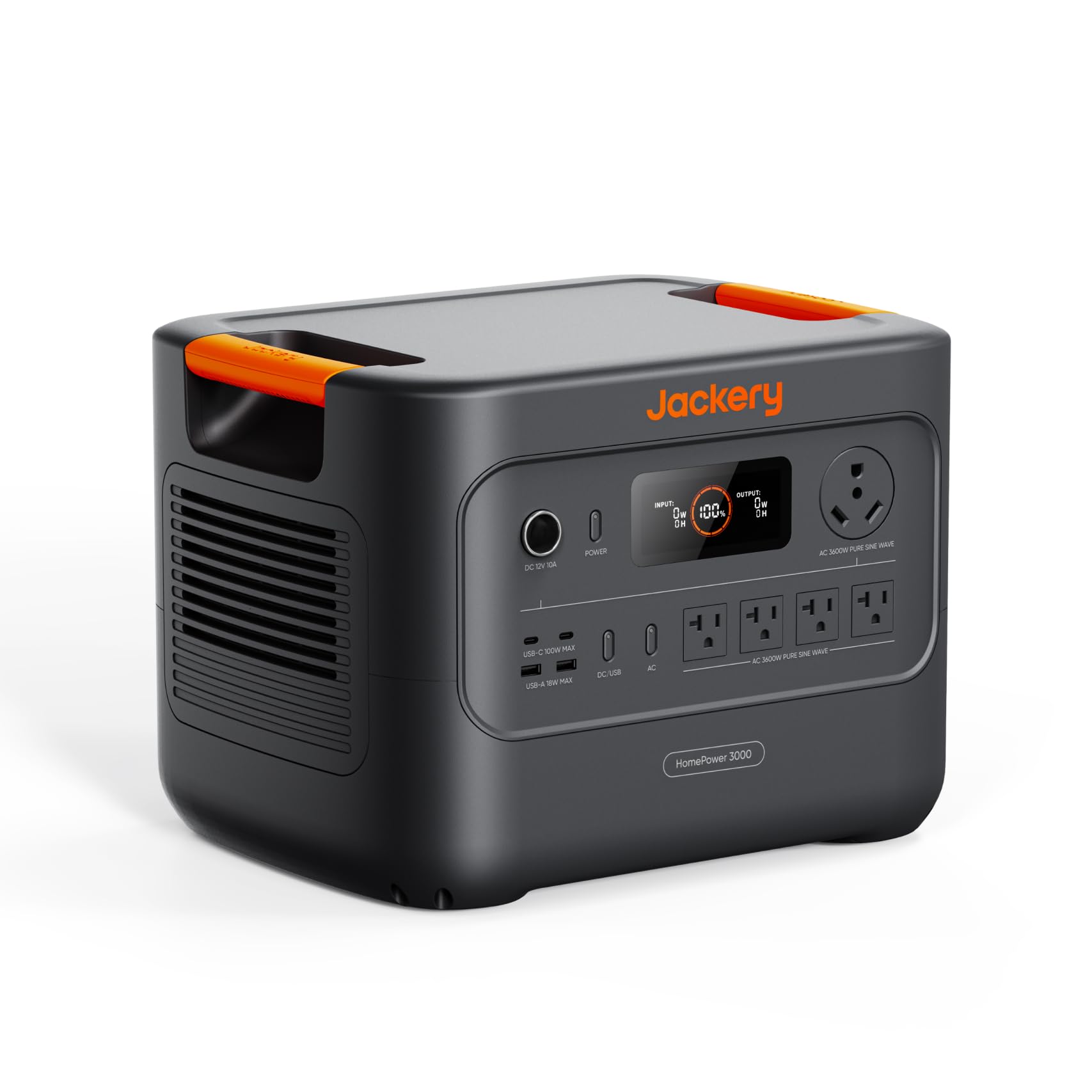
Jackery applies its CTB (Cell-to-Body) technology to a 3kWh station for the first time, making the HomePower 3000 47 percent smaller and 43 percent lighter than comparable 3kWh units at 59.5 pounds. The 3600W continuous output surges to 7200W, handling heavy startup loads of RV air conditioners and well pumps. The LFP battery delivers 4000 cycles to 70 percent capacity retention, offering a decade-plus service life.
Charging options include hybrid AC+DC that reaches full in 1.7 hours, or AC-only in 2.2 hours. The dual 100W USB-C ports and built-in TT-30 RV port eliminate the need for adapters on the road. The ≤20ms UPS switch is UL-certified for medical refrigerators and security systems. Customer reports from dry camping in a 30-foot travel trailer confirm it runs the fridge, furnace fan, TV, and microwave on propane while recharging with 200W solar panels.
A notable buyer warning: Jackery only honors the warranty for units purchased directly from their website, not Amazon. Verify the purchase channel if warranty coverage is critical. The unit’s 60-pound weight is manageable with two handles but still requires storage near the point of use.
Why it’s great
- Smallest 3kWh station on the market
- 7200W surge for A/C startup
- 4000-cycle LFP battery
Good to know
- Warranty only valid for direct purchases
- No expansion battery option available
- Heavy at 59.5 lbs despite CTB
10. ABOK Ark3600
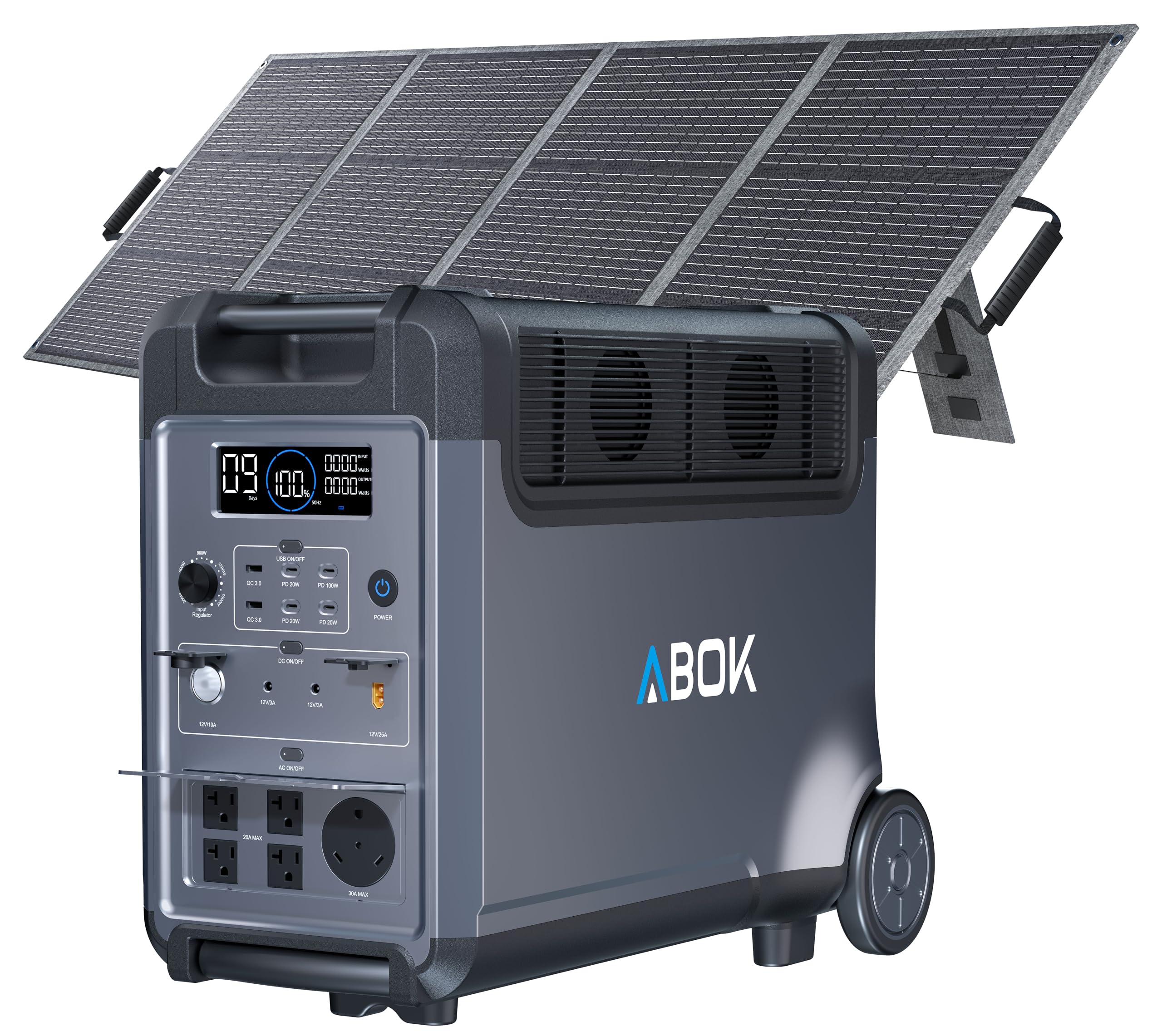
The ABOK Ark3600 stands out with its 3840Wh base capacity — the largest among single-unit stations in this review — expandable to 11520Wh with extra batteries. A 3600W rated output and 4500W peak power handle 99 percent of household appliances, including simultaneous use of a wet vac, heat gun, and hammer drill. The telescoping handle and durable wheels make its 92-pound weight manageable for moving around a property.
AC charging reaches full in roughly 3 hours, while combined AC+PV input (1500W AC + 2000W solar) drops that to 1.29 hours. The 15-output port set includes a 30A RV outlet, three 100W USB-C ports, and an XT60 high-current DC port. Bluetooth app monitoring provides real-time power flow visualization and charge limit control. Customer reports confirm 720W peak solar input with 800W of panels, running a fridge continuously plus intermittent TV and fan loads.
The 30 percent Residential Clean Energy Tax Credit may apply for qualified solar electric property costs, reducing effective outlay. The unit requires an environment above 32°F to begin charging, which limits winter use in unheated spaces. The 2+3 year warranty and responsive customer service mitigate the brand’s lower name recognition compared to Jackery or EcoFlow.
Why it’s great
- 3840Wh base capacity largest in class
- Wheeled design for easy transport
- Potential 30% federal tax credit eligibility
Good to know
- 92 lbs heavy despite wheels
- No charging below 32°F
- Brand less established than competitors
11. VTOMAN FlashSpeed Pro 3600
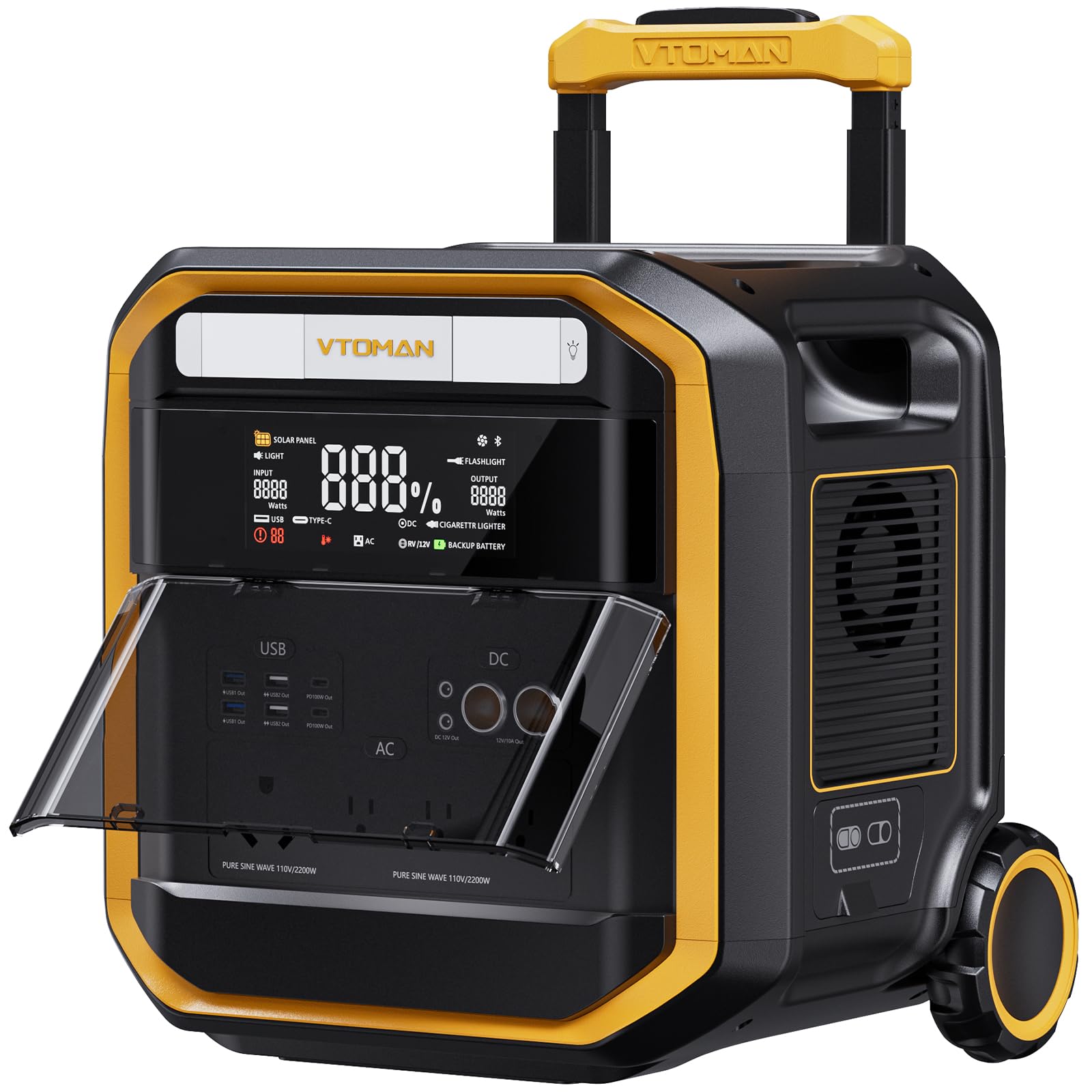
The VTOMAN FlashSpeed Pro 3600 delivers 3096Wh of LiFePO4 storage with a 3600W inverter that surges to 6000W, making it the highest surge capacity in this lineup. The 2-hour AC full recharge is competitive with premium models, and the 800W solar input allows decent off-grid top-ups. Its 3000 cycles to 80 percent capacity ensure a 10-year lifespan under normal daily use.
The 14-output port set includes four AC outlets (two 20A, one 30A RV), dual 100W USB-C, and two car outlets. The <20ms UPS switch protects connected electronics. An integrated pull-up handle and large wheels make the 83.8-pound unit mobile around a garage or campsite. Customer reviews report powering lights, heat, a DVD player, and a coffee pot simultaneously during outages, with the unit recharging in roughly one hour from AC.
Some users note the DC auto-shutdown feature can cycle off when powering a fridge with variable compressor current, and the USB-C ports feel slightly loose. The buttons on the control panel are prone to accidental presses during transport. At this price tier, the capacity-to-cost ratio is the best in the roundup.
Why it’s great
- Highest surge capacity at 6000W
- 3096Wh at budget-friendly price
- Wheeled design for mobility
Good to know
- DC port auto-shutdown with fridge cycling
- Control buttons prone to accidental press
- USB-C ports reported slightly loose
FAQ
Can I charge a solar generator from a wall outlet and solar panels at the same time?
How many solar panels do I need to fully recharge a 2kWh station in one day?
Is a 2400W inverter sufficient to run a window air conditioner?
What is the difference between a solar generator and a gas generator for home backup?
Final Thoughts: The Verdict
For most users, the generator for solar backup winner is the AFERIY P210 because it balances 2400W pure sine wave output, 2048Wh LiFePO4 battery with 3500 cycles, and a class-leading 7-year warranty at a mid-range price point that doesn’t sacrifice ports or charging speed. If you want expandable capacity for whole-home backup, grab the BLUETTI AC200L — it scales to 8192Wh and charges in 45 minutes. And for the best capacity-to-cost ratio with built-in wheels, nothing beats the VTOMAN FlashSpeed Pro 3600 for heavy-duty site work or extended RV stays.