
Every guitarist knows the feeling — that first step away from your amp, only to hear the dreaded pop, hum, or signal drop that kills the mood. The promise of wireless freedom has been dangled for years, but the fear of lag, interference, and flat tone has kept many players tethered to a cheap instrument cable. That era is over.
I’m Mohammad Maruf — the founder and writer behind Drink4Good. I’ve spent years digging into the technical guts of audio hardware, sorting through claims about frequency bands, latency specs, and battery chemistry to separate the gear that actually works from the marketing hype.
Whether you are a bedroom player, a weekend performer, or a touring professional, choosing the right unit is critical to your sound and stage confidence. This guide cuts through the noise to offer the most practical and reliable best guitar wireless systems for every playing situation.
How To Choose The Best Guitar Wireless Systems
Buying a wireless guitar system means balancing three main factors: audio quality, range, and interference immunity. A bad choice can add a metallic sheen to your tone or cut out mid-solo. Here is how to evaluate the specs that actually matter.
Frequency Band: 5.8GHz is the New Standard
The 2.4GHz band is crowded with WiFi routers, Bluetooth devices, and even microwave ovens. Systems operating at 5.8GHz use a much cleaner section of the spectrum, resulting in fewer dropouts and more stable signal transmission during a live set. If you play in an urban area or on a stage with other wireless gear, 5.8GHz is the only safe choice.
Latency: Under 6ms is Inaudible
Human ears can detect a delay of roughly 10 to 15 milliseconds between plucking a string and hearing the amplified note. A quality wireless system keeps latency at or below 6ms, making it feel identical to a cable. Anything over 10ms will feel sluggish and throw off your timing, especially during fast runs.
Battery Life and Charging Convenience
Look for a minimum of five hours of continuous playtime on a full charge. A charging case that stores and powers the transmitter and receiver between uses is a massive convenience, eliminating the risk of dead batteries right before a soundcheck. Systems that use standard USB-C charging are also easier to power up between sets.
Compatibility with Active and Passive Pickups
Some wireless transmitters are designed only for passive pickups and will distort or clip when used with high-output active basses or guitars. A switchable active/passive input mode ensures the system handles the full dynamic range of your instrument without adding noise or distortion. Always check this before buying if you own an active pickup guitar.
Quick Comparison
On smaller screens, swipe sideways to see the full table.
| Model | Category | Best For | Key Spec | Amazon |
|---|---|---|---|---|
| Fender Telepath | Premium | Live performance, pro reliability | 5.8GHz, 8-hour battery | Amazon |
| Positive Grid Spark LINK | Mid-Range | Spark amp ecosystem, home practice | 2.4GHz, under 3ms latency | Amazon |
| Xvive A58 | Premium | Onstage reliability, active pickups | 5.8GHz, 100ft range | Amazon |
| NUX C-5RC | Mid-Range | Sound quality, charging case value | 5.8GHz, 24-bit audio | Amazon |
| LEKATO JW-06 | Budget | Entry-level, portable storage | 5.8GHz, 5000mAh case | Amazon |
| Line 6 G10TII | Budget | Line 6/Yamaha amp integration | 2.4GHz, 7-hour battery | Amazon |
| Enya Nova Go Sonic | Specialty | Integrated wireless guitar rig | Carbon fiber, onboard speaker | Amazon |
In‑Depth Reviews
1. Fender Telepath Wireless System
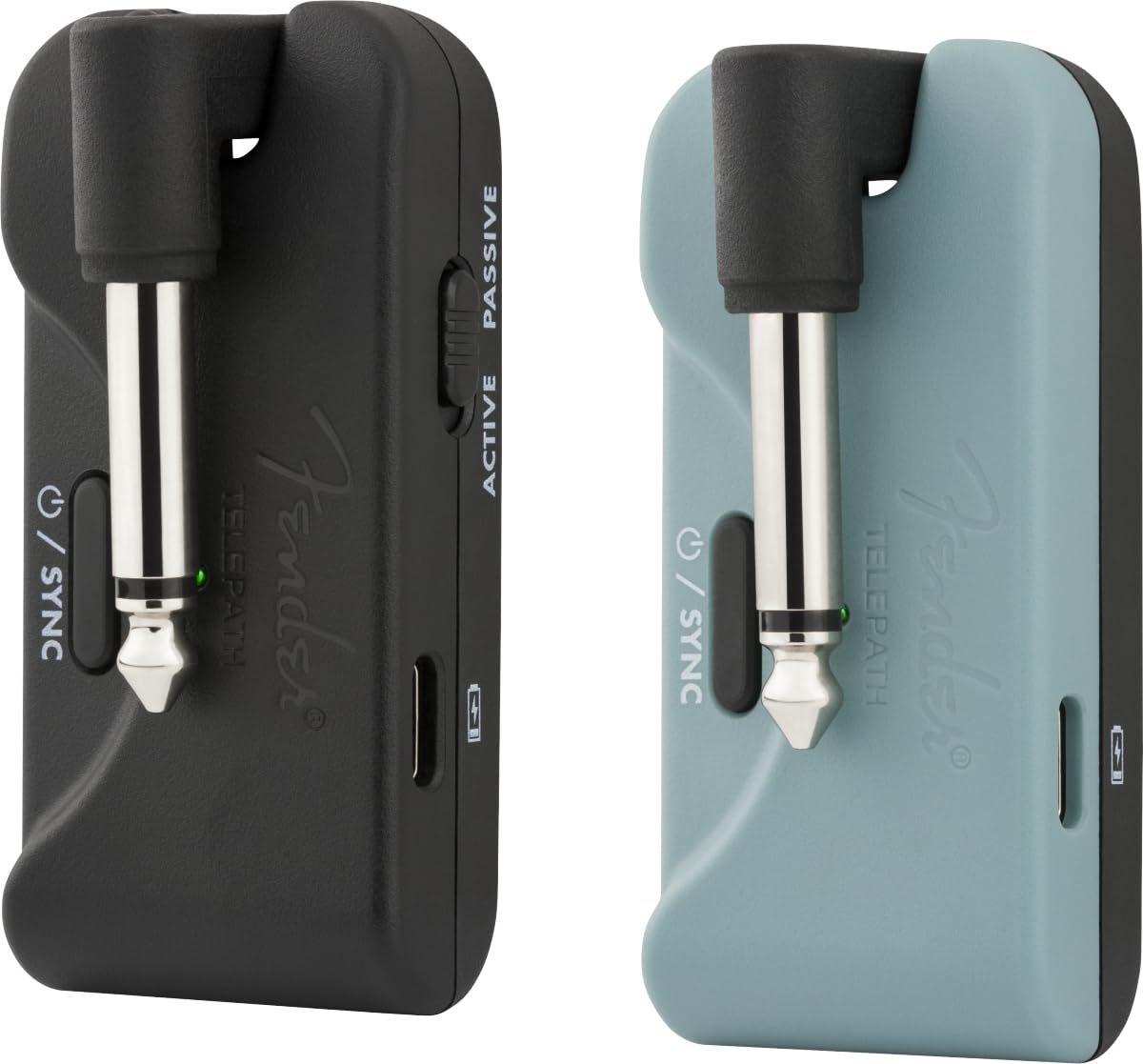
The Fender Telepath operates on the 5.8GHz band, side-stepping the interference that plagues 2.4GHz systems in crowded venues. It delivers a full-frequency wireless signal with just 4ms of latency, meaning your touch and tone remain completely transparent. The unit auto-pairs in seconds and includes an active/passive switch, so it handles everything from a vintage Strat to a high-output active bass without distortion.
Battery life is a class-leading eight hours from a two-hour charge, which covers a full day of rehearsals and a show without reaching for a USB cable. The articulating 1/4-inch plug fits deeply into recessed jacks on guitars like a Telecaster or an SG, a detail many cheaper units overlook. Users consistently report no tone loss or noise floor compared to a standard cable even in RF-dense environments like church worship bands.
The trade-off is the single-unit design — there is no charging case, so you plug each dongle in separately. The range is solid at 70 feet line-of-sight, though one review noted dropouts at 20 feet through a single wall. For stage use where you stay in clear sight of your receiver, this is a non-issue.
Why it’s great
- 8-hour battery and 4ms latency
- 5.8GHz band for interference-free performance
- Articulating plug fits recessed jacks
Good to know
- No charging case included
- Range may drop through walls
2. Xvive A58 Wireless Guitar System
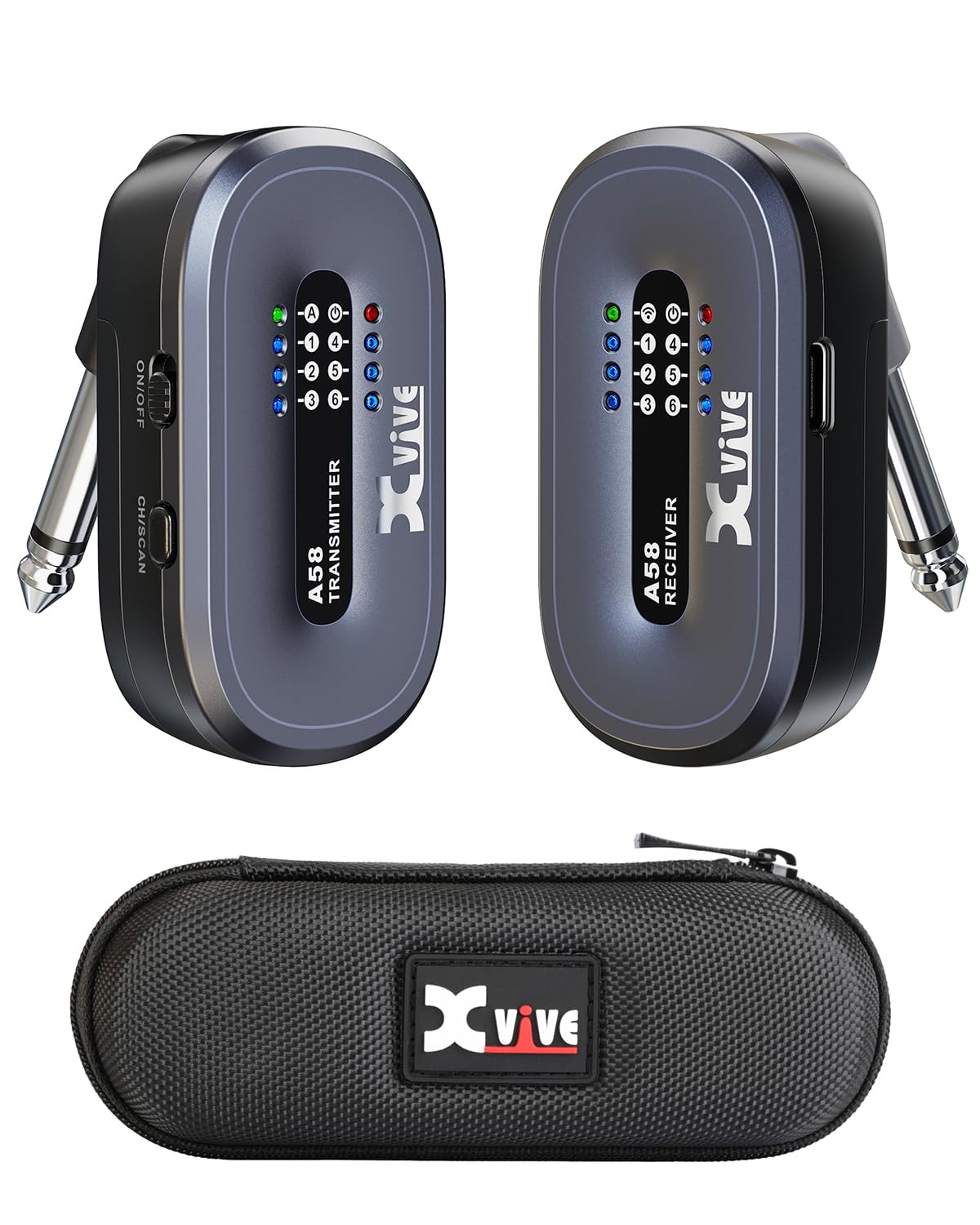
The Xvive A58 uses true diversity reception with four internal antennas and a 5.8GHz carrier, providing a stable link even when you are moving across a large stage. It supports 24-bit/48kHz audio and includes a dedicated input mode for active pickups, eliminating the harsh clipping that can occur when a high-output signal hits a passive-only receiver. The channel scan function automatically finds the cleanest frequency, making setup nearly foolproof.
The system ships with a Y-style USB-C charging cable that can top up both the transmitter and receiver simultaneously. The stated five-hour battery life is realistic based on user reports, and the quick-charge feature gives you an hour of play from a ten-minute charge. The included carrying case is a nice touch for storing the units between sets.
Build quality is a step up from the budget tier, though the oblong shape is less compact than some competitors. A few users note that battery life is closer to four hours than the advertised five, and the recharge time is longer than expected. For gigging musicians who need a reliable 5.8GHz system at a mid-premium price, the A58 is a strong contender.
Why it’s great
- True diversity reception for stable signal
- Active mode prevents input distortion
- Quick-charge feature for emergency top-ups
Good to know
- Battery life slightly under advertised
- Oblong shape less compact than competition
3. NUX C-5RC Wireless Guitar System

NUX packs a 5.8GHz wireless core into this ultra-compact system, delivering 24-bit audio with a cable emulation switch that tames the upper-mid harshness some digital transmitters introduce. The transmitter and receiver auto-match when you power them on simultaneously, cutting the setup time to practically zero. The included charging case holds a full charge for both units and powers them up automatically when stored.
The effective range is rated at 100 feet with clear line-of-sight, and user reports confirm it holds strong through a three-hour gig without a single dropout. The mute function is a practical addition for switching guitars mid-set without sending a pop through the PA. The built quality of the aluminum-alloy housing feels more robust than the plastic shells on many mid-range competitors.
Some users report battery degradation after roughly three years of heavy use, with the cells no longer lasting a full three-hour show. The internal batteries are replaceable with a bit of soldering, but this is not a user-serviceable design. For the price, the C-5RC offers a feature set — 5.8GHz, charging case, cable emulation — that typically costs significantly more.
Why it’s great
- 5.8GHz with cable emulation switch
- Auto-matching and charging case
- Compact aluminum alloy housing
Good to know
- Battery life may fade after a few years
- Batteries not user replaceable
4. Positive Grid Spark LINK Wireless Guitar System

The Spark LINK is built specifically to pair with Positive Grid’s Spark amplifiers, offering seamless integration that makes wireless operation feel like a built-in feature. The 2.4GHz transmission delivers 24-bit/48kHz audio with a remarkably low latency of under 3ms — faster than most 5.8GHz systems on the market. The 110-degree hinged plug is a standout design, angling to fit even deeply contoured guitar bodies without stress on the jack.
Battery life hits six hours on a single charge, and the dual-end USB-C cable lets you charge both the transmitter and receiver from one power source simultaneously. Users report zero hum, static, or signal loss during daily practice and monthly gigs. The 30-minute auto-off feature preserves battery life when you forget to power down after a session.
Out of the Positive Grid ecosystem, the LINK works with any standard guitar amplifier, but its pairing and channel management are less intuitive. A small number of users experienced random signal drops with active pickups from certain brands. The 2.4GHz band is also more susceptible to interference in WiFi-dense environments, though the reported sub-3ms latency makes this a great choice for a controlled home or practice space.
Why it’s great
- Under 3ms latency is best in class
- Hinged plug fits any guitar body
- Seamless pairing with Spark amps
Good to know
- 2.4GHz more prone to WiFi interference
- Some dropout with active pickups reported
5. LEKATO 5.8G Wireless Guitar System with Charging Box
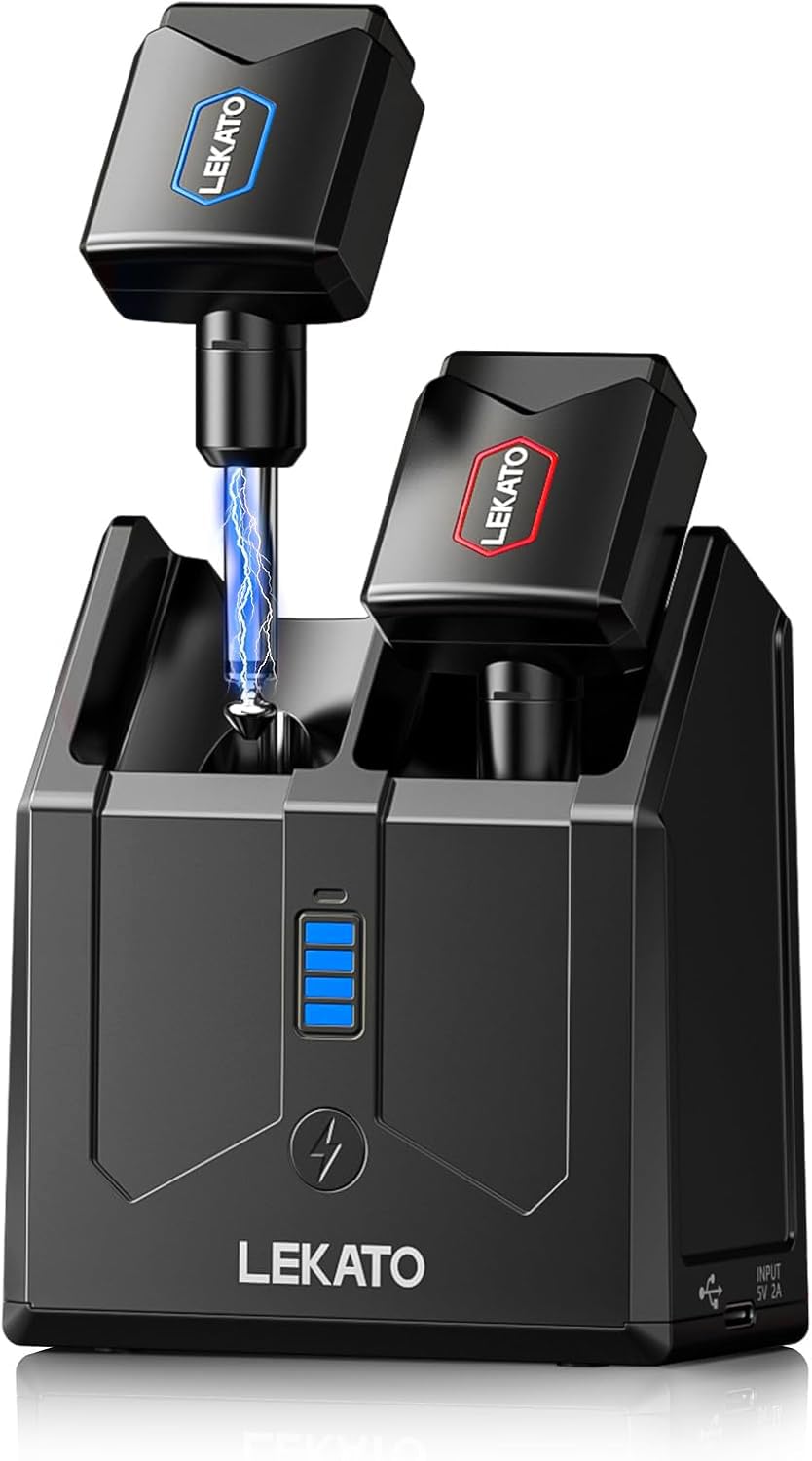
The LEKATO JW-06 brings 5.8GHz technology to an entry-level price point, making it the most affordable way to escape the 2.4GHz noise floor. The transmitter and receiver deliver 24-bit/48kHz audio with latency under 6ms, which is transparent to most players. The stand-out feature is the 5000mAh charging case, which not only stores both dongles but acts as a backup battery for charging a smartphone between sets.
Setup is straightforward — press the pairing buttons on both units, and they lock in across four available channels, allowing up to four guitarists to play wirelessly in the same room without cross-talk. The dongles are small and lightweight, weighing just 10.6 grams each, so they do not strain your guitar’s jack. User reviews consistently mention excellent sound quality with no audible difference from a cable and no lag during fast playing.
Some users experienced a first unit failure within three months, though the replacement performed well. The battery life is around five hours per charge, slightly optimistic but practical for practice sessions and most club sets. The requirement for a 5V/2A USB adapter (not included) is a minor inconvenience. For budget-conscious players who want 5.8GHz reliability, this is the most accessible starting point.
Why it’s great
- 5.8GHz at an entry-level price
- 5000mAh case also charges phones
- 4-channel support for multi-guitar use
Good to know
- Occasional unit failure reported
- 5V/2A charger not included
6. Line 6 G10TII Wireless Transmitter

The G10TII is a dedicated transmitter dongle designed to pair with Line 6 Relay G10 and G10S receivers, as well as Spider V and Yamaha THR-II wireless amps. It is the simplest plug-and-play option on this list — just insert the transmitter into your guitar’s jack and it pairs automatically with a compatible receiver. The 7-hour battery life is among the longest in the category.
Users praise the seamless integration with Yamaha THR-II amplifiers, noting zero latency, no dropouts, and no tone degradation within a 20-foot range. The transmitter charges directly when plugged into a compatible amp’s audio input, eliminating the need for a separate charging cable. For apartment and condo players, this system offers a clean, cable-free practice experience without any setup fuss.
The G10TII is not a full system — it is a transmitter that requires a compatible receiver or amp. If you do not own a Line 6 or Yamaha wireless-capable amp, you will also need to buy a separate receiver. Some users report the dongle breaking easily if bumped, and leaving the transmitter plugged into an active pickup guitar can drain the guitar’s battery. It is also recommended for home and practice use rather than live gigs.
Why it’s great
- 7-hour battery life
- Seamless pairing with Line 6 and Yamaha amps
- Charges through amp input
Good to know
- Requires compatible amp or receiver
- Dongle can break if bumped
7. Enya Electric Guitar Nova Go Sonic
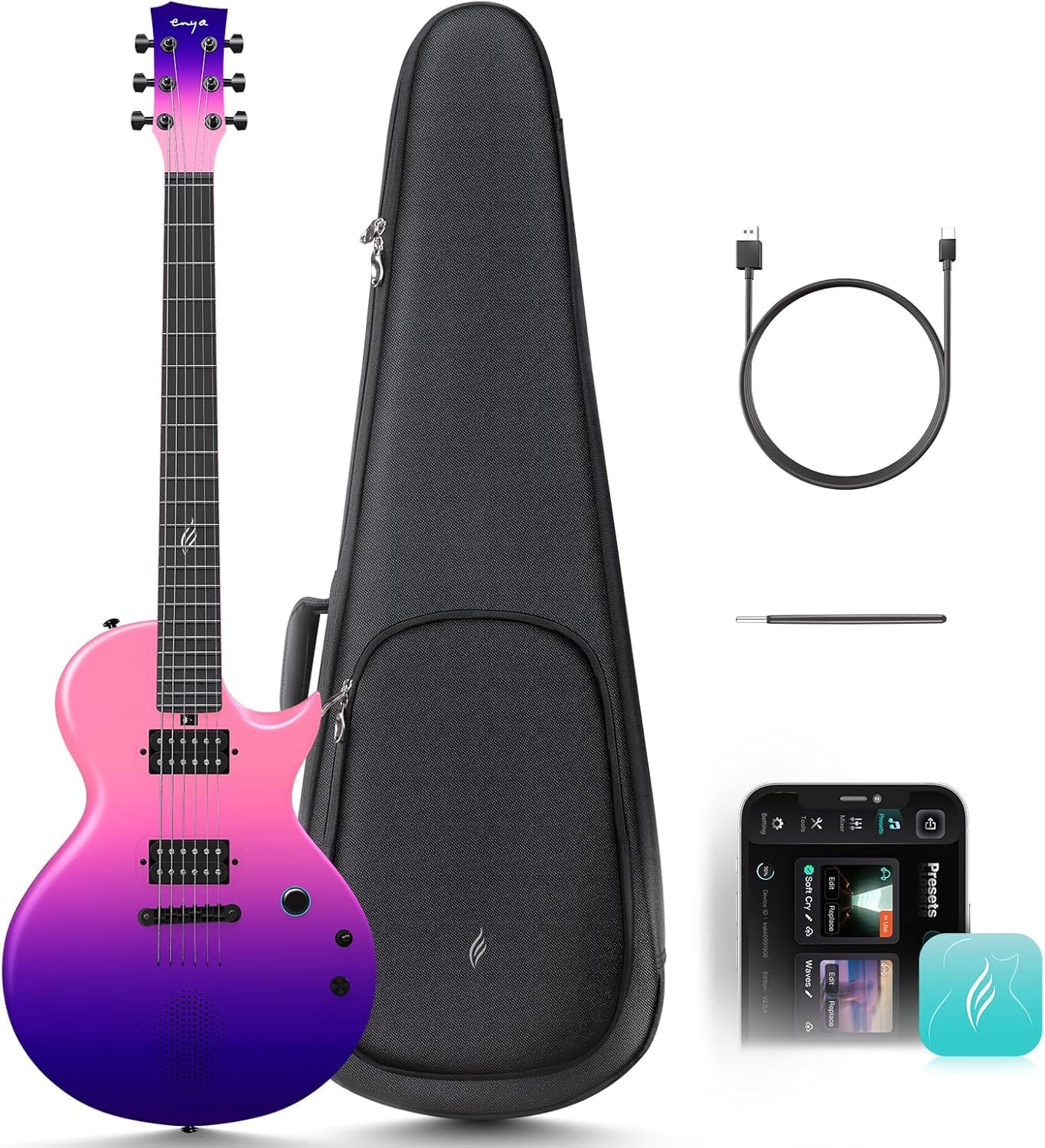
The Enya Nova Go Sonic is not a traditional wireless system — it is a complete electric guitar with a built-in wireless speaker and effects processor. The carbon fiber construction makes it incredibly durable and resistant to humidity changes, ideal for street performers and traveling musicians. The integrated 10-watt speaker amplifies four onboard presets (Clean, Overdrive, Crunch, Lead), all customizable through the ENYA MUSIC APP.
The wireless connectivity is designed for backing track playback through the speaker, not for transmitting your guitar signal to an external amp. The Alnico 2 and Alnico 5 humbucker pickups deliver a versatile vintage-to-modern tonal range, and the push-pull volume knob splits the neck pickup coil for classic single-coil sounds. The asymmetrical neck profile and zero-fret design enhance playability across the entire fretboard.
This is a niche product — it replaces your guitar, amp, and cable in one package, but it does not offer traditional wireless out to a PA or external amplifier. The onboard speaker is not loud enough for stage use without external amplification, and the built-in effects cannot be controlled with foot pedals. For solo buskers, hotel room practice, or a backup travel guitar, it is a uniquely integrated solution.
Why it’s great
- Carbon fiber construction, climate resistant
- Built-in speaker and presets for solo play
- Versatile Alnico pickup configuration
Good to know
- No external wireless transmission to amp
- Onboard speaker not stage-loud
FAQ
Does a wireless guitar system affect my tone quality?
What is the real-world range I should expect from a wireless system?
Can I use a wireless guitar system with active pickups?
Final Thoughts: The Verdict
For most users, the best guitar wireless systems winner is the Fender Telepath because it combines 5.8GHz reliability, the longest battery life in the category, and an articulating plug that fits every guitar. If you want the best value with a charging case and cable emulation, grab the NUX C-5RC. And for the tightest integration with a Spark amp ecosystem and unmatched sub-3ms latency, nothing beats the Positive Grid Spark LINK.