
Plugging an acoustic-electric guitar into a standard electric guitar amp is a fast track to a thin, brittle, and unnatural sound that robs your instrument of its warmth and dynamic range. An acoustic amplifier is a different tool entirely — designed with a full-range speaker system, a flat frequency response, and built-in effects like reverb and chorus to reproduce the natural resonance of your guitar without coloration or distortion.
I’m Mohammad Maruf — the founder and writer behind Drink4Good. I’ve spent years analyzing the acoustic amplifier market, breaking down specs like wattage ratings, speaker configurations, onboard DSP effects, and battery life claims to help musicians find the right amp for their playing style and budget.
This guide covers nine of the most compelling options across different power levels and feature sets to help you find the best guitar amp for acoustic guitar that matches your specific needs.
How To Choose The Best Guitar Amp For Acoustic Guitar
Choosing the right acoustic amp means matching its power output, speaker design, and feature set to your specific playing environment — from quiet bedroom practice to live gigs at coffee shops or outdoor venues.
Wattage and Speaker Configuration
Wattage determines how much clean headroom you have before the signal distorts. For home practice, 20 to 40 watts is sufficient. For small to medium gigs, 60 to 100 watts with a woofer and tweeter combination delivers the full frequency range your acoustic guitar needs.
Onboard Effects and EQ
Built-in reverb, chorus, and delay are essential for adding depth and ambience without external pedals. A three-band EQ (bass, mid, treble) lets you dial in your tone for different room acoustics and playing styles.
Battery Power and Portability
If you play outdoors, busk, or perform at venues without reliable power, a rechargeable battery or AA-powered amp is a game-changer. Look for at least 6 hours of playtime at moderate volume levels.
Quick Comparison
On smaller screens, swipe sideways to see the full table.
| Model | Category | Best For | Key Spec | Amazon |
|---|---|---|---|---|
| Fishman Loudbox Mini BT | Premium | Gigging musician | 60W / 1×6.5″ + feedback suppression | Amazon |
| Boss ACS Live 60W | Premium | Vocal harmony & guitar | 60W / Acoustic Resonance + harmony | Amazon |
| Coolmusic BP80 | Premium | Small band / outdoor gigs | 100W / 6 inputs + 48V phantom | Amazon |
| Fender Acoustasonic 40 | Mid-Range | Singer-songwriter duo | 40W / 2×6.5″ whizzer cones | Amazon |
| Coolmusic BP40D | Mid-Range | Solo performer / small PA | 80W / 6 inputs + rechargeable | Amazon |
| JOYO AC-40S | Mid-Range | Practicing & streaming | 40W / DSP effects + USB-C | Amazon |
| Yamaha THR5A | Mid-Range | Home practice / recording | 10W / mic modeling + AA power | Amazon |
| Roland Mobile-AC | Budget | Street performance / travel | 5W / 15h battery + lightweight | Amazon |
| COOLMUSIC AC-20 | Budget | Church / entry-level | 20W / 2 channel + chorus effect | Amazon |
In‑Depth Reviews
1. Fishman Loudbox Mini BT

Fishman has a well-earned reputation for making some of the best acoustic amplification gear on the market, and the Loudbox Mini BT lives up to that legacy. This 60-watt combo packs a 6.5-inch driver with a dedicated tweeter, delivering remarkably clear and balanced sound across the full frequency spectrum — from the low-end thump of a dreadnought to the sparkle of fingerpicked strings.
The two-channel design gives you independent control over your guitar and microphone inputs, each with its own three-band EQ and reverb. The built-in feedback suppression is a lifesaver on stage, letting you push volume without that awful howl. Bluetooth connectivity streams backing tracks or practice music directly from your phone, making this a versatile mini PA system for solo performers and duos.
Weighing 24.3 pounds, it’s portable enough for regular gigging but built with durable construction that holds up over years of use. While it’s a premium investment, the clarity, headroom, and pro-level features justify the cost for any serious acoustic player.
Why it’s great
- Exceptional clarity with dedicated tweeter
- Feedback suppression works effectively
- Bluetooth for backing tracks
Good to know
- Heavier than some portable options
- Premium price point
2. Boss ACS Live 60W

The standout feature is its built-in harmony processor, which analyzes your guitar chords in real-time and generates vocal harmonies that follow your playing. The effect is smooth, musical, and surprisingly natural, giving solo performers a fuller sound without needing a second band member.
The dedicated guitar channel includes Acoustic Resonance technology, which restores the natural body and warmth of acoustic guitars equipped with piezo pickups — a common source of the quacky, thin tone many players dislike. The mic channel offers delay and echo effects, and both channels have independent reverb controls.
At 26.4 pounds, this amp is heavier than some competitors, but the 60-watt output and huge sound projection make it ideal for medium-sized venues. The onboard looper, while simple, adds creative potential for live arrangements. This is a premium tool for players who want studio-quality vocal and guitar processing in a single box.
Why it’s great
- Real-time vocal harmony generation
- Acoustic Resonance fixes piezo quack
- Two channels with independent effects
Good to know
- Heavy and bulky for travel
- Looper lacks undo function
3. Coolmusic BP80

The Coolmusic BP80 is a serious contender for any musician who needs volume, inputs, and battery power in a single portable package. With 100 watts of clean output through an 8-inch woofer and 3-inch tweeter, this amp fills outdoor spaces with crisp, dynamic sound that stays clear even at higher volumes. The six inputs accommodate two instruments, two microphones, and two auxiliary sources — enough for an entire small band setup.
Both channels have independent three-band EQ controls, letting you dial in separate tones for your guitar and vocal mic. The 48V phantom power switch means you can use professional condenser microphones without needing an external preamp. The rechargeable battery delivers 6 to 8 hours of playtime, which held up consistently in real-world testing at farmers markets and outdoor gigs.
Weighing around 21.8 pounds, the BP80 is surprisingly portable for its power class. The orange finish is distinctive, and the build quality feels solid despite some users noting minor exterior imperfections. For the price, it delivers features and sound quality that rival amps costing significantly more.
Why it’s great
- 100 watts for outdoor venues
- 48V phantom power for condenser mics
- Long battery life
Good to know
- Exterior finish can be inconsistent
- Battery not user-replaceable
4. Fender Acoustasonic 40

Fender’s Acoustasonic 40 combines the brand’s iconic aesthetic with practical acoustic amplification. The dual 6.5-inch speakers with whizzer cones produce a full-range sound that reproduces both guitar and vocals with impressive detail. The 40-watt output is sufficient for coffee shop gigs, smaller venues, and onstage monitoring — several users report being told to turn down, which tells you it has more headroom than the wattage suggests.
The two combo XLR/1/4-inch inputs accept microphones and instruments, with independent volume controls and shared reverb. The lightweight 5-ply plywood cabinet weighs under 20 pounds, making it one of the more portable amps in its class. The classic Brown and Wheat cosmetics look great on any stage.
Some users note a consistent background hiss and a loud thump when powering off, which are minor annoyances in an otherwise well-voiced amp. It lacks the extensive EQ and effects of more modern competitors, but the core acoustic tone is pure Fender — warm, clear, and reliable.
Why it’s great
- Classic Fender acoustic tone
- Lightweight plywood cabinet
- Two universal XLR/1/4″ inputs
Good to know
- Background hiss reported by some users
- Limited EQ compared to competitors
5. Coolmusic BP40D

The Coolmusic BP40D is the little brother to the BP80, but don’t let the smaller size fool you. This 80-watt amp packs six inputs, Bluetooth streaming, and a rechargeable battery into a compact metal enclosure. The 8-inch woofer and tweeter combo delivers clear, full sound that works well for solo performers and small groups who don’t need the raw power of the BP80.
One of the standout features at this price point is the 48V phantom power for condenser microphones, which is usually reserved for more expensive units. The three-band EQ on each channel gives you fine control over your guitar and vocal mix. The battery lasts 6 to 8 hours on a full charge, which is consistent with real-world use at outdoor events.
While the onboard reverb is decent, it’s not as rich as what you’ll find on dedicated pro units. Some users note that Bluetooth audio sounds slightly flat compared to wired connections. Still, for the combination of power, inputs, and portability, the BP40D is hard to beat at this tier.
Why it’s great
- 80 watts with phantom power
- Six inputs for versatile setups
- Rechargeable battery lasts all gig
Good to know
- Reverb quality is average
- Bluetooth sound lacks depth
6. JOYO AC-40S
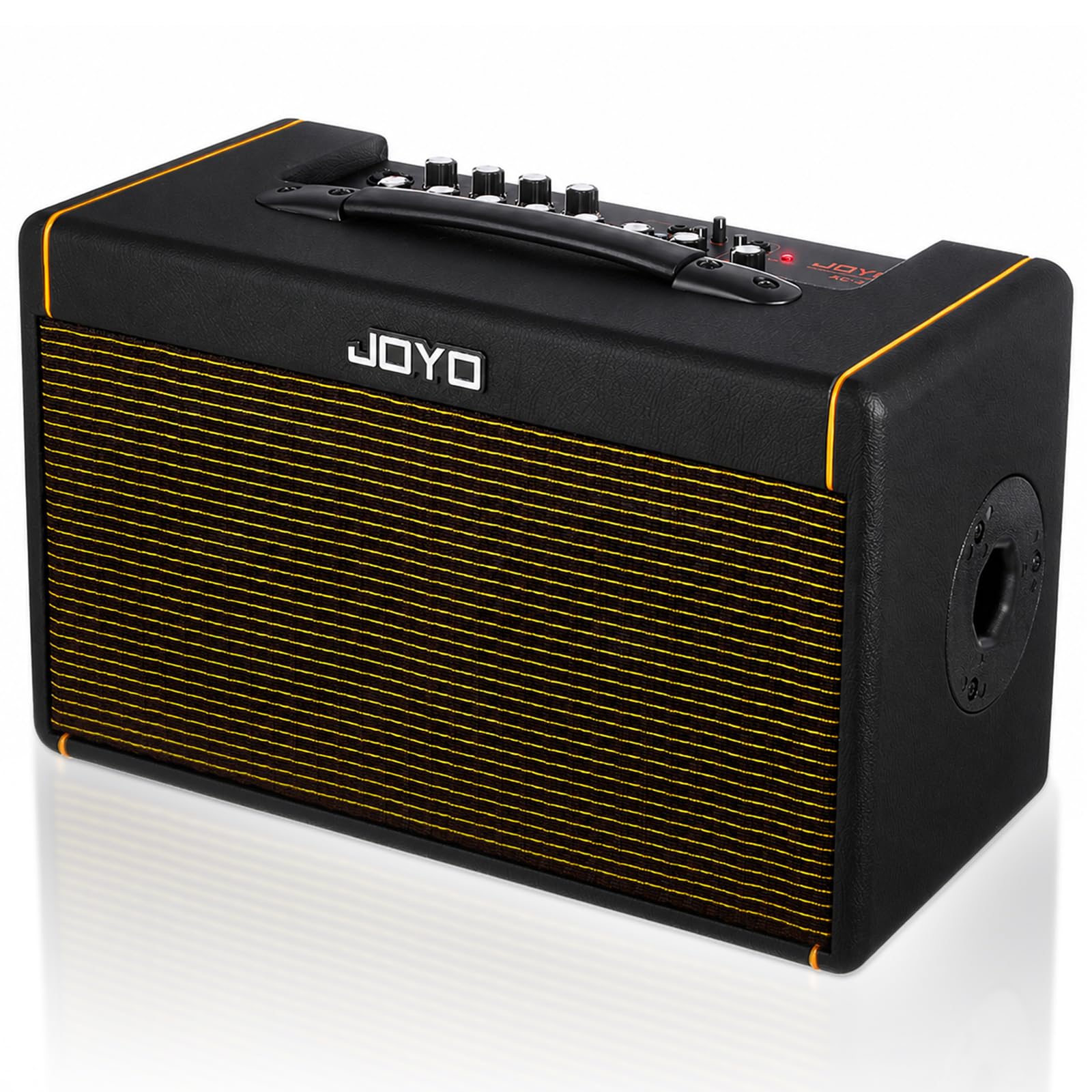
JOYO designed the AC-40S specifically for acoustic guitars, and it shows in the amplification curve that optimizes sound across each frequency range. The 40-watt output is ideal for practice, small gigs, and studio monitoring. What sets this amp apart is the three stackable DSP digital effects — chorus, delay, and reverb — that can be layered to create rich, textured soundscapes.
The connectivity options are modern and comprehensive. Bluetooth pairs seamlessly with your phone for backing tracks, while the USB-C port supports live streaming with OTG functionality. You can run a microphone through the XLR input with independent reverb and bass/treble controls, making this a compact solution for singer-songwriters who also livestream their performances.
The rechargeable battery provides up to 6 hours of playtime, which is enough for a full rehearsal or a farmers market set. The amp also includes a guitar stand mount, which keeps it off the floor and directed at your ears. At this price, the combination of DSP effects, streaming capability, and portability is impressive.
Why it’s great
- Three stackable DSP effects
- USB-C for live streaming
- Acoustic-optimized amplification curve
Good to know
- Effects can be complex to dial in
- 40W may not suffice for loud venues
7. Yamaha THR5A

The Yamaha THR5A is a desktop amp that breaks the mold. Instead of trying to fill a room with raw volume, it focuses on delivering studio-quality tone through advanced mic modeling technology. The amp simulates classic tube condenser and dynamic microphones, capturing the subtle nuances of your acoustic guitar that simple digital modeling cannot touch. The result is a rich, natural sound that feels like a professional recording session.
With 10 watts of power (5 watts on battery), this is not a gigging amp. It is designed for home practice, composition, and recording. The built-in effects — reverb, delay, chorus, and compression — are studio-grade and respond musically to your playing dynamics. The aux input lets you play along with tracks from your phone or computer.
The compact stainless steel enclosure weighs just 4.4 pounds and runs on six AA batteries for up to 6 hours of use. It also includes Cubase AI production software, adding real value for players who record at home. If your priority is tone quality over volume, the THR5A is unmatched in its class.
Why it’s great
- Advanced microphone modeling
- Studio-quality effects
- Ultra-portable and battery-powered
Good to know
- Not loud enough for live gigs
- Batteries not included
8. Roland Mobile-AC

The Roland Mobile-AC is the ultimate busking amp. At just 7 pounds and powered by six AA batteries for up to 15 hours, it fits easily into a backpack and goes anywhere. Despite its modest 5-watt stereo output (2.5 watts per channel), the sound is surprisingly full and clear, with the built-in reverb and chorus adding professional polish to your tone.
The controls are simple and intuitive — separate volume controls for guitar and microphone, shared reverb/chorus, and an auxiliary input for backing tracks. The amp is voiced specifically for acoustic guitar and vocals, and it handles both with impressive clarity. Users consistently praise how feedback-resistant this amp is, which is a common problem with small portable units.
The 1/4-inch mic input may require an adapter for standard XLR microphones, which is a minor inconvenience. It also lacks a feedback eliminator and can distort if pushed to maximum volume. But for quiet practice, street performance, or small acoustic settings where electricity is unavailable, the Mobile-AC is the most practical option available.
Why it’s great
- 15-hour battery life
- Remarkably lightweight at 7 lbs
- Excellent feedback resistance
Good to know
- Microphone input is 1/4″ only
- Distorts at maximum volume
9. COOLMUSIC AC-20
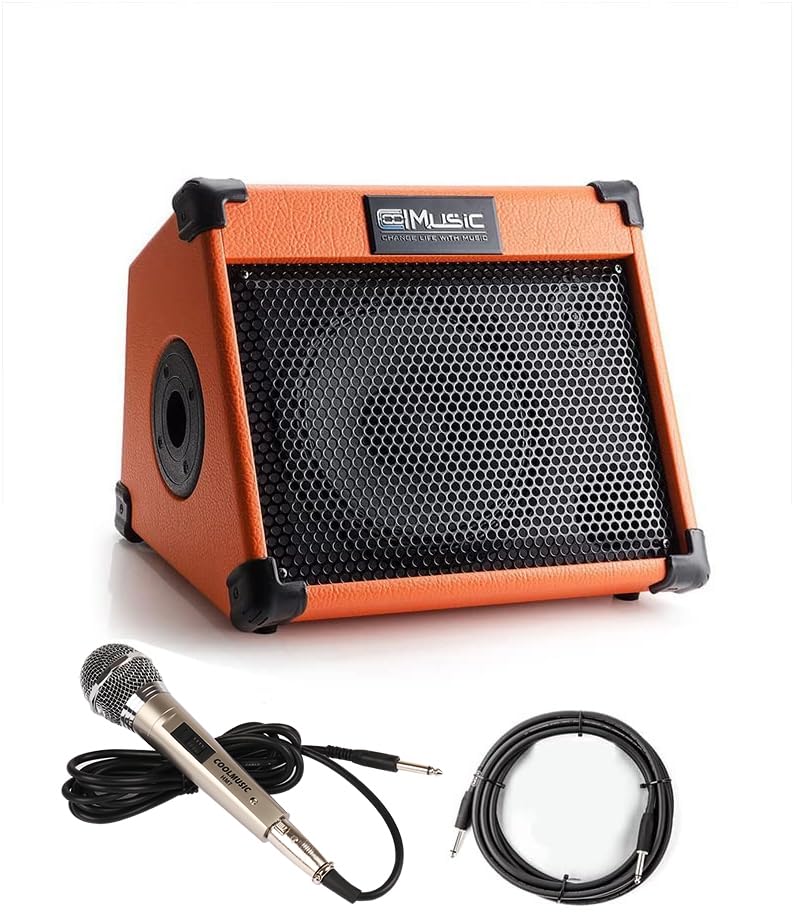
The COOLMUSIC AC-20 is a budget-friendly entry point into acoustic amplification that punches above its weight. The 20-watt power is enough for practice rooms, church bands, and small living room performances. The two-channel design lets you plug in both a guitar and a microphone, with independent gain controls and a shared three-band EQ that lets you shape your overall sound.
The built-in reverb and chorus effects are simple but effective, adding space and movement to your playing without requiring external pedals. Bluetooth connectivity streams music from your phone, and the headphone output is great for silent practice. The 8-inch woofer and 2-inch tweeter produce a fuller sound than you would expect from a 20-watt amp, with the tweeter handling high-end frequencies that keep fingerpicking articulate.
At 16 pounds, it is easy to carry to rehearsals or small gigs. Some users note that the distortion effect is too aggressive for acoustic use, but the reverb and chorus settings work just fine. Considering the low entry price, the AC-20 gives beginners a reliable introduction to amplified acoustic sound.
Why it’s great
- Budget-friendly with solid features
- Two channels for guitar and mic
- Bluetooth and headphone output
Good to know
- Distortion effect not suited for acoustic
- Limited headroom for louder settings
FAQ
Can I use an electric guitar amp for my acoustic guitar?
How many watts do I need for an acoustic guitar amp?
Do I need an amp with a built-in microphone channel?
Final Thoughts: The Verdict
For most users, the guitar amp for acoustic guitar winner is the Fishman Loudbox Mini BT because it combines 60 watts of clean power, excellent clarity, and built-in feedback suppression in a portable package that suits both practice and gigging. If you want pro-grade vocal harmonies and studio-quality effects in one unit, grab the Boss ACS Live 60W. And for battery-powered outdoor performances with tons of inputs, nothing beats the Coolmusic BP80.