
A good guitar stool solves a problem most players don’t realize they have: poor posture during long practice or performance sessions. Sitting on a generic chair or perching on a drum throne without back support forces your spine into a curve that pinches nerves and numbs your legs, leading to distracted playing and early fatigue. The right stool keeps your hips open, your lower back engaged, and your instrument at a consistent height so you can focus entirely on your music.
I’m Mohammad Maruf — the founder and writer behind Drink4Good. I’ve spent years analyzing the construction, weight capacities, and adjustability ranges of seating solutions for musicians, helping readers identify hardware that actually supports extended play without causing structural or ergonomic problems.
After sorting through dozens of models by build quality, adjustability, and real-world comfort reports, I’ve found that the best guitar stool balances a sturdy frame, effective back support, and a secure instrument holder in a package that doesn’t collapse under repeated use or transport.
How To Choose The Best Guitar Stool
A guitar stool is more than a seat — it’s a work station. The wrong choice leads to a sore back, a dropped instrument, or a wobbly platform that distracts from your playing. Focus on these three factors to narrow your options quickly.
Seat Height and Adjustability Range
Your playing style dictates the ideal seat height. Classical and fingerstyle players often prefer a higher seat (around 30 inches) to keep the guitar body flat on the thigh, while acoustic strummers and electric players tend to sit lower (around 24-26 inches). Look for a stool that offers at least 3 to 5 preset positions or a continuous pneumatic adjustment. A range of 22 to 32 inches covers most body types and playing postures.
Cushion Density and Surface Material
A seat that feels plush in the store can bottom out within 30 minutes. High-density foam (2.5 to 3 inches thick) provides the support needed for sessions lasting hours, while memory-fiber blends prevent pressure points on the sit bones. Leather or bonded-leather covers are easier to wipe clean after gigs, but breathable fabric covers reduce sweat buildup during summer rehearsals. Avoid cheap polyurethane foam that degrades into dust within a year.
Instrument Storage and Frame Stability
Integrated guitar holders fall into two categories: rear-mounted hangers that keep the guitar behind you, and front cradles that support the guitar in playing position. Rear hangers are more stable for taking breaks because the instrument is out of the way, but they require a taller adjustment range to avoid hitting the floor. Front cradles are convenient for quick grab-and-play but can interfere with leg movement. For the frame, look for all-steel construction with a minimum 275-pound weight capacity — anything less flexes under lateral pressure when you lean to reach a pedal.
Quick Comparison
On smaller screens, swipe sideways to see the full table.
| Model | Category | Best For | Key Spec | Amazon |
|---|---|---|---|---|
| Gearlux Foldable | Mid-Range | Budget-friendly practice | 300 lb capacity, 30″ seat height | Amazon |
| Gator Frameworks GFW-GTRSTOOL | Mid-Range | Gigging portability | 2.5″ thick seat foam, folds flat | Amazon |
| Rockville RDS42 | Mid-Range | Adjustable multi-instrument | 5 heights (22″-31″), 300 lb capacity | Amazon |
| STRICH SGT-30B | Premium | Full back support with hanger | Adjustable backrest angle, 240 lb capacity | Amazon |
| Ackitry Wooden | Premium | Solid wood studio piece | 400 lb capacity, rubberwood frame | Amazon |
| Liquid Stands | Premium | Maximum adjustability | 23″-32″ seat, 275 lb capacity | Amazon |
| Gator Frameworks Deluxe | Premium | Pro ergonomics for long sessions | 3″ thick foam, 3-point adjustability | Amazon |
In‑Depth Reviews
1. Gator Frameworks GFW-GTRSTOOL

The Gator Frameworks GFW-GTRSTOOL is the goldilocks option for most guitarists: a 2.5-inch thick foam seat that doesn’t bottom out, a fold-up guitar cradle with a retractable neck yoke, and a built-in footrest that keeps your hips open. The seat height sits around 30 inches, which works well for acoustic players who want the guitar body resting on the thigh without hunching. The stainless steel frame feels dense without being overly heavy, and the folding mechanism locks securely in place with no lateral wobble during play.
What sets this stool apart is the integrated guitar stand. The rear-mounted cradle folds up when not in use, and the neck yoke retracts to keep the instrument secure when you step away. The rubber feet with red safety trim provide solid grip on stage floors and add visibility in low-light setups. The seat cushion uses dense polyurethane foam — it’s firm initially but breaks in after about ten hours of use, offering consistent support for four-hour gigs without causing numbness in the legs.
The only real compromise is the guitar stand’s rubber tubing, which some users report popping off the metal cradle shortly after purchase. A dab of superglue solves the issue permanently. The stool also lacks a backrest, so players with chronic lower-back pain may want to look at models with lumbar support. For the weight-to-function ratio, this remains the most balanced all-rounder on the market.
Why it’s great
- Thick, dense foam cushion supports long practice sessions without sagging
- Integrated guitar stand folds out of the way when playing
- Compact folded size fits behind most car seats for transport
Good to know
- Guitar cradle rubber tubing may detach and require adhesive
- No backrest — not ideal for players with existing back problems
2. Rockville RDS42

The Rockville RDS42 brings five preset seat heights ranging from 22 to 31 inches, making it one of the most versatile options for players who share gear across different instruments. The 12-inch circular seat uses 2.75 inches of foam padding that provides good support for drummers and keyboardists, but guitarists may find the round shape less stable for leg positioning than a wider saddle-style seat. The seat attaches to a steel frame that supports a rated 300 pounds, and the whole unit folds for transport.
The removable padded backrest is a standout feature for this price tier. It adjusts in height and angle, giving you lumbar support that most stools at the mid-range level omit entirely. The cushioned footrest is also adjustable up to 12 inches off the ground, which helps reduce leg fatigue during long sets. Assembly is tool-less — the backrest and footrest slide into pre-drilled slots and lock with hand-tightened knobs. The all-metal construction feels robust, though the foam density is moderate and may compress faster than higher-end options under heavy use.
On the downside, the 12-inch seat diameter is narrow for larger players — users with wider hips report a lack of lateral stability, feeling perched rather than seated. The backrest receiver can also dig into your lower back if you sit fully against it. The stool is heavier than most folding models, so it’s more of a studio or rehearsal-space piece than a daily gigging stool. For the adjustability range and included backrest, it offers strong value for multi-instrument setups.
Why it’s great
- Wide height range (22-31″) fits players of all sizes
- Padded, adjustable backrest provides genuine lumbar support
- Cushioned footrest reduces leg fatigue during long sessions
Good to know
- 12-inch seat is narrow for larger body types
- Heavier than many folding stools, more suited to studio use
3. Ackitry Wooden Guitar Stool

The Ackitry Wooden Guitar Stool is the only wood-framed entry in this lineup, and it stands apart visually with its black-and-walnut natural rubberwood construction. The four-legged structure uses double-layer reinforcements and carries a weight capacity of 400 pounds — the highest in this roundup. The pneumatic height adjustment lever lets you change seat height anywhere from 25.2 to 30.3 inches in about three seconds, which is smoother than any preset-pin system. The low backrest provides targeted support for the hips and lower back without restricting arm movement during strumming.
The seat cushion is upholstered in a premium leather-like material with high-density foam padding that feels supportive without being rock-hard. The integrated guitar stand uses a hook-and-loop strap to secure the instrument, and the leather-covered cradle material won’t scratch the guitar’s finish. A lower footrest disc keeps the feet elevated, which improves blood flow during long sessions. The wood frame also absorbs some vibration, giving the stool a quieter, more solid feel under playing than steel frames that can resonate.
The downsides are notable. The seat does not swivel due to the fixed backrest piece, which some players find restrictive when reaching for pedals. The guitar pegs sit low on the frame — owners of electric guitars may find the strap hook doesn’t reach properly. The packaging during shipping has been inconsistent; some units arrive with scuffs or scratches on the wood finish. Despite those fit-and-finish issues, the wood frame offers a weight capacity and aesthetic that steel stools simply can’t match.
Why it’s great
- Solid rubberwood frame supports up to 400 pounds
- Smooth pneumatic height adjustment (25.2-30.3″)
- Attractive design blends well with studio or stage decor
Good to know
- Fixed backrest prevents swivel — not ideal for pedal access
- Guitar strap pegs sit low, may not suit electric guitars
4. STRICH SGT-30B
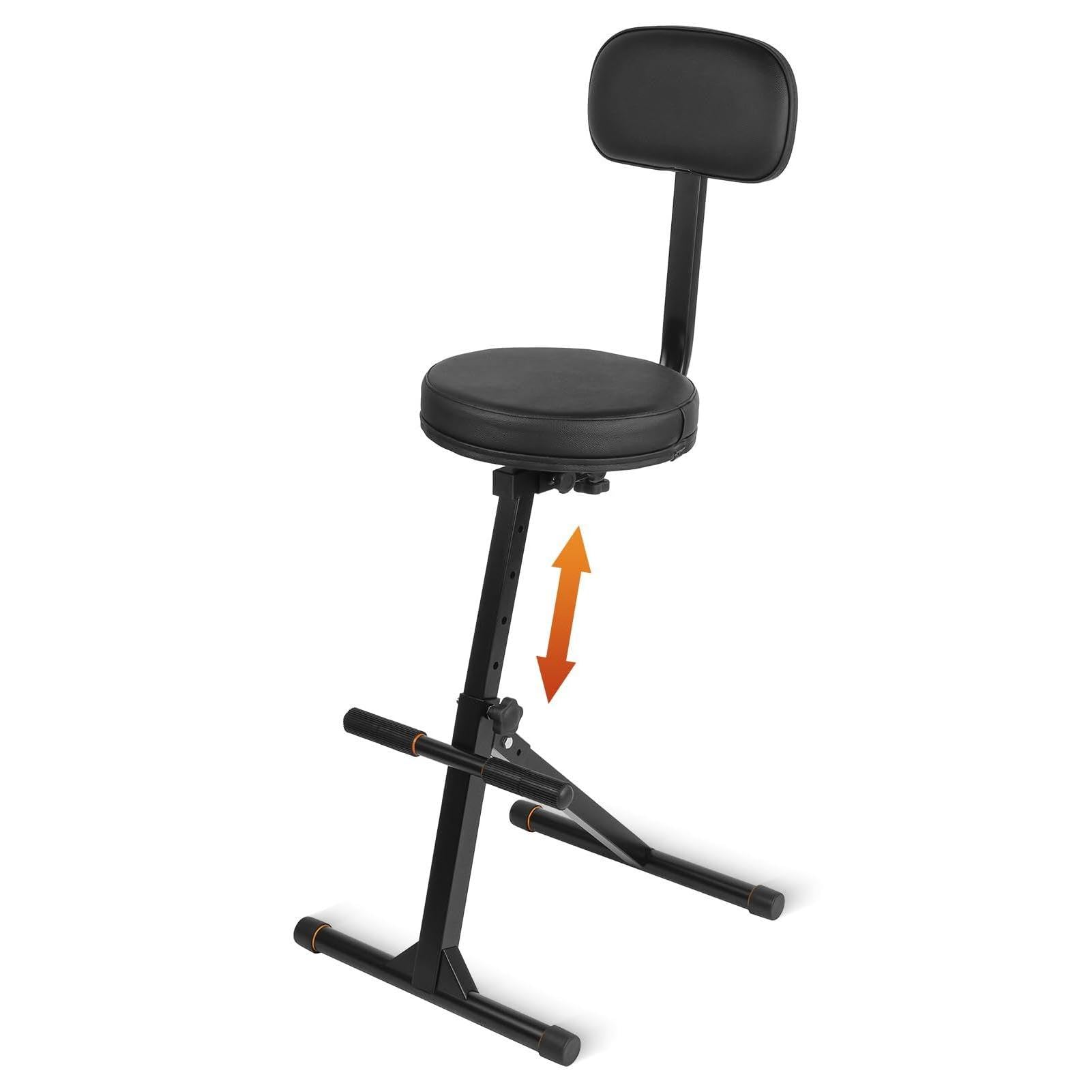
The STRICH SGT-30B is a full-backrest stool designed specifically for guitarists who need lumbar support during extended practice. The backrest offers two adjustable distances (2.8 to 5.3 inches), letting you choose between an upright playing posture and a more relaxed leaned-back position. The all-steel frame folds down for transport, though at 18.78 pounds it’s heavier than most folding stools. The seat height adjusts across five positions with a range of 38.2 to 46.9 inches overall — note that these are total height measurements including the backrest, so the actual seat pan height starts lower.
The seat and backrest are upholstered in a breathable leather-like material with thick foam padding that holds up well during three-hour sessions. The integrated guitar hanger on the backrest is wrapped in soft material to protect the instrument’s finish, and it accommodates acoustic, electric, and bass guitars. The footrest is integrated into the frame and provides a stable surface for elevating one foot during play. Assembly is tool-free: the backrest and seat supports slide into the frame and lock with hand-tightened knobs.
The main concerns are weight and footrest stability. The stool is heavy and awkward to carry for gigging musicians — the guitar hanger tends to detach during transport if not secured separately. Several users report that the footrest slips down when set at the highest seat position, failing to hold the user’s weight. The metal hanger pieces can also be difficult to insert into their slots on the first assembly. For a dedicated home or studio setup where portability isn’t critical, the lumbar support and adjustability are excellent.
Why it’s great
- Adjustable backrest angle provides genuine lumbar support
- Breathable leather-like upholstery withstands long sessions
- Guitar hanger with soft wrap protects instrument finish
Good to know
- Heavy and awkward to transport for gigging musicians
- Footrest may slip down at highest seat height setting
5. Gearlux Foldable Guitar Stool
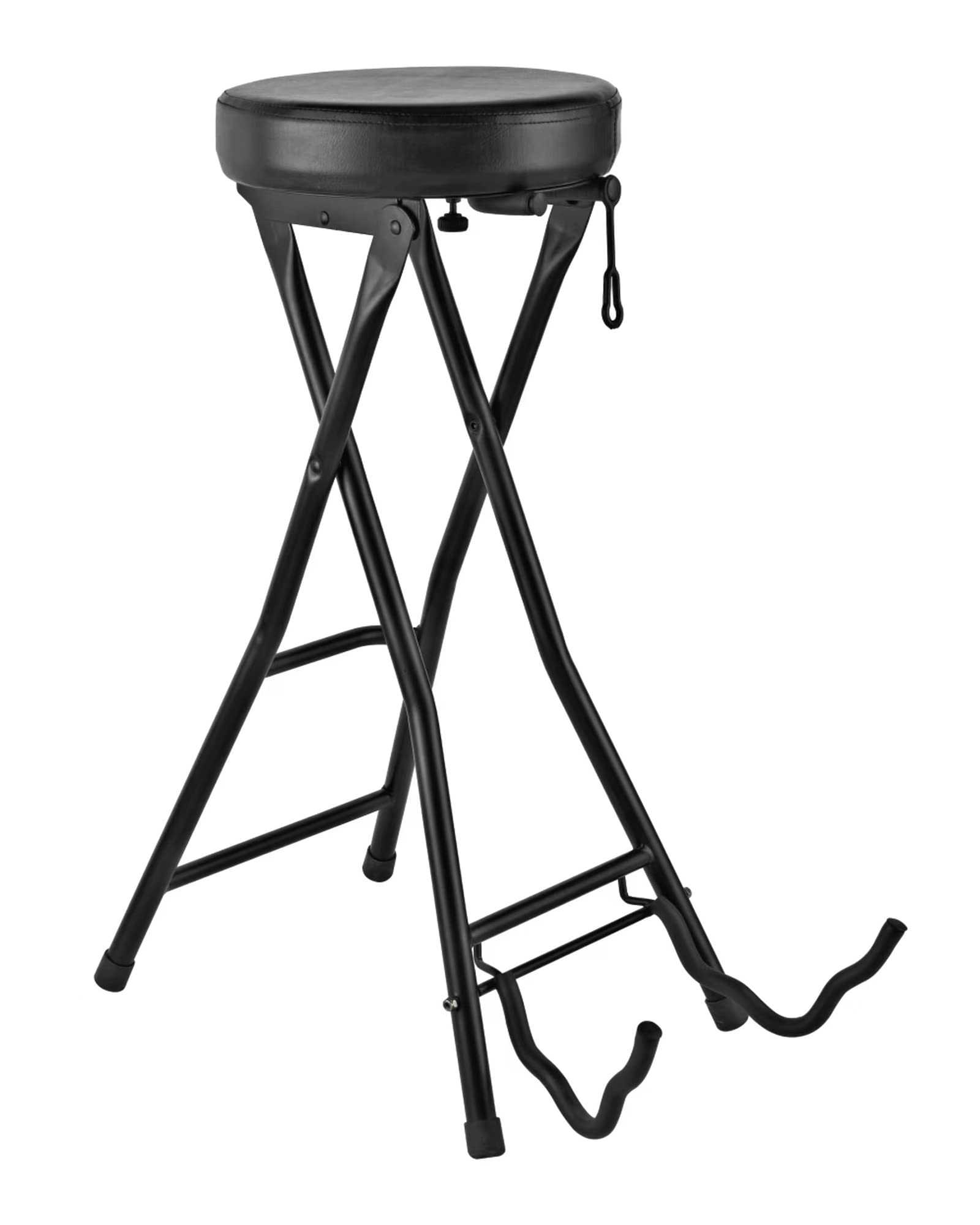
The Gearlux Foldable Guitar Stool packs a surprising amount of utility into a sub-60-dollar frame. The steel construction supports a rated 300 pounds, and the built-in guitar stand uses EVA foam padded cradles that fit acoustic, electric, and bass guitars without scratching. The seat cushion is thick enough to avoid bottoming out during a one-hour practice, though the foam is denser than average for this price tier and can feel firm after extended sitting. The seat height sits at a fixed 30 inches, which is ideal for taller players but may feel tall for shorter users.
The foldable design collapses into a compact shape that stows easily in a closet or car trunk. The crossbar footrest provides a stable elevated surface for one foot, and the non-slip rubber feet keep the stool planted on hardwood or tile floors. For players who need a guitar stand integrated into the seat, this design uses a rear-mounted cradle that holds the instrument in playing position, allowing quick grab-and-go between songs. The assembly requires no tools — the leg frame unfolds and locks with a pin system.
The compromises show up in comfort and stability for heavy users. The seat cushion is small — 13.78 by 10.24 inches — which doesn’t provide enough surface area for larger body types. The lower arms of the frame flop freely when the stool is folded, which makes carrying it difficult without a bungee or strap. Some users also report the footrest sits lower than ideal for resting the guitar on the thigh at a proper angle. For the price, it’s a solid entry-level stool with integrated guitar storage, but players sitting for extended hours will want thicker padding.
Why it’s great
- Built-in guitar stand with soft EVA foam cradles protects instrument
- 300-pound weight capacity from all-steel frame
- Folds flat for easy storage in tight spaces
Good to know
- Seat cushion is small (13.78 x 10.24″) for larger players
- Folded frame arms flop freely — needs a strap for carrying
6. Liquid Stands Guitar Stool

The Liquid Stands Guitar Stool offers the widest adjustability range in this lineup: seat height from 23 to 32 inches, footrest height from 4 to 10.5 inches, and backrest depth adjustment. The heavy-duty steel frame supports 275 pounds and folds compactly for transport, weighing just under 18.3 pounds. The saddle-shaped seat uses firm polyurethane foam that provides good support for drum-style playing positions, though the bulbous front tip of the saddle can create groin pressure points for some users. Setup takes under a minute with tool-free assembly.
The backrest adjustment is the key selling point here. Most stools with backrests offer a fixed depth or a single position, but the Liquid Stands model lets you slide the backrest forward or backward to find your ideal sitting distance from the instrument. The anti-slip footrest uses a rubberized surface and stays locked at your chosen height during play. The stainless steel frame has a powder-coated finish that resists scratches from gear bags, and the rubber floor pads grip well on stage and studio surfaces. The folding mechanism collapses the frame into a manageable bundle that fits in most car trunks.
The major caveat is the seat firmness. Several users describe the foam as “hard as a rock,” making it uncomfortable for sessions longer than an hour without a separate seat pad. The back support also shifts under pressure — if you lean back firmly, the adjustment mechanism can slide. For players under 200 pounds who don’t need a plush seat, the adjustability range and portability make this a strong choice. But heavier users or those with existing back sensitivity should plan to add a gel seat cover.
Why it’s great
- Widest adjustment range (23-32″) for seat, footrest, and backrest depth
- Tool-free assembly and folding design for easy transport
- Anti-slip rubberized footrest and floor pads stay put
Good to know
- Seat foam is very firm — may need extra padding for long sessions
- Back support shifts under firm pressure during play
7. Gator Frameworks Deluxe GFW-GTR-SEATDLX

The Gator Frameworks Deluxe GFW-GTR-SEATDLX is the most comfortable stool tested, primarily because of the 3-inch thick foam seat cushion and the 2.5-inch padded backrest. The 3-point adjustment system lets you independently adjust the seat height, backrest depth, and footrest position — a level of customization that cheaper stools cannot match. The rear guitar hanger uses a neck yoke that securely holds acoustic, electric, or bass guitars when you step away from the seat. The fabric-and-foam construction feels like gym equipment: heavy, dense, and built to withstand years of daily use.
The ergonomics are where this stool justifies its premium positioning. The wide seat pan (larger than the standard GFW-GTRSTOOL) distributes weight evenly across the sit bones, eliminating pressure points that cause leg numbness. The backrest has 1.38 inches of adjustable travel, letting you dial in lumbar support that matches your spinal curve. The footrest is wider and more stable than any other model in this comparison, providing a solid platform for both feet. The 25-pound weight is substantial, but the stool does not fold — it stays assembled and takes up a permanent footprint in your studio or stage space.
The downsides are mostly around build quality consistency and transportability. Some units arrive with warped metal brackets that require pliers to align during assembly, and the plastic leg caps can crack under heavy use. The stool also has a tipping issue when the seat is set low and you lean forward to adjust pedals — the rear legs can lift. For players who sit at a consistent height and don’t need to move the stool between gigs, the comfort and adjustability are unmatched. But the quality control variability makes it a product you should inspect immediately upon delivery.
Why it’s great
- 3-inch thick foam seat provides exceptional comfort for long sessions
- Independent 3-point adjustment for seat, backrest, and footrest
- Wide seat pan eliminates pressure points on sit bones
Good to know
- Does not fold — takes up permanent studio or stage space
- Quality control issues: warped brackets, plastic leg caps may crack
FAQ
What is the ideal seat height for playing classical guitar?
Does a backrest matter for guitar playing?
Can I use a regular drum throne for guitar?
Final Thoughts: The Verdict
For most users, the best guitar stool winner is the Gator Frameworks GFW-GTRSTOOL because it balances a thick foam seat, an integrated guitar stand, and a foldable design at a mid-range price without major compromises. If you want full back support for chronic lower back pain, grab the STRICH SGT-30B. And for a permanent studio piece that looks good and supports up to 400 pounds, nothing beats the Ackitry Wooden Guitar Stool.