
The grinding screech when you turn a corner with a loaded trailer isn’t just annoying — it’s a signal that the metal-on-metal contact between your hitch ball and coupler is accelerating wear on both parts. The right lubricant eliminates that noise, protects the steel from moisture intrusion, and ensures your trailer releases cleanly when you unhitch, rather than binding or sticking. A thin, runny oil won’t cut it here — you need a grease formulated to stay put under compressive loads and resist washout from rain or road spray.
I’m Mohammad Maruf — the founder and writer behind Drink4Good. I’ve spent years tracking lubricant formulations, analyzing corrosion test data, and reading through thousands of owner reports to understand which hitch greases actually hold up under real towing conditions versus which ones get pushed off by the coupler’s clamping force after a few miles.
This guide breaks down the specific formulations that prevent galling, resist water washout, and keep your hitch operating smoothly. Whether you tow a small utility trailer or a heavy travel trailer, the best grease for hitch ball is the one that stays on the ball surface, stops the squeak, and protects against corrosion trip after trip.
How To Choose The Best Grease For Hitch Ball
Picking the right trailer hitch grease comes down to three mechanical realities: the grease must stick to a highly polished steel ball under thousands of pounds of downward force, it must repel water kicked up by the tires, and it must survive temperature swings from freezing mornings to hot asphalt afternoons. A general-purpose chassis grease may work for a few miles, but the sustained pressure of a weight-distribution hitch will squeeze a low-viscosity lubricant right off the ball, leaving metal-on-metal contact and that familiar groan every time you turn.
Consistency and NLGI Grade
The National Lubricating Grease Institute assigns grades from 000 (semi-fluid) to 6 (block-hard). For a hitch ball, you want an NLGI #2 grade — thick enough to adhere to the ball surface under coupler pressure but soft enough to spread easily when the coupler slides over it. A #1 grade can drip off in high heat, and a #3 grade may be too stiff to form a thin, even film between the ball and the coupler socket.
Base Oil and Thickener Type
Lithium-complex and calcium-sulfonate thickeners resist water washout far better than simple sodium-soap greases. Calcium-sulfonate greases in particular have natural rust-fighting properties and a high dropping point above 500°F, which means they won’t melt and run off even after a long descent with hot brake drums radiating heat near the hitch. For trailers launched in salt water, a grease with a corrosion inhibitor additive is essential — the galvanic reaction between dissimilar metals at the coupler can pit the ball surface within weeks without proper protection.
Adhesion and Mechanical Stability
A hitch ball grease must have strong tackiness — the stringy, sticky quality that keeps the grease from flinging off the rotating ball when the trailer turns. Look for greases that include a tackifier additive. Without it, the grease can centrifuge off the ball during sharp turns, especially on trailers with tight turning radii like boat trailers or utility trailers in campgrounds. The grease also needs mechanical stability so it doesn’t thin out (shear down) after repeated coupler sliding, which would leave the ball unprotected.
Quick Comparison
On smaller screens, swipe sideways to see the full table.
| Model | Category | Best For | Key Spec | Amazon |
|---|---|---|---|---|
| Equalizer 91-00-4250 | Calcium Sulfonate | Weight-distribution hitches | Dropping point >500°F | Amazon |
| CorrosionX 90101 | Dielectric Fluid | Salt-water and coastal towing | Film strength 39,000V | Amazon |
| B’laster White Lithium | Lithium Spray | Quick touch-up and hinges | NLGI #2 equivalent | Amazon |
| WD-40 Specialist Silicone | Silicone Spray | Plastic and rubber components | 11 oz twin-pack | Amazon |
| Curt 45131 Ball Mount | Welded Assembly | Light-duty fixed ball towing | 5,000 lb capacity | Amazon |
In‑Depth Reviews
1. Equalizer 91-00-4250 High Performance Lubricant

This tube of calcium-sulfonate grease from Equalizer is specifically formulated for the high clamping loads of weight-distribution hitches, where standard chassis grease gets squeezed off the ball within the first hundred miles. Calcium-sulfonate thickeners have a dropping point above 500°F, meaning this grease stays solid and adherent even when the hitch assembly heats up from brake drum radiation or prolonged towing on hot pavement. The 4-ounce tube is a practical size — you can keep it in the glove box or tool kit without taking up drawer space, yet it holds enough for several full-ball applications.
Real owners report that one application eliminated the loud turning squeak from their camper hitch by 85 percent or more, and the grease held up for an entire multi-state trip without needing reapplication. The consistency is thick enough to resist water washout during rain but soft enough to spread evenly when the coupler slides over the ball. Unlike spray-on lubes that leave a thin film, this grease forms a visible layer that stays put under the coupler’s metal-on-metal pressure, reducing friction that accelerates ball wear and coupler galling.
The product is distributed under the Fastway brand, which focuses on trailer towing accessories, so the formulation is purpose-built for this specific use case rather than adapted from a general-purpose industrial grease. For anyone towing a travel trailer, boat, or heavy utility trailer with a weight-distribution hitch, this is the most reliable option for stopping noise and protecting the ball surface.
Why it’s great
- Formulated specifically for weight-distribution hitch sockets, not adapted from general-purpose grease.
- Calcium-sulfonate base resists water washout and has a dropping point above 500°F.
- Thick, tacky consistency that stays on the ball under high clamping pressure.
Good to know
- Small 4-ounce tube may require multiple applications over a long towing season.
- Noise suppression may diminish after each trip, requiring reapplication for quietest operation.
2. CorrosionX 90101 Rust Inhibitor
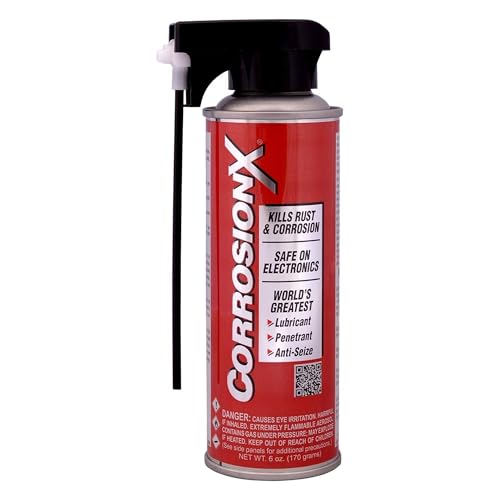
CorrosionX approaches hitch ball lubrication from a corrosion-prevention angle, which makes it a standout choice for anyone towing near salt water or in areas where road salt is used in winter. The formula is a dielectric fluid that molecularly bonds to metal surfaces, forming a self-healing moisture barrier rated at over 39,000 volts — overkill for a hitch ball, but the same properties that protect marine electronics also prevent the galvanic corrosion that pits chrome-plated hitch balls when dissimilar metals meet at the coupler. The fluid is thin enough to penetrate crevices but leaves a residual film that remains active for weeks, so even after rain, the metal stays protected.
This product was originally developed for military aircraft and is still qualified under a U.S. Navy specification for advanced corrosion prevention. The 6-ounce aerosol can applies easily, and the penetrating properties mean it seeps into the gap between the ball and the coupler socket, not just coating the surface. Owners report using it not only on trailer hitches but also on electrical terminals, engine parts, and tools stored in humid environments, which speaks to its versatility — but for hitch ball use, the corrosion protection is the primary benefit.
The catch is that CorrosionX is not a traditional tacky grease — it’s a thin liquid that dries to a semi-solid film. For a standard ball hitch with a loosely fitting coupler, this works fine, but on tight weight-distribution hitches with heavy clamping loads, the film may be too thin to provide the long-lasting squeak suppression that a thicker NLGI #2 grease offers. This is best used as a corrosion preventative on the ball surface between tows or on hitches that don’t suffer from severe noise issues.
Why it’s great
- Molecularly bonds to metal, providing long-term corrosion protection even after rain or washing.
- Qualified by the U.S. Navy for marine corrosion prevention — serious salt-water credentials.
- Self-healing film continues to protect even if the coating is scratched by the coupler.
Good to know
- Thin liquid consistency doesn’t provide the same high-load lubrication as a stiff NLGI #2 grease.
- Aerosol nozzle delivers a broad spray, making precise application on just the ball surface difficult.
3. B’laster White Lithium Grease Spray

White lithium grease is a classic choice for metal-on-metal lubrication, and B’laster’s formulation delivers the thick, clingy consistency that works well on trailer hitch balls. The spray format sweeps out of the can as a semi-fluid that quickly thickens into a white, waxy layer, adhering to the ball surface without dripping off. Once dry, the grease resists water washout and stays in place even when the coupler slides across the ball during tight turns. The 11-ounce can is enough for multiple applications on the hitch ball plus other trailer components like the latch mechanism and pivot points.
Owners consistently compare this product favorably against general-purpose spray lubricants like WD-40, noting that it lasts significantly longer on hinges and metal connections. On a hitch ball, the white lithium base forms a durable boundary layer that reduces friction between the ball and coupler, which directly cuts down on the groaning noise that occurs when the trailer turns at low speeds. The formula is clean and low-odor, so you won’t have a chemical smell lingering in the garage or on your hands after application.
The spray design is convenient for quick applications, but the white lithium base does collect dust and road grit more readily than a grease with stronger tackifiers. Over time, accumulated dirt can turn the lubricant into a mild abrasive paste that accelerates ball wear rather than preventing it. For this reason, white lithium spray works best as a periodic touch-up lubricant on hitches that are used infrequently or on smaller trailers without weight-distribution bars, where the load is lighter and dirt accumulation is less aggressive.
Why it’s great
- Thick, waxy layer that sticks to the ball without running off.
- Clean and low-odor formula compared to solvent-based spray lubricants.
- Large can provides excellent value for multiple applications across the trailer.
Good to know
- White lithium attracts dust and grit that can become abrasive over time.
- Spray format makes it easy to over-apply and waste product on surrounding components.
4. WD-40 Specialist Silicone Lubricant
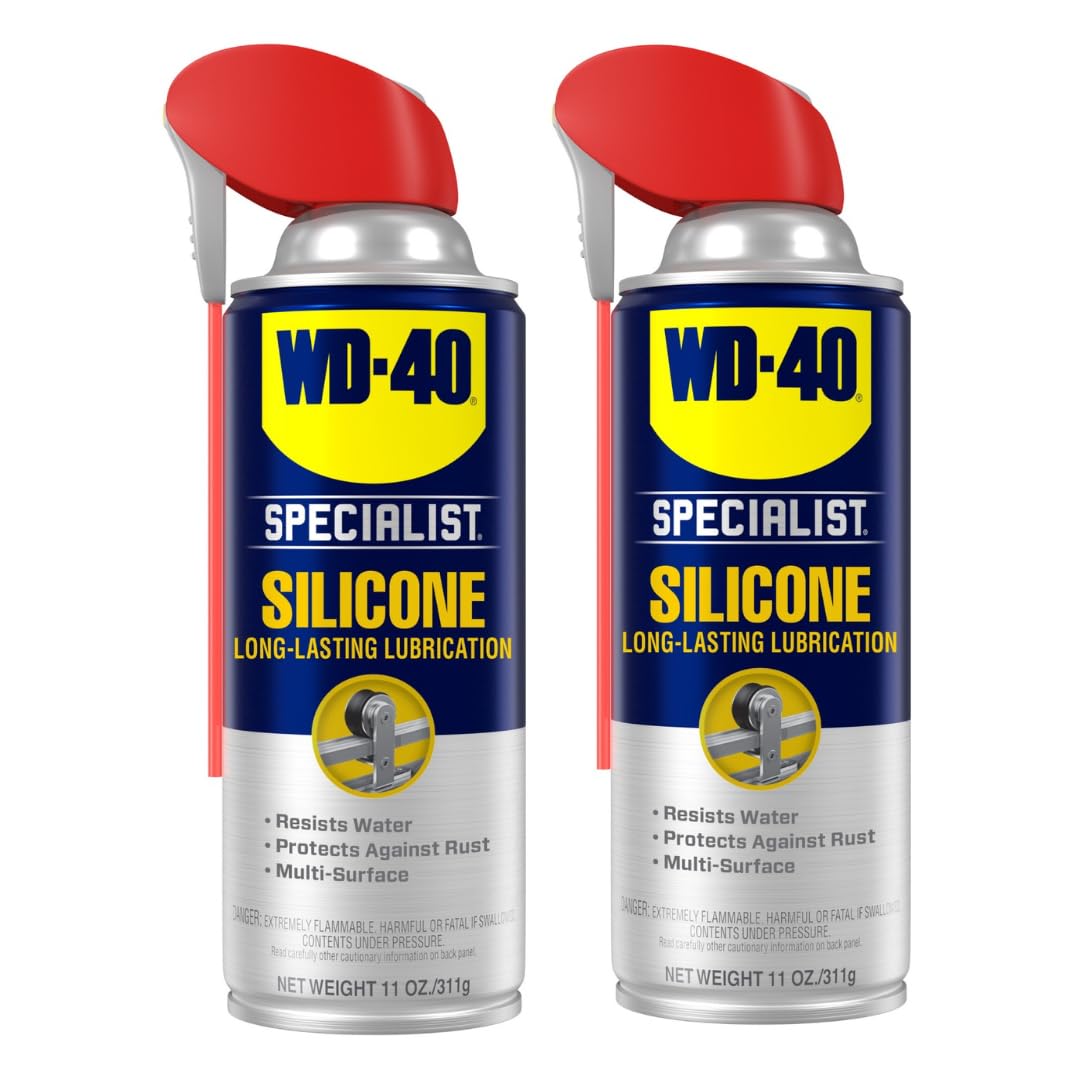
The WD-40 Specialist Silicone Lubricant takes a completely different approach from the greases above — it uses a silicone base that dries quickly to a clear, non-staining film. This makes it ideal for components where you don’t want a visible grease residue, such as the rubber coupler gasket on some hitches, the locking pin mechanism, or the latch lever. The silicone film is waterproof and won’t wash off in rain, and it provides good lubrication for plastic and rubber surfaces that would be degraded by petroleum-based greases. The twin-pack gives you two 11-ounce cans, which is enough for years of periodic maintenance on trailer components.
On a hitch ball specifically, the silicone spray works well for light-duty towing where the trailer weight is under 2,000 pounds and the noise level is low to begin with. The silicone film reduces friction between the ball and coupler without attracting dirt, so the ball stays cleaner than it would with a lithium or calcium-sulfonate grease. Owners also report great results on garage door tracks, weather seals, and wiper blades, indicating this is a versatile maintenance lubricant that can serve multiple roles in your workshop.
The limitation is that silicone lubricant does not have the same load-bearing capacity as a lithium or calcium-sulfonate grease. Under the high clamping pressure of a weight-distribution hitch or a heavy tandem-axle trailer, the silicone film can be displaced, leaving the ball dry and prone to squeaking. This is best used as a supplementary lubricant for the hitch’s secondary components — not as the primary layer on the ball surface for heavy towing. For light utility trailers, jet skis, or small cargo trailers, it’s a clean and effective choice.
Why it’s great
- Dries clear and non-staining — no greasy residue on clothes or trailer components.
- Safe on rubber, vinyl, and plastic parts that surround the hitch assembly.
- Waterproof film resists washout from rain or road spray.
Good to know
- Thin film can be displaced under the high clamping pressure of heavy trailers.
- Not ideal as a primary lubricant for weight-distribution hitches or frequent heavy towing.
5. Curt 45131 Fusion Ball Mount
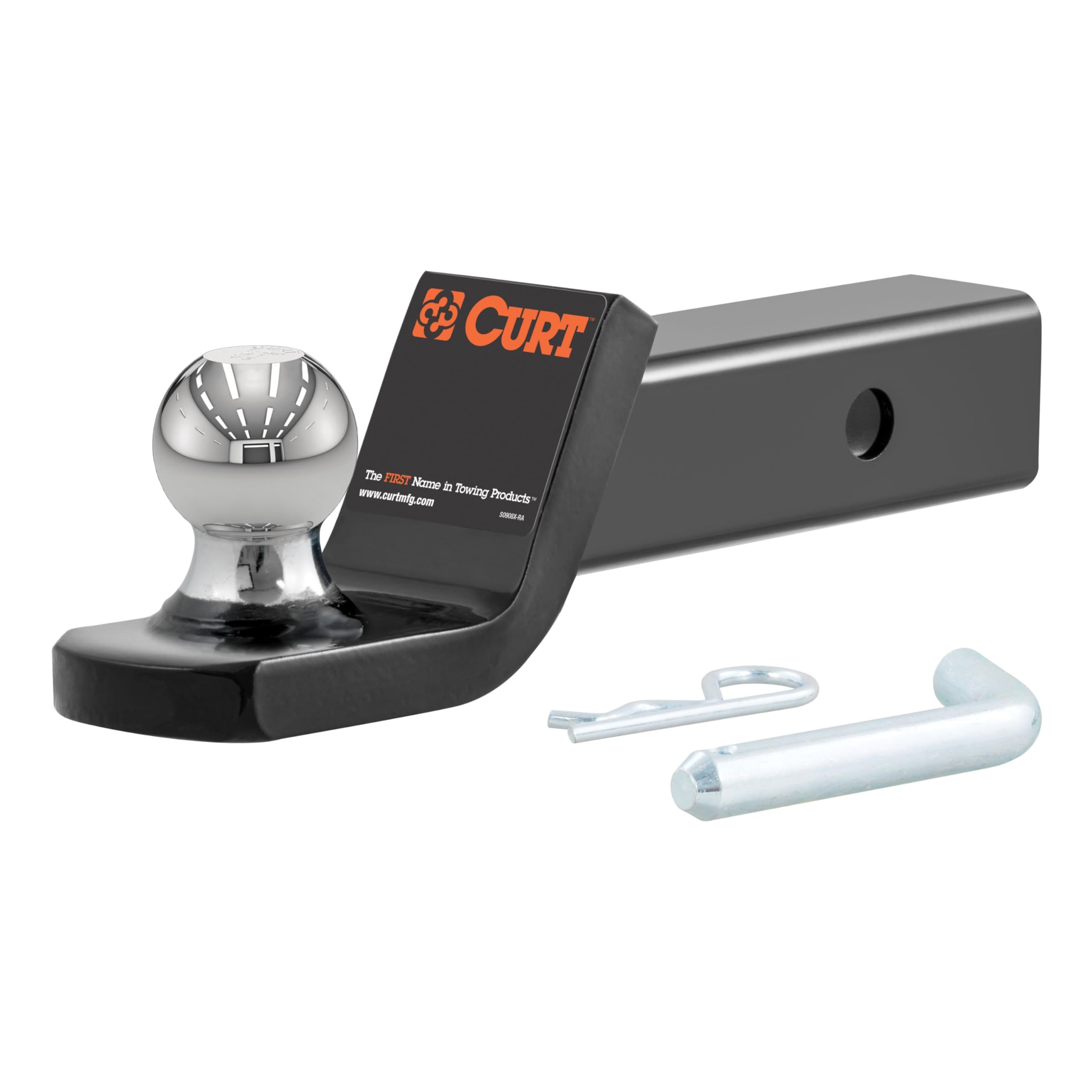
The Curt 45131 Fusion Ball Mount is a different category of product — not a grease, but a complete hitch assembly with a permanently welded ball. It lands in this guide because the welded construction eliminates the threaded ball stud that can loosen over time, which changes how you approach lubrication. The 1-7/8-inch ball is precision-machined from carbon steel with a powder-coated finish, and the hollow shank reduces weight while allowing use with an anti-rattle kit for a quieter ride. The 2-inch drop allows level trailer positioning for smaller utility trailers and light campers.
Because the ball is welded rather than bolted, there is no risk of the ball rotating independently of the shank — a common problem with bolted balls that need periodic retightening. This means you can apply a generous layer of your preferred grease to the ball without worrying about the grease interfering with a threaded connection. The powder-coated finish provides initial corrosion resistance, but when the coupler slides over the surface, the coating will wear at the contact points, making grease application essential to prevent rust from starting at those bare spots.
The 5,000-pound towing capacity puts this in the light-to-medium duty range, suitable for single-axle trailers, small boats, and utility trailers. The welded design is clean and theft-proof, which is a practical advantage for trailers left on storage lots. However, you cannot change the ball size — you’re locked into the 1-7/8-inch ball, so this only works if your trailer coupler matches that diameter. For owners with that specific coupler size, this mount, combined with a quality grease like the Equalizer, provides a solid, low-maintenance towing setup.
Why it’s great
- Welded ball eliminates loosening and theft of the ball component.
- Hollow shank allows anti-rattle kit installation for quieter towing.
- Precision-machined surface provides smooth contact with the coupler.
Good to know
- Fixed 1-7/8-inch ball means it only fits that specific coupler size — not interchangeable.
- Powder-coat finish can wear at the contact point, requiring diligent grease application to prevent rust.
FAQ
Can I use standard wheel bearing grease on a hitch ball?
How often should I reapply grease to my hitch ball?
Final Thoughts: The Verdict
For most users, the best grease for hitch ball winner is the Equalizer 91-00-4250 because its calcium-sulfonate formulation stays put under the high clamping loads of weight-distribution hitches, resists water washout, and effectively stops the squeak that drives trailer owners crazy. If you tow near salt water and need maximum corrosion protection, grab the CorrosionX 90101 for its military-grade moisture barrier. And for a clean, quick-drying option on light-duty trailers, nothing beats the WD-40 Specialist Silicone Lubricant for keeping secondary components like latches and pins operating smoothly without greasy residue.