
That yellow leaf curling inward, the white dusting on your prize roses, the sudden black rot on your tomato stems — these are the hallmarks of a fungal takeover that can erase a season’s work in days. The right spray stops the spread and protects your edible and ornamental plants without locking you into a cycle of harsh synthetic residue.
I’m Mohammad Maruf — the founder and writer behind Drink4Good. I’ve spent years analyzing concentrate-to-water ratios, active ingredient efficacy, and real-world user outcomes across dozens of disease control formulas to separate the broad-spectrum powerhouses from the one-trick solutions.
After cross-referencing hundreds of verified experiences, these five formulations earn their place in any guide to a best fungicide for plants, each chosen for its specific strength against the most common garden diseases like powdery mildew, blight, rust, and leaf spot.
How To Choose The Best Fungicide For Plants
Fungicides are not interchangeable. A product that annihilates powdery mildew may do nothing for root rot or late blight. The decision starts with identifying the disease, not the brand.
Match the Active Ingredient to the Disease
Sulfur-based sprays like those in the Safer Brand line are effective against rust and cedar-apple rust but can burn foliage in temperatures above 85°F. Citric acid formulas such as Earth’s Ally are gentle enough for day-of-harvest use on edibles but work best as a preventive rather than a cure for advanced infections. Neem oil extracts (Garden Safe Fungicide3) disrupt fungal cell membranes and double as insecticide and miticide, making them ideal for a single-bottle approach. Chlorothalonil, found in Bonide Fung-onil, is a broad-spectrum synthetic that clings to leaf surfaces even after rain, but it leaves a visible white residue.
Concentrate vs. Ready-to-Use
A 32-ounce concentrate that makes ten gallons of finished spray costs less per application than a one-gallon ready-to-use bottle, but you must own a sprayer and be comfortable mixing. Ready-to-use bottles, like the Safer Brand 32-ounce spray, offer zero-fuss convenience for container gardeners or those treating only a few infected plants.
Single-Purpose vs. Multi-Purpose Formulas
Some products, like Bonide Captain Jack’s Orchard Spray, combine fungicide, insecticide, and miticide in one bottle. This is efficient if you are battling multiple problems on fruit trees, but unnecessary if you only need a pure fungicide to treat a single disease. Multi-purpose formulas often contain sulfur or neem oil, which can harm beneficial insects if applied during bloom.
Quick Comparison
On smaller screens, swipe sideways to see the full table.
| Model | Category | Best For | Key Spec | Amazon |
|---|---|---|---|---|
| Earth’s Ally Disease Control | Concentrate | Organic edibles up to harvest day | Citric acid, makes 10 gallons | Amazon |
| Garden Safe Fungicide3 | RTU / Gallon | Mildew + aphid control on flowers | Neem oil extract, 128 oz | Amazon |
| Bonide Captain Jack’s Orchard Spray | Concentrate | Fruit trees with pest + fungal issues | Sulfur, makes 6.4 gallons | Amazon |
| Bonide Fung-onil | Concentrate | Heavy blight on tomatoes/vegetables | Chlorothalonil, 16 oz | Amazon |
| Safer Brand 5450-6 | RTU Spray | Quick spot treatment on rust | Sulfur, 32 oz RTU | Amazon |
In‑Depth Reviews
1. Earth’s Ally Disease Control Concentrate
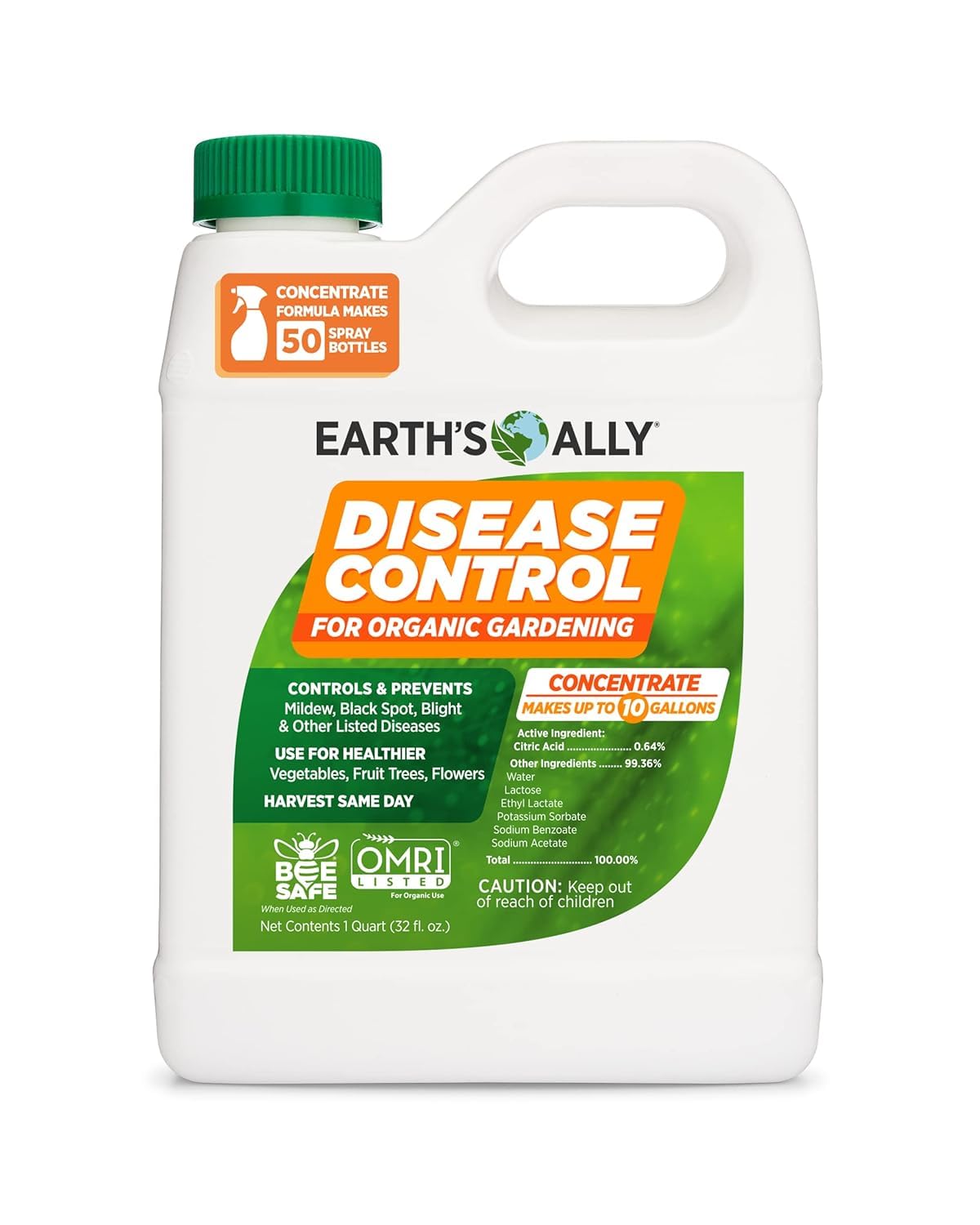
Earth’s Ally uses citric acid as its active ingredient — a food-grade compound that disrupts fungal cell walls without leaving harmful residues. This 32-ounce concentrate makes ten full gallons of finished spray, which works out to roughly forty applications for a standard vegetable garden. Gardeners growing tomatoes, cucumbers, and squash have reported that a weekly spray schedule keeps powdery mildew from gaining a foothold even in humid summer conditions.
The OMRI listing confirms it is suitable for certified organic operations, and the label allows application right up to the day of harvest — a critical advantage when blight threatens your ripening tomatoes. Users mixing six tablespoons per gallon of water note that the solution stays suspended well and does not clog standard hose-end or pump sprayers. The citric acid formula is also safe around pets and pollinators once the spray has dried.
Where this product falls short is on established, advanced infections. Citric acid works best as a preventive or early-stage treatment; if your plant is already covered in black spot or late blight, a stronger synthetic like chlorothalonil will produce faster results. The lack of insecticidal properties also means you will need a separate product if aphids or mites are present alongside the fungus.
Why it’s great
- Zero-day pre-harvest interval — spray until picking
- Concentrate yields 10 gallons for long-term economy
- Safe for people, pets, and beneficial insects when dry
Good to know
- Less effective on severe, established infections
- Not a multi-purpose formula — no pest control
2. Garden Safe Fungicide3
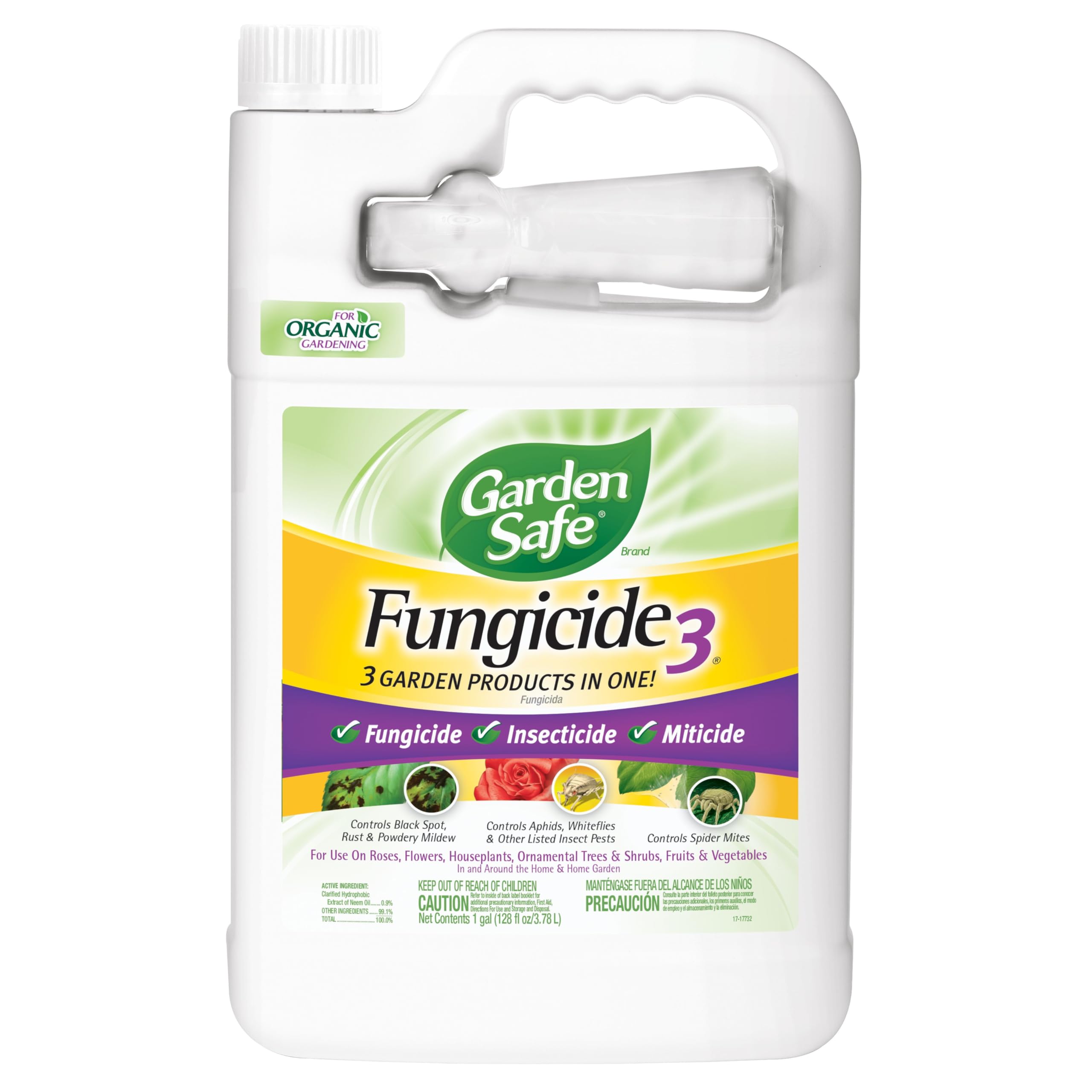
The Garden Safe Fungicide3 combines clarified hydrophobic neem oil extract with a ready-to-use gallon sprayer, making it a direct competitor to the Bonide Captain Jack’s line but with the convenience of no mixing. Neem oil works by smothering fungal spores and disrupting the life cycle of soft-bodied insects like aphids, whiteflies, and spider mites, which makes this a rare single-bottle solution for the gardener who has both fungus and pests.
Users treating orchids, hibiscus, roses, and vegetable beds report that weekly applications halt powdery mildew and prevent its return. The neem oil also leaves a glossy finish on leaves that many gardeners find visually preferable to the white residue left by sulfur or chlorothalonil. The integrated sprayer on the one-gallon container is convenient but short — the hose reaches only about four inches from the bottle, so you will need to tilt the container awkwardly to reach the underside of leaves on bushy plants.
A common warning from experienced users is to start with half the recommended dose. Several reviews note that the full-strength formula burned tender new growth when applied during daytime heat. Applying in the evening or early morning, and ensuring the foliage dries before direct sun hits, eliminates this issue. The EPA-registered formulation also means it is not OMRI listed, though the active ingredient is derived from a natural source.
Why it’s great
- Fungicide, insecticide, and miticide in one bottle
- No mixing required — spray directly from container
- Highly effective against powdery mildew on ornamentals
Good to know
- Short spray hose makes reaching leaf undersides difficult
- Can burn foliage if applied in direct sun or at full dose
3. Bonide Captain Jack’s Orchard Spray

Bonide Captain Jack’s Orchard Spray is a sulfur-based triple-action concentrate designed specifically for fruit and nut trees. It treats fungal diseases like powdery mildew, rust, and brown rot while also killing beetles, caterpillars, spider mites, and scale insects. One pint of concentrate makes up to 6.4 gallons of finished spray, and users report that a single application on apple and cherry trees visibly reduces leaf spotting within days.
The spray is gentler than a straight sulfur fungicide because the formulation includes lemon-derived compounds that improve leaf adhesion. Users treating citrus, avocados, and stone fruits note that the sulfur leaves a fine powdery residue on the fruit, but it washes off easily with water and does not affect flavor. The product is safe to use up to the day before harvest, which is uncommon for a multi-purpose spray containing insecticidal properties.
The biggest limitation is heat sensitivity. Sulfur-based sprays can burn foliage when temperatures climb above 85°F, so you must time applications for cool mornings. The concentrate also requires a sprayer — either a hose-end or tank sprayer — and the mixing ratios vary by target pest or disease, so keeping the label handy is essential. Some users found the instructions overly detailed for a simple refill scenario.
Why it’s great
- Triple-action: fungus, insects, and mites in one mix
- Cost-effective concentrate makes over 6 gallons
- Safe for use up to day before harvest on fruit
Good to know
- Can burn leaves in temperatures above 85°F
- Requires a separate sprayer and careful mixing
4. Bonide Fung-onil Multi-Purpose Fungicide

Bonide Fung-onil delivers chlorothalonil, a synthetic broad-spectrum fungicide that is the gold standard for controlling aggressive diseases like early blight, late blight, leaf spot, rust, and scab on vegetables, fruits, and ornamentals. The 16-ounce concentrate mixes with water to create a milky suspension that clings to both the upper and lower leaf surfaces, providing a protective barrier that resists wash-off from rain better than sulfur or neem oil formulas.
Tomato growers dealing with early blight have reported that a regimen of two applications ten days apart, combined with removing affected lower leaves and adding mulch, cleared the infection and saved their harvest. Users treating boxwood, roses, and shrubs in low-sun conditions noted that the fungicide stopped the spread of powdery mildew and black spot where organic options had failed. The chlorothalonil leaves a visible white residue on leaves and fruit, but it washes off easily and does not affect the taste of vegetables.
The primary trade-off is that chlorothalonil is a synthetic chemical. It is not suitable for organic gardening, and users must be careful to follow mixing instructions exactly — over-concentration can cause leaf burn, and under-concentration reduces efficacy. The label recommends spraying every seven days for active infections, which means a single 16-ounce bottle can treat a medium vegetable garden for roughly three to four weeks depending on the dilution rate.
Why it’s great
- Superior rain resistance compared to organic options
- Highly effective against blight on tomatoes
- Broad label covers most common garden diseases
Good to know
- Leaves white residue on leaves and fruit
- Not OMRI listed — not for organic gardening
5. Safer Brand 5450-6 Garden Fungicide

The Safer Brand 5450-6 is a no-mix, ready-to-use sulfur spray aimed at gardeners who want to treat a small number of plants without committing to a concentrate and sprayer setup. The 32-ounce trigger spray bottle targets common diseases like rust, powdery mildew, and black spot on ornamentals, fruit trees, and vegetables. Users treating fig trees for rust and apple trees for cedar-apple rust report visible results after a single application, with reduced spore production and leaf spotting within days.
The convenience factor is real — you can walk out to the garden, spray the affected leaves, and put the bottle away in under two minutes. However, the sulfur smell is strong, and multiple reviewers describe it as unpleasant. Since the product is used outdoors, the odor dissipates quickly, but it is worth noting if you plan to spray near open windows or patio seating areas.
The ready-to-use format is expensive per application compared to concentrates. A 32-ounce bottle covers roughly 30 square feet of foliage, which is plenty for a few rose bushes or a small vegetable patch but insufficient for a full orchard or large flower bed. The sulfur also carries the same heat sensitivity as the Bonide Captain Jack’s — avoid spraying when temperatures exceed 85°F to prevent leaf burn. Some users also reported that the sprayer nozzle clogged mid-bottle, wasting product.
Why it’s great
- Zero setup — spray directly from the bottle
- Effective against rust and powdery mildew
- Safe for use on edibles up to day before harvest
Good to know
- Strong sulfur odor during application
- Cost per ounce is higher than concentrate options
FAQ
Can I use a sulfur fungicide on my vegetable garden while temperatures are above 85°F?
How often should I reapply a fungicide concentrate after heavy rain?
Is a fungicide with insecticidal properties safe for bees and pollinators?
Final Thoughts: The Verdict
For most users, the best fungicide for plants winner is the Earth’s Ally Disease Control Concentrate because it combines OMRI-listed safety, an economical concentrate that makes ten gallons, and zero-day pre-harvest interval for edible crops. If you want a single-bottle solution for both powdery mildew and aphids on your roses or ornamentals, grab the Garden Safe Fungicide3. And for heavy blight on tomatoes or vegetables where rain resistance matters most, nothing beats the Bonide Fung-onil.