
Watching your goats sort through a pile of hay, trample half of it into the bedding, and then refuse the rest is frustrating and expensive. Every flake that hits the ground is money lost. The right feeder changes that equation entirely by keeping hay elevated, clean, and accessible without the free-for-all that leads to waste.
I’m Mohammad Maruf — the founder and writer behind Drink4Good. I’ve spent years analyzing farm equipment specifications, reading through thousands of verified buyer reports, and comparing the structural integrity and feed-saving designs of livestock feeding systems to identify what actually holds up.
Choosing a goat hay feeder that fits your herd size, pen setup, and budget is the single most effective step toward reducing overhead and keeping your animals healthy. This guide breaks down the best options on the market today based on real-world performance.
How To Choose The Best Goat Hay Feeder
Goats are notorious for wasting hay unless the feeder design forces them to eat through a grid or slot. The wrong feeder allows them to pull out entire mouthfuls and drop the rest. The right feeder solves that by controlling access. Beyond that, material durability, mounting style, and capacity determine whether a feeder lasts three seasons or ten years.
Material: Plastic vs. Galvanized Steel
Plastic feeders like the Little Giant models are lightweight, resistant to rust, and easier on a goat’s horns during feeding. They work best in sheltered or indoor pens. Galvanized steel options from VEVOR, BUYYAH, and Rugged Ranch withstand direct sun, rain, and repeated head-butting without cracking. If your feeder sits outside year-round, choose galvanized. For a barn or run-in shed, UV-stabilized plastic is sufficient and quieter.
Mounting Style: Fence Hook, Wall Mount, or Freestanding
Hook-over models attach directly to existing fencing without tools, making them the quickest to install. Wall-mounted units save floor space and stay stable on solid walls but require drilling into studs. The 2-in-1 designs from VEVOR and Little Giant offer a dedicated grain tray below the hay rack, which cuts down on cleaning time and keeps both feed types in one station. If you move goats between pens, stick with a hook-over style. For a permanent setup, wall-mount is more secure.
Capacity and Herd Size
A single goat needs roughly 2 to 4 pounds of hay per day. A 9-quart trough feeds one or two goats for a day. Large-capacity racks holding 20+ gallons can feed up to five goats at once and reduce refill frequency. If you have a growing herd, sizing up saves daily labor. But oversized feeders in small pens can lead to waste if hay sits too long and goats start picking through stale leftovers.
Quick Comparison
On smaller screens, swipe sideways to see the full table.
| Model | Category | Best For | Key Spec | Amazon |
|---|---|---|---|---|
| Little Giant 2-in-1 | Fence Mount | Larger herds, hay and grain | Holds 2 flakes of hay | Amazon |
| Intrepid International Corner Rack | Wall Mount | Corner installation, space saving | 31″ x 29″ x 21″ size | Amazon |
| BUYYAH 21 Gallon | Wall Mount | Multiple goats, waste reduction | 21 gallon capacity | Amazon |
| VEVOR Wall Mounted 2-in-1 | Wall Mount | Dual feed (hay and grain) | 21 gallon hay + 2.5 gal tray | Amazon |
| Rugged Ranch 2-Pack | Wall Mount | Small herds, multiple stations | 4″ x 4″ grid openings | Amazon |
| BUYYAH 20 Gallon 2-Pack | Wall Mount | Dual feeding stations | 20 gallon per unit | Amazon |
| Little Giant Hook Over 9 Quart | Fence Hook | Small goats, quick install | 6 feeding slots | Amazon |
In‑Depth Reviews
1. Little Giant Mountable Sheep and Goat Feeder 2-in-1

The Little Giant 2-in-1 Feeder is built around a heavy-duty galvanized metal frame that holds two full flakes of hay without buckling. The lower grain tray keeps pellets separate from the hay so your goats don’t pick through wet bedding to reach their grain. Mounting it on a rail, chain-link, or hurricane fence takes no tools — the integrated hooks drop right over the top rail and the weight of the hay locks it in place.
Assembly takes about ten to fifteen minutes with a screwdriver. Some buyers report needing to ream out one bolt hole to fit the hook bracket, but the finished frame is rigid and quiet during feeding. The feeder accommodates up to ten mature sheep or goats at once, which makes it a strong choice for mid-size herds where you need a single reliable station.
The powder-coated finish resists rust well in covered pens. In full outdoor exposure, expect some surface wear after several seasons. The open grid design reduces parasite ingestion by keeping hay off the ground, and the separation between hay and grain cuts down on spoilage from wet pellets.
Why it’s great
- Galvanized steel frame holds two flakes without flexing
- Integrated grain tray feeds hay and pellets in one unit
- Tool-free hook-over installation on rail or chain-link fence
- Reduces hay waste and parasite ingestion
Good to know
- Assembly instructions are minimal; use the box photo for guidance
- May need to ream out one bolt hole during assembly
- Not weather-sealed for prolonged outdoor exposure
2. Intrepid International Wall-Mounted Corner Hay Rack

The Intrepid International rack is one of the few designs specifically engineered for corner mounting, measuring 31 inches wide by 29 inches tall. It keeps hay elevated off the floor and frees up wall space along straight runs. The metal construction uses rounded edges to prevent cuts or scrapes when goats push their heads in to eat.
Installation requires drilling into wall studs with heavy-duty toggle bolts — standard drywall anchors will pull out under the combined weight of hay and livestock pressure. The wire basket is open enough for easy loading but tight enough that goats can’t drag out entire flakes. Buyers who repurposed this rack for blanket storage report that the metal holds up well even under heavy loads.
Because the rack sits in a corner, two goats can eat side by side without crowding. The raised design stops hay from mixing with manure or urine-soaked bedding, which directly cuts down on waste. For barns with limited wall space, this rack solves the corner dead zone efficiently.
Why it’s great
- Unique corner design maximizes unused wall space
- Rounded edges protect animals during feeding
- Sturdy metal construction withstands enthusiastic eaters
- Keeps hay elevated and clean
Good to know
- Requires heavy-duty toggle bolts for secure installation
- Does not align with standard stud spacing in some barns
- Open wire design can lead to hay dropping through
3. BUYYAH 21 Gallon Multiple Sided Goat Hay Rack

The BUYYAH 21-gallon rack comes with a detachable grain tray that clips onto the base, making it a true 2-in-1 station. The capacity is roughly one-third larger than many competing feeders, which means a single fill can last an entire day for up to five Nigerian dwarf or medium-size goats. The multiple-sided design gives animals access from all angles, so no single goat dominates the feeding spot.
Assembly takes about three minutes with no tools required — the three main pieces interlock and the tray slides into place. The heavy-duty carbon steel frame has a rust-proof surface coating that passed buyer tests in outdoor pens. A few owners noted that the finished unit feels slightly lighter than some premium feeders, but the trade-off is a price point that makes it accessible for herd expansion.
Food-grade surface treatment means no chemical off-gassing, and the wide top opening makes loading a flake of alfalfa or Timothy hay quick. The tray separates for easy cleaning, which prevents old grain from souring and attracting flies. For small to medium herds on a budget, this feeder delivers the largest capacity per dollar.
Why it’s great
- 21-gallon capacity feeds up to five goats all day
- Detachable grain tray simplifies cleaning and reduces spoilage
- Tool-free assembly in under three minutes
- Multiple feeding sides prevent herd dominance
Good to know
- Frame feels lighter than all-steel alternatives
- No cover included for weather protection
- Best suited for medium and small breeds
4. VEVOR Wall Mounted Hay Rack with Feed Tray
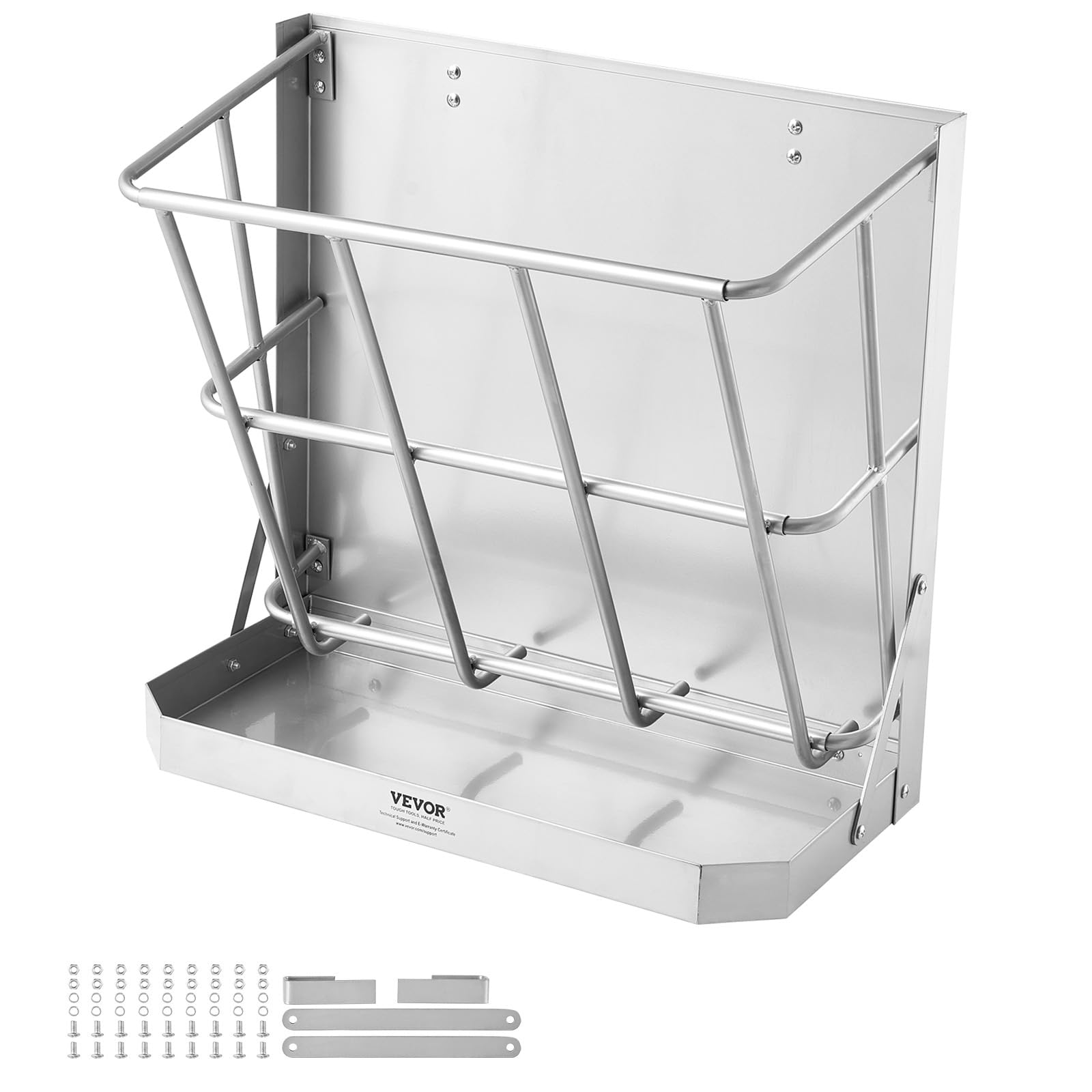
The VEVOR feeder uses Q235 carbon steel pipes welded to galvanized steel panels, creating a frame that resists rust and shrugs off repeated head-butting. The 21-gallon hay section sits above a 2.5-gallon grain tray, giving you a dedicated space for pellets without mixing. Wall-mounted L-shaped hooks secure the unit to wooden posts or stud walls in minutes.
The wide top opening allows loading an entire hay flake without stuffing, and the depth of the hay section prevents goats from pulling out mouthfuls and dropping them. Owners of Nigerian dwarf goats report that the feeder works perfectly in run-in sheds and barns, and the dual-feed design eliminates the need for a second station. Assembly requires a drill and basic hardware, but the process is straightforward.
While the unit is not fully waterproof, the galvanized coating handles rain exposure better than painted steel. The grain tray is shallow enough to be visible from across the pen, so you can quickly tell when pellets are low. For farms switching from separate hay and grain stations to a single-unit solution, this is a solid upgrade.
Why it’s great
- Welded Q235 carbon steel frame is extremely durable
- Large hay section paired with a 2.5-gallon grain tray
- Wall-mounted design keeps floor space clear
- Easy to install inside barns, sheds, or stalls
Good to know
- Not fully waterproof; best in covered areas
- Grain tray is fixed, not detachable
- Drilling required for wall installation
5. BUYYAH 20 Gallon Wall Hay Rack (2-Pack)

The BUYYAH 20-gallon two-pack gives you two feeding stations for the price many brands charge for one. Each unit holds 20 gallons of hay with a multiple-sided opening that allows several goats to eat simultaneously. The wall-mounted profile keeps the floor clear, and the rounded edges reduce the chance of injury during feeding.
Assembly is simple — each feeder comes in three pieces that lock together without tools. The metal frame is BPA-free and coated for rust resistance. Buyers have successfully used these feeders with Nigerian dwarf goats, sheep, and even small horses. The 20-gallon capacity holds roughly one and a half standard hay flakes, which is enough for two to three goats per feeder in a full-day rotation.
Some users repurposed these racks for blanket storage, noting that the frame felt less rigid than heavier commercial-grade feeders. For goats, the bars are spaced well enough to prevent head entrapment with adult animals, but young kids should be monitored. The two-pack format works especially well for owners who rotate grazing areas and need portable feeding stations.
Why it’s great
- Two feeders per pack for herd expansion or rotation
- Tool-free assembly in minutes
- Rounded edges and BPA-free materials
- Multiple-sided design allows simultaneous feeding
Good to know
- Feel less rigid than single-piece welded steel units
- Bar spacing may allow young kid heads through
- No cover provided for outdoor weather protection
6. Rugged Ranch Wall Mounted Rustproof Hay Feeder (2-Pack)
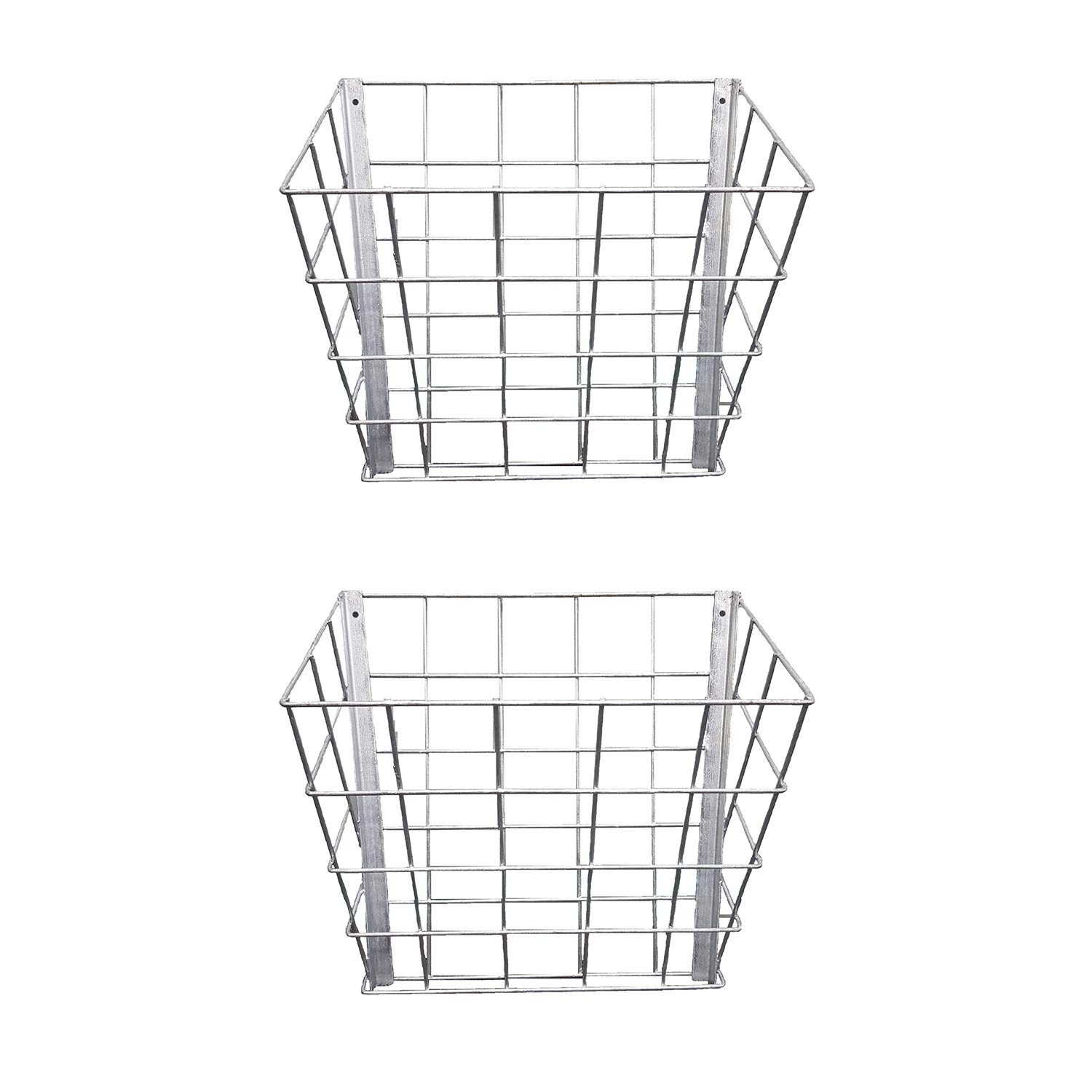
The Rugged Ranch feeder rack uses a 4-inch by 4-inch grid pattern stamped into galvanized steel, creating a simple, strong barrier that holds hay in place while allowing goats to pull through small mouthfuls. The rustproof frame handles outdoor exposure without paint peeling or corrosion at the weld points. Mounting screws are included, and the backplate attaches flat against any wooden wall or fence post.
The 2-pack format lets you set up stations in multiple pens or provide two feeding points in one enclosure to reduce crowding. Owners with herds of forty or more goats report using multiple sets across their operation. The shallow depth of the feeder keeps hay from compacting at the bottom, which encourages goats to eat the entire flake rather than letting stems settle out.
One recurring note from buyers is that the grid openings are large enough for kids under five weeks old to get a leg caught or their head stuck. For adults, the feeder works fine. The lack of included mounting hardware beyond basic screws means you may need to supply your own washers or toggle bolts for masonry walls. Overall, for the price per unit, this is one of the most durable galvanized options available.
Why it’s great
- Rustproof galvanized steel withstands outdoor weather
- 4×4 grid reduces waste while keeping hay accessible
- Two-pack provides great value for multiple pens
- Lightweight and stackable for storage
Good to know
- Grid openings may endanger very young kids
- No mounting hardware included beyond basic screws
- Shallow depth limits total hay capacity
7. Little Giant Hook Over Goat Trough

The Little Giant Hook Over Trough is the simplest entry-level option for goat owners who need a quick feeding solution without tools. The molded plastic body with six segmented slots prevents goats from pushing each other out of the feeding position. Fiberglass reinforcement adds impact resistance, and the UV-stabilized polyethylene won’t crack under extended sun exposure.
The 9-quart capacity fits a day’s hay for one or two Nigerian dwarf goats. The integrated hooks drop over standard fencing, but the fit is loose on most wire fences — owners frequently add a 2×4 backup board to stabilize the trough. The plastic is smooth and easy to wipe down, which stops mold from forming in wet climates.
At its price point, the Little Giant is the most affordable feeder on this list, but the lightweight plastic does flex under aggressive goats, and the shallow trough depth can lead to hay being pushed out onto the ground. For a single goat or a small pen where budget is the primary constraint, this feeder gets the job done with minimal setup time.
Why it’s great
- Simple hook-over design requires no tools for installation
- Six segmented slots reduce feeding competition
- UV- and impact-resistant plastic lasts in direct sun
- Easy to clean with soap and water
Good to know
- Lightweight plastic may flex under heavy use
- Hooks fit poorly on wire fences without a backing board
- Shallow design allows hay to spill onto the ground
FAQ
How often should I clean my goat hay feeder?
What feeder size do I need for Nigerian dwarf goats?
Can I leave a hay feeder outside in the rain?
How do I stop goats from wasting hay in a feeder?
Are 2-in-1 hay and grain feeders worth it?
Final Thoughts: The Verdict
For most users, the goat hay feeder winner is the Little Giant Mountable 2-in-1 because it combines tool-free installation, galvanized steel durability, and a dedicated grain tray in a unit that holds two flakes of hay and feeds up to ten animals. If you want a budget-friendly option that still offers strong capacity, grab the BUYYAH 21 Gallon Rack. And for barns with tight wall space where corner dead zones need to become functional feeding stations, nothing beats the Intrepid International Corner Rack.