
The most frustrating part of modern golf technology isn’t a bad swing—it’s buying a piece of gear only to discover it demands a recurring annual fee just to keep working. Dedicated golfers looking to practice at home or on the range want hardware that delivers raw data without a monthly subscription attached to it. The market has responded with dozens of capable devices that give you ball speed, launch angle, spin rate, and full simulator integration with zero recurring costs baked into the product.
I’m Mohammad Maruf — the founder and writer behind Drink4Good. After analyzing the shot data, build materials, connectivity requirements, and long-term ownership costs across eleven devices in this niche, I’ve mapped out which units deliver the highest spec-to-value ratio for buyers who refuse to pay annual fees.
Whether you need a compact radar unit for backyard nets or a high-end camera system for a dedicated simulator room, this guide focuses exclusively on best golf launch monitor without subscription models that give you full access to every metric from day one without locking key features behind a paywall.
How To Choose The Best Golf Launch Monitor Without Subscription
Choosing a launch monitor that doesn’t demand an annual fee goes beyond just looking at the sticker price—it’s about understanding how the device tracks data, what environment it needs, and which metrics really matter for your practice goals. Radar-based units do well outdoors with ample ball flight, while photometric systems shine in tight indoor spaces. The key specs to evaluate are the sensing technology, the number of data parameters captured, the minimum space required for reliable reads, and whether the included software gives you simulator access without time-limited trials.
Radar vs. Camera: Which Sensing Technology Suits Your Space
Doppler radar launch monitors measure the ball’s velocity and trajectory by bouncing radio waves off the moving object—they need at least 8 to 15 feet of ball flight to lock onto the data. These units excel on the driving range or in large indoor sim bays. Photometric camera-based systems, on the other hand, capture high-speed images the moment the club hits the ball—they require limited space behind the hitting area and work even in cramped garages or basements. Camera systems typically do not need special marked balls either, which saves ongoing cost.
Data Metrics That Actually Move Your Handicap
A launch monitor that dumps 20 numbers on you is useless if you don’t know which ones to act on. For full-swing improvement, focus on club head speed, ball speed, carry distance, launch angle, and spin rate—these five metrics alone can diagnose 90 percent of distance and dispersion issues. Attack angle and club path matter for advanced fitters and low-handicap players trying to shape shots. Smash factor (ratio of ball speed to club speed) tells you how cleanly you’re hitting the center of the clubface. Devices with less than 10 capture parameters may leave serious players wanting more detail.
Space Requirements and Ball Type Flexibility
Every radar-based monitor lists a minimum flight distance—typically 8 to 15 feet—for the data to register. If you’re hitting into a net in a 10-foot bay, you need a unit that works reliably in that environment. Some budget units read short chips poorly indoors because the ball doesn’t travel far enough. For camera-based units, the key dimension is the placement distance behind the ball line. Also check whether the device forces you to buy specific marked balls (like RPT balls) or if it reads any standard ball—the latter saves serious money over a season.
Quick Comparison
On smaller screens, swipe sideways to see the full table.
| Model | Category | Best For | Key Spec | Amazon |
|---|---|---|---|---|
| Swinora GX-03 | Launch Monitor | Budget-friendly practice | Doppler radar OLED display | Amazon |
| Izzo Swami Launch Master Pro | Launch Monitor | Easy portability | Doppler radar 30-420 yds | Amazon |
| Garmin Approach R10 Bundle | Launch Monitor | Portable all-rounder | Doppler radar 10-hr battery | Amazon |
| Voice Caddie SC4 PRO | Launch Monitor | Mid-range simulator | Doppler radar built-in screen | Amazon |
| Rapsodo MLM2PRO | Launch Monitor | Dual camera accuracy | Doppler + dual camera | Amazon |
| Uneekor EYE MINI CORE | Launch Monitor | Indoor camera setup | Photometric cameras no sticker | Amazon |
| FlightScope Mevo Gen2 | Launch Monitor | Pro-level parameters | Doppler + camera 18 params | Amazon |
| SkyTrak ST MAX | Launch Monitor | Tour-level precision | Dual Doppler + cameras | Amazon |
In‑Depth Reviews
1. Swinora GX-03 Launch Monitor
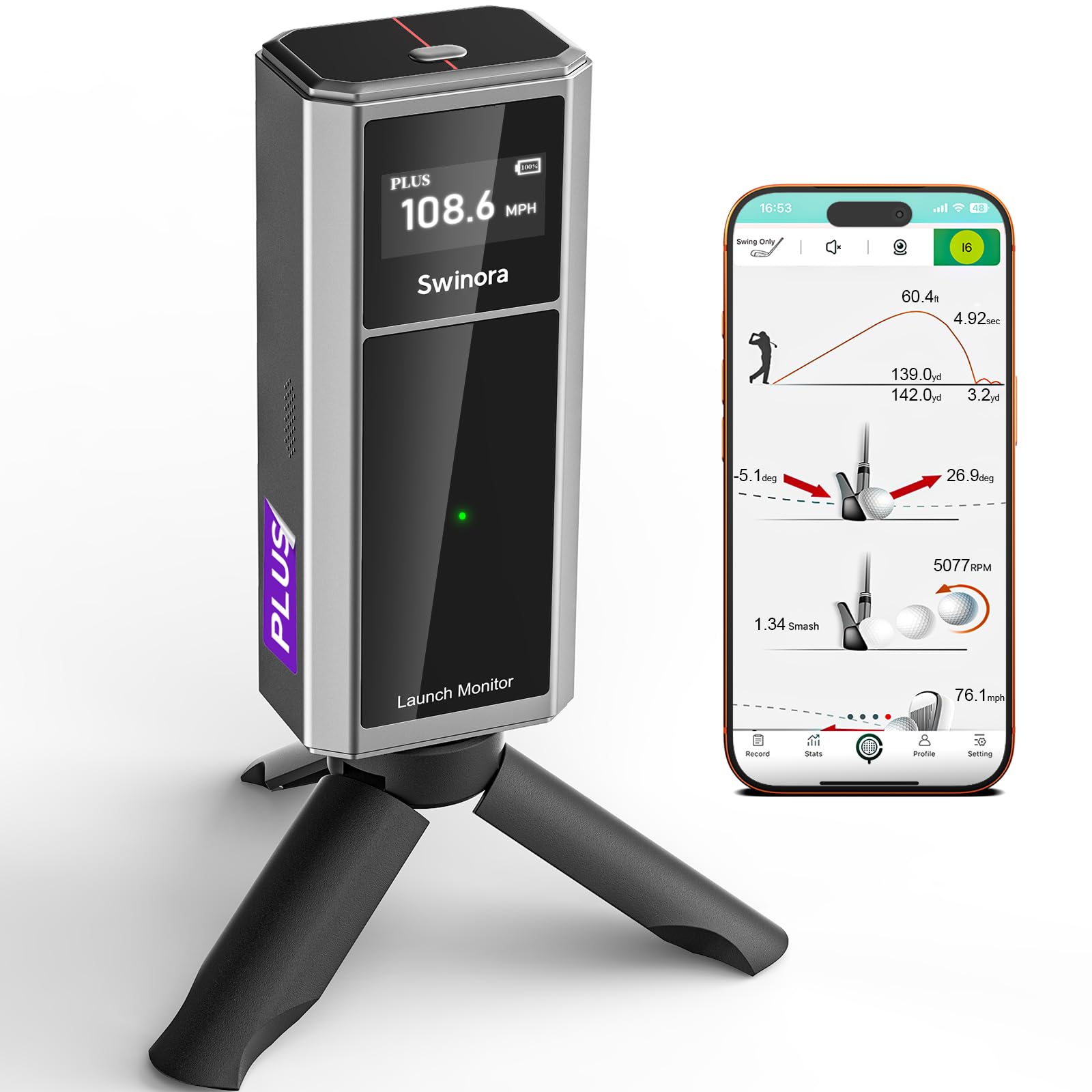
The Swinora GX-03 is an entry-level Doppler radar launch monitor that punches above its price tier by delivering 13 key metrics—including attack angle, launch angle, spin rate, and club speed—with absolutely zero subscription fees. The built-in temperature, humidity, and barometric pressure sensors automatically adjust shot data to real-world conditions, which is a feature typically reserved for units costing two to three times more. The 3D driving range app offers 45- and 90-degree viewing angles, and the distance compensation function lets you dial each club’s carry from 80 to 120 percent to match your actual yardage.
Indoor use requires at least 15 feet of total space (place the device 5 feet behind the ball with 10 feet of ball flight), which is the standard expectation for radar-based units in this range. The aluminum metal body and OLED display feel more premium than the plastic enclosures found on comparable budget options. The app does require a smartphone—there is no built-in display beyond the small OLED—but the real-time voice feedback and guest mode make it easy to hand to a buddy during practice sessions.
Some early adopters report occasional Bluetooth disconnections and the device emits a beep pattern for shanked shots to avoid recording bad data. The distance readings have been called into question by a minority of users comparing the GX-03 to high-end simulators, but calibrating the yardage offset typically brings the numbers in line. For golfers who want a portable, fully functional launch monitor that never asks for a credit card, the Swinora is the strongest entry-level play on the market right now.
Why it’s great
- Environmental sensor compensation improves real-world accuracy
- Premium metal housing feels durable for range bag storage
- Distance calibration lets you tune each club individually
Good to know
- Requires 15 feet of total space for reliable indoor reads
- App stability varies depending on phone model and OS version
2. Garmin Approach R10 Bundle

The Garmin Approach R10 has become the benchmark for portable launch monitors, and this PlayBetter bundle amplifies its value by including a 5000mAh power bank, tripod, phone mount, and padded carry case—everything you need for net practice or range sessions right out of the box. The R10 uses Doppler radar to measure club head speed, ball speed, swing tempo, spin rate, launch angle, and ball flight path, then pushes that data to the Garmin Golf app for metric tracking and shot dispersion charts. The Home Tee Hero feature gives access to over 43,000 virtual courses, though it does carry a small optional monthly fee—the base unit requires no subscription to function.
Battery life is rated at 10 hours, which covers multiple sessions without needing a recharge. The device is lightweight enough to throw in a carry-on bag, and the included tripod and phone mount make setup repeatable. The R10 measures ball direction at this price point—a feature many competitors reserve for more expensive units—so you get shot shape data without upgrading to a camera system. Android compatibility is solid, unlike some competitors that restrict full functionality to iOS devices.
The most common criticism is that the R10 requires a Wi-Fi or cellular connection on the range to access cloud-based features, which can be limiting at remote practice spots. Some users also note that putting data and very short chip shots (under 10 yards) are not consistently tracked. For mid-range buyers who want the most proven, widely-reviewed launch monitor that works out of the box, the Garmin R10 bundle remains the safest and most feature-complete pick in this category.
Why it’s great
- Base unit requires zero subscription for all core metrics
- Bundle includes portable charger, tripod, and carry case
- Ball direction measurements rare at this price level
Good to know
- Requires data connection for cloud features on the range
- Short chip shots under 10 yards are inconsistently captured
3. Izzo Golf Swami Launch Master Pro

The Izzo Swami Launch Master Pro brings Doppler radar tracking to a mid-range price point with nine key data fields—total distance, carry distance, swing speed, ball speed, smash factor, launch angle, attack angle, spin rate, and apex height. The unit measures from 30 to 420 yards, covering every club from wedge to driver. Integrated live weather sensors (temperature, humidity, altitude) auto-adjust the readings, so the data you see on an indoor net matches what the ball would do on a 75-degree afternoon at sea level.
Setup is straightforward: place the unit 6 feet behind the ball, connect via Bluetooth to the Izzo app, and start swinging. The built-in speaker delivers loud shot callouts, which is helpful for outdoor range sessions where you may not be looking at the phone between swings. The measuring range maxes out at 420 yards, which covers the vast majority of amateurs, but elite drivers hitting over 300 yards of carry may find the total distance ceiling limits full-driver data on wide-open ranges.
User reports show that carry distances tend to read 5 to 10 yards longer than some reference devices, though it is difficult to say which unit is more accurate without a Trackman comparison. The plastic build is functional but not as premium-feeling as the all-metal Swinora or the dense Garmin design. For a mid-range unit that gives you attack angle data—critical for diagnosing fat or thin strikes—and never asks for a subscription, the Swami Launch Master Pro is a solid choice for range rats who want to track swing changes over time.
Why it’s great
- Attack angle measurement helps diagnose low-point issues
- Weather sensor compensation improves data consistency
- Loud voice callout useful for range sessions without phone
Good to know
- Carry distances may read 5–10 yards long on some clubs
- Plastic body lacks the heft of higher-end competitors
4. Voice Caddie SC4 PRO

The Voice Caddie SC4 PRO is a purpose-built launch monitor that integrates its own built-in screen for on-device data display—a rarity at this tier that eliminates the need to pull your phone out between every swing. The Prometrics engine captures ball data and club head metrics from swing through impact to ball flight, providing real-time feedback loops. The device comes with access to E6 Connect’s 3D driving range and five free courses, plus the VOICECADDIE S app for advanced statistical analysis, all with zero subscription costs attached to the base hardware.
It works with standard golf balls—no special marked balls required—which saves the recurring cost of proprietary consumables. The multiple training modes include 3D Simulator, Practice/Target Mode, and Speed Training/Swing Speed Mode, so you can shift between free play and structured drills without restarting the app. Indoor use requires about 14 feet of flight distance to the net for the radar to lock on, which is on par with other Doppler units in this range.
Some users report that occasional shots read the wrong direction (draw instead of fade) or show carry distances that are off by significant margins compared to a Trackman. Lighting conditions can also affect reading consistency, especially when using the device indoors under poor overhead lighting. The SC4 PRO sits at a premium price point, but the built-in display and lack of any subscription barrier make it a compelling choice for golfers who want standalone function without a phone dependency.
Why it’s great
- Built-in screen lets you practice without a phone
- No special balls required for any mode
- E6 Connect 3D range included free with hardware
Good to know
- Indoor readings can vary under poor lighting conditions
- Some shot direction inaccuracies reported on fades/draws
5. Rapsodo MLM2PRO Launch Monitor
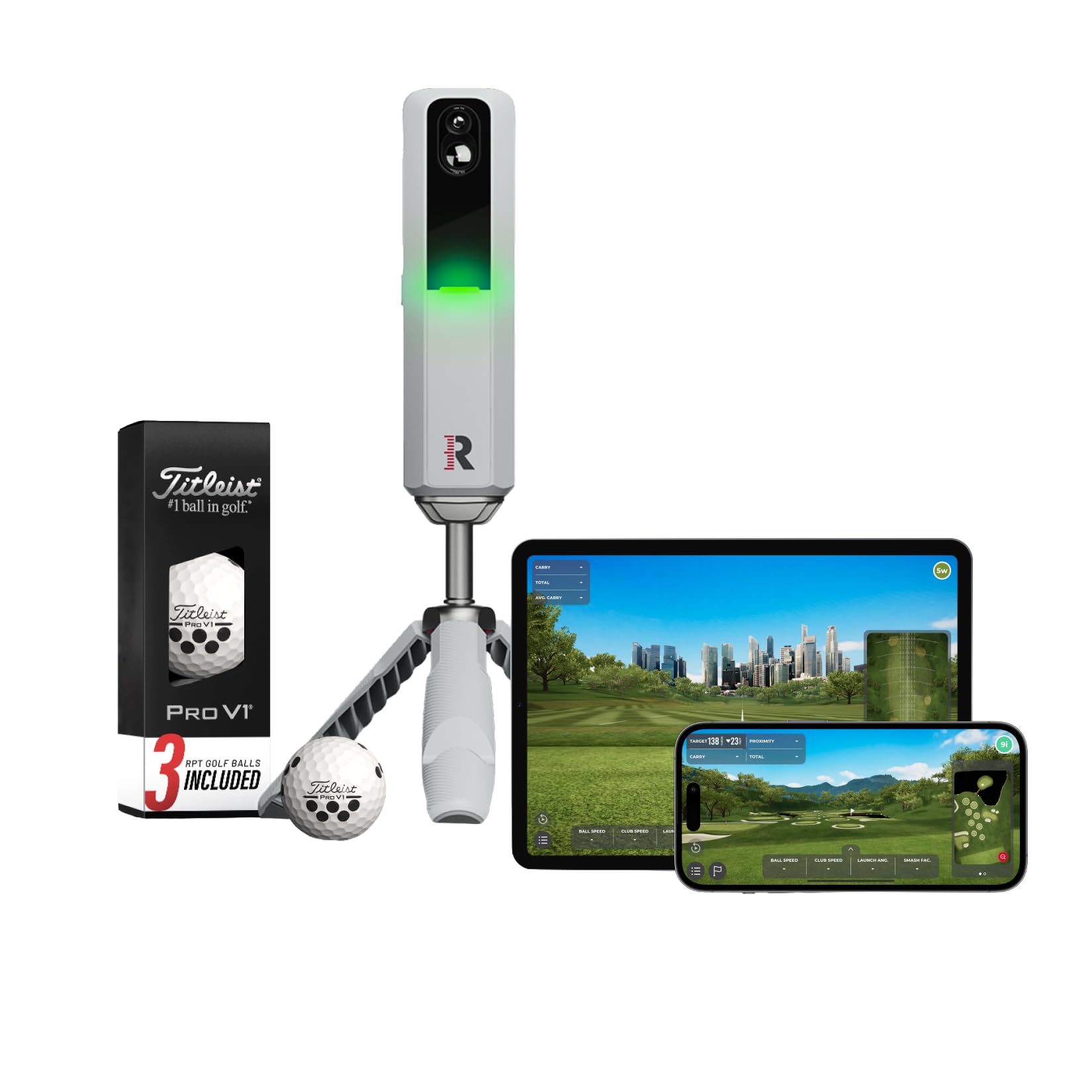
The Rapsodo MLM2PRO combines Doppler radar with a dual-camera system to capture 15 metrics including spin rate, spin axis, club speed, club path, launch angle, and carry distance. The dual-camera array captures club and ball contact in slow motion, overlaying data directly onto the video replay—this visual feedback is invaluable for diagnosing face angle at impact and path issues. The unit includes three ProV1 RPT Chrome Soft X balls (marked for the camera) for out-of-box use, and the premium trial gives you 45 days of access to simulated courses, third-party app integration, and speed training.
The key decision point with the MLM2PRO is that after the trial period, premium features—including the simulator courses and third-party app connection—require a paid membership. However, the core launch monitor functions (spin data, club data, video capture) remain accessible without a subscription, which satisfies the no-subscription criteria for base functionality. If you plan to use the device purely for range practice and video analysis, you never have to pay a cent after buying the unit.
Connection stability is the most common pain point; the device works best when set to its own direct Wi-Fi network rather than sharing a facility Wi-Fi. The marked ball requirement adds ongoing consumable cost, although many users apply their own alignment dots with a plastic eartag marker to use standard balls. The MLM2PRO’s data consistently tracks within 2–3 percent of a Trackman, making it one of the most accurate sub- launch monitors available—as long as you can tolerate its occasional connectivity quirks.
Why it’s great
- Dual-camera video overlay shows club contact in slow motion
- Spin axis data helps diagnose slice/hook mechanics
- Accuracy within 2–3 percent of reference-grade units
Good to know
- Marked balls (RPT) are required for best camera tracking
- Premium features expire after 45-day trial
6. Uneekor EYE MINI CORE
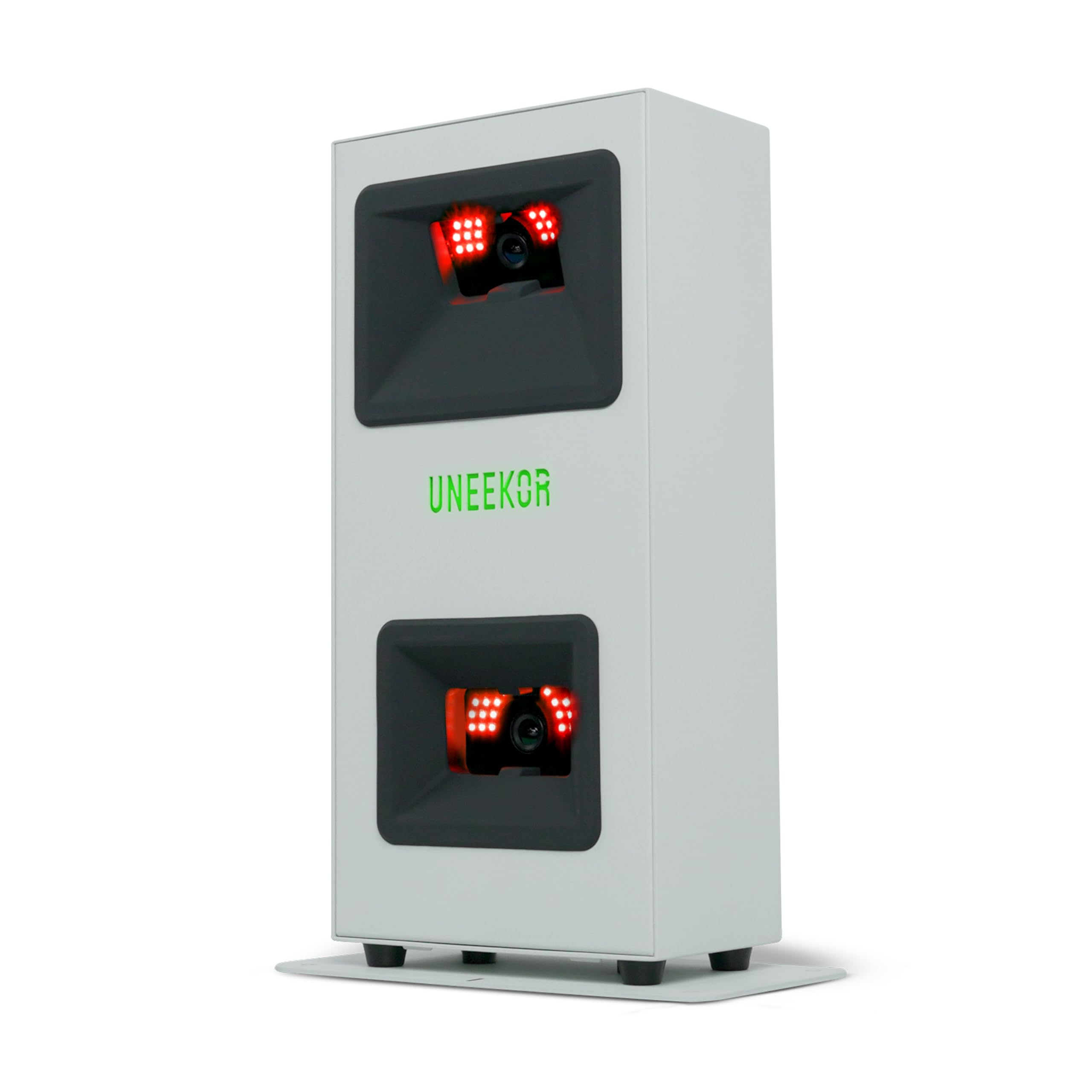
The Uneekor EYE MINI CORE represents a step change in launch monitor technology by using photometric high-speed cameras that read any dimple pattern on any golf ball—no stickers, no marked balls, no consumables. This alone saves roughly to per dozen balls if you prefer premium urethane options. The unit captures 15 ball data points with near-zero latency, and the included VIEW software provides session reports to track progress over time. Dimple Optix technology means you could pull a ball from the used barrel at the range and get full spin data instantly.
Hardwired via Ethernet, the EYE MINI CORE eliminates the latency and disconnection issues that plague Bluetooth and Wi-Fi-based units—data appears on screen before you’ve finished your follow-through. It works in tight spaces because the cameras sit just behind the ball line and require limited ball flight distance, making it ideal for garage sims and basements where 15 feet of space isn’t available. The 3-month Ultimate Package trial gives you access to 4K championship courses on the GameDay platform, though a simulation software subscription is required after trial.
The trade-off is that the unit must stay plugged into AC power and requires a capable laptop (i5 Gen12/Ryzen5+ with RTX 3060 minimum) to run the simulation software—it is not a grab-and-go device for the driving range. The metal enclosure and 8.4-pound weight signal serious build quality, but this is a stationary unit meant for a dedicated hitting bay. For indoor-only golfers who want camera-based precision without the cost per ball of proprietary systems, the EYE MINI CORE is the most future-proof investment in the sub- category.
Why it’s great
- Reads any golf ball without stickers or marked patterns
- Ethernet connection eliminates wireless dropouts
- Works in compact indoor spaces with limited ball flight
Good to know
- Requires a powerful PC laptop for simulation features
- Not portable—needs AC power and wired connection
7. FlightScope Mevo Gen2
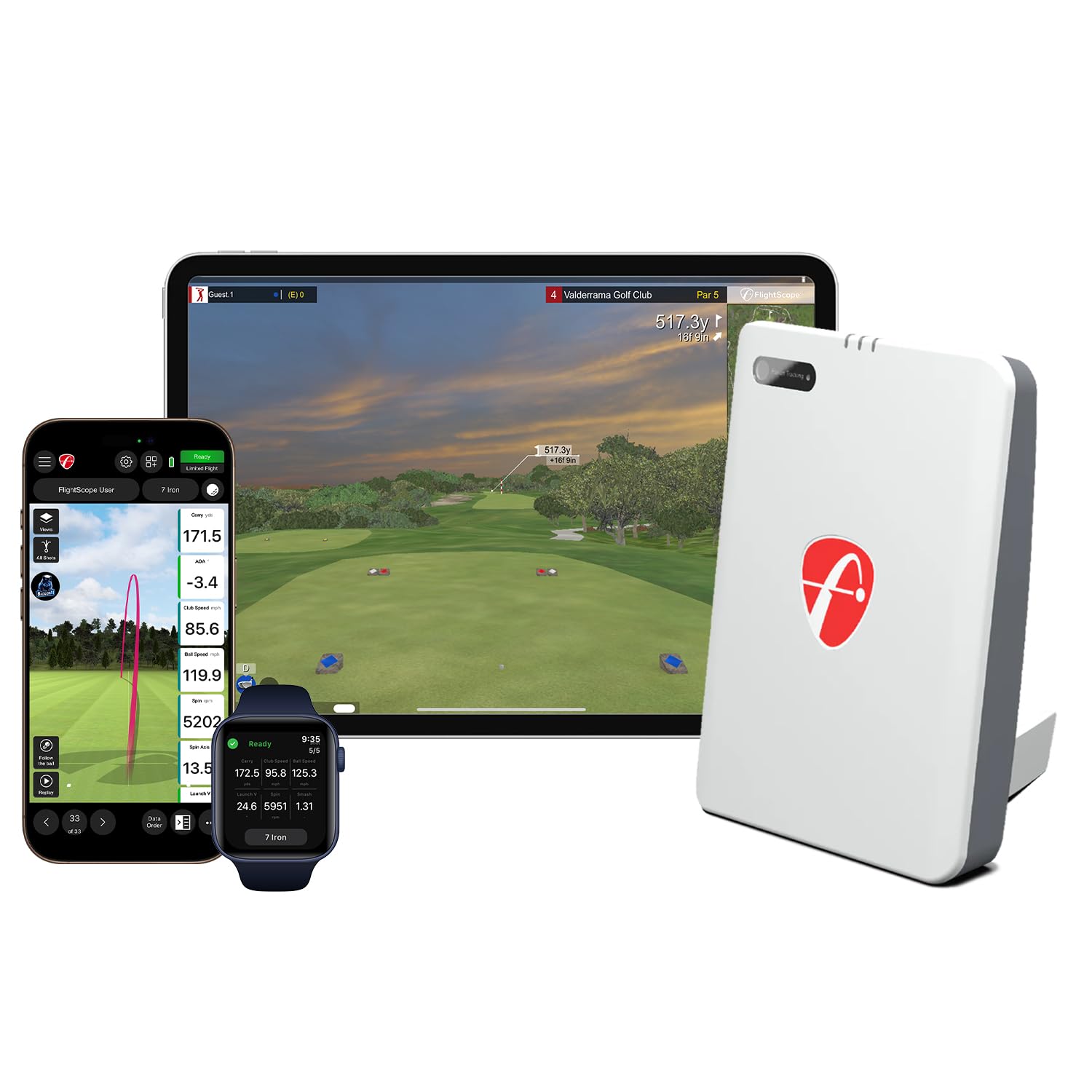
The FlightScope Mevo Gen2 uses patented Fusion Tracking—a combination of 3D Doppler radar and synchronized high-speed image processing—to deliver 18 swing data parameters including full chipping and putting data that many competitors skip altogether. This is the only unit in this guide that captures putting metrics at the sub- mark. The front-facing camera records every swing with data overlays for clubhead speed, ball speed, carry distance, and shot tracer, all without requiring a subscription for the core FS Golf app functionality.
The unit ships with lifetime access to eight E6 Connect simulation courses (including Kiawah Ocean Course and Torrey Pines), the FS Skills App, and the shot tracer feature—no recurring fees, no limited trials. The range ball setting lets you get accurate numbers even when hitting the worn rocks found at public driving ranges. Battery life is six hours, and the compact form factor (about the size of a TV remote) fits easily in a side pocket of most golf bags.
Initial setup is the most frequently criticized aspect of the Mevo Gen2—users report needing to install firmware updates and tweak elevation settings to get distance numbers to match real-world yardages. Some early units had tracking issues where only one out of ten shots would register properly, although firmware updates have improved consistency. For golfers who want a full-spectrum data device—including putting and chipping—that never asks for a recurring payment for its core features, the Mevo Gen2 is the most complete package in the premium category.
Why it’s great
- Captures putting and chipping data—unique at this level
- Lifetime access to 8 E6 Connect courses included
- Range ball setting compensates for worn range balls
Good to know
- Initial setup requires firmware updates and elevation calibration
- Some units ship with inconsistent shot tracking
8. SkyTrak ST MAX
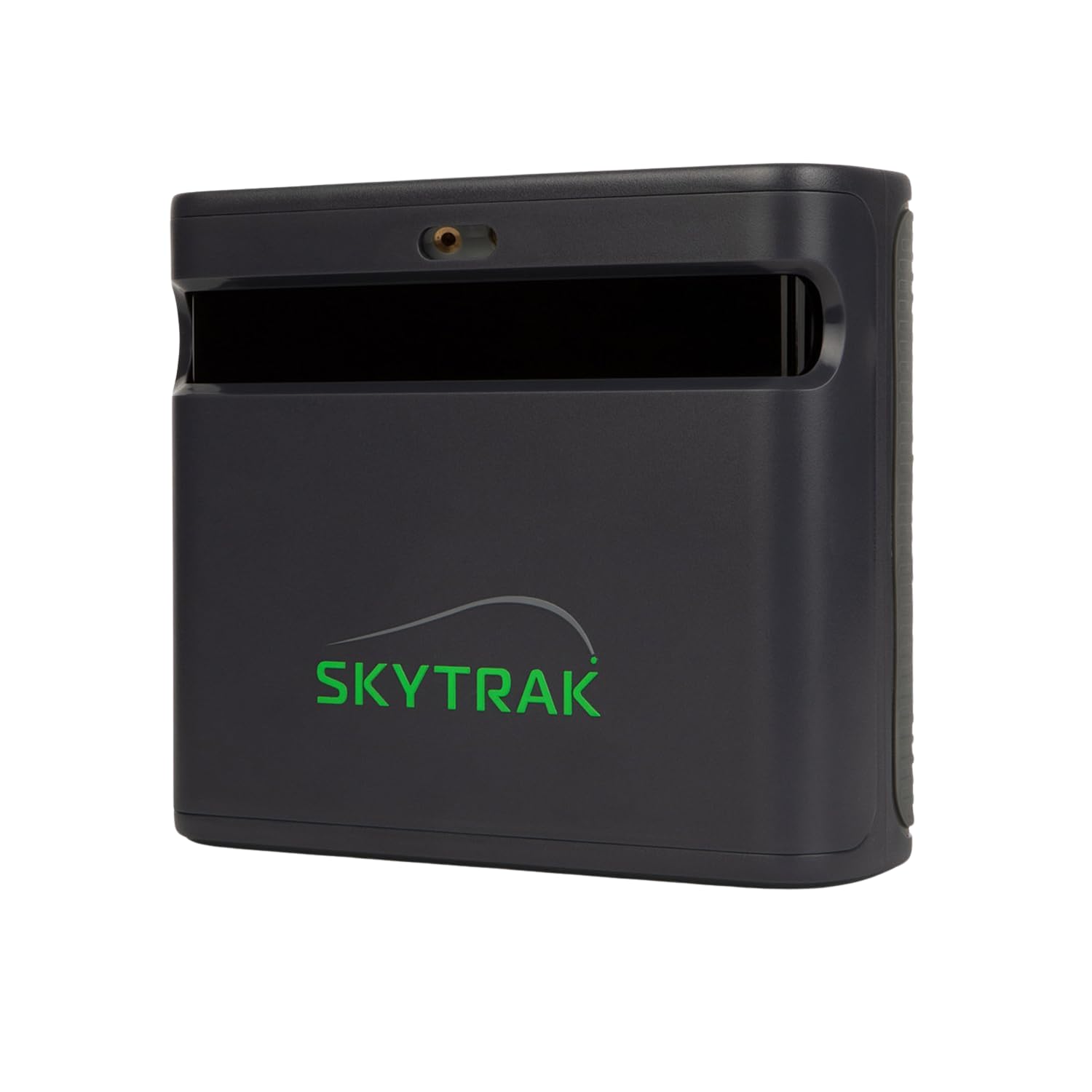
The SkyTrak ST MAX sits at the top of the portable launch monitor market by integrating dual Doppler radar with photometric cameras to produce tour-level ball and club data in a package about the size of a thick laptop. It is the only device on the market with built-in GOLFTEC Speed Training—guided drills and swing insights drawn from over 10 million lessons worldwide—embedded directly into the software. The modular internal architecture reduces component count for greater long-term stability, and the dual USB-C ports allow simultaneous charging and data transfer so your session never gets interrupted by a low battery.
The unit ships with access to SkyTrak’s Skills Assessments, Bag Mapping, Wedge Matrix, and Randomized Practice modes. A 14-day free trial lets you explore the full software suite, but the base hardware captures all core ball flight data (carry distance, ball speed, launch angle, spin rate, club head speed) without any ongoing subscription. The device requires a good Wi-Fi connection and a laptop or phone for display, as the unit itself has no built-in screen. The hitting zone is relatively small, meaning mis-hits near the toe or heel may produce “no read” results more frequently than larger-cavity competition.
Indoor practice requires at least 8 x 10 feet of open space, and users report that shots under 90 yards and those hit off very tall tees (25mm) produce more no-read events. The SkyTrak ST MAX is unambiguously a premium, permanent installation for the serious golfer—not a device you toss in a bag for a quick range session. For enthusiasts building a dedicated simulator space who want the highest data granularity available without paying per-month fees for base functionality, the ST MAX is the undisputed heavyweight champion of the no-subscription category.
Why it’s great
- Built-in GOLFTEC speed training with guided drills
- Dual radar + camera fusion for tour-level data
- Modular design for consistent long-term performance
Good to know
- Small hitting zone produces more no-read events on mis-hits
- Requires dedicated 8×10 foot space and stable Wi-Fi
9. Swinora GX-03 (Alternate Entry)
The Swinora GX-03 reprises its role here as the budget entry point for golfers who want Doppler radar tracking without spending beyond the entry-level threshold. The 13 captured metrics include Spin Rate, Launch Angle, Attack Angle, Ball Speed, Club Speed, Carry Distance, Total Distance, Smash Factor, Apex Height, Club Path, Face Angle, Side Spin, and Shot Shape. The OLED display on the unit itself shows real-time speed data, so you don’t need to look at your phone between swings—a small convenience that makes a difference during high-rep practice sessions.
The aluminum body feels robust for the price point, and the included tripod provides a stable base on both grass and concrete. The magnetic phone mount lets you position your device for swing video capture without buying a separate accessory.
Some users report that the app’s club identification occasionally misreads, requiring a manual club selection before each swing. The 1-year manufacturer warranty covers defects, but the limited track record of the Swinora brand means long-term reliability is still unproven compared to the Garmin and Bushnell ecosystems. For the budget-conscious golfer who wants an all-metal, no-subscription launch monitor that covers the essential full-swing metrics, the GX-03 delivers remarkable value for the money.
Why it’s great
- Aluminum body withstands range bag abuse
- OLED screen shows club speed without phone
- Guest mode allows multiplayer practice
Good to know
- App club identification can require manual overrides
- Brand reliability is less established than Garmin or Bushnell
10. Bushnell Tour V6 Shift Rangefinder

The Bushnell Tour V6 Shift is not a launch monitor in the traditional sense—it is a premium laser rangefinder that provides slope-compensated distances to the pin. I am including it here because many golfers searching for a launch monitor without subscription also need a reliable way to dial in yardages on the course, and the Tour V6 Shift never charges any kind of annual fee for its slope calculations. The Visual JOLT system flashes a red ring and vibrates when you lock onto the flag, eliminating the guesswork of whether you’re aimed at the pin or the background.
The BITE magnetic mount sticks to any metal cart surface for one-handed grabs between shots, and the IPX6 waterproofing means you can use it in light rain without worry. The 1300-yard total range with 6x magnification provides crisp optics even on long par-5 approaches.
This is a course tool, not a practice-range data generator—it will not measure ball speed, launch angle, or spin rate. For a complete training system, pair it with one of the Doppler launch monitors in this guide. But if your primary need is on-course distance accuracy with zero subscription overhead, the V6 Shift is the gold standard that cheaper knockoffs try (and fail) to match.
Why it’s great
- Visual JOLT confirmation eliminates target doubt
- BITE magnet for one-handed cart access
- IPX6 weather resistance for wet rounds
Good to know
- Does not measure ball or club data—rangefinder only
- Premium price over generic laser rangefinders
11. Bushnell Tour Hybrid Laser + GPS

The Bushnell Tour Hybrid combines laser rangefinder accuracy with built-in GPS data, showing front, center, and back yardages directly in the viewfinder while simultaneously lasering the pin—a hybrid approach that eliminates the need to look down at a wrist device or phone for course data. Over 38,000 preloaded courses require no membership fees, making this one of the few GPS devices on the market with zero recurring cost. The Visual JOLT on the laser side provides vibration and red-ring confirmation when you’ve locked onto the flag.
The slope compensation activates or deactivates for both laser and GPS distances via a simple toggle switch, keeping the unit tournament legal when needed. The integrated BITE magnetic mount and IPX6 water resistance match the V6 Shift’s durability. The CR123A battery lasts about 35 rounds, which is respectable for a unit that runs both laser and GPS electronics simultaneously.
Like the V6 Shift, the Tour Hybrid does not produce club or ball data—it is a distance-measurement device, not a swing analyzer. It pairs best with a dedicated launch monitor for range practice. But for golfers who want one device that handles both pin-locking laser distances and GPS course management without any subscription, the Tour Hybrid delivers a capability that no pure launch monitor can replicate.
Why it’s great
- Viewfinder shows front/middle/back yardage alongside laser
- 38,000 preloaded courses with zero membership fees
- Slope toggle works for both laser and GPS modes
Good to know
- Requires smartphone app for initial course data sync
- No ball data metrics—strictly a distance device
FAQ
Can I use a launch monitor without subscription forever?
Do camera-based launch monitors need special golf balls?
How much space do I need for indoor launch monitor use?
Is the Garmin Approach R10 good for Android phones?
What is smash factor and why does it matter?
Final Thoughts: The Verdict
For most users, the best golf launch monitor without subscription winner is the Garmin Approach R10 Bundle because it combines proven radar tracking, 10-hour battery life, and a robust accessory package with zero recurring fees for its core functionality. If you want built-in screen and sim access, grab the Voice Caddie SC4 PRO. And for camera-based indoor precision without sticker cost, nothing beats the Uneekor EYE MINI CORE.