
Finding the right tool to quiet an anxious mind can feel overwhelming. You need something that actively engages your senses without demanding high-level strategy or a steep learning curve. The best options leverage tactile feedback, guided patterns, or gentle social prompts to shift your focus from internal worry to the present moment.
I’m Mohammad Maruf — the founder and writer behind Drink4Good. I’ve spent years analyzing the hardware, design intent, and therapeutic value behind products marketed for stress and anxiety, filtering out gimmicks from genuinely effective tools.
Whether you need a solo activity for your desk or a group game for a therapy session, the right pick can make a real difference. This guide breaks down the top-rated games for anxiety, comparing their mechanisms and best uses so you can find your perfect match.
How To Choose The Best Games For Anxiety
Not all anxiety tools work the same way. Some rely on guided rhythms to slow your breathing, others on physical manipulation to burn nervous energy, and a few on structured conversation to externalize worries. The right choice depends on where you’ll use it and who will use it — a solo adult at a desk needs something very different from a therapist leading a group of teens.
Match the Mechanism to Your Need
Guided breathing tools like a programmable light force you into a calming respiratory rhythm through visual cues. Tactile fidgets like a shape-shifting cube or stacking rocks channel restless energy into repetitive, low-stakes manipulation. Conversation-based games use social prompts and turn-taking to make discussing feelings less intimidating. Identify whether you need to slow down, burn energy, or open up before choosing a tool.
Evaluate Material, Size, and Durability
Soft silicone feels soothing to squeeze and is safe for children, but may attract dust. Rigid plastic or magnetic components offer more complex transformations but can break under aggressive use. For group or therapy settings, a larger format like a 6-inch ball or a stacking game with multiple pieces works better. For desk or pocket carry, a compact 2.3-inch cube or a single breathing light is more practical. Assess the environment first.
Check the Learning Curve and Replay Value
A tool that requires memorizing complex sequences may increase frustration rather than reduce it. Look for clear, intuitive interaction — a single-button breathing light or a simple toss-and-answer ball. On the other hand, a game with hundreds of possible configurations like a magnetic shape-shifter offers long-term engagement. For family or group use, ensure the prompts or mechanics are age-appropriate and repeatable without getting stale.
Quick Comparison
On smaller screens, swipe sideways to see the full table.
| Model | Category | Best For | Key Spec | Amazon |
|---|---|---|---|---|
| Breathing Pal ‘Ted’ | Guided Breathing | Calming corners & bedtime | 3 breathing modes with light cues | Amazon |
| Shashibo Sensory Cube | Tactile Fidget | Desk focus & quiet play | 100+ shape transformations | Amazon |
| YEHUA! Totika Kohatu | Stacking Game | Group & therapy sessions | 192 mindfulness prompt cards | Amazon |
| Knitting Circle | Strategy Board Game | Cozy solo or group play | Plays in 30–45 minutes | Amazon |
| Anxiety Thumball | Social Conversation | Group icebreakers & classes | 6″ diameter with prompts | Amazon |
In‑Depth Reviews
1. Breathing Pal ‘Ted’ – Mindfulness Breathing Light

The Breathing Pal ‘Ted’ combines a soft, squeezable silicone exterior with a programmable color light that guides you through three distinct breathing exercises — 4-7-8 for anxiety relief, 4-4-4-4 box breathing for focus, and 5-5 relaxing breathing. Its 3.94-inch cube form factor is small enough for a bedside table or a desk calming corner, and the auto-shutdown feature makes it safe for sleep use. The included rechargeable lithium-ion battery means no hunting for replacements.
Each mode uses intuitive light cues that expand and contract in rhythm with the breath pattern, which is especially effective for beginners who struggle to pace their breathing without audio guidance. Parents report that children as young as 7 use it to self-regulate during emotional moments, while adults find the ambient light setting useful for meditation. The single-button operation removes any cognitive friction — press to switch modes, tap to change light color.
What sets this apart from a standard nightlight is the structured breathing pedagogy baked into the design. The 4-4-4-4 box breathing mode is directly borrowed from tactical breathing protocols used by military and first responders, making it a clinically grounded tool rather than a simple decorative object. For anyone looking for a passive, guided relaxation aid that works across ages, this is the clear frontrunner.
Why it’s great
- Three effective breathing patterns with clear visual pacing
- Soft silicone top is pleasant to squeeze during use
- Long battery life and auto-shutdown for worry-free sleep
Good to know
- The hard plastic base is not squeezable like the top
- Light is not bright enough to read by
2. Shashibo Sensory Fidget Toy – Shape Shifting Cube

The Shashibo cube uses 36 ultra-strong internal magnets to fold, twist, and snap into over 100 geometric shapes, providing a silent tactile activity that channels restless hand energy without disrupting a workspace or classroom. At 2.3 inches on each side, it fits comfortably in one palm and produces satisfying magnetic clicks with each transformation. The “Spaced Out” colorway features a vibrant, shifting pattern that adds visual interest.
Unlike a simple stress ball, the Shashibo requires active mental engagement to navigate its fold sequences, which pulls focus away from anxious rumination. Users report that memorizing the steps to form specific shapes serves as a working-memory exercise that occupies the prefrontal cortex, leaving less bandwidth for worry. The magnetic connection also allows multiple cubes to be linked together, enabling larger collaborative builds.
Durability is a mixed note — the magnets and panels hold up well to regular folding, but some users report seam separation after several weeks of aggressive use by children. For an adult or teen using it moderately at a desk, the build quality is sufficient. It works best as a quiet focus aid between meetings or as a screen-free break for students, making it a strong mid-range option for tactile, solo play.
Why it’s great
- Hundreds of shapes keep engagement fresh over time
- Quiet magnetic clicks are not disruptive in shared spaces
- Multiple cubes can connect for expanded creativity
Good to know
- Seams can tear with heavy or aggressive use
- Learning curve for advanced shapes may frustrate some users
3. YEHUA! Totika Kohatu – Wood Rock Stacking Game
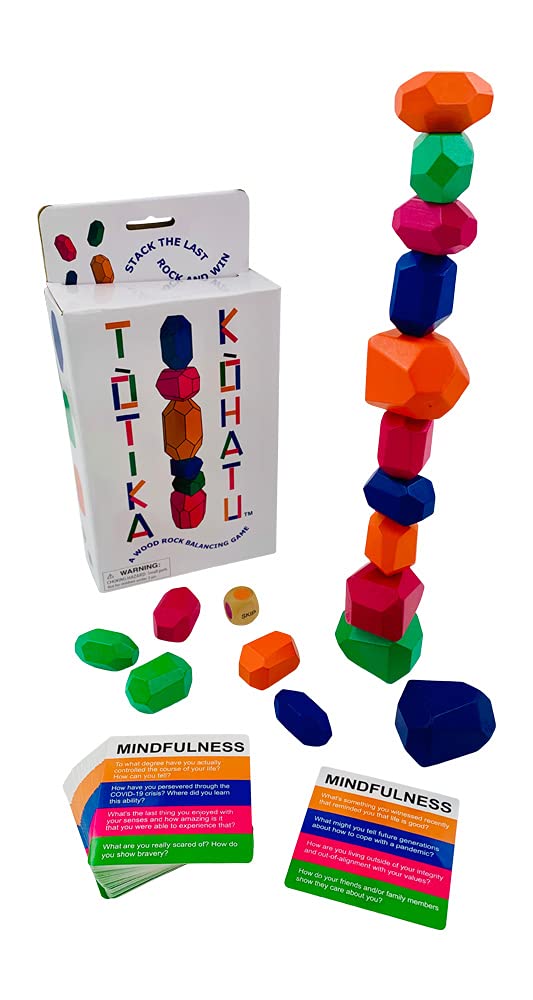
The Totika Kohatu game pairs a set of smooth, natural-wood stacking rocks with a 192-card deck of mindfulness prompts designed by mental health professionals. Players take turns balancing a rock on the growing tower while answering questions about self-care, emotional awareness, relationships, and communication. The stacking mechanic itself is a mindful activity — the tactile weight and grip of the wood pieces encourages slow, deliberate movements.
The card prompts are structured to facilitate meaningful conversation without feeling like an interrogation. Questions like “What does self-care look like for you?” and “Describe a time you felt truly calm” are accessible to teens and adults alike. Therapists report that the game lowers the barrier for clients who are hesitant to open up, because the physical challenge of stacking provides a natural distraction and reduces eye contact pressure.
Some users note that the number of rocks could be higher for more complex stacking, and a few find the card prompts less therapeutic than expected for clinical settings. However, for a family game night, a classroom calming corner, or a group therapy icebreaker, this title delivers a rare combination of fine-motor mindfulness and structured emotional exploration. It is a premium pick in terms of thoughtful design and reusability.
Why it’s great
- Wooden rocks add a grounding, organic sensory element
- 192 unique prompts prevent repetition in group settings
- Designed by therapists for therapeutic conversation flow
Good to know
- Some card prompts feel generic for advanced clinical use
- More rocks would improve stacking variety
4. Knitting Circle – Follow-Up to Calico
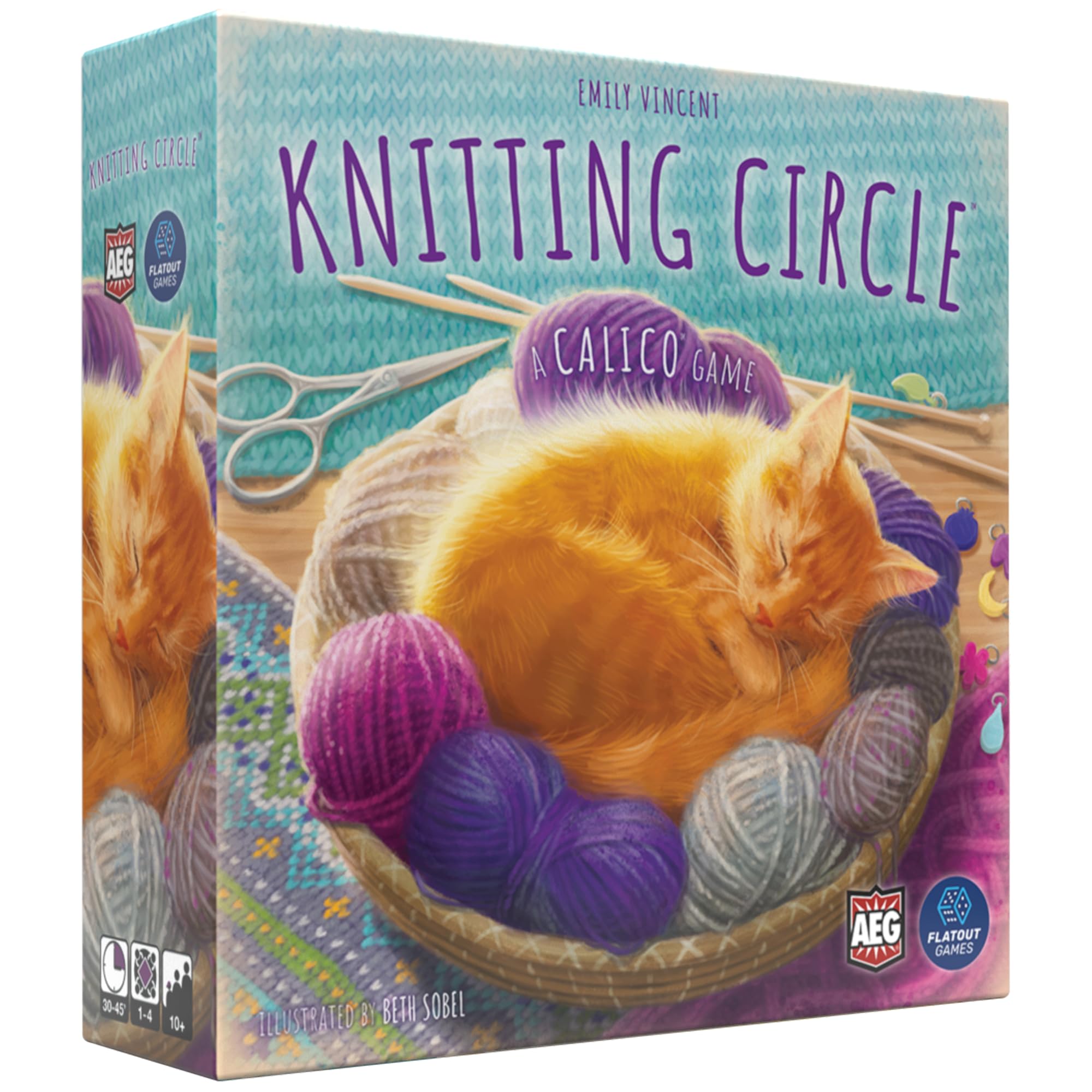
Knitting Circle is a follow-up to the award-winning puzzly game Calico, designed for 1 to 4 players to compete in creating the coziest, most beautiful knitted garments. Illustrated by the beloved artist Beth Sobel, the game uses yarn tiles, garment cards, and cat tokens to create a low-stakes competitive loop that feels relaxing rather than stressful. Each session takes roughly 30 to 45 minutes, making it easy to fit into an evening wind-down routine.
The core loop involves drafting tiles and matching patterns to fulfill garment requests, with quick turns that prevent analysis paralysis. Players report that the tactile quality of the tiles and the satisfying “aha” moment of completing a pattern triggers a gentle dopamine release without the adrenaline spike of more cutthroat board games. The game includes a mini expansion for Calico, adding replayability for existing fans of the series.
This is not a clinical tool — it is a recreational board game with a calming theme and gentle strategic depth. It works best for adults or teens who enjoy crafting themes and want a social, screen-free activity that promotes focus on a concrete task. For someone whose anxiety stems from overthinking, the combination of simple rules, beautiful art, and satisfying combos provides a welcome mental reset.
Why it’s great
- Beautiful, soothing artwork by Beth Sobel
- Quick turns prevent overthinking and frustration
- Includes mini expansion for Calico fans
Good to know
- Better as a relaxing hobby game than a directed therapy tool
- Small pieces may not suit very young children
5. Anxiety Thumball – 6-Inch Conversation Ball

The Anxiety Thumball from PlayTherapySupply is a straightforward yet clever tool: a 6-inch inflatable plastic ball printed with prompts related to coping with anxiety and worry. Players toss the ball, catch it, and respond to the prompt under their thumb. The large size makes it visible and easy to catch in group settings, and the plastic construction is durable enough for regular classroom or clinic use.
Designed for ages 8 through adult, the prompts cover coping strategies, identifying triggers, and expressing feelings — all in language that is accessible without being condescending. Counselors report that the physical act of tossing and catching reduces the intimidation of direct questioning, helping shy teenagers and reluctant participants engage. The game works equally well with small groups of 3 and larger groups of 15 or more, with the ball simply being passed around.
This is a budget-friendly entry point for therapists, teachers, or parents who need an immediate, low-prep group activity. It does not offer the sensory richness of a breathing light or the tactile engagement of a stacking game, but its strength lies in its simplicity and proven effectiveness as a social icebreaker. For anyone running a group session and needing a reliable warm-up activity, this delivers exactly what it promises.
Why it’s great
- Low-prep, high-engagement group icebreaker
- Large 6-inch size is easy to catch and read
- Prompts encourage coping skills without pressure
Good to know
- Less effective for solo or independent use
- Plastic texture is not as soothing as softer materials
FAQ
Can a board game actually reduce anxiety symptoms?
Are breathing lights safe to leave on overnight?
What is the difference between a fidget toy and a therapy game?
Final Thoughts: The Verdict
For most users, the games for anxiety winner is the Breathing Pal ‘Ted’ because it offers clinically grounded breathing exercises in a soft, approachable form factor that works for both adults and children. If you want a tactile desk companion that burns nervous energy, grab the Shashibo Sensory Cube. And for a group therapy session where conversation needs a gentle nudge, nothing beats the YEHUA! Totika Kohatu stacking game.