
Your sweat drips, your glasses slip, and a stray pebble catches your lens mid-stride. That instant of blurred vision is all it takes to lose your rhythm or plant your face on the pavement. The right pair of sports-specific eyewear solves that tension before it starts.
I’m Mohammad Maruf — the founder and writer behind Drink4Good. My market research on athletic optics focuses on impact resistance, lens adaptability, and the frame geometries that lock eyewear in place under high-intensity movement.
I’ve analyzed over a hundred pairs head-to-head across cycling, running, volleyball, and hiking. The following breakdown delivers my distilled guide to the best glasses for sports available right now, ranked by real-world grip, lens versatility, and overall durability.
How To Choose The Best Glasses For Sports
Sports eyewear must juggle three conflicting demands: optical clarity across changing light, a frame that doesn’t shift under movement, and enough impact protection to handle small debris or a stray elbow. Here are the specific specs that separate gear that works from gear that ends up in your backpack.
Lens Technology
Photochromic lenses that automatically adjust transmittance from about 83% indoors down to 16% in full sun eliminate the need to swap lenses between starts and finishes. For high-glare environments like water or snow, a polarized layer cuts reflected light and reduces eye strain. UV400 protection is the baseline — anything less fails to block 100% of UVA and UVB rays up to 400 nanometers.
Frame Material & Fit
TR90 is a lightweight, flexible thermoplastic that retains its shape under heat and pressure, making it the go‑to for wraparound frames. Grilamid offers similar resilience with slightly higher rigidity for rimless designs. Look for adjustable silicone nose pads and hydrophilic rubber on the temple tips — both become tackier when wet, so the frame grips harder the more you sweat. Bridge width (typically 50–60 mm) and arm length (standard 150 mm) determine whether the frame will sit flush against your cheekbones or slide off during a sprint.
Impact & Safety Certifications
ANSI Z87.1‑rated lenses have passed a high‑velocity impact test that standard sunglass lenses often fail. If you cycle on roads with loose gravel, play racquet sports with fast projectiles, or run trails with low‑hanging branches, an impact‑certified lens is not optional. Polycarbonate is the default impact‑resistant material; it is shatter‑resistant and roughly 10 times more impact‑resistant than glass or standard plastic.
Quick Comparison
On smaller screens, swipe sideways to see the full table.
| Model | Category | Best For | Key Spec | Amazon |
|---|---|---|---|---|
| Tifosi Sanctum | Premium | Multi‑sport (cycling, running, pickleball) | ACRed™ polarized lens; anti‑fog vents | Amazon |
| Under Armour UA 0012/S | Premium | Everyday performance & driving | Wrap frame; polycarbonate lens | Amazon |
| Tifosi Vogel SL | Premium | Baseball, cycling, trail running | Frameless design; 1.1 mm polycarbonate | Amazon |
| UV400 Photochromic Safety Glasses | Mid‑Range | Workshop & outdoor activity | ANSI Z87 impact‑rated; photochromic | Amazon |
| ROCKBROS Photochromic | Mid‑Range | Cycling with prescription insert | Built‑in myopia frame; 180° wrap | Amazon |
| Meeloog Fit Over Glasses | Budget | Over‑prescription driving | Polarized; fits over Rx frames | Amazon |
| KAPVOE K76 | Budget | Entry‑level cycling & running | TR90 frame; three swappable lenses | Amazon |
In‑Depth Reviews
1. Tifosi Sanctum
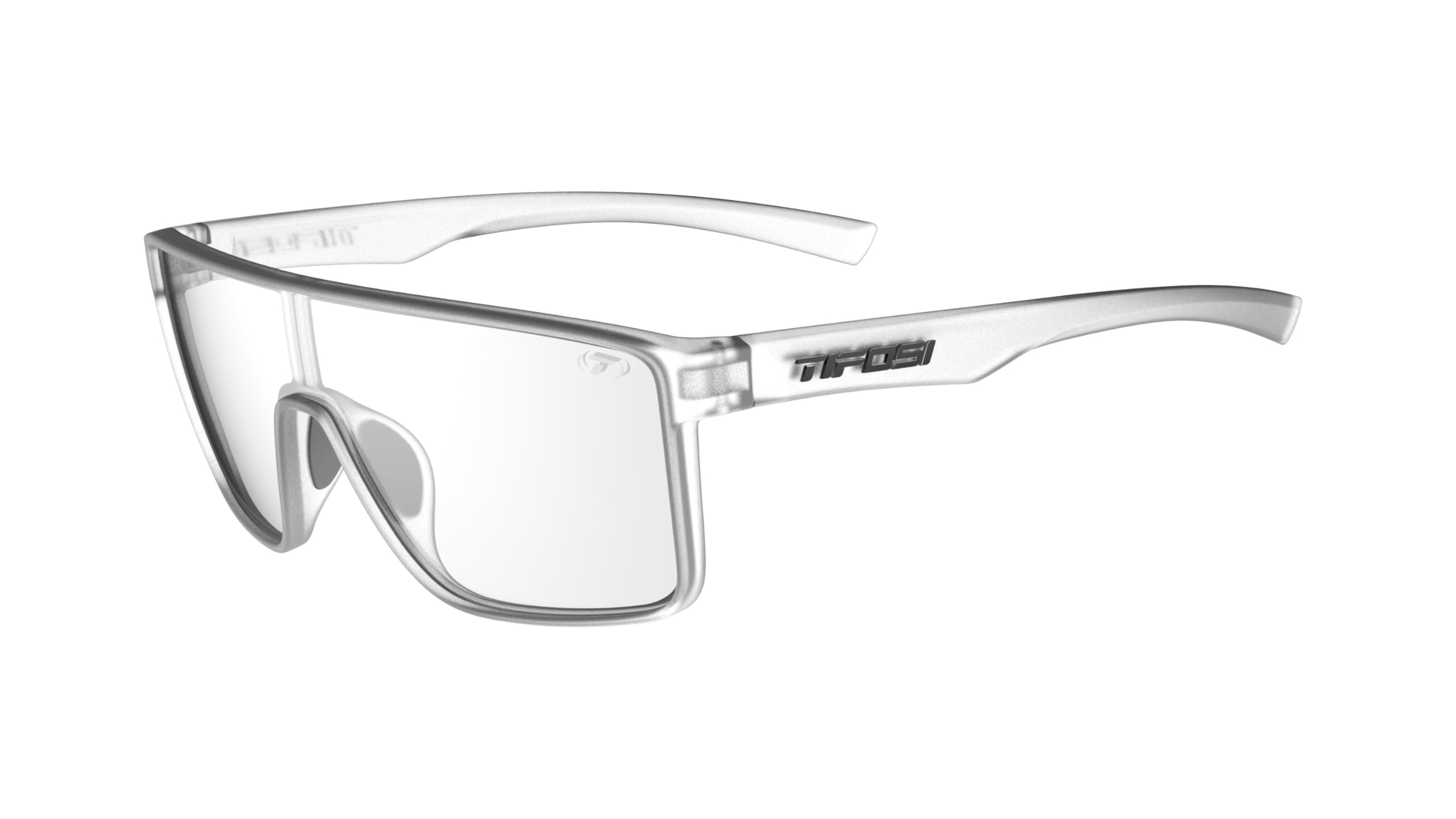
The Sanctum earns the top spot because it nails every variable that ruins a multi‑sport day. Hydrophilic rubber on the nose and temple tips increases grip as you sweat — exactly the opposite behavior of standard plastic frames. The ACRed™ polarized lens cuts harsh glare on pavement and water without washing out color contrast, which matters when you’re tracking a pickleball or spotting trail roots.
Ventilated cutouts in the frame keep fog from building up during high‑output efforts, and the single‑shield lens provides a wide field of view with minimal obstruction. Multiple reviewers noted that the fit works particularly well for smaller faces — the frame doesn’t slide even at a full sprint. The included hard case and microfiber cloth add real everyday utility.
One caveat: the upper frame sits low enough that cyclists wearing a helmet with a deep brow may experience the top edge touching their forehead, which can trap heat on long climbs. For running, hiking, or court sports, that issue disappears entirely.
Why it’s great
- Hydrophilic ear and nose grips lock in place when wet
- Polarized lens with anti‑fog vents works across varied sports
- Lightweight and secure for smaller face shapes
Good to know
- Top frame can contact helmet brim on some cycling helmets
- Lens is fixed — no swappable tint options
2. Under Armour UA 0012/S Wrap
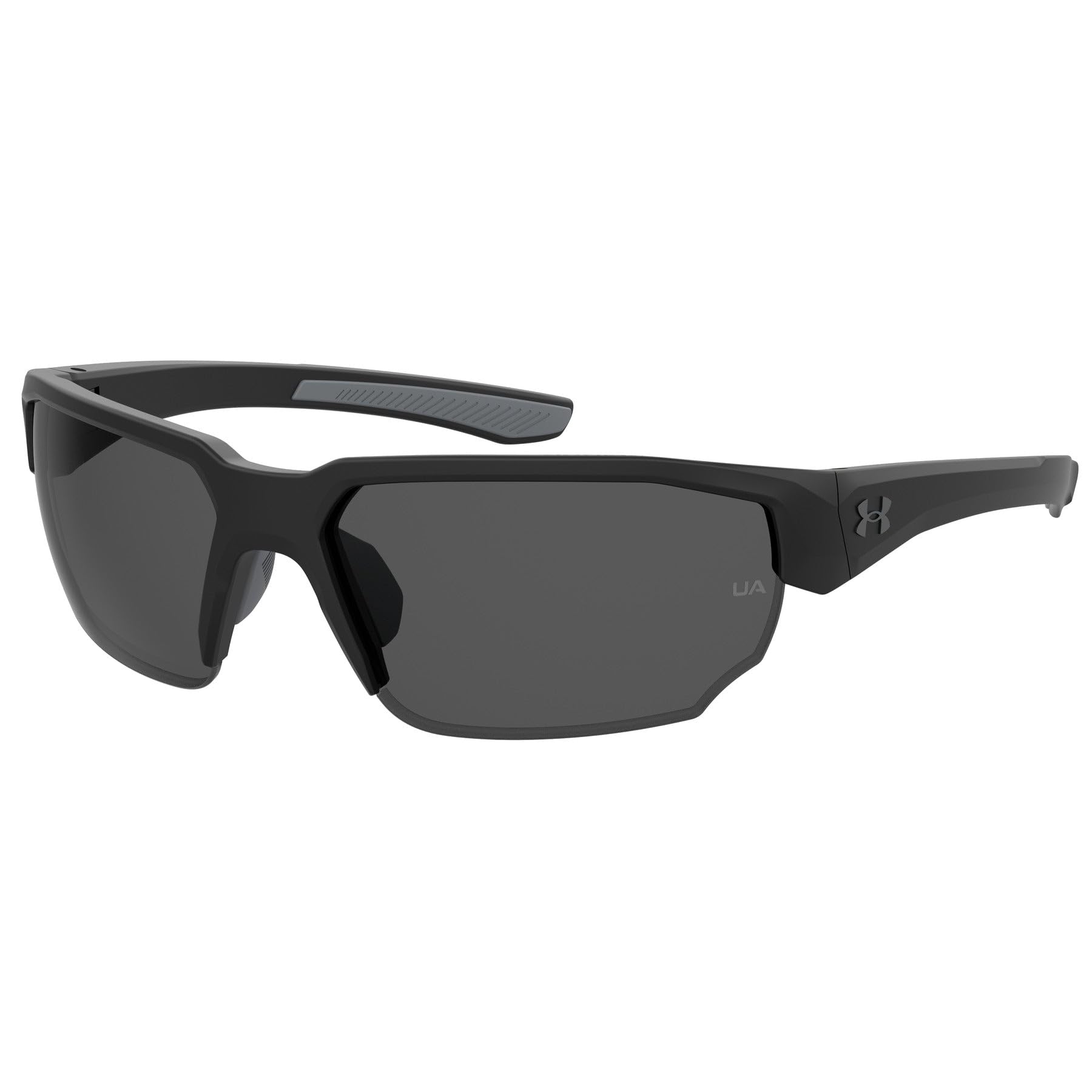
Under Armour’s 0012/S is a premium‑tier wraparound built for athletes who want mainstream brand durability without the Oakley price tag. The polycarbonate lens is impact‑resistant and scratch‑resistant out of the box, and the wrap geometry blocks peripheral wind and light that can cause eye fatigue on long rides or drives.
What sets this frame apart is the fit profile: the arms don’t compress the temples, and the nose piece sits clear of your cheeks, eliminating the pinch marks and lens‑to‑cheek contact that plague many wrap designs. Reviewers with larger heads reported that these are among the most comfortable sunglasses they’ve worn for extended periods — no pressure points even after hours of use.
The trade‑off is lens versatility. These are a fixed‑tint sunglass, so they work best in bright, full‑sun conditions. If you regularly transition between shaded trails and open roads, the lack of photochromic adaptation may push you toward a more adaptive option.
Why it’s great
- Exceptional all‑day comfort with zero temple pressure
- Shield‑style wrap eliminates peripheral wind and glare
- Polycarbonate lens is tough against daily wear and small impacts
Good to know
- Fixed tint unsuitable for low‑light or indoor transitions
- Higher price point than other mid‑range competitors
3. Tifosi Vogel SL
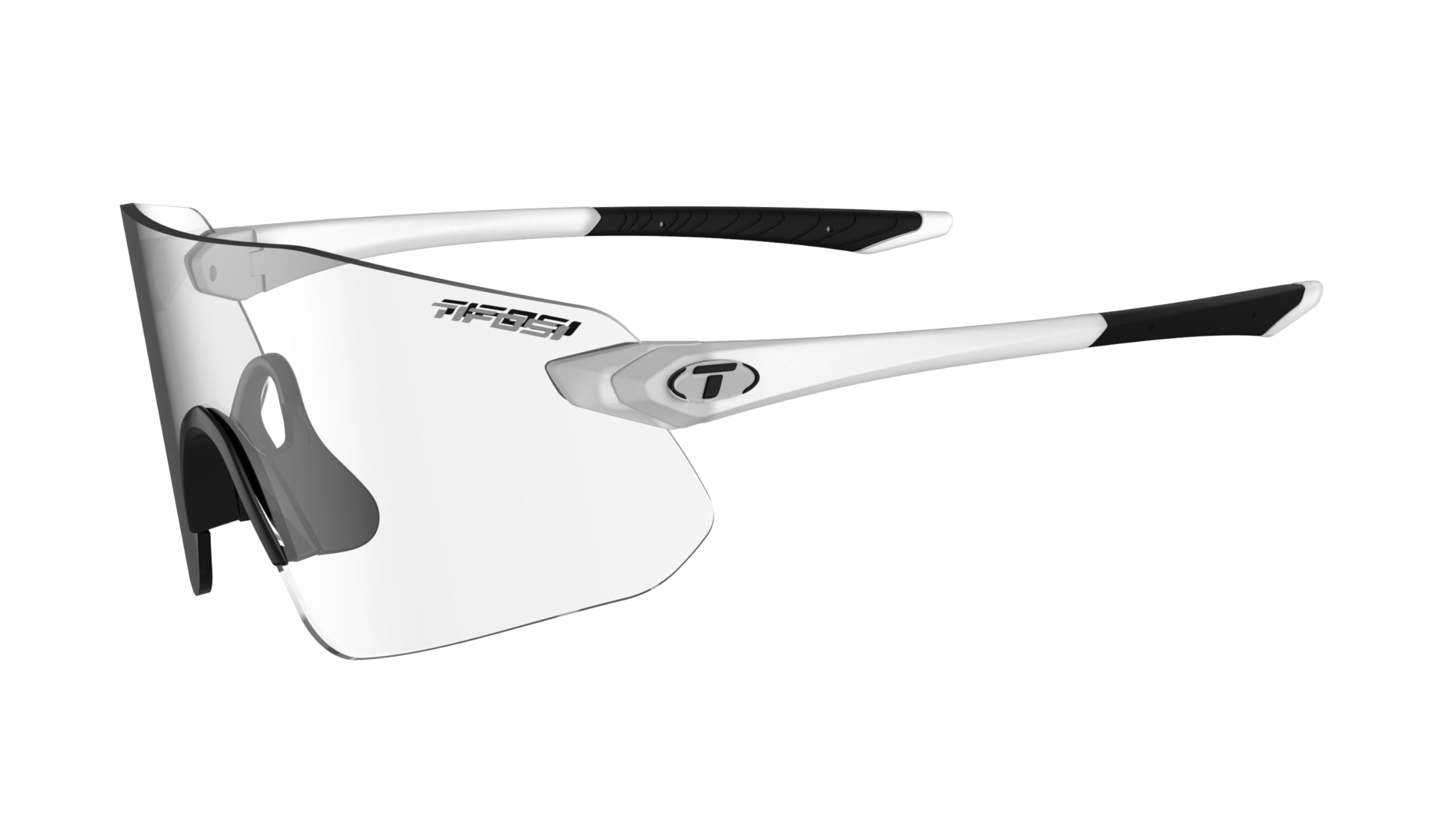
The Vogel SL strips away the bottom frame so sight lines stay completely open — a huge advantage for baseball outfielders tracking fly balls, cyclists looking down at handlebars, or runners scanning uneven ground. The 1.1‑mm polycarbonate lens is thin enough to keep weight negligible but thick enough to pass basic impact standards. Multiple users reported months of sand‑volleyball and trail‑running use with no scratches on the lens surface.
Hydrophilic rubber grips on the temple tips and nose pads provide the same wet‑weather tackiness as the more expensive Sanctum, and the frame flexes without cracking when you push it into a bag. The lavender lens option works well in variable light, though it doesn’t darken as aggressively as an adaptive photochromic.
The downsides are durability‑adjacent: after 500+ hours of use, the mirror coating can begin to wear at the lens edges, and the lens itself can scratch if stored unprotected against keys or gravel. The slim profile also means the lens offers less wind protection than a full‑wrap frame.
Why it’s great
- Frameless bottom gives unobstructed downward vision
- Very lightweight; stays secure during high‑impact running or jumping
- Flex frame resists cracking under travel pressure
Good to know
- Lens mirror coating can wear at edges after heavy use
- Not a wraparound — less peripheral wind blockage
4. UV400 Photochromic Safety Glasses
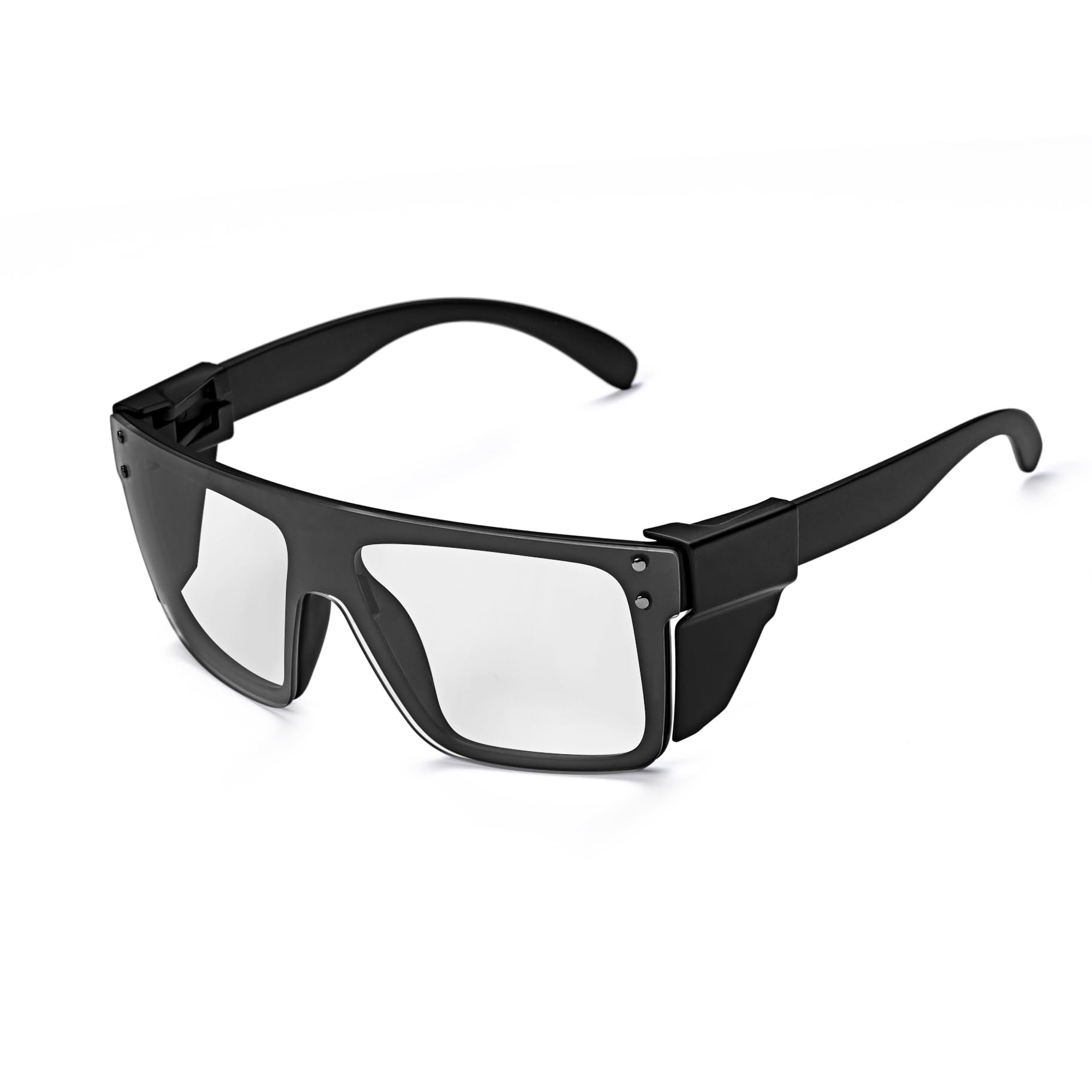
These glasses occupy a rare intersection: they’re ANSI Z87‑certified for impact protection and use a photochromic lens that shifts from clear indoors to a medium grey tint outdoors. That combination makes them equally viable for a woodshop or a trail run — they protect your eyes from sawdust and flying debris, then serve as functional sunglasses when you step outside.
The transition speed is respectable, shifting from 83% transmittance down to around 16% within a minute of direct sun exposure, though the darkest tint won’t match a dedicated sunglass in reducing glare on bright snow or open water. The wraparound design provides 180‑degree debris protection, and the lightweight frame (under 30 grams) won’t cause fatigue over a full work day.
The reliability issue is real: some units have reported frame rivets detaching from the lens within three months, which is unacceptable for a product marketed as impact‑rated. If you buy these, check the hinge construction on arrival and treat the frame carefully.
Why it’s great
- ANSI Z87 impact rating is legitimate for workshop and field use
- Photochromic lens adapts to indoor/outdoor transitions
- Very lightweight and comfortable for extended wear
Good to know
- Hinge rivets can fail after a few months on some units
- Maximum tint is not as dark as a quality sunglass
5. ROCKBROS Photochromic Sports Sunglasses

What gives the ROCKBROS pair an edge in this field is the integrated myopia frame — a snap‑in lens holder that accepts prescription lenses up to around 400 degrees of myopia and 200 degrees of astigmatism. This eliminates the need for bulky fit‑over solutions or expensive prescription sport frames, making it a cost‑effective gateway for nearsighted athletes.
The photochromic lens offers a wider transmittance range than many budget competitors, spanning 83% indoors down to 16% in full sun, and the large wraparound geometry delivers a genuinely panoramic field of view with no detectable distortion at the edges. Multiple riders logged over 1,000 miles with these glasses and reported only fogging when wearing a thick balaclava — otherwise the ventilated frame remains clear.
The photochromic darkening is functional but not sunglasses‑grade; if you ride in relentless high‑altitude sun, you may find the darkest tint insufficient. Also, the frame’s rectangular shape and reflective lens coating lean toward a flashy aesthetic that may not appeal to every cyclist.
Why it’s great
- Built‑in prescription frame works for moderate myopia and astigmatism
- Wide photochromic range (16‑83%) covers most daily light shifts
- No distortion in the large wraparound lens
Good to know
- Max tint still lighter than a dedicated sunglass
- Styling is flashy and may not suit everyone
6. Meeloog Fit Over Glasses
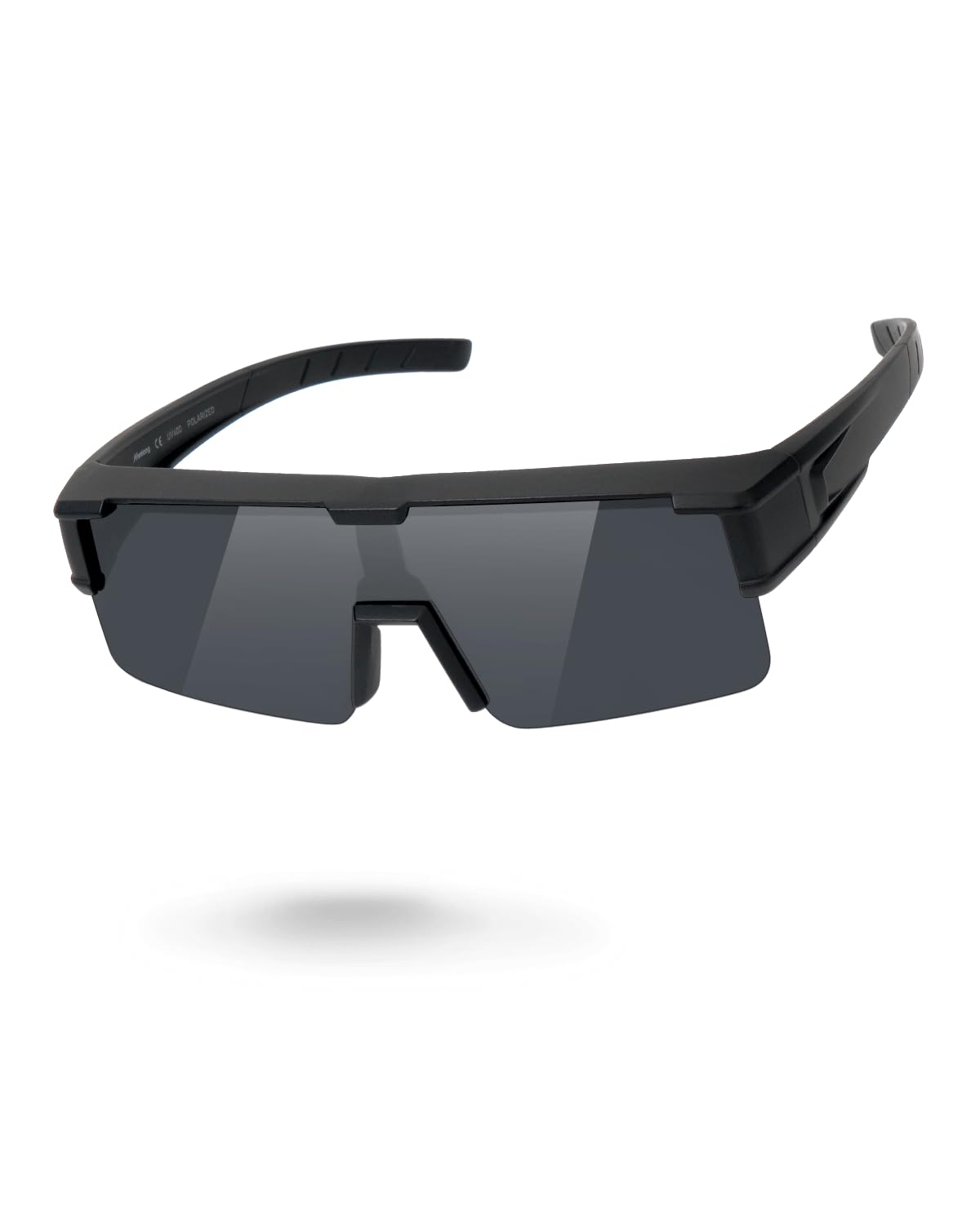
If you wear prescription glasses and don’t want to invest in a dedicated sports Rx frame, the Meeloog Fit Over Glasses is a sensible stopgap. The polarized lens cuts road glare effectively without darkening the world unnaturally, and the oversized frame fits comfortably over most standard‑size prescription eyeglasses without pinching the bridge.
The frame material is flexible and lightweight — it survives being tossed into a glove box — but the plastic is noticeably thinner than the TR90 frames on the KAPVOE or ROCKBROS models. Reviewers noted that the temple arms can feel a bit tight behind the ears during extended driving, and the build quality edges toward flimsy when handled frequently.
The biggest caveat: some units shipped with lenses that failed a basic polarization test (no distortion when tilting a phone screen), suggesting batch inconsistency. If polarization is critical to your sport, verify the lens quality immediately upon arrival. These work best for driving and casual outdoor wear rather than competitive athletic use.
Why it’s great
- Affordable solution for prescription‑wearers who want polarized coverage
- Flexible frame holds up to casual tossing and storage
- Green lens option doesn’t artificially tint surroundings
Good to know
- Inconsistent polarization quality across batches
- Temple arms can feel tight on larger heads
7. KAPVOE K76 Polarized Cycling Glasses
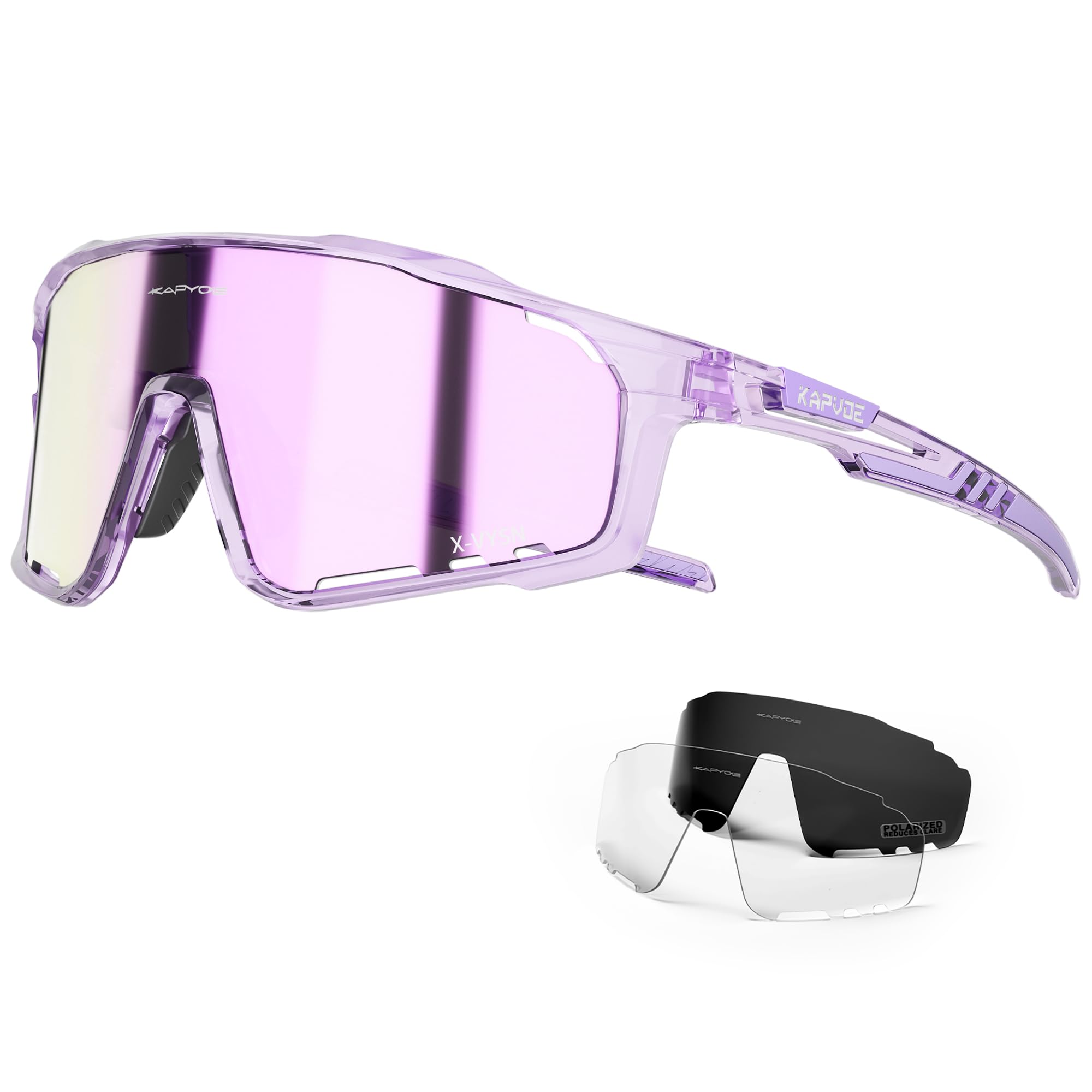
The KAPVOE K76 delivers three coloured lenses (clear, polarised, and light blue) in a single package, giving you a modular system that adapts to dawn rides, full‑sun climbs, and evening commutes without needing a second pair of glasses. The TR90 frame is flexible enough to survive being shoved into a jersey pocket yet rigid enough to keep the lens aligned during high‑speed descents.
Ventilation slots keep fog at bay even during hard efforts, and the adjustable nose piece and temple arms create a custom fit that stays planted under a helmet strap. The polarised lens is effective against road glare, and the retro shape has a distinctive look that attracts compliments. Multiple users reported the clear lens is sharp enough for night riding, which extends the pair’s utility well beyond daytime use.
The friction points are the lens‑swap mechanism — the polycarbonate edges feel thin and can scratch easily if you pry them out without care — and the overall aesthetic is flashy rather than understated. If you want a quiet, professional look for the office commute, these may draw more attention than you’d like.
Why it’s great
- Three lenses (clear, polarised, light blue) cover dawn to dusk
- TR90 frame flexes without breaking; fits under most helmets
- Ventilation keeps fog from forming during aerobic effort
Good to know
- Lens edges are thin and scratch if swapped carelessly
- Striking retro style may not suit conservative tastes
FAQ
Can I put prescription lenses in photochromic sports glasses?
How dark should the polarised lens be for trail running?
Do sports glasses help with fogging?
How do I know if a sports frame will fit my face?
Final Thoughts: The Verdict
For most users, the best glasses for sports winner is the Tifosi Sanctum because it combines a useful polarized lens, reliable anti‑fog ventilation, and a sweat‑activated frame grip that stays locked during high‑intensity movement. If you want a premium wraparound with all‑day comfort and a brand name you can trust, grab the Under Armour UA 0012/S. And for budget‑conscious cyclists who need a modular lens system, nothing beats the KAPVOE K76 for its three‑lens versatility and durable TR90 frame.