
When you’re elbow-deep under a sink, gripping a wrench coated in sludge, the last thing you need is a glove that turns into a slippery noodle or gets shredded by a sharp pipe edge. The wrong pair turns a simple repair into a bloody, frustrating ordeal — the right pair disappears from your mind entirely, letting you focus on the work. Plumber gloves face a uniquely brutal combo of wet surfaces, chemical exposure, oils, and hidden sharp metal, and most generic work gloves fail at least one of these tests.
I’m Mohammad Maruf — the founder and writer behind Drink4Good. I’ve spent years digging into the hardware specs of hand protection, comparing nitrile thickness, cut-resistance levels, leather grain quality, and chemical certification data to separate real performance from marketing fluff.
After sorting through hundreds of user reviews and technical datasheets across five distinct models, I’ve isolated the pairs that genuinely hold up. This guide breaks down the best plumber gloves for every job, from snaking drains to handling acids and hauling debris.
Selecting the right plumber gloves means matching your specific task to the glove’s material, thickness, cut-resistance rating, and length. A glove perfect for pulling a sewer snake will be a disaster for handling chemicals, and vice versa. Focus on these three factors first.
Material and Grip Against Wet Surfaces
Nitrile-coated palms provide excellent grip on wet tools and pipes without absorbing water. Pure leather offers durability against abrasion but can turn slick when wet. For plumbing work that involves constant contact with water, oils, or grease, a nitrile palm coating or a full nitrile construction (like the LANON style) is the safer choice. The thickness, measured in mils (1 mil = 0.001 inch), directly affects puncture resistance — look for at least 20 mils for heavy use.
Cut Resistance and Reinforced Zones
Plumbers routinely encounter sharp PVC edges, metal shards, and drain cables that can easily slice through standard cotton or latex gloves. A cut-resistance level of ANSI A4 to A5 is ideal for snaking tasks and handling debris. The reinforced zone between the thumb and forefinger — a high-stress area — separates budget gloves from durable ones. NoCry’s reinforced thumb crotch is a direct response to this specific failure point.
Sleeve Length and Closure Fit
Standard 10-inch work gloves leave your wrists and forearms exposed to splashes. For chemical handling or working in deep water, an 18-inch gauntlet like the LANON gloves provides crucial barrier protection up to the elbow. A snug elastic wrist closure prevents debris and liquid from entering the glove and keeps the glove securely in place during overhead work or when snaking drains.
Quick Comparison
On smaller screens, swipe sideways to see the full table.
| Model | Category | Best For | Key Spec | Amazon |
|---|---|---|---|---|
| NoCry Cut Resistant Pro | Cut Resistant | Sharp debris & tools | ANSI A5 Cut Level | Amazon |
| Moey PVC Sewer Glove | Sewer Specific | Snaking drain lines | PVC Molded Grip | Amazon |
| LANON Nitrile Chemical | Chemical Resistant | Acid & alkali handling | 22 Mil / 18-Inch Length | Amazon |
| Superior Glove Endura | Multi-Hazard Leather | Heavy construction | ANSI A4 Cut / 41 cal Arc | Amazon |
| HaoYuan Cowhide Leather | General Leather | Yard & barn work | Full Grain Cowhide | Amazon |
In-Depth Reviews
1. NoCry Cut Resistant Pro Gloves

This entry-level-priced glove punches far above its cost. The ANSI A5 cut-resistance rating means it’s four times stronger than standard leather against sharp edges — ideal when you’re fishing shards of PVC or metal out of a drain trap. The nitrile coating on the palm provides a firm, non-slip grip on wet wrenches and pipes without the tacky feeling that attracts debris.
The reinforced bridge between the thumb and forefinger directly addresses the failure point that kills most work gloves in plumbing use. That small design detail, combined with the breathable knit back, keeps your hands cool during long jobs under a sink or in a crawlspace. Touchscreen tips on the thumb and index finger let you check a phone manual without stripping the gloves off.
Users consistently report that these gloves outlast heavier-looking competitors on sharp materials, with no tearing after weeks of regular kitchen or construction work. The only trade-off is the rough interior wrist label, which some find irritating on bare skin. Sizing down one step is also recommended for a precision fit.
Why it’s great
- ANSI A5 cut level provides confidence against sharp edges
- Breathable knit back prevents sweaty hands during long tasks
- Reinforced thumb crotch extends glove lifespan significantly
Good to know
- Rough interior wrist stitching may irritate sensitive skin
- Runs slightly large; consider sizing down one step
2. Moey PVC Sewer Glove

This is not a general-purpose glove — it exists for one specific job: pulling and feeding drain snakes. The molded PVC construction has no fabric loops or seams that can catch on the rotating cable, which is exactly why standard leather or knit gloves get yanked off or twisted around your fingers. The smooth, rigid surface lets the cable slip past without snagging.
The fit is intentionally snug, so you maintain control even when the cable is under tension. Users report that these gloves dramatically increase safety when snaking drains because there’s zero risk of the glove getting pulled into the machine. The pull-on closure is quick and stays secure, though there’s no insulation or cut-resistance liner — they are purely for cable work.
Durability reviews are overwhelmingly positive, with several buyers noting they’ve lasted through years of professional use. A few report that the red dye can transfer slightly onto hands after prolonged use, but this is a minor cosmetic issue. If you run a drain snake more than once a month, this glove pays for itself in avoided injuries.
Why it’s great
- Zero snags on rotating drain cables
- Snug molded fit gives excellent control under tension
- Professional-grade durability for frequent sewer work
Good to know
- Not intended for chemical handling or general wet work
- Limited dexterity for small part manipulation
3. LANON Nitrile Chemical Resistant Gloves

When the job involves cleaning chemicals, acidic drain openers, or raw sewage splash, you need barrier protection that goes past the wrist. The LANON gloves deliver a full 18 inches of coverage with a 22-mil nitrile wall — thick enough to resist punctures from metal shards while remaining flexible enough to grip a spray nozzle or a scrub brush.
The non-slip particle texture on the palm and fingers meets EN 388 Level 4 abrasion resistance (over 8,000 cycles), which is exceptional for an unlined chemical glove. They are CE-certified Cat III for Type A chemical protection, meaning they pass the strictest European standards against acids, alkalis, and solvents. For plumbers dealing with industrial-grade drain cleaners, this certification matters more than brand reputation.
Users in both professional dishwashing and chemical handling rely on these for nightly 5-hour shifts, with many reporting they last significantly longer than kitchen-grade rubber gloves. The unlined interior means no fabric to absorb liquids, but it also means no insulation against hot water. Sizing runs slightly large, so check the sizing guide carefully.
Why it’s great
- CE Cat III Type A certified for harsh chemicals
- 18-inch length protects forearms from splashes
- 22 mil thickness resists punctures while staying flexible
Good to know
- Unlined interior offers no thermal protection
- Runs slightly large; order down for snug fit
4. Superior Glove Endura Cut & Water Resistant

This is the heavyweight contender for plumbers working on commercial sites or in utility maintenance where hazards are layered. The leather outer provides exceptional abrasion and heat resistance — users report handling surfaces up to 400°F — while the internal ParaActiv knit liner delivers ANSI A4 cut resistance across the entire hand, not just the palm. The combination means you get the durability of full-grain leather with the cut safety of a specialty textile.
The arc flash rating of CAT 4 with 41 cal/cm² ATPV is overkill for residential sink work, but for plumbers working near electrical panels or in industrial settings, it’s a critical safety layer. The snug elastic wrist keeps debris and sparks out, and the unpadded palm preserves tactile feedback when threading pipes or adjusting fittings. Users note the leather softens and conforms to the hand over a break-in period.
On the downside, the leather can peel or tear if exposed to barbed wire or extremely sharp edges repeatedly, and washing the gloves makes the leather surface slick temporarily. The sizing also runs large, particularly in palm width, so buyers with slender hands should size down. For the price, you’re buying multi-hazard capability that few other gloves in this category offer.
Why it’s great
- ANSI A4 cut protection with full leather outer durability
- Arc flash CAT 4 rated for high-risk environments
- Breathable knit liner wicks sweat and keeps hands cooler
Good to know
- Leather loses grip when saturated or washed
- Runs large in palm width; check sizing chart carefully
5. HaoYuan Cowhide Leather Work Gloves
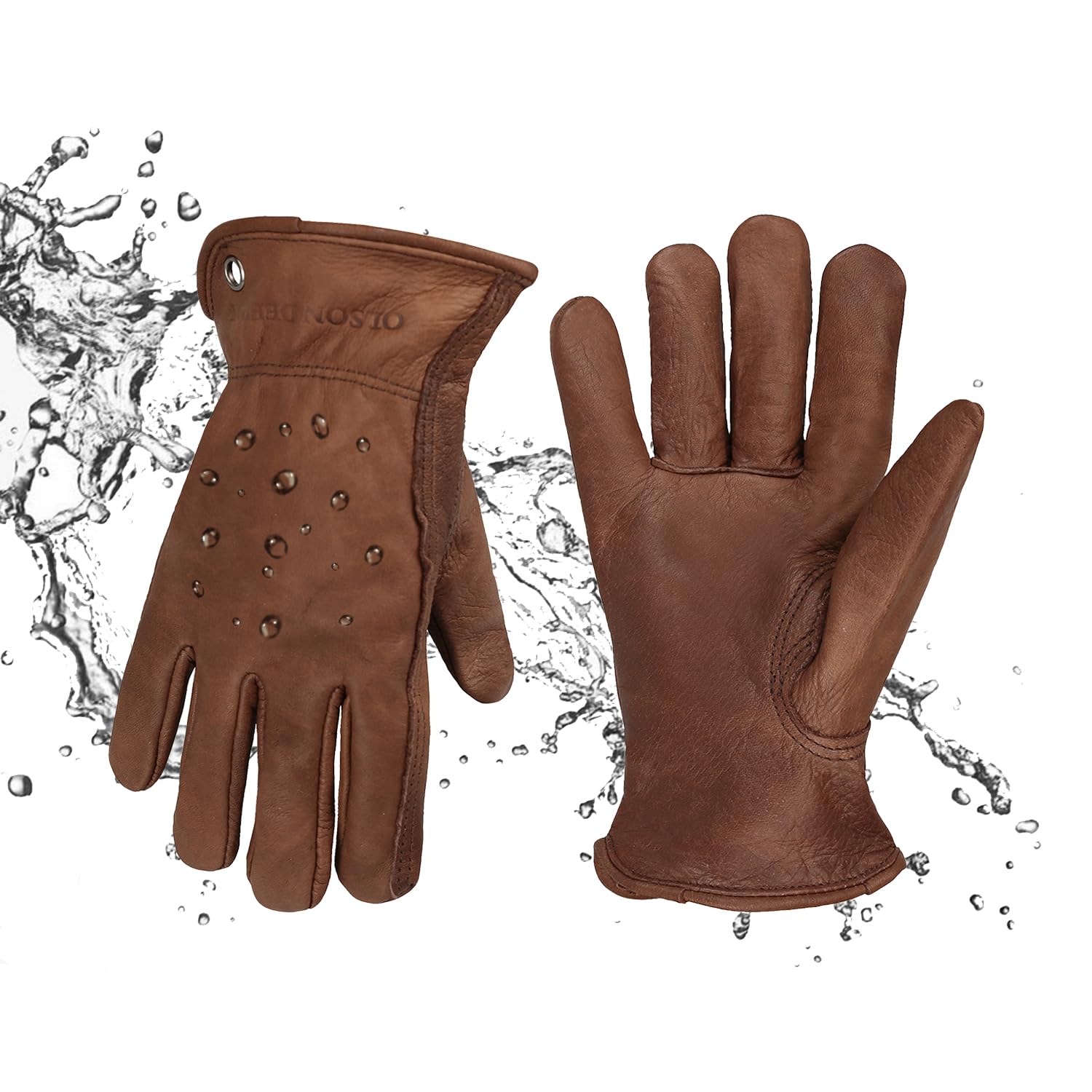
For general yard work, barn chores, or lighter plumbing tasks like changing a faucet or clearing a vent stack, these cowhide gloves offer a solid entry-level option. The leather is reasonably thick and provides decent puncture resistance against splinters, thorns, and rough pipe edges. The sizing is accurate per the guide, and the gloves break in nicely to conform to your hand shape.
Several users treat these with snow seal for cold-weather work, reporting they keep hands warm down to 35°F while still allowing enough dexterity for tool handling. The water-resistant treatment on the leather helps keep hands dry during light rain or damp crawlspace work. At this budget-friendly price point, you can afford to buy a few pairs and treat them as replaceables.
The main drawbacks are the lack of any cut-resistance liner and the leather dye residue that transfers onto your hands during the first few wears. They are also too heavy for fine work and too warm for summer use. If you need maximum protection against sharp metal or chemicals, one of the higher-ranked options on this list is a better investment.
Why it’s great
- Affordable entry-level option for light plumbing tasks
- Leather breaks in comfortably with extended use
- Sealant treatment adds water resistance for damp conditions
Good to know
- No cut-resistance liner behind the leather
- Leather dye may stain hands during initial wears
FAQ
Can I wear cut-resistant gloves while handling chemicals?
What thickness of nitrile is best for drain cleaning?
How do I prevent my sewer gloves from getting pulled into the snake machine?
Are latex or nitrile gloves better for handling acidic drain cleaners?
Final Thoughts: The Verdict
For most users, the best plumber gloves winner is the NoCry Professional Cut Resistant Gloves because it delivers ANSI A5 cut protection, a reinforced thumb crotch, and a breathable design at a mid-range price that makes it the most versatile daily driver. If you work with harsh chemicals or need forearm splash protection, grab the LANON Nitrile Chemical Gloves. And for snaking drains where standard gloves are a safety hazard, nothing beats the Moey PVC Sewer Glove.