
The frustration of a cold shower halfway through your morning routine—or waiting 20 minutes for the tank to reheat after a long bath—is a problem that a traditional tank water heater simply can’t solve. A gas water heater that fires on demand eliminates the storage tank entirely, turning your home’s gas line into an unlimited stream of heat that never runs dry, never idles, and never wastes energy keeping 40 gallons of water hot when nobody is using it.
I’m Mohammad Maruf — the founder and writer behind Drink4Good. I’ve spent years analyzing the mechanics of gas-fired appliances, from BTU-to-flow-rate ratios to heat-exchanger materials, so you can buy with confidence rather than guesswork.
To help you find the right fit for your home, I’ve vetted the top contenders and built this guide around best gas water heater choices that balance durability, efficiency, and real-world performance across every budget tier.
How To Choose The Best Gas Water Heater
Moving from a tank-style heater to a tankless gas unit isn’t just an upgrade—it’s a shift in how your home uses energy. The wrong choice means tepid showers or a gas bill that never shrinks. Focus on these three specs to avoid the most common pitfalls.
Flow Rate and BTU: The Power Duo
Flow rate, measured in gallons per minute (GPM), tells you how much hot water the unit can deliver at once. British Thermal Units (BTUs) measure the heat energy the burner can produce. A higher BTU number supports a higher GPM, but only up to a point. For a two-bathroom home running a shower and a kitchen sink simultaneously, you need at least 5 GPM at a 70°F temperature rise. Oversized units with extreme BTUs won’t hurt—they just modulate down—but undersized units guarantee cold shocks.
Heat Exchanger Material and Efficiency
Oxygen-free copper delivers superior thermal conductivity and corrosion resistance compared to stainless steel. A copper heat exchanger typically achieves 85% to 98% thermal efficiency, meaning less gas burned per gallon of hot water produced. Condensing units (which capture exhaust heat) hit UEF ratings above 0.95, while non-condensing models sit around 0.80 to 0.83. The higher the UEF, the lower your annual operating cost.
Venting, Placement, and Freeze Protection
Indoor gas water heaters require a proper venting system—either PVC for condensing units or Category III stainless steel for non-condensing models. Outdoor units eliminate venting complexity but must handle ambient temperatures. Any unit installed in a space that dips below freezing needs active freeze protection, usually an electric heating element that activates around 41°F. Without it, ice can crack the heat exchanger and destroy the unit within one freeze cycle.
Quick Comparison
On smaller screens, swipe sideways to see the full table.
| Model | Category | Best For | Key Spec | Amazon |
|---|---|---|---|---|
| A. O. Smith ATI-310CX3 | Condensing | Hard-water homes | 8 GPM / 190k BTU / X3 scale prevention | Amazon |
| Rinnai RX199iN | Condensing | Large families & multi-fixture | 11.1 GPM / 199k BTU / UEF 0.98 | Amazon |
| Rinnai RU199iN | Condensing | Recirculation-ready installs | 11 GPM / 199k BTU / Circ-Logic | Amazon |
| CAMPLUX Climatech 7 | Non-Condensing | High-demand whole house | 6.86 GPM / 170k BTU / 45dB fan | Amazon |
| Rheem RTG-84XLN-3 | Non-Condensing | Outdoor installation | 8.4 GPM / 180k BTU / outdoor-rated | Amazon |
| Rheem RTG-70DVLN-3 | Non-Condensing | Medium homes, high reliability | 7 GPM / 160k BTU / 15-yr heat exchanger | Amazon |
| Westinghouse AMZ-HW120A1G-NG | Non-Condensing | WiFi-smart monitoring | 5.1 GPM / 120k BTU / WiFi app | Amazon |
| FOGATTI Instagas Comfort 120S | Non-Condensing | Propane & outdoor setups | 5.1 GPM / 120k BTU / CSA certified | Amazon |
| ThermoMate CZ422NG | Non-Condensing | High-wind resistance | 5 GPM / 113k BTU / 360Pa fan | Amazon |
| ThermoMate CZ360NG | Non-Condensing | Budget-minded homeowners | 4 GPM / 98.5k BTU / UEF 0.81 | Amazon |
| APUS AP-AWH-Q13NG | Non-Condensing | Low-flow & single-bath setups | 4.42 GPM / 95k BTU / 36dB quiet | Amazon |
In‑Depth Reviews
1. A. O. Smith ATI-310CX3 ProLine XE
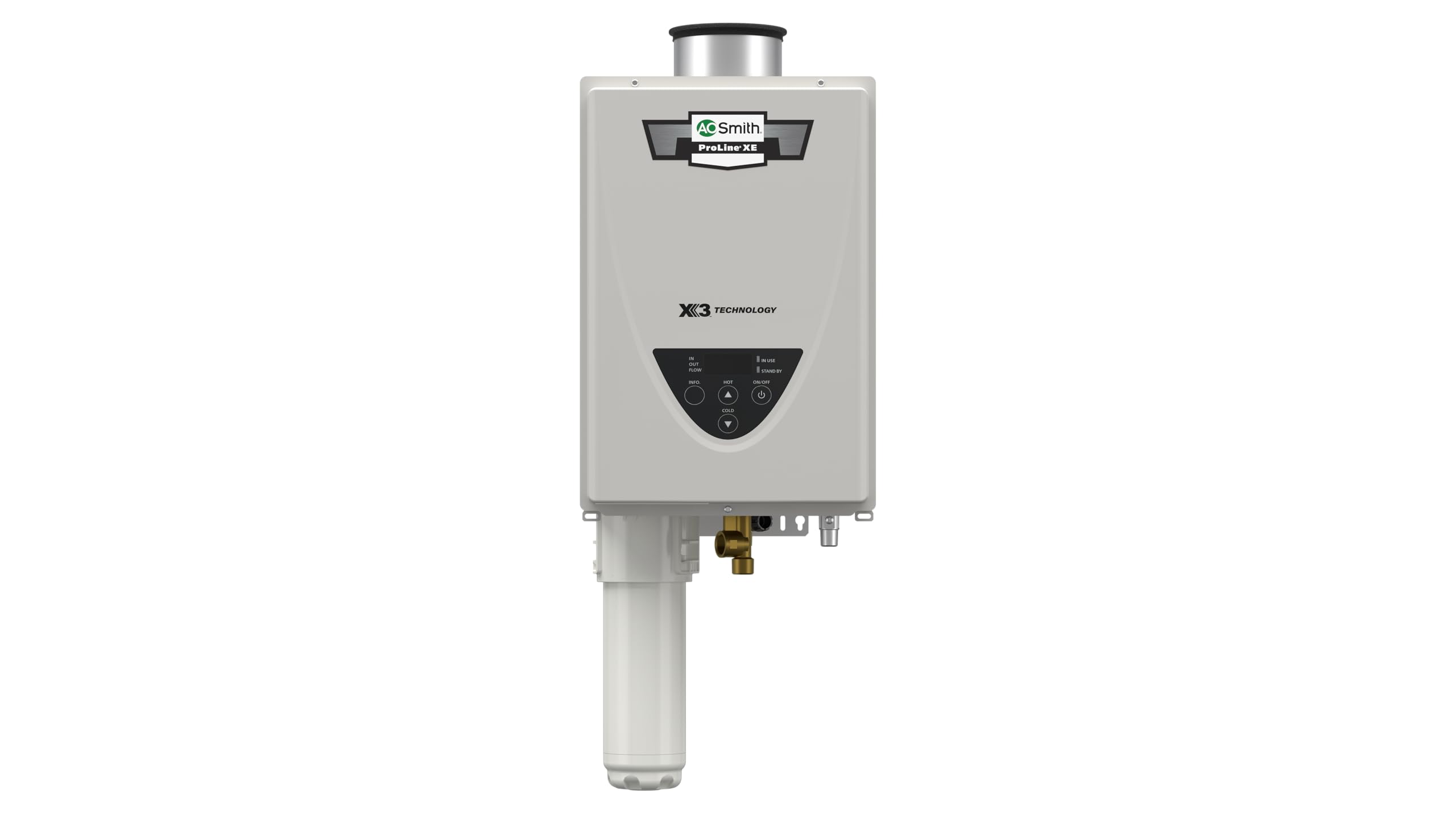
The A. O. Smith ATI-310CX3 is a condensing unit that stands apart because of its X3 Scale Prevention Technology, a built-in system that treats hard water without requiring annual descaling or isolation valves. That alone saves you hours of maintenance and hundreds of dollars over the heater’s life. Its 190,000 BTU burner delivers 8 gallons per minute—enough for two showers, a dishwasher, and a washing machine to run at once without a temperature dip.
The commercial-grade copper heat exchanger transfers heat 25 times better than steel, and the unit switches from natural gas to propane with the included conversion kit. The UEF of 0.81 for a non-condensing model is respectable, but this is actually a condensing design that captures exhaust heat for even higher efficiency. Users report quiet, predictable operation and consistent 115°F output even with multiple fixtures open.
Professional installation is strongly recommended because of the concentric vent system (APNC35) and the 3/4-inch gas line requirement. But once installed, the 15-year limited warranty on the heat exchanger and the elimination of scale-related service calls make this the most future-proof investment in the mid-to-premium tier.
Why it’s great
- Integrated scale prevention eliminates annual descaling
- Commercial-grade copper heat exchanger with 15-year warranty
- Propane conversion kit included in the box
Good to know
- Requires professional installation for venting and gas line
- Compact dimensions (13.75”W x 20.5”H) but heavier at 51 lbs
2. Rinnai RX199iN Condensing

The Rinnai RX199iN redefines versatility by being installable both indoors and outdoors without changing the chassis—thanks to the new Versa Vent system and the Smart Sense gas control that automatically adjusts for natural gas or propane. You get 11.1 GPM at a 199,000 BTU rating, which covers up to seven fixtures at once. The condensing design achieves a UEF of 0.98, making it one of the most energy-efficient residential gas water heaters on the market.
The interface is straightforward, and a Controlr module (sold separately) enables WiFi monitoring and remote temperature adjustment. The Quick Flush feature simplifies the annual cleaning process to a single valve turn. Owners report that after six months of use in a three-bedroom home with a family of five, multiple simultaneous showers never caused a pressure or temperature drop.
If you live in a region with very cold groundwater (below 50°F inlet), the 11 GPM capacity ensures you still get a 105°F shower at full flow. Professional installation is still recommended because the gas supply line must be sized correctly, but the unit’s ability to switch between indoor and outdoor placement gives you flexibility that few others offer.
Why it’s great
- UEF 0.98—top-tier energy efficiency for condensing models
- Installable indoors or outdoors with Versa Vent system
- Smart Sense gas control auto-detects fuel type
Good to know
- WiFi module (Controlr) sold separately
- Outdoor install requires RX-OVC vent cap (sold separately)
3. Rinnai RU199iN Condensing

The Rinnai RU199iN is the long-proven workhorse of the premium tier. Its Circ-Logic technology is designed to pair with an external recirculation pump, delivering near-instant hot water at the farthest fixture without wasting gallons down the drain. With 11 GPM and 199,000 BTUs, it covers up to seven simultaneous uses—enough for a large family running two showers, a dishwasher, and laundry at once.
The unit is ENERGY STAR qualified and holds a 15-year limited warranty on the heat exchanger, five years on parts, and one year on labor. Users who have owned this unit since 2019 report zero failures and a noticeable reduction in gas bills compared to their previous 50-gallon tank heaters. The construction is solid; the sound is remarkably quiet; and the temperature stability remains steady even during back-to-back showers.
The only catch is that Amazon’s installation service often refuses to install tankless units, so you will need to source a local Rinnai-trained plumber. Also, because the unit is condensing, it requires PVC venting rather than metal flue pipe—a detail that can surprise homeowners switching from a tank.
Why it’s great
- Circ-Logic enables on-demand recirculation for fast hot water
- Proven long-term reliability with owners reporting 5+ trouble-free years
- Covers up to seven fixtures at once
Good to know
- Recirculation pump not included
- Amazon installation service may refuse tankless installs
4. CAMPLUX Climatech 7
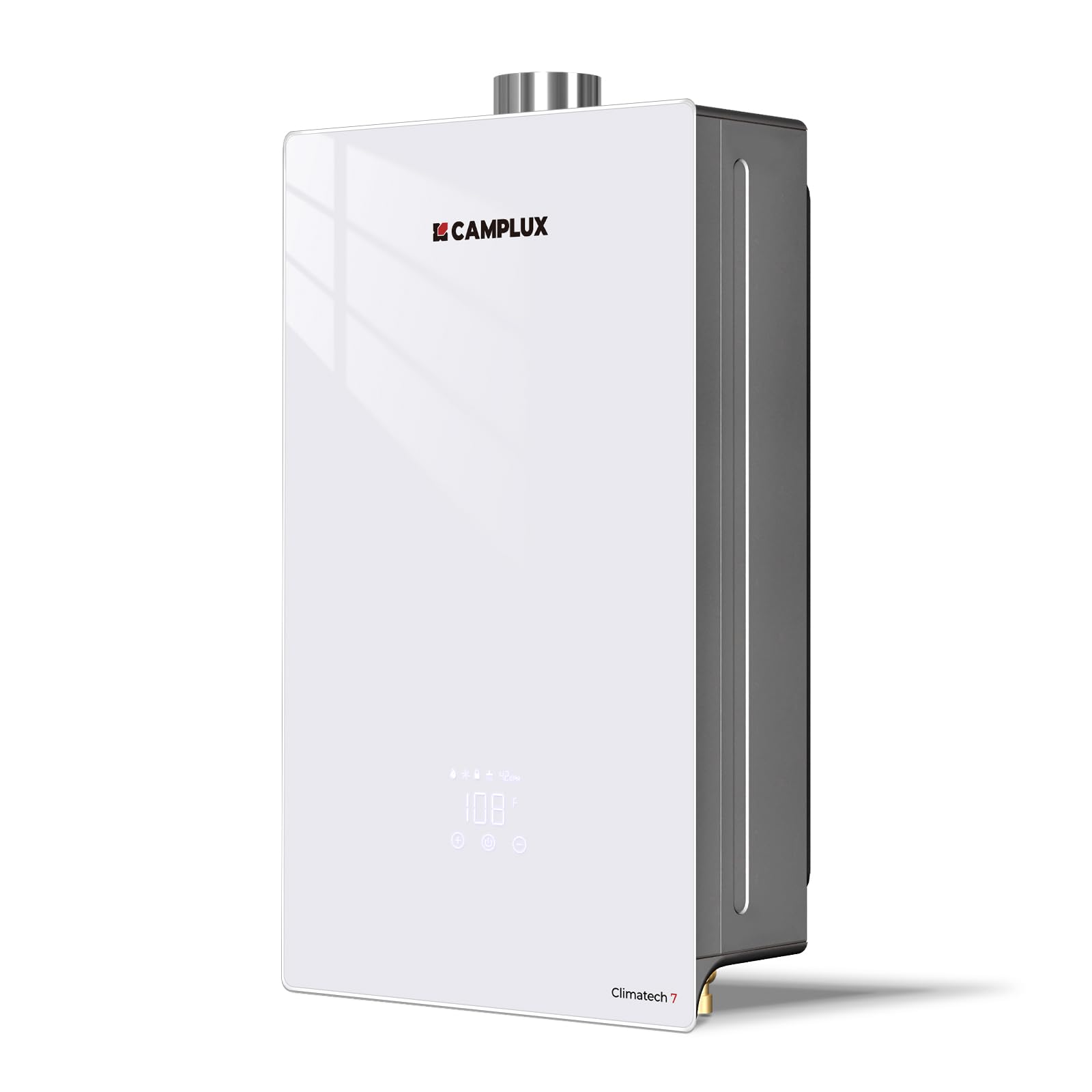
The CAMPLUX Climatech 7 is a non-condensing natural gas unit that punches above its weight with 170,000 real BTUs—not the inflated numbers some brands use. It delivers 6.86 GPM (peak up to 7.6 GPM) and can run six hot-water points simultaneously. The bottom-fan technology with dual undercarriage blowers prevents 100% of smoke backflow and holds a 16:1 air-fuel ratio for complete combustion, all while humming along at a quiet 45 dB.
The oxygen-free copper heat exchanger improves heat transfer, and the unit includes -20°F freeze protection with an automatic drain assist. The touchscreen aesthetic and compact design (24.7” x 14.3” x 7.3”) make it easy to mount in a basement, utility closet, or garage. Owners with three-bathroom homes report that it supplies all showers without a problem, and the customer support team is responsive—even sending a replacement unit when the first one had an ignition issue.
Annual descaling is mandatory, and winterization below 20°F is required if the unit is in an unconditioned space. The included CSA-certified gas connector and ultra-detailed manual make DIY installation straightforward for anyone comfortable with gas fitting.
Why it’s great
- Real 170k BTU output with bottom-fan anti-backflow design
- Runs 6 fixtures simultaneously without pressure loss
- 45 dB operation is quieter than most refrigerator hums
Good to know
- Annual descaling is required for warranty
- Mounting brackets may need 2×4 blocking for stud alignment
5. Rheem RTG-84XLN-3 Outdoor
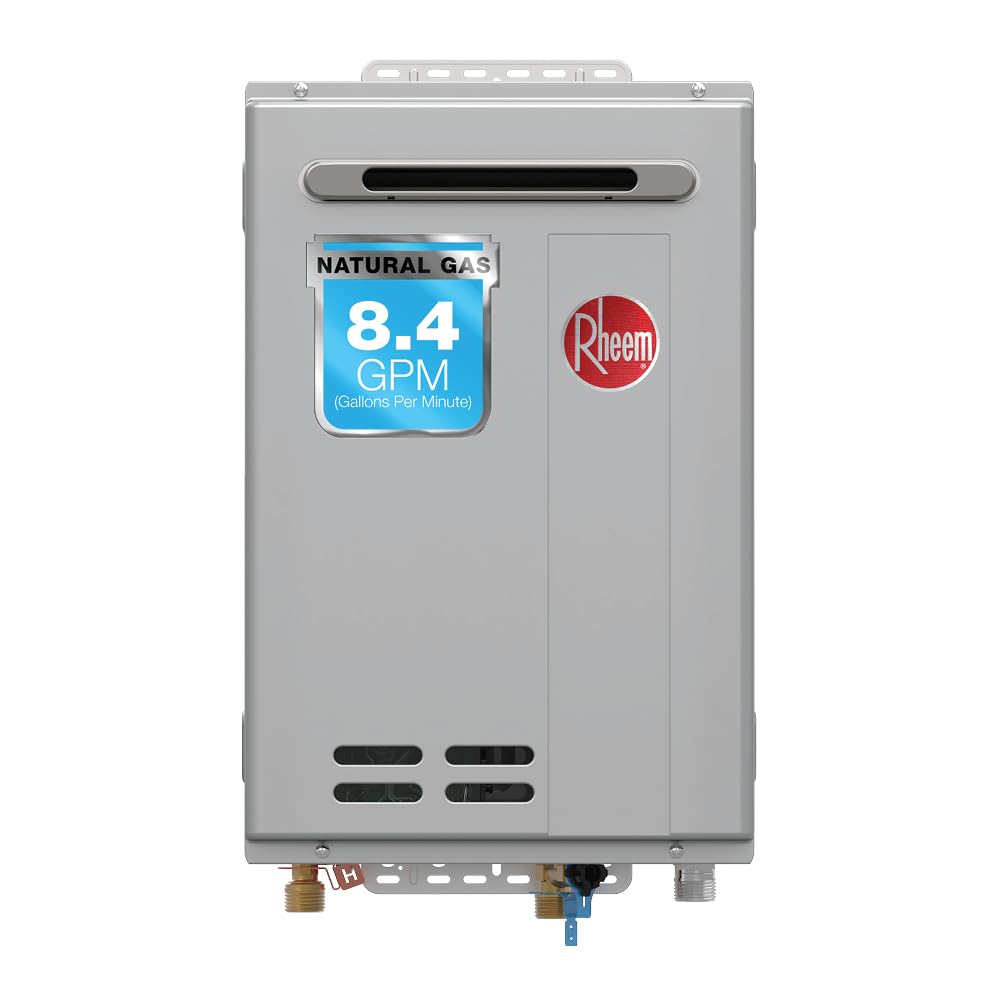
The Rheem RTG-84XLN-3 is a dedicated outdoor non-condensing unit that eliminates the need for venting entirely—it simply sits on an exterior wall and draws combustion air from outside. With 8.4 GPM and 180,000 BTUs, it handles a three-bathroom home with multiple appliances running. The Hot-Start programming prevents that cold slug of water between back-to-back showers, a feature that matters in busy households.
The metal cabinet is weather-resistant, and the unit weighs just 39.3 pounds, making wall mounting simpler than heavier indoor models. Owners report that it works perfectly even with old, undersized piping, and the altitude adjustment feature (up to 10,000 feet) is critical for mountain homes. The 15-year heat exchanger warranty is standard for Rheem’s premium tier.
The trade-off is that outdoor units are exposed to the elements—if you live in a region with frequent sub-freezing temperatures, the integrated freeze protection handles minor dips, but a deep freeze below 5°F requires draining the unit to prevent damage.
Why it’s great
- No venting system needed—mounts on an exterior wall
- Hot-Start programming prevents cold bursts between showers
- 8.4 GPM covers large families with ease
Good to know
- Must be drained if ambient temp drops below 5°F
- Outdoor placement may require a gas-line extension
6. Rheem RTG-70DVLN-3 Indoor
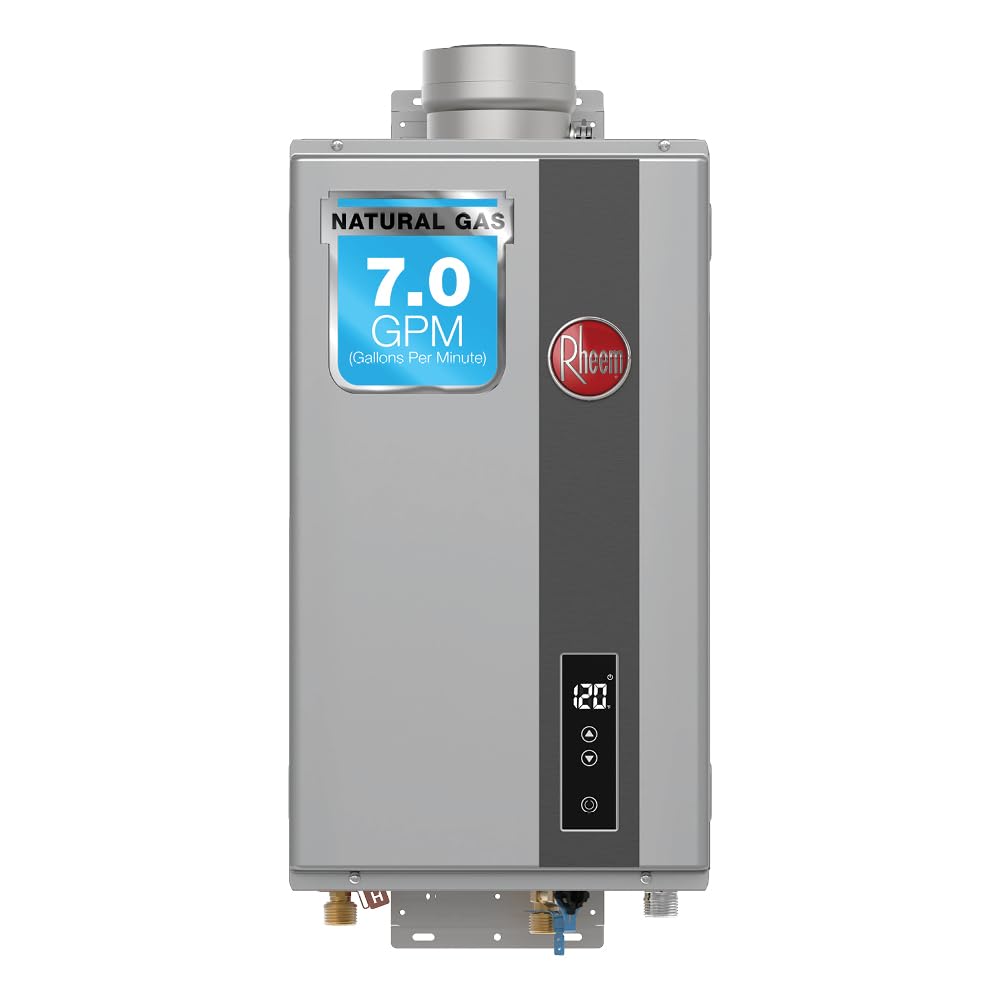
The Rheem RTG-70DVLN-3 is the indoor counterpart to the outdoor model, offering 7.0 GPM and 160,000 BTUs—plenty for a two-to-three bathroom home. Its standout feature is the warranty package: 1 year labor, 5 years parts, and 15 years on the heat exchanger. That level of coverage signals confidence in the build quality and gives you a safety net if anything goes wrong.
The unit requires Category III stainless steel venting (not standard PVC), which adds to the installation cost but is necessary for non-condensing flue gas temperatures. Owners appreciate the user-friendly display and the fact that it works well even with old undersized plumbing. The altitude adjustment is a plus for homes above 2,000 feet.
This is a straightforward, no-frills tankless heater from a name-brand manufacturer with a nationwide parts network. If you want serviceability and warranty protection without paying for smart-home features, this model delivers.
Why it’s great
- 15-year heat exchanger warranty from a major brand
- Works reliably with old, undersized piping
- Altitude adjustment for high-elevation homes
Good to know
- Requires Category III stainless steel venting
- Heavier (46.5 lbs) than some comparable models
7. Westinghouse AMZ-HW120A1G-NG
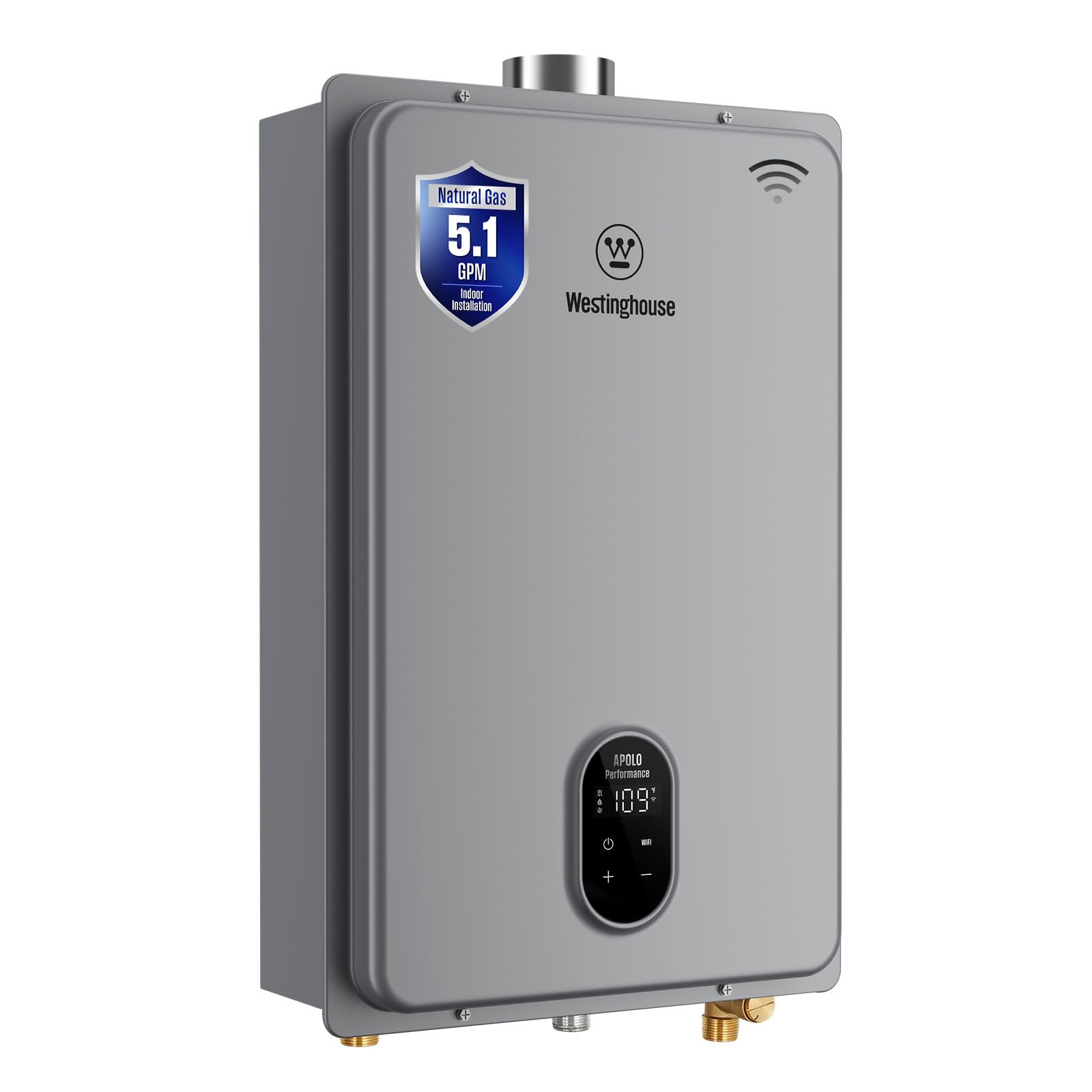
The Westinghouse AMZ-HW120A1G-NG brings true smart-home integration to a gas tankless water heater. The built-in WiFi module lets you adjust water temperature, view real-time usage reports, and monitor system status through a smartphone app—no extra hub purchase needed. With 5.1 GPM and 120,000 BTUs, it supports 2 to 4 fixtures simultaneously, making it a strong fit for a medium-sized family.
The self-modulating technology adjusts gas and water flow 20,000 times per second to maintain ±1°F temperature stability, effectively eliminating those cold bursts during simultaneous use. Users report that setting the temperature to 116°F means they no longer need to mix cold water—just turn on the hot tap and step in. The CSA certification and freeze protection add peace of mind for installations in unconditioned basements.
It requires a 120V AC outlet nearby, and in temperatures below 5°F or during extended non-use, the system must be drained. The unit uses standard 3/4-inch NPT connections, which simplifies the plumbing side of installation.
Why it’s great
- Built-in WiFi app control with daily water usage reports
- ±1°F temperature stability eliminates cold bursts
- CSA certified with durable copper heat exchanger
Good to know
- Best for homes with 2-4 simultaneous fixtures (not large families)
- Requires 120V AC outlet for electronics
8. FOGATTI Instagas Comfort 120S
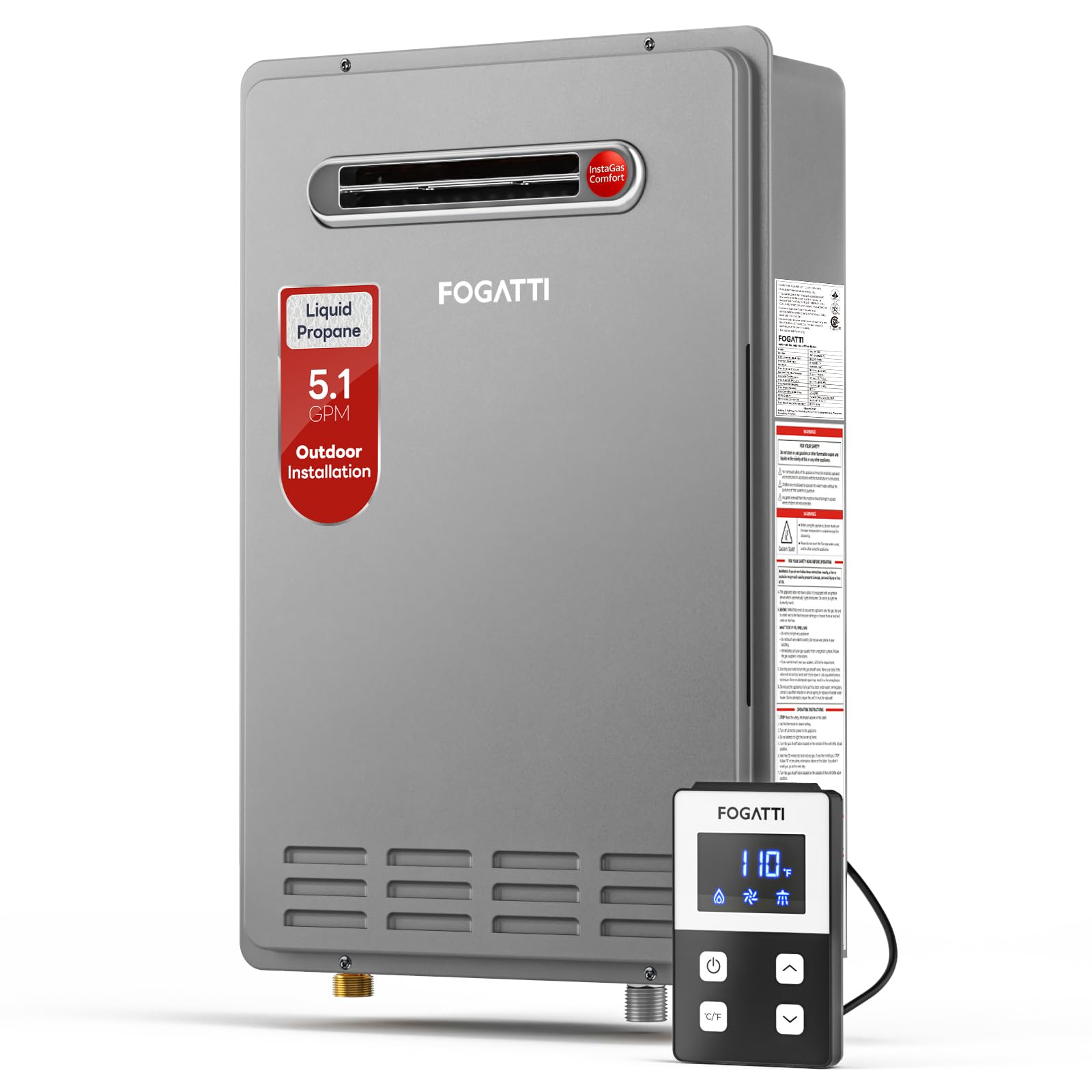
The FOGATTI Instagas Comfort 120S is a CSA-certified propane tankless heater designed for outdoor mounting, making it an excellent choice for homes without natural gas connections or where indoor venting is impractical. Its 120,000 BTU burner delivers 5.1 GPM, supporting 2 to 4 outlets at once. The four-stage combustion system and advanced water servo regulate both gas and water flow to hold temperature within ±1°F, even during winter.
The heat exchanger uses high-efficiency copper, and the burner is made from 304 stainless steel for corrosion resistance. A remote control panel connects to the unit for convenient indoor temperature adjustment. The unit operates at low water pressures ranging from 15 to 150 PSI, making it compatible with well-water systems. The 5-year heat exchanger warranty adds long-term security.
The outdoor placement means zero venting cost, but the active anti-freeze device requires draining if temperatures drop below 5°F for extended periods. It’s also optimized for altitudes below 2,000 feet, so mountain-home owners should check with the manufacturer before purchasing.
Why it’s great
- Outdoor installation eliminates venting complexity
- Five-year heat exchanger warranty and CSA certification
- Works with low water pressure (15 PSI min)
Good to know
- Best for altitudes under 2,000 feet
- Must be drained if temps drop below 5°F for long periods
9. ThermoMate CZ422NG
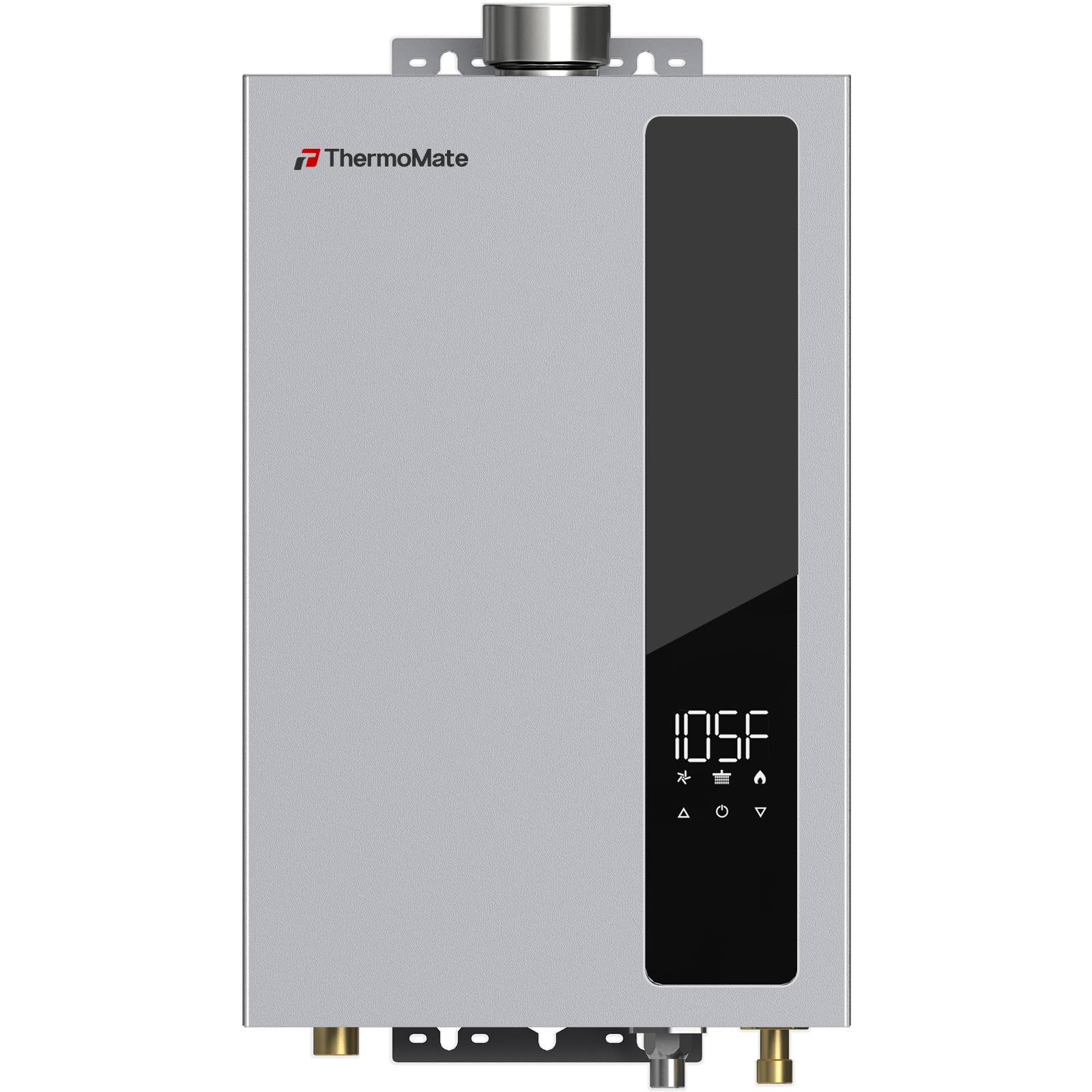
The ThermoMate CZ422NG is a mid-range non-condensing unit that distinguishes itself with a heavy-duty DC high-speed fan capable of 360 Pa static pressure and 3,000 RPM. This makes it resistant to backdrafting from hurricane-force winds (Category 3 and above), a rare feature for tankless heaters that usually struggle in windy coastal areas. With 5 GPM and 113,000 BTUs, it supports two simultaneous showers based on a 65°F inlet temperature.
The unit shares the same 98% thermal efficiency oxygen-free copper heat exchanger found in ThermoMate’s smaller model, and the UEF rating of 0.81 is solid for a non-condensing design. The 3.5-inch LED touchscreen reports flow, fan speed, and flame status, and the eight built-in safety protections cover boil-dry, freeze, flame-out, and over-temperature conditions. Active freeze protection kicks in automatically at 41°F.
Users report a straightforward DIY installation, though the metric-sized vent (3-inch OD) may need an adapter if you’re connecting to standard US Class B venting. The manufacturer support is responsive, offering credits to resolve compatibility issues.
Why it’s great
- 360 Pa fan resists backdrafting in hurricane conditions
- 98% thermal efficiency from oxygen-free copper heat exchanger
- Eight safety protections including freeze and flame-out
Good to know
- Vent size may require an adapter for standard US systems
- Not ideal for homes with more than 2 simultaneous showers
10. ThermoMate CZ360NG
The ThermoMate CZ360NG steps in as the entry-level champion for smaller households. With 4 GPM and 98,500 BTUs, it comfortably supplies one shower plus a kitchen faucet simultaneously, assuming a 62°F inlet water temperature. The heat exchanger is oxygen-free copper with 98% thermal efficiency and a UEF of 0.81—numbers you normally see on premium units, not budget-friendly ones.
The smart diagnostic 3.5-inch LED touchscreen gives you real-time tracking of water flow, fan operation, and flame status, and the built-in chip regulates heating 20,000 times per second to hold temps within ±1°F. The eight safety protections are identical to the larger CZ422NG, including active freeze protection at 41°F. UL certification on the 120V power cord adds a layer of trust.
Installation is straightforward with standard 3/4-inch NPT water connections and a 1/2-inch NPT gas inlet. This is the unit to recommend for a 1-2 person home or a workshop needing on-demand hot water without over-spending on capacity you won’t use.
Why it’s great
- 98% thermal efficiency at a budget-friendly entry point
- Smart diagnostic touchscreen with real-time status tracking
- Compact footprint (21”H x 13”W x 7”D)
Good to know
- Limited to 1-2 fixture simultaneous use
- Lower BTU means slower recovery in very cold climates
11. APUS AP-AWH-Q13NG
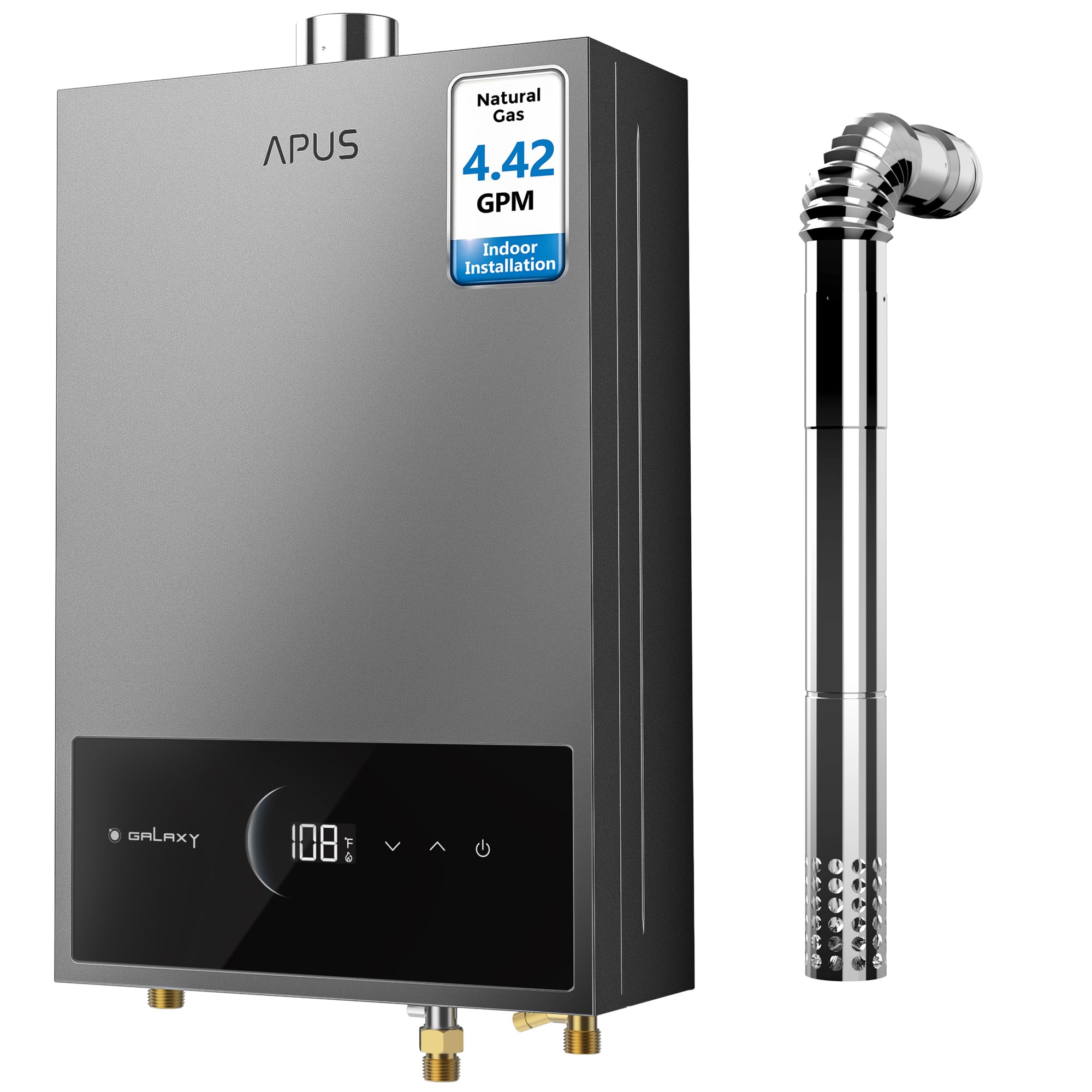
The APUS AP-AWH-Q13NG is the most compact unit in this lineup, measuring just 20.55 x 13.27 x 5.91 inches. Its 95,000 BTU burner delivers 4.42 GPM, and the standout feature is the 0.66 GPM low-flow start technology—this allows the unit to ignite and heat water even at very low faucet flow rates, which is a common failure point for other tankless heaters. The segmented combustion system achieves 85%+ thermal efficiency, and the unit runs at a whisper-quiet 36 dB.
The digital LED touchscreen lets you adjust the temperature from 95°F to 140°F in 1°F increments, and the smart CPU maintains that temperature within ±1°F. The built-in freeze protection activates automatically in low temperatures, though the manual warns that extended exposure below 41°F requires draining. The steel heat exchanger is oxygen-free copper for better heat transfer.
Some users report that the unit only delivers lukewarm water in colder climates, so this is best suited for regions where the incoming groundwater stays above 60°F. It’s a strong choice for a small apartment, a tiny house, or as a supplemental unit for a workshop or in-law suite where space is limited.
Why it’s great
- Low-flow start (0.66 GPM) works with trickling faucets
- Ultra-compact design (5.9” deep) for tight spaces
- 36 dB operation is barely audible
Good to know
- Best for warm-groundwater regions (inlet above 60°F)
- 2-year limited warranty is shorter than some competitors
FAQ
Can a gas tankless water heater replace my existing tank heater on the same gas line?
Why does my tankless water heater take so long to deliver hot water?
What is the difference between condensing and non-condensing gas water heaters?
Can I install a gas tankless water heater outdoors in a cold climate?
How often do I need to descale a tankless gas water heater?
Final Thoughts: The Verdict
For most users, the best gas water heater winner is the A. O. Smith ATI-310CX3 because it combines built-in scale prevention with professional-grade build quality and a 15-year heat exchanger warranty. If you want the highest efficiency and the ability to run seven fixtures at once, grab the Rinnai RX199iN. And for a budget-minded household with 1–2 simultaneous uses, nothing beats the value of the ThermoMate CZ360NG.