
A French drain fails the moment soil particles migrate into the gravel bed, turning your carefully laid trench into a mud-filled pipe. That is the single problem the right geotextile fabric solves — it lets water pass freely while trapping silt and fines that would otherwise clog the perforated pipe and stone base.
I’m Mohammad Maruf — the founder and writer behind Drink4Good. I have spent years analyzing filtration media, tensile strength ratings, and pore size data to separate real drainage fabric from basic weed barriers that collapse under load.
Whether you are laying perforated pipe around a foundation or stabilizing a gravel driveway for heavy traffic, choosing the wrong fabric wastes time and money. This guide breaks down the top contenders to help you find the best geotextile fabric for french drain performance based on ounce weight, permeability, and tensile strength.
How To Choose The Best Geotextile Fabric For French Drain
Selecting drainage fabric is not about brand loyalty — it is about matching the fabric’s physical properties to your soil type and trench depth. The wrong choice either blocks water flow entirely or lets sediment pass straight through, rendering the drain useless within a season.
Non-Woven vs. Woven — The Right Construction for Drainage
Non-woven needle-punched geotextile fabric is the standard for French drains because its random fiber matrix creates a three-dimensional filter that catches fines while maintaining high water flow. Woven fabric, by contrast, relies on a flat grid that can clog quickly when exposed to silty or clay-heavy soil. For a trench that must stay open for years, choose non-woven.
Ounce Weight — Not All 4 oz Rolls Are Equal
The ounce weight (oz/sq yd) directly correlates with puncture resistance and filtration depth. A 3.2 oz fabric works for light residential gravel beds, while 5 oz or 8 oz material handles deeper trenches, larger stone, and heavier equipment traffic. Thicker fabric also resists root penetration better over time.
Tensile Strength and Grab Load Ratings
Tensile strength measured in pounds or Newtons tells you how much force the fabric can handle before tearing during installation or under gravel settlement. Look for a minimum of 350 N (roughly 80 lbs) for standard residential use. Commercial projects with traffic require 600–800 lbs tensile strength to avoid separation and rutting.
Quick Comparison
On smaller screens, swipe sideways to see the full table.
| Model | Category | Best For | Key Spec | Amazon |
|---|---|---|---|---|
| VEVOR 4ft x 100ft 8 oz | Non-Woven | Deep Trenches & Heavy Stone | 8 oz/sq yd, 350 N Tensile | Amazon |
| DWALE Driveway 13×65 ft 5 oz | Woven | Gravel Driveways & Wide Coverage | 5 oz/sq yd, 800 lbs Tensile | Amazon |
| Doniks 13×115 ft 5 oz | Woven | Large-Area Erosion Control | 5 oz/sq yd, 800 lbs Tensile | Amazon |
| DWALE Driveway 5×500 ft 4 oz | Woven | Long-Run Driveway Projects | 4 oz/sq yd, 600 lbs Tensile | Amazon |
| DWALE Driveway 6×300 ft 3.5 oz | Woven | Commercial-Scale Barriers | 3.5 oz/sq yd, 800 lbs Tensile | Amazon |
| Aquascape Non-Woven 10×15 ft | Non-Woven | Pond & Waterfall Underlayment | Lightweight, Non-Slip | Amazon |
| HOOPLE 4ft x 100ft 3.2 oz | Woven | Garden Bed Weed Control | 3.2 oz/sq yd, Light Duty | Amazon |
In‑Depth Reviews
1. VEVOR Geotextile Landscape 4ft x 100ft 8 oz

The VEVOR is the only roll in this group that hits an 8 oz weight with a needle-punched non-woven construction, making it the clear choice for a French drain that must stay open in silty clay. The 350 N tensile strength provides enough tear resistance to survive being buried under a foot of washed stone without the fabric ripping during compaction. Buyers describe it as thick, easy to cut, and substantially heavier than standard woven rolls sold at big-box stores.
Installation is straightforward with landscape staples, though the 22-pound roll requires two people to position cleanly. The 4-foot width is ideal for standard trench widths, and the non-woven matrix allows water to flow through at a high rate while retaining fines. Multiple users report using it in drainage ditches with larger stone and seeing zero sediment migration after heavy rain.
The main trade-off is the cost per square foot compared to thinner woven options. For a residential driveway underlayment where traffic is light, you could use a lighter fabric, but for a true drainage trench this density pays for itself in longevity.
Why it’s great
- Heavy 8 oz non-woven construction blocks silt effectively
- Needle-punched design maintains high water permeability
- Strong 350 N tensile rating resists tearing during gravel backfill
Good to know
- Roll is heavy and awkward to maneuver alone
- Higher cost per square foot than woven alternatives
2. DWALE Driveway Fabric 13×65 ft 5 oz

The DWALE 13×65 ft roll delivers a 5 oz woven polyethylene sheet with an 800 lb tensile strength, making it suitable for driveways and French drains exposed to vehicle weight. Woven fabric works best in gravel driveways where the primary need is separation rather than deep filtration — it stops the gravel from punching into the subsoil while allowing water to drain through its grid structure. Users praise its strength over the thin rolls sold at hardware chains.
At 65 feet long and 13 feet wide, this roll covers a large area quickly, which matters for a full driveway or expansive drainage field. The material is tear-resistant and easy to cut with a utility knife. One reviewer used it under a shed pad and noted it outperformed basic weed fabric significantly. The 5 oz density feels sturdy without being stiff.
Because it is woven, this fabric is not ideal for trenches with high silt content — the grid gaps can allow fine particles to pass over time. Pair it with a layer of sand or a non-woven underlayment for clay-heavy soil conditions.
Why it’s great
- Wide 13 ft roll reduces seams and installation time
- 800 lb tensile strength handles gravel truck traffic
- High water permeability prevents pooling on driveways
Good to know
- Woven grid may pass silt in heavy clay soils
- Not as thick as non-woven for sediment filtration
3. Doniks 13×115 ft 5 oz
The Doniks 13×115 ft roll mirrors the DWALE 5 oz woven construction but extends the length significantly, covering nearly 1,500 square feet in a single run. For large-scale drainage fields, commercial landscaping, or long driveway runs, this eliminates the need for multiple rolls and the seams that weaken overall performance. The woven polypropylene delivers the same 800 lb tensile strength, ensuring durability under heavy stone and equipment.
Users consistently highlight the fabric’s thickness and non-stretch quality — it lays flat without wrinkling, which is critical for weed prevention and even gravel distribution. Some buyers note that cut edges fray easily, so a quick pass with a torch along cuts prevents loose threads during installation. The 35-pound roll requires planning for transport and setup.
As with any woven fabric, performance in fine-soil French drains is secondary to driveway separation. If your trench runs through sandy or loamy soil, this roll works well; for pure silt filtration, a non-woven layer on top is recommended.
Why it’s great
- Massive 115 ft length minimizes seams for large projects
- Thick, non-stretch woven material lays flat reliably
- 800 lb tensile strength withstands heavy stone loads
Good to know
- Cut edges fray; torch sealing recommended
- Heavy roll needs two people for positioning
4. DWALE Driveway Fabric 5×500 ft 4 oz
The 5×500 ft DWALE roll is purpose-built for contractors or homeowners tackling long driveway runs, extended French drain lines, or acreage stabilization. At 4 oz and 600 lb tensile strength, it is slightly lighter than the 5 oz options but still dense enough for most residential and semi-commercial applications. The folded packaging means the 5-foot width arrives compressed to 2.5 feet, requiring spreading before installation.
User reports confirm the fabric performs well as a grass barrier under gravel and for greenhouse foundations. The polyethylene woven material resists UV degradation when covered, and several buyers noted the price per square foot is competitive against shorter rolls from local suppliers. The 500-foot length demands careful layout planning — unfolding it in wind is challenging without extra hands.
The 4 oz weight makes this a mid-range option for French drains. In high-silt soil, I would still prefer a non-woven liner, but for gravel driveways and erosion control along long slopes, this delivers reliable separation at scale.
Why it’s great
- 500 ft roll covers large areas without multiple purchases
- 600 lb tensile strength handles typical gravel loads
- Folded packaging reduces shipping size
Good to know
- Unfolding the compressed fabric requires space and effort
- Cut edges fray; torch sealing advised for clean edges
5. DWALE Driveway Fabric 6×300 ft 3.5 oz

This 3.5 oz woven roll from DWALE spans 300 feet with a 6-foot width and an 800 lb tensile strength that seems disproportionate to its lighter weight — the polyethylene fibers are tightly woven for high load capacity. It is best suited for commercial landscaping projects where the primary need is separation of gravel from subsoil rather than deep trench filtration. The 6-foot width is packaged folded down to 3 feet, so factor in time to spread it flat.
Reviews consistently note that the fabric is surprisingly heavy-duty for its weight class, with users employing it for greenhouse foundations, no-till gardening, and weed control around structures. It drains well and prevents weeds from punching through, even after eight months of exposure in some cases. The 10-year warranty when covered with mulch adds peace of mind for permanent installations.
The lighter 3.5 oz construction means it is not the first choice for a deep French drain filled with large angular stone. For that application, the VEVOR non-woven remains superior. But as a high-value barrier for large horizontal areas, this roll covers ground economically.
Why it’s great
- 800 lb tensile strength in a lightweight 3.5 oz fabric
- 300 ft length covers commercial-scale areas
- 10-year warranty adds confidence for permanent installs
Good to know
- Lighter weight not ideal for deep stone trenches
- Folded packaging requires careful spreading
6. Aquascape Non-Woven Geotextile 10×15 ft

The Aquascape non-woven underlayment is designed specifically for pond and waterfall liners, but its filtration properties translate directly to light-duty French drain applications where a small area needs protection from root puncture and silt. The polypropylene non-woven material allows gasses to escape while blocking sharp rocks from damaging the liner beneath. At 10×15 feet, it is a compact solution for targeted drainage spots.
Users confirm the fabric runs closer to 12×15 feet in actual dimensions, providing extra coverage. It is light enough to handle solo and spreads easily without heavy equipment. The material holds up well against roots and standard soil types, with several reviewers using it successfully under sand and clay layers before installing pond liners.
This is not a bulk roll for long trench runs. Its value lies in precision applications — protecting a pipe outlet, lining a small catchment basin, or creating a filter layer under a retaining wall gravel base. For those specific cases, the non-woven construction outperforms any woven scrap.
Why it’s great
- True non-woven construction filters fines effectively
- Light and easy to handle for small projects
- Allows gas escape, reducing liner bubbles
Good to know
- Small size not suitable for long trench runs
- Delivered folded; edges may stick together
7. HOOPLE 4ft x 100ft 3.2 oz
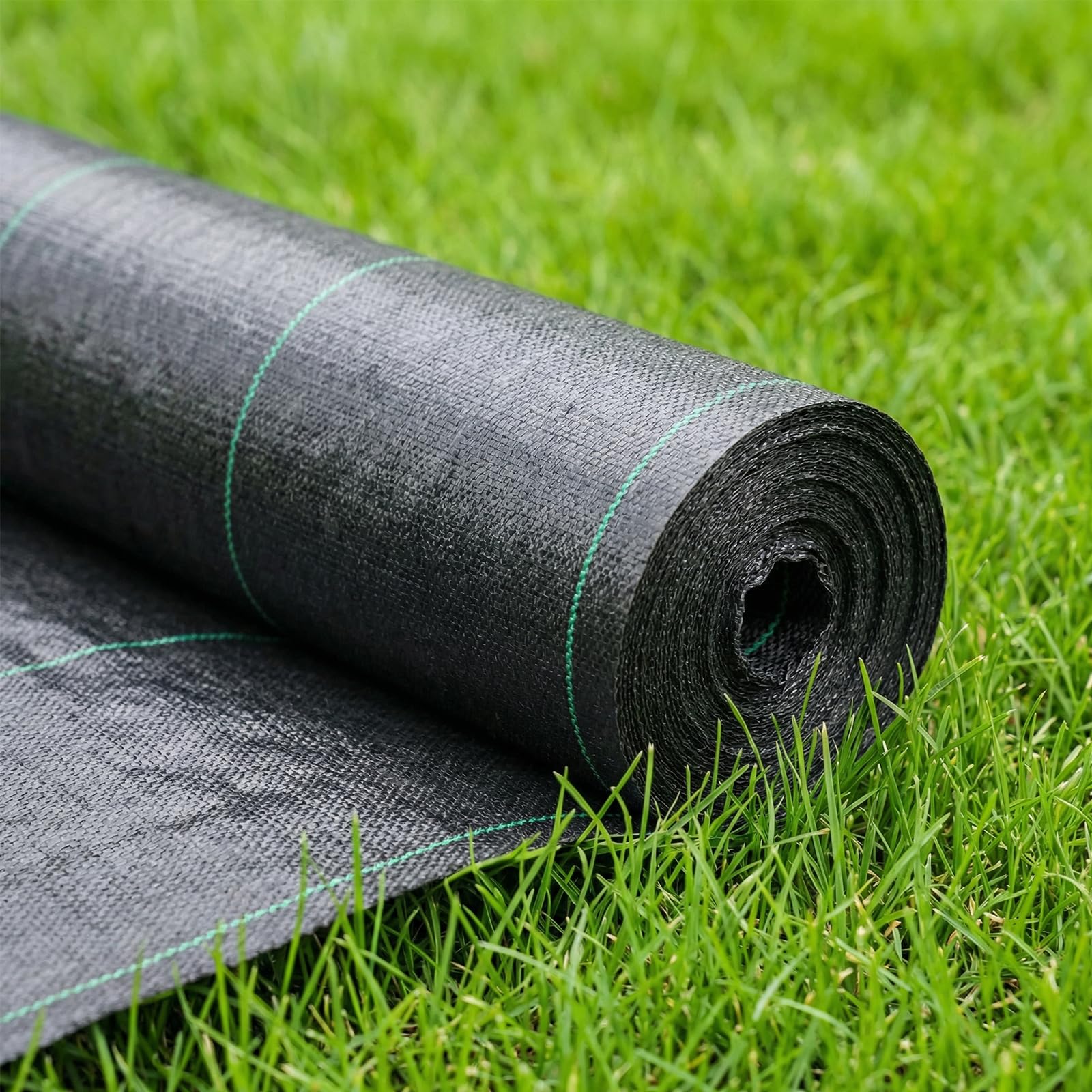
The HOOPLE 3.2 oz woven polypropylene fabric is positioned as a heavy-duty weed barrier, and at this price point for a 100-foot roll, it is a budget-friendly entry into ground cover. For a French drain in sandy or well-draining soil with minimal fines, this will provide basic separation between gravel and subsoil. It blocks sunlight effectively and allows water to pass, matching the description of a permeable landscape fabric.
User feedback confirms it stops weeds in flower beds and gardens, and the 3.2 oz thickness is noticeably more substantial than the ultra-thin rolls found at discount retailers. It cuts cleanly with scissors and installs quickly. Some reviewers noted that cutting leaves non-biodegradable plastic strings that can get caught in garden tillers — a reminder to dispose of trimmings properly.
The 3.2 oz weight and woven construction limit its use in high-silt French drains. If your trench sees heavy clay runoff or large volumes of water, the fabric may not trap fines effectively over multiple seasons. For light-duty landscaping drainage or as a base layer under a second non-woven sheet, it is a cost-conscious starting point.
Why it’s great
- Low cost per square foot for covering long runs
- 3.2 oz thickness exceeds basic weed cloth density
- Easy to cut and install without special tools
Good to know
- Woven construction may pass silt in clay-heavy soil
- Cut edges shed plastic threads that need cleanup
FAQ
Can I use regular landscape fabric instead of geotextile for a French drain?
Should I use woven or non-woven geotextile in a French drain trench?
How deep should the geotextile extend in a French drain trench?
Final Thoughts: The Verdict
For most users, the best geotextile fabric for french drain winner is the VEVOR 8 oz non-woven roll because its heavy needle-punched construction provides the deepest silt filtration and highest puncture resistance for standard trench conditions. If you want wide-area gravel driveway coverage, grab the DWALE 13×65 ft 5 oz roll. And for small-scale pond underlayment or a short drainage spot, nothing beats the Aquascape non-woven sheet for precise filtration.