
A camping generator’s job is to vanish into the background — you should hear the birds, the breeze, and the crackle of the fire, not a constant mechanical drone. The difference between a great trip and a noisy one often comes down to a single decibel rating or a pure sine wave inverter that keeps your CPAP or laptop running safely. Whether you’re powering a fridge for the weekend or keeping your trailer’s AC humming in July, the right generator sits quietly at the edge of camp, delivering reliable power without demanding attention.
I’m Mohammad Maruf — the founder and writer behind Drink4Good. I’ve spent years analyzing portable power and generator hardware specs to help outdoor enthusiasts find equipment that matches their real-world needs.
After comparing runtimes, noise levels, weight, and power output across dozens of models, here is my curated guide to the best generators for camping this season.
How To Choose The Best Generators For Camping
Choosing a camping generator isn’t just about the highest wattage — it’s about matching your power needs with portability, noise tolerance, and fuel preferences. A 3000-watt gas generator may power an RV AC, but if it weighs 80 pounds and hits 65 decibels, it might not suit a tent camp site. Start by listing the devices you plan to run, check their running and startup wattage, and decide whether silent operation or fuel flexibility matters more to your camping style.
Power Output: Running Watts vs. Surge Watts
Every appliance has a running wattage and a higher startup (surge) wattage. A 13,500 BTU RV air conditioner, for example, may need 1800 watts to run but 3000+ watts to start. Your generator must handle the surge peak for a few seconds, then settle into its rated running load. Overlooking this difference is the most common mistake campers make — leading to tripped breakers and a hot, uncomfortable night.
Noise Level: Decibels at Camp
Campground etiquette and many state parks enforce strict noise limits, often below 60 decibels at a distance of 23 feet. Inverter generators typically operate between 50 and 60 dBA, which is quieter than a normal conversation. Conventional open-frame generators can push 68–75 dBA — loud enough to disturb neighbors and wildlife. Always check the decibel rating at a specified distance to gauge real-world campsite quietness.
Fuel Type and Runtime
Gasoline is easy to find but degrades over time and requires carburetor maintenance. Propane burns cleaner and stores indefinitely, making dual-fuel models a smart investment for occasional users. Battery power stations (LiFePO4) offer silent operation and zero emissions — ideal for tent campers and overnight CPAP use — but require a way to recharge (solar panels or vehicle charging). Runtime matters: a 1-gallon tank on an inverter generator can last 5–6 hours at half load, while a large battery station may run a fridge for 24+ hours before needing a recharge.
Quick Comparison
On smaller screens, swipe sideways to see the full table.
| Model | Category | Best For | Key Spec | Amazon |
|---|---|---|---|---|
| Westinghouse 2550W Inverter | Dual Fuel Inverter | RV & Quiet Camp | 52 dBA at 23 ft | Amazon |
| BLUETTI Elite 100 V2 | Power Station | Silent Camping | 1024Wh LiFePO4 | Amazon |
| Anker SOLIX C2000 Gen 2 | Power Station | High Capacity Camp | 2048Wh LiFePO4 | Amazon |
| WEN 56360i | Gas Inverter | Budget Light Camp | 46 lbs / 2900W Rated | Amazon |
| PowerSmart HB5020 | Gas Inverter | Compact Camping | 59 dBA / 5.5h Runtime | Amazon |
| BLUETTI AC70 | Power Station | Fast Recharge Camp | 768Wh / 45min to 80% | Amazon |
| VTOMAN Jump 600X | Power Station | Car Jump + Camp | 299Wh / 600W Output | Amazon |
| PowerSmart DB5068 | Gas Inverter | RV & Tailgate | 52 lbs / 3200W Rated | Amazon |
| Westinghouse 11000W Inverter | Dual Fuel Inverter | Heavy Duty Camp | 187 lbs / 9000W Running | Amazon |
In‑Depth Reviews
1. Westinghouse 2550W Dual Fuel Inverter Generator

The Westinghouse 2550W hits the sweet spot for most campers — it produces 1900 running watts (2550 peak) with pure sine wave inverter output that’s safe for electronics, and it runs on either gasoline or propane. The 52 dBA noise rating is genuinely quiet at a campsite, allowing for normal conversation without raising voices. With an RV-ready TT-30R outlet, a pair of 120V 20A GFCI outlets, and two USB ports, this generator is purpose-built for trailer and tent camping alike.
Fuel efficiency is standout here: the 1.16-gallon tank delivers up to 12 hours of runtime at 25% load in economy mode, meaning you can sleep through a full night without refueling or waking to a dead battery. The propane option gives you a clean-burning, shelf-stable fuel alternative when gasoline isn’t convenient, and the CO sensor adds a critical safety layer for enclosed campsite setups.
At 42.4 pounds, it’s light enough for one person to load into a truck bed or SUV, and the minimal assembly (mount the handle and wheels) means you can have it running within ten minutes of unboxing. The included toolkit and oil make first-time startup straightforward, though some users note the break-in procedure feels vague — follow the manual carefully to ensure long-term reliability.
Why it’s great
- Ultra-quiet 52 dBA operation blends into campground noise
- Dual-fuel capability (gas/propane) extends fuel flexibility
- RV-ready 30A outlet plus 12+ hour runtime in eco mode
Good to know
- Propane hose connection can feel loose initially — tighten securely
- Lacks a built-in hour meter for tracking maintenance intervals
2. BLUETTI Elite 100 V2 Power Station
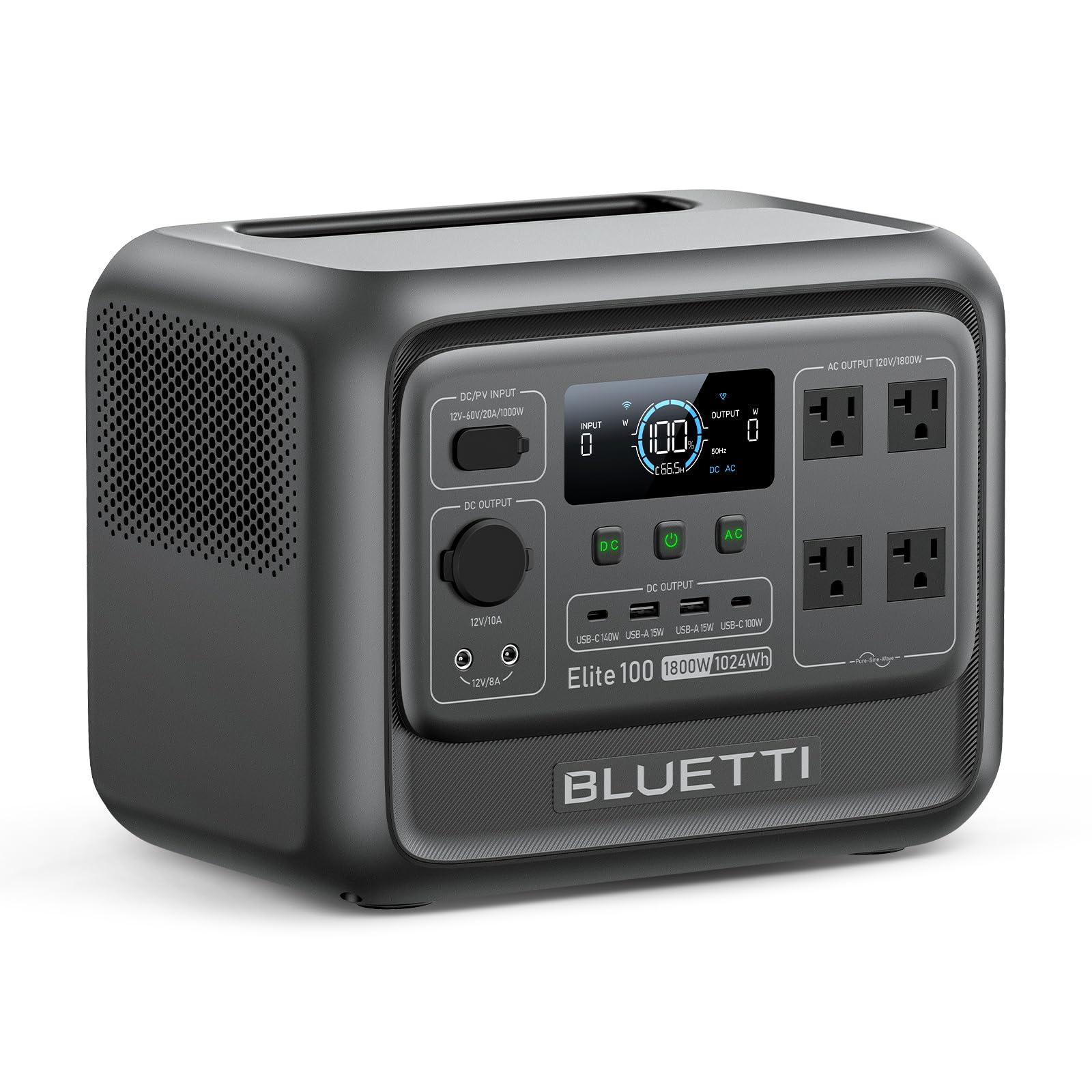
The BLUETTI Elite 100 V2 delivers 1800W of continuous AC output (3600W surge) from a 1024Wh LiFePO4 battery pack that weighs just 25 pounds. This is the sweet spot for campers who prioritize absolute silence — no engine noise, no fumes, and the unit operates at a library-quiet 30 dB under light loads. The 4 AC ports, USB-C PD, and USB-A ports let you charge laptops, phones, a CPAP machine, and even a small fridge simultaneously.
Recharging is fast: a 1200W AC input brings it from zero to full in about 70 minutes, and it supports up to 1000W of solar input for off-grid replenishment. The UPS mode switches in under 10 milliseconds, making it a viable backup for sensitive electronics. The hidden carry handle and compact 17L volume make it genuinely portable for tent camping or RV cabin storage.
What sets this unit apart is the 4000+ cycle life expectancy from the LiFePO4 chemistry, meaning it will last through years of weekend trips without significant capacity loss. The included app provides remote monitoring and charge/discharge scheduling, though some users report the Bluetooth/WiFi connectivity can be finicky. Keep in mind that running a space heater or microwave will drain the 1024Wh faster than you might expect — this is best paired with a solar panel for multi-day trips.
Why it’s great
- Near-silent operation at 30 dB — invisible to campsite neighbors
- Fast 70-minute full recharge from AC wall power
- 4000+ cycle LiFePO4 battery with long-term durability
Good to know
- Heavy for a power station at 25 lbs — not pocket-sized
- No built-in light or wireless charging pad
3. Anker SOLIX C2000 Gen 2 Power Station
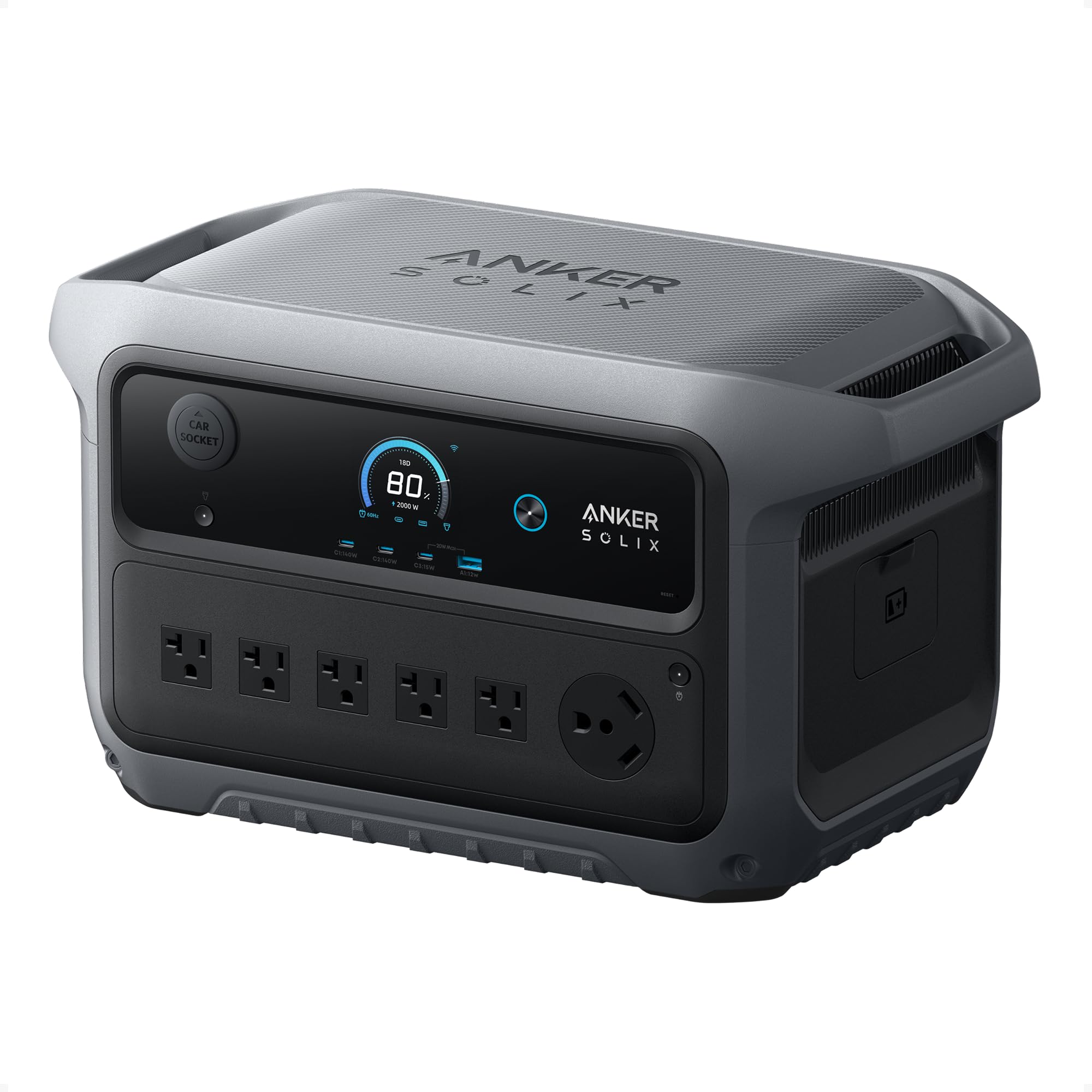
The Anker SOLIX C2000 Gen 2 is a beast — 2048Wh of LiFePO4 capacity with 2400W rated AC output and a 4000W peak, enough to run a large RV air conditioner, a full-size fridge, and multiple device chargers simultaneously. Despite the massive energy store, Anker shrank the overall size by 29% compared to previous generation models, landing at 41.7 pounds with a manageable 18.1 x 9.8 x 10.1-inch footprint.
Charging speed is where this unit truly excels: AC input recharges the entire 2kWh pack in just 58 minutes, which is class-leading for this capacity tier. It also supports 800W alternator charging from a vehicle, reaching full charge in about 3 hours — ideal for topping up while driving between campsites. The standby power draw is a mere 9 watts, meaning it can sit unused for weeks without draining significantly.
Durability is a strong suit: the metal and plastic hybrid chassis feels robust, and the battery is rated for 3000+ cycles before hitting 80% capacity. The six recharge methods (AC, solar, car, generator, lead-acid, alternator) give you exceptional flexibility in the field. The price point is premium, but for campers who need serious capacity — running a 30-quart fridge for five to seven days on a single charge — the C2000 Gen 2 justifies its cost through sheer versatility and build quality.
Why it’s great
- Full 2048Wh capacity recharges in under 1 hour via AC
- 4000W peak handles RV AC and heavy appliances
- Extremely low 9W standby power consumption
Good to know
- Heavy at 41.7 lbs — more of a car-camp or RV companion
- Premium price point reflects the high capacity and fast charging
4. WEN 56360i Inverter Generator

At 46 pounds, the WEN 56360i is one of the lightest gas inverter generators in the 3600-watt surge class, making it a top pick for campers who carry their generator to remote sites. The 149cc engine delivers 2900 running watts from a fully enclosed, fuel-shutoff-equipped design that protects the carburetor from stale gas damage — a thoughtful feature for seasonal users.
The generator includes a TT-30R RV receptacle alongside two 120V 20A outlets, a 12V DC port, and dual USB ports, covering the essentials for trailer power and device charging. Users consistently report that this unit starts on the first or second pull, even after storage, and that it handles 13,000 BTU RV air conditioners without struggling, consuming about 1 gallon over 4 hours under heavy load.
Noise levels are impressively low for a gas inverter — described as a gentle purr that blends into the background at a campsite. The three-year warranty provides solid coverage for occasional use. The main trade-off is the 1-gallon tank: runtime at half load is roughly 5 hours, so you’ll need to plan refueling stops on longer stays. The fuel shut-off system helps minimize maintenance, making this a reliable, easy-owning choice for the lightweight camping crowd.
Why it’s great
- Ultra-light 46-pound chassis with RV-ready 30A outlet
- Fuel shut-off extends carburetor life between trips
- Quiet operation for a gas generator
Good to know
- 1-gallon tank limits runtime to ~4-5 hours at medium load
- Not powerful enough for larger well pumps or whole-house loads
5. PowerSmart HB5020 Inverter Generator
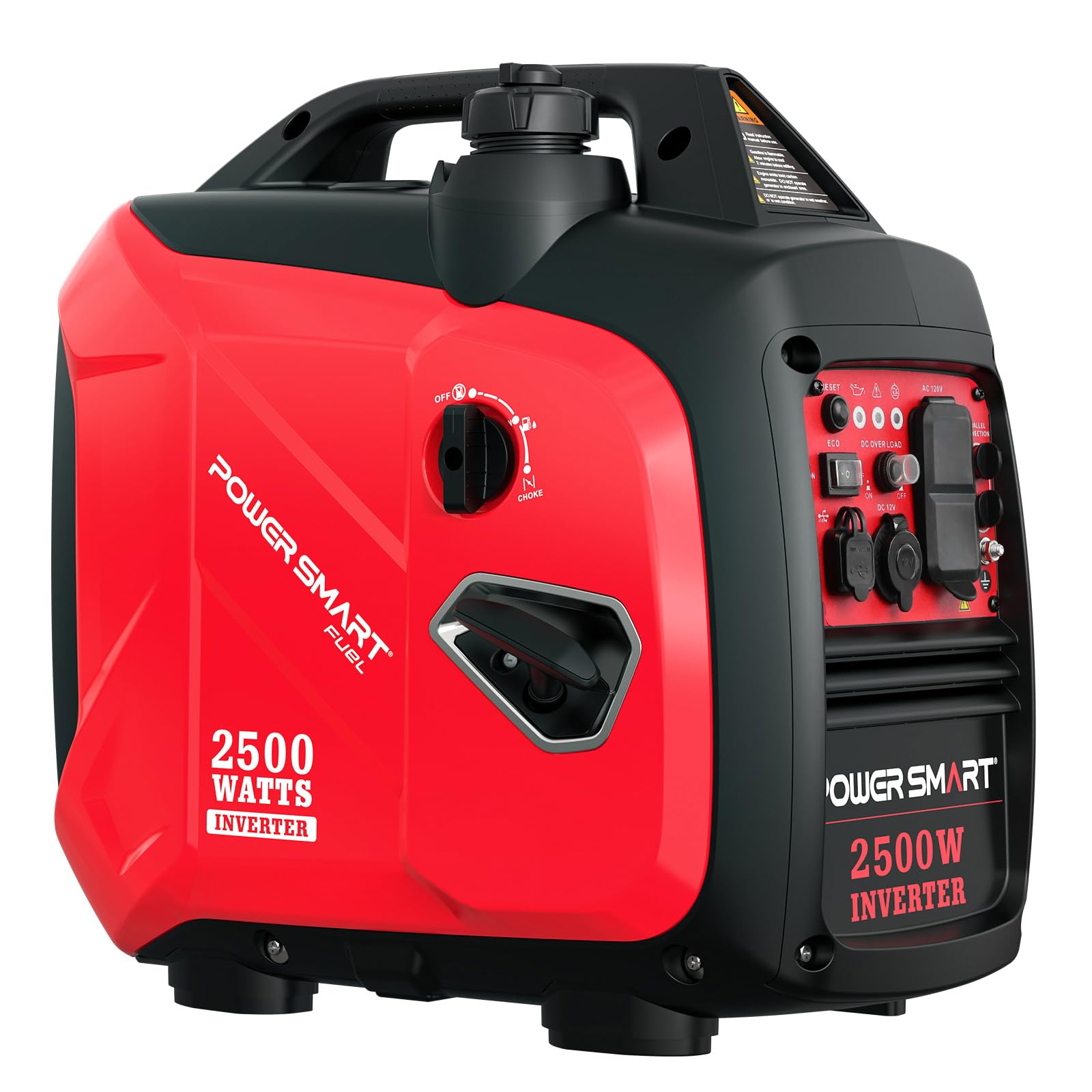
The PowerSmart HB5020 brings entry-level inverter generator pricing to a 2500-watt surge / 1900-watt rated unit that weighs just 39.7 pounds. The 79.8cc 4-stroke OHV engine produces clean sine wave power with less than 3% THD, safe for phones, laptops, and CPAP machines. At 59 dBA from 23 feet, it’s quiet enough for family campsites and RV parks with noise restrictions.
Fuel economy is a standout: the 1.06-gallon tank yields up to 5.5 hours at 50% load, and the ECO mode adjusts engine speed to match demand, stretching runtime further during light loads. The control panel includes two 120V household outlets and two 5V USB ports, covering the basics for camp lighting, device charging, and small appliances. The recoil start consistently fires on the first or second pull according to user reports.
The red chassis and compact footprint fit well in a car trunk or truck bed, and the built-in handle makes single-person transport manageable. The two-year warranty adds peace of mind. On the downside, the lack of a 30A RV outlet means you’ll need an adapter for direct trailer hookup, and the plastic fuel cap can feel flimsy over time. Overall, this is a solid budget-friendly entry for tent campers who want clean, quiet power without a major investment.
Why it’s great
- Lightest gas inverter on the list at under 40 pounds
- 5.5-hour runtime at half load with ECO mode
- Clean sine wave output protects sensitive electronics
Good to know
- No TT-30R RV outlet — adapter needed for trailer hookup
- Plastic fuel cap feels less durable than metal alternatives
6. BLUETTI AC70 Power Station

The BLUETTI AC70 packs 768Wh of LiFePO4 capacity into a 22.5-pound package with a 1000W pure sine wave inverter (2000W power lifting). This mid-range power station is optimized for campers who need fast recharge cycles — it goes from 0 to 80% in just 45 minutes and full in 1.5 hours using AC wall power, thanks to a 950W input ceiling.
The AC70 features a 100W USB-C PD port that can charge a MacBook Pro 16 at full speed, two 120V AC outlets, and multiple DC and USB-A ports for accessories. The built-in MPPT controller handles up to 500W of solar input, making it a viable off-grid companion for weekend trips. The LCD display clearly shows remaining percentage, input/output wattage, and estimated runtime, removing guesswork from power management.
Users report that a 100W guitar amp and pedalboard ran for 8 hours with the battery dropping to only 59%, demonstrating high inverter efficiency. The UPS function with sub-20ms switchover protects connected devices during power drops. The included app adds remote monitoring and charge scheduling. At this capacity level, expect to power a medium fridge for 6-8 hours, or run CPAP, lights, and phones through a full night. The downside is the plastic chassis — it feels solid but not as premium as metal-framed competitors.
Why it’s great
- Fast 45-minute recharge to 80% — best in class for this size
- 100W USB-C PD handles full-size laptop charging
- LiFePO4 battery rated for 3000+ cycles
Good to know
- 768Wh capacity may not cover heavy appliances like AC
- Plastic enclosure, not as rugged as metal alternatives
7. VTOMAN Jump 600X Power Station

The VTOMAN Jump 600X is a unique hybrid — it functions as a 299Wh portable power station AND a car jump starter, making it ideal for campers who drive to remote trailheads. The 600W inverter (1200W surge) powers phones, CPAP machines, laptops, and small appliances, while the integrated jump-start port can revive a dead vehicle battery in seconds when used with optional jumper cables.
The LiFePO4 battery pack is expandable to 939Wh with an external battery (sold separately), and it features regulated 12V DC output ports that deliver stable voltage for car refrigerators and tire inflators — a detail often overlooked on budget power stations. The nine output ports include two AC outlets, a 60W USB-C PD, three USB-A (one QC 3.0), two DC5521 ports, and a 12V car port, covering every camping device simultaneously.
Charging speed is average: AC input refuels the 299Wh pack in about 3 hours, and solar charging takes 5-6 hours with a 110W panel. The LED light with 5 modes is a nice bonus for tent setup. At 14.6 pounds, it’s easy to toss in a backpack or trunk. The main limitation is the base capacity — 299Wh is enough for a single night of light device use but won’t power a fridge or high-demand gear for extended trips. Consider the expansion battery if you plan longer stays.
Why it’s great
- Built-in car jump starter eliminates need for a separate device
- Regulated 12V DC ports power car fridge and inflator safely
- Expandable capacity for longer trips
Good to know
- Base 299Wh capacity is limited for multi-day camping
- Jumper cables sold separately
8. PowerSmart DB5068 Inverter Generator
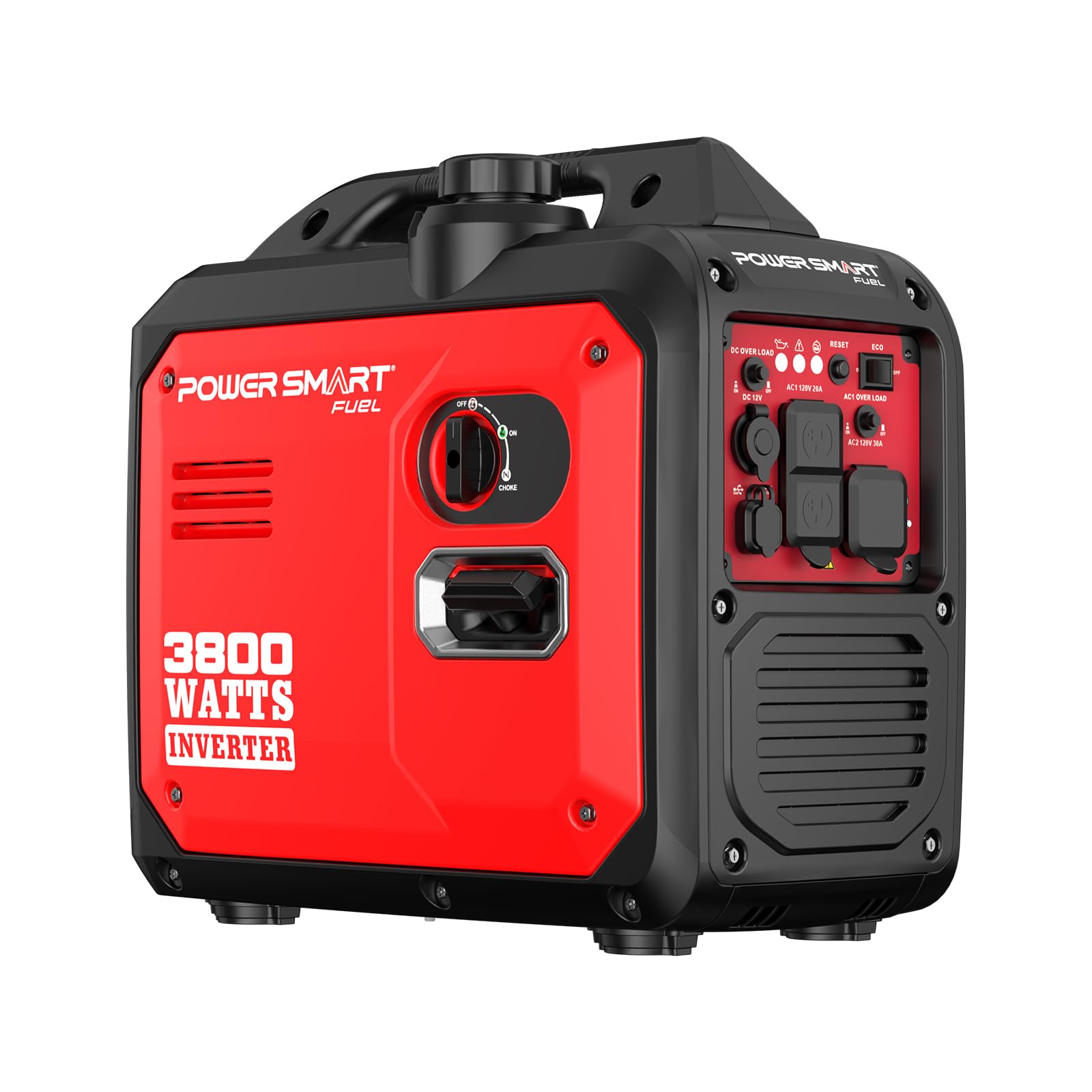
The PowerSmart DB5068 bridges the gap between compact inverter generators and full-size RV units — it delivers 3800 surge watts / 3200 running watts from a 143cc 4-stroke OHV engine while keeping noise at a campsite-friendly 59 dBA. At 52 pounds, it’s heavier than smaller inverters but still manageable for one person, and the wheels and handle make rolling it to the campsite effortless.
Parallel capability is a key feature here: you can connect two DB5068 units with a parallel kit (sold separately) to double your output to 6400 running watts, giving you flexibility for larger RVs or multiple appliances. The 1.19-gallon fuel tank provides up to 4.5 hours of runtime at 50% load, and the economy mode automatically adjusts engine speed to reduce fuel consumption and noise during lighter loads.
The control panel includes two 120V 26.7A AC outlets and a 5V USB port, though some users wish for a dedicated TT-30R RV outlet. The pure sine wave output stays under 3% THD, making it safe for sensitive electronics. User reports highlight exceptional reliability — one camper reported running their entire off-grid home (lights, TV, AC) continuously for 24+ hours without issues. The two-year warranty provides solid coverage. Consider this if you need the option to double power later, but note that the single USB port feels limited by modern standards.
Why it’s great
- Parallel-ready for doubling power output with a second unit
- Quiet 59 dBA operation fits campground noise limits
- Wheels and handle make 52 lbs easy to move
Good to know
- Only one USB port — bring a multi-port adapter for devices
- No TT-30R RV outlet; needs adapter for direct trailer hookup
9. Westinghouse 11000W Dual Fuel Inverter Generator

The Westinghouse 11000W is a heavyweight inverter generator designed for campers who bring the full RV experience — or need whole-house backup at remote cabins. It produces 9000 running watts (11000 peak) on gasoline and 8100 running watts (10000 peak) on propane, with true inverter clean power under 3% THD that rivals utility-grade electricity.
The 457cc OHV engine includes remote electric start with a key fob (range tested at 50+ feet), push-button start, and backup recoil start. The 9.8-gallon fuel tank provides up to 17 hours of runtime at 25% load, and the dual-fuel system lets you switch between gas and propane without any conversion kit. Outlets include a 50A RV-ready 14-50R, a 30A L14-30R transfer switch outlet, and two GFCI 20A household outlets — all with rubber covers for weather protection.
Despite weighing 187 pounds, the built-in flat-free tires and fold-down handle make it easier to position than the weight suggests. The CO sensor and automatic low-oil shutdown add essential safety features for campsite use. Users report that this generator can power an entire house including heat pump, fridge, well pump, and lights — or charge a Tesla at 20-25 miles per hour through the 50A outlet. For campers who need industrial-grade power with inverter quality, the 11000W is unmatched, though its size and price point clearly target the premium, heavy-use segment.
Why it’s great
- True inverter clean power at 11000W peak — rare at this size
- Remote electric start with key fob for easy ignition
- 50A RV outlet and dual-fuel flexibility
Good to know
- 187 pounds is not portable without wheels and a vehicle
- Included oil unsuitable for temps below 23°F; switch to 5W-30 synthetic
FAQ
How many watts do I need for basic tent camping?
Can I run a 15000 BTU RV air conditioner on a 2500 watt generator?
Is propane or gas better for camping generators?
Final Thoughts: The Verdict
For most campers seeking the best balance of quiet operation, fuel flexibility, and portability, the Westinghouse 2550W Dual Fuel Inverter is the top pick because it combines a 52 dBA noise floor with a lightweight chassis and both gas and propane fueling. If you want absolute silence and zero emissions for tent camping, the BLUETTI Elite 100 V2 power station delivers 1024Wh of quiet power. And for serious RV or cabin setups needing high surge capacity, the Westinghouse 11000W Inverter provides whole-camp power with inverter-grade clean electricity.