
Establishing a resilient, deep-rooted lawn in North Florida means choosing a grass seed blend that handles both the humid heat and the occasional cold snap without constant replanting. The sandy, acidic soil common to the region demands varieties with strong drought tolerance and the ability to thrive in full sun with moderate shade.
I’m Mohammad Maruf — the founder and writer behind Drink4Good. My analysis focuses on germination rates, seed purity percentages, and how each blend’s specific grass varieties perform under the unique Panhandle and First Coast climate conditions.
After reviewing the top options available, I found that the ideal best grass seed for north florida delivers a balance of wear resistance, shade tolerance, and fast establishment without demanding excessive watering.
How To Choose The Best Grass Seed For North Florida
North Florida sits in the transition zone where warm-season grasses flourish, but cold snaps and sandy soil create unique challenges. The wrong seed choice leads to patchy lawns that die back in winter or fail to establish before summer heat arrives. Focus on these key factors to avoid wasted time and seed.
Identify the right grass type for your sun exposure
Bermudagrass dominates full-sun lawns across the region due to its aggressive spreading habit and extreme wear tolerance. If your yard has moderate to heavy shade from live oaks or pines, look for a sun-and-shade mix that includes tall fescue or fine fescue varieties. Pure ryegrass or Kentucky bluegrass typically fizzle out after one season in the humid summer, leaving bare patches.
Check the seed tag for purity and noxious weed content
Florida law requires seed tags to list the percentage of pure seed, inert matter, and weed seed. Aim for at least 85 percent pure seed with less than 0.5 percent weed seed. Blends that contain a high percentage of coating or filler may look cheap per pound but deliver less actual live seed per square foot.
Look for tackifier or mulch technology
Afternoon thunderstorms in North Florida can wash untreated seed off slopes and level lawns in minutes. A seed mix that includes a tackifier — a natural glue that binds seed to soil — or a mulch that changes color when dry helps protect your investment. These additives are especially important for lawns with even a slight grade change.
Quick Comparison
On smaller screens, swipe sideways to see the full table.
| Model | Category | Best For | Key Spec | Amazon |
|---|---|---|---|---|
| Pennington Bermudagrass | Warm-Season | Full sun, wear-resistant lawns | Cold-tolerant Bermuda varieties | Amazon |
| Scotts Sun & Shade Mix | Versatile Blend | Mixed sun/shade, overseeding | 5.6 lb bag covers 2,240 sq ft | Amazon |
| Scotts Sunny Mix | Full Sun | Direct sun, new lawns | Root-Building Nutrition formula | Amazon |
| Pennington Smart Patch | Patch Repair | Bare spot repair on slopes | Tackifier prevents washout | Amazon |
| Canada Green Ryegrass | Budget Blend | Quick green cover, temporary fill | 32 oz bag sprouts in 6 days | Amazon |
In‑Depth Reviews
1. Pennington Bermudagrass Grass Seed, 5 lb

Bermudagrass is the gold standard for full-sun lawns across North Florida, and Pennington’s version includes improved cold-tolerant varieties that handle the occasional freeze better than standard Bermuda. This 5-pound bag delivers a thick, aggressively self-spreading turf that fills in bare spots on its own during the growing season.
The deep root system makes it naturally more drought-tolerant than fescue or ryegrass mixes, a major advantage during the dry spells common to the region. Customer reports confirm high germination percentages when soil temperatures reach the 70-80°F range, which matches Florida’s late spring and early summer planting window.
One notable trade-off is that Bermuda goes dormant and turns brown during winter months, leaving your lawn straw-colored until March. The tiny seed size requires careful application to avoid overseeding, and some batches have shown germination variability, so starting with a quality test is smart.
Why it’s great
- Aggressive self-spreading fills gaps without replanting
- Exceptional drought and wear tolerance for Florida’s climate
- Cold-tolerant varieties survive North Florida winters
Good to know
- Goes fully dormant and brown in winter
- Requires 70-80°F soil temps for reliable germination
- Some users report batch-to-batch variability
2. Scotts Turf Builder Grass Seed Sun and Shade Mix, 5.6 lb

For North Florida lawns that mix full-sun stretches with moderate shade from trees or structures, this Scotts blend offers the most versatile coverage in the group. The 5.6-pound bag covers up to 2,240 square feet when overseeding, making it a cost-efficient option for mid-sized yards.
The Root-Building Nutrition formula combines seed, fertilizer, and soil improver into one product, eliminating the need for separate starter applications. Users report visible sprouting within 10 days with consistent twice-daily watering, though some noticed slower establishment in the first week compared to pure Bermuda.
A few recent buyers flagged increased weed content in certain production batches, which is worth monitoring if you plan to use this on a previously weed-free lawn. Additionally, the medium drought resistance means you cannot skip irrigation during extended dry periods like you can with Bermuda.
Why it’s great
- Versatile blend works in sun and moderate shade
- Includes fertilizer and soil improver in one bag
- Large coverage area per bag reduces cost
Good to know
- Only medium drought resistance requires regular watering
- Some batches reported higher weed seed content
- Germination can be slower than pure Bermuda
3. Scotts Turf Builder Grass Seed Sunny Mix, 2.4 lb
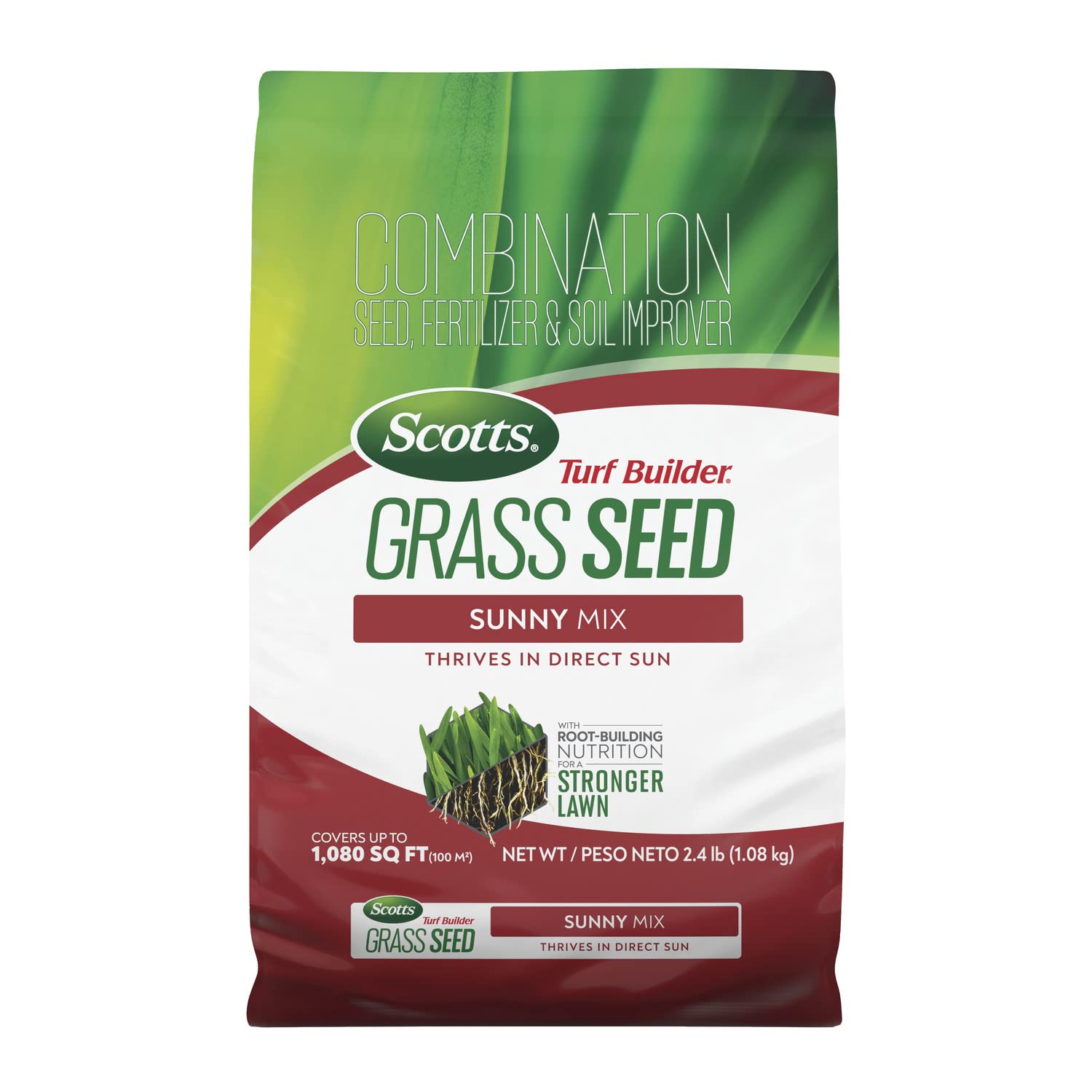
If your yard gets direct sun and you want a budget-friendly starting point for a new lawn or overseeding, this Scotts Sunny Mix punches above its weight. The 2.4-pound bag covers 360 square feet for new lawns or 1,080 square feet for overseeding, making it ideal for smaller spaces or targeted section work.
The mix is designed for full sun and light shade, with medium to high drought resistance that holds up better than ryegrass during Florida’s dry spells. Customers who prepared soil properly saw fast growth and strong root establishment, with one reviewer noting it handled a drought period better than expected.
Given the smaller bag size and narrower sun requirement, it is not the best choice for large, shaded, or mixed-exposure lawns. The need for regular watering during establishment remains critical; skipping a few days can stunt germination significantly.
Why it’s great
- Strong drought resistance for a fescue-based blend
- Affordable entry point for small lawns or patches
- Fast germination with proper watering routine
Good to know
- Smaller bag requires multiple purchases for larger yards
- Not suitable for areas with heavy tree shade
- Needs consistent watering for first 2-3 weeks
4. Pennington Smart Patch Tall Fescue, 5 lb

This Pennington Smart Patch is uniquely designed for one specific job: repairing bare spots on slopes and hills where standard seed washes away. The included tackifier acts as a natural blanket that locks seed in place during Florida’s heavy rain events, making it the go-to choice for any lawn with a grade change.
The built-in mulch turns a lighter color when the area dries out, giving you a visual cue for when to water again — a practical feature for anyone who struggles with watering schedules. The tall fescue base offers good tolerance for partly shaded areas too, which is common around foundations and landscape beds.
Results have been inconsistent according to reviews, with some users seeing no germination even after following directions carefully. The 5-pound jug goes quickly when covering multiple spots, and the tall fescue may thin out after the first summer heat if not paired with a warm-season overseed.
Why it’s great
- Tackifier prevents seed washout on sloped lawns
- Mulch color change shows when to water
- Good for partly shaded repair spots
Good to know
- Germination results can be inconsistent
- Tall fescue may struggle in deep summer heat
- 5 lb jug covers limited area for larger patches
5. Canada Green Grass Lawn Seed Ryegrass, 2 lb

Canada Green’s ryegrass mix is the fastest germinating option here, with sprouts visible in as little as six days. That rapid establishment makes it a popular choice for temporary erosion control or quick green cover while a permanent warm-season lawn fills in.
The blend performs well in both sun and shade, and users report that it stays a rich green color during its short life cycle. For North Florida homeowners looking for a winter overseed to keep lawn color while Bermuda is dormant, this can serve that purpose effectively if planted in late fall.
The major catch is longevity: this is primarily annual ryegrass, which thins out and dies after 5-6 weeks, leaving bare spots that weeds quickly colonize. The bag label does not clearly specify the percentage of annual versus perennial ryegrass, so expect it to behave as a temporary cover rather than a permanent lawn solution.
Why it’s great
- Germinates in roughly 6 days for fast results
- Works well in both full sun and moderate shade
- Affordable entry price for temporary coverage
Good to know
- Likely annual ryegrass dies back after 5-6 weeks
- Lack of seed type labeling on the bag
- Not suitable as a permanent lawn solution
FAQ
What is the best time to plant grass seed in North Florida?
Can I use ryegrass as a permanent lawn in North Florida?
How often should I water new grass seed in Florida’s heat?
Final Thoughts: The Verdict
For most users, the best grass seed for north florida winner is the Pennington Bermudagrass because its aggressive spreading habit and cold tolerance match the region’s full-sun lawns and occasional freezes perfectly. If you have a mix of sun and shade, grab the Scotts Sun and Shade Mix. And for quick bare-spot repair on sloped areas where rain washout is a risk, nothing beats the Pennington Smart Patch.