
Fingerstyle acoustic playing demands a string set that balances tactile sensitivity with tonal warmth — the wrong gauge or alloy deadens your dynamic range before you can even set a nail into the first arpeggio. Aggressive flatpicking strings can feel stiff and metallic under a light touch, robbing your fingerpicked passages of their natural shimmer and sustain. The right set, on the other hand, responds instantly to subtle variations in attack, delivering everything from a whisper-soft thumb bass to a singing melodic line on the trebles.
I’m Mohammad Maruf — the founder and writer behind Drink4Good. Over years of market research and specification analysis across hundreds of acoustic string sets, I’ve tracked the precise construction details — core-to-wrap ratios, coating thicknesses, and alloy compositions — that separate a good fingerstyle string from a genuinely great one. The selection below reflects that deep-dive approach, not a casual trial.
Whether you are a stage performer needing projection or a home player chasing a mellow after-hours sound, this guide isolates the technical choices that matter most for fingerstyle. The guitar strings for acoustic fingerstyle listed here are graded by feel, longevity, and tonal balance — each reviewed against the specific demands of uncovered fingerwork.
How To Choose The Best Guitar Strings For Acoustic Fingerstyle
Selecting the right fingerstyle string is not about picking a brand name — it is about matching three variables: the alloy that supports your preferred tonal palette, the tension that suits your hand strength and technique, and the coating that keeps your tone consistent across a month of daily practice. Beginners often reach for heavy-gauge strings because they associate mass with volume, but fingerstyle thrives on lighter tension that allows the fingers to articulate each note cleanly without excessive force. The wrong choice leads to buzzing, muted sustain, or premature fret wear. Here is the breakdown of what matters most for this playing style.
Alloy Choice: Phosphor Bronze vs. 80/20 Bronze vs. Silk & Steel
Phosphor bronze (92% copper, 8% tin, with trace phosphorus) is the default choice for fingerstyle because it produces a warm, balanced tone with a slightly compressed attack — ideal for chord-melody arrangements where you need even response across all six strings. Eighty/twenty bronze (80% copper, 20% zinc) sounds brighter and projects more shimmer on the trebles, which can be excellent for solo fingerpicking in a live setting, but the brightness can turn harsh on certain guitar bodies such as maple. Silk-and-steel strings wrap a fine steel core with silk fibers and a silver-plated copper winding, resulting in very low tension and a soft, mellow voice that is forgiving on the fingertips — a smart choice for long practice sessions or players with joint sensitivity.
Gauge and Tension: Why Light and Medium-Light Dominate Fingerstyle
Fingerstyle players almost never reach for extra-heavy strings. The standard sweet spot sits in the light (0.012–0.053) to light/medium (0.012–0.056) range. Light gauge lets your fingers bend notes, hammer-on, and pull-off with less resistance, preserving dynamic nuance across quiet passages. Going too light — 0.010 sets — can sacrifice volume and low-end thump, especially on dreadnought bodies. The balance is a light/medium hybrid or a true light set on a guitar with good resonant projection. For players who primarily play alone at moderate volume, custom light (0.011–0.052) or extra-light (0.010–0.047) can reduce fatigue without gutting the tone.
Coating Technology: Preservation vs. Natural Feel
Coated strings extend life by protecting the wrap wire from sweat and humidity, but the coating can dampen the high-frequency sparkle that fingerstyle players rely on for articulation on the B and high E strings. Elixir’s Polyweb coating delivers a warm, “played-in” character from day one, whereas D’Addario’s XT coating uses a thin, barely perceptible layer that preserves more of the uncoated feel while still extending life. Martin’s Lifespan 2.0 treatment is a chemical anticorrosion process rather than a polymer jacket, so the bare-bronze feel remains, but the protection level is slightly lower than a full polymer wrap. Uncoated strings offer the most natural finger-to-string friction, which some players prefer for precision slurs and slides, but they die faster — sometimes in as little as two weeks for corrosive hand chemistry.
Quick Comparison
On smaller screens, swipe sideways to see the full table.
| Model | Category | Best For | Key Spec | Amazon |
|---|---|---|---|---|
| D’Addario XT Phosphor Bronze Coated | Mid-Range | Balanced warmth with extended life | Light gauge 12-53, XT polymer coating | Amazon |
| Elixir 80/20 Bronze Polyweb | Mid-Range | Smooth, fast feel with long life | Light/Medium 12-56, Polyweb coating | Amazon |
| John Pearse 700M Phosphor Bronze | Mid-Range | Warm, vibrant uncoated tone | Medium gauge 13-56, uncoated phosphor bronze | Amazon |
| Martin Authentic Lifespan 2.0 | Premium | Vintage warmth with treated longevity | Custom Light 11-52, phosphor bronze treated | Amazon |
| GHS Strings 345 Silk & Steel | Premium | Low-tension, mellow fingerstyle comfort | Light gauge 10-42, silver-plated copper on silk core | Amazon |
In‑Depth Reviews
1. D’Addario XT Phosphor Bronze Coated
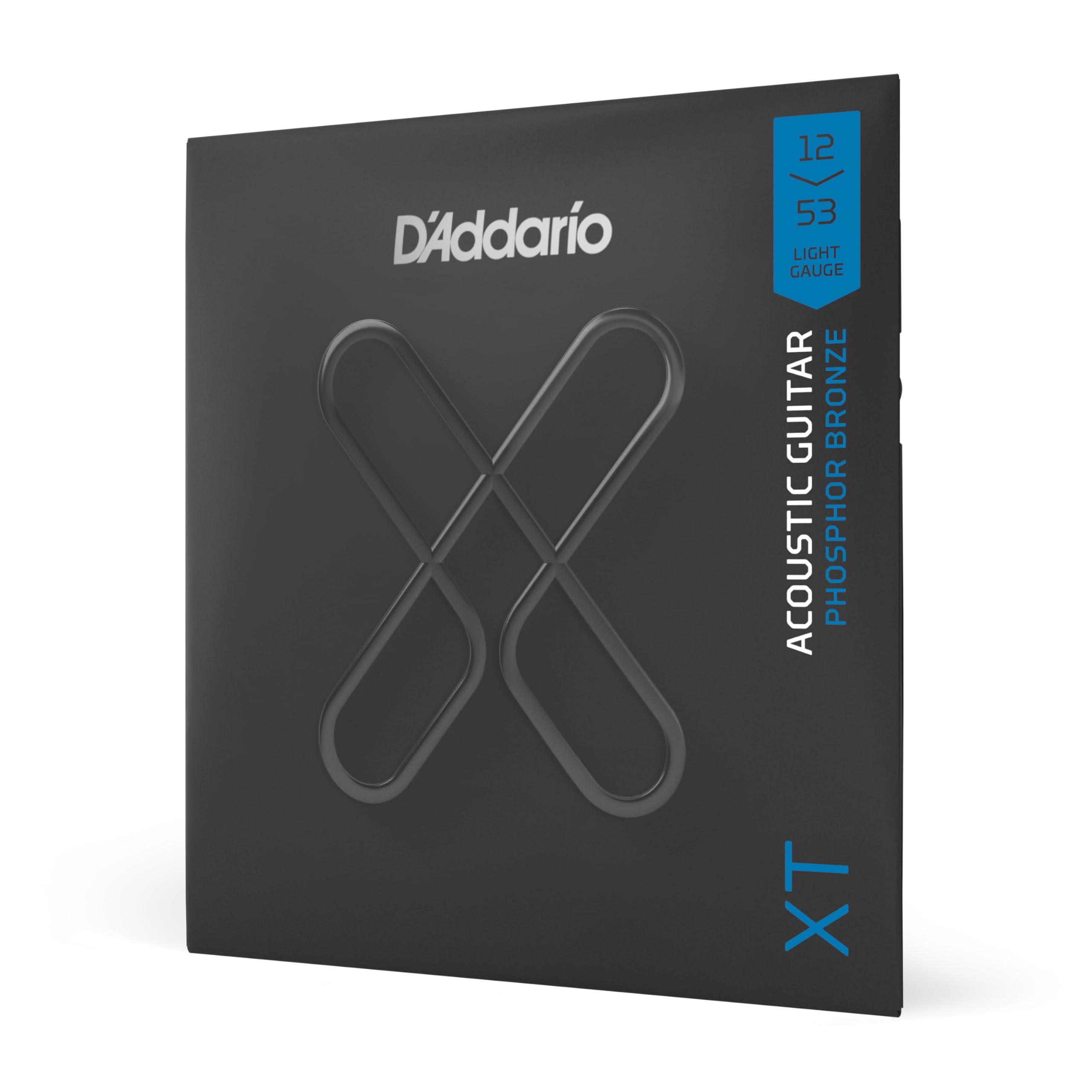
The D’Addario XT Phosphor Bronze set uses an advanced corrosion-resistance coating so thin it preserves the natural feel of an uncoated phosphor bronze string while extending service life significantly. For fingerstyle players, that means the smooth attack of a bare bronze winding with the reassurance that the set will stay tonally consistent through a month of nightly practice — no sudden dulling of the trebles after week two. The NY Steel core and Fusion Twist technology deliver tuning stability that holds even when you drop to open D or alternate fingerstyle tunings.
In practice, these strings produce a warm, balanced voice that does not lean excessively bright or muddy. The light gauge (12-53) provides enough tension for clear articulation on bass runs while keeping the B and high E strings responsive to light finger taps. Multiple user reports confirm the coating resists flaking at fret contact points, a common failure point on cheaper coated strings. For fingerstyle players who gig regularly or practice multiple hours daily, this is the most reliable balance of longevity, natural feel, and tonal fidelity.
The coated surface still whispers slightly on slides compared to an uncoated set, but the trade-off is hours of preserved tone. If you have ever pulled a set of coated strings off after three weeks only to find the plain steel strings still bright while the wound strings had gone dead, the XT construction eliminates that mismatch. It is the best single purchase for any fingerstyle player who wants coated convenience without the plasticized feel.
Why it’s great
- Coating preserves natural bronze feel and finger friction
- Stays in tune 131% better than standard acoustic strings
- Warm, balanced phosphor bronze tone suitable for chord-melody
Good to know
- Slightly higher initial cost than uncoated phosphor bronze
- Some users report plain steel strings can snap during aggressive bends
2. Elixir 80/20 Bronze with POLYWEB Technology
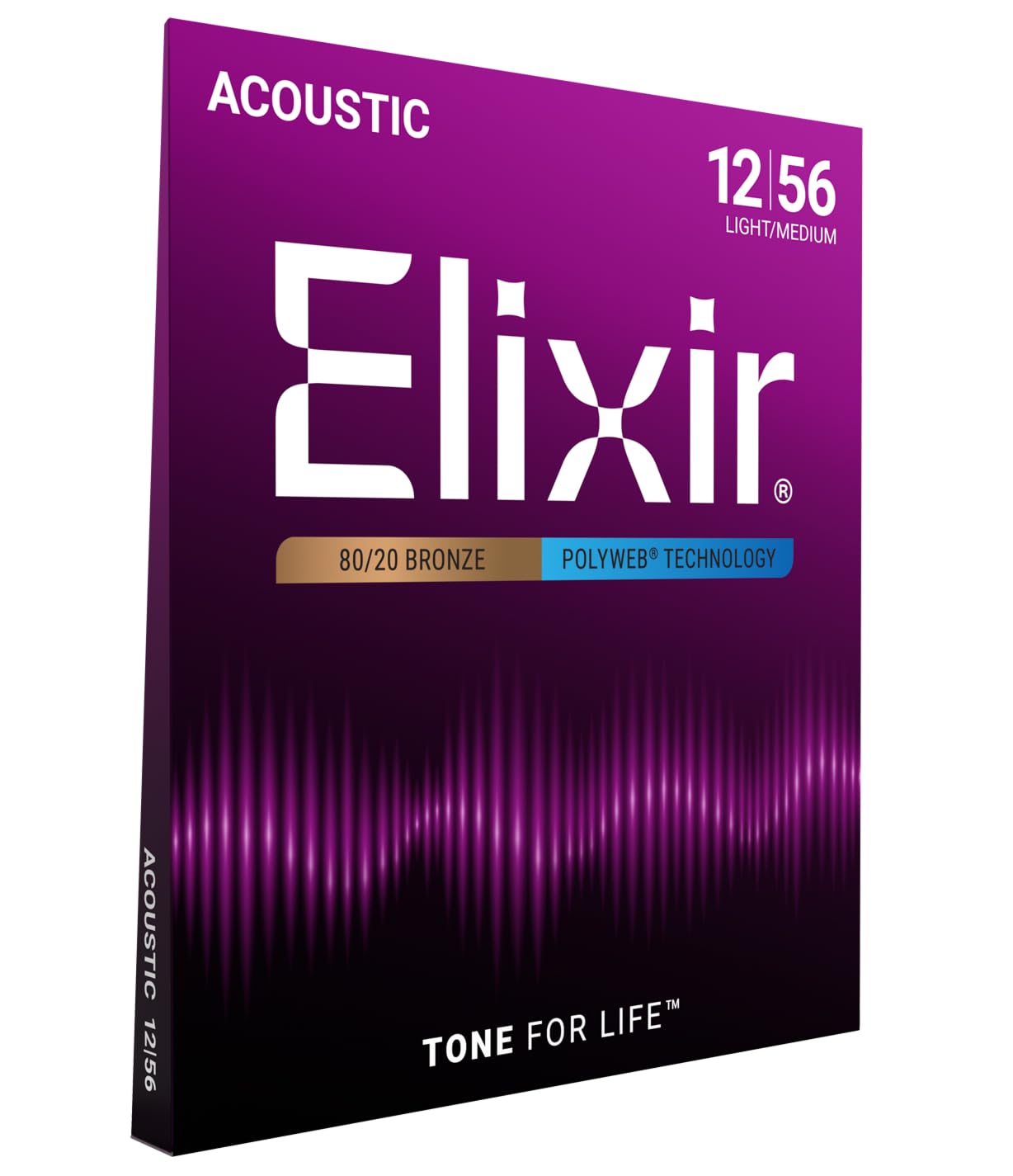
Elixir’s Polyweb coating is the softest, slickest of the major coated-string technologies, producing a “played-in” warmth from the very first strum. For fingerstyle, this translates to a friction-free surface that glides under the fingertips — slides between positions feel effortless, and the reduced string noise is a real benefit during quiet solo passages. The 80/20 bronze wrap wire delivers a brighter fundamental than phosphor bronze, but the Polyweb jacket rounds off the edge, giving you a clear, singing treble without the brittle spike that uncoated 80/20 can produce on rosewood fingerboards.
The light/medium gauge (12-56) is a smart hybrid for fingerstyle: the bottom three strings carry enough heft to drive a dreadnought or jumbo body, while the top three remain responsive enough for rapid-fire folk picking. Reviewers consistently report 30–40 hours of play before any noticeable drop-off in brightness, and the coating protects against sweat corrosion even in humid climates. For players with arthritis or tendon sensitivity, the reduced friction and slightly lower tension compared to a true medium set can make a tangible difference in playing endurance.
Be aware that the Polyweb coating can fray at fret contact points after extended use, and the slick feel is not for everyone — some fingerstyle players prefer the tactile grip of an uncoated string for precision slurs. If you prioritize a fast, smooth feel and do not mind swapping strings every few months, this set is a strong contender for extended daily use. It pairs especially well with mahogany-bodied guitars, adding sparkle without crossing into harsh territory.
Why it’s great
- Exceptionally smooth Polyweb coating reduces friction on slides
- Warm, mellow tone with less metallic edge than uncoated 80/20
- Consistent tonal life for 30–40 hours of play
Good to know
- Coating frays visibly at high-wear fret positions
- Polyweb feel may be too slick for players wanting more finger traction
3. John Pearse 700M Phosphor Bronze

John Pearse 700M strings are an American-made uncoated phosphor bronze set that has earned a loyal following among fingerstyle players who want a natural, unvarnished acoustic voice. The medium gauge (13-56) is heavier than most fingerstyle picks, but the construction — a proprietary blend of phosphorus and bronze — produces a surprisingly warm sustain with a balanced midrange that does not turn tubby on the low E. The tone is earthy and vibrant, with a slight crunch on the attack that responsive to varied nail angles and plucking positions.
Where this set truly shines is on mahogany, basswood, and rosewood guitars — bodies that benefit from the extra midrange warmth without the piercing high end. Users playing Martin and Taylor dreadnoughts report a well-rounded sound that sits beautifully in fingerstyle chord-melody arrangements, with the heavy gauge providing a solid foundation for thumb-driven bass patterns. The lack of coating means the string-to-finger friction is maximal, which some players prefer for controlled slides and intentional buzzed articulations. The set also has a distinct bronze scent that many players associate with high-quality fresh strings.
The obvious trade-off is longevity: uncoated phosphor bronze strings degrade faster under aggressive or acidic hand chemistry, and some users experienced a dead low E within a week. If you are willing to swap strings more frequently in exchange for pure, uncoated tone and a broader dynamic headroom, the John Pearse 700M offers a benchmark value for the organic fingerstyle experience. It is not the set for players who want to change strings less than once a month, but for those who dial in tone with every fresh set, it is a rewarding choice.
Why it’s great
- Rich, earthy phosphor bronze tone with great sustain
- Natural finger friction ideal for controlled articulation
- Made in the USA with consistent quality control
Good to know
- Uncoated and prone to quick degradation in humid settings
- Medium gauge may be too stiff for some fingerstyle players
4. Martin Authentic Lifespan 2.0 Treated
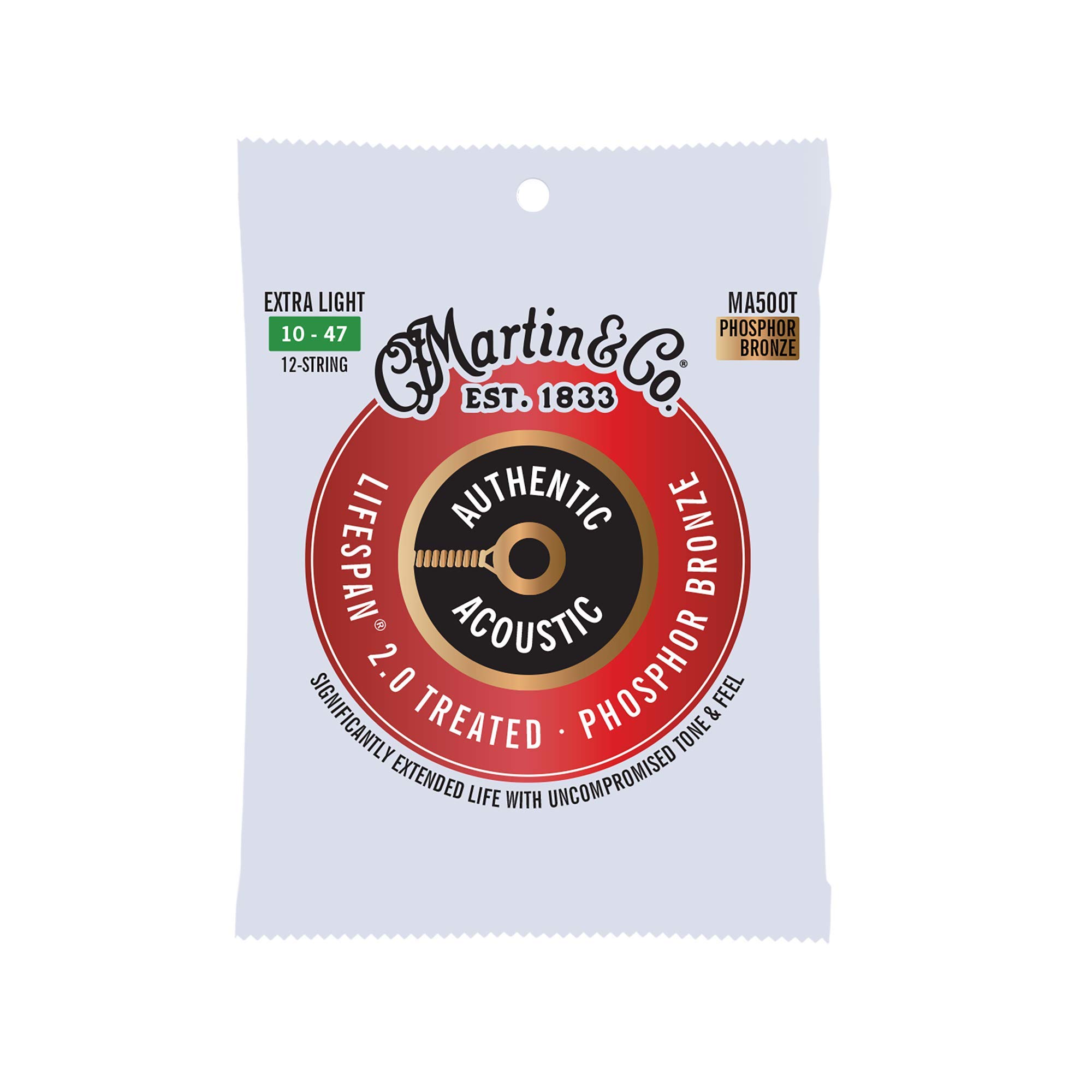
Martin’s Lifespan 2.0 treatment applies a patented anticorrosion process to the core and wrap wire without a polymer coating jacket. The result is a string that looks and feels like an uncoated phosphor bronze set but resists tarnishing and retains tonal clarity longer than standard untreated strings. The 92/8 phosphor bronze formula produces a woody, vintage-inspired voice with a slightly compressed attack — excellent for fingerstyle patterns where you want the bass notes to bloom without overwhelming the treble melody. The custom light gauge (11-52) is a rare find in the fingerstyle world, offering very low tension on the trebles while maintaining a respectable bottom end for chordal work.
Players using these strings on smaller-body guitars — 0-size, 00-size, or Martin’s own mini models — report a remarkable improvement in playability and tonal balance. The low tension reduces the risk of finger fatigue during extended practice sessions, and the smoother surface (compared to uncoated bronze) eases barre chords and slides. The treated surface provides more traction than a coated string like Polyweb, which some fingerstyle players prefer for maintaining control during fast passages. The set holds its luster for roughly four weeks with regular use, outpacing standard uncoated strings by a wide margin.
The treatment is not as moisture-resistant as a full polymer coating, so players with naturally acidic hand chemistry may still see faster wear than expected. Additionally, the custom light gauge produces less volume than a light or light/medium set, meaning it pairs best with guitars that already have strong natural projection. For home practice, recording, or low-volume fingerstyle performance, the Martin Lifespan 2.0 is a premium choice that delivers old-school tone without the rapid decay.
Why it’s great
- Vintage, woody phosphor bronze tone without polymer coating
- Custom light gauge reduces finger fatigue for long sessions
- Anticorrosion treatment extends life over standard strings
Good to know
- Lower output volume compared to medium or light/medium sets
- Treatment offers less moisture protection than coated alternatives
5. GHS Strings 345 Silk And Steel

The GHS 345 Silk and Steel set is a niche masterpiece for the fingerstyle player who prioritizes touch sensitivity and mellow tone over raw volume. The construction uses a fine steel core wrapped with silk fibers, then wound with a silver-plated copper ribbon — the silk core dramatically lowers the string tension relative to a standard steel core, while the silver-plated copper produces a warm, bell-like voice that sits between a traditional acoustic set and a classical guitar string. The light gauge (10-42) is the lightest in this guide, making it ideal for players with arthritis, tendon sensitivity, or a very delicate fingerstyle technique.
On a smaller-bodied or vintage parlor guitar, the GHS 345 set unlocks a surprising depth of resonance. The low tension allows the top to vibrate freely, producing overtones and sustain that heavier strings would choke off. Reviewers consistently note that the strings feel almost like nylon under the fingers but produce a distinctly metallic, clean sound — perfect for fingerpicking ballad patterns or solo guitar arrangements where you do not need to compete with a band. The silver-plated copper winding gives a slightly compressed attack, which means aggressive plucking still sounds controlled rather than harsh.
These strings have two clear limitations. First, the low tension means they produce less volume than a standard light or medium set — not ideal for loud live performance without amplification. Second, the ultra-light gauge requires precise technique to avoid fret buzz on guitars with higher action. For home players, recording enthusiasts, or anyone dealing with hand strain, the GHS 345 delivers a level of comfort and tonal sweetness that no other string in this category can match. The price is the highest in this guide, but the construction quality and unique feel justify the premium for the right player.
Why it’s great
- Extremely low tension reduces finger fatigue dramatically
- Warm, mellow tone with bell-like silver-plated copper trebles
- Ideal for parlor guitars and sensitive instrument tops
Good to know
- Lightest gauge may cause fret buzz on guitars with medium action
- Lower volume output requires amplification for live settings
FAQ
What gauge is best for acoustic fingerstyle?
Does coating affect fingerstyle tone?
Final Thoughts: The Verdict
For most users, the guitar strings for acoustic fingerstyle winner is the D’Addario XT Phosphor Bronze Coated because it delivers the best balance of warm phosphor bronze tone, natural finger feel, and extended lifespan without a plasticized coating sensation. If you want a smooth, friction-free surface with mellow warmth, grab the Elixir 80/20 Bronze Polyweb. And for players seeking maximum comfort on long sessions with a delicate touch, nothing beats the GHS Strings 345 Silk And Steel.