
A glass polisher has one job: return a transparent, scratch-free surface without introducing haze, burn marks, or uneven pressure points. Whether you are restoring a foggy windshield, polishing tempered glass tabletops, or finishing a custom mirror edge, the difference between a pro-grade finish and a wasted afternoon comes down to orbital throw, pad compatibility, and variable-speed control that doesn’t bog down under load.
I’m Mohammad Maruf — the founder and writer behind Drink4Good. I spend my time dissecting manufacturer spec sheets, comparing motor windings, and cross-referencing real-user durability reports so you don’t have to guess which units actually hold up to repeated glass polishing cycles.
After comparing seven distinct models across corded, cordless, rotary, and mini-orbital formats, the following guide breaks down the only best glass polisher options worth your time based on measurable performance data and verified owner experiences.
How To Choose The Best Glass Polisher
Selecting a glass polisher is not the same as picking a car polisher. Glass is harder than clear coat but more brittle under localized heat. The wrong pad or an overly aggressive rotary speed can cause thermal shock, leaving a permanent fracture pattern that no amount of compound can fix. Focus on three mechanical criteria before considering brand or included accessories.
Orbital Throw and Motion Type
Dual-action (DA) polishers with an 8mm to 10mm orbit are the safest choice for glass work because the random orbital pattern prevents heat from concentrating in one spot. Rotary polishers, while faster for material removal, require a seasoned hand to avoid burning the glass surface. For beginners, a DA polisher virtually eliminates the risk of holograms and burn rings.
Motor Power and Torque Curve
Glass polishing often involves working with cerium oxide slurries or diamond pastes that create drag on the pad. A motor rated below 500 watts will struggle to maintain speed under load, leading to inconsistent cut rates. Look for units with at least 700 watts or, for corded models, a labeled maximum power above 900 watts to ensure the motor doesn’t stall when you lean into a stubborn scratch.
Variable Speed Range
Glass compounds require specific pad speeds. Low speeds (1500-2500 RPM) are for applying wax or final polishing. Medium speeds (3000-4500 RPM) handle light scratch removal with a medium-cut pad. High speeds (above 5000 RPM) should only be used with aggressive cutting compounds on thick or tempered glass. A glass polisher without a wide variable speed dial forces you to compensate with pressure, which is where errors happen.
Quick Comparison
On smaller screens, swipe sideways to see the full table.
| Model | Category | Best For | Key Spec | Amazon |
|---|---|---|---|---|
| SPTA 7 Inch Rotary Polisher | Rotary | Deep scratch removal on thick glass | 1200W motor, 500-3000 RPM | Amazon |
| SPTA Mini Orbital Polisher | Mini DA | Tight corners and edges on glass | 780W motor, 2000-5500 OPM, 10mm orbit | Amazon |
| LDHTHOPI Dual Action Polisher | DA Polisher | Entry-level glass polishing with safety | 980W motor, 2800-5800 RPM, 9mm orbit | Amazon |
| ZOTA Mini Polisher | Mini DA | Detailing tight curves and headlights | 380W motor, 3000-7200 RPM, 8mm orbit | Amazon |
| OPAVIOC Jewelry Polisher | Bench Grinder | Polishing glass edges and small parts | 320W motor, 1750-8500 RPM | Amazon |
| Vkdemer Cordless Buffer Polisher | Cordless DA | Quick waxing and light scratch removal | 21V brushless, 5500 RPM, 9mm orbit | Amazon |
| Milwaukee M12 Polisher | Cordless | Portable headlight restoration | 12V cordless, variable speed, 2.3 lbs | Amazon |
In‑Depth Reviews
1. SPTA 7 Inch Rotary Polisher

The SPTA 7-inch rotary delivers 1200 watts of sustained power through an all-ball-bearing construction, making it the most capable unit in this lineup for heavy glass polishing. The 500-3000 RPM digital speed display gives you precise control when switching between aggressive cerium oxide cutting and final haze-free buffing on flat glass sheets. Users consistently report that this machine does not bog down even when leaning into years-old water spot etching on windshields or shower doors.
What sets this model apart is the included 7-inch backing plate kit with interchangeable 3-inch, 5-inch, and 6-inch plates, letting you match pad size to the work area without buying extra adapters. The two-handle system (side handle plus D-handle) provides the leverage needed to control a 6.6-pound rotary during extended sessions. Experienced polishers will appreciate the lack of soft-start gimmicks — the motor responds instantly to the trigger, giving you full torque at any speed setting.
Be aware that rotary action requires a steady hand on glass. If you are new to glass polishing, practice on a scrap piece first. The included wool pads are serviceable for initial test runs, but upgrading to a dedicated glass polishing pad with a foam interface will reduce the risk of edge burning. For the price, this is the closest you can get to a commercial-grade glass finishing tool without a three-phase power connection.
Why it’s great
- 1200W motor handles thick slurry loads without stalling
- Digital RPM readout for repeatable speed settings
- Multiple backing plates included for flexible pad sizing
Good to know
- Rotary action demands skill to avoid burning glass edges
- Heavy at 6.6 pounds; fatigue possible on overhead work
2. SPTA Mini Orbital Polisher

The 3-inch SPTA mini DA packs 780 watts into a body designed for one-handed control, making it the optimal choice for polishing glass edges, mirror bevels, and tight corners where a full-size pad would walk off the surface. Its 10mm dual-action orbit is wider than typical mini polishers, which means it removes material faster than the 8mm competition while still maintaining the random motion that prevents heat buildup on glass substrates. Owners report using it successfully for cut-and-buff cycles on painted glass frames with zero burn-through.
The ergonomic design places the speed dial right above the thumb, allowing on-the-fly adjustments between 2000 and 5500 OPM without breaking your work rhythm. The included kit is generous: three polishing pads, three wool pads, a pad conditioning brush, sanding discs in 3-inch and 4-inch sizes, and a tool bag that holds everything. The soft-start feature ramps up power gradually, which is a nice safety net when you are first touching pad to glass.
Experienced users note that the lock-on switch can be stiff initially, and the unit runs louder than some comparable mini DAs. The included foam pads are adequate for testing but wear quickly under consistent glass compound use — plan to replace them with dedicated low-profile glass pads after the first few sessions. For small-area glass work where a 6-inch polisher is too clumsy, this mini DA is the most capable tool in its size class.
Why it’s great
- 10mm orbit removes scratches faster than standard 8mm mini DAs
- One-handed design perfect for tight glass edges and corners
- 780W motor maintains speed under load on glass compounds
Good to know
- Stiff lock-on switch requires two hands to engage
- Noisy operation compared to larger DAs
3. LDHTHOPI Dual Action Polisher

The LDHTHOPI dual-action polisher offers the highest motor wattage in the mid-range segment at 980 watts, paired with a 9mm random orbit that is gentle enough for first-time glass polishers but powerful enough to cut through light scratches on tempered glass tabletops. The 6-speed dial spans 2800 to 5800 RPM, giving you a wide working range for everything from applying sealant to cutting with a medium-grade compound. User reports highlight the smooth speed ramp-up that prevents compound splatter on initial contact.
What makes this kit especially beginner-friendly is the included color-coded pad guide: yellow for aggressive cutting, orange for compound, blue for polishing, and white for final wax. The machine ships with a detachable D-handle and side handle, so you can switch grips depending on whether you are working on a horizontal glass desk or a vertical shower panel. The storage bag is sturdy enough for long-term organization of pads and compounds.
The primary durability concern centers on the hook-and-loop backing on the included pads, which can delaminate when washed aggressively. This is a fix with spray adhesive, but it is worth noting if you plan to reuse the pads for multiple glass jobs. The machine itself runs hot after 20 minutes of continuous use — take short breaks to let the motor cool. For the price, this is the best entry point into safe, effective glass polishing with a dual-action platform.
Why it’s great
- 980W motor provides ample torque for glass scratch removal
- Color-coded pad system simplifies compound selection
- Dual-handle design adapts to horizontal and vertical surfaces
Good to know
- Included pad backing may delaminate with repeated washing
- Motor heats up during extended continuous sessions
4. ZOTA Mini Polisher

The ZOTA mini polisher is built specifically for accessing tight geometry on glass surfaces that larger tools cannot reach, such as the A-pillar of a windshield, motorcycle headlight lenses, or glass cabinet door edges. Its 2-inch and 3-inch dual backing plate system is unique at this price point, and the 8mm random orbit ensures you avoid heat concentration even on small glass panels. The 380-watt motor is less powerful than the full-size options, but for detailed polishing on small areas, the torque is sufficient for light scratch removal and final finish work.
The body is constructed from high-impact nylon PA6-30%GF, making it lighter than metal-shelled competitors at 3.75 pounds. Variable speed runs from 3000 to 7200 RPM, and the trigger response is immediate with no noticeable delay. Users who detail boats report that the compact size allows them to polish glass instrument panels without removing surrounding trim. The included carbon brushes are a nice touch for extending the motor’s lifespan with easy DIY replacement.
The included sponge pads are low-density and wear out quickly when used with glass compounds. The wool pad sheds fibers on initial use, so break it in on a scrap surface first. For the price, this is a specialized tool for those who regularly polish small glass components and need a backup plate system that switches between sizes without tools. If your work is limited to large flat glass panels, a full-size DA will serve you better.
Why it’s great
- Dual 2-inch and 3-inch backing plates for tight-access glass work
- Lightweight nylon body reduces fatigue on detailed jobs
- Included carbon brushes extend motor service life
Good to know
- 380W motor struggles with deep glass scratches
- Wool pad sheds heavily during initial break-in
5. OPAVIOC Jewelry Polisher

The OPAVIOC bench grinder-style polisher takes a completely different approach to glass finishing, replacing the handheld orbital with a stationary motor that drives cotton and fiber wheels directly. This design excels at polishing glass edges, bevels, and small loose glass pieces that would be dangerous to hold against a spinning orbital pad. The variable speed range from 1750 to 8500 RPM allows you to start slow for edge shaping and ramp up for high-gloss finishing on glass cabochons or microscope slides.
The motor is rated at 320 watts, which is modest compared to handheld units, but because the work is fed into the wheel rather than the tool pressing against the work, the torque feels ample for most small glass projects. The bundled six 4-inch cotton wheels handle final polishing stages, while the two abrasive fiber wheels can remove heavier scratches from glass edges before you switch to a compound. The included safety glasses are a welcome addition — bench grinders on glass create fine silica dust that requires eye protection.
Assembly requires careful attention to the left and right cone orientation — some users report the instructions are unclear on this step. The arbor size is standard, so upgrading to 6-inch felt wheels or specialty glass polishing buffs is straightforward. This machine is not a replacement for a handheld polisher on large sheets of glass, but for anyone regularly finishing glass edges or polishing small glass components, it is the most efficient format available at this price.
Why it’s great
- Stationary format ideal for polishing glass edges and small parts safely
- Wide speed range from 1750 to 8500 RPM for shaping to final finish
- Includes cotton wheels, fiber wheels, and safety glasses
Good to know
- Assembly instructions lack clarity on cone orientation
- 320W motor limits aggressive material removal on thick glass
6. Vkdemer Cordless Buffer Polisher

The Vkdemer cordless buffer brings genuine convenience to glass polishing by eliminating the cord drag that can pull a polisher off a delicate glass edge. The brushless motor runs on two 21V 2000mAh batteries, with users reporting about one hour of run time at full speed — enough to polish two car windshields or a set of glass shower doors on a single charge. The 8-speed dial tops out at 5500 RPM, and the 9mm random orbit motion keeps heat dispersion even across the glass surface.
Weighing only 3 pounds, this is the lightest dual-action polisher in the lineup, which makes a real difference during overhead glass polishing or long-duration sessions on vertical glass panels. The LCD display shows remaining battery capacity, so you are never caught mid-polish with a dead tool. The kit is comprehensive: two batteries, a fast charger, waffle sponge pads, flat sponge pads, wool pads, knitted wool pads, and multiple polishing bonnets for different compound types.
Real-world battery life drops noticeably when using aggressive cutting compounds that create more drag on the pad. Users with large hands report that the switch position can lead to accidental shut-off during work. The motor is brushless, which extends its lifespan, but the included chargers are not the fastest on the market — budget for a spare battery if you plan all-day glass work. For quick touch-ups and maintenance polishing on glass, this cordless unit is the most liberating option tested.
Why it’s great
- Cordless design eliminates cord snagging on glass edges
- 3-pound body reduces arm fatigue during extended polishing
- LCD battery display prevents unexpected power loss mid-job
Good to know
- Battery runtime drops significantly with heavy cutting compounds
- Switch position may cause accidental shut-off for larger hands
7. Milwaukee M12 Polisher (Tool Only)
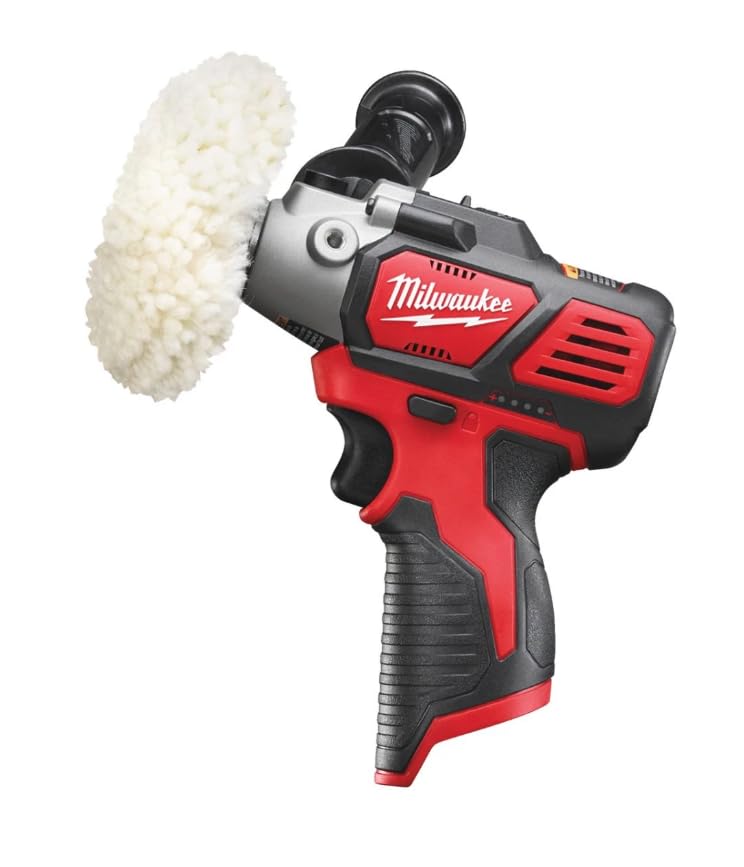
The Milwaukee M12 polisher is a bare-tool offering designed for users who already own M12 batteries and need a compact, single-handed glass polishing solution for small jobs like headlight restoration, polishing glass table edges, or finishing small aquarium panels. At 2.3 pounds, it is the lightest option reviewed, and its compact form factor lets you work in tight spaces where even a 3-inch mini polisher feels bulky. The variable speed trigger gives you proportional control from 0 to 2800 RPM, which is ideal for carefully applying compound to glass without slinging it everywhere.
The tool is built with Milwaukee’s typical alloy steel and plastic construction, and user reports confirm it holds up well to regular use. Owners who use it for headlight restorations note that it produces a smooth finish with no burn marks when used with a foam pad and cerium oxide paste. The 12V platform means you are limited to light-duty work — this tool will struggle against deep scratches or large glass surfaces that require sustained pressure.
The biggest practical limitation is the lack of an included battery and charger, which adds significant cost if you are not already in the M12 ecosystem. The hard plastic pad backing can scratch glass if you are not careful, so a foam interface pad is strongly recommended. This is not a primary glass polisher for big projects, but as a dedicated small-area detailer that fits in a tool drawer, the M12 has no direct competitor in terms of build quality and brand reliability.
Why it’s great
- Ultra-light 2.3-pound body for single-handed glass detailing
- Variable speed trigger gives precise control on small glass surfaces
- Compact form factor reaches tight headlight and cabinet spaces
Good to know
- Bare tool requires separate purchase of M12 battery and charger
- Hard plastic pad edge can scratch glass without foam interface
FAQ
Can I use a standard car paint polisher on glass?
What is the ideal pad speed for polishing glass without burning it?
Do I need a special compound for glass polishing?
Can a cordless glass polisher handle deep windshield scratches?
Final Thoughts: The Verdict
For most users, the best glass polisher winner is the SPTA 7 Inch Rotary Polisher because its 1200W motor and digital speed control give you the power and precision needed for everything from windshield scratch removal to final edge finishing on thick glass panels. If you want a tool that excels on tight corners and small glass components without the risk of burning edges, grab the SPTA Mini Orbital Polisher with its 10mm dual-action orbit. And for quick, cordless maintenance polishing on glass tables, shower doors, or headlights where convenience matters most, nothing beats the Vkdemer Cordless Buffer Polisher for its lightweight design and two-battery system.