
Every dental hygienist knows the cycle: scrub in, glove up, work through a full schedule, peel off gloves, and find hands that feel tighter, drier, and more irritated than when the day began. The constant hand washing, alcohol-based sanitizers, and hours inside exam gloves strip natural oils, leaving behind cracked knuckles, flaking skin, and a persistent feeling of rawness that lotion alone can’t fix. For those who clock in five or six days a week, this isn’t a minor annoyance—it’s a professional hindrance that affects grip, comfort, and even patient interaction.
I’m Mohammad Maruf — the founder and writer behind Drink4Good. My deep market research focuses on barrier protection materials, dermatological compatibility, and the specific wear patterns dental professionals experience over multi-hour shifts, helping me assess which glove constructions actually preserve hand health rather than accelerate damage.
After sorting through dozens of options across material types, thickness ranges, and skin-soothing technologies, I’ve narrowed the field to five that offer real relief. This analysis of the best gloves for dry hands for dental hygienists focuses on three critical factors: internal coating technology that actively moisturizes, material flexibility that reduces friction, and powder-free construction that eliminates further irritation.
How To Choose The Best Gloves For Dry Hands For Dental Hygienists
The wrong glove choice can turn a mild dryness issue into chronic dermatitis. For dental hygienists, three factors determine whether a glove will soothe or worsen hand skin over the course of a work week. Focus on these specific elements rather than general glove features.
Internal Moisturizing Coatings vs. Dry Liners
The single most impactful feature for dry hands is an internal coating that transfers hydration to the skin during wear. Aloe vera gel and colloidal oatmeal are the two proven technologies here—they create a micro-barrier that reduces friction while depositing soothing agents directly onto the skin. Uncoated nitrile gloves, even high-quality ones, do nothing to counteract moisture loss. Cotton liner gloves worn under nitrile add a layer but reduce tactile sensitivity and dexterity—a serious trade-off for scaling and probing procedures.
Nitrile Thickness and Grip Sensitivity
Dental hygiene requires fine motor control. Gloves between 3.5 and 4.0 mils offer the best balance: thick enough to resist tearing against handpiece edges and patient restraints, yet thin enough to feel calculus deposits and subgingival textures. Gloves under 3.0 mils tear too easily during prophy work, while gloves over 5.0 mils cause hand fatigue and reduce tactile feedback, leading to tighter gripping that strains already dry skin.
Accelerator-Free and Powder-Free Construction
Chemical accelerators used in standard nitrile curing (like thiurams and carbamates) are common triggers for contact dermatitis in dental workers. Accelerator-free formulations dramatically reduce allergic reactions and further irritation. Powdered gloves are contraindicated entirely—the cornstarch absorbs moisture and abrades compromised skin. Always look for powder-free, accelerator-free certification on the product labeling.
Quick Comparison
On smaller screens, swipe sideways to see the full table.
| Model | Category | Best For | Key Spec | Amazon |
|---|---|---|---|---|
| Medline Restore Nitrile Exam Gloves | Coated Nitrile | Active clinical use with hydration | 3.5 mil with colloidal oatmeal coating | Amazon |
| Medline AloeTouch Ice Nitrile Exam Gloves | Coated Nitrile | Multi-hour shifts with cooling relief | 3.6 mil with aloe vera inner coating | Amazon |
| ECZEMA HONEY Premium 100% Cotton Gloves | Cotton Liner | Overnight moisture therapy | 100% cotton, 24 pairs, one size | Amazon |
| HALYARD Sterling SG Nitrile Powder Free Exam Gloves | Standard Nitrile | Budget-friendly barrier protection | 3.7 mil, 9.5-inch length | Amazon |
| HCS 250 Nitrile Gloves | Standard Nitrile | Entry-level sensitive skin protection | 4 mil accelerator-free nitrile | Amazon |
In‑Depth Reviews
1. Medline Restore Nitrile Exam Gloves
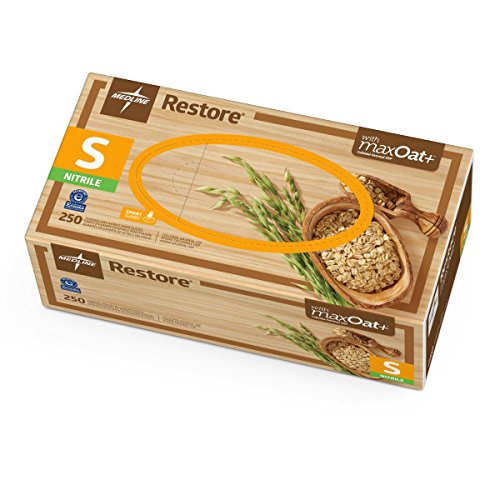
The Medline Restore glove addresses the core problem directly: a layer of colloidal oatmeal (MaxOat+ technology) is bonded to the interior surface, depositing a soothing, moisturizing compound onto the skin during every wear. At 3.5 mils, the nitrile body is thin enough to maintain the tactile sensitivity needed for intraoral procedures without sacrificing the puncture resistance required for instrument handling. The off-white color signals immediately that this is not a standard exam glove—it is built specifically for compromised skin.
Clinical feedback from hygienists and medical staff consistently highlights two points: the gloves reduce itching and flaking noticeably within a week of switching, and the material does not leave a greasy residue on instruments or patient contacts. The 250-count box provides a solid per-pair value for daily users, and the powder-free, latex-free construction eliminates the main irritants that worsen dermatitis. The classic fit runs true to size, so ordering your usual exam glove size works.
One consideration: the colloidal oatmeal coating is optimized for wear durations of 20 to 60 minutes, which aligns well with typical patient appointments. For extended single-use procedures lasting over two hours, a cotton liner worn underneath may provide additional comfort, though this reduces tactile feedback slightly. Overall, this is the targeted solution for dry hands during active clinical work.
Why it’s great
- Colloidal oatmeal coating actively moisturizes hands during wear
- 3.5 mil thickness balances dexterity with barrier strength
- Hospital-grade construction resists tearing from fingernails and instruments
Good to know
- Internal coating may feel slightly slick during the first minute of wear
- Not ideal for overnight or extended non-clinical use
2. Medline AloeTouch Ice Nitrile Exam Gloves
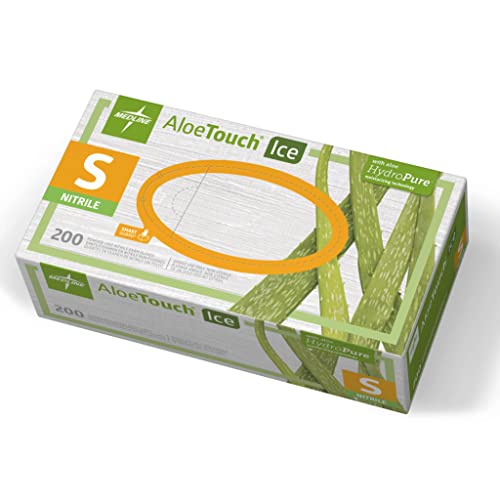
The Medline AloeTouch Ice uses Aloe HydroPure technology to coat the glove interior with aloe vera, which provides both moisturizing and cooling effects during wear. For dental hygienists who experience hot, sweaty hands inside standard nitrile—a condition that accelerates moisture loss when the gloves come off—this cooling sensation helps maintain skin comfort across multiple back-to-back appointments. The green color distinguishes these from standard blue gloves, making them easy to identify in a packed drawer.
The 3.6 mil thickness sits just slightly thicker than the Restore line, offering comparable tactile sensitivity for probing and scaling while adding a marginal edge in puncture resistance. Textured fingertips improve grip on smooth composite instruments, and the powder-free construction prevents the additional drying effects of cornstarch. Customer feedback from healthcare workers with latex allergies and contact dermatitis consistently rates these as superior to uncoated nitrile alternatives.
The key difference between AloeTouch and Restore comes down to personal preference: aloe vera provides a cooler, lighter feel, while colloidal oatmeal offers a richer moisturizing deposit. Both perform well for dry hands, but AloeTouch edges ahead for hygienists who work in warmer clinical environments or who prefer a less viscous internal coating. The 200-count box is slightly smaller than Restore’s 250-count, so budget-conscious buyers should calculate per-pair cost accordingly.
Why it’s great
- Aloe vera coating soothes and moisturizes without residue
- Cooling effect reduces hand fatigue during long procedures
- Textured fingertips provide excellent grip on wet instruments
Good to know
- 200 gloves per box compared to 250 for other premium options
- Cooling sensation may feel pronounced for users unaccustomed to it
3. ECZEMA HONEY Premium 100% Cotton Gloves
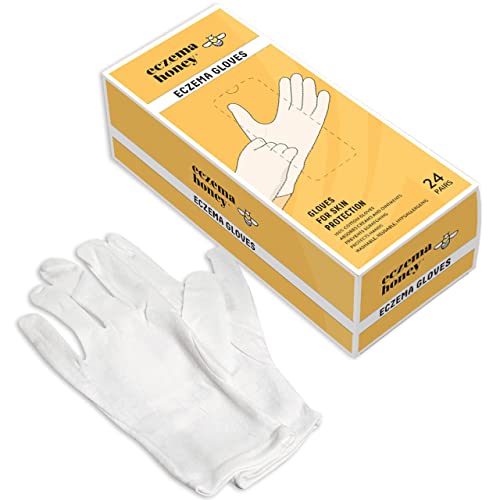
This product serves a completely different function from the nitrile options above: it is designed for overnight moisture therapy, not clinical wear. The 100% cotton construction creates a breathable barrier that traps hand cream or lotion against the skin, preventing the product from rubbing off onto sheets while allowing the skin to absorb moisture throughout the night. For dental hygienists whose hands are already damaged by the time they leave the office, this is the recovery layer that speeds healing between shifts.
The set includes 24 pairs, which is generous for a reusable product—you can rotate through pairs while washing, ensuring you always have a clean set ready. The one-size-fits-most design accommodates a range of hand sizes, though users with very small or very large hands should note the lack of specific sizing. The cotton is lab tested and Leaping Bunny certified cruelty-free, which matters for professionals who prefer ethically sourced materials.
Practical limitations: these gloves cannot be worn under nitrile during patient procedures because the cotton reduces tactile sensitivity to near zero. They also have internal seams that some users report as irritating on already sensitive skin—turning the gloves inside out before wear resolves this issue. These are not a replacement for coated nitrile gloves but rather a complementary tool for after-hours hand recovery.
Why it’s great
- Traps moisturizer against skin for deep overnight hydration
- 24 pairs provide long-lasting rotation between washes
- Breathable cotton prevents sweat buildup during sleep
Good to know
- Not suitable for use during clinical procedures
- Internal seams may require inside-out wearing for comfort
4. HALYARD Sterling SG Nitrile Powder Free Exam Gloves
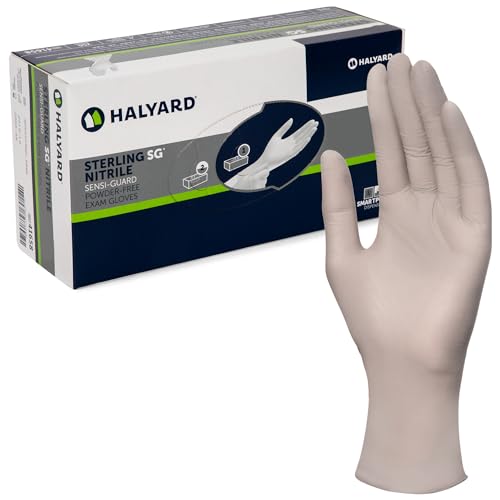
HALYARD Sterling SG gloves offer a mid-range balance for hygienists who need a reliable barrier without the moisturizing coatings found in premium options. At 3.7 mils, this glove is marginally thicker than the Medline Restore and AloeTouch options, providing slightly more resistance to tearing during aggressive scaling or instrument manipulation. The 9.5-inch length extends further up the wrist than many competitors, which is helpful for procedures requiring higher forearm coverage.
The space-saving 200-count dispenser box design is a practical advantage for busy operatories—it reduces storage footprint by up to 50% compared to standard boxes, which translates to fewer inventory restocks and less waste from half-empty boxes sitting around. The gray color provides a professional appearance that resists showing stains from composites, amalgam polishing, or disinfectant solutions. Customer reviews from military and hospital RNs consistently praise the ease of donning and doffing without tearing.
Where this glove falls short for dry hands specifically is the lack of any internal moisturizing agent. It is a straight nitrile barrier—effective at protection, but doing nothing to counteract moisture loss during wear. For hygienists whose hands are already compromised, this may maintain dryness rather than improve it. This glove is best suited for those who have mild dryness that they manage with pre- and post-shift moisturizing routines and prioritize durability over hydration.
Why it’s great
- Space-saving 200-count box reduces storage needs by half
- 3.7 mil thickness offers strong puncture and tear resistance
- Easy donning design works well for frequent glove changes
Good to know
- No internal moisturizing coating for dry hand relief
- Slightly thicker feel reduces tactile sensitivity compared to 3.5 mil gloves
5. HCS 250 Nitrile Gloves

The HCS 250 Nitrile Gloves represent the entry-level solution for hygienists who are just beginning to experience glove-related dryness and want to eliminate chemical accelerators from their barrier protection. At 4 mils, these are the thickest gloves in this selection, which provides superior puncture and tear resistance for rigorous procedures but comes at the cost of reduced tactile sensitivity. The cobalt blue color is familiar and hospital-standard.
The primary advantage here is the accelerator-free formulation, which earned a Dermatest 5-Star Seal for low dermatitis potential. For hygienists who have not yet developed full-blown contact dermatitis but notice their skin becoming progressively more reactive to standard nitrile gloves, switching to an accelerator-free option can halt the worsening cycle. The textured fingertips provide adequate grip, and the 250-count box offers reasonable per-pair value at the entry-level price tier.
The trade-off is thickness: 4 mils is noticeably stiffer than 3.5 or 3.6 mil gloves, which can cause hand fatigue during back-to-back procedures and may encourage tighter gripping that further irritates dry skin. Some customer feedback also notes that the nitrile compound has a higher coefficient of friction against dry skin, making donning slightly more difficult compared to coated alternatives. For best results, pair these with a pre-shift moisturizing routine to offset the lack of internal hydration.
Why it’s great
- Accelerator-free construction minimizes dermatitis triggers
- 4 mil thickness provides excellent protection against tears and punctures
- Dermatest approved for use on sensitive or reactive skin
Good to know
- No internal moisturizing agent; may not improve existing dryness
- Thicker material reduces tactile feedback for fine motor tasks
FAQ
Can I wear cotton gloves under nitrile during patient procedures?
How often should I change gloves to minimize hand dryness?
Final Thoughts: The Verdict
For most users seeking the best gloves for dry hands for dental hygienists, the winner is the Medline Restore Nitrile Exam Gloves because the colloidal oatmeal coating provides direct hydration during clinical wear without compromising tactile sensitivity. If you prefer a cooling sensation and lighter feel, grab the Medline AloeTouch Ice Nitrile Exam Gloves. And for overnight recovery to repair damaged skin between shifts, nothing beats the ECZEMA HONEY Premium 100% Cotton Gloves.