
Breaking compacted clay, pulverizing sod, and blending compost into a seed-ready bed is the single most physically demanding task in gardening. A rotary tiller turns hours of pick-and-shovel labor into twenty minutes of machine-guided work, but choosing the wrong one means fighting the tool instead of the dirt. The gap between a frustrating yard tool and a legitimate soil-breaking machine comes down to engine displacement, tine configuration, and gearbox construction.
I’m Mohammad Maruf — the founder and writer behind Drink4Good. My research process involves cross-referencing hundreds of verified buyer reports, studying gearbox failure patterns, and isolating the real-world tilling width and depth numbers that separate effective machines from overpriced disappointments.
Whether you need to renovate a neglected vegetable patch or prep a flower bed every spring, the right garden rotary tiller saves your body and your schedule. This guide breaks down the nine most capable models across electric, gas front-tine, and gas rear-tine platforms so you can match the machine to your soil.
How To Choose The Best Garden Rotary Tiller
Every tiller on this list will spin tines and churn dirt. The difference is how deeply, how quickly, and for how many seasons before something breaks. Focus on engine type, tine design, and tilling width rather than brand colors or marketing promises.
Engine Displacement and Fuel Type
For gas models, engine displacement measured in cubic centimeters (cc) directly correlates to torque. A 79cc engine handles light cultivation and previously worked soil. A 99cc to 212cc engine powers through hard-packed clay and sod without bogging down. Four-cycle engines run on straight gasoline, eliminating the oil-mixing hassle of older two-stroke designs. Corded electric models give unlimited runtime but require an extension cord strategy — tripping over cables in a wet garden is a real safety risk.
Tine Configuration: Front Tine vs. Rear Tine
Front-tine tillers drive the tines directly under the engine. They are lighter, more maneuverable, and cost less, but they require the operator to push down to stop the machine from hopping. Rear-tine tillers place the tines behind the wheels, so the wheels pull the machine forward while the tines churn soil independently. Rear-tine designs with counter-rotating tines (CRT) are the gold standard for breaking new ground because the tines rotate opposite the wheel direction, clawing deeper into compacted soil without lunging forward.
Working Width and Tilling Depth
Working width determines how many passes you need to cover a row. A 10-inch width suits raised beds and tight spaces. A 16- to 18-inch width is the sweet spot for most home gardens — wide enough to be efficient, narrow enough to maneuver around plants. Tilling depth matters more for root vegetables and heavy clay. Look for at least 8 inches of depth capability for serious soil preparation. Adjustable depth stakes or wheel positions let you dial in shallow cultivation for weeding versus deep tilling for new beds.
Quick Comparison
On smaller screens, swipe sideways to see the full table.
| Model | Category | Best For | Key Spec | Amazon |
|---|---|---|---|---|
| SPLENDOR 212CC | Gas Rear-Tine | Large gardens & deep tilling | 212cc / 33.5in max width / 13in depth | Amazon |
| Earthquake Victory 39381 | Gas Rear-Tine | Breaking tough new ground | 209cc Viper / CRT / 10in depth | Amazon |
| Earthquake 20015 Versa | Gas Front-Tine | Versatile width adjustment | 99cc Viper / 11-21in width / 11in depth | Amazon |
| NOVUS 2-in-1 | Gas Front-Tine | Tool-free width changes | 79cc / 9-17in width / 6in depth | Amazon |
| BILT HARD 46cc | Gas Front-Tine | Small gardens on a budget | 46cc / 16in width / 8in depth | Amazon |
| Greenworks Pro 80V | Battery Front-Tine | Light cultivation near beds | 80V battery / 10in width / 5in depth | Amazon |
| Westinghouse W18TCAC | Corded Electric | Medium garden soil prep | 15A / 18in width / 9in depth | Amazon |
| etoolab ET18 | Corded Electric | Large-area electric tilling | 1800W / 18in width / 9in depth | Amazon |
| Sun Joe TJ604E | Corded Electric | Compact storage & small beds | 13.5A / 16in width / 8in depth | Amazon |
In‑Depth Reviews
1. SPLENDOR 212CC Gas Powered Tiller

The SPLENDOR is the largest-displacement unit in this lineup at 212cc, generating 7 HP through a chain-type gearbox. It tills up to 13 inches deep and offers three width settings (13, 22, and 33.5 inches), which makes it a legitimate competitor to gas-powered rear-tine machines at a fraction of the price. The 4-cycle engine eliminates the need to mix oil with fuel, and the forward/reverse speed adds real convenience when working around garden edges.
Multiple buyers confirm it “rips through the dirt with ease” and starts on the first pull, even after storage. The adjustable width is genuinely useful — you can go narrow for weeding between rows and full-width for initial bed prep. The downside is weight: at over 100 pounds, this machine demands upper-body strength to control, and a few users report tine bolts loosening from vibration during heavy use.
The chain-type gearbox is serviceable, which is a plus for long-term ownership. However, one critical review warns of a defective unit out of the box, so a pre-delivery inspection of the gearbox oil level and bolt tightness is wise. For serious gardeners with large plots and tough clay, the SPLENDOR delivers the most raw tilling capacity per dollar in this comparison.
Why it’s great
- Massive 212cc engine powers through hard clay and roots smoothly.
- Adjustable 13-33.5 inch tilling width covers beds and patches efficiently.
- Forward and reverse gears improve maneuverability in tight spaces.
Good to know
- Very heavy; requires significant physical effort to control.
- Vibration can loosen tine bolts; regular tightening is necessary.
- Quality control issues reported in a small number of units.
2. Earthquake Victory Rear Tine Tiller 39381

The Earthquake Victory is a dedicated rear-tine machine with counter-rotating tines (CRT), meaning the tines spin opposite the wheel direction. This design pulls the tines down into the soil rather than propelling the machine forward, making it the definitive choice for breaking sod, virgin ground, and heavily compacted clay. The 209cc Viper engine feeds a cast-iron transmission with engineered bronze gears, which is the most robust drivetrain in this review.
Owners consistently praise its balance and power, noting that it tills a 70×100 foot garden in about an hour. The instant reverse handle is a lifesaver when you hit a rock or need to pivot in tight corners. The 3-position adjustable handlebar keeps footprints out of the seedbed, and the side shields prevent dirt from throwing onto plants. The 5-year limited warranty is the best in class among these models.
The tradeoff is price and weight — at 154 pounds, this is not a machine you toss in the trunk. A few users report that baseball-sized rocks can lock the tines, and rock damage is not covered under warranty. If your soil is rocky, a front-tine tiller may be more forgiving. For clean, heavy soil that needs deep primary tillage, the Victory is the most durable option here.
Why it’s great
- Counter-rotating tines break hard clay and sod better than any front-tine design.
- Cast-iron gearbox with bronze gears offers exceptional long-term durability.
- 5-year limited warranty and responsive US-based customer support.
Good to know
- Very heavy at 154 pounds; tough to transport without a trailer.
- Rocks can jam the tines and potentially damage the transmission.
- Premium price point puts it out of reach for casual gardeners.
3. Earthquake 20015 Versa 2-in-1 Tiller

The Earthquake Versa splits the difference between a dedicated tiller and a cultivator. Its 99cc Viper engine provides enough torque for serious soil work, and the tool-less removal of outer tines and side shields lets you dial in widths from 11 to 21 inches. The tilling depth reaches 11 inches, which is deeper than most front-tine machines in this class. The onboard wheels make transport simple — a rare feature on front-tine tillers.
Buyers rave about its power on compacted South Carolina clay and note that it starts on the first or second pull every time. The adjustable handlebar height accommodates different operator statures without forcing a stoop. The drag arm (included) is critical to prevent bucking — without it, the engine torque can throw the tiller upward when the tines bite into hard ground.
The main recurring complaint involves bolts loosening from vibration. Several owners recommend replacing the stock hardware with lock washers or longer screws. The engine ships with oil, which can spill during transit, so check the crankcase before first start. For gardeners who need one machine for both broad bed prep and precise row cultivation, the Versa is the most flexible mid-range option.
Why it’s great
- Tool-less tine and shield removal enables fast width adjustment from 11 to 21 inches.
- 99cc Viper engine provides genuine power for breaking compacted soil.
- Onboard transport wheels and adjustable handlebar improve usability.
Good to know
- Vibration loosens bolts; expect to tighten hardware regularly.
- Drag arm is essential — the machine bucks without it engaged.
- Engine oil often spills during shipping; check level before starting.
4. NOVUS 2-in-1 Gas Tiller Cultivator
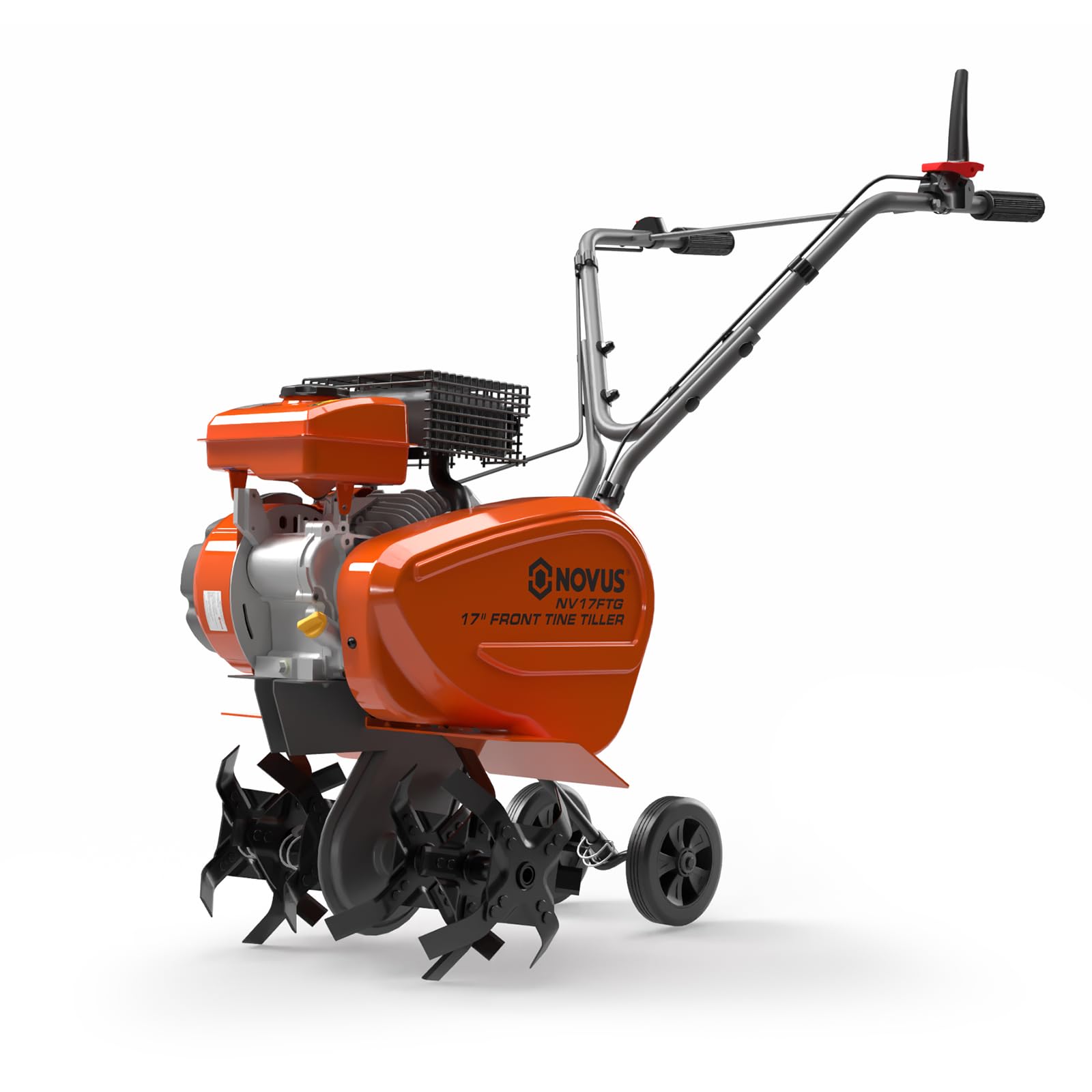
The NOVUS punches above its displacement class with a clever 2-in-1 design. The 79cc 4-cycle engine is smaller than the Earthquake Versa, but it still delivers enough torque for typical home garden soil. The standout feature is the tool-free outer tine removal that adjusts working width between 9, 14, and 17 inches. The 6-inch never-flat wheels eliminate flat tire hassles and roll smoothly across loose soil.
Owners consistently report easy assembly and startup on the second pull. The reverse gear is a genuine bonus — rare at this price point — and helps when maneuvering in tight raised beds or backing out of deep tilled rows. The low center of gravity provides ground-hugging stability that reduces the hopping sensation common on lighter front-tine machines.
The 6-inch tilling depth is adequate for established beds but shallow for breaking new ground or planting root crops. A few users note that the gas and oil caps are prone to cross-threading if over-tightened. The NOVUS is best suited for medium-size gardens where you need width flexibility and reverse gear without paying premium-tier prices.
Why it’s great
- Tool-free width adjustment between 9, 14, and 17 inches is genuinely useful.
- Reverse gear provides valuable maneuverability in tight garden spaces.
- Never-flat wheels and low center of gravity improve stability on loose soil.
Good to know
- 6-inch depth is shallow for breaking new ground or planting deep root crops.
- Gas and oil caps can cross-thread if tightened too aggressively.
- 79cc engine may bog in heavy clay on the widest tine setting.
5. BILT HARD 46cc 4-Cycle Gas Tiller
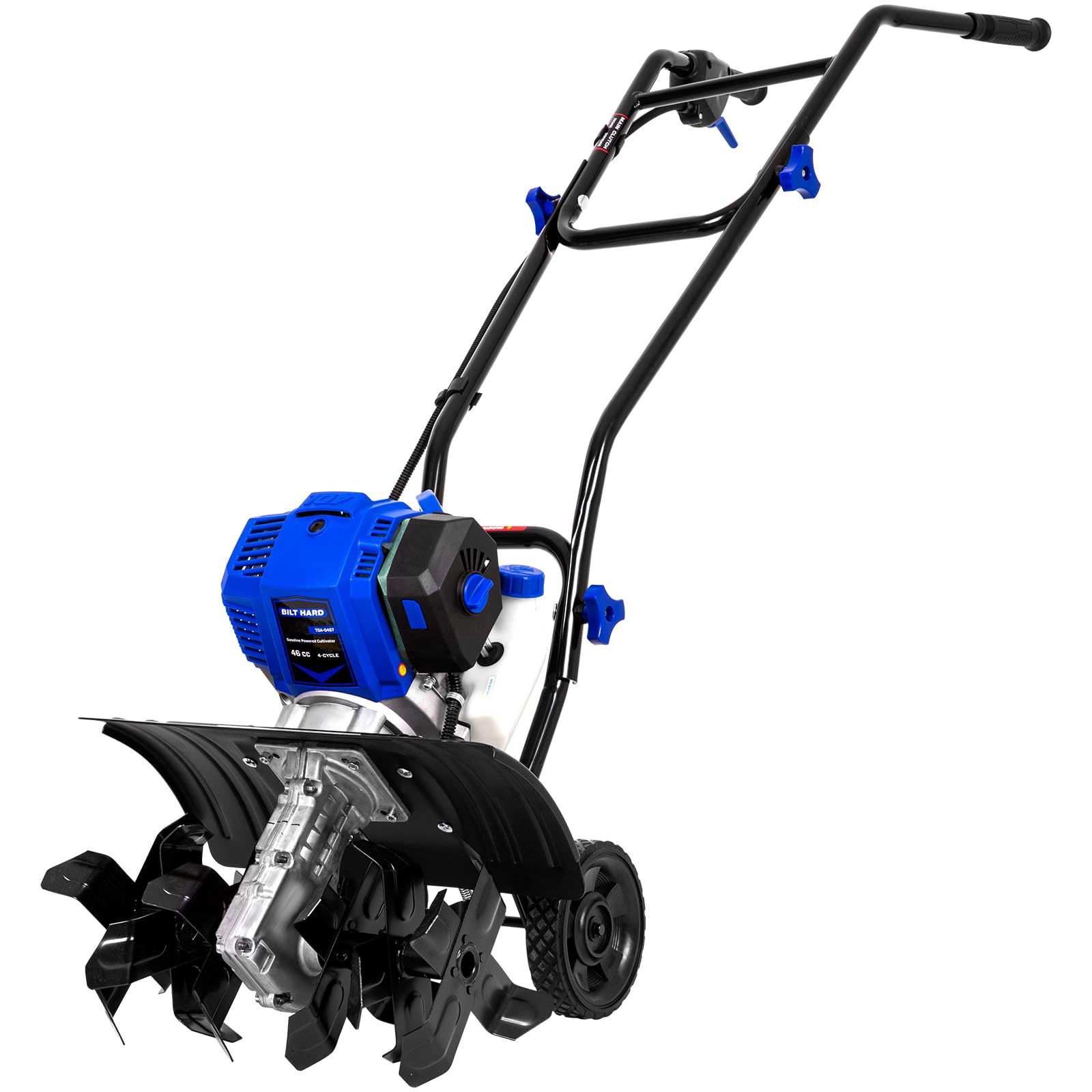
The BILT HARD is a no-frills gasoline front-tine tiller built for small-to-medium gardens on a limited budget. Its 46cc 4-cycle engine produces 1.9 HP and 1,400W peak power, enough to handle previously turned soil and light turf. The 16-inch working width with 8-inch depth is appropriate for hobby gardens, and the folding handles make storage easy. The one-hand control panel combines throttle and power switch into a single ergonomic grip.
Buyers — including a 59-year-old woman who assembled it solo — report easy starting on the fourth pull and reliable restarts. The automatic reset choke lever and compression release system genuinely reduce starting effort. Multiple owners confirm it tilled 120 to 300 square feet of compacted ground in 20 to 30 minutes. The machine comes with oil and a small amount of fuel, which is a thoughtful touch.
The biggest concern is customer support. BILT HARD’s phone line is unreported, and the 90-day warranty from some sellers is short compared to the 12-month warranty BILT HARD advertises. The long-term durability of the gearbox is unproven beyond a few seasons. This machine makes sense for budget-conscious growers who can handle minor maintenance and don’t mind a shorter warranty.
Why it’s great
- Lightweight and easy to handle for users with limited upper-body strength.
- Automatic choke and compression release make starting simple.
- Folding handles and compact size simplify storage in small sheds.
Good to know
- Customer support is difficult to reach; warranty terms are inconsistent.
- Long-term gearbox durability is unverified beyond a few seasons of use.
- 46cc engine lacks the torque for heavy clay or breaking new ground.
6. Greenworks Pro 80V Cordless Tiller

The Greenworks Pro 80V is a bare-tool battery-powered cultivator designed for light-duty work in established beds. It runs up to 40 minutes on a single 80V battery (sold separately), and the four forward-rotating steel tines produce a 10-inch tilling width at 5 inches depth. This is not a machine for breaking sod or tilling compacted clay — it excels at mixing soil amendments, weeding between rows, and preparing previously tilled soil for planting.
Owners who already own Greenworks 80V tools appreciate the battery interchangeability with lawn mowers, chainsaws, and blowers. The tiller itself weighs very little, making it easy to lift into raised beds and maneuver around delicate plants. One 76-year-old reviewer reports preparing her garden soil in 30 minutes instead of a week by hand, which says everything about the value of even a small powered cultivator over manual labor.
The battery platform is the catch. If you do not already own Greenworks 80V batteries, the initial investment is steep. The 5-inch depth limit also means you cannot perform deep tillage for root vegetables or major bed renovation. This tool is best understood as a powered hand cultivator for maintenance work, not a primary tillage machine.
Why it’s great
- Ultra-light and easy to maneuver in raised beds and narrow rows.
- Battery platform shares with other Greenworks 80V outdoor tools.
- Replaces hand-digging for soil amendments and light cultivation.
Good to know
- Tool only — battery and charger sold separately, adding significant cost.
- 5-inch tilling depth is too shallow for primary tillage or hard clay.
- 40-minute runtime may require multiple batteries for larger gardens.
7. Westinghouse W18TCAC Corded Electric Tiller
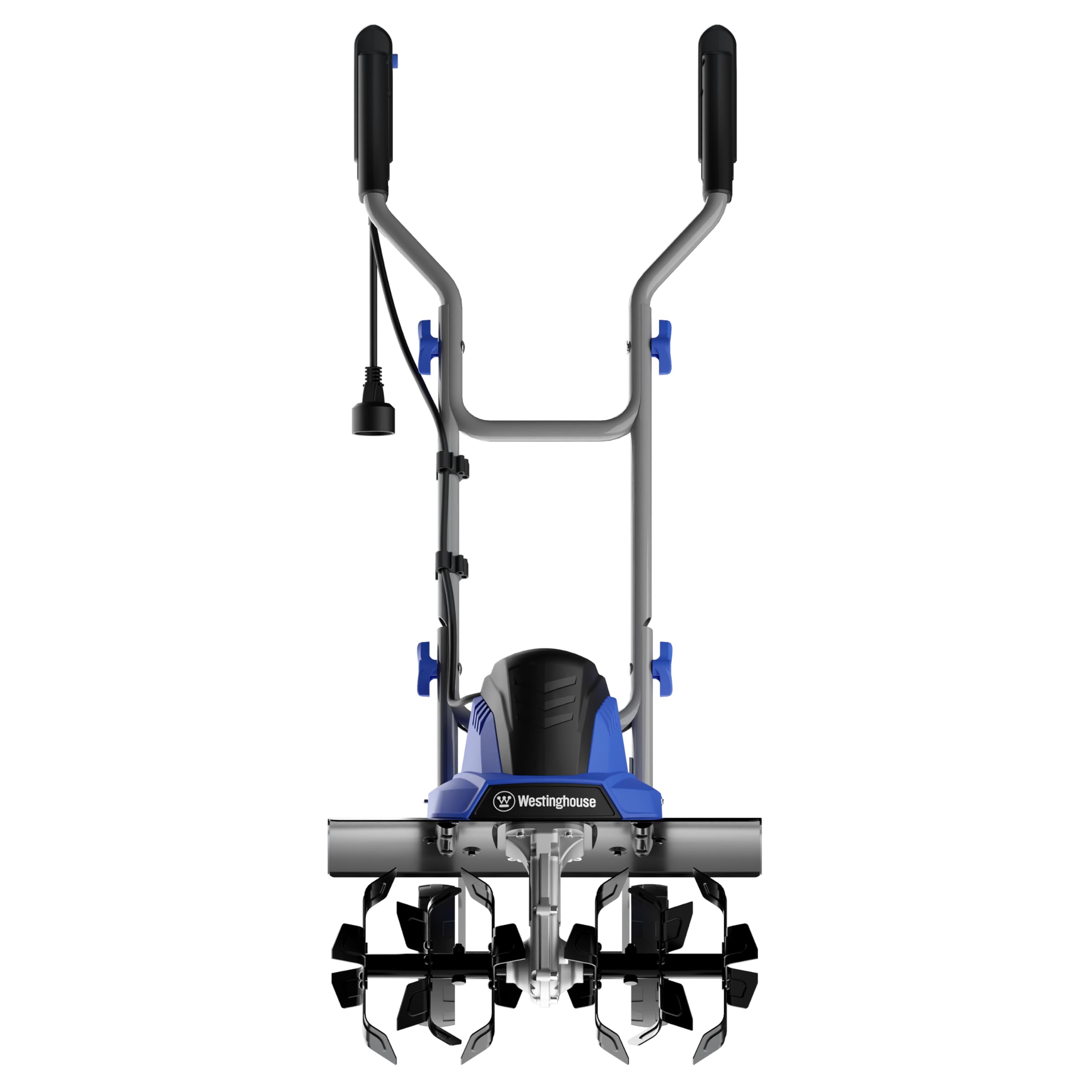
The Westinghouse W18TCAC earns the top spot by delivering gas-comparable performance from a corded electric platform. Its 15-amp motor spins six integrated steel blades at 400 RPM, tilling 18 inches wide and 9 inches deep. The H-type folding handle keeps the 24-pound machine stable during operation and compact for storage. The 2-year limited warranty and lifetime technical support through the Westinghouse service network add confidence that most corded brands do not offer.
Real-world testing confirms it “shreds grassy areas easily” and turns red clay crabgrass patches into garden beds in about 10 minutes. The 9-inch depth is genuinely useful for double-digging bed preparation. Users note that the machine vibrates significantly, which is typical for front-tine electrics at this power level, and that the extension cord requires constant attention to avoid running it over.
The main drawbacks are the lack of an ambidextrous safety trigger (left-handed users must adapt their grip) and a chrome extension pole that may rust if stored wet. The gap between the center tines leaves a small uncultivated strip that requires a second overlapping pass. For gardeners with access to a standard outdoor outlet and medium-to-large beds, the Westinghouse delivers the best combination of power, coverage, and value in the corded category.
Why it’s great
- 15-amp motor with 18-inch width covers large areas faster than any corded competitor here.
- 9-inch tilling depth rivals many gas-powered front-tine machines.
- 2-year warranty and Westinghouse service network offer real support.
Good to know
- Significant vibration requires frequent grip adjustments during long sessions.
- Cord management is critical — running over the extension cord is easy.
- Safety trigger is not ambidextrous; left-handed users may struggle.
8. etoolab ET18 Corded Electric Tiller
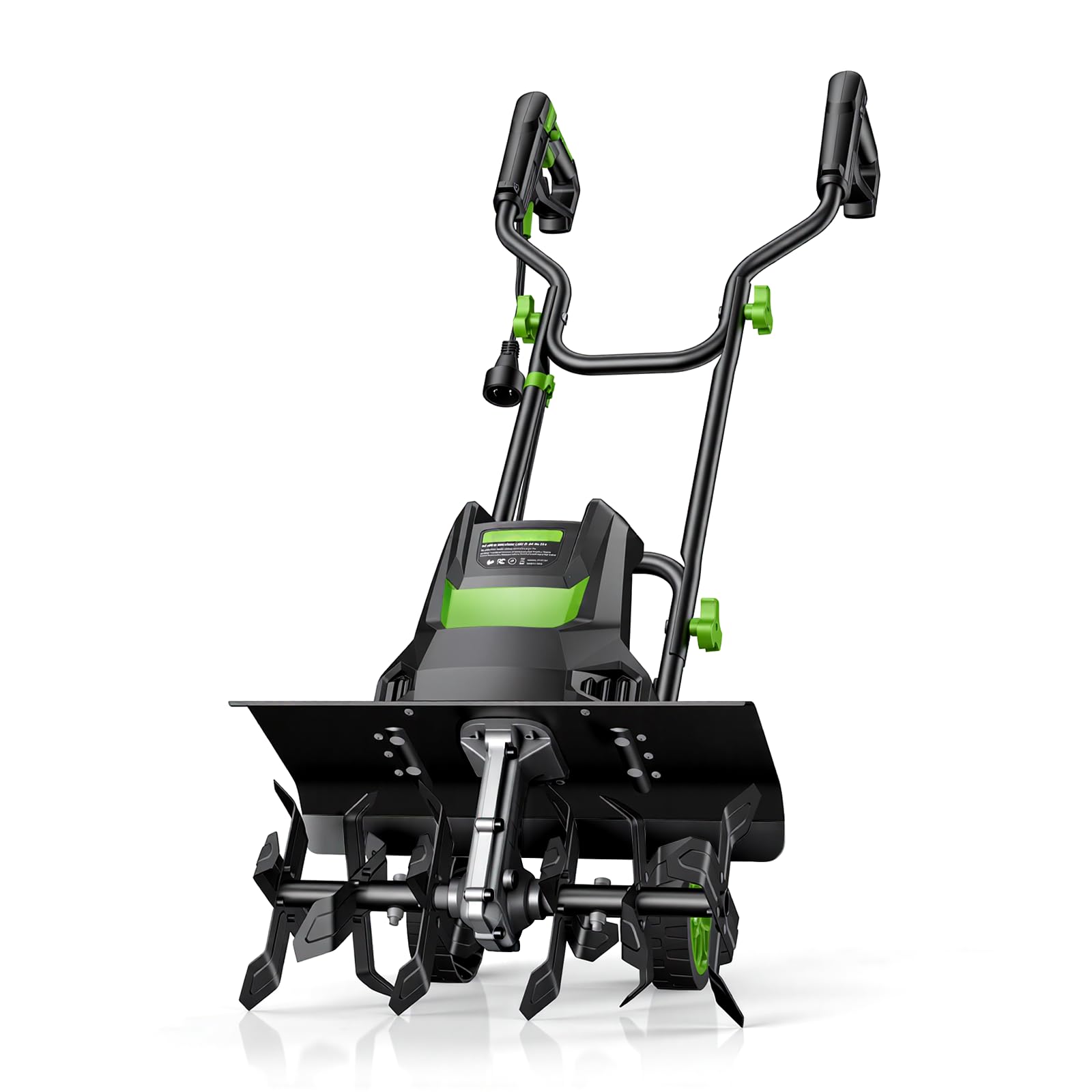
The etoolab ET18 is another strong corded contender, packing an 1800-watt motor (15 amps) into a design with 24 steel tines arranged in six sets. The tilling width hits 18 inches with 9 inches of depth, identical to the Westinghouse, and the 4-position adjustable wheels give precise depth control from shallow weeding to deep trenching. The dual safety lock system requires simultaneous trigger and button engagement, which prevents accidental starts.
Buyers describe it as “super powerful and reliable” for loosening soil, removing weeds, and mixing compost. The 400 RPM blade speed is sufficient for moderately compacted soil, though it will bog down in dense clay or heavy root masses. The adjustable wheels are a genuine advantage over fixed-wheel competitors — you can dial in shallow passes for weeding and deep passes for bed prep without stopping.
The biggest risk is the cord. Like all corded tillers, you must plan an extension cord route and avoid running over the cable. The unit weighs about the same as the Westinghouse and produces similar vibration. A few users note that the tine bolt holes can wear over time if overtightened. For gardeners who prioritize continuous runtime and adjustable depth control, the etoolab is a solid mid-range corded choice.
Why it’s great
- 4-position adjustable wheels allow precise depth changes without tools.
- 24 steel tines provide thorough soil breakup and compost mixing.
- Dual safety lock system prevents accidental startup during transport.
Good to know
- Continuous runtime requires constant cord management and a nearby outlet.
- Motor may bog in extremely dense clay or heavy root systems.
- Tine bolt holes can wear if hardware is over-tightened repeatedly.
9. Sun Joe TJ604E Corded Electric Tiller
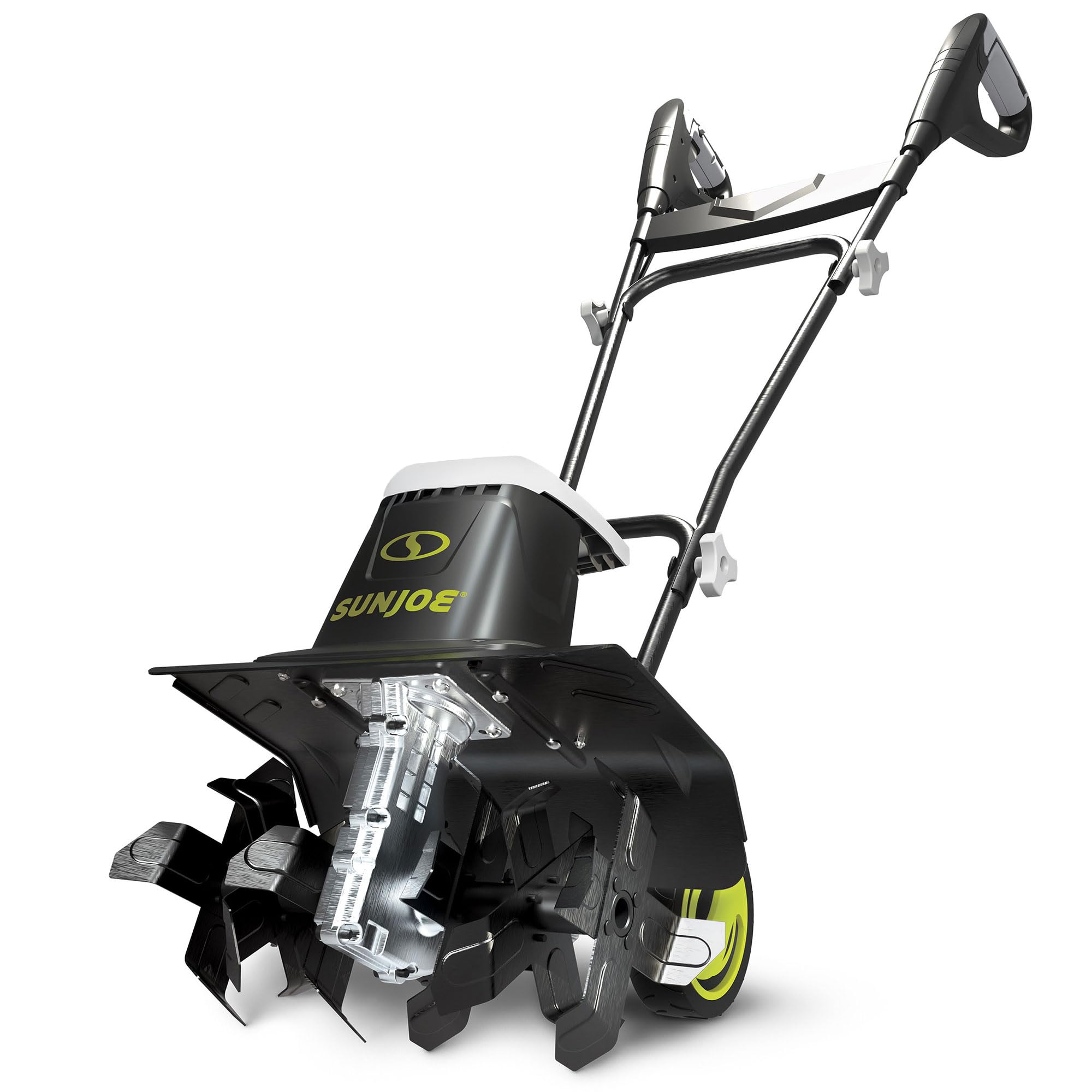
The Sun Joe TJ604E is a budget-friendly corded tiller designed for small gardens, flower beds, and light soil preparation. Its 13.5-amp motor drives six rust-proof steel tines to a working width of 16 inches and depth of 8 inches. The folding handle collapses for compact storage — a real advantage if you have limited shed space. The 3-position wheel adjustment provides basic depth control for different soil conditions.
Long-term owners consistently report that this machine “exceeded expectations” and “turns hours of manual work into 20 minutes.” An 80-year-old gardener confirms it is easy to maneuver and powerful enough for moderate turf. The maintenance-free electric motor requires no oil changes, spark plugs, or fuel stabilization. Sun Joe offers a 2-year warranty with an extended option upon online registration.
The 16-inch width is narrower than the Westinghouse and etoolab, meaning more passes for larger beds. The included power cord is short, so a heavy-duty extension cord is mandatory. The plastic gear housing is less durable than the metal housings on more expensive models, and the tines — while rust-proof — can bend if you hit large rocks. For the small-space gardener who wants a reliable, no-fuss electric tiller, the Sun Joe is the smartest entry-level buy.
Why it’s great
- Folding handle and lightweight build make it the most storage-friendly corded option.
- Reliable 13.5-amp motor handles moderate turf and established beds with ease.
- Zero maintenance — no oil, gas, or spark plug changes ever.
Good to know
- 16-inch width requires extra passes for medium to large garden areas.
- Plastic gearbox is less durable than metal housings on pricier models.
- Tines can bend on large rocks; requires careful use in rocky soil.
FAQ
Can a corded electric tiller handle compacted clay soil?
What extension cord gauge do I need for a corded tiller?
Is a gas tiller worth the extra cost over an electric model?
Final Thoughts: The Verdict
For most users, the garden rotary tiller winner is the Westinghouse W18TCAC because it delivers gas-comparable 18-inch width and 9-inch depth from a lightweight corded platform with a solid warranty. If you need the raw power to break new ground and don’t mind heavy weight, grab the Earthquake Victory 39381 for its counter-rotating tines and cast-iron gearbox. And for the best value in a compact electric tiller, nothing beats the Sun Joe TJ604E for small gardens and tight storage spaces.