
A greenhead fly bite is a sharp, burning instant you never forget—and once you’ve felt it, you will do anything to avoid the next one. These aggressive biting flies terrorize coastal marshes, farms, stables, and even suburban backyards between June and August, making outdoor work and recreation miserable. The right repellent doesn’t just mask the problem; it chemically breaks the fly’s feeding cycle, offering hours of genuine relief.
I’m Mohammad Maruf — the founder and writer behind Drink4Good. I’ve spent years analyzing repellent formulas, reading entomology research on biting fly behavior, and cross-referencing active ingredient efficacy against the specific feeding habits of greenhead flies versus standard mosquitoes.
This guide cuts through the marketing noise to deliver practical, tested advice. After reviewing dozens of products and hundreds of verified user experiences, I’ve narrowed the field to five of the most effective options on the market. Whether you’re a horse owner, a trail hiker, or a weekend beachgoer, this guide will help you find the very best greenhead fly repellent for your specific situation.
How To Choose The Best Greenhead Fly Repellent
Greenhead flies (Tabanus nigrovittatus) are larger, more persistent, and more aggressive than common houseflies or mosquitoes. They track carbon dioxide and visual movement, making standard mosquito repellents often ineffective. Choosing correctly means matching the active ingredient chemistry to the specific environment where the flies are worst.
Active Ingredients: Pyrethroids vs. Essential Oils
The most reliable greenhead repellents contain pyrethrins (a botanical insecticide derived from chrysanthemums) or synthetic pyrethroids like permethrin. These compounds provide rapid knockdown and can sustain residual protection for up to 14 days on animals or surfaces. Essential-oil blends (citronella, lemongrass, cedarwood) offer a DEET-free alternative that works well in low-to-moderate pressure, but they require more frequent reapplication—typically every 90 minutes to 2 hours—and may fail during peak greenhead season.
Application Format: Spray vs. Fogger vs. Mist
For personal body protection, a continuous mist or pump spray gives even coverage without saturating clothing. For barns, stables, or large outdoor areas, a metered aerosol fogger or a ready-to-use premise spray delivers sustained area control. If you’re applying it to horses or livestock, a water-based, non-greasy formula will won’t attract dust or irritate the animal’s skin.
Residual Duration and Reapplication Frequency
Greenheads feed in daylight and are active in hot, humid conditions. A repellent that lasts 14 days on a horse in a dry pasture may only hold for 3 days in a tidal marsh. Check user reviews for stories from similar environments—coastal Maine is not the same as a dry Texas ranch. Products with higher permethrin concentration or a synergist like piperonyl butoxide generally extend the protection window.
Quick Comparison
On smaller screens, swipe sideways to see the full table.
| Model | Category | Best For | Key Spec | Amazon |
|---|---|---|---|---|
| Farnam Tri-Tec 14 | Equine Spray | Horse & livestock protection | 14-day residual protection | Amazon |
| Manna Pro Pro-Force | Equine Spray | All-life-stage equine use | 70+ pest species coverage | Amazon |
| Zep Enforcer Country Vet | Metered Fogger | Barn & stable area control | 30-day continuous supply | Amazon |
| No Mosquitoz Botanical Spray | DEET-Free Mist | Family & sensitive skin | Natural essential oil blend | Amazon |
| Best Bee Brothers Shake + Shield | Plant-Based Mist | On-the-go personal use | 370+ sprays per 2 oz bottle | Amazon |
In‑Depth Reviews
1. Farnam Tri-Tec 14 Horse Fly Spray
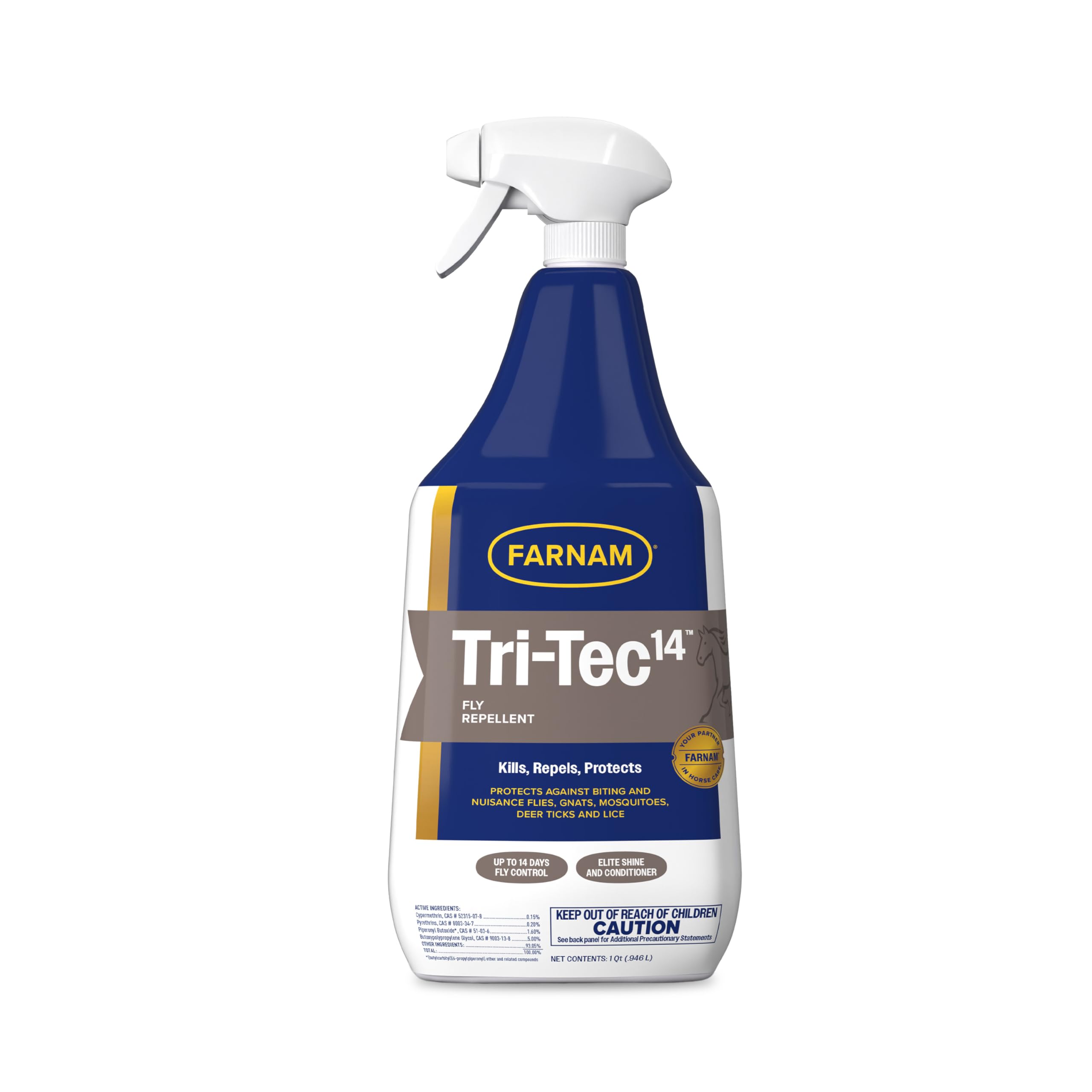
The Farnam Tri-Tec 14 has a reputation among horse owners as the gold standard for greenhead and horse fly season, and the data backs it up. Its permethrin-based formula delivers knockdown on contact and leaves a residual barrier that keeps biting flies off treated animals for up to 14 days under normal conditions. Users in high-humidity environments like Hawaii and the Gulf Coast report it still holds for roughly a week—far longer than most competitors.
The formula includes coat conditioners that leave a healthy shine on the animal’s hide, so it serves a dual purpose. The 32-ounce ready-to-use spray covers multiple applications, and a gallon refill is available for larger operations. The only consistent complaint is that the spray nozzle on the 32-ounce bottle can fail after extended use, though many buyers simply decant into their own sprayer.
If you’re facing a heavy greenhead infestation in a stable, pasture, or riding arena, this is the most reliable option on this list. It’s also effective for dogs, though the label restricts it to horses and ponies. For personal body use, the same active ingredient class is found in many U.S. military-issue repellents, but this specific bottle is formulated for livestock.
Why it’s great
- Up to 14 days of residual protection per application
- Proven knockdown of greenhead flies, ticks, and mosquitoes
- Coat conditioners improve the animal’s hide health
Good to know
- Spray nozzle durability is inconsistent
- Reapplication may be needed more often in wet conditions
2. Manna Pro Pro-Force Fly Spray

The Manna Pro Pro-Force Fly Spray is a strong second-place option for equine greenhead control. It claims up to 14 days of repellency and covers 70+ pest species, including the specific biting flies that torment livestock. Users report it works especially well on cows and horses, with one reviewer noting their cow would stand still for the spray—a practical testament to the formula’s instant relief effect.
The water-based, non-greasy formula dries quickly and doesn’t attract dust, which is important for performance horses that spend time in the ring. The 32-ounce bottle is ready to use, and the label also allows application as a premise spray for barns and stables, adding versatility that the Tri-Tec doesn’t officially offer. Some users describe the scent as mild and non-offensive.
Where it falls short is in extreme humidity or wet weather; the 14-day claim is optimistic in those conditions, and you’ll likely need to reapply near the 7-day mark. It also isn’t as effective for dogs as some other options, and the sprayer can be less precise than the standard pistol-grip nozzle found on Farnam bottles.
Why it’s great
- Covers 70+ listed pest species
- Dries fast, no greasy residue
- Can be used as barn premise spray
Good to know
- Residual protection drops in rain or high humidity
- Sprayer lacks precision for spot application
3. Zep Enforcer Country Vet Metered Fly Spray
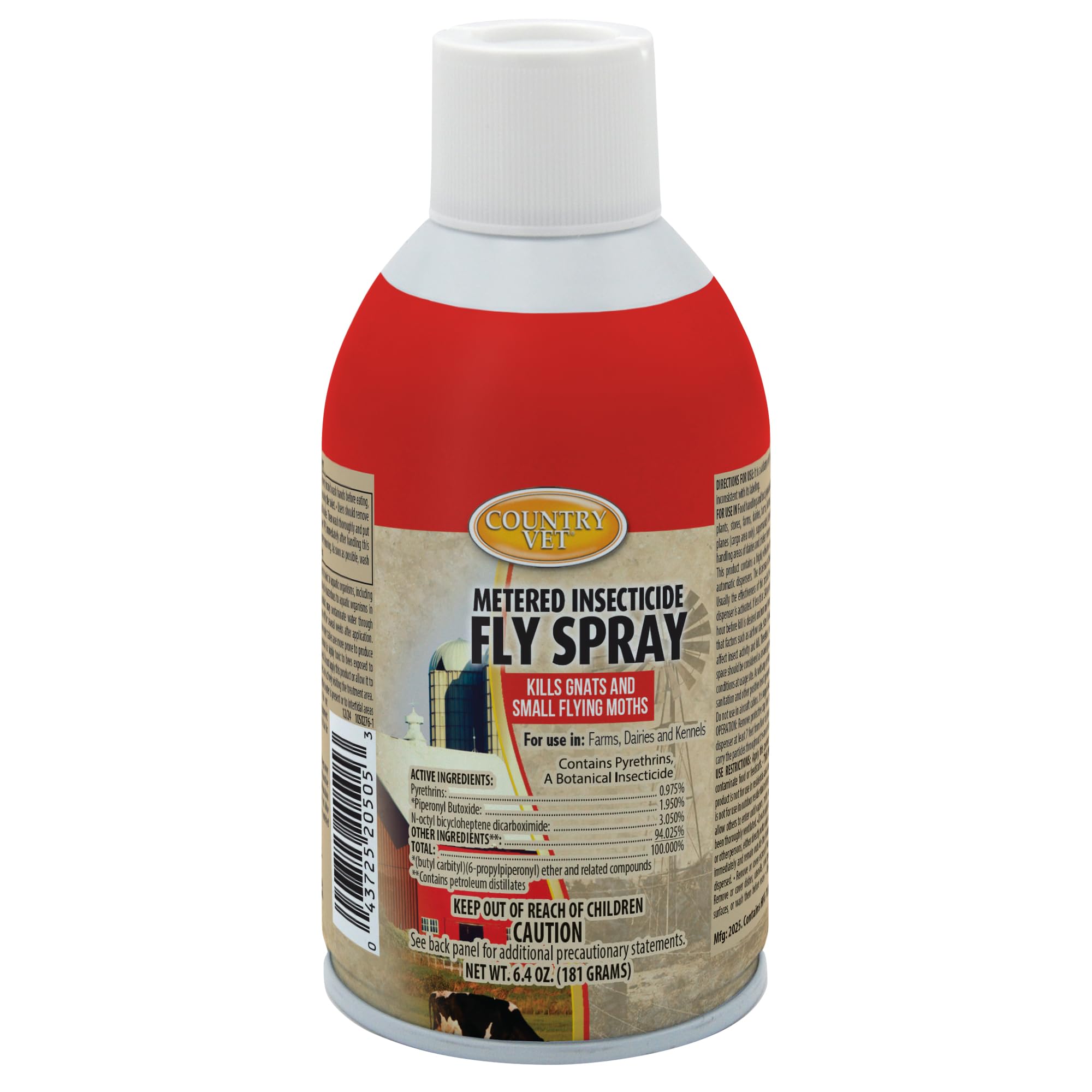
The Zep Enforcer Country Vet is a unique entry because it’s not a body spray—it’s a metered aerosol fogger designed for automatic dispensers in barns, stalls, and stables. Each can provides a 30-day supply when used in a standard Glade-style or automatic dispenser, releasing a measured burst of pyrethrin insecticide every 15 minutes. This creates a constant knockdown zone that stops greenheads before they land.
Users report it kills flies, mosquitoes, gnats, and even wasps instantly on contact, with a fresh outdoor scent that is less chemical-smelling than many aerosol insecticides. It’s ideal for covered outdoor areas like sheds, patios, and equipment garages where greenheads congregate. A recurring tip from long-time users is to mount the dispenser near a doorway or ventilation point to catch flies entering the space.
The main limitation is that it’s an area fogger, not a personal repellent. It won’t protect you when you’re walking the property or riding in an open pasture. Also, placement matters significantly—positioning it away from food prep areas is smart, and the label includes specific safety guidelines you should follow.
Why it’s great
- 30-day continuous area protection from a single can
- Instant knockdown of greenheads and wasps
- Light, non-offensive scent
Good to know
- Only for enclosed or semi-enclosed areas
- Requires a compatible automatic dispenser
4. No Mosquitoz Botanical Insect Repellent
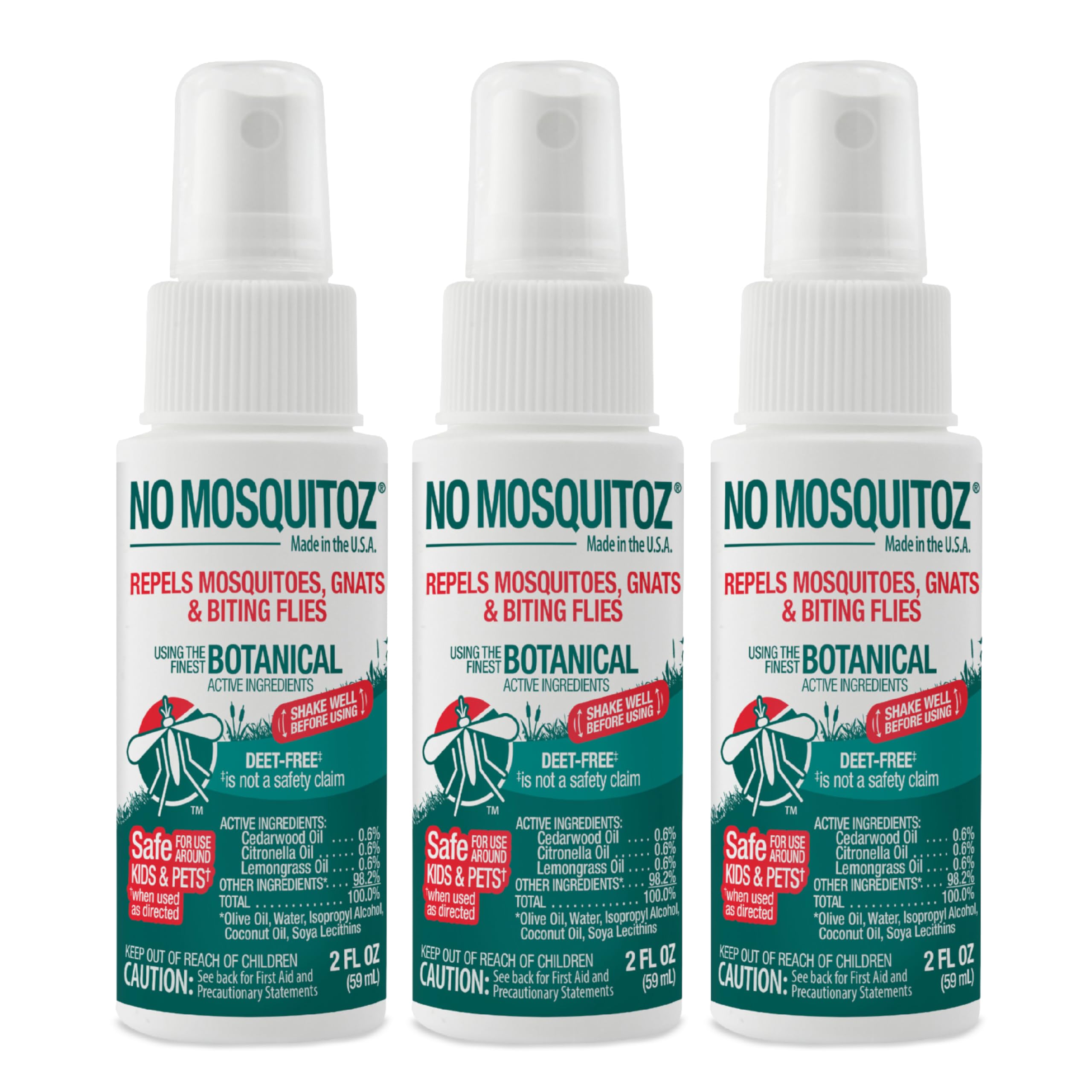
The No Mosquitoz Botanical Repellent is a DEET-free alternative that relies on cedarwood, citronella, and lemongrass essential oils. It’s designed for people who want to avoid synthetic chemicals, especially for use around children or on sensitive skin. User reviews consistently highlight its effectiveness against mosquitoes and black flies, with several Florida swamp dwellers rating it as strong as traditional DEET-based sprays.
The formula includes coconut and olive oils, which act as skin moisturizers and prevent that sticky, tacky feeling common with many bug sprays. The woodsy-citronella scent is pleasant compared to the sharp chemical odor of many synthetic sprays. The 2-ounce bottle is TSA-friendly and easy to pack for day trips to the beach or marsh.
Where it struggles is against heavy greenhead pressure. Essential oils evaporate faster than synthetic repellents, so you’ll need to reapply every 60–90 minutes in high-bug situations. A few users have noted that it doesn’t stop greenheads during peak dawn/dusk feeding windows. It’s best used as a light everyday option rather than a heavy-duty defense mechanism.
Why it’s great
- 100% botanical active ingredients, no DEET
- Pleasant woodsy scent, non-greasy feel
- Suitable for sensitive skin and children
Good to know
- Frequent reapplication needed in greenhead zones
- Small 2 oz bottle only lasts a few outings
5. Best Bee Brothers Shake + Shield No-See-Ums Gnat Spray
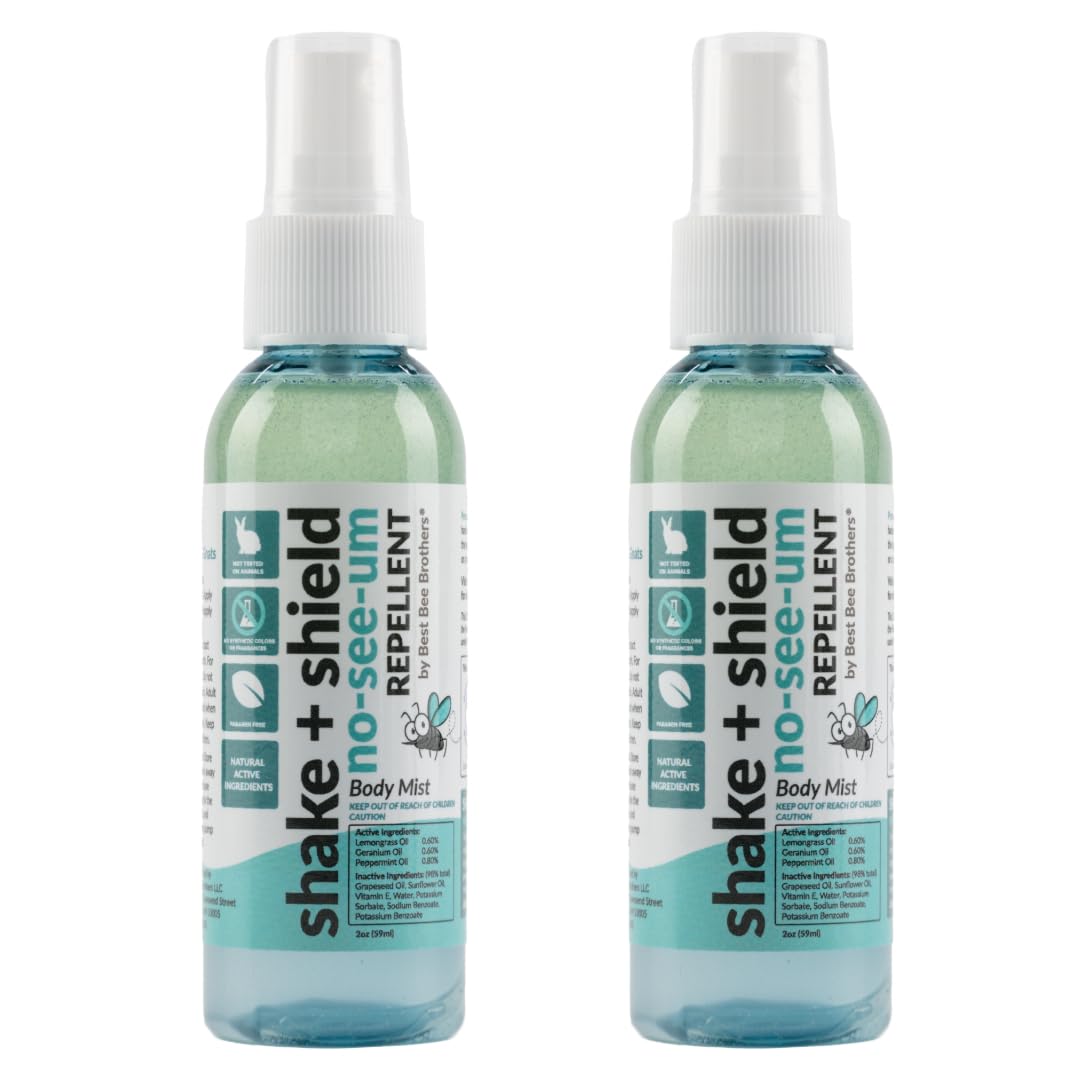
The Best Bee Brothers Shake + Shield is a plant-based body mist formulated specifically for gnats, no-see-ums, and small biting flies—the exact size class that greenheads belong to. It comes in a 2-ounce bottle, and the two-pack provides around 740 total sprays, making it a solid value for daily beach or garden use. The formula is made with reclaimed ocean plastic packaging, which adds an eco-friendly angle.
Users praise its effectiveness against no-see-ums that standard repellents can’t stop, and note a pleasant lemony scent that isn’t overpowering. The mist application spreads evenly without drenching clothes, and the oil-based formula does leave a slight shine on the skin—some users love this as a sign of coverage, while others find it slightly sticky. It’s safe for kids when used as directed.
The biggest drawback is inconsistency: a small number of users report getting bitten immediately after application, suggesting the formula may not create a uniform repellent barrier on all skin types. Reapplication every 60–90 minutes is necessary, and it hasn’t been formally tested against large greenhead populations the way the equine sprays have.
Why it’s great
- Effective against gnats and no-see-ums
- Pack of 2 provides excellent value per spray
- Sustainable packaging from reclaimed ocean plastic
Good to know
- Inconsistent protection across skin types
- Needs frequent reapplication in high-bug areas
FAQ
Does DEET work on greenhead flies?
Can I use horse fly spray on my own skin?
How do metered foggers compare to personal sprays for greenheads?
Final Thoughts: The Verdict
For most users, the greenhead fly repellent winner is the Farnam Tri-Tec 14 because its permethrin-based formula offers the longest residual protection and the most consistent knockdown of any product on this list. If you need a budget-friendly equine option with barn flexibility, grab the Manna Pro Pro-Force. And for creating a greenhead-free stable or barn environment, nothing beats the Zep Enforcer Country Vet fogger running on an automatic timer.