
Balancing a high-fps gaming rig with a dedicated streaming encoder is the single hardest puzzle in PC building. The wrong prebuilt either chokes on OBS encoding while you raid or forces you to drop settings mid-broadcast. The market is flooded with machines that promise “dual-purpose” performance but deliver stuttering frames for your viewers the moment the action heats up.
I’m Mohammad Maruf — the founder and writer behind Drink4Good. I’ve spent years dissecting hardware specifications for gaming desktops, cross-referencing GPU encoder generations, CPU core counts, and thermal design profiles to separate true broadcast-ready machines from overhyped gaming boxes.
After deep analysis of thirteen configurations spanning budget to flagship tiers, these are the prebuilt towers that actually handle simultaneous gaming and streaming without breaking a sweat. This is the definitive guide to finding your ideal gaming and streaming pc.
How To Choose The Best Gaming And Streaming PC
Choosing a machine that can game at high refresh rates while encoding a live stream requires balancing three core components: the GPU’s dedicated media encoder, the CPU’s core/thread layout, and the system’s thermal capacity. Ignore any one of these, and your stream will buffer or your frame rate will tank.
GPU Encoder Generation Is Non-Negotiable
The NVIDIA NVENC encoder on RTX 40-series and newer cards offloads the entire video encoding workload from the CPU. This leaves your processor free to run the game, dramatically reducing in-game stutter during a broadcast. A machine with an older GTX or RTX 30-series card forces the CPU to share encoding duties, which hurts both frame rates and stream quality.
RAM Capacity and Speed for Overlay-Heavy Workloads
Running OBS Studio, a modern AAA title, a chat window, and background apps like Spotify or Discord can easily consume 24GB of system memory. A 16GB machine will hit its ceiling during a broadcast, causing micro-stutters. Aim for at least 32GB of DDR5 RAM running at 5600MHz or faster. DDR4 still works, but the lower bandwidth becomes a bottleneck on demanding titles.
Thermal Management for Long Broadcast Sessions
A streaming PC runs at near-peak load for hours. Air cooling alone often struggles to keep the CPU under 85°C in a compact mid-tower, triggering thermal throttling that drops both game FPS and encoding quality. A 240mm or larger liquid cooler is the baseline for any machine expected to stream for more than two hours at a time. Check for a case with positive airflow and at least three intake fans.
Quick Comparison
On smaller screens, swipe sideways to see the full table.
| Model | Category | Best For | Key Spec | Amazon |
|---|---|---|---|---|
| Skytech Gaming Legacy 4 | Flagship | Ultra 4K streaming & rendering | RTX 5090 / 64GB DDR5 | Amazon |
| Alienware Aurora ACT1250 | Premium | High-end gaming & live production | RTX 5080 / 1000W PSU | Amazon |
| Lenovo Legion Tower 5i | Performance | Quiet 1440p streaming setup | RTX 5070 Ti / 32GB DDR5 | Amazon |
| The Horizon RGB I9 | Enthusiast | VR streaming & CAD workloads | RTX 5070 / 360mm AIO | Amazon |
| iBUYPOWER Element | Mid-High | Ryzen 9 processing & stream | RTX 5070 / 32GB DDR5 | Amazon |
| MSI Codex Z2 | Balanced | AAA gaming & OBS encoding | RTX 5070 / 32GB DDR5 | Amazon |
| KOTIN G60B | Feature-Rich | 4K gaming with live monitoring | RTX 5070 / 360mm AIO | Amazon |
| TOPGRO T1-Pro Mini | Compact | Portable streaming battles | RTX 4060 / i9-13900HK | Amazon |
| CyberPowerPC Gamer Xtreme | Entry-Spec | 1080p streaming starter | RTX 5060 Ti / 16GB DDR5 | Amazon |
| NINGMEI Ryzen 7 | Mid-Range | Budget AAA & light stream | RTX 5060 / 32GB DDR4 | Amazon |
| Suevery I9 13900HX | Value Plus | High-core CPU for multitasking | RTX 5060 / 32GB DDR5 | Amazon |
| YAWYORE Ryzen 7 | Budget Mid | Solid 1080p gaming & stream | RTX 5060 / 32GB DDR4 | Amazon |
| ViprTech Stryker 4.0 | Entry Value | First-time streamer rig | RTX 5060 / 16GB DDR4 | Amazon |
In‑Depth Reviews
1. Skytech Gaming Legacy 4

The Skytech Legacy 4 is the definitive no-compromise broadcast machine. The AMD Ryzen 9 9950X3D with its 3D V-Cache technology provides a massive L3 cache that dramatically reduces frame-time variance in CPU-bound titles like Escape from Tarkov and Baldur’s Gate 3. Paired with the RTX 5090’s dual NVENC encoders, this rig can encode a 4K60 stream at high bitrate while pushing 200+ fps in the game — all without a single dropped frame.
The 420mm AIO liquid cooler keeps the 9950X3D under 75°C even during a multi-hour broadcast session, and the 1200W Gold ATX 3.0 PSU leaves ample headroom for overclocking both CPU and GPU. The 4TB Gen4 NVMe SSD provides fast mass storage for game libraries and recorded VODs, while the 64GB of DDR5 6000MHz RAM ensures OBS, Discord, and a browser with ten tabs never fight for bandwidth.
Real-world owners report that the system handles simultaneous Call of Duty at Ultra 4K and OBS at high preset without any perceptible lag. The only tradeoff is the physical footprint — the full-tower case is large and heavy, making LAN-party transport a two-person job. For a permanent studio setup, this is the peak of the category.
Why it’s great
- RTX 5090 dual NVENC handles 4K120 streaming effortlessly
- 64GB DDR5 eliminates all RAM bottleneck in OBS+game scenarios
- 420mm AIO keeps thermals in check during marathon broadcasts
Good to know
- Very large chassis — not travel-friendly for LAN events
- Premium price point requires serious budget commitment
2. Alienware Aurora ACT1250

Alienware’s latest Aurora chassis brings a clean “basalt black” aesthetic with customizable AlienFX lighting zones, but the real story is inside. The Intel Core Ultra 9 285 processor paired with the RTX 5080 delivers Blackwell-architecture ray tracing performance that rivals last-generation flagship workstations. The 240mm liquid cooler on the CPU is well-tuned for the 285’s thermal curve, and the 1000W Platinum-rated PSU ensures stable power delivery even during the most intense rendering bursts.
With 32GB of DDR5 RAM and a 1TB SSD, this machine is ready for 1440p streaming out of the box. The RTX 5080’s single NVENC encoder is still extremely capable for 4K60 streaming, and the ultra 9’s 24 cores handle the encoding overhead if you ever want to push beyond the GPU encoder’s limits. The tool-less side panel makes upgrading RAM or storage trivial, which is a nice touch for streamers who want to expand later.
Customer reports note that the system runs remarkably quiet for a high-TDP build, even under sustained load. A minority of units have experienced motherboard issues, but Dell’s 1-year onsite service means a technician comes to you rather than you shipping the whole tower back. For a polished, warranty-backed premium machine, this is a strong contender.
Why it’s great
- Very quiet operation even at full load during streaming
- Dell onsite service provides peace of mind
- RTX 5080 handles 4K encoding with 60+ FPS in latest titles
Good to know
- Some units have reported early motherboard failure
- RAM upgrade path is limited to Dell-certified modules
3. Lenovo Legion Tower 5i
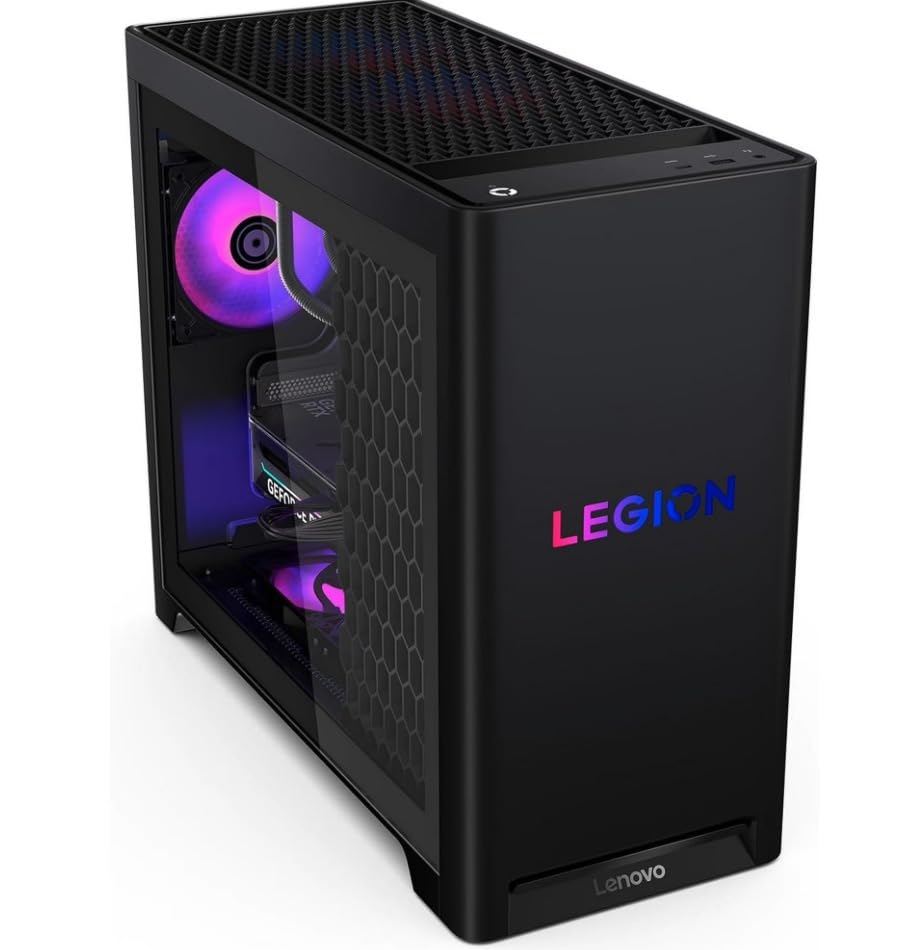
The Legion Tower 5i is the quietest mid-range streaming machine in this lineup. Lenovo’s up-to-180W optimized air-cooling solution keeps the Intel Core Ultra 7 265F running cool and whisper-quiet during a stream, a feat most competing mid-towers fail to achieve without liquid cooling. The RTX 5070 Ti with 16GB of VRAM is a fantastic encoder for 1440p streaming, and the 32GB of 5600MHz DDR5 leaves plenty of headroom for OBS overlays and background apps.
The tool-less side panel is a rare convenience at this price tier, making future RAM or SSD upgrades painless. The 2.5G Ethernet port and WiFi 6E ensure your upload bandwidth is never the bottleneck during a broadcast. Customers consistently report that the system runs games like Forza 5 at around 180 fps at 1440p max settings while maintaining cool temperatures in the mid-60s Celsius for the GPU.
One minor downside is that the GPU’s “GEFORCE RTX” text lacks RGB lighting, which some buyers found disappointing for a showpiece build. The fan noise only becomes audible during shader compilation stutters, not during sustained gaming. For a quiet, capable streaming rig that won’t overpower your room audio, this is the top pick.
Why it’s great
- Exceptionally quiet even under full streaming load
- Tool-less upgrade panel simplifies future expansion
- 2.5G Ethernet and WiFi 6E for reliable upload speed
Good to know
- GPU branding lacks RGB customization
- Cooling fans spin up audibly during shader compilation
4. The Horizon RGB I9
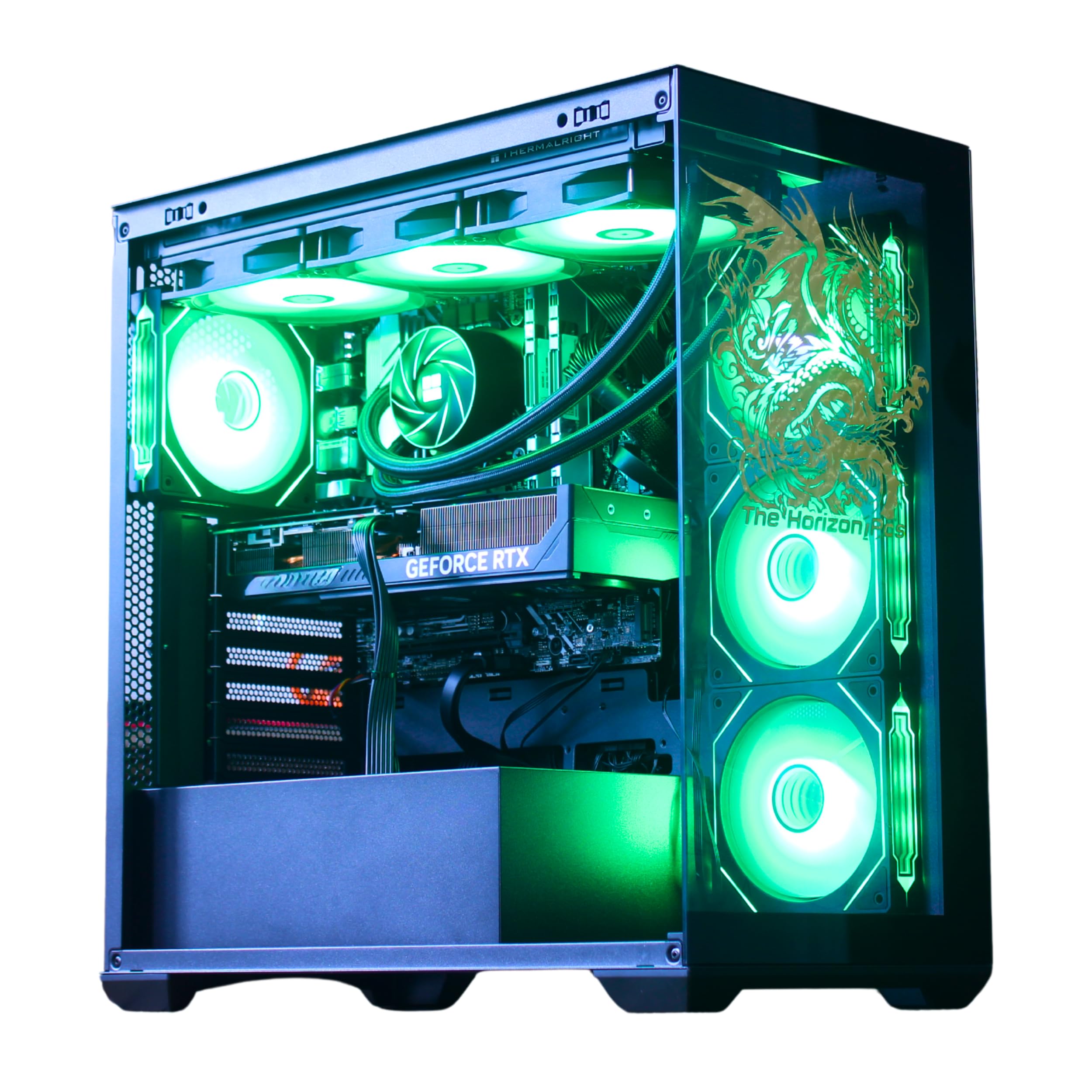
The Horizon RGB I9 is built for streamers who push their PC to the absolute edge. The unlocked Core i9 CPU with a 360mm AIO liquid cooler gives you the thermal headroom to run sustained all-core turbo frequencies while encoding video. Combined with the RTX 5070 12GB card and DLSS 4.0 support, this machine can handle both 4K gaming and 1080p60 streaming simultaneously without breaking a sweat.
The chassis includes a total of eleven fans (three on the GPU, one on the PSU, eight for case airflow) which is arguably excessive but ensures that neither the CPU nor GPU ever approaches thermal throttle territory. Owners report that the system runs Microsoft Flight Simulator at Ultra settings in VR on a Quest 3 while OBS captures the feed with zero stutter. Video rendering is equally impressive — a three-minute 4K clip encodes in roughly 35 seconds.
The dragon front panel design is polarizing — some love the aggressive aesthetic, while others find it too loud for a professional streaming setup. The 2TB storage combo (1TB NVMe M.2 for OS and games, 1TB 7200RPM HDD for archives) provides a good balance of speed and capacity. For an enthusiast who wants maximum thermal performance and a bold look, this is a compelling choice.
Why it’s great
- 360mm AIO sustains all-core turbo during long streams
- Handles VR streaming on Quest 3 without frame drops
- 2TB combined storage offers speed plus archive space
Good to know
- Dragon front panel aesthetic may not suit all setups
- Runs hot internally; needs good room airflow
5. iBUYPOWER Element
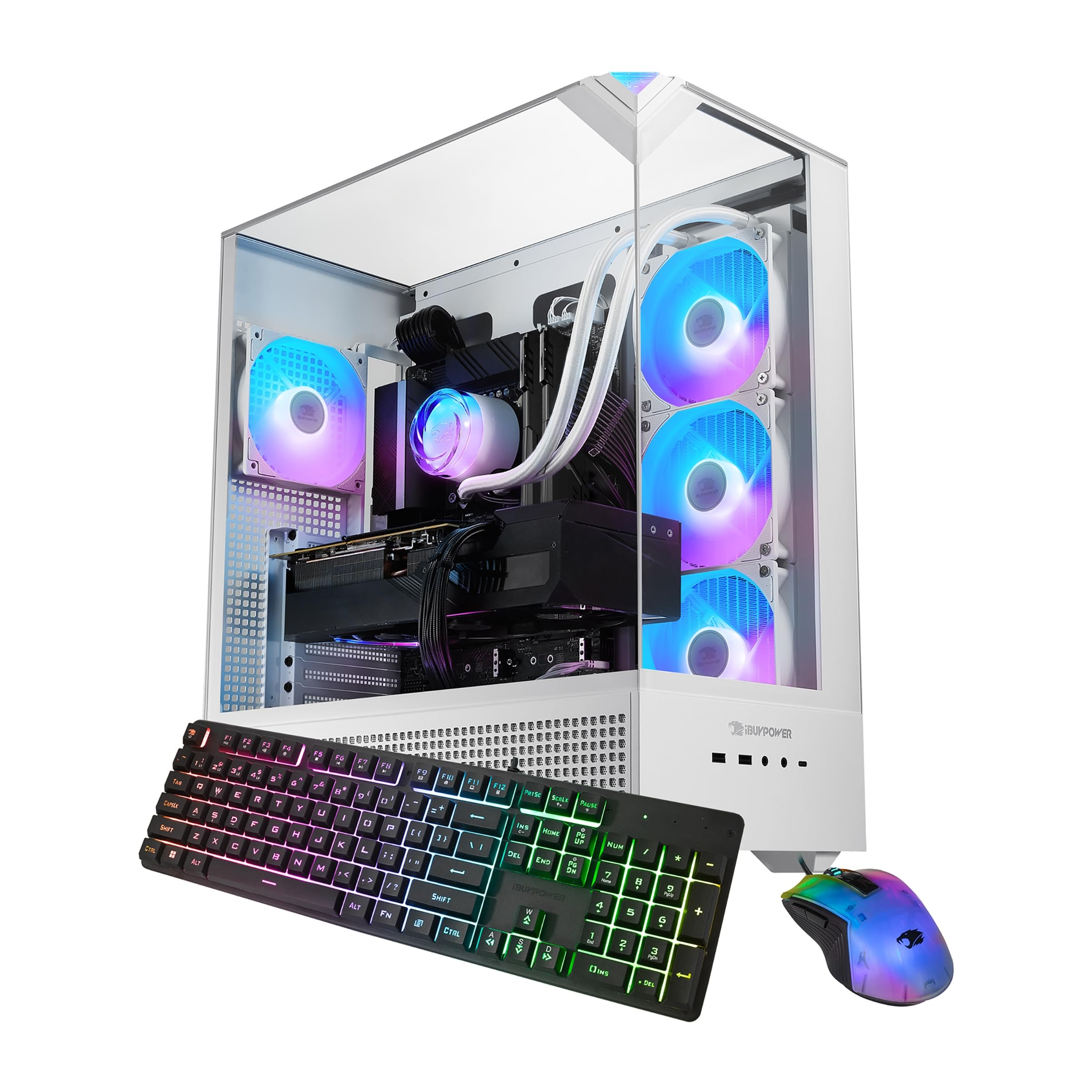
The iBUYPOWER Element stands out for its Ryzen 9 7900X processor, a 12-core/24-thread beast that excels in multi-threaded encoding tasks. When paired with the RTX 5070 12GB GPU, you get a combination that can run OBS at the x264 “Medium” preset while pushing 1440p gaming at high settings. This is especially useful if you prefer software encoding over NVENC for its superior quality at lower bitrates.
The 32GB of DDR5 5200MHz RAM is adequate for streaming, though 5600MHz would be more ideal. The 1TB NVMe SSD provides fast boot times, but you’ll likely need a secondary drive for a growing game library. The included keyboard and mouse are basic, but they get you started without an extra purchase. The white RGB case is a visual highlight for any desk setup.
Customer feedback highlights excellent thermal performance thanks to the water cooling, with the CPU rarely exceeding 70°C during gaming. The main critique is that the motherboard has only two RAM slots, capping future expansion at 64GB without replacing the existing sticks. For a streamer who values CPU encoding flexibility, this machine delivers strong mid-range value.
Why it’s great
- Ryzen 9 7900X provides 12 cores for x264 encoding
- RTX 5070 handles 1440p gaming with NVENC fallback
- Water cooling keeps CPU temps under 70°C under load
Good to know
- Motherboard has only 2 RAM slots for future upgrades
- Included peripherals are basic and may be replaced quickly
6. MSI Codex Z2

MSI’s Codex Z2 is a well-balanced streaming machine that hits the sweet spot between price and performance. The AMD Ryzen 7 8700F with 8 cores and 16 threads is a capable encoder when paired with the RTX 5070’s NVENC, giving you both hardware and software encoding flexibility. The 32GB of DDR5 memory ensures smooth multitasking, and the 2TB NVMe SSD provides generous storage for games and recorded streams.
The chassis features four system fans — three front intake and one rear exhaust — creating positive airflow that keeps the GPU cool even during marathon sessions. The RGB lighting can be customized via MSI Center software, allowing you to match the lighting to your broadcast branding. The included keyboard and mouse are functional, though many users will want to upgrade them relatively quickly.
Customer reviews are generally very positive, highlighting smooth frame rates in Frostpunk 2 and other CPU-intensive strategy games. The most common complaint is poor Bluetooth performance, which some users resolve by adding a separate PCIe WiFi/BT card. For a mainstream mid-tower that delivers reliable streaming performance right out of the box, the Codex Z2 is a solid investment.
Why it’s great
- Excellent balance of CPU and GPU for dual-purpose use
- 2TB SSD provides ample space for raw stream recordings
- MSI Center software enables broadcast-matched RGB lighting
Good to know
- Bluetooth performance may require a replacement module
- Included peripherals are entry-level quality
7. KOTIN G60B
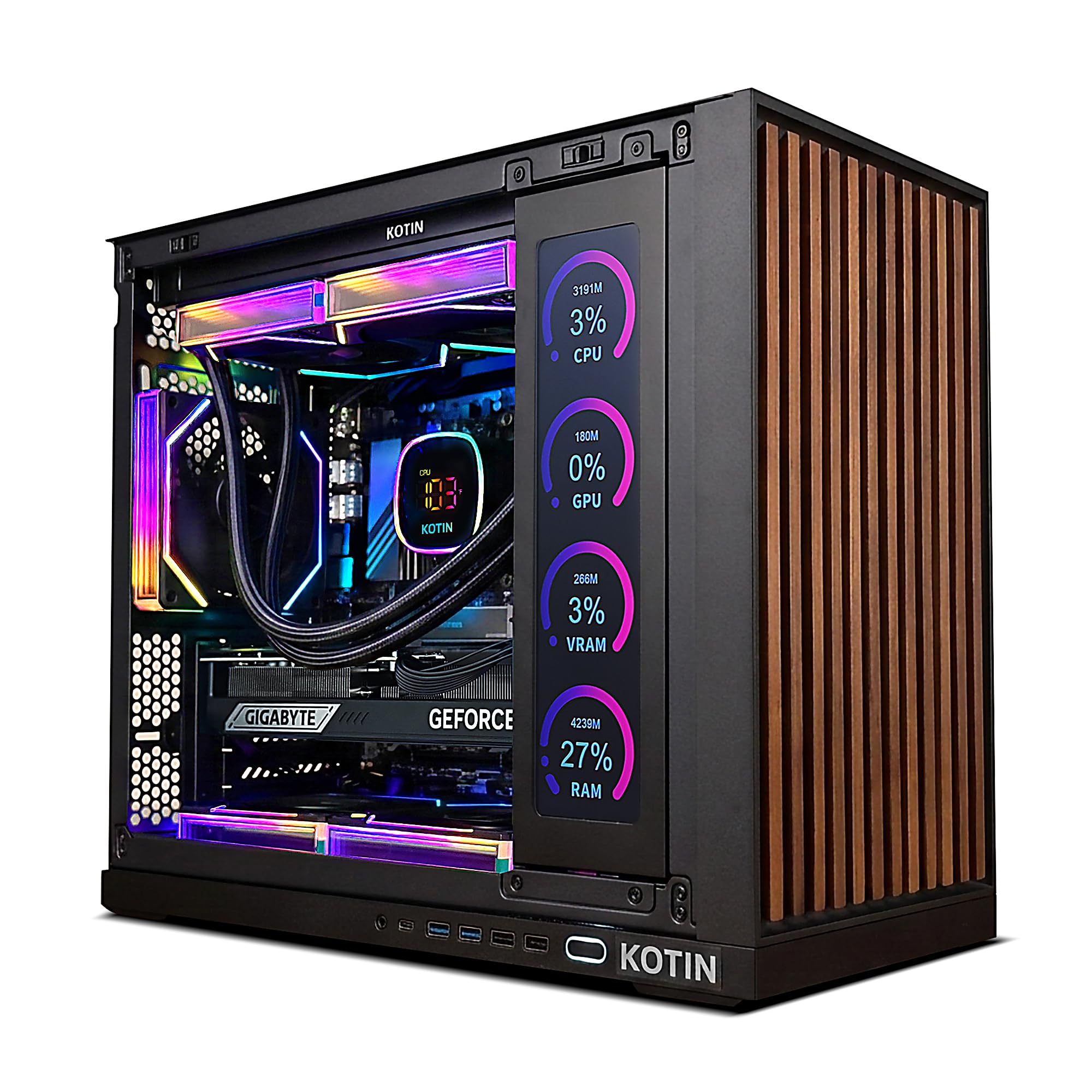
The KOTIN G60B is the most visually striking machine in this lineup, featuring an 11.3-inch smart display on the side panel that shows real-time CPU temperature, weather, and time. For a streamer who wants to monitor system vitals at a glance without overlaying them on the broadcast, this is a unique asset. Under the hood, the Ryzen 7 9700X and RTX 5070 12GB pair delivers strong 1440p and passable 4K gaming performance.
The 360mm digital liquid cooler with a temperature display on the pump itself helps you visually confirm thermal status during a broadcast. The 32GB of DDR5 6000MHz RAM ensures OBS never runs out of memory, and the 850W Gold PSU provides enough headroom for future upgrades. The system is fully assembled in California, meaning the GPU is pre-installed and the protective foam is easily removable.
Customer experiences are mixed on the side display’s reliability — some units have had functionality issues, while others report zero problems. The Gigabyte motherboard used in this build is a decent component, and the ARGB lighting syncs well for a unified aesthetic. For a streamer who values on-chassis monitoring and a premium look, the G60B is a standout option.
Why it’s great
- 11.3-inch real-time system display helps monitor stream health
- 360mm digital AIO offers excellent thermal capacity
- 32GB DDR5 6000MHz RAM handles memory-heavy overlays
Good to know
- Side display has occasional reliability issues per some reviews
- Gigabyte motherboard drivers may require manual updates
8. TOPGRO T1-Pro Mini

The TOPGRO T1-Pro Mini is a tiny powerhouse that redefines what a streaming PC can fit into. The Intel Core i9-13900HK (14 cores/20 threads) is a mobile-class processor, but in this chassis it runs at full desktop-grade turbo frequencies thanks to effective cooling. The RTX 4060 8GB GPU is the weak link for 4K streaming — it lacks the VRAM for high-texture 4K titles — but for 1080p or 1440p streaming, it delivers solid 60+ FPS encoding.
The 32GB of DDR5 RAM and 1TB NVMe PCIe 4.0 SSD provide fast loading times, and the dual HDMI 2.0 ports support 4K60 output to multiple monitors. The adjustable RGB lighting and fan speed control button give you direct control without software. The WiFi 6E and 2.5G LAN ensure your stream upload is as fast as your connection allows. The unit is incredibly portable, making it ideal for streamers who do LAN events or travel to different studios.
Customer feedback notes that the fans can get noisy under sustained gaming load, though this is expected given the small form factor and high-performance components. The SSD is slightly slower than full-size PCIe 4.0 drives. For a streamer who prioritizes portability and desk space savings over raw 4K gaming capability, the T1-Pro is a compelling choice.
Why it’s great
- Extremely compact for easy LAN-party transport
- i9-13900HK provides high core count for encoding tasks
- WiFi 6E and 2.5G LAN for reliable stream upload
Good to know
- Fans become noisy under sustained gaming load
- RTX 4060 struggled with 4K streaming texture loads
9. CyberPowerPC Gamer Xtreme
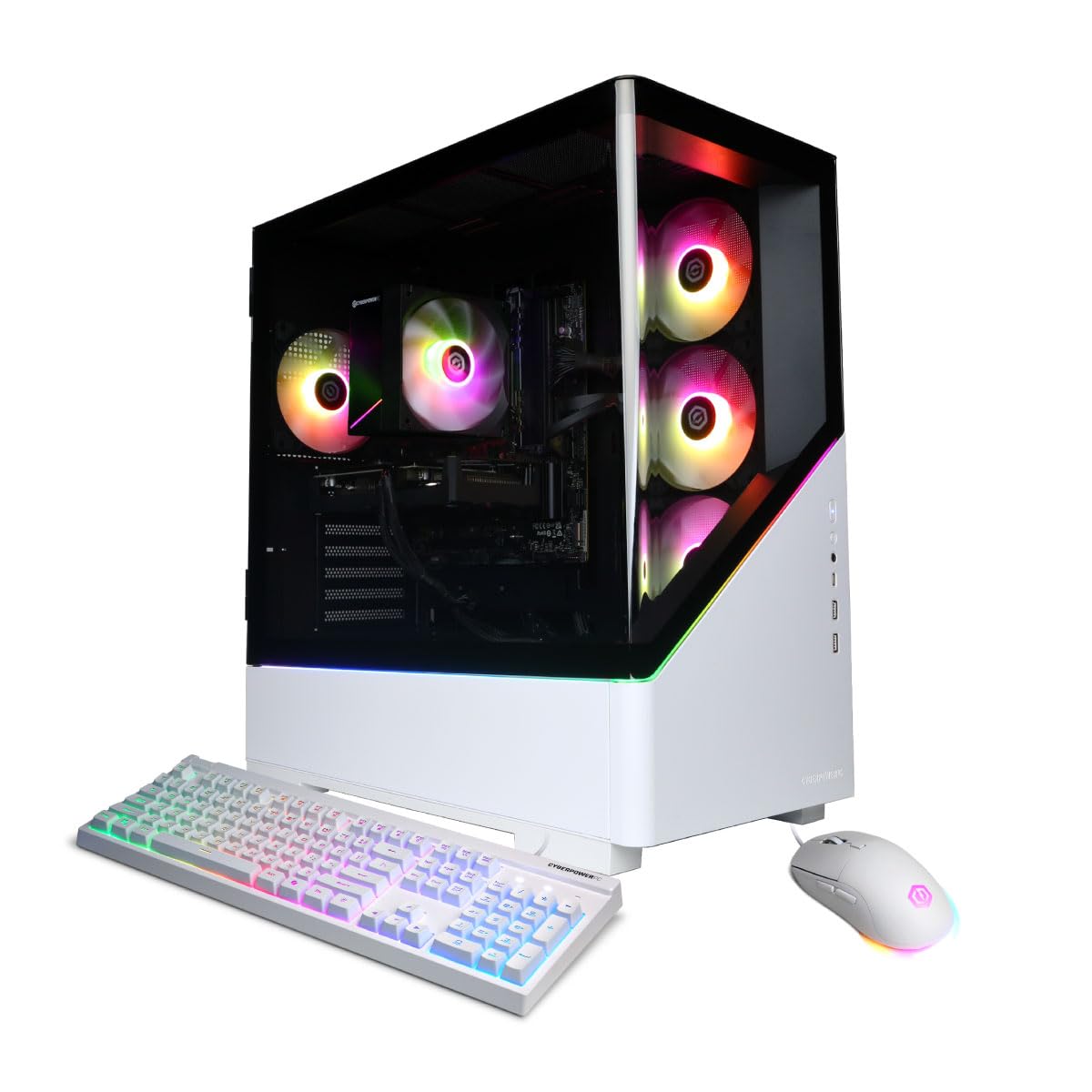
CyberPowerPC’s Gamer Xtreme is the most affordable entry point for streaming that still delivers modern performance. The Intel Core i7-14700F with 20 cores (8 P-cores, 12 E-cores) is a surprisingly capable encoder at this price tier, and the RTX 5060 Ti 8GB GPU supports NVENC encoding for hardware-accelerated streaming. The 16GB of DDR5 RAM is the most obvious bottleneck — it’s enough for light streaming with minimal overlays, but you’ll want to upgrade quickly if your OBS setup is complex.
The 1TB PCIe 4.0 NVMe SSD provides fast storage, and the WiFi 6 and Bluetooth 5.3 connectivity ensure wireless peripherals work smoothly. The tempered glass side panel and custom RGB lighting give it a premium look that belies its entry-level price. The included keyboard and mouse are basic but functional for immediate setup.
Customer reviews overwhelmingly praise this machine for running Helldivers 2 and Company of Heroes at high settings without issues. The most common hardware quirk is that the HDD LED and reset switch wires are swapped, causing a minor inconvenience. For a streamer on a tight budget who needs a solid 1080p streaming foundation, the Gamer Xtreme is the best starting point.
Why it’s great
- i7-14700F has 20 cores for software encoding flexibility
- RTX 5060 Ti supports NVENC for hardware streaming
- Premium tempered glass and RGB design at a budget price
Good to know
- 16GB RAM fills quickly with OBS, chat, and game open
- Front panel wires may come pre-swapped from factory
10. NINGMEI Ryzen 7
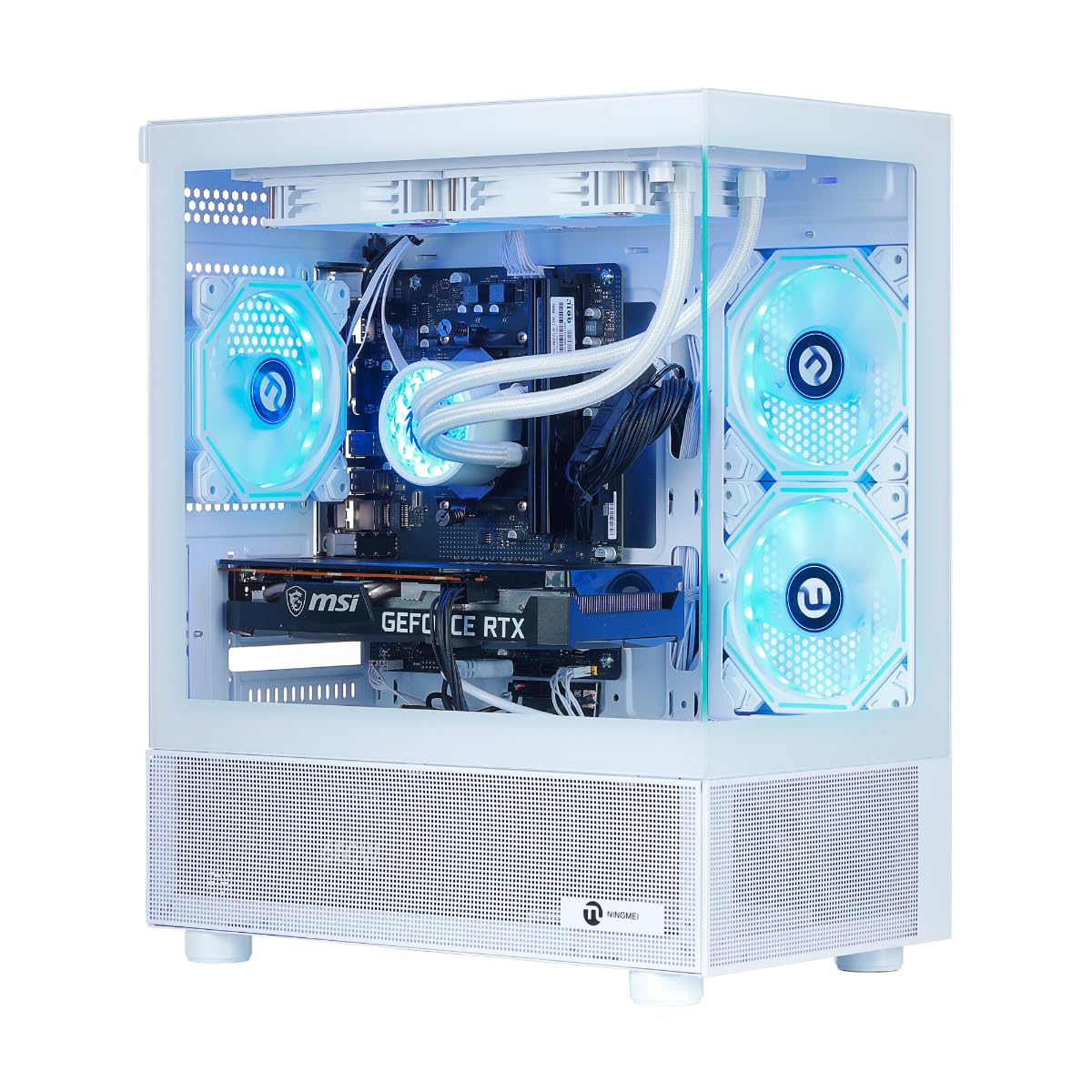
The NINGMEI Ryzen 7 system is a Taiwanese-built machine that offers excellent value for a mid-range gaming and streaming setup. The AMD Ryzen 7 5700X (8 cores/16 threads) paired with the RTX 5060 8GB creates a solid 1080p streaming foundation. The 32GB of DDR4 RAM is generous for the price tier and ensures OBS, Discord, and chat apps all fit comfortably in memory.
The liquid cooling solution is a welcome addition at this price point, keeping the 5700X cool during long streaming sessions. The 650W 80+ Bronze PSU is sufficient for the current components but leaves limited headroom for future GPU upgrades. The white tower design with RGB fans is a clean aesthetic that fits well in most streaming studios.
Customer feedback is mixed — while many report excellent AAA game performance at max settings, a notable minority have received units with defective RAM or no pre-installed Windows, suggesting inconsistent quality control. The GPU requires manual installation (it’s packed separately for safety), which takes about 10 minutes for most users. For a tech-savvy buyer willing to do a small assembly step, this offers strong value.
Why it’s great
- 32GB DDR4 is very generous for this price tier
- Liquid cooling on a mid-range CPU for sustained loads
- White RGB design suits many streaming environments
Good to know
- GPU requires manual installation from separate packaging
- Some units have reported defective RAM or missing OS
11. Suevery I9 13900HX
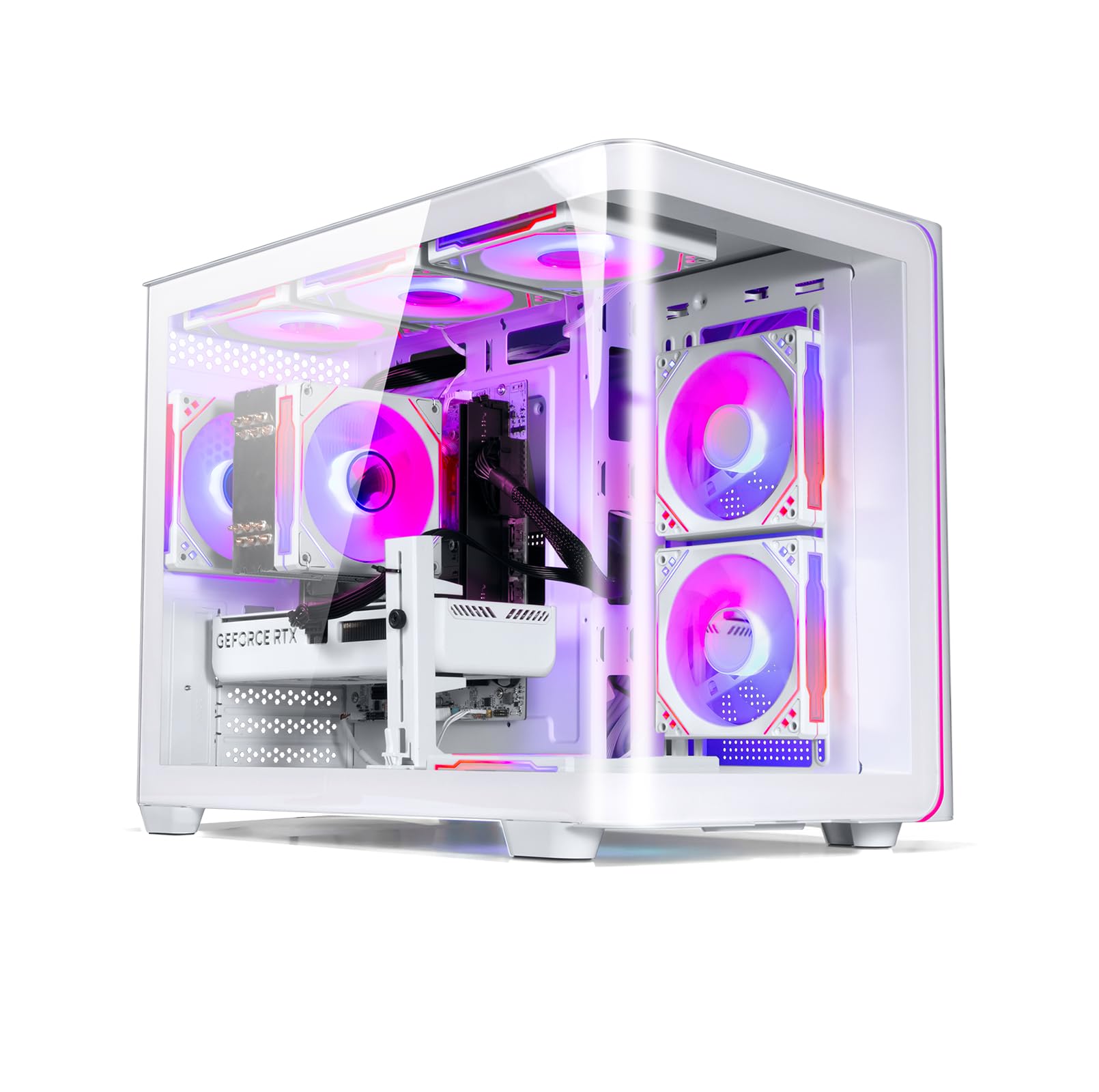
The Suevery I9 13900HX system is a value proposition that prioritizes CPU horsepower above all else. The Core i9-13900HX (24 cores/32 threads) is a mobile-class chip that beats many desktop i7s in multi-threaded workloads, making it exceptional for software encoding. The RTX 5060 8GB is the bottleneck in this equation — it’s a solid 1080p gaming GPU but lacks the VRAM for high-texture 4K streaming.
The 32GB of DDR5 RAM and 1TB NVMe SSD provide fast loading times, and the stand-up curved glass design with color-changing RGB fans is visually distinctive. The system supports four monitors, which is ideal for streamers who want a dedicated preview screen, a chat window, and a game screen. The included WiFi/BT antennas are functional, though most users prefer a wired Ethernet connection for streaming stability.
Customer feedback confirms the system runs games like Apex Legends at 150+ fps and Arc Raiders on Ultra. The most common post-purchase issue is missing drivers after a Windows format, particularly for audio, but these are available from the motherboard manufacturer’s support page. For a streamer who values CPU encoding quality above raw GPU power, this is an excellent budget choice.
Why it’s great
- 24-core CPU provides exceptional software encoding power
- 32GB DDR5 avoids RAM bottlenecks in streaming
- Unique stand-up design with color-changing RGB fans
Good to know
- RTX 5060 is underpowered for 4K streaming textures
- May require manual driver downloads after system reset
12. YAWYORE Ryzen 7
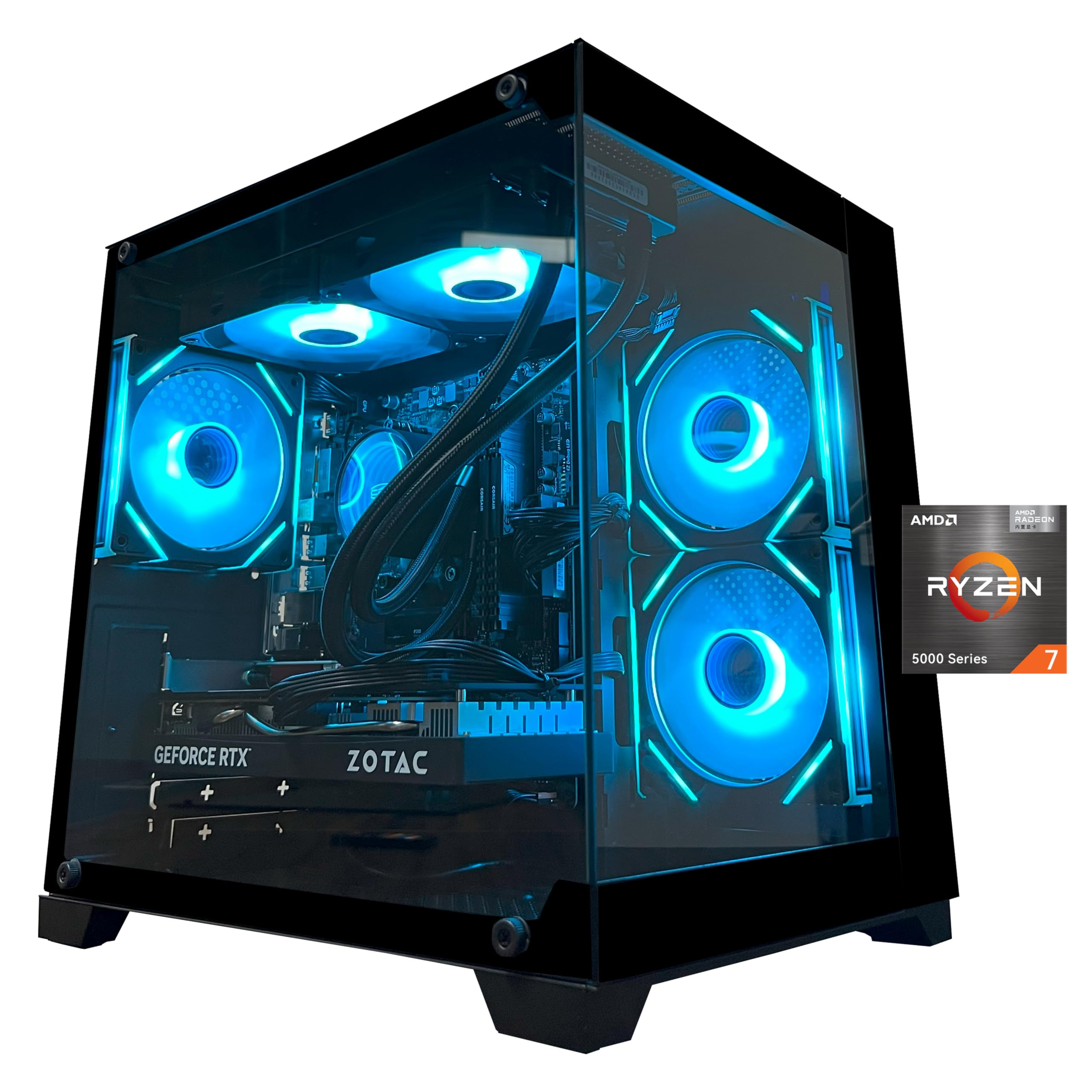
The YAWYORE Ryzen 7 system is a no-frills budget streaming PC that delivers exactly what it promises. The AMD Ryzen 7 5700X and RTX 5060 8GB combination is tried and tested for 1080p gaming and streaming. The 32GB of DDR4 RAM is sufficient for OBS and gaming simultaneously, and the 1TB NVMe SSD ensures fast load times and enough storage for a modest game library.
The MSI B550M-A PRO motherboard provides a solid foundation with good VRM cooling for the 5700X. The 650W 80+ Bronze PSU is adequate but not future-proofed for major GPU upgrades. The ARGB fans and remote control for lighting are a nice touch at this price point, and the shock-absorbing foam packaging ensures the chassis arrives in good condition.
Customer reviews are overwhelmingly positive, with users reporting smooth performance in Forza Horizon 6, heavily modded Arma Reforger multiplayer, and CSGO at high settings. The boxy short tower design is compact and unobtrusive, and the system runs surprisingly quietly. The primary drawback is the DDR4 RAM — it’s slower than the DDR5 found in more expensive systems, but for budget-focused streamers, this machine offers reliable performance.
Why it’s great
- 32GB DDR4 RAM is spacious for streaming multitasking
- MSI motherboard provides stable VRM performance
- Quiet operation with remote-controlled ARGB lighting
Good to know
- DDR4 RAM is a speed bottleneck compared to DDR5 options
- 650W PSU limits future GPU upgrade headroom
13. ViprTech Stryker 4.0

The ViprTech Stryker 4.0 is the most affordable entry point into dedicated streaming PCs in this lineup. The AMD Ryzen 7 3700X (8 cores/16 threads) and RTX 5060 8GB are last-generation components, but they still deliver competent 1080p streaming performance. The 16GB of DDR4 RAM is the tightest constraint — you’ll need to close background apps while streaming AAA titles to avoid stutter.
The 120mm RGB AIO liquid cooler is a nice inclusion at this price point, helping the 3700X maintain turbo frequencies during encoding. The white braided cable extensions and RGB lighting give the system a clean, premium look that belies its budget status. The 700W PSU provides decent headroom for future storage upgrades. The 1TB SSD is fast but fills quickly with modern games, though additional storage can be added easily.
Customer feedback is mixed. Many users praise the silent, cool operation and smooth AAA gaming performance. However, a significant number report a critical issue: the machine fails to wake from sleep or suspension, requiring a full power cycle. This is a pre-beta level bug that some technical support teams couldn’t fix quickly. For a first-time streamer who never uses sleep mode, the performance-per-dollar is excellent, but the sleep bug is a serious frustration.
Why it’s great
- Liquid cooling on an affordable prebuilt keeps thermals low
- White braided cables and RGB give a premium aesthetic
- RTX 5060 delivers smooth 1080p gaming and streaming
Good to know
- 16GB RAM is the minimum for streaming — needs upgrades
- Widespread report of PC failing to wake from sleep mode
FAQ
Can I stream from a PC with only 16GB of RAM?
Do I need an Intel CPU with Quick Sync for streaming?
Will an RTX 5060 handle 4K streaming?
Final Thoughts: The Verdict
For most users, the gaming and streaming pc winner is the Skytech Gaming Legacy 4 because its RTX 5090 and 64GB DDR5 combination is the only machine that can handle 4K120 streaming with zero compromises. If you want a quiet, mid-range setup that still looks professional, grab the Lenovo Legion Tower 5i. And for a budget-friendly entry into 1080p streaming, nothing beats the CyberPowerPC Gamer Xtreme.