
The difference between a decent run and a well-tracked training block often comes down to the silicon on your wrist, but with so many models claiming superior accuracy and battery life, choosing the right one can feel overwhelming.
I’m Mohammad Maruf — the founder and writer behind Drink4Good. I spend my time analyzing hardware specifications, comparing satellite chipsets, and stress-testing battery claims across the current GPS watch landscape to separate real performance from marketing noise.
A reliable gps watch should lock onto satellites quickly, deliver consistent distance data, and last through your longest efforts without demanding a mid-activity charge.
How To Choose The Best GPS Watch
Selecting a GPS watch involves balancing satellite accuracy, battery endurance, display type, and the ecosystem that best fits your daily routine. The right choice depends on whether you primarily run roads, train for triathlons, hike remote trails, or simply want reliable activity tracking without daily charging.
Multi-Band GPS vs. Standard GPS
Multi-band GPS (also called dual-frequency) accesses multiple satellite frequencies simultaneously, which dramatically improves accuracy in challenging environments like city streets with tall buildings or dense forest canopies. Standard GPS works fine on open roads but can wander in signal-challenged areas. If you train in varied terrain, prioritize multi-band support for consistent distance and pace data.
Battery Life: GPS Hours vs. Daily Wear
Battery specifications are often split between daily smartwatch mode and continuous GPS tracking mode. A watch that lasts 14 days in daily mode might only offer 20 hours of GPS tracking, which is plenty for weekly training but may fall short for an ultramarathon or multi-day backpacking trip. Look for watches that clearly state GPS hours rather than just standby days.
Display Technology: AMOLED vs. MIP
AMOLED displays offer vibrant colors, deep blacks, and excellent indoor readability, but they consume more power and can be harder to read in direct sunlight. Memory-in-Pixel (MIP) displays, common in rugged outdoor models, are always-on and exceptionally readable in bright sunlight with minimal battery drain. The trade-off is that MIP screens look less sharp indoors and lack the visual pop of AMOLED.
Ecosystem and Smart Features
Consider whether you want a watch that integrates tightly with your smartphone’s ecosystem (Apple Health, Samsung Health, Google Fit) or one that operates more independently with its own training platform (Garmin Connect, COROS app, Zepp). For serious runners and triathletes, dedicated training metrics like VO2 max, training load, and recovery time are often more valuable than notification handling or app stores.
Quick Comparison
On smaller screens, swipe sideways to see the full table.
| Model | Category | Best For | Key Spec | Amazon |
|---|---|---|---|---|
| COROS PACE 4 | Running | Lightweight daily training | 41 hrs GPS / 32g weight | Amazon |
| Garmin Forerunner 970 | Triathlon | Serious multi-sport athletes | 26 hrs GPS / 560mAh | Amazon |
| Apple Watch Ultra 3 | Adventure | iPhone users needing durability | 20 hrs GPS (LPM) / 49mm | Amazon |
| Samsung Galaxy Watch Ultra | Adventure | Android users wanting LTE | Dual-frequency GPS / Titanium | Amazon |
| COROS PACE Pro | Running | Long battery with AMOLED | 38 hrs GPS / 1.3″ AMOLED | Amazon |
| Garmin Instinct 3 Solar | Outdoor | Rugged expeditions | Unlimited solar / MIP display | Amazon |
| Samsung Galaxy Watch 7 | Smartwatch | Everyday health tracking | 425mAh / Wear OS 5 | Amazon |
| Apple Watch SE 3 | Smartwatch | Budget Apple ecosystem | 18 hrs battery / GPS only | Amazon |
| Amazfit Active Max | Value | Budget-friendly features | 25-day battery / 1.5″ AMOLED | Amazon |
In‑Depth Reviews
1. COROS PACE 4
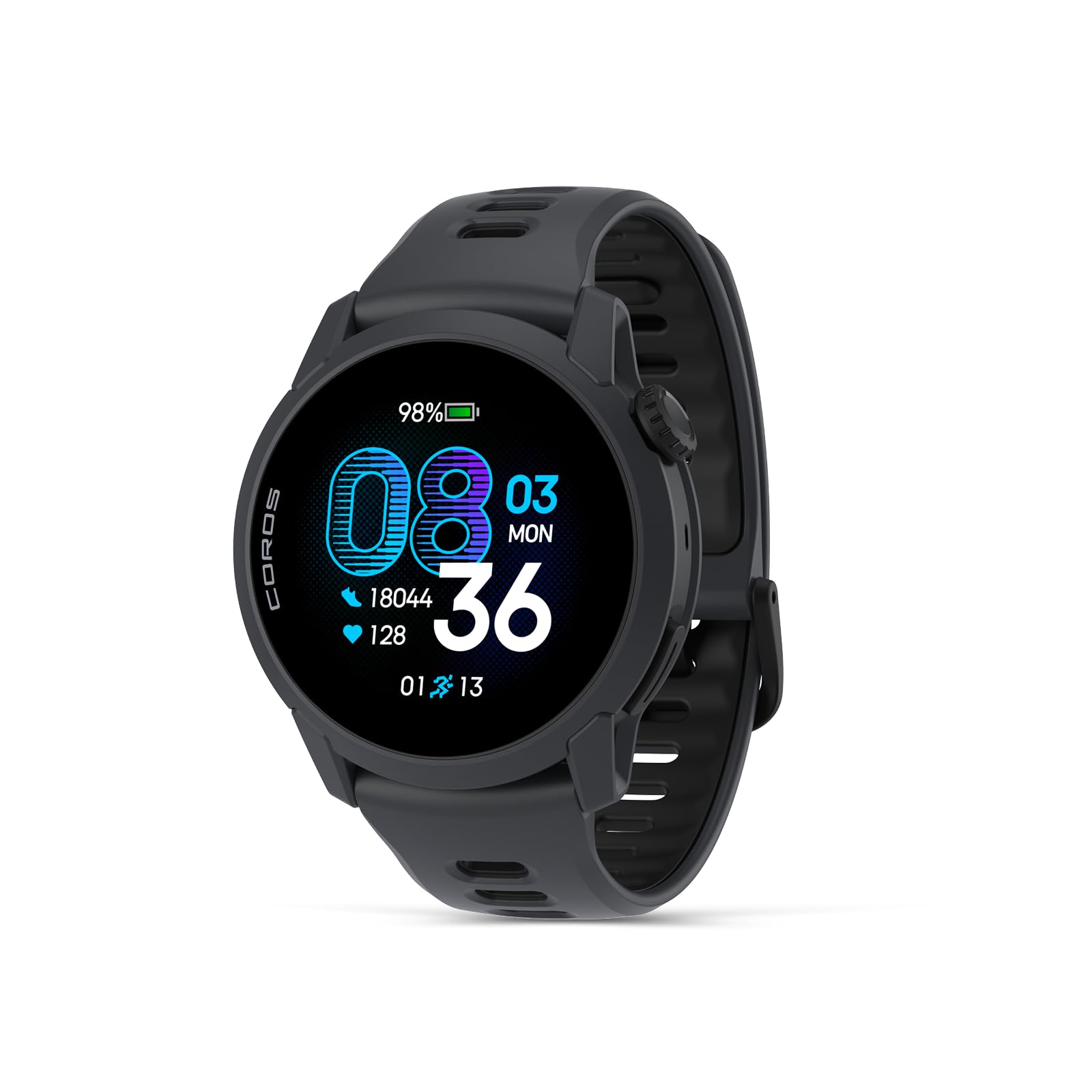
The COROS PACE 4 redefines what a lightweight GPS watch can deliver at a mid-range price point. Weighing just 32 grams with the nylon band and measuring only 11.8 mm thin, it sits virtually unnoticed on the wrist during long runs and all-day wear. The 1.2-inch AMOLED touchscreen offers 164% higher resolution than the PACE 3, providing sharp data fields that auto-adjust brightness for any light condition.
Battery life is exceptional here: 41 hours of continuous GPS tracking and up to 19 days of daily use mean you can train through a full marathon block without hunting for a charger. New voice features let you record training logs verbally and control the watch hands-free, while the dual-frequency GPS ensures accurate tracking even on tree-lined trails. The combination of a tactile digital crown and two physical buttons gives you reliable control even when your fingers are sweaty or gloved.
For runners who prioritize weight, accuracy, and battery endurance over smartwatch extras, the PACE 4 delivers a focused training tool that outperforms many watches costing twice as much. The COROS app provides detailed metrics like recovery time, HRV, and sleep stages without any subscription fees.
Why it’s great
- Ultralight 32g design is barely noticeable
- 41-hour GPS battery handles ultra distances
- Dual-frequency GPS provides reliable accuracy
- No subscription fees for advanced training metrics
Good to know
- No onboard music storage or maps
- Screen is smaller than premium AMOLED competitors
2. Garmin Forerunner 970

The Garmin Forerunner 970 sits at the top of the running and triathlon food chain with a bright AMOLED display, a lightweight titanium bezel, and a scratch-resistant sapphire crystal lens. Its 560 mAh battery delivers up to 15 days in smartwatch mode and 26 hours of continuous GPS tracking, which is enough to cover a full Ironman training week without mid-week charging. The built-in LED flashlight is a subtle but game-changing addition for early morning or late-night runs.
Performance metrics go deep: running economy, step speed loss, ground contact time, and wrist-based running power are all available straight out of the box. The Training Readiness score combines sleep quality, recovery, training load, and HRV status to tell you whether you’re primed to push hard or need an easy day. Multi-band GPS with SatIQ technology automatically adjusts satellite frequency usage to balance accuracy and battery drain based on your environment.
Triathletes will appreciate the auto-transition detection that switches between swim, bike, and run without manual intervention. The built-in microphone and speaker allow phone calls and voice assistant responses when paired with a smartphone. For serious athletes who want professional-grade data and premium build quality, the Forerunner 970 justifies its premium price point with tangible performance features.
Why it’s great
- Deep running dynamics and training metrics
- Durable titanium bezel with sapphire lens
- Built-in flashlight for low-light visibility
- Excellent 26-hour GPS battery life
Good to know
- Premium price point reflects the pro-level features
- Steeper learning curve than general smartwatches
3. Apple Watch Ultra 3
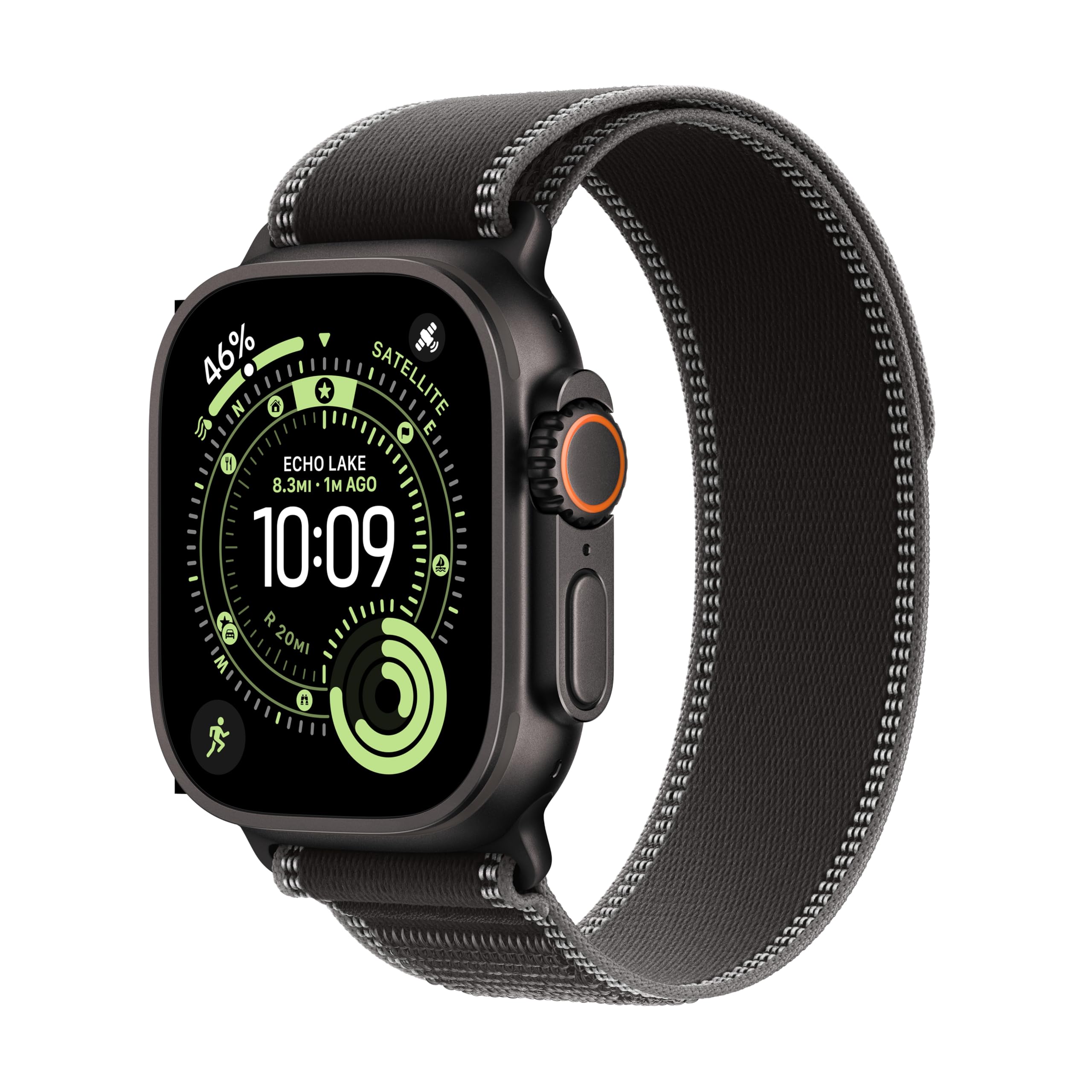
The Apple Watch Ultra 3 is built for those who demand rugged durability without leaving the Apple ecosystem. Its 49 mm titanium case and sapphire crystal display are water-resistant to 100 meters, making it suitable for swimming, diving, and high-speed water sports. The precision dual-frequency GPS delivers accurate tracking even in challenging urban environments, while satellite communications allow you to text emergency services when cellular and Wi-Fi networks are unavailable.
Health tracking is comprehensive: the Vitals app provides daily health status, sleep apnea notifications, irregular heart rhythm alerts, and blood oxygen readings. For runners, Ultra 3 offers Pacer, Heart Rate Zones, running power, and Workout Buddy powered by Apple Intelligence from your nearby iPhone. The customizable Action Button gives one-press access to start a workout, mark a lap, or turn on the flashlight.
Battery life reaches up to 42 hours in normal use and up to 72 hours in Low Power Mode, with 20 hours of full GPS and heart rate monitoring in Low Power Mode. The larger display emits more light at wider angles for outdoor readability. For iPhone users who want a smartwatch that doubles as a serious training and safety tool, the Ultra 3 is the clear flagship choice.
Why it’s great
- 100m water resistance and rugged titanium case
- Satellite SOS for off-grid emergencies
- Seamless integration with Apple ecosystem
- Customizable Action Button for quick controls
Good to know
- Requires iPhone for full functionality
- Premium price reflects the build and features
4. Samsung Galaxy Watch Ultra
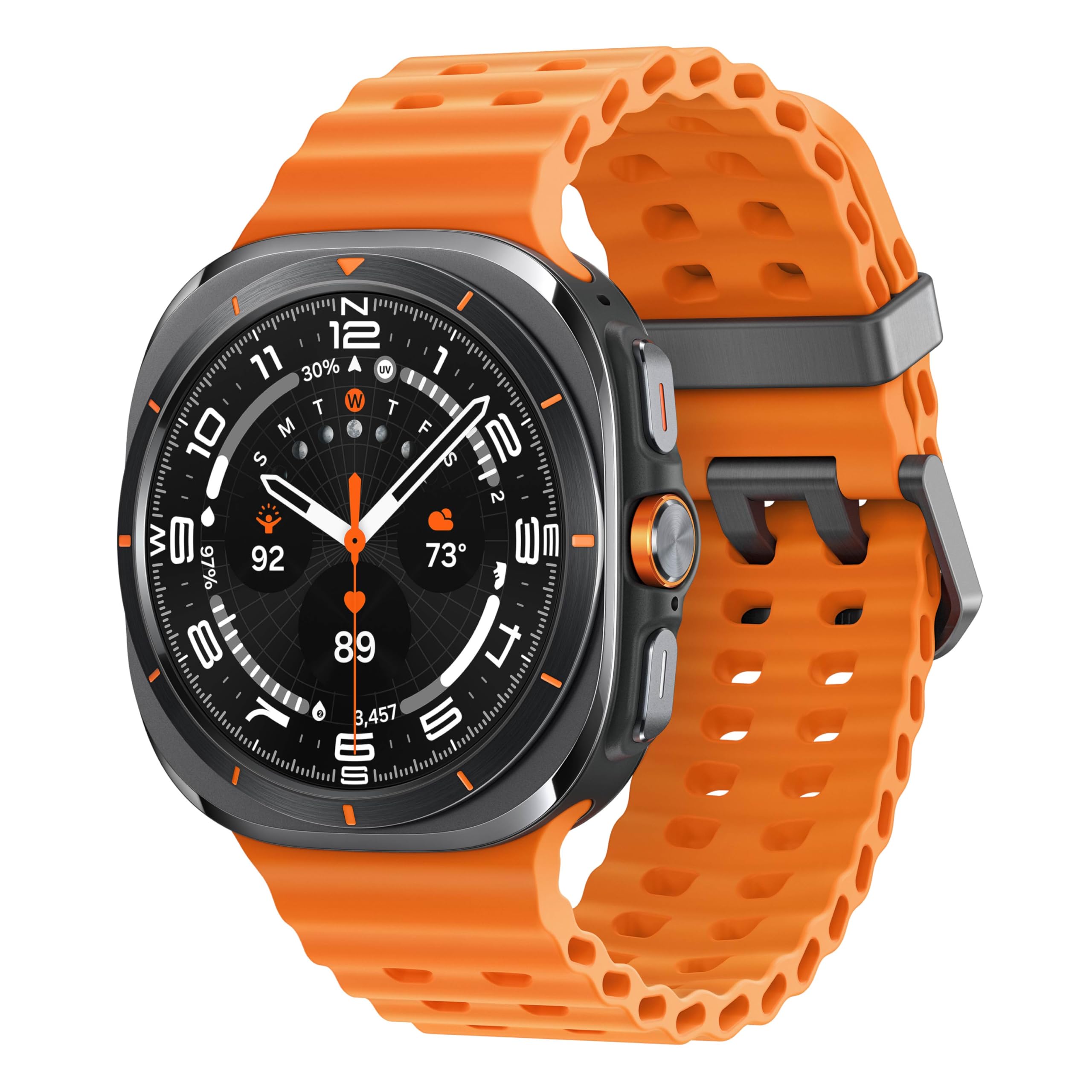
The Samsung Galaxy Watch Ultra brings a durable titanium casing and dual-frequency GPS to the Android smartwatch space. It’s designed for endurance, with Samsung’s longest-lasting battery yet that comfortably gets through multi-day adventures. The 10ATM water resistance rating means you can take it ocean swimming without worry, and the MIL-STD-810H certification ensures it survives drops, shocks, and extreme temperatures.
Advanced Sleep Coaching analyzes your sleep patterns to optimize recovery, while the Running Coach feature adapts training suggestions based on your age, weight, oxygen levels, and heart rate. The Energy Score combines sleep, activity, and heart rate data into a single metric that tells you how ready you are for the day. LTE connectivity means you can leave your phone behind and still take calls, stream music, and use Google Maps directly from your wrist.
The 1.5-inch Super AMOLED display is bright and sharp, and the Now Bar puts your most-used information like weather, timers, and directions right on the main watch face. Gemini AI assistant integration provides hands-free help during workouts. For Android users, especially those with Samsung phones, the Galaxy Watch Ultra is a premium training companion that doubles as a full-featured smartwatch.
Why it’s great
- Durable titanium casing with 10ATM rating
- LTE option for phone-free adventures
- Comprehensive sleep and recovery coaching
- Seamless integration with Samsung ecosystem
Good to know
- Battery drain can be heavy with LTE enabled
- Best paired with a Samsung smartphone
5. COROS PACE Pro

The COROS PACE Pro upgrades the PACE formula with a brilliant 1.3-inch AMOLED display that hits 1500 nits of brightness, making it readable in direct sunlight without breaking a sweat. The processor is over twice as fast as previous generations, delivering snappy performance when scrolling through menus or zooming into maps. It still maintains the featherweight feel at just 49 grams, comfortable enough for 24/7 wear.
Battery life remains a strong suit: 38 hours in standard GPS mode and 31 hours with dual-frequency GPS enabled. In daily use, you can expect 20 days of battery or 6 days with the always-on display active. USB-C charging is a welcome addition, and the included keychain adapter means you only need one cable for all your devices. Navigation features include offline topographical maps with turn-by-turn directions, all accessible from the watch without requiring a phone connection.
The COROS app mirrors the watch’s focus on training data, offering Training Status, custom workouts, detailed activity summaries, and sleep analysis without any subscription fees. For runners who want a bright AMOLED display, long battery life, and free maps, the PACE Pro delivers premium features at a price that undercuts most competitors with similar specs.
Why it’s great
- Bright 1500-nit AMOLED display
- 38-hour GPS battery with fast charging
- Free offline topographical maps
- Fast processor with smooth UI
Good to know
- No onboard music storage
- Band selection is less varied than Garmin
6. Garmin Instinct 3 Solar

The Garmin Instinct 3 Solar is built for those who spend days away from a power outlet. The solar charging lens extends battery life indefinitely under normal wear—assumes all-day wear with three hours per day outside in 50,000 lux conditions—so you never have to worry about the watch dying mid-expedition. The 45 mm fiber-reinforced polymer case with a metal-reinforced bezel meets MIL-STD-810 standards for thermal and shock resistance, and the 10 ATM water rating means it survives anything from rain to river crossings.
The MIP display is a deliberate choice for outdoor use: it reflects ambient light for crystal-clear readability in bright sun with minimal power consumption. Multi-band GPS with SatIQ technology delivers superior positioning while optimizing battery life, and the 3-axis compass with barometric altimeter provides reliable navigation even without a phone. The built-in LED flashlight with variable intensities and strobe modes adds practical visibility in low-light conditions.
Health monitoring includes wrist-based heart rate, advanced sleep tracking, Pulse Ox, and stress tracking. Smart notifications and Garmin Pay contactless payments are available, but the Instinct 3 intentionally skips music storage and color touchscreens to focus on durability and battery endurance. For hikers, backpackers, and outdoor enthusiasts who prioritize reliability over smartwatch features, the Instinct 3 Solar is the ultimate companion.
Why it’s great
- Solar charging for unlimited battery life
- MIL-STD-810 rugged durability
- MIP display is excellent in direct sunlight
- Multi-band GPS with SatIQ for accuracy
Good to know
- MIP display is less vibrant indoors
- No music storage or color maps
7. Samsung Galaxy Watch 7

The Samsung Galaxy Watch 7 brings the latest Wear OS 5 experience to a broad Android audience. Its 1.5-inch Super AMOLED display is sharp at 480×480 pixels, and the Exynos W1000 processor (3nm) ensures smooth performance across apps and notifications. The 425 mAh battery provides 1.5 to 3 days of use depending on feature load, which is competitive for a full-featured smartwatch with an always-on display option.
Health tracking is a strong point: the advanced BioActive sensor tracks heart rate, sleep stages, and body composition. For the first time on a Galaxy Watch, an AI-enhanced sleep tracker helps detect moderate to severe sleep apnea. ECG certification and blood pressure monitoring (with a compatible cuff for calibration) add medical-grade insight for health-conscious users. GPS accuracy is solid thanks to the dual-frequency support, and the watch is MIL-STD-810H compliant with 5ATM water resistance.
Smart features include voice-to-text responses, Samsung Pay, music streaming, and full app support through the Google Play Store. The watch pairs seamlessly with Samsung phones but also works well with other Android devices, though some features like ECG are limited to Samsung phones. For Android users who want a balanced mix of fitness tracking and smartwatch convenience without stepping up to the Ultra model, the Galaxy Watch 7 is a compelling mid-range choice.
Why it’s great
- Bright AMOLED display and smooth Wear OS 5
- Comprehensive health tracking with ECG
- MIL-STD-810H durability rating
- Good app selection through Google Play
Good to know
- Battery life is just 1.5-3 days
- Best features require a Samsung phone
8. Apple Watch SE 3
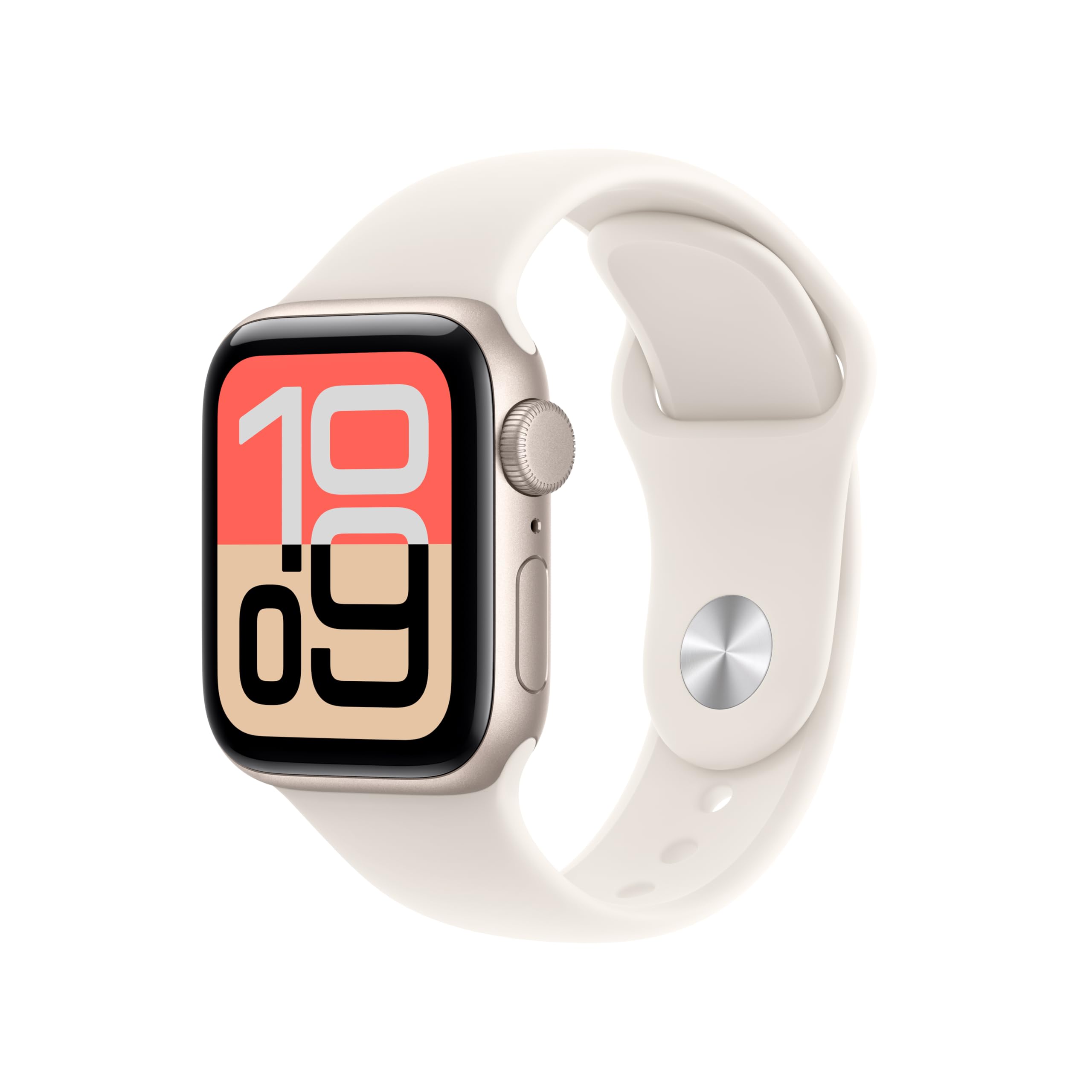
The Apple Watch SE 3 offers the core Apple Watch experience at a more accessible price point. Its always-on display allows you to see the time and complications without raising your wrist, and the 18-hour battery life comfortably gets through a full day of use with faster charging than the SE 2—up to 8 hours of battery in 15 minutes. Temperature sensing enables retrospective ovulation estimates and richer insights in the Vitals app.
Fitness tracking covers running, strength training, and daily step goals with real-time metrics powered by Apple Intelligence from your nearby iPhone. Safety features are a standout: fall detection, car crash detection, and Check In provide peace of mind for active users. The watch works with your iPhone or Wi-Fi for calls, texts, music, and Siri, and the Family Setup option lets you manage watches for kids who don’t have their own iPhones.
The SE 3 lacks the blood oxygen sensor and ECG found on higher-end Apple Watches, but for most users focused on everyday activity tracking, sleep monitoring, and staying connected, it delivers the essential Apple Watch experience without the premium price. The lightweight aluminum case and variety of band options make it comfortable for all-day wear.
Why it’s great
- Core Apple Watch features at lower cost
- Always-on display at this price point
- Excellent safety features (fall/crash detection)
- Fast charging with 18-hour battery
Good to know
- No blood oxygen sensor or ECG
- Requires an iPhone for full functionality
9. Amazfit Active Max
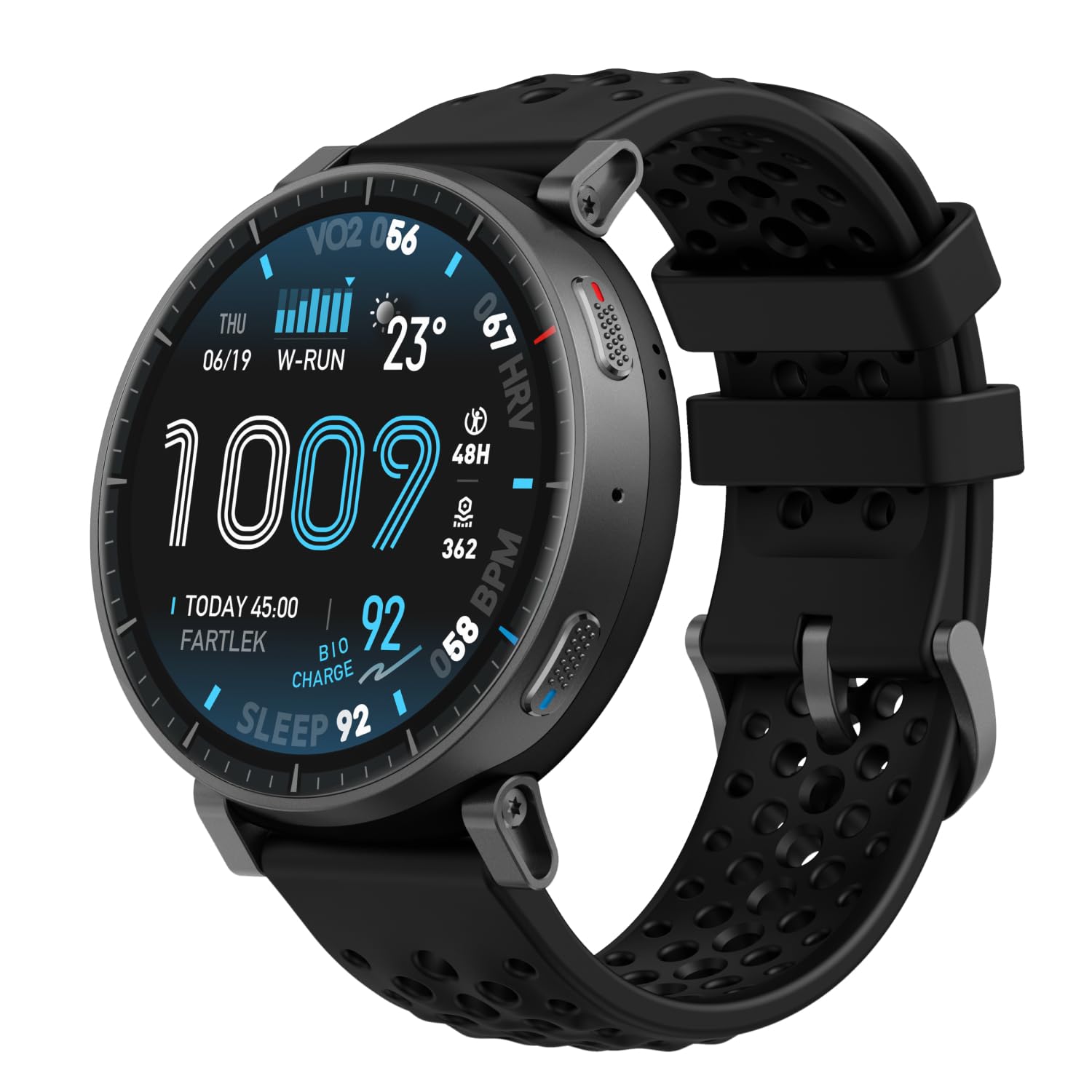
The Amazfit Active Max proves that feature-rich GPS watches don’t have to break the bank. Its 1.5-inch AMOLED display hits a remarkable 3000 nits of peak brightness, making it the most readable screen in direct sunlight at this price tier. The 25-day battery life in typical use means you charge it less than once a month, and the 4GB of onboard storage allows for music downloads and offline maps with turn-by-turn navigation.
GPS tracking uses five satellite systems for fast and accurate positioning, and the BioCharge energy monitoring system helps you understand when to push harder and when to rest based on daily workouts and stress levels. The Zepp Coach feature provides personalized AI-driven training plans for distances from 3K to full marathons, and 170+ sport modes cover everything from strength training to skiing. Bluetooth calling and hands-free voice replies work with Android phones, adding smartwatch convenience without sacrificing battery life.
Health sensors track heart rate, SpO2, sleep stages, and stress, and the watch integrates seamlessly with Apple Health and Google Fit. While it lacks the advanced training metrics of Garmin or COROS, the Active Max delivers exceptional display quality, battery endurance, and core GPS functionality at a budget-friendly price that’s hard to beat for everyday fitness enthusiasts.
Why it’s great
- 3000-nit AMOLED is ultra-bright outdoors
- 25-day battery life reduces charging frequency
- 4GB storage for music and offline maps
- Excellent value for core GPS features
Good to know
- Advanced training metrics are basic
- Voice reply limited to Android phones
FAQ
How accurate is wrist-based heart rate during interval training?
Can I use a GPS watch without a smartphone?
What is the difference between MIP and AMOLED displays for GPS watches?
How often should I calibrate the GPS on my watch?
Do GPS watches work for swimming and water sports?
Final Thoughts: The Verdict
For most users, the best gps watch winner is the COROS PACE 4 because it combines ultralight wearability, 41-hour GPS battery life, and dual-frequency accuracy at a mid-range price that doesn’t compromise on training features. If you want bright AMOLED visuals with long battery endurance, grab the COROS PACE Pro. And for rugged outdoor expeditions where charging is rare, nothing beats the Garmin Instinct 3 Solar with its unlimited battery life via solar charging.