
Finding an ink that doesn’t feather on standard notebook paper or clog your feed is a common frustration. The wrong bottle can turn a smooth-writing fountain pen into a sputtering mess, ruining the tactile pleasure of putting thought to page.
I’m Mohammad Maruf — the founder and writer behind Drink4Good. I spend my time cross-referencing dye formulas, pH levels, and real-world user reports to separate the inks that perform reliably from those that look good in the bottle but fail on the page.
To help you cut through the options, I’ve tested and analyzed the flow, dry times, and paper compatibility of the leading contenders to assemble this guide to the best fountain ink.
How To Choose The Best Fountain Ink
Fountain pen ink isn’t just colored water. The chemistry behind each bottle determines how it behaves with your nib, feed, and paper. Your goal is to match the ink’s characteristics to your pen’s nib width and your typical writing paper.
Flow & Lubricity: Wet vs. Dry
Wet inks flow heavily from the feed, making fine nibs write like mediums but increasing feathering and dry time. Dry inks offer more control on absorbent paper but may skip in pens with tight feeds. Lubricity refers to how slick the ink feels—high-lubricity inks make the nib glide, while low-lubricity inks provide more feedback. Most dye-based inks listed here fall on the wet side, which is ideal for smooth, consistent ink delivery.
Feathering & Bleed-Through
Feathering happens when ink spreads along paper fibers, creating jagged edges. Bleed-through is ink soaking to the reverse side. Both are paper-dependent. High-quality coated papers like Tomoe River or Clairefontaine minimize these issues. Beginners should look for inks reviewed as well-behaved on standard copy paper to avoid disappointment.
Water Resistance & Staining
Most dye-based inks are not waterproof—a spill can ruin your writing. Pigmented inks offer water resistance but require more frequent pen cleaning. Some inks, particularly those with high saturation or particular dye compounds, will permanently stain pen converters and even plastic feeds. The intensity of the color usually correlates with staining risk. If you change colors often, stick to milder, lower-staining dye formulas.
Quick Comparison
On smaller screens, swipe sideways to see the full table.
| Model | Category | Best For | Key Spec | Amazon |
|---|---|---|---|---|
| Pilot Iroshizuku Kon-peki | Premium | Luxury daily writing & shading | 50 ml bottle, dye-based | Amazon |
| Herbin Bleu Pervenche | Mid-range | Smooth flow & moderate shading | 30 ml, pH neutral | Amazon |
| Lamy Blue Black | Mid-range | Consistent performance with Lamy pens | 50 ml, alcohol-based | Amazon |
| Noodler’s Baystate Blue | Premium | Vibrant color & waterproof | 3 oz, paint-based | Amazon |
| Lamy Black Cartridges | Budget | Convenience for Lamy pens | 20-pack, medium nib | Amazon |
In‑Depth Reviews
1. Pilot Iroshizuku Kon-peki
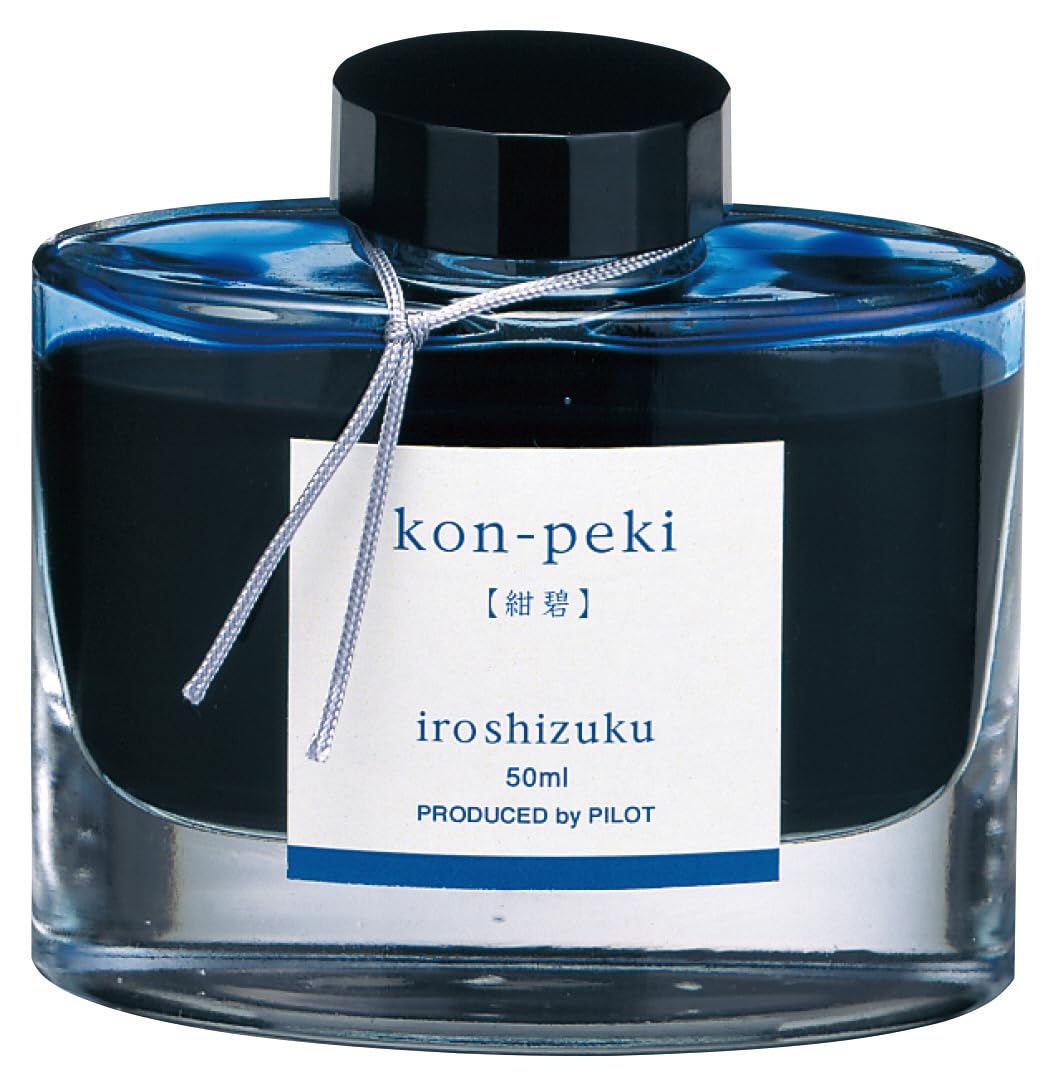
The Pilot Iroshizuku Kon-peki (Deep Azure Blue) is widely regarded as a benchmark for premium fountain pen ink. Its dye-based formula delivers a bright, almost greenish-blue that shades beautifully on coated papers like Rhodia and Tomoe River. Users consistently note zero feathering on these surfaces, with a dry time around 26 seconds on Rhodia—fast enough for right-handed writers.
Flow is excellent across nib sizes from extra-fine to stub. It lubricates the nib smoothly without making the ink feel excessively wet. The bottle itself is a standout: heavy glass construction with a well-designed shape that looks elegant on any desk. However, the cap design can allow ink to pool slightly when opening, and there is no built-in pen rest for filling.
This ink is not waterproof. A splash of water will lift the dye entirely, so it is not suitable for archival needs. On cheap, porous paper, it will feather and bleed through. For daily writing on decent paper, especially if you value shading and a polished experience, Kon-peki is difficult to surpass in this category.
Why it’s great
- Beautiful shading with a bright, unique blue tone.
- Exceptionally smooth flow for all nib sizes.
- Premium bottle presentation adds desk appeal.
Good to know
- Not waterproof; smears easily when wet.
- Feathers on low-quality, porous paper.
- Cap can pool ink; no filling rest on bottle.
2. Herbin Bleu Pervenche

Jacques Herbin’s Bleu Pervenche is a delightful mid-range offering that punches above its price point. Users describe the color as a happy, warm medium blue reminiscent of a swimming pool, with a greenish undertone that shades well for drawing and controlled lettering. The ink is pH neutral, non-toxic, and uses natural dyes, making it safe for vintage pens and unlikely to damage feeds.
Flow is excellent—reviewers note it performs better than some high-end brands, with no feathering on cheap paper even at maximum pen pressure. It is fast-drying, which helps reduce smudging for left-handed writers. The 30 ml bottle is small but well-designed, and the ink is also available in 10 ml and 100 ml sizes plus cartridges.
This ink is not water resistant. It washes out of clothes easily, but a spill on paper will destroy your work. The color saturation is moderate, so fine nibs may appear pinkish rather than the deeper blue seen in broad nibs. For the price, the smooth flow and reliable performance make it an exceptional everyday ink.
Why it’s great
- Excellent flow with no feathering on standard paper.
- pH neutral and non-toxic, safe for vintage pens.
- Versatile color with good shading properties.
Good to know
- Not water resistant at all.
- Color in fine nibs appears pinkish, not deep blue.
- Small 30 ml bottle may require frequent repurchase.
3. Lamy Blue Black
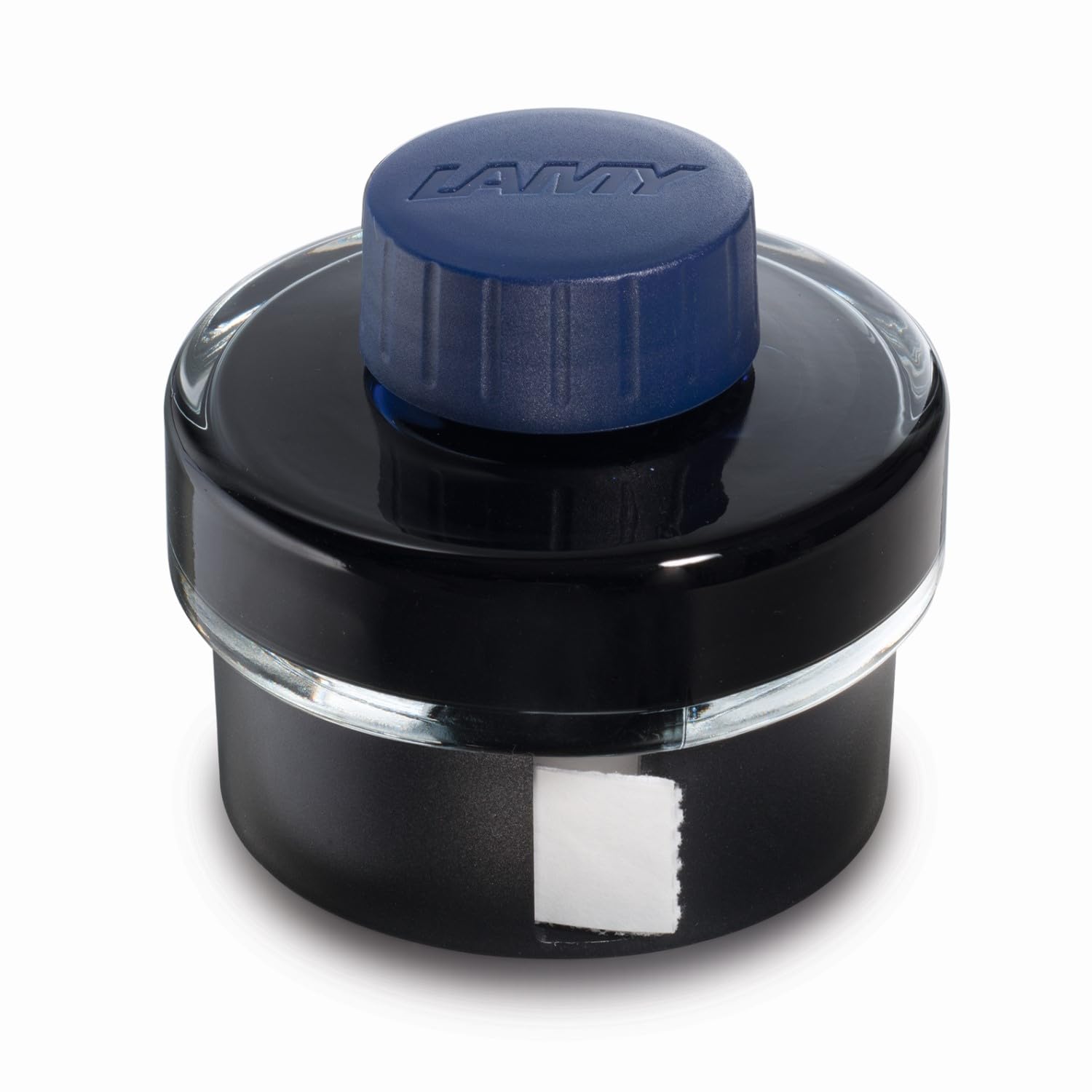
Lamy Blue Black is a workhorse ink designed primarily for Lamy fountain pens. The color is a medium green with yellow undertones that matches the cap label. It flows smoothly and dries quickly, though users report it bleeds through standard notebook paper. The wetness is moderate, which can make fine nibs write closer to medium, a plus for those seeking a broader line.
This ink has higher lubricity than many alternatives, which users note solves drying-out issues common with some Lamy pen models. It provides a consistent, reliable writing experience without skipping. The 50 ml glass bottle is straightforward and functional, though the opening could be wider for easier filling with larger nibs.
Be aware that this ink runs quite wet. Some fine-nib users find it messier than other Lamy offerings, requiring more frequent pen cleaning to prevent residue buildup. It does not offer water resistance. For those using Lamy pens and seeking a dependable, well-behaved ink that matches the brand’s feed characteristics, this is a strong choice.
Why it’s great
- Excellent flow that prevents drying in Lamy pens.
- Quick drying time suitable for notebooks.
- Large 50 ml bottle offers good value per use.
Good to know
- Bleeds through standard copy paper.
- Wet flow makes fine nibs write thicker.
- Not water resistant; requires frequent pen cleaning.
4. Noodler’s Baystate Blue
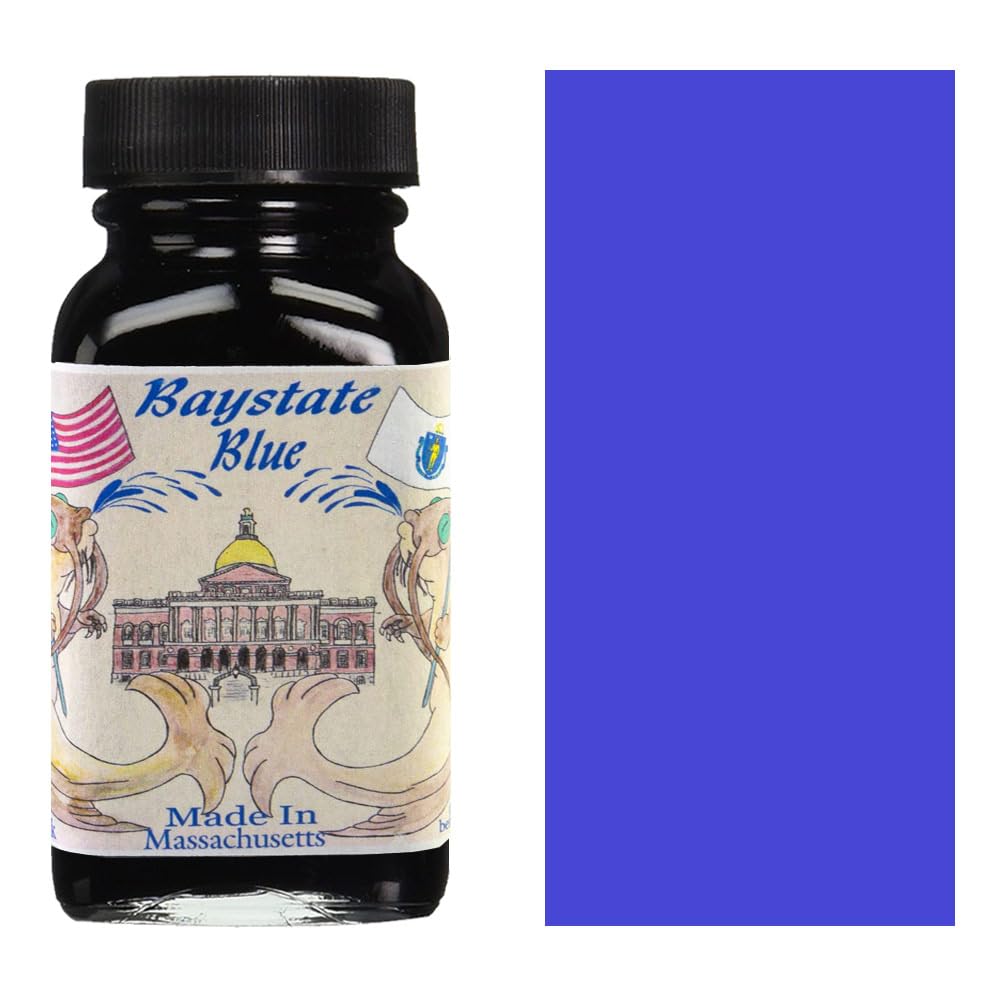
Noodler’s Baystate Blue is infamous in the fountain pen community for its aggressively vibrant, deep blue color. It is one of the most saturated inks available—so bold that it will stain any surface it touches, including your pen, sink, and hands. Users unanimously recommend dedicating one pen to this ink because it reacts badly with other formulas and requires bleach to clean.
The ink is waterproof and free-flowing, drying quickly on most papers. It performs exceptionally well on coated papers like Cosmo Air Light and Tomoe River, but feathers badly on high-gsm porous papers. The color has a slight violet tint with no shading or sheening. Best results come from broad nibs that lay down a heavy wet line.
This ink is not for beginners. It demands dedicated cleaning protocols—users recommend a 1:10 bleach solution for cleanup. The feathering is severe on any absorbent paper, making paper selection critical. Many experienced users consider it an essential collector’s ink for the sheer intensity of the blue, but it requires careful handling.
Why it’s great
- Unmatched vibrant blue color, waterproof.
- Free-flowing and dries quickly.
- Excellent on high-quality coated papers.
Good to know
- Stains everything permanently; requires dedicated pen.
- Severe feathering on porous papers.
- Reacts badly with other inks; clean thoroughly.
5. Lamy Black Cartridges

The Lamy Black Cartridge pack is the entry-level convenience solution for Lamy pen owners. Each cartridge is a snap-in type that fits all Lamy fountain pen models. The ink is a deep, opaque black that flows reliably without clogging—users report it works perfectly straight from the package with no drying or skipping issues.
Performance is solid for everyday writing on standard notebooks. The ink is sufficiently saturated to look nearly black on most papers but does not soak through cheap leaves. Cartridges last a long time in use, making this pack economical for regular writers. The medium point type is a good match for typical Lamy nibs.
These are not refillable bottles, so you generate more plastic waste. You also cannot mix custom colors. The ink is not water resistant and may not satisfy enthusiasts seeking shading or sheen. For a new fountain pen user or anyone wanting zero-mess refills with consistent black output, these cartridges deliver reliable performance.
Why it’s great
- Snap-in convenience, no mess filling.
- Opaque black that doesn’t soak through paper.
- Long-lasting per cartridge for daily use.
Good to know
- Not refillable; produces plastic waste.
- No water resistance.
- Fixed black color; no custom mixing or shading.
FAQ
Can I mix different brands of fountain pen ink in my pen?
Why does my new ink feather on my normal notebook paper?
Final Thoughts: The Verdict
For most users, the best fountain ink winner is the Pilot Iroshizuku Kon-peki because it combines premium bottle design, reliable flow, and beautiful shading. If you want a budget-friendly daily writer with excellent flow, grab the Herbin Bleu Pervenche. And for a bold, waterproof statement color in a dedicated pen, nothing beats the Noodler’s Baystate Blue.